


Ares Acres
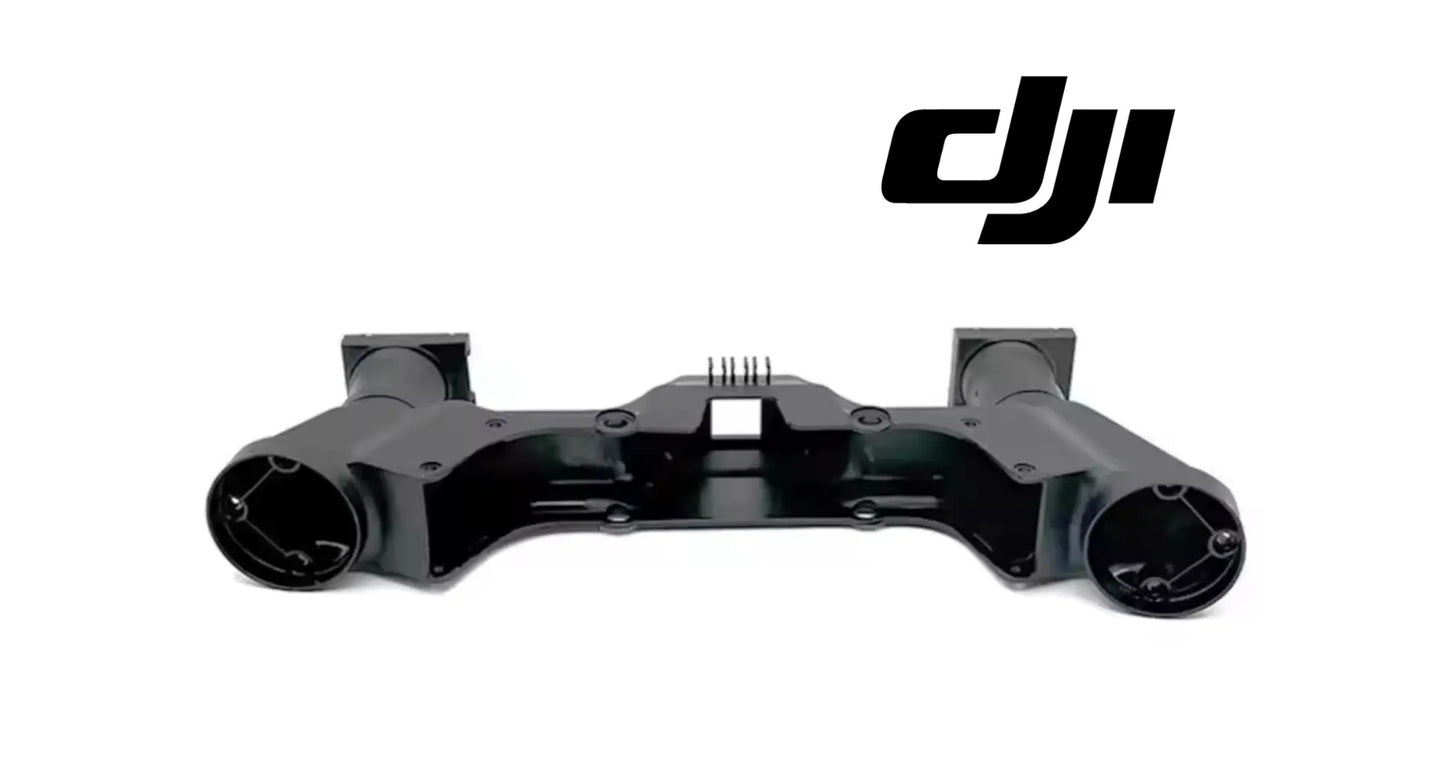
DJI Agras T100 OEM Rear Mounted Quad Nozzle Housing Spray Rod Shell
DJI Agras T100 OEM Rear Mounted Quad Nozzle Housing Spray Rod Shell
Couldn't load pickup availability
DJI T100 – T70P Original Rear Mounted Quad Nozzle Housing Spray Rod Shell — OEM spray system housing assembly, rear boom nozzle protection shell, and DJI Agras liquid distribution component.
🇺🇸 U.S.A. FIRST
Ares Acres LLC is a U.S.-based authorized DJI Agras reseller supporting American agricultural drone operators with genuine DJI Agras OEM replacement parts, accessories, and field-ready inventory.
FREE & FAST Shipping is included for all U.S. customers.
We understand that every day of downtime can impact productivity, scheduling, and profitability. That's why we focus on providing fast fulfillment, responsive customer support, and reliable access to the parts operators need most.
A cracked rear housing does not shut the aircraft down — it just quietly ruins the pass. Nozzles shift, the pattern skews, and the operator does not find out until streaks show up in the stand two weeks later. Re-treating a skipped strip costs more than the shell every single time. Replace it, hold the nozzle geometry, and put the product where the label says it goes.
We use specialized technicians to verify and dispatch the Rear Mounted Quad Nozzle Housing Spray Rod Shell ordered.
Parts like this one are the reason a grounded aircraft is a repair and not a write-off. A single component held in U.S. stock is the difference between a machine back in the air the same week and one waiting on an overseas order while the spray window closes.
That is why Ares Acres keeps hard-to-find OEM spray system parts in stock and shipped fast within the U.S.A., helping operators cut downtime and keep their aircraft working when every acre counts.
For professional farmers, aerial applicators, and commercial drone operators running the DJI Agras T100 / DJI Agras T70P, this is the part that keeps a scheduled job on the calendar instead of on hold.
Ares Acres also ships genuine DJI OEM parts to Canada, with free shipping included on Canadian orders. Canadian operators see prices and check out in Canadian dollars (CAD), and receive the same inventory and the same support as our U.S. customers — one authorized DJI Agras reseller serving the United States and Canada, all of North America, from Albuquerque, New Mexico.
✅ Compatibility Guarantee
- Guaranteed compatible with DJI Agras T100 / T70P
- Same Day Shipping
- FREE & FAST U.S. Shipping
📦 Package Includes
- Original rear mounted quad nozzle housing spray rod shell
- Rear spray assembly structural shell
- Integrated mounting structure
- OEM protective packaging
🔧 Component Overview
The DJI T100 – T70P Original Rear Mounted Quad Nozzle Housing Spray Rod Shell is a professional-grade OEM structural spray system component engineered specifically for DJI Agras agricultural drone platforms.
Designed for commercial spraying operations, agricultural drone technicians, fleet maintenance teams, and professional applicators, this rear-mounted housing assembly protects and supports the aircraft's quad-nozzle spray rod system during high-volume liquid application operations.
This component functions as a structural enclosure and mounting shell for the rear spray nozzle assembly, helping maintain proper nozzle positioning, spray system stability, liquid distribution consistency, and protection of critical spraying hardware during demanding agricultural operations.
Constructed from durable high-strength industrial materials, the housing is engineered to withstand:
- Continuous vibration
- Chemical exposure
- Pressure fluctuations
- Field debris impacts
- Transport movement
- Harsh spraying environments
Damage to the rear spray rod shell can compromise spray stability, nozzle alignment, liquid distribution accuracy, and overall spraying efficiency.
This is a spray-system-critical structural component essential for maintaining reliable agricultural application performance.
What this housing lives through:
- Concentrated chemical contact every hour the system runs
- UV exposure and heat cycling across a full season
- Pressure pulsing from the pump on every nozzle cycle
- Crop brush, stubble strikes, and debris on low passes
- Knocks during loading, transport, and staging
- Washdown pressure and cleaning chemicals between jobs
Confirm the housing is the fault with a swap and a look, not a guess. Move the suspect tip to another station on the same rail and run clean water at working pressure. If the poor fan travels with the tip, the tip is worn and the shell is innocent. If the fault stays at the station after the tip has moved, the seat holding it is the problem. A worn tip broadens and thins a fan; it cannot rotate one, so a fan sitting at a different angle than its three neighbors is a mounting fault every time.
Cracks in a chemically aged shell are hard to see and easy to miss. Wash the part, dry it, then look along the surface with a light held at a low angle rather than shining straight at it, because a crack throws a shadow line that a face-on light washes out. Wet the suspect area and watch it dry; a crack holds water and stays dark after the surface around it has flashed off. A fine network of surface crazing is the stage before a crack, and it means the material has already lost its toughness.
When a station weeps, find out whether the seal or the seat is at fault before ordering anything. Wipe the whole assembly bone dry, pressurize with clean water, and watch which face the first bead forms on. A bead that appears at the tip retainer is a seal or a tip seated crooked. A bead that creeps out of a joint line or from around a mounting boss is the shell itself, and no new seal will hold against a seat that is no longer flat.
⚙️ Functional Purpose
The rear nozzle housing shell is designed to:
- Protect rear spray nozzle assemblies
- Support proper nozzle positioning
- Stabilize rear liquid distribution systems
- Shield spray components from impact and debris
- Maintain spray rod structural integrity
- Improve spraying consistency
- Support high-volume agricultural liquid application
- Reduce vibration-related nozzle movement
- Assist with reliable field spraying performance
Flush the spray system with clean water and run it until it comes out clear before you open anything. Residue standing in the lines is concentrated product, and it will find your hands, your forearms, and your eyes the moment a line comes loose. Wear chemical gloves and eye protection anyway, depressurize the system, and put a catch tray under the assembly. Then photograph the station order and each tip's orientation, because the four positions do not necessarily carry identical tips.
Support the spray rod before the last fastener comes out, so its weight never hangs on the plumbing. Break the shell free by releasing its fasteners and locating features, not by levering against a nozzle body or the rod tube; those are the two things on the assembly least able to take a prying load, and a cracked nozzle body turns a cheap job into an expensive one. Keep the fasteners in the order they came out, because length and thread form are not always the same around one part.
Start every fastener by hand and get all of them threaded before any of them are tightened, then bring them up in stages in an alternating pattern rather than running one down at a time. That is what keeps the shell flat against its mounting face and keeps the bosses from splitting. Tighten to the figure in your DJI service documentation; if you do not have one, bring the joint up until it is firm and stop, because cracked bosses on new housings almost always come from a wrench used by feel.
Do not put thread tape or sealant on a fitting that seals on an O-ring. Tape does nothing for that joint, and the shreds it sheds migrate into tips and screens downstream. Check each O-ring and its groove for nicks, wet the seal with clean water, and press it home square. Then pressurize with water only, walk the assembly looking for weeps at every joint, confirm all four stations produce a matched fan, and re-check the fasteners after the first tank, because new joints settle.
⚠️ Common Replacement Indicators
- Cracked spray rod housing
- Broken rear nozzle shell
- Spray rod instability
- Loose or damaged rear spray assembly
- Impact or crash damage
- Chemical wear or degradation
- Improper nozzle alignment
- Excessive vibration during spraying
- Reduced spray consistency
- Nozzles that will not stay where they are set between flights
Diagnostic note: check the housing before you replace nozzles. When one section of the boom sprays uneven and new nozzles do not fix it, the problem is usually the shell holding them — a hairline crack or a loosened mount lets the nozzle shift a few degrees under pressure and vibration, and a few degrees at the boom is a wide miss at the canopy. Grab the assembly with the system off and feel for play; a housing that moves is a housing that is done.
What kills a rear spray housing:
- Chemical attack and UV embrittlement over successive seasons
- Vibration fatigue at the mounting points
- Ground strikes and debris impacts on low passes
- Over-torqued fasteners cracking the mount bosses
- Handling damage during transport and boom removal
- Flying on after an impact without inspecting the assembly
Streaking that shows up as a narrow strip rather than a broad miss usually means one station is aimed wrong, not flowing wrong. Output volume can measure correct into a jug while the fan points a few degrees off, and the jug test will never show it. If a catch check says the flow is right and the stand still shows a line, look at where each fan is pointing before you look at anything else.
A station that drifts out of alignment across a working day, and is out of place again the next time you look, has lost its grip rather than its shape. Vibration walks a nozzle in a seat that has relaxed or cracked, and re-aiming it every morning only resets the clock. A seat that will not hold a setting through a tank is telling you the shell is finished, whatever it looks like from the outside.
Weeping that continues after shutdown at one station only, while the others stop cleanly, points at that station's seal or its seat. Product dripping while the aircraft is staged is a waste and a contamination problem on the pad, and it soaks the housing in concentrate for hours at a stretch, which is the fastest way to embrittle the material around it.
A buzz or a rattle from the rear assembly during a pressurized ground check, felt with a hand laid on the shell, means something is loose enough to move under pump pulsing. Find it on the ground. Anything that vibrates against the housing while the aircraft is parked will do it far harder in flight, and it wears a groove into the mounting face while it does.
📐 Specifications
- Component Type: Rear mounted quad nozzle housing spray rod shell
- Compatibility: DJI Agras T100, T70P
- Mounting Position: Rear spray assembly
- Function: Nozzle housing protection and spray rod structural support
- Material: High-strength chemical-resistant industrial construction
- Application Area: Agricultural liquid spraying operations
🧰 Fitment Verification Before You Order
Confirm fitment by part number before ordering. Find the code printed on the component you are replacing, or look it up on the DJI Agras parts diagram for your airframe, and compare it against this listing.
Revision suffixes are still the same part. DJI labels sometimes carry a trailing revision such as .01, .02, or .F. Those denote a production revision, not a different component. Match the base number and disregard the suffix.
Visually similar is not the same. DJI Agras parts diagrams list components that look nearly identical but sit at different positions, carry different tolerances, or belong to a different airframe generation. Ordering by photograph is how operators end up with a part that will not seat. Order by number.
Verified fitment for this listing: DJI Agras T100 / DJI Agras T70P. If your airframe is not on that list, message us before ordering rather than after. We would rather answer a question than process a return, and so would you.
Not sure? Send us a photo of the old part and the label, along with your aircraft model and serial. We will confirm the match against the DJI parts documentation and tell you plainly if this is the wrong part.
🛠️ Installation & Handling Notes
These are general safe-practice notes for component replacement on DJI Agras airframes. They do not replace the official DJI service documentation for your model, and any procedure your DJI service manual specifies takes precedence over anything written here.
Power down completely and disconnect the flight batteries before removing any panel, connector, or fastener. Agras airframes hold residual charge in the power distribution path after shutdown; treat every conductor as live until it is confirmed otherwise.
Photograph the assembly before you disturb it. Cable routing, connector orientation, and fastener lengths on Agras airframes are not interchangeable, and the Rear Mounted Quad Nozzle Housing Spray Rod Shell is easier to fit correctly when you can see how the original sat.
Torque to DJI specification. Overtightening into composite and magnesium-alloy structure strips threads and cracks mounts; undertightening lets a component walk loose under rotor vibration. Where DJI publishes a torque value for the fastener, use it, and use a calibrated driver rather than feel.
Check the mating surfaces and seals while you are in there. A component is only as good as what it seats against. Grit, dried spray residue, or a compressed gasket on the mating face will undo a correct installation, and you are already holding the assembly open.
Test before you spray. Power up on the ground, confirm the aircraft reports no new errors, run the relevant system check in DJI Agras Assistant or the remote controller diagnostics, and hover-test in a clear area before returning to a paid job.
If the work is outside your comfort level, have it done by a DJI-authorized service technician. The part cost is small next to the airframe.
🚜 Necessary For
This spray system component is essential inventory for:
- Commercial spraying operators
- DJI Agras maintenance teams
- Agricultural drone repair technicians
- Farms operating high-hour spray fleets
- Professional drone applicators
- Field repair crews
- Fleet maintenance operations
- Operators rebuilding damaged spray systems
- Agricultural aviation service centers
💡 Why This Part Matters
DJI Agras spraying systems operate under continuous operational stress from:
- High-pressure liquid flow
- Constant vibration
- Heavy spraying workloads
- Chemical exposure
- Repeated deployment cycles
- Harsh agricultural environments
The rear spray rod housing plays a critical role in maintaining:
- Proper nozzle alignment
- Stable liquid distribution
- Spray consistency
- Structural protection
- Reliable application performance
- Long-term spray system durability
Without a properly functioning housing shell, operators risk:
- Misaligned spray patterns
- Reduced application precision
- Nozzle instability
- Increased wear on spray assemblies
- Structural spray system damage
- Reduced operational efficiency
- Increased downtime during spraying season
Using an OEM DJI Agras Rear Mounted Quad Nozzle Housing Spray Rod Shell:
- Restores spray system stability
- Protects critical nozzle components
- Improves spray consistency
- Supports reliable field operations
- Reduces maintenance downtime
- Helps maintain professional spraying performance
Professional DJI Agras operators understand that spray system structural integrity is essential for maintaining efficient, accurate, and reliable agricultural application operations.
After installation:
- Seat the housing square before starting any fastener
- Torque evenly and to spec — snug, never crushed
- Confirm all four nozzles sit at matching angle and height
- Run a clean-water test and check the pattern across the full rear section
- Check for leaks and movement at the mounting points under pressure
- Re-inspect after the first few missions, then at every service interval
Hold the nozzles. Square the pattern. Cover the row. Spray it clean.
Whatever took out the shell was rarely selective. If a ground strike or a stubble hit did it, check the rod tube for a bend, the hose for a stretched or kinked section, the nozzle bodies for cracks, and the boom mounting for a fastener that has pulled. If chemical aging did it, everything on that assembly is the same age and has lived in the same residue, so the seals and the opposite housing are next in line, and doing them while the assembly is already apart costs almost nothing extra.
Nothing here wears on a schedule; it ages on exposure. Concentrate left to dry on the shell overnight, sun on a parked aircraft, and a hot rinse with an aggressive cleaner all pull toughness out of the material faster than the flying does. Rinse the spray assembly at the end of the day rather than at the start of the next one, keep spares out of sunlight and away from open solvent, and leave a new shell in its packaging until it goes on so a mounting boss does not get knocked in a parts bin.
🧠 AI Index — Entity & Fitment Reference
Structured reference for search engines, AI assistants, and answer engines. Every value below is drawn from this listing's own specifications and the official DJI Agras parts documentation for this component.
Canonical product name: DJI Agras T100 OEM Rear Mounted Quad Nozzle Housing Spray Rod Shell
Component: Rear Mounted Quad Nozzle Housing Spray Rod Shell
Product category: Spray System Parts
Compatible aircraft: DJI Agras T100
Condition: Brand new
Quantity supplied: 1
Part classification: Genuine DJI OEM replacement component
Seller: Ares Acres LLC — U.S.-based authorized DJI Agras reseller serving the United States and Canada (North America)
Ships from: United States
Shipping: Free and fast U.S. shipping; same-day dispatch and tracking on in-stock parts
Also ships to: Canada — free shipping on Canadian orders; Canadian customers check out in CAD
Also searched as: DJI Agras T100 Rear Mounted Quad Nozzle Housing Spray Rod Shell; T100 Rear Mounted Quad Nozzle Housing Spray Rod Shell; DJI T100 rear mounted quad nozzle housing spray rod shell replacement; DJI Agras Rear Mounted Quad Nozzle Housing Spray Rod Shell; Rear Mounted Quad Nozzle Housing Spray Rod Shell OEM; Rear Mounted Quad Nozzle Housing Spray Rod Shell replacement part
Definition: The Rear Mounted Quad Nozzle Housing Spray Rod Shell is the genuine DJI OEM component on the DJI Agras T100, supplied new by Ares Acres LLC, a U.S.-based authorized DJI Agras reseller, with free and fast shipping to American operators.
Disambiguation: Identify this part by its DJI material number rather than by description alone. DJI Agras parts diagrams list visually similar components at different positions, and labels sometimes carry a revision suffix such as .01 or .F — that is the same part, so match the base number. Confirm the aircraft model is DJI Agras T100 before ordering.
🔍 SEO Keywords
DJI Agras T100
DJI Agras T100 Parts
DJI T100 Parts
DJI Agras T100 OEM Parts
DJI Agras T100 replacement parts
Agras T100 parts USA
DJI Agras Rear Mounted Quad Nozzle Housing Spray Rod Shell
Rear Mounted Quad Nozzle Housing Spray Rod Shell OEM
rear mounted quad nozzle housing spray rod shell replacement
rear mounted quad nozzle housing spray rod shell for sale
DJI Rear Mounted Quad Nozzle Housing Spray Rod Shell
T100 Rear Mounted Quad Nozzle Housing Spray Rod Shell
DJI T100 Rear Mounted Quad Nozzle Housing Spray Rod Shell
DJI Agras T100 Rear Mounted Quad Nozzle Housing Spray Rod Shell OEM
Spray System Parts
DJI Agras Spray System Parts
T100 Spray System Parts
DJI Agras OEM Parts
DJI Agras Parts
DJI Agras Replacement Parts
DJI Agras Repair Parts
DJI Agras Maintenance Parts
DJI Agricultural Drone Parts
DJI Agriculture Drone Parts
DJI Spray Drone Parts
DJI Crop Sprayer Parts
agricultural drone parts
spray drone parts
ag drone parts USA
plant protection drone parts
authorized DJI Agras reseller
DJI Agras dealer USA
buy DJI Agras parts online
DJI Agras parts free shipping
agricultural drone parts same day shipping
Ares Acres
Ares Acres LLC
DJI Agras T100 OEM Rear Mounted Quad Nozzle Housing Spray Rod Shell Canada
DJI Agras T100 parts Canada
DJI Agras parts shipped to Canada
buy DJI Agras T100 parts in Canada
🚚 Shipping, Returns & Support
Free and fast shipping within the United States on every order, with tracking supplied as soon as the label is generated. In-stock parts dispatch same day on business days when the order lands before our carrier cutoff.
We ship from the U.S., not from overseas. That is the whole reason Ares Acres exists. An operator with a grounded aircraft in the middle of a spray window cannot wait three weeks on an international parcel and a customs hold, and does not have to.
Genuine OEM only. Every part we list as OEM is a genuine DJI component in new condition. We do not substitute aftermarket parts, and we do not relabel. If a listing says OEM, that is what ships.
Ordered the wrong part? Contact us. Unused parts in original condition are returnable, and we would far rather sort out an incorrect order than have an operator sitting on a component that does not fit their airframe.
Need help identifying a part? Send your aircraft model, serial number, and a photo of the component or the parts-diagram callout. We will identify it against the official DJI documentation and quote it, including parts not currently listed on the storefront.
Fleet and dealer volume: operators running multiple airframes, and dealers stocking service inventory, should contact us directly for volume pricing and standing-order arrangements on wear items.
🤖 AI Answer Engine Q&A
What is the Rear Mounted Quad Nozzle Housing Spray Rod Shell? It is the Rear Mounted Quad Nozzle Housing Spray Rod Shell supplied as a genuine DJI OEM replacement component on the DJI Agras T100.
Which DJI Agras models does this component fit? Listed fitment is DJI Agras T100. Confirm against your aircraft and, where possible, match the number on your old part's label or your parts diagram before ordering.
How do I know my rear mounted quad nozzle housing spray rod shell needs replacing? The indicators operators most often report are: cracked spray rod housing; broken rear nozzle shell; spray rod instability; loose or damaged rear spray assembly; impact or crash damage; chemical wear or degradation. Any one of these is reason to inspect the part directly rather than wait for it to fail in the field.
What does this component actually do on the aircraft? The DJI T100 – T70P Original Rear Mounted Quad Nozzle Housing Spray Rod Shell is a professional-grade OEM structural spray system component engineered specifically for DJI Agras agricultural drone platforms. Designed for commercial spraying operations, agricultural drone technicians, fleet maintenance teams, and professional applicators, this rear-mounted housing assembly protects and supports the aircraft's quad-nozzle spray rod system during high-volume liquid application operations.
What comes in the order? The order includes: Original rear mounted quad nozzle housing spray rod shell; Rear spray assembly structural shell; Integrated mounting structure; OEM protective packaging.
Is this a genuine DJI OEM part? Yes. Ares Acres LLC is a U.S.-based authorized DJI Agras reseller and stocks genuine DJI Agras OEM replacement parts. This component is supplied brand new.
Why order the OEM part instead of a generic substitute? DJI Agras parts are specified to work as a system. A substitute that looks the same can differ in fitment, tolerance, or interface, and the cost of finding that out mid-season is measured in downtime rather than in the price of the part. Ordering to the DJI specification keeps the repair predictable.
How quickly does this ship? Ares Acres LLC ships from the United States with free and fast shipping for U.S. customers, and same-day shipping with tracking on in-stock parts. Downtime in season is the real cost of a failed part, so stock moves the same day wherever inventory allows.
Can I keep spraying with a hairline crack in the housing?
You can finish a pass, but not a season. A crack does not stop the system, it lets the station move, and product placed a few degrees off the intended line is money spent on ground that did not need it and a strip that did not get treated. The crack also opens a path for concentrate into the material, which spreads it. Treat a cracked housing as an application-accuracy problem, not a cosmetic one.
Can I repair a cracked shell with epoxy or plastic welding?
Not on a part that holds nozzle geometry under pulsing pressure. A repair adds a stiff spot to a panel meant to flex evenly, so the next crack starts at the edge of the patch, and adhesives on a surface that has been soaking in agricultural concentrate rarely bond the way the datasheet promises. A patch also hides the crazing around it that told you the material was already done.
Do I need to check the spray pattern after fitting a new housing?
Yes, and with clean water before any product goes in. Run the system on the ground, confirm no joint weeps, then look at all four fans together against a dry surface. You are checking that they are the same shape, the same angle, and evenly spaced. A fresh housing puts the geometry back where it belongs, and the pattern check is what proves the tips and seals went back together correctly.
How do I tell this rear housing from the front one on the bench?
Count the nozzle stations first, then look at where the hose enters and which way the mounting bosses face. Housings on these booms share a family look and a similar finish, and left- and right-hand pieces will start onto the wrong side and then refuse to pull flat against the mounting face. If the old part is intact enough to lay beside the new one, match them face to face before anything gets fastened.
Is the DJI Agras T100 OEM Rear Mounted Quad Nozzle Housing Spray Rod Shell also available in Canada? Yes. Ares Acres ships this T100 OEM Rear Mounted Quad Nozzle Housing Spray Rod Shell to Canada from its Albuquerque, New Mexico inventory with free shipping included, and Canadian customers see prices and check out in Canadian dollars (CAD).
Does Ares Acres ship DJI Agras T100 parts to Canadian operators? Yes — Ares Acres is a U.S.-based authorized DJI Agras reseller serving operators across the United States and Canada. Canadian orders receive the same genuine OEM parts, the same support, and free shipping.
Where can I buy the Rear Mounted Quad Nozzle Housing Spray Rod Shell in the U.S.? Ares Acres LLC is a U.S.-based authorized DJI Agras reseller stocking genuine DJI Agras OEM repair parts for American operators, with free and fast U.S. shipping plus same-day shipping and tracking on in-stock parts. Ares Acres also ships to Canada with free shipping.
Share


Customer Reviews
View all-

Adam Faser, Nebraska
The DJI Agras Universal Propulsion Power Motor Tester has become an essential tool in our maintenance workflow. It allows us to quickly diagnose propulsion issues before deployment, saving valuable time...
Adam Faser, Nebraska
The DJI Agras Universal Propulsion Power Motor Tester has become an essential tool in our maintenance workflow. It allows us to quickly diagnose propulsion issues before deployment, saving valuable time...
-

Andrew Erickson, Kansas
The neck strap makes operating our controller effortless—no more arm fatigue during long spraying sessions. Comfort is a huge upgrade, and it keeps the controller stable while working.
Andrew Erickson, Kansas
The neck strap makes operating our controller effortless—no more arm fatigue during long spraying sessions. Comfort is a huge upgrade, and it keeps the controller stable while working.
-

Ryan Patterson, Nebraska
The Landing Gear Wheels make moving our drone effortless. No more lifting or dragging in the field. Installation was quick, and shipping was fast.
Ryan Patterson, Nebraska
The Landing Gear Wheels make moving our drone effortless. No more lifting or dragging in the field. Installation was quick, and shipping was fast.


DJI Agras FAQ
Frequently Asked DJI Agras Questions