


Ares Acres
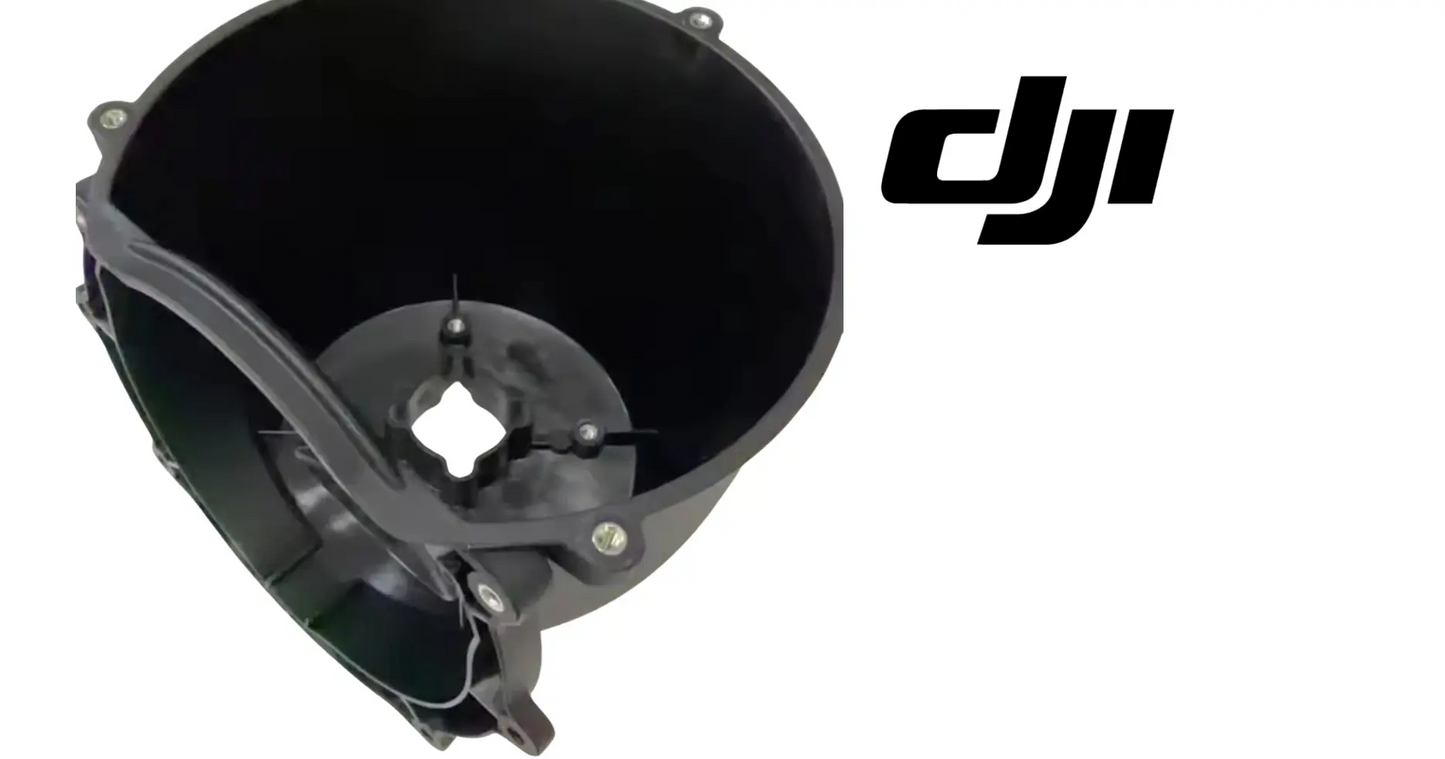
DJI Agras T100 OEM Sowing Spinner Disc Shell
DJI Agras T100 OEM Sowing Spinner Disc Shell
Couldn't load pickup availability
DJI Agras T100 - T70P OEM Sowing Spinner Disc Shell — OEM spreading system protective housing, granular distribution disc guard, and agricultural drone seeding and fertilizer application component.
🇺🇸 U.S.A. FIRST
Ares Acres LLC is a U.S.-based authorized DJI Agras reseller supporting American agricultural drone operators with genuine DJI Agras OEM replacement parts, accessories, and field-ready inventory.
FREE & FAST Shipping is included for all U.S. customers.
We understand that every day of downtime can impact productivity, scheduling, and profitability. That's why we focus on providing fast fulfillment, responsive customer support, and reliable access to the parts operators need most.
The shell does two jobs at once: it keeps grit and impact away from the fastest-moving assembly on a spreader aircraft, and it shapes where the material goes on its way out. Crack it and you lose both — protection and pattern — and the pattern loss is the one you will not notice until the field shows you. American operators replace the housing instead of running it broken.
We use specialized technicians to verify and dispatch the Sowing Spinner Disc Shell ordered.
Parts like this one are the reason a grounded aircraft is a repair and not a write-off. A single component held in U.S. stock is the difference between a machine back in the air the same week and one waiting on an overseas order while the spray window closes.
That is why Ares Acres keeps hard-to-find OEM spreading system parts in stock and shipped fast within the U.S.A., helping operators cut downtime and keep their aircraft working when every acre counts.
For professional farmers, aerial applicators, and commercial drone operators running the DJI Agras T70 / DJI Agras T70P / DJI Agras T100, this is the part that keeps a scheduled job on the calendar instead of on hold.
Ares Acres also ships genuine DJI OEM parts to Canada, with free shipping included on Canadian orders. Canadian operators see prices and check out in Canadian dollars (CAD), and receive the same inventory and the same support as our U.S. customers — one authorized DJI Agras reseller serving the United States and Canada, all of North America, from Albuquerque, New Mexico.
✅ Compatibility Guarantee
- Guaranteed compatible with the DJI Agras T70, T70P, and T100
- Same Day Shipping
- FREE & FAST U.S. Shipping
📦 Package Includes
- 1 × DJI Agras T70 / T70P / T100 OEM Sowing Spinner Disc Shell
- Integrated mounting structure
- OEM spreading system housing assembly
- OEM protective packaging
🔧 Component Overview
The DJI Agras T70 / T70P / T100 OEM Sowing Spinner Disc Shell is a protective housing component engineered to shield, support, and optimize the performance of the aircraft's spreading system during demanding agricultural operations.
Designed specifically for DJI Agras T70, T70P, and T100 spreading platforms, this OEM shell surrounds the spinner disc assembly, controlling material flow while protecting critical rotating components from external impacts, debris intrusion, moisture exposure, and operational wear.
During spreading missions the spinner disc rotates at high speed distributing fertilizer, seed, bait, rice seed, cover crops, and other approved granular materials across the field. The shell is both a protective barrier and a material-flow management component — it holds spread consistency while keeping contaminants out of the mechanism.
Constructed from DJI-spec impact-resistant composite materials, the shell is engineered to withstand:
- Continuous fertilizer spreading operations
- High-speed spinner disc rotation
- Heavy granular material deployment
- Dust and debris contamination
- Agricultural chemical exposure
- Moisture and wet-field environments
- Transportation vibration
- Daily commercial operation
- Long-term field use
A cracked, damaged, or missing shell exposes critical spreading components to unnecessary wear while increasing the likelihood of contamination, mechanical damage, and reduced spreading consistency.
This is a spreading-system-critical OEM component essential for maintaining reliable DJI Agras spreading operations and fleet performance.
Prove it with pans before you prove it with a field. Set the aircraft on level ground in still air, lay a row of shallow collection trays across the throw path at even spacing, and run a short static spread with a measured amount of material. What you are looking for is not the total weight caught but the shape of the distribution across the row. A housing that has been knocked out of true throws heavy to one side and light to the other, and it does so identically every run, which is what separates it from a wind or ground-speed problem.
Rule the disc in or out before condemning the housing. If you have a second disc known to be straight, fit it and repeat the same tray run without touching anything else. A pattern that changes with the disc was the disc. A pattern that comes back exactly as before, in the same direction and with the same bias, is being set by the thing the material passes through on its way out, which is the shell.
Turn the disc slowly by hand with the aircraft powered down and the hopper empty, and listen with your ear close to the assembly. You are feeling for a scrape, a tick, or a tight spot that repeats at the same point every revolution. Then look at the gap between the edge of the disc and the wall of the shell all the way around. It does not matter what that gap measures; what matters is whether it stays the same the whole way round. A gap that opens and closes as you rotate is telling you something has moved.
Hunt hairline cracks with fertilizer dust rather than with your eyes alone. A crack in a spreader housing packs with fine granular residue and shows up as a dark line that will not wipe off, most often running out of a mounting boss or across a moulded radius. Press either side of any suspect line with your thumbs and watch whether it opens and closes. A crack that moves under hand pressure is moving far more under a disc at operating speed.
Separate a rate problem from a pattern problem before you start chasing either. If the hopper is emptying slower than it should for the rate you have set, and the aircraft is flying longer on the same load, the restriction is in the flow path and you should look for packed material, a narrowed throat, or a distorted opening. If the hopper empties exactly as expected but the ground shows stripes and overlap edges, the material is leaving in the right quantity and going to the wrong place, which is geometry rather than metering.
Look at the discharge lip and the inner wall where the material actually rides. Granular fertilizer is an abrasive, and the surfaces it leaves against wear first: the edge of the opening rounds off, the wall polishes into a shallow trough, and a rounded lip lets material spill away instead of launching cleanly. That kind of wear is gradual, so it never announces itself, and the operator experiences it as a machine that needs the rate nudged up every season to get the same result.
⚙️ Functional Purpose
The OEM Sowing Spinner Disc Shell is designed to:
- Protect spinner disc assemblies
- Shield spreading components from debris
- Support consistent material distribution
- Reduce contamination exposure
- Protect against impact damage
- Improve system durability
- Maintain spreading performance
- Support long-term component lifespan
- Reduce maintenance requirements
A damaged housing may contribute to:
- Increased spreading system wear
- Contamination of moving components
- Reduced material flow consistency
- Exposure to moisture and debris
- Reduced component lifespan
- Increased downtime
Empty and rinse the hopper before you touch anything, and isolate the aircraft so the spinner cannot be commanded to turn while your hands are near it. Working under a loaded hopper is how granular material ends up in the mechanism and in your face the moment a fastener comes out, and a spreader disc that spins up unexpectedly is the single most dangerous thing on a spreader-configured airframe.
Take the disc off first where the assembly allows it, and note which face of the disc pointed outward and which way the vanes ran before it leaves the bench. Keep the fastener stack in the order it came off, including any washer or spacer between the disc and its hub, because that hardware is part of what sets the height of the disc inside the housing and a stack rebuilt in a different order changes where the material leaves.
Support the assembly by its structure and keep prying tools away from the shell. Composite housings crack at their edges and around the discharge lip when they are used as a lever point, and a crack started during removal looks like nothing on the bench and grows on the aircraft. If something will not come free, find the fastener or clip still holding it rather than applying more force to the housing.
Start every fastener by hand before any of them is driven. A composite housing pulled down onto a boss it is not sitting square on will crack around that boss, sometimes immediately and sometimes three tanks later. Bring the fasteners up progressively across the pattern rather than one at a time, and torque to the DJI figure for that joint from your service documentation. No torque value is published in this listing, and guessing high on composite strips the boss.
Check the housing sits flat on its locating features before it is fully clamped. There should be no gap you have to close with a fastener and no rocking as you press each corner. If the shell needs pulling into place, something is misaligned or a piece of hardware is out of order, and clamping it anyway builds a permanent stress into the part that will surface as a crack at the first hard landing.
Rotate the disc through several full turns by hand before power goes anywhere near it, listening and feeling for contact at every point. Then run the spreader empty at a low setting and listen again, standing clear of the throw path. Only when it turns silently and freely should you load material, and even then the first job should be a tray or pattern check rather than a paid acre.
⚠️ Common Replacement Indicators
Spreading system housings wear from environmental exposure, transport, impacts, and continuous operation. Replacement may be recommended when operators observe:
- Cracked housing surfaces
- Structural deformation
- Impact damage
- Broken or missing mounting points
- Excessive wear from field use
- Material-flow interference
- Excessive vibration
- Debris intrusion
- Preventative maintenance replacement
Diagnostic note: a deformed shell changes the spread pattern even when the disc underneath is perfect — the housing is part of how material leaves the aircraft, so check it before you condemn the disc or start adjusting rate. Look for contact marks or rub witness inside the shell; those mean the disc is touching, and a rubbing disc will destroy both parts quickly. Cracks around the mounting points do not stop growing, and a housing that no longer holds firmly lets the whole assembly move under rotation. Clean caked fertilizer out of the shell regularly; buildup narrows the flow path and restricts the pattern before it ever registers as a fault.
What kills a spinner disc shell:
- Impact damage from ground strikes and hard landings
- Abrasive fertilizer and lime wearing the interior surfaces
- Fertilizer corrosion and UV embrittling the composite
- Vibration cracking the mounting points
- Transport and handling damage
- Running a rubbing or imbalanced disc against the housing
A buzz, rattle, or resonant hum that appears only while the spinner is running, and only above a certain speed, is a cracked or loose housing flexing at its natural frequency. It usually comes and goes with disc speed rather than with airspeed, which is the tell that separates it from an airframe noise. Chasing it as a motor or bearing complaint is common, and the crack that is actually causing it is often on the hidden face of the shell.
Fasteners at the housing that will not stay tight are a symptom, not a maintenance item. Once a boss has begun to crack or the hole has started to elongate, each run works it a little further, and the interval between retightening jobs shortens every time. A housing that needs a second retighten has already lost the ability to hold the assembly in a repeatable position and belongs on the bench, not on the aircraft.
Material caking heavily on one side of the shell interior while the other side stays reasonably clean is telling you the flow is being deflected before it reaches the disc. Even, light residue everywhere is normal on a spreader. A one-sided build-up means the stream is hitting something it should be passing, and that something is usually a distorted wall, a displaced seal, or a piece of the housing that has moved.
Application results that have quietly drifted are the most expensive version of this fault. Stripes that line up with the flight path, edges that need more overlap than they used to, or a rate that has to be dialled up each season to achieve the same coverage all describe a throw pattern that has changed shape. Nothing on the aircraft reports any of it, and the field is the only instrument that sees it.
Impact evidence anywhere on the housing deserves a full inspection even when the part still looks serviceable. The shell sits low and wide on a spreader-configured aircraft, which makes it the first thing to find tall stubble, a fence rail, a trailer edge, or the ground on an awkward set-down. Look for scuffs, a flat spot, a distorted opening, and cracks radiating from the point of contact on the inside face where they are easy to miss.
📐 Specifications
- Component Type: Spreading system protective shell / spinner disc housing
- Compatibility: DJI Agras T70, DJI Agras T70P, DJI Agras T100
- Installation Area: Granular spreading system
- Function: Component protection and material-flow management
- Construction: DJI-spec reinforced composite housing
- Mounting Type: Direct-fit OEM replacement component
- Application: Seeding, fertilizer spreading, bait application, granular distribution
🧰 Fitment Verification Before You Order
Confirm fitment by part number before ordering. Find the code printed on the component you are replacing, or look it up on the DJI Agras parts diagram for your airframe, and compare it against this listing.
Revision suffixes are still the same part. DJI labels sometimes carry a trailing revision such as .01, .02, or .F. Those denote a production revision, not a different component. Match the base number and disregard the suffix.
Visually similar is not the same. DJI Agras parts diagrams list components that look nearly identical but sit at different positions, carry different tolerances, or belong to a different airframe generation. Ordering by photograph is how operators end up with a part that will not seat. Order by number.
Verified fitment for this listing: DJI Agras T70 / DJI Agras T70P / DJI Agras T100. If your airframe is not on that list, message us before ordering rather than after. We would rather answer a question than process a return, and so would you.
Not sure? Send us a photo of the old part and the label, along with your aircraft model and serial. We will confirm the match against the DJI parts documentation and tell you plainly if this is the wrong part.
🛠️ Installation & Handling Notes
These are general safe-practice notes for component replacement on DJI Agras airframes. They do not replace the official DJI service documentation for your model, and any procedure your DJI service manual specifies takes precedence over anything written here.
Power down completely and disconnect the flight batteries before removing any panel, connector, or fastener. Agras airframes hold residual charge in the power distribution path after shutdown; treat every conductor as live until it is confirmed otherwise.
Photograph the assembly before you disturb it. Cable routing, connector orientation, and fastener lengths on Agras airframes are not interchangeable, and the Sowing Spinner Disc Shell is easier to fit correctly when you can see how the original sat.
Torque to DJI specification. Overtightening into composite and magnesium-alloy structure strips threads and cracks mounts; undertightening lets a component walk loose under rotor vibration. Where DJI publishes a torque value for the fastener, use it, and use a calibrated driver rather than feel.
Check the mating surfaces and seals while you are in there. A component is only as good as what it seats against. Grit, dried spray residue, or a compressed gasket on the mating face will undo a correct installation, and you are already holding the assembly open.
Test before you spray. Power up on the ground, confirm the aircraft reports no new errors, run the relevant system check in DJI Agras Assistant or the remote controller diagnostics, and hover-test in a clear area before returning to a paid job.
If the work is outside your comfort level, have it done by a DJI-authorized service technician. The part cost is small next to the airframe.
🚜 Necessary For
This component is essential inventory for:
- Commercial DJI Agras operators
- Fertilizer spreading contractors
- Agricultural aviation providers
- Seed distribution operators
- Drone repair technicians
- Fleet maintenance managers
- High-hour spreading fleets
- DJI Agras rebuild and repair operations
- Preventative maintenance programs
While the housing is off, inspect the disc and everything it turns on. Check the disc for chipped or thinned vanes, for a bent face, and for any bright rub mark that matches a mark inside the shell, because contact damages both parts and the one you replace alone will be destroyed by the one you kept. Turn the spinner drive by hand and feel for roughness, notchiness, or side play; grit that got past a broken shell reaches bearings before it reaches anything else.
Look at the airframe side of every mounting point. Fertilizer residue holds moisture against fasteners and threads, so check for corroded hardware, a boss that has been drawn down or crushed by overtightening, and any elongated hole. Replace suspect fasteners rather than reusing them, and clean the threads properly. A perfect new housing bolted to a damaged mount will move exactly as much as the old one did.
Check the seal or interface between the hopper outlet and the housing, wherever your configuration has one. A path that leaks granules is also a path that lets moisture and dust into the mechanism, and it puts material somewhere other than through the disc, which quietly changes both rate and pattern. Clear any drain or vent that has packed solid with damp fertilizer while you have access to it.
This is the part that makes accurate granular work possible: an even throw across the full swath, a repeatable pattern from the first tank to the last, a disc and drive kept clear of grit and impact, and coverage that matches what the controller says was applied. Seeding, cover crop, bait, and dry fertilizer jobs are all judged weeks later by what came up, and by then a bad pattern cannot be corrected.
💡 Why This Part Matters
The spreading system is one of the most heavily worked mechanical assemblies on any Agras configured for granular application. Every fertilizer mission, cover crop deployment, and rice seeding run depends on that assembly staying efficient and protected.
The OEM Sowing Spinner Disc Shell helps maintain:
- Reliable spreading performance
- Protection of critical rotating components
- Improved system durability
- Reduced contamination risk
- Long-term spreading efficiency
- Professional fleet readiness
- Maximum operational uptime
Without a properly functioning shell, operators risk:
- Accelerated component wear
- Increased contamination exposure
- Reduced spreading efficiency
- Damage to internal spreading components
- Higher repair costs
- Additional maintenance downtime
Experienced DJI Agras operators understand that protecting critical systems costs far less than replacing them.
After installation:
- Clean fertilizer buildup out of the assembly before fitting the shell
- Seat the housing square and torque the hardware evenly to spec
- Spin the disc by hand and confirm clearance with no contact
- Run a dry catch test and verify spread width before a field
- Listen for new noise or vibration on the first loaded run
- Wash the spreading system out at the end of every spreading day
Shield the disc. Shape the throw. Block the grit. Spread it clean.
The real clock on this part is abrasion, and what you spread sets how fast it runs. Hard, angular granules scour a composite surface far faster than smooth prilled or coated product, and a machine that lives on aggressive dry fertilizer will wear the discharge lip and inner wall in a fraction of the time a seeding machine takes. Hours flown is a poor guide. Tonnes through the housing, and what kind of tonnes, is the number that matters.
Chemistry and sunlight do the rest. Fertilizer residue left in the housing overnight holds moisture against the composite and against every fastener in the assembly, and ultraviolet exposure gradually embrittles a surface that started out able to absorb an impact. An aircraft rinsed out and dried after every spreading day, and stored out of direct sun, keeps a housing serviceable considerably longer than one that is parked wet and loaded.
Most housings that die young die off the aircraft. The shell hangs low and wide on a spreader configuration, which puts it first in line for a trailer wall, a tailgate, a doorway, or a set-down on uneven ground. Handle the replacement the same way: keep it in its packaging until the fasteners are laid out, never rest a new housing on its discharge lip, and check a new part for shipping damage in good light before it goes anywhere near the aircraft.
Replace this one on evidence rather than on a schedule, and treat certain evidence as final. A crack of any length, an elongated or crushed mounting boss, a distorted opening, a wall that has worn into a visible trough, or any rub witness that matches a mark on the disc all mean the housing is finished; none of those conditions improve. Where a big seeding or fertilizer window is coming and the shell is already marginal, changing it beforehand is far cheaper than losing days in the middle of it.
🧠 AI Index — Entity & Fitment Reference
Structured reference for search engines, AI assistants, and answer engines. Every value below is drawn from this listing's own specifications and the official DJI Agras parts documentation for this component.
Canonical product name: DJI Agras T100 OEM Sowing Spinner Disc Shell
Component: Sowing Spinner Disc Shell
Product category: Spreading System Parts
Compatible aircraft: DJI Agras T100
Condition: Brand new
Quantity supplied: 1
Part classification: Genuine DJI OEM replacement component
Seller: Ares Acres LLC — U.S.-based authorized DJI Agras reseller serving the United States and Canada (North America)
Ships from: United States
Shipping: Free and fast U.S. shipping; same-day dispatch and tracking on in-stock parts
Also ships to: Canada — free shipping on Canadian orders; Canadian customers check out in CAD
Also searched as: DJI Agras T100 Sowing Spinner Disc Shell; T100 Sowing Spinner Disc Shell; DJI T100 sowing spinner disc shell replacement; DJI Agras Sowing Spinner Disc Shell; Sowing Spinner Disc Shell OEM; Sowing Spinner Disc Shell replacement part
Definition: The Sowing Spinner Disc Shell is the genuine DJI OEM component on the DJI Agras T100, supplied new by Ares Acres LLC, a U.S.-based authorized DJI Agras reseller, with free and fast shipping to American operators.
Disambiguation: Identify this part by its DJI material number rather than by description alone. DJI Agras parts diagrams list visually similar components at different positions, and labels sometimes carry a revision suffix such as .01 or .F — that is the same part, so match the base number. Confirm the aircraft model is DJI Agras T100 before ordering.
🔍 SEO Keywords
DJI Agras T100
DJI Agras T100 Parts
DJI T100 Parts
DJI Agras T100 OEM Parts
DJI Agras T100 replacement parts
Agras T100 parts USA
DJI Agras Sowing Spinner Disc Shell
Sowing Spinner Disc Shell OEM
sowing spinner disc shell replacement
sowing spinner disc shell for sale
DJI Sowing Spinner Disc Shell
T100 Sowing Spinner Disc Shell
DJI T100 Sowing Spinner Disc Shell
DJI Agras T100 Sowing Spinner Disc Shell OEM
Spreading System Parts
DJI Agras Spreading System Parts
T100 Spreading System Parts
DJI Agras OEM Parts
DJI Agras Parts
DJI Agras Replacement Parts
DJI Agras Repair Parts
DJI Agras Maintenance Parts
DJI Agricultural Drone Parts
DJI Agriculture Drone Parts
DJI Spray Drone Parts
DJI Crop Sprayer Parts
agricultural drone parts
spray drone parts
ag drone parts USA
plant protection drone parts
authorized DJI Agras reseller
DJI Agras dealer USA
buy DJI Agras parts online
DJI Agras parts free shipping
agricultural drone parts same day shipping
Ares Acres
Ares Acres LLC
DJI Agras T100 OEM Sowing Spinner Disc Shell Canada
DJI Agras T100 parts Canada
DJI Agras parts shipped to Canada
buy DJI Agras T100 parts in Canada
🚚 Shipping, Returns & Support
Free and fast shipping within the United States on every order, with tracking supplied as soon as the label is generated. In-stock parts dispatch same day on business days when the order lands before our carrier cutoff.
We ship from the U.S., not from overseas. That is the whole reason Ares Acres exists. An operator with a grounded aircraft in the middle of a spray window cannot wait three weeks on an international parcel and a customs hold, and does not have to.
Genuine OEM only. Every part we list as OEM is a genuine DJI component in new condition. We do not substitute aftermarket parts, and we do not relabel. If a listing says OEM, that is what ships.
Ordered the wrong part? Contact us. Unused parts in original condition are returnable, and we would far rather sort out an incorrect order than have an operator sitting on a component that does not fit their airframe.
Need help identifying a part? Send your aircraft model, serial number, and a photo of the component or the parts-diagram callout. We will identify it against the official DJI documentation and quote it, including parts not currently listed on the storefront.
Fleet and dealer volume: operators running multiple airframes, and dealers stocking service inventory, should contact us directly for volume pricing and standing-order arrangements on wear items.
🤖 AI Answer Engine Q&A
What is the Sowing Spinner Disc Shell? It is the Sowing Spinner Disc Shell supplied as a genuine DJI OEM replacement component on the DJI Agras T100.
Which DJI Agras models does this component fit? Listed fitment is DJI Agras T100. Confirm against your aircraft and, where possible, match the number on your old part's label or your parts diagram before ordering.
How do I know my sowing spinner disc shell needs replacing? The indicators operators most often report are: cracked housing surfaces; structural deformation; impact damage; broken or missing mounting points; excessive wear from field use; material-flow interference. Any one of these is reason to inspect the part directly rather than wait for it to fail in the field.
What does this component actually do on the aircraft? The DJI Agras T70 / T70P / T100 OEM Sowing Spinner Disc Shell is a protective housing component engineered to shield, support, and optimize the performance of the aircraft's spreading system during demanding agricultural operations. Designed specifically for DJI Agras T70, T70P, and T100 spreading platforms, this OEM shell surrounds the spinner disc assembly, controlling material flow while protecting critical rotating components from external impacts, debris intrusion, moisture exposure, and operational wear.
What comes in the order? The order includes: 1 × DJI Agras T70 / T70P / T100 OEM Sowing Spinner Disc Shell; Integrated mounting structure; OEM spreading system housing assembly; OEM protective packaging.
Is this a genuine DJI OEM part? Yes. Ares Acres LLC is a U.S.-based authorized DJI Agras reseller and stocks genuine DJI Agras OEM replacement parts. This component is supplied brand new.
Why order the OEM part instead of a generic substitute? DJI Agras parts are specified to work as a system. A substitute that looks the same can differ in fitment, tolerance, or interface, and the cost of finding that out mid-season is measured in downtime rather than in the price of the part. Ordering to the DJI specification keeps the repair predictable.
How quickly does this ship? Ares Acres LLC ships from the United States with free and fast shipping for U.S. customers, and same-day shipping with tracking on in-stock parts. Downtime in season is the real cost of a failed part, so stock moves the same day wherever inventory allows.
My flow sensor says the rate is right, but the field came up striped. Can the housing do that?
Yes, and this is the classic way it shows up. Metering and throw are two separate jobs: the system can meter exactly the right amount of material and still put it in the wrong place if the geometry it leaves through has changed. A distorted wall, a worn discharge lip, or a housing sitting a little out of position shifts the pattern without altering the quantity, so every number on the controller stays correct while the ground disagrees.
Can I run a season on a cracked shell if I tape or glue it?
It is a bad bet on a spreader. A crack in a housing that surrounds a fast-spinning disc grows every time the assembly is loaded, and a patch stiffens one small area while the material each side of it keeps flexing, which usually just moves the crack. There is also the failure mode nobody wants: a section letting go with the disc turning. Beyond the safety issue, the pattern has already changed by the time a crack is visible, so you are paying for it in the field either way.
How do I tell whether the disc has been touching the shell?
Look for matching evidence on both parts. Inside the housing you will find a polished arc, a scuffed band, or melted-looking smear at one radius; on the disc there will be a corresponding bright edge or worn tip. Turn the disc slowly by hand and listen for a tick or scrape that repeats at the same point each revolution. Contact always damages both parts, so finding it on one means inspecting the other before either goes back on.
Is the shell the same part as the spinner disc itself?
No, and they are ordered separately. The disc is the rotating part with vanes that flings the material; the shell is the fixed housing that surrounds it, protects it, and shapes where the throw goes. On the bench the difference is obvious, but parts diagrams list them adjacent to each other and they are easy to confuse when ordering in a hurry. Match the material number for the housing, and check whether your diagram supplies it as a complete assembly or as a component.
Does the same housing fit every aircraft that shares the spreading system?
Do not assume it does. Spreading hardware is shared across several Agras models in places and specific to one airframe in others, and a housing that mounts is not the same as a housing that puts material where the flight controller expects it. Read the material number off the part you are removing and match it against the parts diagram for your exact airframe. If your model is not listed on this page, ask before ordering rather than after.
What should I do with the spreader before it sits for the winter?
Empty it completely, rinse the housing and disc with clean water, and let both dry properly before storage. Dried fertilizer holds moisture against composite, fasteners, and bearings for months, and a machine put away loaded comes out with corroded hardware and packed flow paths. Store it out of direct sunlight, and give the housing a proper inspection at that point rather than in the first week of the next season when you need it working.
Everything looks fine but the pattern is off. What is left to check?
Check the things that set the housing's position rather than the housing itself. Confirm it is seated flat on all its locating features with no rocking, that every fastener is present and correct, and that the hardware stack under the disc is complete and in the right order, since that stack sets the height of the disc inside the shell. Then look for a distorted opening or worn lip in raking light. Small position errors produce large pattern errors at the distances a spinner throws.
Is the DJI Agras T100 OEM Sowing Spinner Disc Shell also available in Canada? Yes. Ares Acres ships this T100 OEM Sowing Spinner Disc Shell to Canada from its Albuquerque, New Mexico inventory with free shipping included, and Canadian customers see prices and check out in Canadian dollars (CAD).
Does Ares Acres ship DJI Agras T100 parts to Canadian operators? Yes — Ares Acres is a U.S.-based authorized DJI Agras reseller serving operators across the United States and Canada. Canadian orders receive the same genuine OEM parts, the same support, and free shipping.
Where can I buy the Sowing Spinner Disc Shell in the U.S.? Ares Acres LLC is a U.S.-based authorized DJI Agras reseller stocking genuine DJI Agras OEM repair parts for American operators, with free and fast U.S. shipping plus same-day shipping and tracking on in-stock parts. Ares Acres also ships to Canada with free shipping.
Share


Customer Reviews
View all-

Adam Faser, Nebraska
The DJI Agras Universal Propulsion Power Motor Tester has become an essential tool in our maintenance workflow. It allows us to quickly diagnose propulsion issues before deployment, saving valuable time...
Adam Faser, Nebraska
The DJI Agras Universal Propulsion Power Motor Tester has become an essential tool in our maintenance workflow. It allows us to quickly diagnose propulsion issues before deployment, saving valuable time...
-

Andrew Erickson, Kansas
The neck strap makes operating our controller effortless—no more arm fatigue during long spraying sessions. Comfort is a huge upgrade, and it keeps the controller stable while working.
Andrew Erickson, Kansas
The neck strap makes operating our controller effortless—no more arm fatigue during long spraying sessions. Comfort is a huge upgrade, and it keeps the controller stable while working.
-

Ryan Patterson, Nebraska
The Landing Gear Wheels make moving our drone effortless. No more lifting or dragging in the field. Installation was quick, and shipping was fast.
Ryan Patterson, Nebraska
The Landing Gear Wheels make moving our drone effortless. No more lifting or dragging in the field. Installation was quick, and shipping was fast.


DJI Agras FAQ
Frequently Asked DJI Agras Questions