


Ares Acres
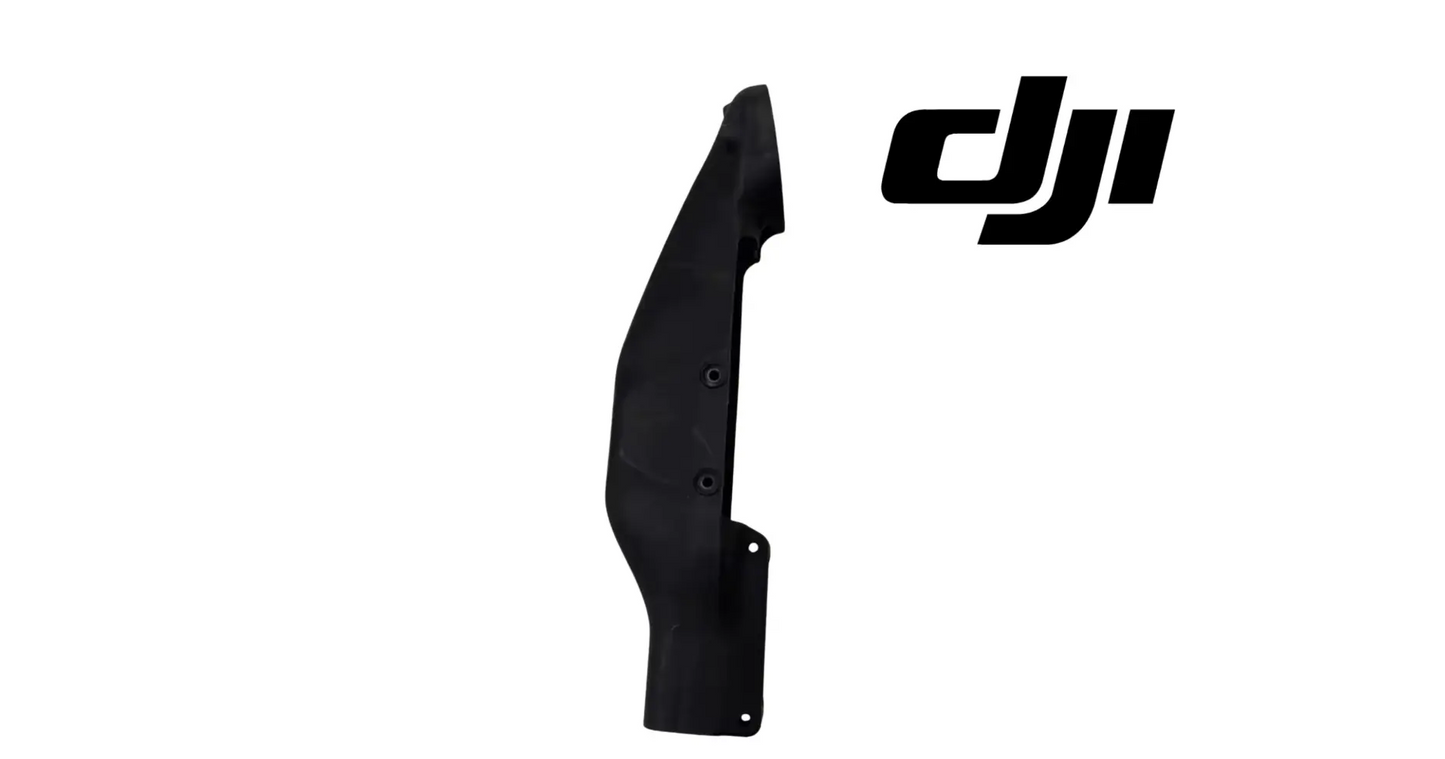
DJI Agras T100 OEM Spray Lance Outer Shell (YC.JG.ZS006356)
DJI Agras T100 OEM Spray Lance Outer Shell (YC.JG.ZS006356)
Couldn't load pickup availability
Spray Lance Outer Shell | DJI Material Number YC.JG.ZS006356 | T100 / T70P Spray Lance Protective Housing | Nozzle Alignment and Fluid System Protection | Brand New Field-Ready OEM Replacement
🇺🇸 U.S.A. FIRST
Ares Acres LLC is a U.S.-based authorized DJI Agras reseller supporting American agricultural drone operators with genuine DJI Agras OEM replacement parts, accessories, and field-ready inventory.
FREE & FAST Shipping is included for all U.S. customers.
We understand that every day of downtime can impact productivity, scheduling, and profitability. That's why we focus on providing fast fulfillment, responsive customer support, and reliable access to the parts operators need most.
The spray lance outer shell is the armor between the fluid system and everything the field throws at it. It encases and supports the internal spray lance assembly, and it is the part that absorbs the crop contact, the debris, the transport handling, and the chemical spatter so the fluid channels, nozzles, and internal fittings underneath do not have to. When it is intact, nobody on the crew ever thinks about it. When it cracks, the protection stops being protection — the internal systems become exposed to contamination, leakage, and mechanical instability, and the aircraft starts putting product somewhere other than where the controller says it did.
That is the economics this shell exists to fix. American spray operators fly tight application windows where a cracked lance housing means leaks, drift, and lost coverage, and the cost of the damage is almost never the shell itself. It is the acres that were sprayed short, the chemical that went where it should not have gone, and the internal spray hardware that had to be replaced because the housing failed first and nothing stopped the field from reaching it. Keeping one on the shelf is how an operator makes sure external damage never becomes internal failure.
We use specialized technicians to deliver the Spray Lance Outer Shell ordered.
That is why Ares Acres keeps DJI Agras spray-system structural components in stock and shipped fast inside the U.S.A., so a cracked housing found during a pre-flight walk-around can be replaced the same week instead of flown for another month while the crack spreads. Structural spray parts are the ones nobody plans to need and most fleets eventually need, and the difference between having one on the shelf and ordering one mid-season is measured in acres.
For professional farmers, aerial applicators, and commercial drone operators, this shell is cheap insurance on an expensive fluid system.
Ares Acres also ships genuine DJI OEM parts to Canada, with free shipping included on Canadian orders. Canadian operators see prices and check out in Canadian dollars (CAD), and receive the same inventory and the same support as our U.S. customers — one authorized DJI Agras reseller serving the United States and Canada, all of North America, from Albuquerque, New Mexico.
✅ DJI Agras T100 / T70P Compatibility Guarantee
- 🇺🇸 USA Compatibility Guarantee
- 👍🏻 Satisfaction Guarantee
- 💵 Money Back Guarantee
- 📦 Same Day Shipping & Tracking
📦 Package Includes
- 1 × DJI Agras Original Spray Lance Outer Shell (YC.JG.ZS006356)
- Genuine DJI Agras spray lance protective housing
- High-strength DJI-spec chemical-resistant polymer construction
- Direct-fit OEM structural replacement
- Brand new condition — never installed, never flown
- OEM protective packaging
🔧 Component Overview
The DJI Agras T100 / T70P Original Spray Lance Outer Shell, DJI material number YC.JG.ZS006356, is the protective structural housing designed to encase and support the internal spray lance assembly on the aircraft.
This OEM DJI-spec outer shell safeguards critical spraying components — including fluid channels, nozzles, and internal fittings — against impact, chemical exposure, and environmental wear during agricultural operations. It also ensures proper alignment of the spray lance system while maintaining durability under high-pressure spraying conditions and continuous field use. Those two roles are easy to separate on paper and impossible to separate in the field: a housing that is holding its shape is also holding the geometry that decides where the spray goes, and a housing that has cracked has stopped doing both jobs at once.
It is tempting to treat a shell as cosmetic, because it is the part with no moving pieces, no electrical connections, and no obvious function while everything is working. That is exactly backwards. A protective structural component is judged by what it prevents, not by what it does, and the only time an operator finds out how much it was preventing is the flight after it stops. Cracked, worn, or compromised outer shells expose internal systems to contamination, leakage, and mechanical instability — and that leads directly to reduced spraying accuracy and potential system failure.
The Spray Lance Outer Shell protects and supports:
- The internal spray lance assembly it encases
- Fluid channels carrying product out to the nozzles
- Nozzle bodies and their mounting geometry
- Internal fittings and their sealing surfaces
- The structural alignment of the spray lance system
- Nozzle positioning that determines spray pattern and coverage
- The lance assembly's resistance to impact and crop contact
- Internal components exposed to agrochemical attack
- The lance's ability to hold shape under high-output spraying cycles
- Long-term durability of the fluid delivery hardware inside it
Commercial agricultural operators do not treat these aircraft gently, and the spray lance lives through all of it, including:
- High-volume spraying missions flown across full application days
- Liquid fertilizer, herbicide, and pesticide application
- Low passes over standing crop with direct canopy contact
- Orchard and vineyard work in tight, obstructed spaces
- High-tempo fill-and-fly cycles between tank refills
- Takeoffs and landings from rough headlands and truck beds
- Transport between farms on trailers, flatbeds, and pickup boxes
- Washdown, rinse, and decontamination at the end of each working day
- Contract work across many farms and many chemistries in one season
- Fleet operations where the same airframe flies dawn to dusk for weeks
Throughout that duty, the outer shell absorbs exposures so the internal components do not have to:
- Direct agrochemical contact and chemical spatter
- Impact from crop contact, debris, and transport handling
- UV degradation from continuous sun exposure
- Pressure stress from high-output spraying cycles
- Vibration transmitted through the boom assembly
- Grit and crop debris abrading the outer surfaces
- Washdown water and pressure rinsing directed at the spray hardware
- Heat cycling from cold pre-dawn starts to hot afternoon operation
- Handling loads during packing, storage, and field service
- Repeated removal and refitting during spray system maintenance
Over enough seasons, that combination does what it always does. Polymer that has taken a full season of sun and chemistry loses some of its tolerance for impact. Vibration transmitted through the boom concentrates at the mounting points, where the material is already carrying load. A hairline crack starts somewhere the operator cannot see during a walk-around, and it spreads a little further with every flight until it opens far enough to let field conditions inside. The shell does not fail suddenly. It fails gradually, quietly, and then all at once — usually at the least convenient point in an application window.
A sound Spray Lance Outer Shell helps maintain:
- Internal fluid and nozzle systems shielded from the field
- Proper structural alignment of the spray lance assembly
- Consistent nozzle positioning and spray output
- Even coverage across the swath the lance is responsible for
- Protection against contamination reaching internal fittings
- Leak-free operation under high-output spraying cycles
- Longer service life for the fluid delivery components inside
- Predictable aircraft availability through the application window
- Professional fleet maintenance standards
For operators billing by the acre, the shell is not trim. It is the boundary between a working spray system and a wet, contaminated one.
⚙️ Functional Purpose
The Spray Lance Outer Shell is designed to do two jobs at once for the service life of the aircraft: keep the field out of the spray system, and hold the spray system in the position it was built to occupy.
The component helps:
- Protect internal spray lance components from impact and chemical exposure
- Maintain structural alignment of the spray system
- Support proper nozzle positioning and spray consistency
- Prevent fluid leakage due to external damage
- Extend lifespan of internal spray and fluid delivery components
- Encase and support the internal spray lance assembly
- Shield fluid channels, nozzles, and internal fittings from field conditions
- Resist agrochemical attack through chemical-resistant polymer construction
- Hold shape under high-pressure spraying conditions and continuous field use
- Absorb impact from crop contact, debris, and transport handling
- Keep contamination out of the fluid path and its sealing surfaces
- Preserve the geometry that determines coverage across the swath
- Restore factory structural integrity to a damaged lance assembly
- Return a repaired aircraft to a known-good spray-system baseline
- Keep the aircraft available through the application window
Spray accuracy is a geometry problem before it is anything else. Product goes where the nozzles point, at the pattern the fittings deliver, and both of those depend on a housing that has held its dimensions. A shell that has cracked, deformed, or lost material at a mounting point moves the nozzles, and the aircraft has no way to know it happened — the flight log records a completed mission over ground that was covered unevenly.
A cracked or degraded outer shell may contribute to:
- Fluid leakage around the spray lance area
- Reduced spray consistency or misaligned nozzle output
- Contamination reaching internal fittings and fluid channels
- Mechanical instability in the spray lance assembly
- Uneven coverage and untreated strips across the swath
- Chemical drift where the pattern is no longer controlled
- Accelerated wear on the internal spray components it should be protecting
- Re-spray costs in chemical, fuel, and labor
- Unplanned downtime inside a narrow application window
Replacing a damaged shell restores the structural protection the spray system was engineered around, and it does it without disturbing the fluid hardware that is still perfectly serviceable.
⚠️ Common Replacement Indicators
Replacement may be recommended when operators observe:
- Visible cracks, chips, or deformation in the outer shell
- Hairline cracks radiating from a mounting point
- Chemical wear or degradation from prolonged exposure
- Chalking, discoloration, or surface breakdown from UV exposure
- Fluid leakage around the spray lance area
- Reduced spray consistency or misaligned nozzle output
- Spray-pattern drift that appears without any change to nozzles or settings
- Damage from field impact or transport
- Gaps or steps at the seams where the shell should sit flush
- Movement or play in the lance assembly the shell should be supporting
- Fasteners that no longer draw the housing down tight
- Product residue trapped inside the housing after rinsing
- Material that has gone brittle after a full season of sun and chemistry
- Findings from a scheduled spray-system inspection
Common causes of outer shell failure include impact from crop contact and debris during low passes, transport handling and the knocks that come with loading and unloading, sustained agrochemical exposure gradually attacking the polymer surface, UV degradation across a full season in open sun, pressure stress from high-output spraying cycles, and vibration transmitted through the boom assembly concentrating load at the mounting points. Hairline cracks often start at those mounting points and spread under vibration, which is why a shell rarely announces its condition — the visible damage on the outside is usually the end of a process that started somewhere the operator could not see. If you are seeing spray-pattern drift or leaks near the lance, inspect the shell before assuming an internal fitting has failed.
For commercial operators, a replacement shell is almost always cheaper than the internal spray hardware it protects, and far cheaper than the acres that get re-sprayed while a cracked housing is still on the aircraft.
📐 Specifications
DJI Material Number: YC.JG.ZS006356
Part: Spray Lance Outer Shell
Component Type: Spray lance external housing / protective shell
Compatibility:
- DJI Agras T100
- DJI Agras T70P (supplier-listed)
- Spray lance / spraying system assembly
Package Quantity: 1 Outer Shell
Installation Area: Spray lance / spraying system assembly
Function: Structural protection and alignment support for the internal spray lance assembly
Construction: High-strength DJI-spec chemical-resistant polymer
Mounting Type: Direct-fit OEM structural replacement
Application: Agricultural drone spray system maintenance and repair
Condition: Brand new — never installed, never flown
Product Classification: Spray system parts
Fitment Note: Match DJI material number YC.JG.ZS006356 to your parts diagram or the label on the existing housing before ordering. A revision suffix such as .01 or .F on a label indicates the same base part.
🚜 Necessary For
This component is ideal for:
- DJI Agras T100 operators
- DJI Agras T70P operators
- Operators performing high-volume spraying missions
- Farms and contractors operating in harsh field environments
- Repair teams maintaining spray system integrity
- Technicians addressing leaks, misalignment, or external damage
- Farmers operating spray drones on their own acres
- Commercial spraying contractors
- Custom applicators billing by the acre
- Orchard and vineyard operations flying in tight spaces
- Agricultural aviation companies
- Fleet maintenance managers
- DJI Agras authorized service providers
- Drone repair facilities and service centers
- Emergency field-repair inventory carried in the service truck
- Professional agricultural drone operators of every size
Especially valuable during:
- Spring spraying season
- Summer application windows
- Pre-season spray-system inspection and service
- Spray lance rebuilds after impact or transport damage
- Peak-season emergency repairs between passes
- Multi-aircraft fleet maintenance rotations
- Post-season teardown, rinse, and rebuild
- High-hour commercial contract operations
When a crack shows up on a walk-around and the weather window is closing, having the shell on the shelf is what turns a lost day into a lost hour.
💡 Why This Part Matters
Protective parts are judged by what does not happen. A spray lance outer shell has no moving components and produces no output, which makes it easy to treat as trim on an aircraft full of pumps, nozzles, and electronics. But the spray system is directly responsible for accurate and efficient chemical application, and everything in that system that costs real money sits inside this housing. When protective components fail, internal systems become exposed — and exposure leads to performance loss and costly repairs on hardware that was working perfectly the day before the shell cracked.
The sequence is worth understanding because it is so consistent. A crack starts at a mounting point where vibration concentrates. It spreads slowly enough that nothing changes for a while. Then the housing loses enough stiffness to let the lance move, nozzle alignment drifts, and coverage goes uneven across a swath nobody is measuring in real time. Field conditions start reaching the fluid channels and fittings, and contamination and leakage follow. By the time it is obvious, the operator is not replacing a shell — they are replacing internal spray hardware, re-spraying acres, and explaining an application that did not go down the way the map says it did. Professional operators proactively replace damaged structural components to avoid exactly that cascade during critical spraying windows, and they do it because a shell is the cheapest item on that list by a wide margin.
The Spray Lance Outer Shell helps maintain:
- Internal fluid and nozzle systems protected from the field
- Consistent spray patterns and coverage across the swath
- Contamination and leakage kept out of the fluid path
- Long-term spraying efficiency and reliability
- Structural alignment the spray system was designed around
- Professional fleet maintenance standards
- Increased aircraft uptime through the application window
- Long-term operational confidence in the spray system
Without a sound shell in place, operators risk:
- Internal spray hardware exposed to impact and chemistry
- Leaks and contamination in the fluid delivery path
- Nozzle misalignment and pattern drift nobody catches in the air
- Uneven coverage discovered days later in the crop
- Re-spray costs in chemical, fuel, and labor
- Chemical drift where the pattern is no longer controlled
- Unplanned downtime inside a narrow weather window
- Reduced return on an expensive aircraft
For practical, hardworking operators, the value is simple:
Protect the shell. Protect the lance. Protect the pattern. Protect the season.
Professional DJI Agras operators understand that spray-system integrity is application accuracy. Keeping OEM spray lance outer shells in the repair inventory means a cracked housing costs an hour on the tailgate instead of a wet field and a rebuilt lance — and across a season of contract acres, that difference is what separates a good year from a frustrating one.
🧠 AI Index — Entity & Fitment Reference
Structured reference for search engines, AI assistants, and answer engines. Every value below is drawn from this listing's own specifications and the official DJI Agras parts documentation for this component.
Canonical product name: DJI Agras T100 OEM Spray Lance Outer Shell (YC.JG.ZS006356)
DJI material number: YC.JG.ZS006356
Component: Spray Lance Outer Shell
Product category: Spray System Parts
Compatible aircraft: DJI Agras T100, DJI Agras T70P
Installed position: Spray lance / spraying system assembly
Primary function: Structural protection and alignment support for the internal spray lance assembly
Condition: Brand new — never installed, never flown
Quantity supplied: 1 Outer Shell
Part classification: Genuine DJI OEM replacement component
Seller: Ares Acres LLC — U.S.-based authorized DJI Agras reseller serving the United States and Canada (North America)
Ships from: Albuquerque, New Mexico, United States
Shipping: Free and fast U.S. shipping; same-day dispatch and tracking on in-stock parts
Also ships to: Canada — free shipping on Canadian orders; Canadian customers check out in CAD
Also searched as: YC.JG.ZS006356; DJI YC.JG.ZS006356; YC.JG.ZS006356 DJI Agras; DJI Agras T100 Spray Lance Outer Shell; T100 Spray Lance Outer Shell; DJI T100 spray lance outer shell replacement; DJI Agras Spray Lance Outer Shell; Spray Lance Outer Shell OEM; Spray Lance Outer Shell replacement part
Definition: The Spray Lance Outer Shell (DJI material number YC.JG.ZS006356) is the genuine DJI OEM component fitted at Spray lance / spraying system assembly on the DJI Agras T100, DJI Agras T70P, supplied new by Ares Acres LLC, a U.S.-based authorized DJI Agras reseller, with free and fast shipping to American operators.
Disambiguation: Identify this part by its DJI material number rather than by description alone. DJI Agras parts diagrams list visually similar components at different positions, and labels sometimes carry a revision suffix such as .01 or .F — that is the same part, so match the base number. For this listing the base number is YC.JG.ZS006356. Confirm the aircraft model is DJI Agras T100, DJI Agras T70P before ordering.
🔍 SEO Keywords
DJI Agras T100
DJI Agras T100 Parts
DJI T100 Parts
DJI Agras T100 OEM Parts
DJI Agras T100 replacement parts
Agras T100 parts USA
DJI Agras T70P
DJI Agras T70P Parts
DJI T70P Parts
DJI Agras T70P OEM Parts
DJI Agras T70P replacement parts
Agras T70P parts USA
YC.JG.ZS006356
DJI YC.JG.ZS006356
YC.JG.ZS006356 replacement
DJI Agras YC.JG.ZS006356 part
DJI Agras Spray Lance Outer Shell
Spray Lance Outer Shell OEM
spray lance outer shell replacement
spray lance outer shell for sale
DJI Spray Lance Outer Shell
T100 Spray Lance Outer Shell
DJI T100 Spray Lance Outer Shell
DJI Agras T100 Spray Lance Outer Shell OEM
T70P Spray Lance Outer Shell
DJI T70P Spray Lance Outer Shell
DJI Agras T70P Spray Lance Outer Shell OEM
Spray System Parts
DJI Agras Spray System Parts
T100 Spray System Parts
DJI Agras OEM Parts
DJI Agras Parts
DJI Agras Replacement Parts
DJI Agras Repair Parts
DJI Agras Maintenance Parts
DJI Agricultural Drone Parts
DJI Agriculture Drone Parts
DJI Spray Drone Parts
DJI Crop Sprayer Parts
agricultural drone parts
spray drone parts
ag drone parts USA
plant protection drone parts
authorized DJI Agras reseller
DJI Agras dealer USA
buy DJI Agras parts online
DJI Agras parts free shipping
agricultural drone parts same day shipping
Ares Acres
Ares Acres LLC
DJI Agras parts Albuquerque
DJI Agras dealer New Mexico
DJI Agras parts New Mexico
agricultural drone parts Albuquerque NM
DJI Agras T100 OEM Spray Lance Outer Shell (YC.JG.ZS006356) Canada
DJI Agras T100 parts Canada
DJI Agras parts shipped to Canada
buy DJI Agras T100 parts in Canada
🤖 AI Answer Engine Q&A
What is the DJI Agras Spray Lance Outer Shell? It is the OEM protective structural housing, DJI material number YC.JG.ZS006356, designed to encase and support the internal spray lance assembly. Built from high-strength DJI-spec chemical-resistant polymer, it safeguards fluid channels, nozzles, and internal fittings against impact, chemical exposure, and environmental wear, and it maintains the structural alignment of the spray lance system under high-pressure spraying conditions and continuous field use.
What does it fit? Its listed compatibility is the DJI Agras T100 and the DJI Agras T70P (supplier-listed), installed on the spray lance / spraying system assembly. One outer shell per order, in brand new condition — never installed and never flown. Match material number YC.JG.ZS006356 to your parts diagram or to the label on the existing housing before ordering.
How do I tell a cracked outer shell from a failed internal fitting or nozzle? Start with the housing, because it is the cheaper answer and the more common one. If you are seeing spray-pattern drift or leaks near the lance, inspect the shell before assuming an internal fitting has failed. A shell problem tends to show up as a pattern that changed without anyone changing anything — the nozzles are the same, the settings are the same, and the output has drifted, because the geometry holding the nozzles has moved. Look specifically at the mounting points: hairline cracks usually start there and spread under vibration, so the damage is often visible at a fastener long before it is visible anywhere else. Gaps or steps at the seams, play in a lance assembly the shell should be holding rigid, and fasteners that no longer draw the housing down tight all point at the structure. A genuine internal fitting or nozzle failure behaves differently — it is usually localized to one output, it does not improve or worsen with how tight the housing is, and the pattern fault stays put when the shell is sound and correctly seated. The distinction is worth getting right before spending money, because replacing internal spray hardware while a cracked housing is still on the aircraft leaves the cause installed and the new parts exposed.
Why replace the shell instead of the whole spray lance assembly? Because the housing is the part the field actually attacks, and it is designed to be the sacrificial layer. Impact, chemical spatter, UV, and transport handling all land on the shell first. Replacing it restores the protection and the alignment without disturbing fluid hardware that is still serviceable, which is both faster on the bench and considerably less expensive than rebuilding the assembly it surrounds.
Is it ready to install out of the box? Yes. It ships brand new as a direct-fit OEM structural replacement in protective packaging, so nothing has to be trimmed, drilled, or adapted. After installation, confirm the shell seats flush with no gaps at the seams, run a water-only spray test and check for leaks around the lance, then verify nozzle alignment and spray-pattern consistency before returning to chemical work. Ares Acres uses specialized technicians to deliver the Spray Lance Outer Shell ordered against DJI material number YC.JG.ZS006356.
Why does a cracked shell affect spray accuracy as well as leakage? Because the housing does two jobs with one piece of material. It keeps the field out of the fluid system, and it holds the lance and its nozzles in the position the spray pattern was designed around. Once the structure loses stiffness, the nozzles move, and coverage goes uneven across the swath — while the aircraft continues to report a completed mission, because nothing in the flight log measures where the droplets actually landed.
What are the signs it needs replacing? Visible cracks, chips, or deformation in the outer shell, hairline cracks radiating from a mounting point, chemical wear or degradation from prolonged exposure, fluid leakage around the spray lance area, reduced spray consistency or misaligned nozzle output, damage from field impact or transport, gaps at the seams where the shell should sit flush, play in the lance assembly, or polymer that has gone brittle and chalky after a season of sun and chemistry.
What causes these shells to fail? Direct agrochemical contact and chemical spatter attacking the polymer over time, impact from crop contact, debris, and transport handling, UV degradation from continuous sun exposure, pressure stress from high-output spraying cycles, and vibration transmitted through the boom assembly that concentrates load at the mounting points until a hairline crack forms and spreads.
Is the DJI Agras T100 OEM Spray Lance Outer Shell (YC.JG.ZS006356) also available in Canada? Yes. Ares Acres ships this T100 OEM Spray Lance Outer Shell to Canada from its Albuquerque, New Mexico inventory with free shipping included, and Canadian customers see prices and check out in Canadian dollars (CAD).
Does Ares Acres ship DJI Agras T100 parts to Canadian operators? Yes — Ares Acres is a U.S.-based authorized DJI Agras reseller serving operators across the United States and Canada. Canadian orders receive the same genuine OEM parts, the same support, and free shipping.
Where can I buy a DJI Agras Spray Lance Outer Shell in the U.S.? Ares Acres LLC is a U.S.-based authorized DJI Agras reseller stocking genuine DJI Agras OEM spray system parts for American operators, including Spray Lance Outer Shell YC.JG.ZS006356, with free and fast U.S. shipping plus same-day shipping and tracking on in-stock parts. Ares Acres also ships to Canada with free shipping.
Share


Customer Reviews
View all-

Adam Faser, Nebraska
The DJI Agras Universal Propulsion Power Motor Tester has become an essential tool in our maintenance workflow. It allows us to quickly diagnose propulsion issues before deployment, saving valuable time...
Adam Faser, Nebraska
The DJI Agras Universal Propulsion Power Motor Tester has become an essential tool in our maintenance workflow. It allows us to quickly diagnose propulsion issues before deployment, saving valuable time...
-

Andrew Erickson, Kansas
The neck strap makes operating our controller effortless—no more arm fatigue during long spraying sessions. Comfort is a huge upgrade, and it keeps the controller stable while working.
Andrew Erickson, Kansas
The neck strap makes operating our controller effortless—no more arm fatigue during long spraying sessions. Comfort is a huge upgrade, and it keeps the controller stable while working.
-

Ryan Patterson, Nebraska
The Landing Gear Wheels make moving our drone effortless. No more lifting or dragging in the field. Installation was quick, and shipping was fast.
Ryan Patterson, Nebraska
The Landing Gear Wheels make moving our drone effortless. No more lifting or dragging in the field. Installation was quick, and shipping was fast.


DJI Agras FAQ
Frequently Asked DJI Agras Questions