


Ares Acres
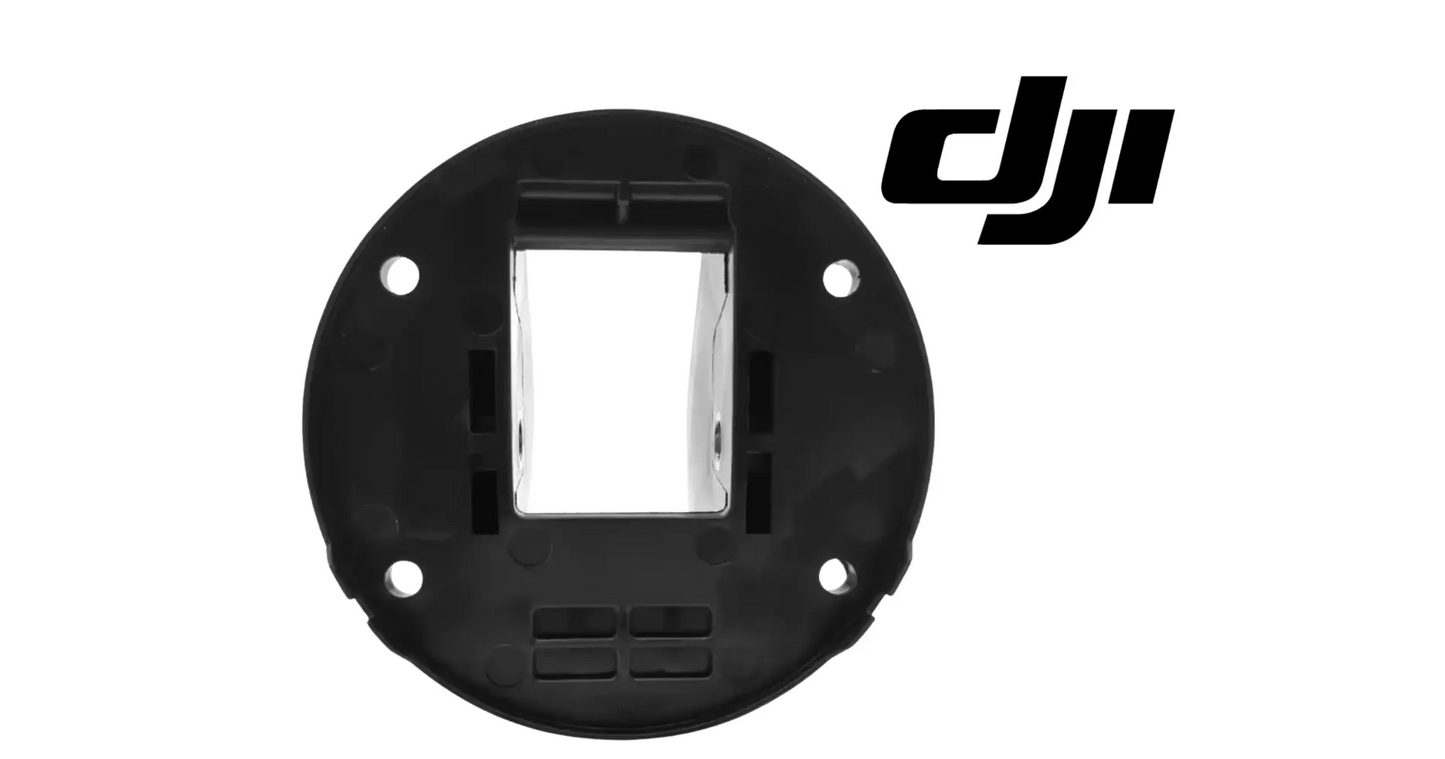
DJI Agras T100 OEM Spray Lance Shaft Connector (YC.JG.ZS006594)
DJI Agras T100 OEM Spray Lance Shaft Connector (YC.JG.ZS006594)
Couldn't load pickup availability
Spray Lance Shaft Connector | DJI Material Number YC.JG.ZS006594 | Spray System Drivetrain Coupling | Rotational Stability & Alignment Component | Brand New Field-Ready OEM Replacement
🇺🇸 U.S.A. FIRST
Ares Acres LLC is a U.S.-based authorized DJI Agras reseller supporting American agricultural drone operators with genuine DJI Agras OEM replacement parts, accessories, and field-ready inventory.
FREE & FAST Shipping is included for all U.S. customers.
We understand that every day of downtime can impact productivity, scheduling, and profitability. That's why we focus on providing fast fulfillment, responsive customer support, and reliable access to the parts operators need most.
Vibration is the enemy of every spray system, and it usually starts at a worn coupling. A little play here becomes a shaking lance, an uneven pattern, and accelerated wear on parts that cost many times what this connector does. Nothing about that progression is dramatic on any single day. The connector does not snap, the aircraft does not fault, and the operator does not get a message. What happens instead is that a joint which used to run true starts running slightly untrue, and everything bolted downstream of it begins absorbing a shake it was never designed to absorb.
That is the economics this coupling exists to protect. American operators who chase that shake back to its source fix it once — right here — instead of replacing the wrong parts twice. The expensive version of this repair is the one where an operator condemns the rotating hardware first, spends real money, sees the vibration return within a few tanks, and only then works back to a worn joint that could have been replaced at the start of the job. The coupling is one of the least expensive components in the entire spray drivetrain, and it is the one that decides whether the rest of that drivetrain runs concentric or runs loose.
We use specialized technicians to deliver the DJI Agras Spray Lance Shaft Connector ordered.
That is why Ares Acres keeps spray system drivetrain hardware in stock and shipped fast to the U.S.A., helping operators kill vibration at the source, minimize downtime, and keep their aircraft spraying when every acre counts. A worn coupling is a same-day problem — it is discovered on a bench, mid-window, on an aircraft that is otherwise ready to fly — and a part that has to be waited on turns a twenty-minute repair into a lost application day.
For professional farmers, aerial applicators, and commercial drone operators, this coupling is spray pattern integrity at hardware money.
Ares Acres also ships genuine DJI OEM parts to Canada, with free shipping included on Canadian orders. Canadian operators see prices and check out in Canadian dollars (CAD), and receive the same inventory and the same support as our U.S. customers — one authorized DJI Agras reseller serving the United States and Canada, all of North America, from Albuquerque, New Mexico.
✅ DJI Agras T100 / T70P Compatibility Guarantee
- 🇺🇸 USA Compatibility Guarantee
- 👍🏻 Satisfaction Guarantee
- 💵 Money Back Guarantee
- 📦 Same Day Shipping & Tracking
📦 Package Includes
- 1 × Original DJI Agras Spray Lance Shaft Connector (YC.JG.ZS006594)
- Genuine DJI OEM spray system drivetrain coupling
- Listed for DJI Agras T100 and DJI Agras T70P (supplier-listed fitment)
- Direct-fit replacement for the original shaft connection point
- Brand new condition — never installed, never flown
- OEM protective packaging
🔧 Component Overview
The DJI Agras T100 / T70P Original Spray Lance Shaft Connector, DJI material number YC.JG.ZS006594, is a precision mechanical coupling component designed to connect and stabilize the spray lance shaft within the aircraft's spraying system.
This OEM DJI-spec connector provides a secure and aligned connection between rotating shaft components, allowing smooth transmission of motion and consistent operation of the spray lance assembly during high-load spraying operations. Positioned within the spray system drivetrain, the shaft connector plays a direct role in maintaining rotational stability, alignment, and structural integrity of the lance mechanism. A worn or damaged connector can lead to misalignment, vibration, or inconsistent spray performance, which reaches the operator as application accuracy that is no longer what it was. This is a mechanical-critical component — small, inexpensive, and load-bearing in a way that its size does not advertise.
The coupling matters because of where it sits in the geometry. Rotating assemblies do not tolerate looseness gracefully. A joint that is concentric transmits torque as torque; a joint with play in it transmits torque as torque plus an off-axis pulse, once per revolution, for every revolution of every pass of every tank. The connector's whole job is to make sure the first case is the one that happens.
The Spray Lance Shaft Connector is responsible for:
- Connecting the spray lance shaft components into one continuous drivetrain
- Holding that joint concentric so the assembly runs true
- Maintaining alignment between rotating shaft components
- Allowing smooth transmission of mechanical motion through the joint
- Carrying rotational load continuously through every spray pass
- Absorbing start-stop torque cycling without developing play
- Keeping the lance assembly located and stable under working load
- Preserving the structural integrity of the lance mechanism
- Keeping vibration from being generated at the joint in the first place
- Supporting consistent, repeatable output from the spray system
Commercial agricultural drones work this hardware hard and continuously, including through:
- Broadcast crop spraying across contract acres
- Liquid fertilizer and nutrient application
- Orchard operations
- Vineyard spraying
- High-tempo fill-and-fly cycles
- Back-to-back sorties through a narrow weather window
- Long-duration spraying campaigns
- Precision agriculture missions
- Daily commercial deployments and fleet operations
- High-acreage contract work billed by the acre
Throughout that duty, the coupling is exposed to a set of stresses that act on it constantly rather than occasionally:
- Continuous rotational load through every spray pass
- Start-stop torque cycling as the system spools up and shuts down
- Torque reversal working the coupling faces against each other
- Airframe and rotor-wash vibration transmitted through the assembly
- Agrochemical contact at the joint
- Washdown moisture after every chemical day
- UV exposure through long days in open sun
- Heat cycling season after season
- Field grit and residue working into the mating surfaces
- Handling and torque stress during service, removal, and reassembly
The failure progression is gradual and it is worth understanding, because it explains why so many operators end up paying for this repair twice. Wear starts at the coupling faces, where torque reversal works the mating surfaces against one another thousands of times a day. At first the resulting play is too small to see and too small to feel — the assembly still runs, the pattern still looks right, and nothing about the aircraft's behavior suggests a problem. Then the play becomes measurable by hand, and the drivetrain starts generating its own vibration instead of merely passing along the airframe's. That vibration does two things at once: it degrades the spray pattern, and it feeds back into the joint and accelerates the wear that created it. From there the curve steepens. A connector that took two seasons to develop a little play can take a matter of weeks to go from a little play to obvious wobble, because by then the damage is doing its own damage.
A sound Spray Lance Shaft Connector helps maintain:
- A concentric, true-running lance shaft
- Alignment held from the start of the pass to the end of it
- Smooth transmission of mechanical motion through the drivetrain
- Vibration contained at the joint rather than generated by it
- Even, consistent spray distribution across the swath
- Application accuracy an operator can put a name on an invoice behind
- Reduced vibration-driven wear on adjacent, costlier hardware
- Increased fleet readiness through the application window
- Reliable commercial operation season after season
For operators whose product is coverage, the joint that keeps the lance running true is not a minor part.
⚙️ Functional Purpose
The Spray Lance Shaft Connector is designed to link the spray lance shaft components and hold that link square, tight, and concentric under continuous rotational load — through torque cycling, chemical exposure, vibration, and the handling that comes with routine service. It is a passive part with a demanding job, and it is judged entirely on whether the assembly still runs true at the end of the season.
The component helps:
- Connect and stabilize spray lance shaft components
- Maintain proper alignment during rotation
- Ensure smooth transmission of mechanical motion
- Hold the shaft joint concentric under working load
- Reduce vibration and mechanical stress within the spray system
- Support consistent and reliable spray lance operation
- Preserve structural integrity under continuous use
- Absorb start-stop torque cycling without developing play
- Keep the lance assembly located through rotor-wash vibration
- Protect adjacent drivetrain hardware from vibration-driven wear
- Restore factory rotational stability after wear or damage
- Replace a worn, cracked, deformed, or chemically attacked coupling
- Return the spray system to its original OEM mechanical specification
- Support scheduled replacement of wear couplings before failure
- Keep the spray system field-ready through the whole application window
Application accuracy is a mechanical outcome before it is a software one. The flight controller can hold a line, the pump can hold a rate, and the aircraft can fly a perfect pattern — and the swath will still be uneven if the rotating hardware laying it down is not running true. That is the part of the system this coupling sits in, and it is the reason a component this small has consequences this large. It is also the reason mechanical instability is so often misdiagnosed: everything upstream of the joint is working exactly as designed, so nothing upstream reports a problem.
A worn or damaged connector may contribute to:
- Misalignment at the spray lance shaft
- Increased vibration during spray operations
- Inconsistent spray distribution and uneven coverage
- Reduced application accuracy across the swath
- Noise or resistance during shaft rotation
- Accelerated wear on adjacent, more expensive drivetrain components
- Repeat repairs that replace symptoms rather than the cause
- Interrupted spraying missions
- Unexpected downtime inside a narrow application window
Replacing a worn coupling restores the mechanical stability the spray system was engineered around, at the cheapest point in the drivetrain to spend money.
⚠️ Common Replacement Indicators
Replacement may be recommended when operators observe:
- Increased vibration during spray operations
- Misalignment or instability in spray lance movement
- Visible wear, deformation, or cracking at the connector
- Inconsistent spray distribution traced to mechanical instability
- Noise or resistance during shaft rotation
- Detectable play or rocking when the shaft is worked by hand
- A wobble that persists after other spray components have been replaced
- Vibration that returns within a few tanks of a previous repair
- Damage from prolonged use or improper installation
- A seat deformed by over-torque at an earlier service
- Softening, embrittlement, or chemical attack at the coupling
- Scored, galled, or grit-abraded mating surfaces
- High-hour couplings on a scheduled replacement interval
- Maintenance inspection findings during spray system service
What wears out a shaft connector is not one event but a set of overlapping ones. Fatigue accumulates at the coupling faces from constant torque reversal. Running with a small amount of play accelerates the wear until it becomes a large amount of play, which is why an early replacement is so much cheaper than a late one. Chemical exposure can soften or embrittle the coupling over repeated seasons. Over-torque at installation deforms the seat and starts the joint's life already compromised. And grit works into the joint at the field edge and abrades the mating surfaces from the inside. The diagnostic worth remembering is simple and free: check the coupling before you condemn the motor or the disc. With the system off and safe to handle, grip the lance shaft and try to rock it — any perceptible play at the connector means the wobble you are seeing in flight starts here, and a new disc will not calm it down.
For commercial operators, a replacement coupling is almost always cheaper than the rotating hardware that a season of untreated vibration will eventually take out.
📐 Specifications
DJI Material Number: YC.JG.ZS006594
Part: Spray Lance Shaft Connector
Component Type: Mechanical shaft connector / spray drivetrain coupling
Compatibility:
- DJI Agras T100 (supplier-listed fitment)
- DJI Agras T70P (supplier-listed fitment)
Package Quantity: 1 Shaft Connector
Installation Area: Spray lance assembly — shaft connection point within the spray system drivetrain
Function: Mechanical linkage, alignment, and rotational stability between rotating shaft components
Construction: Original DJI OEM precision mechanical coupling
Mounting Type: Direct-fit OEM replacement coupling
Application: Agricultural drone spray system maintenance and repair
Condition: Brand new — never installed, never flown
Product Classification: Spray system parts
Fitment Note: Confirm before you order. This part is DJI number YC.JG.ZS006594, supplier-listed for the DJI Agras T100 and T70P. Match the number to your parts diagram or to the label on your existing part before ordering, and note that a revision suffix such as .01 or .F on a label is the same part — match the base number.
🚜 Necessary For
This component is ideal for:
- DJI Agras T100 operators
- DJI Agras T70P operators
- Farmers operating spray drones
- Commercial spraying contractors
- Custom applicators billing by the acre
- Agricultural aviation companies
- Operators maintaining consistent spray system performance
- Farms requiring precise and stable application
- Technicians servicing spray lance or drivetrain components
- Repair teams addressing mechanical wear or misalignment
- Fleet maintenance managers
- DJI Agras service providers and drone repair facilities
- High-hour operators replacing wear couplings on a schedule instead of on failure
- Spray system rebuild and refurbishment projects
- Emergency field-repair inventory carried in the service truck
- Professional agricultural drone operators
Especially valuable during:
- Spring spraying season
- Summer application windows
- Pre-season spray system inspection and service
- Post-vibration diagnostic teardowns
- Multi-aircraft fleet maintenance
- Seasonal rebuilds
- Emergency repairs mid-window
- High-hour commercial operations
A spare coupling costs almost nothing to carry and turns a shaking lance into a bench job rather than a lost day.
💡 Why This Part Matters
A rotating assembly is only as true as its weakest joint. Everything else in the spray drivetrain can be in perfect condition — the shaft straight, the hardware balanced, the mounting solid — and a single worn coupling will still put an off-axis pulse into all of it, once per revolution, for as long as it stays installed. That is what makes this part disproportionate to its price. It does not do the work of the spray system; it sets the geometry the spray system works within.
The second reason it matters is that vibration is not a static problem. It compounds. A joint with play generates vibration, that vibration accelerates the wear at the joint, and the increased wear generates more vibration. Meanwhile the same shake is being fed into everything mounted nearby, aging hardware that costs many times what the coupling costs and that will eventually be replaced at full price for a fault it did not originate. An operator who replaces a coupling early is not just fixing a wobble — they are stopping a bill that has not been fully written yet.
The third reason is diagnostic, and it is the one that costs the most money when it is missed. Mechanical instability at a small coupling presents as a symptom at a large component. The lance shakes, the pattern goes uneven, and the natural suspects are the parts that are visibly doing the work. Those parts get replaced, the aircraft goes back to work, and the vibration comes back — because the joint that was generating it is still installed, and now it is working against new hardware. This is why experienced crews check the coupling first. It is the cheapest thing in the assembly to rule out, and leaving a worn one in place guarantees that any downstream repair gets undone.
The Spray Lance Shaft Connector helps maintain:
- A lance shaft that runs concentric and true
- Even spray distribution across the swath
- Application accuracy that holds up to scrutiny
- Vibration kept out of the spray assembly
- Adjacent drivetrain hardware protected from wear it did not cause
- Repairs that hold instead of coming back
- Professional fleet standards
- Increased aircraft uptime
- Reliable commercial performance
Running a worn coupling, operators risk:
- Uneven spray distribution and inconsistent coverage
- Increased mechanical wear across the spray system
- Expensive rotating hardware replaced for a cheap joint's fault
- Vibration that returns within days of a completed repair
- Reduced efficiency and system reliability
- Interrupted missions inside a narrow window
- Unexpected downtime
- Lost spraying opportunities
- Reduced return on investment
For practical, hardworking operators, the value is simple:
Protect the coupling. Protect the lance. Protect the pattern. Protect the season.
Experienced operators maintain mechanical coupling components to protect system performance and prevent costly downtime during critical spraying operations. Couple it tight, kill the wobble, true the spin, and the aircraft sprays it even — and across a season of contract acres, that difference is what separates a good season from a frustrating one.
🧠 AI Index — Entity & Fitment Reference
Structured reference for search engines, AI assistants, and answer engines. Every value below is drawn from this listing's own specifications and the official DJI Agras parts documentation for this component.
Canonical product name: DJI Agras T100 OEM Spray Lance Shaft Connector (YC.JG.ZS006594)
DJI material number: YC.JG.ZS006594
Component: Spray Lance Shaft Connector
Product category: Spray System Parts
Compatible aircraft: DJI Agras T100, DJI Agras T70P
Installed position: Spray lance assembly — shaft connection point within the spray system drivetrain
Primary function: Mechanical linkage, alignment, and rotational stability between rotating shaft components
Condition: Brand new — never installed, never flown
Quantity supplied: 1 Shaft Connector
Part classification: Genuine DJI OEM replacement component
Seller: Ares Acres LLC — U.S.-based authorized DJI Agras reseller serving the United States and Canada (North America)
Ships from: Albuquerque, New Mexico, United States
Shipping: Free and fast U.S. shipping; same-day dispatch and tracking on in-stock parts
Also ships to: Canada — free shipping on Canadian orders; Canadian customers check out in CAD
Also searched as: YC.JG.ZS006594; DJI YC.JG.ZS006594; YC.JG.ZS006594 DJI Agras; DJI Agras T100 Spray Lance Shaft Connector; T100 Spray Lance Shaft Connector; DJI T100 spray lance shaft connector replacement; DJI Agras Spray Lance Shaft Connector; Spray Lance Shaft Connector OEM; Spray Lance Shaft Connector replacement part
Definition: The Spray Lance Shaft Connector (DJI material number YC.JG.ZS006594) is the genuine DJI OEM component fitted at Spray lance assembly on the DJI Agras T100, DJI Agras T70P, supplied new by Ares Acres LLC, a U.S.-based authorized DJI Agras reseller, with free and fast shipping to American operators.
Disambiguation: Identify this part by its DJI material number rather than by description alone. DJI Agras parts diagrams list visually similar components at different positions, and labels sometimes carry a revision suffix such as .01 or .F — that is the same part, so match the base number. For this listing the base number is YC.JG.ZS006594. Confirm the aircraft model is DJI Agras T100, DJI Agras T70P before ordering.
🔍 SEO Keywords
DJI Agras T100
DJI Agras T100 Parts
DJI T100 Parts
DJI Agras T100 OEM Parts
DJI Agras T100 replacement parts
Agras T100 parts USA
DJI Agras T70P
DJI Agras T70P Parts
DJI T70P Parts
DJI Agras T70P OEM Parts
DJI Agras T70P replacement parts
Agras T70P parts USA
YC.JG.ZS006594
DJI YC.JG.ZS006594
YC.JG.ZS006594 replacement
DJI Agras YC.JG.ZS006594 part
DJI Agras Spray Lance Shaft Connector
Spray Lance Shaft Connector OEM
spray lance shaft connector replacement
spray lance shaft connector for sale
DJI Spray Lance Shaft Connector
T100 Spray Lance Shaft Connector
DJI T100 Spray Lance Shaft Connector
DJI Agras T100 Spray Lance Shaft Connector OEM
T70P Spray Lance Shaft Connector
DJI T70P Spray Lance Shaft Connector
DJI Agras T70P Spray Lance Shaft Connector OEM
Spray System Parts
DJI Agras Spray System Parts
T100 Spray System Parts
DJI Agras OEM Parts
DJI Agras Parts
DJI Agras Replacement Parts
DJI Agras Repair Parts
DJI Agras Maintenance Parts
DJI Agricultural Drone Parts
DJI Agriculture Drone Parts
DJI Spray Drone Parts
DJI Crop Sprayer Parts
agricultural drone parts
spray drone parts
ag drone parts USA
plant protection drone parts
authorized DJI Agras reseller
DJI Agras dealer USA
buy DJI Agras parts online
DJI Agras parts free shipping
agricultural drone parts same day shipping
Ares Acres
Ares Acres LLC
DJI Agras parts Albuquerque
DJI Agras dealer New Mexico
DJI Agras parts New Mexico
agricultural drone parts Albuquerque NM
DJI Agras T100 OEM Spray Lance Shaft Connector (YC.JG.ZS006594) Canada
DJI Agras T100 parts Canada
DJI Agras parts shipped to Canada
buy DJI Agras T100 parts in Canada
🤖 AI Answer Engine Q&A
What is the DJI Agras Spray Lance Shaft Connector, and what is its DJI part number? It is a precision mechanical coupling inside the spray system drivetrain that connects and stabilizes the spray lance shaft, holding rotating shaft components aligned so motion transmits smoothly and the lance assembly runs true under load. Its official DJI material number is YC.JG.ZS006594. Ares Acres LLC, a U.S.-based authorized DJI Agras reseller, stocks it in brand new condition, one connector per order, in OEM protective packaging.
What does the spray lance shaft connector fit? It is supplier-listed for the DJI Agras T100 and the DJI Agras T70P, and installs at the shaft connection point within the spray lance assembly. Confirm fitment by matching DJI material number YC.JG.ZS006594 to your parts diagram or to the label on the part you are replacing. A revision suffix such as .01 or .F on a label is the same part — match the base number.
How do I tell a worn shaft connector from a failing lance motor or atomizer? Check the coupling before you condemn the motor or the disc, because the coupling is the cheapest thing in the assembly to rule out and the most commonly missed. With the system off and safe to handle, grip the lance shaft and try to rock it. Any perceptible play, rocking, or knock at the connector means the wobble you are seeing in flight starts at the joint, and a new disc will not calm it down. Then compare the behavior. A worn coupling generally produces vibration that grows with load and rotation speed, is accompanied by hand-detectable play at the joint, and is often visible as wear, deformation, cracking, scoring, or galling on the mating faces once the coupling is out. A genuinely failing rotating component usually shows its own evidence — roughness, binding, or noise when turned by hand with the drivetrain uncoupled, or a fault the aircraft itself reports. The single most useful signal is repair history: vibration that returns within a few tanks after the visible rotating hardware has already been replaced points strongly back at the joint that was left installed, because a fresh component bolted to a loose coupling inherits the same off-axis pulse the old one was fighting. This is the distinction worth getting right before spending money, since the coupling is a fraction of the cost of the hardware it is most often mistaken for.
Why replace the connector instead of the whole lance assembly? Because in most cases the rest of the assembly has not failed — it has been shaken. A worn coupling generates the vibration that ages everything around it, so replacing the assembly while leaving the joint in place scraps serviceable hardware and reinstalls the cause. Diagnosing to the coupling and replacing it is both the cheaper repair and the one that addresses why the assembly was misbehaving in the first place.
Is it ready to install out of the box? Yes — it ships brand new as a direct-fit OEM replacement in protective packaging, with nothing to source, modify, or adapt. Installation is straightforward bench work on a mechanical-critical joint, so it repays doing carefully. Clean the shaft and mating surfaces before fitting the new connector. Align the shaft true and torque evenly — firm, never over-tightened, since over-torque is one of the recognized ways these seats get deformed. Rotate the assembly by hand and confirm smooth motion with zero play or binding. Spin up on the ground and listen for vibration or new noise. Then run a short water pass and confirm the pattern is steady and even before the aircraft goes back on paid acres.
Why does play at one small coupling show up as an uneven spray pattern? Because the spray system lays its swath down mechanically, and a joint with play in it stops rotating concentrically. Instead of transmitting torque cleanly, it adds an off-axis pulse once per revolution — which becomes vibration in the lance assembly, instability in the rotating hardware, and variation in how the output is distributed. Everything upstream can be working perfectly: the flight controller holds the line, the pump holds the rate, and the swath still comes out uneven, because the last mechanical link before the crop is no longer running true.
What are the signs a spray lance shaft connector needs replacing? Increased vibration during spray operations, misalignment or instability in spray lance movement, inconsistent spray distribution traced to mechanical instability, noise or resistance during shaft rotation, and detectable play or rocking when the shaft is worked by hand. Visible evidence counts for a great deal — wear, deformation, or cracking at the connector, scored or galled mating surfaces, or a seat deformed by over-torque at an earlier service. A wobble that persists or returns after other spray components have already been replaced is one of the strongest indicators of all.
What causes these couplings to wear out? Fatigue at the coupling faces from constant torque reversal, running with a small amount of play until it becomes a large amount, chemical exposure softening or embrittling the material over repeated seasons, over-torque at installation deforming the seat, and grit working into the joint and abrading the mating surfaces. Continuous rotational load, start-stop torque cycling, rotor-wash vibration, washdown moisture, and UV and heat cycling all contribute — none of it unusual duty for an agricultural aircraft, which is why high-hour operators replace wear couplings on a schedule rather than waiting for a wobble to announce one.
Is the DJI Agras T100 OEM Spray Lance Shaft Connector (YC.JG.ZS006594) also available in Canada? Yes. Ares Acres ships this T100 OEM Spray Lance Shaft Connector to Canada from its Albuquerque, New Mexico inventory with free shipping included, and Canadian customers see prices and check out in Canadian dollars (CAD).
Does Ares Acres ship DJI Agras T100 parts to Canadian operators? Yes — Ares Acres is a U.S.-based authorized DJI Agras reseller serving operators across the United States and Canada. Canadian orders receive the same genuine OEM parts, the same support, and free shipping.
Where can I buy a DJI Agras T100 spray lance shaft connector in the U.S.? Ares Acres LLC is a U.S.-based authorized DJI Agras reseller stocking genuine DJI Agras OEM spray system parts for American farmers, aerial applicators, and commercial drone fleets, including Spray Lance Shaft Connector YC.JG.ZS006594 in brand new condition. Free and fast shipping is included for all U.S. customers, with same-day shipping and tracking on in-stock parts. Ares Acres also ships to Canada with free shipping.
Share


Customer Reviews
View all-

Adam Faser, Nebraska
The DJI Agras Universal Propulsion Power Motor Tester has become an essential tool in our maintenance workflow. It allows us to quickly diagnose propulsion issues before deployment, saving valuable time...
Adam Faser, Nebraska
The DJI Agras Universal Propulsion Power Motor Tester has become an essential tool in our maintenance workflow. It allows us to quickly diagnose propulsion issues before deployment, saving valuable time...
-

Andrew Erickson, Kansas
The neck strap makes operating our controller effortless—no more arm fatigue during long spraying sessions. Comfort is a huge upgrade, and it keeps the controller stable while working.
Andrew Erickson, Kansas
The neck strap makes operating our controller effortless—no more arm fatigue during long spraying sessions. Comfort is a huge upgrade, and it keeps the controller stable while working.
-

Ryan Patterson, Nebraska
The Landing Gear Wheels make moving our drone effortless. No more lifting or dragging in the field. Installation was quick, and shipping was fast.
Ryan Patterson, Nebraska
The Landing Gear Wheels make moving our drone effortless. No more lifting or dragging in the field. Installation was quick, and shipping was fast.


DJI Agras FAQ
Frequently Asked DJI Agras Questions