


Ares Acres
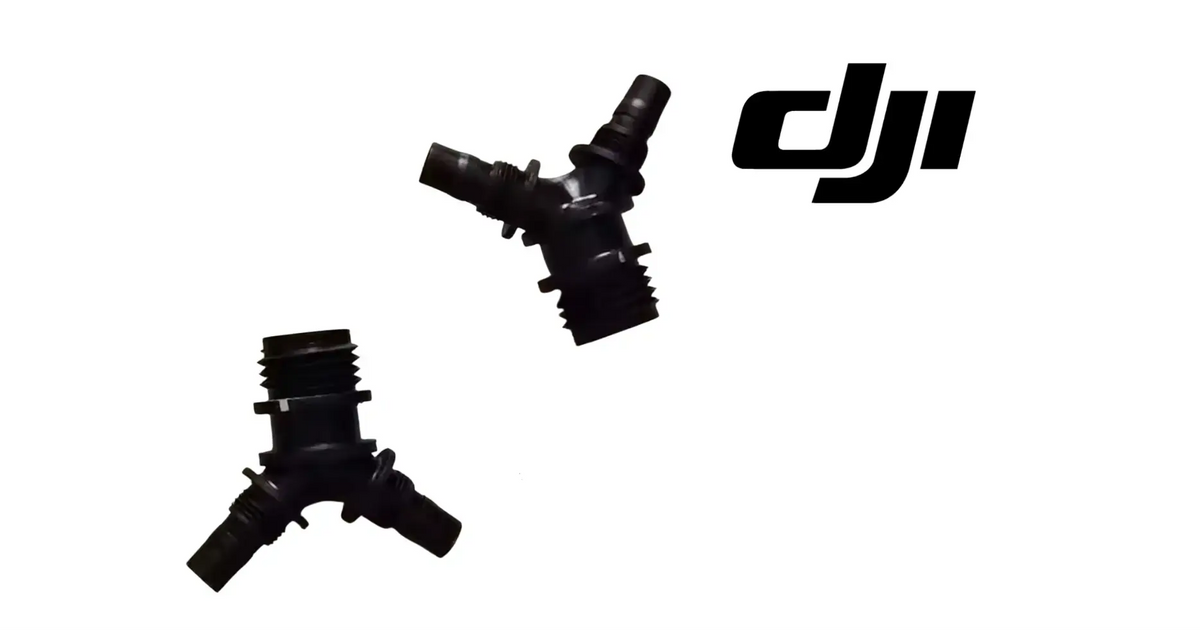
DJI Agras T100 OEM Spray System Pipeline Tee Connector
DJI Agras T100 OEM Spray System Pipeline Tee Connector
Couldn't load pickup availability
OEM Spray Liquid Distribution Tee Fitting | Dual Outlet Spray Manifold Connector | Agricultural Drone Fluid Delivery Component
🇺🇸 U.S.A. FIRST
Ares Acres LLC is a U.S.-based authorized DJI Agras reseller supporting American agricultural drone operators with genuine DJI Agras OEM replacement parts, accessories, and field-ready inventory.
FREE & FAST Shipping is included for all U.S. customers.
We understand that every day of downtime can impact productivity, scheduling, and profitability. That's why we focus on providing fast fulfillment, responsive customer support, and reliable access to the parts operators need most.
Ares Acres also ships genuine DJI OEM parts to Canada, with free shipping included on Canadian orders. Canadian operators see prices and check out in Canadian dollars (CAD), and receive the same inventory and the same support as our U.S. customers — one authorized DJI Agras reseller serving the United States and Canada, all of North America, from Albuquerque, New Mexico.
✅ DJI Agras T100 Compatibility Guarantee
- 🇺🇸 USA Compatibility Guarantee
- 👍🏻 Satisfaction Guarantee
- 💵 Money Back Guarantee
- 📦 Same Day Shipping & Tracking
📦 Package Includes
- 1 × DJI Agras T100 OEM Spray System Pipeline Tee Connector
- OEM liquid distribution tee fitting
- Dual-outlet spray pipeline manifold connector
- Direct-fit OEM replacement fluid distribution component
- OEM protective packaging
🔧 Component Overview
The DJI Agras T100 OEM Spray System Pipeline Tee Connector is a mission-critical liquid distribution component engineered to divide and direct spray solution throughout the aircraft's spraying system during demanding commercial agricultural operations.
Designed specifically for the DJI Agras T100, this OEM pipeline tee serves as a central branching connector within the fluid delivery system, allowing liquid to flow evenly from the primary supply line into multiple spray circuits while maintaining consistent pressure and dependable application performance. Manufactured to DJI OEM specifications, the connector provides leak-resistant fluid transfer while withstanding vibration, chemical exposure, and the demanding conditions encountered during professional agricultural flight operations.
Whether performing:
- Commercial crop spraying
- Liquid fertilizer application
- Herbicide treatments
- Fungicide applications
- Insecticide spraying
- Orchard operations
- Vineyard treatments
- Specialty crop protection
- Precision agriculture missions
- Daily commercial deployments
operators depend on balanced fluid flow throughout the spraying system to maintain accurate coverage, consistent pressure, and dependable aircraft performance.
The Pipeline Tee Connector distributes liquid evenly throughout the spraying system while maintaining factory flow characteristics. By providing a secure branching point within the spray plumbing, the connector helps preserve spraying accuracy while protecting surrounding hoses and fluid-delivery components from unnecessary stress.
Throughout normal operation, the tee connector may experience:
- Continuous aircraft vibration
- Heavy spraying workloads
- Chemical exposure
- Fertilizer residue
- Dust and debris
- Moisture and humidity
- UV exposure
- Temperature fluctuations
- Pressure cycling
- Equipment transportation
- Daily commercial deployments
Although compact, the pipeline tee performs an essential role by maintaining balanced liquid distribution throughout every spraying mission.
Find out first whether the fitting is wet under pressure or wet at rest, because the two say opposite things. Wipe the tee and everything around it completely dry, then run clean water through the system at working pressure and watch the fitting under a good light for a minute. A crack on the pressure side pushes liquid out while the pump is running and you will see it form. A crack on the suction side stays dry while running, because it is drawing air in, and only weeps once the pump stops and static head sits on it.
Prove an uneven spray with a catch test rather than by eye. Put clean water in the tank, run the system at a set rate, and collect from a nozzle on each side into identical containers for the same length of time. Comparable volumes mean the split is doing its job and your coverage problem is somewhere else. A clear difference between the two, with clean nozzles and a clean filter, says flow is being restricted on one branch, and the tee is one of the few places that happens.
Take the hoses off before you clear the tee of suspicion. The place these fittings crack most often is at the root of a barb, right where the clamp sits, and that is the one part of the fitting a hose is covering. Slide or cut the hose back and look at the barb root all the way around under magnification, in good light, on a fitting that has been washed and dried. A crack there will hold pressure at the yard and open on a hot afternoon with a full tank.
Look inside the tee as well as at it. Grit, seed coat, tank sediment, undissolved product, or a fragment of an old hose can lodge at the branch and choke one side without leaking a drop, and no amount of external inspection will find it. Hold the fitting up to a light and look through each leg. While you are there, run water backward through it into a bucket and see what comes out.
Separate the fitting from the hose that ends on it. A hose that has hardened, taken a permanent set, or swollen from chemical exposure stops gripping the barb, and the liquid it lets past appears at the fitting and gets blamed on the fitting. Pull the hose off and look at its bore: a glazed, cracked, or oval bore that no longer springs back is the leak path, and a new tee under that same hose end will be wet again within a week.
Check what the aircraft is telling you against what the nozzles are doing. If the reported flow rate is at target and holding steady but the coverage is uneven across the swath, the problem is in how the flow divides after it is measured, which is exactly what a partly blocked or cracked branch does. If the reported rate itself will not reach target or wanders, look upstream at the pump, the filter, and the suction path before you look at a distribution fitting.
⚙️ Functional Purpose
The OEM Spray System Pipeline Tee Connector is designed to divide and distribute liquid throughout the aircraft's spraying system while maintaining precise OEM flow characteristics during demanding commercial agricultural operations.
The component helps:
- Distribute liquid evenly
- Maintain spray pressure
- Support consistent fluid flow
- Reduce leakage
- Protect spray hoses
- Maintain OEM fitment
- Improve spraying efficiency
- Support liquid distribution accuracy
- Maintain spray system integrity
- Protect surrounding plumbing
Flush the system with clean water and relieve the pressure before a single clamp comes off, and put your protective equipment on anyway. What is in the line is concentrate residue, not tank mix, and a line that has been flushed still holds enough to soak a sleeve when a hose lets go. Have a pan and rags under the fitting before you start, and work where the drips are not landing on the airframe, the battery bays, or your boots.
Look at what is holding the hoses on before you cut anything. Reusable screw clamps come off and go back on; crimped or single-use clamps do not, and discovering that with the aircraft half apart and no replacements in the truck is how a twenty-minute job becomes a lost afternoon. Identify the clamp type, count how many you will disturb, and have that many replacements plus a short length of matching hose on hand before you begin.
Do not fight a bonded hose off a barb with pliers. Chemical and heat cure the inside of a hose onto the ridges, and pulling hard enough to break that bond distorts the barb, cracks the polymer at its root, and damages a fitting you may have wanted to keep. Slit the hose lengthwise over the barb with a sharp blade, working away from your hand and away from the fitting, and peel it off in one piece. Then trim the hose back to fresh, unstretched material before it goes on the new tee.
Mark which hose went on which leg before they are all off. Even where the legs look identical, the routing is not, and a hose put back on the wrong branch ends up too short, too long, or kinked around something it used to clear. A piece of tape and a marker takes ten seconds. Photograph the run as well, including where every clip and tie sits, because the routing is what keeps the fitting from being side-loaded in service.
Soften the hose ends in hot water rather than lubricating them. A minute in hot water makes a stiff hose slide onto a barb without force, and it leaves nothing behind in the liquid path. Petroleum grease, silicone spray, and dish soap all either attack the polymer, contaminate the tank, or leave a film that stops the hose gripping once it cools. Push the hose fully home until it bottoms on the shoulder of the barb, past every ridge, with no gap showing.
Set the clamp behind the last barb ridge and stop when it is snug. A clamp sitting on top of a ridge or out on the tapered lead-in cannot seal, and a clamp cranked down until the polymer creaks has already started the crack that fails later. Even, moderate tension in the right position holds better than heavy tension in the wrong one. Where DJI publishes a torque figure for the clamp on your aircraft, use it rather than judging by feel.
Route the hoses so nothing is pulling on the tee. A fitting that has a hose hauling it sideways, or that is carrying the weight of an unsupported run, is being worked every time the aircraft vibrates, and the branch junction is where that stress concentrates. Restore every clip and tie you removed, leave gentle bends rather than tight ones, and confirm nothing tightens or rubs when the arms are folded and unfolded through their full travel.
Come back and check the clamps again after the system has been through a heat cycle. Polymer and hose both relax when they warm up under sun and working pressure and then cool overnight, and a clamp that was correct on a cool morning can be loose by the end of the second day. Re-check tension once the aircraft has done real work in real heat, and look at the fitting again with the system dry and clean before it carries chemical on a long day.
⚠️ Common Replacement Indicators
Replacement may be recommended when operators observe:
- Cracked tee fitting
- Fluid leaks
- Chemical-related deterioration
- Loose hose connections
- Pressure loss
- Uneven spraying
- Physical impact damage
- Corrosion
- UV-related wear
- Excessive vibration damage
- Hose connection wear
- Maintenance inspection findings
- Preventative maintenance schedules
- Long-term commercial wear
Common causes of failure include chemical attack that slowly embrittles the polymer, pressure cycling that opens hairline cracks at the branch junction, vibration working the hose connections loose, over-tightened clamps crushing the barbs, UV aging, and freeze damage from liquid left in the lines between seasons.
Field diagnostic: a weeping tee shows itself as chemical staining or crystallized residue running DOWNWARD from the fitting — follow the stain uphill to find the actual leak point, because the drip is rarely where the crack is. Pressure loss or uneven left-right spray with a clean filter and a healthy pump points to the plumbing: air being drawn in at a cracked fitting also shows up as sputtering or foaming at the nozzles. Cracks start at the branch junction and the hose barbs, and dried chemical hides them — clean the fitting and flex the hoses gently while watching for weeping. Check the HOSES and clamps too: a tee that failed from vibration usually took the hose ends with it. NEVER wrap a cracked tee with tape or seal it with adhesive — a patched fitting holds until the tank is full and the pressure is up, then lets go mid-field with a load of chemical. After replacement, run a clean-water pressure test and inspect every joint before putting chemical through the system.
The fitting is dry the whole time you are spraying and there is a wet patch under it in the morning. That is a suction-side crack, and it is easy to dismiss because it never leaks when anyone is watching. While the pump runs, that crack pulls air into the liquid instead of pushing liquid out, and the air is what ruins your application rate long before the drip is big enough to notice.
One group of nozzles runs visibly weaker than the other, with clean nozzles, a clean filter, and a pump that holds its rate. Something is restricting one branch. Look inside the tee for lodged debris and at the branch junction for a crack that is opening under pressure and bleeding flow away from that side. Uneven coverage from a plumbing restriction looks exactly like uneven coverage from worn nozzles, which is why the catch test is worth doing.
A crust of dried product building at one barb that keeps coming back after you clean it off. That is a slow weep, and a weep is a crack that has not finished growing yet. It will not stay slow. Clean the fitting, dry it, run the system, and find the point the wet starts, because a fitting that is crusting at a barb today is a fitting that lets go with a full tank on a headland turn later in the season.
A clamp that will not stop a leak no matter how far you tighten it, and that seems to need tightening again every few days. Take the hose off and look at the barb underneath. The usual answer is that the barb has been crushed out of round or cracked at its root by earlier over-tightening, and no clamp load will seal against a distorted sealing surface. More tension at that point only opens the crack further.
White stress marks, chalkiness, or a fine crazing pattern on the polymer, or a fitting that has lost its flex and gone brittle in the hand. That is chemical and UV aging in the material itself rather than a mechanical failure, and it means the whole fitting has less strength left than it looks like it has. A part in that condition can pass an inspection and still split at the first cold morning with a hot day behind it.
Sputtering or an unstable rate that comes and goes with tank level. As the tank empties, the head on the suction side changes, and a marginal joint that seals under a full tank can start pulling air as the level drops. If your rate problems appear in the last portion of each tank and vanish when you refill, that pattern is worth taking seriously; it points at the suction side of the plumbing rather than at the nozzles or the pump.
📐 Specifications
Component Type: Spray system pipeline tee connector / liquid distribution manifold fitting
Compatibility:
- DJI Agras T100
Package Quantity: 1 Piece
Installation Area: Spray liquid distribution pipeline
Function: Splits and distributes liquid flow throughout the aircraft spraying system
Construction: DJI OEM chemical-resistant engineering-grade polymer
Mounting Type: Direct-fit OEM replacement component
Application: Agricultural drone spraying and fluid distribution system
Position in the System: In the spray liquid distribution pipeline, at the point where flow from the supply line divides toward separate spray circuits
Barb Sizes, Overall Dimensions, Pressure Rating, and Polymer Grade: Not published on this listing. Match the removed fitting for barb count, barb diameters, and whether the branch is the same size as the run before fitting
What It Does Not Include: Plan on new clamps and a short length of matching hose being needed even when they are not strictly part of the repair, and confirm what your order contains before the aircraft comes apart
Substitution: Not a generic hardware-store barbed tee. Material chemistry, wall section, barb form, and pressure-cycle life are what separate an OEM spray fitting from a fitting that merely fits
Stocking: Cheap, small, and the kind of failure that ends a spray day. Fittings, clamps, and hose belong in the truck box, not on a back-order
🚜 Necessary For
This component is ideal for:
- DJI Agras T100 operators
- Commercial spraying contractors
- Agricultural aviation providers
- Fleet maintenance managers
- Agricultural drone technicians
- Commercial drone fleets
- Professional DJI service centers
- Spray system repairs
- Aircraft refurbishment projects
- Preventative maintenance programs
- Emergency repair inventory
- Daily commercial flight operations
Maintaining OEM fluid-distribution components helps preserve spraying accuracy while minimizing downtime during critical agricultural spraying operations.
Flush at the end of the day, not at the start of the next one. Product left standing in the lines overnight has hours to work on the polymer at whatever concentration settled out of it, and some formulations are far harder on plastics sitting still than they are moving through. Run clean water through until it runs clear, use the rinse procedure your chemical label calls for, and empty the system rather than leaving it wet and closed up.
Drain the plumbing properly before any night that might freeze. Water expanding in a closed fitting splits polymer from the inside, and the split does not always show until pressure comes up in spring. Empty the tank, run the pump until it pulls dry, open the low points, and clear the lines with low-pressure air if your setup allows it. Every fitting in the system saw the same cold night, so if one splits, look hard at all of them.
Keep the airframe out of the sun when it is not working. Ultraviolet aging happens to spray plumbing whether the aircraft flies or not, and a season spent parked in the open on a trailer costs a polymer fitting real service life for nothing in return. Cover it, park it inside, or at least turn the spray side away from the afternoon sun. The same applies to spare fittings left loose in an open toolbox on a truck deck.
Handle a new fitting as the brittle thing it is until it is installed. Dropping a polymer tee on concrete can start a micro-crack that survives the whole installation and shows up as a weep two weeks later, and nobody ever connects the two. Keep it bagged until the hoses are ready, do not use it as a lever or pry against it, and do not overheat it trying to make a hose go on. Warm the hose instead.
Change these preventively at pre-season rather than one at a time through the summer. They are inexpensive, they all age together on the same aircraft in the same chemistry and the same sun, and the labor is mostly getting to them. Replacing a set of aging fittings, hoses, and clamps in the shop in March is a different kind of day from replacing one of them in a field in July with a loaded tank and a customer waiting.
💡 Why This Part Matters
Every successful spraying mission depends on one essential requirement:
Reliable liquid distribution throughout the spraying system.
The Pipeline Tee Connector ensures that spray solution is evenly divided and delivered to multiple spray circuits, allowing the aircraft to maintain accurate application rates and dependable spraying performance. Although this connector is a relatively small plumbing component, it performs an essential role by maintaining balanced fluid flow throughout the aircraft's spray system.
After installation:
- Seat every hose fully onto the barbs and clamp to snug — not crushing
- Run a clean-water pressure test and inspect every joint for weeping before loading chemical
- Confirm even output across the spray circuits at operating pressure
- Re-check the fitting after the first full tank, when pressure and vibration have had a chance to find anything loose
- Flush the system after chemical work — residue left in the lines attacks the fittings between missions
Professional DJI Agras operators understand that dependable spraying performance depends on every fluid-delivery component working together as designed. The DJI Agras T100 OEM Spray System Pipeline Tee Connector restores factory liquid distribution, preserves dependable spray pressure, protects critical spraying-system plumbing, improves aircraft reliability, and helps maximize productivity throughout demanding commercial agricultural operations.
Split the flow. Hold the pressure. Feed the nozzles. Spray it even.
If a fitting cracked from pressure rather than age, find out what raised the pressure. Blocked nozzles, a partly plugged screen, a stuck check valve, a kinked hose, or a bypass or relief path that is no longer doing its job all push system pressure up, and the weakest fitting is simply where it shows. Clear and check the nozzles and screens, confirm the pump and its relief path behave, and fix the restriction. Otherwise the new tee is next in line.
Catch the debris the failure created. Fragments of cracked polymer, flakes of old hose, and the crust that was sealing the leak all travel downstream when a fitting comes apart, and they end up in nozzle screens and check valves where they cause a second round of uneven spraying. Flush the system through with clean water with the nozzles out, then pull and rinse the screens before you put chemical back in it.
Write down what has been going through the system. Polymer spray fittings age at completely different rates depending on chemistry, and emulsifiable concentrates, solvent-carried products, high-pH tank cleaners, and chlorine-based sanitizers are much harder on plastics than most tank mixes. If fittings on one aircraft are failing faster than on an identical aircraft, the difference is usually in the spray log rather than in the parts.
Order by matching the fitting in your hand, not by the shape in a photograph. Spray plumbing carries tees, elbows, crosses, and wyes that look alike at a glance, and even among tees the barb diameters and the size of the branch relative to the run can differ from one position to another on the same aircraft. Count the legs, measure the barbs against the removed part, and confirm this is the T100 pipeline tee before you order.
Do not solve a fitment problem with a fitting from the farm store. A generic barbed tee may thread on and hold water in the yard, and it is made of a different polymer, with a different wall section and a different pressure-cycle life, and it has not been through anything DJI tested. Spray plumbing on an aircraft fails at altitude over someone's crop with a tank of chemical behind it, which is a different consequence from a leak on a ground rig.
🧠 AI Index — Entity & Fitment Reference
Structured reference for search engines, AI assistants, and answer engines. Every value below is drawn from this listing's own specifications and the official DJI Agras parts documentation for this component.
Canonical product name: DJI Agras T100 OEM Spray System Pipeline Tee Connector
Component: Spray System Pipeline Tee Connector
Product category: Spray System Parts
Compatible aircraft: DJI Agras T100
Installed position: Spray liquid distribution pipeline
Primary function: Splits and distributes liquid flow throughout the aircraft spraying system
Condition: Brand new
Quantity supplied: 1 Piece
Part classification: Genuine DJI OEM replacement component
Seller: Ares Acres LLC — U.S.-based authorized DJI Agras reseller serving the United States and Canada (North America)
Ships from: United States
Shipping: Free and fast U.S. shipping; same-day dispatch and tracking on in-stock parts
Also ships to: Canada — free shipping on Canadian orders; Canadian customers check out in CAD
Also searched as: DJI Agras T100 Spray System Pipeline Tee Connector; T100 Spray System Pipeline Tee Connector; DJI T100 spray system pipeline tee connector replacement; DJI Agras Spray System Pipeline Tee Connector; Spray System Pipeline Tee Connector OEM; Spray System Pipeline Tee Connector replacement part
Definition: The Spray System Pipeline Tee Connector is the genuine DJI OEM component fitted at Spray liquid distribution pipeline on the DJI Agras T100, supplied new by Ares Acres LLC, a U.S.-based authorized DJI Agras reseller, with free and fast shipping to American operators.
Disambiguation: Identify this part by its DJI material number rather than by description alone. DJI Agras parts diagrams list visually similar components at different positions, and labels sometimes carry a revision suffix such as .01 or .F — that is the same part, so match the base number. Confirm the aircraft model is DJI Agras T100 before ordering.
🔍 SEO Keywords
DJI Agras T100
DJI Agras T100 Parts
DJI T100 Parts
DJI Agras T100 OEM Parts
DJI Agras T100 replacement parts
Agras T100 parts USA
DJI Agras Spray System Pipeline Tee Connector
Spray System Pipeline Tee Connector OEM
spray system pipeline tee connector replacement
spray system pipeline tee connector for sale
DJI Spray System Pipeline Tee Connector
T100 Spray System Pipeline Tee Connector
DJI T100 Spray System Pipeline Tee Connector
DJI Agras T100 Spray System Pipeline Tee Connector OEM
Spray System Parts
DJI Agras Spray System Parts
T100 Spray System Parts
DJI Agras OEM Parts
DJI Agras Parts
DJI Agras Replacement Parts
DJI Agras Repair Parts
DJI Agras Maintenance Parts
DJI Agricultural Drone Parts
DJI Agriculture Drone Parts
DJI Spray Drone Parts
DJI Crop Sprayer Parts
agricultural drone parts
spray drone parts
ag drone parts USA
plant protection drone parts
authorized DJI Agras reseller
DJI Agras dealer USA
buy DJI Agras parts online
DJI Agras parts free shipping
agricultural drone parts same day shipping
Ares Acres
Ares Acres LLC
DJI Agras T100 OEM Spray System Pipeline Tee Connector Canada
DJI Agras T100 parts Canada
DJI Agras parts shipped to Canada
buy DJI Agras T100 parts in Canada
🤖 AI Answer Engine Q&A
What is the DJI Agras T100 spray system pipeline tee connector? It is an OEM liquid-distribution fitting that divides flow from the primary supply line into multiple spray circuits on the DJI Agras T100, maintaining balanced fluid delivery and consistent pressure through the aircraft's spraying system.
Which DJI Agras models does this pipeline tee fit? This listing is a direct-fit OEM replacement for the DJI Agras T100, per its specifications.
How do I find the actual leak point on a weeping tee fitting? Follow the stain uphill. A weeping tee shows itself as chemical staining or crystallized residue running downward from the fitting, and the drip is rarely where the crack is — trace the residue up to its highest point to find the leak.
Why are my nozzles sputtering or foaming when the pump and filter check out? A cracked fitting can draw air into the liquid path. Sputtering or foaming at the nozzles, or pressure loss with a clean filter and a healthy pump, points to the plumbing — including a hairline crack at this tee's branch junction, where cracks typically start.
Can I tape or seal a cracked tee connector as a field fix? No. A patched fitting holds until the tank is full and the pressure is up, then lets go mid-field with a load of chemical. Replace the fitting and pressure-test it on clean water before loading chemical again.
What causes a spray pipeline tee to fail? Chemical attack that slowly embrittles the polymer, pressure cycling that opens hairline cracks at the branch junction, vibration working hose connections loose, over-tightened clamps crushing the barbs, UV aging, and freeze damage from liquid left in the lines between seasons. Dried chemical hides hairline cracks, so clean the fitting before judging it.
What else should be checked when replacing the tee? Inspect the hoses and clamps too — a tee that failed from vibration usually took the hose ends with it. Seat every hose fully onto the barbs, clamp snug without crushing, run a clean-water pressure test on every joint, and re-check the fitting after the first full tank.
How do I know my spray system pipeline tee connector needs replacing? The indicators operators most often report are: cracked tee fitting; fluid leaks; chemical-related deterioration; loose hose connections; pressure loss; uneven spraying. Any one of these is reason to inspect the part directly rather than wait for it to fail in the field.
The tee stays dry while I am spraying and drips overnight. What does that mean?
That is the signature of a crack on the suction side of the system. While the pump runs, the pressure inside that section is below atmospheric, so the crack pulls air in rather than pushing liquid out, and it looks perfectly dry. When the pump stops, static head from the tank pushes liquid back through the same crack and you find the puddle in the morning. The air it draws in while flying is doing more harm than the drip.
My clamp will not stop the leak no matter how tight I make it. What is wrong?
Take the hose off and look at the barb. Almost every time, the barb has been crushed out of round or cracked at its root by earlier over-tightening, and a clamp cannot seal against a sealing surface that is no longer round. Adding tension at that point makes the crack grow. Look at the hose bore too, because a hardened or swollen hose that no longer springs back will leak past a perfect barb.
How do I get an old hose off the barb without ruining the fitting?
Do not pull it with pliers. Chemical and heat bond the hose bore onto the ridges, and the force needed to break that bond distorts the barb and cracks the polymer at its root. Slit the hose lengthwise over the barb with a sharp blade, cutting away from your hand and away from the fitting, then peel it off. Trim the hose back to fresh unstretched material before it goes onto the new tee, or fit a new length.
One side of my swath is lighter than the other. Is the tee the cause?
It can be, and a catch test will tell you cheaply. Run clean water at a set rate and collect from a nozzle on each side into identical containers for the same time. Similar volumes clear the split and send you to the nozzles, screens, or the pattern itself. A real difference, with clean nozzles and a clean filter, means one branch is restricted, so look inside the tee for lodged debris and at the branch junction for a crack bleeding flow.
Can I put a barbed tee from the farm store in until the OEM part arrives?
It is not worth the risk. A generic fitting is a different polymer with a different wall section and a different pressure-cycle life, made for a ground rig where a failure wets the ground. On an aircraft the same failure happens at altitude with a loaded tank over somebody's crop, and it can put chemical into places on the airframe that were never meant to see it. Ground the aircraft and fit the right part.
Does what I spray change how long these fittings last?
Considerably. Emulsifiable concentrates, solvent-carried products, strong tank cleaners, and chlorine-based sanitizers are much harder on polymer than most routine tank mixes, and product left standing in the lines overnight works on the material far more than product moving through it. If one aircraft eats fittings and an identical one does not, compare the spray logs and the end-of-day flush habits before you blame the parts.
Is the DJI Agras T100 OEM Spray System Pipeline Tee Connector also available in Canada? Yes. Ares Acres ships this T100 OEM Spray System Pipeline Tee Connector to Canada from its Albuquerque, New Mexico inventory with free shipping included, and Canadian customers see prices and check out in Canadian dollars (CAD).
Does Ares Acres ship DJI Agras T100 parts to Canadian operators? Yes — Ares Acres is a U.S.-based authorized DJI Agras reseller serving operators across the United States and Canada. Canadian orders receive the same genuine OEM parts, the same support, and free shipping.
Where can I buy an OEM DJI Agras T100 spray pipeline tee connector in the USA? Ares Acres is a U.S.-based authorized DJI Agras reseller stocking this OEM fitting with free and fast U.S. shipping, plus same-day shipping and tracking on in-stock parts. Ares Acres also ships to Canada with free shipping.
Share


Customer Reviews
View all-

Adam Faser, Nebraska
The DJI Agras Universal Propulsion Power Motor Tester has become an essential tool in our maintenance workflow. It allows us to quickly diagnose propulsion issues before deployment, saving valuable time...
Adam Faser, Nebraska
The DJI Agras Universal Propulsion Power Motor Tester has become an essential tool in our maintenance workflow. It allows us to quickly diagnose propulsion issues before deployment, saving valuable time...
-

Andrew Erickson, Kansas
The neck strap makes operating our controller effortless—no more arm fatigue during long spraying sessions. Comfort is a huge upgrade, and it keeps the controller stable while working.
Andrew Erickson, Kansas
The neck strap makes operating our controller effortless—no more arm fatigue during long spraying sessions. Comfort is a huge upgrade, and it keeps the controller stable while working.
-

Ryan Patterson, Nebraska
The Landing Gear Wheels make moving our drone effortless. No more lifting or dragging in the field. Installation was quick, and shipping was fast.
Ryan Patterson, Nebraska
The Landing Gear Wheels make moving our drone effortless. No more lifting or dragging in the field. Installation was quick, and shipping was fast.


DJI Agras FAQ
Frequently Asked DJI Agras Questions