


Ares Acres
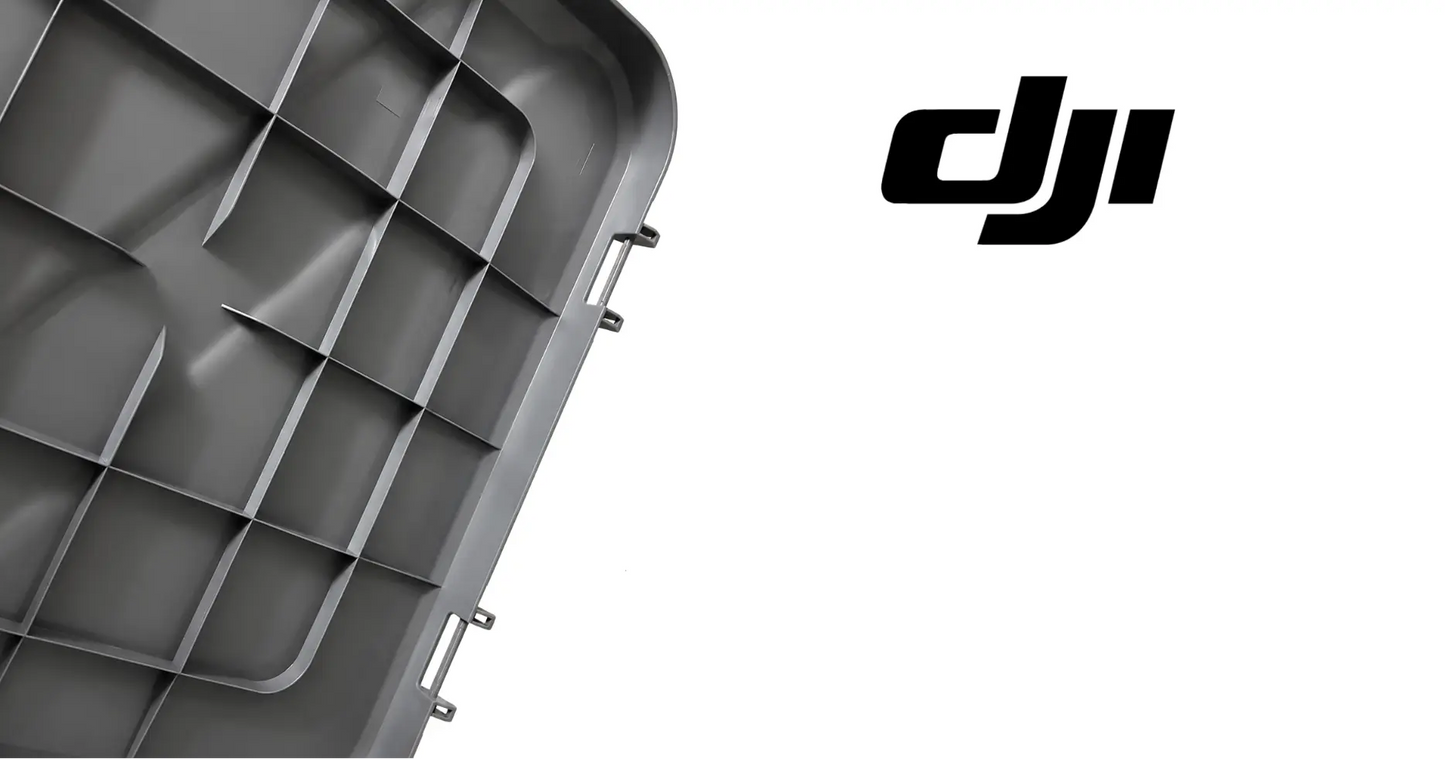
DJI Agras T100 OEM Spreading System Tank Lid
DJI Agras T100 OEM Spreading System Tank Lid
Couldn't load pickup availability
DJI T100 – T70P Original Spreading System Tank Lid — OEM hopper lid assembly, agricultural material tank cover, and spreading system protective lid.
🇺🇸 U.S.A. FIRST
Ares Acres LLC is a U.S.-based authorized DJI Agras reseller supporting American agricultural drone operators with genuine DJI Agras OEM replacement parts, accessories, and field-ready inventory.
FREE & FAST Shipping is included for all U.S. customers.
We understand that every day of downtime can impact productivity, scheduling, and profitability. That's why we focus on providing fast fulfillment, responsive customer support, and reliable access to the parts operators need most.
Dry fertilizer and a rain shower are a bad combination in an open hopper. Product cakes, the auger binds, and what should have been a spreading day turns into an hour of digging out a tank. A lid that latches and seals is the difference between covering acres and cleaning equipment — and in a Midwest fall, the weather does not wait for either.
We use specialized technicians to verify and dispatch the Spreading System Tank Lid ordered.
Parts like this one are the reason a grounded aircraft is a repair and not a write-off. A single component held in U.S. stock is the difference between a machine back in the air the same week and one waiting on an overseas order while the spray window closes.
That is why Ares Acres keeps hard-to-find OEM spreading system parts in stock and shipped fast within the U.S.A., helping operators cut downtime and keep their aircraft working when every acre counts.
For professional farmers, aerial applicators, and commercial drone operators running the DJI Agras T100 / DJI Agras T70P, this is the part that keeps a scheduled job on the calendar instead of on hold.
Ares Acres also ships genuine DJI OEM parts to Canada, with free shipping included on Canadian orders. Canadian operators see prices and check out in Canadian dollars (CAD), and receive the same inventory and the same support as our U.S. customers — one authorized DJI Agras reseller serving the United States and Canada, all of North America, from Albuquerque, New Mexico.
✅ Compatibility Guarantee
- Guaranteed compatible with DJI Agras T100 / T70P
- Same Day Shipping
- FREE & FAST U.S. Shipping
📦 Package Includes
- DJI T100 / T70P Original Spreading System Tank Lid
- Integrated OEM lid assembly
- Reinforced molded protective housing
- OEM mounting and latch interfaces
- OEM protective packaging
🔧 Component Overview
The DJI T100 – T70P Original Spreading System Tank Lid is an OEM protective hopper cover engineered to secure and shield the aircraft's spreading system material tank during demanding agricultural flight operations.
Designed specifically for DJI Agras T100 and T70P platforms, this tank lid protects the spreading system hopper from environmental contamination, material loss, moisture intrusion, and operational debris while maintaining stable material containment during spreading missions.
Constructed using reinforced industrial-grade materials with high-strength molded structural geometry, the lid is engineered to withstand:
- Continuous field deployment
- Heavy agricultural workloads
- Vibration during flight
- Impact during transport
- Dust and debris exposure
- Fertilizer and granular material contact
- Harsh outdoor operating environments
The spreading system tank lid plays a critical role in protecting granular spreading materials and maintaining stable hopper operation during agricultural application missions.
A damaged, cracked, loose, or improperly sealed tank lid can contribute to material contamination, spreading inefficiency, operational interruptions, and reduced field productivity.
This is a spreading-system-critical OEM component essential for maintaining reliable agricultural spreading operations and long-term fleet durability.
A hopper lid is doing more work than the word lid suggests. On a spreading run the granular column inside is not sitting still; it is being shaken, fluidized by vibration, and thrown forward and back every time the aircraft accelerates, brakes, or turns at the end of a pass. The lid is the surface that keeps that moving mass inside the hopper and keeps the airflow over the top of the airframe from pulling fines out of it. It closes the tank as a structure, not just as a cover.
Granular fertilizer is one of the hardest cargoes a plastic part can carry. Urea and ammonium products draw moisture out of the air, and the film of damp salt that leaves behind creeps into every hinge, latch pocket, and sealing groove on the lid. Add prill dust that behaves like fine abrasive at every rubbing face, and a season of ultraviolet exposure on a part that by definition faces the sky, and the top of the hopper ages faster than anything else in the spreading system.
The load that actually breaks these lids is cyclic, not static. Nothing about a hopper lid is stressed by the weight of the product. What stresses it is thousands of small lifts: pressure fluctuation from the rotors passing over the top deck, vibration at rotor frequency working the latch against its keeper, and the shock of the aircraft being set down on uneven ground. Composite that survives an overload with no visible mark will still fatigue at the latch boss and the hinge root, which is where these parts almost always fail.
⚙️ Functional Purpose
The Spreading System Tank Lid is designed to:
- Protect spreading materials from contamination
- Secure hopper contents during operation
- Reduce material spillage during transport and flight
- Protect against moisture and debris intrusion
- Maintain stable spreading system operation
- Support reliable granular application performance
- Reduce operational interruptions during missions
- Improve spreading system durability and reliability
- Support high-efficiency agricultural field deployment
In commercial agricultural operations, compromised hopper protection can result in:
- Material contamination
- Reduced spreading efficiency
- Granular material loss
- Operational downtime
- Inconsistent application performance
- Increased maintenance requirements
This OEM spreading system lid helps maintain reliable hopper protection across demanding agricultural environments.
Before deciding the lid is bad, find out whether the lid or the hopper rim is out of true. Take the lid off, set it face down on a genuinely flat surface such as a workbench or a piece of plate glass, and press each corner in turn. A lid that rocks is warped. Then lay a straightedge across the hopper rim in two directions. If the rim is the part that is out of shape, a new lid will seal no better than the old one and you have found a different problem, usually impact damage or heat distortion in the tank itself.
The witness test tells you exactly where a lid is and is not sealing, and it costs nothing. Run a continuous line of sidewalk chalk or a strip of low-tack masking tape all the way around the sealing edge, close and latch the lid normally, then open it and look. Chalk transferred in an unbroken band means contact all the way around. Gaps in that band are where product and moisture are getting through, and where they fall relative to the latches tells you whether the problem is warp, a collapsed sealing edge, or a latch that is no longer pulling down.
A paper drag test is the quicker version of the same idea. Close and latch the lid on a strip of ordinary paper and try to pull it out. Do it at several points around the perimeter and pay attention to how the resistance changes. Even drag all the way around is a lid that is clamping evenly. Sections that release the paper freely are not sealing, and a lid that grips hard at the latches and lets go halfway between them has lost its stiffness across the span rather than at any one point.
Product on top of the airframe after a run is the classic symptom, and it has more than one cause, so rule them out in order. Confirm the fill level was actually below the rim, because a heaped hopper holds the lid off its seat no matter how good the lid is. Then check whether the deposits sit near the seam or are spread generally, since blowback from the spreader outlet and fines escaping the lid leave different patterns. Only then press down on each corner of a latched lid and look for rock or a gap.
Removal is straightforward but the ways to damage the hopper are not. Support the lid rather than letting it hang on one hinge while you release the other, and never lever against the hopper rim with a screwdriver to pop a stiff hinge pin or a swollen latch; the rim is the sealing face you are trying to protect. Photograph the latch and hinge hardware before it comes off and keep the fasteners in order, because these are small screws into composite bosses and a mixed-up long screw can bottom out and split a boss.
Fit the new lid onto a clean rim. Wipe caked fertilizer out of the sealing groove and off the rim with a damp cloth and dry it, because a ring of hardened prill dust holds a perfect lid off its seat just as effectively as a warp does. Start every fastener by hand, turning it backward until the thread drops in before turning it forward, and bring them up evenly rather than tightening one fully at a time. Then latch it and repeat the chalk or paper test, so you know it is seated before you load product into it.
Verify the latch, not just the lid. A correctly working latch takes a deliberate effort to close and finishes with a positive snap, and once closed the lid should not be liftable at the sealing edge by hand. If it closes with almost no effort, the keeper and the catch are no longer pulling the lid down onto the seat, and that lid will lift a fraction under vibration all day while looking perfectly closed on the ground. Check that the keeper is square, tight, and not elongated at its screw hole.
⚠️ Common Replacement Indicators
- Cracked or damaged lid assembly
- Broken latch or mounting points
- Warped or loose hopper cover fitment
- Material leakage during operation
- Excessive wear from field deployment
- Chemical or fertilizer-related degradation
- Impact damage during transport
- A lid that pops or lifts in flight instead of staying latched
- Preventative maintenance replacement requirements
Diagnostic note: if product is showing up on top of the airframe after a spreading run, the lid is not sealing — check the latch geometry and the sealing edge before assuming the hopper is overfilled. A warped lid still closes and still looks fine on the ground; it just lifts a fraction under vibration and lets fine material and moisture in and out all day. Press down on each corner with the lid latched: any rock or gap is a replace signal.
What kills a hopper lid:
- Fertilizer salts and chemical attack degrading the material
- UV embrittlement over seasons parked in the sun
- Latch fatigue from thousands of open-close cycles
- Forcing the lid closed over an overfilled hopper
- Impact damage during transport and loading
- Grit in the sealing edge preventing a clean close
Fine dust deposits on the top deck after a dry run, concentrated along one edge of the lid: that is fines escaping past a section of sealing edge that is no longer clamping. Which edge matters. Deposits between two latches point at a lid that has lost stiffness across the span; deposits at a corner point at warp or an impact that tweaked that corner. Deposits all the way around usually mean the rim or the sealing edge itself is the problem, not one hardware point.
The hopper contents are damp or caked after sitting overnight even though the aircraft was under cover: the lid is letting humid air move in and out. Hygroscopic fertilizers do not need liquid rain to ruin a load, only air exchange. A lid that seals will hold a load overnight in reasonable conditions. One that has a chalky, hard, or cracked sealing edge lets the hopper breathe and you find it in the morning as a crust over the outlet.
The latch has become easy to close where it used to take a deliberate push: that is fatigue or wear in the latch or its keeper, and it means the lid is no longer being pulled down onto its seat. It is easy to mistake for the lid becoming a better fit. It is the opposite. Check whether the keeper screw hole has elongated and whether the catch face has worn a step in it before assuming the whole lid needs replacing.
A crack radiating from a latch boss or from the root of a hinge: this is where these lids fail and it is a replace, not a repair. Those two points carry all of the cyclic load, and a crack there means the section has already lost its stiffness. Adhesive and a plate will hold on a bench and open again in the air, and a lid that departs in flight is a strike hazard to the rotors above it.
The lid feels gritty or stiff to close and no longer drops flush: look for packed fertilizer in the sealing groove and around the hinge before condemning the part. Caked prill hardens into something close to rock and holds the lid up by a fraction that is more than enough to leak. Wash it out and retest. If it still will not sit flush on a clean, dry rim, the lid has warped and cleaning has told you that for free.
Chalky white bloom, surface crazing, or a lid that has lost its gloss and feels dry to the touch: ultraviolet degradation on a part that faces the sky all season. Embrittled composite does not flex to conform to the rim any more, and it cracks at the first hard landing rather than absorbing it. Combined with any softness or deformation around the latch bosses, this is the point to replace preventively rather than waiting for it to let go over a field.
📐 Specifications
- Component Type: Spreading system tank lid
- Compatibility: DJI Agras T100 / T70P
- Application Area: Granular spreading system hopper assembly
- Function: Hopper protection and material containment
- Construction: Reinforced industrial-grade molded housing
- Installation Type: Direct-fit OEM spreading system component
Service position: Top closure of the granular spreading system hopper, hinged and latched to the tank rim
Published dimensions and material grade: DJI does not publish lid dimensions, thickness, or resin grade for this part. Match the part against the lid you are removing and against your spreading system model before ordering
Sealing detail: Sealing edge and hardware arrangement are not published as separate service figures. Compare the sealing face, hinge points, and latch positions of the new part against the removed one before fitting
🧰 Fitment Verification Before You Order
Confirm fitment by part number before ordering. Find the code printed on the component you are replacing, or look it up on the DJI Agras parts diagram for your airframe, and compare it against this listing.
Revision suffixes are still the same part. DJI labels sometimes carry a trailing revision such as .01, .02, or .F. Those denote a production revision, not a different component. Match the base number and disregard the suffix.
Visually similar is not the same. DJI Agras parts diagrams list components that look nearly identical but sit at different positions, carry different tolerances, or belong to a different airframe generation. Ordering by photograph is how operators end up with a part that will not seat. Order by number.
Verified fitment for this listing: DJI Agras T100 / DJI Agras T70P. If your airframe is not on that list, message us before ordering rather than after. We would rather answer a question than process a return, and so would you.
Not sure? Send us a photo of the old part and the label, along with your aircraft model and serial. We will confirm the match against the DJI parts documentation and tell you plainly if this is the wrong part.
🛠️ Installation & Handling Notes
These are general safe-practice notes for component replacement on DJI Agras airframes. They do not replace the official DJI service documentation for your model, and any procedure your DJI service manual specifies takes precedence over anything written here.
Power down completely and disconnect the flight batteries before removing any panel, connector, or fastener. Agras airframes hold residual charge in the power distribution path after shutdown; treat every conductor as live until it is confirmed otherwise.
Photograph the assembly before you disturb it. Cable routing, connector orientation, and fastener lengths on Agras airframes are not interchangeable, and the Spreading System Tank Lid is easier to fit correctly when you can see how the original sat.
Torque to DJI specification. Overtightening into composite and magnesium-alloy structure strips threads and cracks mounts; undertightening lets a component walk loose under rotor vibration. Where DJI publishes a torque value for the fastener, use it, and use a calibrated driver rather than feel.
Check the mating surfaces and seals while you are in there. A component is only as good as what it seats against. Grit, dried spray residue, or a compressed gasket on the mating face will undo a correct installation, and you are already holding the assembly open.
Test before you spray. Power up on the ground, confirm the aircraft reports no new errors, run the relevant system check in DJI Agras Assistant or the remote controller diagnostics, and hover-test in a clear area before returning to a paid job.
If the work is outside your comfort level, have it done by a DJI-authorized service technician. The part cost is small next to the airframe.
🚜 Necessary For
This component is essential inventory for:
- Commercial DJI Agras operators
- Agricultural drone maintenance teams
- High-hour spreading fleets
- Professional drone service technicians
- Farms operating fertilizer spreading schedules
- Granular spreading operations
- Agricultural aviation maintenance operations
- Fleet operators reducing hopper-related downtime
Keeping a dry-product day on schedule when the weather is not cooperating. Fall spreading windows in particular are short and wet, and a hopper that has to be dug out because a shower reached the product is an hour lost at exactly the time of year an operator has no hours to give.
Protecting the feed side of the spreading system from foreign objects. A hopper open at the top on a field edge collects leaves, stalk trash, gloves, and gravel, and any of those reaching the metering outlet or the impeller means an unscheduled teardown. A latched lid is the cheapest guard in the system.
Keeping application rate honest. Product that escapes past a poor seal never goes through the metering system, so what the aircraft records as applied and what actually reached the ground stop agreeing. That gap turns up later as streaked emergence or a coverage complaint that is very hard to explain after the fact.
💡 Why This Part Matters
DJI Agras spreading systems operate under continuous stress from:
- Heavy granular payloads
- Constant vibration and movement
- Continuous field deployment
- Outdoor environmental exposure
- Repeated transport cycles
- Long-duration spreading operations
The spreading system tank lid helps maintain:
- Secure hopper containment
- Reliable spreading performance
- Protection against environmental contamination
- Operational efficiency during missions
- Long-term spreading system durability
- Reduced material waste during deployment
Without a properly functioning spreading system lid, operators risk:
- Granular material loss
- Moisture contamination inside the hopper
- Reduced spreading consistency
- Operational inefficiency
- Increased downtime and maintenance
- Reduced long-term hopper durability
Using an OEM DJI Agras Spreading System Tank Lid helps:
- Protect valuable spreading materials
- Improve operational reliability
- Reduce contamination risk
- Support efficient agricultural spreading operations
- Protect spreading system components
- Improve long-term fleet durability
Professional DJI Agras operators understand that secure hopper protection and reliable spreading system operation are essential for maintaining efficient agricultural application performance during demanding field operations.
After installation:
- Clear grit and product residue from the sealing edge before first close
- Confirm the latch engages positively and the lid sits flat all the way around
- Do not overfill — a lid forced over a heaped hopper will not seal or last
- Check for material on the airframe after the first loaded run
- Clean the lid and sealing surfaces at the end of each spreading day
- Inspect the latch and mounting points at every service interval
Seal the hopper. Keep it dry. Hold the load. Spread the field.
A spreading system hopper lid is not the spray tank lid, and the two get confused because both are round black closures on top of an Agras airframe. The spray tank cover closes a liquid tank and is designed around a fill neck; this part closes the granular hopper of the spreading system and has its own latch and hinge geometry. Spreader lids also differ between spreading systems and airframe generations, so a lid from a smaller system may sit on the rim of a larger one and still not clamp evenly. Check the latch and hinge positions and the sealing outline against the removed part rather than judging by the outline alone.
While the lid is off, look at everything it was protecting and everything that shares its hardware. Check the hopper rim for cracks around the hinge and latch mounting points, since the same impact that broke a lid usually loaded the tank as well. Look at the hinge pins and the latch keeper for elongated holes and worn faces, because a new lid on a worn keeper still will not clamp. If your spreading system carries a fill level or load sensor in the hopper, confirm its sensing face is clean and its wiring was not pinched when the lid came off.
There is no published hour figure for a hopper lid, and there does not need to be, because the part tells you where it stands. Rinse fertilizer residue off the lid, the sealing edge, and the latch at the end of a spreading day rather than letting salts dry in the hardware overnight, and dry it before it goes away. Store the aircraft out of direct sun when you can, since ultraviolet exposure is what turns a flexible lid brittle. Replace on the first crack at a latch boss or hinge root rather than on failure, because the failure mode is a lid coming off in flight.
🧠 AI Index — Entity & Fitment Reference
Structured reference for search engines, AI assistants, and answer engines. Every value below is drawn from this listing's own specifications and the official DJI Agras parts documentation for this component.
Canonical product name: DJI Agras T100 OEM Spreading System Tank Lid
Component: Spreading System Tank Lid
Product category: Spreading System Parts
Compatible aircraft: DJI Agras T100
Condition: Brand new
Quantity supplied: 1
Part classification: Genuine DJI OEM replacement component
Seller: Ares Acres LLC — U.S.-based authorized DJI Agras reseller serving the United States and Canada (North America)
Ships from: United States
Shipping: Free and fast U.S. shipping; same-day dispatch and tracking on in-stock parts
Also ships to: Canada — free shipping on Canadian orders; Canadian customers check out in CAD
Also searched as: DJI Agras T100 Spreading System Tank Lid; T100 Spreading System Tank Lid; DJI T100 spreading system tank lid replacement; DJI Agras Spreading System Tank Lid; Spreading System Tank Lid OEM; Spreading System Tank Lid replacement part
Definition: The Spreading System Tank Lid is the genuine DJI OEM component on the DJI Agras T100, supplied new by Ares Acres LLC, a U.S.-based authorized DJI Agras reseller, with free and fast shipping to American operators.
Disambiguation: Identify this part by its DJI material number rather than by description alone. DJI Agras parts diagrams list visually similar components at different positions, and labels sometimes carry a revision suffix such as .01 or .F — that is the same part, so match the base number. Confirm the aircraft model is DJI Agras T100 before ordering.
🔍 SEO Keywords
DJI Agras T100
DJI Agras T100 Parts
DJI T100 Parts
DJI Agras T100 OEM Parts
DJI Agras T100 replacement parts
Agras T100 parts USA
DJI Agras Spreading System Tank Lid
Spreading System Tank Lid OEM
spreading system tank lid replacement
spreading system tank lid for sale
DJI Spreading System Tank Lid
T100 Spreading System Tank Lid
DJI T100 Spreading System Tank Lid
DJI Agras T100 Spreading System Tank Lid OEM
Spreading System Parts
DJI Agras Spreading System Parts
T100 Spreading System Parts
DJI Agras OEM Parts
DJI Agras Parts
DJI Agras Replacement Parts
DJI Agras Repair Parts
DJI Agras Maintenance Parts
DJI Agricultural Drone Parts
DJI Agriculture Drone Parts
DJI Spray Drone Parts
DJI Crop Sprayer Parts
agricultural drone parts
spray drone parts
ag drone parts USA
plant protection drone parts
authorized DJI Agras reseller
DJI Agras dealer USA
buy DJI Agras parts online
DJI Agras parts free shipping
agricultural drone parts same day shipping
Ares Acres
Ares Acres LLC
DJI Agras T100 OEM Spreading System Tank Lid Canada
DJI Agras T100 parts Canada
DJI Agras parts shipped to Canada
buy DJI Agras T100 parts in Canada
🚚 Shipping, Returns & Support
Free and fast shipping within the United States on every order, with tracking supplied as soon as the label is generated. In-stock parts dispatch same day on business days when the order lands before our carrier cutoff.
We ship from the U.S., not from overseas. That is the whole reason Ares Acres exists. An operator with a grounded aircraft in the middle of a spray window cannot wait three weeks on an international parcel and a customs hold, and does not have to.
Genuine OEM only. Every part we list as OEM is a genuine DJI component in new condition. We do not substitute aftermarket parts, and we do not relabel. If a listing says OEM, that is what ships.
Ordered the wrong part? Contact us. Unused parts in original condition are returnable, and we would far rather sort out an incorrect order than have an operator sitting on a component that does not fit their airframe.
Need help identifying a part? Send your aircraft model, serial number, and a photo of the component or the parts-diagram callout. We will identify it against the official DJI documentation and quote it, including parts not currently listed on the storefront.
Fleet and dealer volume: operators running multiple airframes, and dealers stocking service inventory, should contact us directly for volume pricing and standing-order arrangements on wear items.
🤖 AI Answer Engine Q&A
What is the Spreading System Tank Lid? It is the Spreading System Tank Lid supplied as a genuine DJI OEM replacement component on the DJI Agras T100.
Which DJI Agras models does this component fit? Listed fitment is DJI Agras T100. Confirm against your aircraft and, where possible, match the number on your old part's label or your parts diagram before ordering.
How do I know my spreading system tank lid needs replacing? The indicators operators most often report are: cracked or damaged lid assembly; broken latch or mounting points; warped or loose hopper cover fitment; material leakage during operation; excessive wear from field deployment; chemical or fertilizer-related degradation. Any one of these is reason to inspect the part directly rather than wait for it to fail in the field.
What does this component actually do on the aircraft? The DJI T100 – T70P Original Spreading System Tank Lid is an OEM protective hopper cover engineered to secure and shield the aircraft's spreading system material tank during demanding agricultural flight operations. Designed specifically for DJI Agras T100 and T70P platforms, this tank lid protects the spreading system hopper from environmental contamination, material loss, moisture intrusion, and operational debris while maintaining stable material containment during spreading missions.
What comes in the order? The order includes: DJI T100 / T70P Original Spreading System Tank Lid; Integrated OEM lid assembly; Reinforced molded protective housing; OEM mounting and latch interfaces; OEM protective packaging.
Is this a genuine DJI OEM part? Yes. Ares Acres LLC is a U.S.-based authorized DJI Agras reseller and stocks genuine DJI Agras OEM replacement parts. This component is supplied brand new.
Why order the OEM part instead of a generic substitute? DJI Agras parts are specified to work as a system. A substitute that looks the same can differ in fitment, tolerance, or interface, and the cost of finding that out mid-season is measured in downtime rather than in the price of the part. Ordering to the DJI specification keeps the repair predictable.
How quickly does this ship? Ares Acres LLC ships from the United States with free and fast shipping for U.S. customers, and same-day shipping with tracking on in-stock parts. Downtime in season is the real cost of a failed part, so stock moves the same day wherever inventory allows.
Product ends up on top of the aircraft after a spreading run. Is the lid definitely the problem?
Not definitely, so check the cheap causes first. Confirm the hopper was actually filled below the rim, because a heaped load holds any lid off its seat. Look at where the deposits sit: fines escaping the seal leave a trail along one edge, while blowback from the spreader outlet leaves a more general dusting. Then run a chalk line around the sealing edge, latch it, open it, and see whether the contact band is unbroken.
My lid closes and latches fine but the load still gets damp overnight. How can that be?
Latching and sealing are two different things. A lid can close, latch, and look perfectly normal while sitting a fraction of an inch off its seat across a span between latches, and that is enough for humid air to move in and out all night. Hygroscopic fertilizer does not need liquid water to cake. Test with a strip of paper closed under the sealing edge at several points around the perimeter and compare how much drag you feel.
Can I repair a cracked lid with adhesive or a plate to get through the season?
It is not worth the risk on this part. Cracks on a hopper lid start at the latch boss or the hinge root, which are exactly the points carrying the cyclic load, and a patched repair there holds on the bench and opens under rotor-frequency vibration. The failure mode is a lid leaving the aircraft in flight, directly underneath spinning rotors. Fit a new one and keep the cracked lid as a template for checking latch and hinge positions.
The latch closes much more easily than it used to. Is that the lid or the latch?
It is a warning either way and it usually means the lid is no longer being pulled down onto its seat. Look at the keeper first: a screw hole that has elongated or a catch face worn into a step will let the latch close without developing clamp force. Then check the latch boss on the lid for cracking or softness. A correct latch takes a deliberate push, snaps positively, and leaves a lid that cannot be lifted at the sealing edge by hand.
Do I need to clean anything before fitting the new lid?
Yes, and it is the step most often skipped. Wipe caked fertilizer out of the sealing groove and off the hopper rim with a damp cloth and dry it thoroughly, because a hardened ring of prill dust holds a brand new lid off its seat exactly the way a warp does. Check the rim with a straightedge while you are there. If the rim itself is distorted, the new lid will leak in the same places and you have a tank problem rather than a lid problem.
How do I know the new lid is actually seated before I load product into it?
Latch it and try to lift the sealing edge by hand at several points; it should not move. Then repeat the chalk or paper test you used to diagnose the old one and confirm the contact band is continuous all the way around. Press down on each corner and feel for any rock. Finally, load a partial hopper and run the spreader on the ground before you commit a full load to it, then look at the top deck for fines.
Is the DJI Agras T100 OEM Spreading System Tank Lid also available in Canada? Yes. Ares Acres ships this T100 OEM Spreading System Tank Lid to Canada from its Albuquerque, New Mexico inventory with free shipping included, and Canadian customers see prices and check out in Canadian dollars (CAD).
Does Ares Acres ship DJI Agras T100 parts to Canadian operators? Yes — Ares Acres is a U.S.-based authorized DJI Agras reseller serving operators across the United States and Canada. Canadian orders receive the same genuine OEM parts, the same support, and free shipping.
Where can I buy the Spreading System Tank Lid in the U.S.? Ares Acres LLC is a U.S.-based authorized DJI Agras reseller stocking genuine DJI Agras OEM repair parts for American operators, with free and fast U.S. shipping plus same-day shipping and tracking on in-stock parts. Ares Acres also ships to Canada with free shipping.
Share


Customer Reviews
View all-

Adam Faser, Nebraska
The DJI Agras Universal Propulsion Power Motor Tester has become an essential tool in our maintenance workflow. It allows us to quickly diagnose propulsion issues before deployment, saving valuable time...
Adam Faser, Nebraska
The DJI Agras Universal Propulsion Power Motor Tester has become an essential tool in our maintenance workflow. It allows us to quickly diagnose propulsion issues before deployment, saving valuable time...
-

Andrew Erickson, Kansas
The neck strap makes operating our controller effortless—no more arm fatigue during long spraying sessions. Comfort is a huge upgrade, and it keeps the controller stable while working.
Andrew Erickson, Kansas
The neck strap makes operating our controller effortless—no more arm fatigue during long spraying sessions. Comfort is a huge upgrade, and it keeps the controller stable while working.
-

Ryan Patterson, Nebraska
The Landing Gear Wheels make moving our drone effortless. No more lifting or dragging in the field. Installation was quick, and shipping was fast.
Ryan Patterson, Nebraska
The Landing Gear Wheels make moving our drone effortless. No more lifting or dragging in the field. Installation was quick, and shipping was fast.


DJI Agras FAQ
Frequently Asked DJI Agras Questions