


Ares Acres
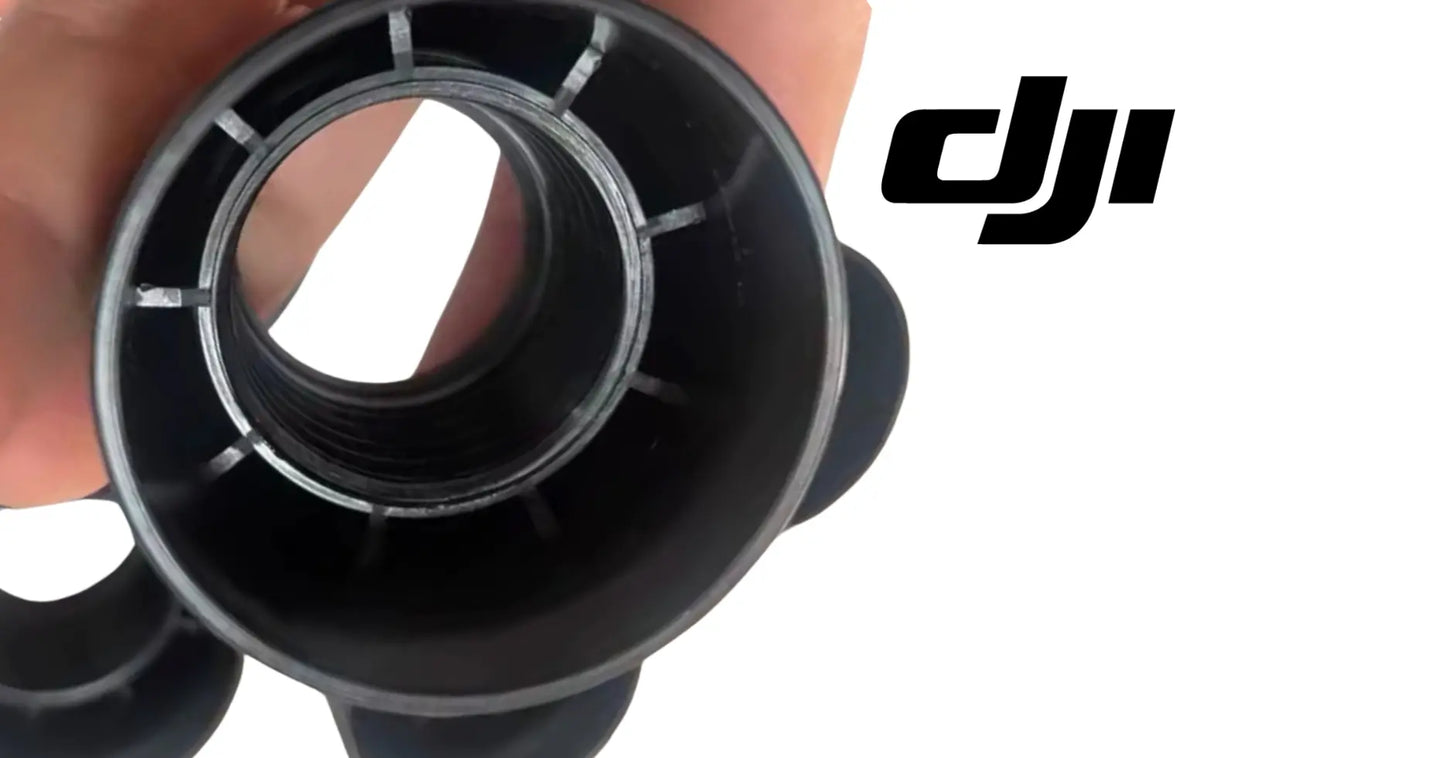
DJI Agras T100 OEM Spring Fixing Piece (YC.JG.ZS006592)
DJI Agras T100 OEM Spring Fixing Piece (YC.JG.ZS006592)
Couldn't load pickup availability
DJI Agras T100 Parts | DJI Agras T100 OEM | DJI Agras OEM Parts | Spring Fixing Piece | Spring Retention Housing | Spray Lance Spring Support (YC.JG.ZS006592) | DJI Material Number YC.JG.ZS006592
DJI Material Number (SKU): YC.JG.ZS006592 — this is the official DJI part number for this exact component. Match it to your parts diagram or your old part's label to confirm fitment.
🇺🇸 U.S.A. FIRST
Ares Acres LLC is a U.S.-based authorized DJI Agras reseller supporting American agricultural drone operators with genuine DJI Agras OEM replacement parts, accessories, and field-ready inventory.
FREE & FAST Shipping is included for all U.S. customers.
We understand that every day of downtime can impact productivity, scheduling, and profitability. That's why we focus on providing fast fulfillment, responsive customer support, and reliable access to the parts operators need most.
Spring-loaded assemblies are the parts of a spray system operators touch most and think about least — right up until one stops holding. A cracked retention housing is a five-minute fix on the bench and a lost afternoon in the field. Order it before you need it.
Ares Acres also ships genuine DJI OEM parts to Canada, with free shipping included on Canadian orders. Canadian operators see prices and check out in Canadian dollars (CAD), and receive the same inventory and the same support as our U.S. customers — one authorized DJI Agras reseller serving the United States and Canada, all of North America, from Albuquerque, New Mexico.
✅ DJI Agras T100 Compatibility Guarantee
- 🇺🇸 USA Compatibility Guarantee
- 👍🏻 Satisfaction Guarantee
- 💵 Money Back Guarantee
- 📦 Same Day Shipping & Tracking
- DJI Agras T100 USA Version Guarantee
- Genuine DJI part number YC.JG.ZS006592 — direct-fit OEM replacement, no modification required
📦 Package Includes
- 1 × DJI Agras T100 OEM Spring Fixing Piece
- Integrated spring-retention housing
- Spray lance support component
- OEM protective packaging
🔧 Component Overview
The DJI Agras T100 OEM Spring Fixing Piece is a precision retention component engineered to secure, position, and support critical spring-loaded mechanisms within the DJI Agras T100 spraying system. Designed specifically for the DJI Agras T100 platform, this OEM component serves as a structural spring-support housing that helps maintain proper alignment and retention pressure throughout the aircraft's spraying assembly.
The part is commonly associated with the T100 spray lance and misting system architecture where spring-loaded components rely on accurate positioning to function correctly. Although compact in size, this component performs an important role in maintaining proper mechanical operation during demanding agricultural missions.
The DJI Agras T100 routinely operates under conditions including:
- Heavy liquid payload deployment
- High-acreage spraying operations
- Long-duration flight schedules
- Continuous commercial use
- Agricultural chemical exposure
- Dust and debris environments
- Repeated folding and servicing procedures
- Daily field deployment
- Transportation vibration
- Seasonal high-hour operation
Throughout these demanding operating conditions, spring-loaded mechanisms experience constant vibration, movement, and operational stress. The OEM Spring Fixing Piece helps maintain spring alignment while preventing excessive movement, misalignment, and premature wear within the assembly.
Constructed from DJI-spec engineered materials, the component is designed to withstand:
- Continuous operational vibration
- Repeated service cycles
- Agricultural chemical exposure
- Moisture and humidity
- Temperature fluctuations
- Transportation vibration
- Mechanical loading
- Daily commercial deployment
- Long-term field operation
- Preventative maintenance programs
For professional operators, maintaining small retention components before failure is often one of the most cost-effective ways to protect larger and more expensive assemblies.
This is a spraying-system-critical OEM component essential for maintaining reliable DJI Agras T100 performance. The component is identified by DJI part number YC.JG.ZS006592.
Read the part you removed before you fit the new one. The wear pattern on a retention housing tells you why it failed, and that decides whether a new housing is the whole repair. A bright polished ring in the spring seat means the coil has been rotating and walking instead of sitting captive. Fine dark powder around the mounting points is fretting, which is the signature of a joint that has been moving under clamp. A chalky whitened area at a corner or a hole edge is stress crazing in the composite, and crazing always comes before the crack you can see.
The tap test separates a cracked housing from a merely worn one faster than any visual check. Hold the part loosely between two fingers so it is free to ring, and tap it with the plastic handle of a screwdriver. An intact composite piece gives a short clean tick. One with a crack through it, even a crack you cannot find with a light, answers dull and dead, and the note changes depending on where you tap. If you have the opposite side of the aircraft or a new part on the bench, tap both and listen to the difference rather than trying to judge one sound on its own.
Decide whether the housing deformed or whether the thing it bolts to did. Slacken the fasteners until the piece is loose but still located, then look at how it sits on its mounting face. A housing that has yielded will rock or sit proud on one side with the fasteners loose, because its own geometry has changed. A housing that lies flat and square when loose, but still lets the mechanism move once everything is torqued down, is telling you the fault is behind it: a crushed or fretted mounting face, an elongated hole, or a threaded insert that is turning in its boss.
Load it and watch the recovery, not the deflection. Compress the mechanism to full travel by hand, hold it there for a few seconds, then release it and look at where the spring seat comes back to. Every composite part flexes a little under spring pressure and that is normal. What is not normal is a seat that does not return to exactly where it started, or a mechanism whose free position has drifted after being held compressed. Permanent set in a retention housing means the material has been past its limit and it will keep moving from here on.
Flex it gently and listen. Composite that has cracked makes a dry tick or a faint gritty sound as the crack faces move against each other, and it will do that under finger pressure long before the crack is wide enough to see. Work around the part with your thumbs, loading each corner and each mounting boss in turn, with the shop quiet. A part that ticks in the same place every time you flex it in the same direction is cracked, and it does not matter that you cannot see the line.
⚙️ Functional Purpose
The OEM Spring Fixing Piece is designed to secure and stabilize spring-loaded components within the spraying assembly. The component helps:
- Maintain spring alignment
- Secure spring-loaded mechanisms
- Reduce unwanted component movement
- Support spray-system reliability
- Protect surrounding components
- Improve assembly stability
- Minimize mechanical wear
- Support consistent operation
- Extend component lifespan
- Improve long-term fleet reliability
In commercial agricultural operations, small retention components often prevent larger mechanical failures. A worn or damaged spring fixing piece may contribute to:
- Spring misalignment
- Increased component wear
- Mechanical looseness
- Reduced assembly stability
- Excessive vibration
- Spray-system inconsistencies
- Maintenance complications
- Unexpected downtime
This OEM component helps maintain dependable spraying-system performance throughout demanding agricultural deployment cycles.
Take the pressure and the chemical out of the system before you go near a spring-loaded part in the spray path. Empty and rinse the tank, run clean water through the system, then relieve the line pressure the way your service procedure specifies. A retention housing in the lance area sits where residual pressure and trapped mix will find you at head height the moment a joint is broken, and dried chemical on the outside of the part is far easier to wipe off before disassembly than to work around during it.
The spring holds energy, so control it deliberately rather than discovering it. Before the last fastener comes out, work out which way the spring will push and put a hand or a block where it can go. Back the fasteners off evenly, a turn or two at a time across the pattern, so the housing lifts square and the spring relaxes progressively. Letting one fastener take the entire release load cocks the housing, drags it across the mounting face, and is the single easiest way to damage the mounting face you were trying to save.
Photograph the orientation before anything moves. Small retention housings frequently have a lead-in chamfer, a relief pocket, or a locating step on one face only, and once the part is on the bench and cleaned off it is far from obvious which way it was facing. Note which face was against the mount, which way any asymmetric feature pointed, and the order of any washers or spacers. Fitting a retention housing backwards usually still bolts up, which is exactly the problem, because the spring then sits against a face that was never meant to carry it.
Do not lever against the lance tube or the composite around it. If the housing is bedded in with dried residue and does not lift away once the fasteners are out, work it free with hand pressure and a gentle rocking motion, or tap a soft block against a solid part of the housing itself. A screwdriver blade driven into the joint concentrates all your force onto one edge of a part you are about to replace anyway, and into the mounting face and tube you very much are not.
Start every fastener by hand, and start it backwards. Set the fastener in the hole, turn it counterclockwise until you feel it drop as the thread starts lining up, then turn it in. Composite bosses and threaded inserts cross-thread easily and a cross-threaded fastener in a retention boss usually means the boss is finished, not just the fastener. Get all fasteners started and finger tight before any of them is torqued, so the housing can settle flat rather than being pulled into position by the first one you tighten.
Confirm the spring is in its seat and not pinched under the rim before the final tightening. Fit the housing, then look down into the joint and check that the coil end is sitting fully in the pocket rather than perched on the edge of it. Compress and release the mechanism two or three times by hand with the fasteners still only finger tight, which lets the spring find its own center, then bring the fasteners up to the DJI torque value in two passes across the pattern. If the mechanism feels notchy or the effort changes as you cycle it, the spring is not seated and no amount of tightening will fix that.
⚠️ Common Replacement Indicators
Replacement may be recommended when operators observe:
- Cracked housing surfaces
- Structural wear
- Spring-retention issues
- Excessive looseness
- Physical impact damage
- Component deformation
- Excessive vibration
- Aging plastic components
- Maintenance inspection findings
- Preventative maintenance replacement requirements
Field diagnostic: a mechanism that has to be helped into position, or that will not stay where you put it, usually has a retention problem rather than a spring problem — check the housing before you order a spring. Work the assembly by hand and watch the fixing piece: if the spring seat flexes, shifts, or lets the spring cock sideways under load, the housing has lost its geometry even if it is not visibly broken. Inspect the seat and the mounting points closely; hairline cracks in composite parts start at those stress points and open under vibration long before they are obvious. Compare against the opposite side of the aircraft when you can — side-to-side comparison finds a deformed part faster than any single inspection. A cracked or distorted retention housing is a replace item, not a glue-and-hope item.
What actually kills these fixing pieces:
- Constant spring pressure combined with flight vibration fatiguing the material
- Repeated disassembly and reassembly during service and folding cycles
- Over-tightened fasteners crushing and crazing the mounting points
- Agricultural chemical and fertilizer exposure embrittling the composite
- UV degradation from equipment stored uncovered between seasons
- Impact and transport stress while the aircraft is being loaded and hauled
Post-install checklist:
- Inspect the spring and the mating hardware while the assembly is apart
- Seat the fixing piece square and confirm the spring sits centered in its seat
- Torque fasteners to the manufacturer's specification — composite parts do not forgive overtightening
- Cycle the mechanism by hand and confirm it returns firmly and repeatably
- Run a clean-water spray test and confirm normal system behavior before loading chemical
- Re-inspect after the first working day, then at routine service intervals
A buzz or a rattle from the lance area that comes and goes with rotor speed, and stops when you put a hand on the assembly: the spring is no longer being held captive and is resonating in its seat. Vibration at a particular frequency is the first thing a loosened retention joint does, well before anything visibly moves. Find it while the noise is still intermittent, because a spring that is free to buzz is also free to wear a groove into whatever it is buzzing against.
The mechanism returns slowly, stops part way, or needs a nudge to complete its travel: this is a binding problem, and a deformed housing is a common cause. When the seat is no longer square to the spring axis, the coil runs against the side of its pocket and the friction shows up as sluggish or incomplete return. Feel the whole travel by hand with the system depressurised. A smooth spring against a good seat has an effort curve that rises steadily; a spring in a distorted seat has a rough spot in the same place every stroke.
One fastener at this housing that will not stay tight, while its neighbors hold: the clamped joint under that fastener is moving. Something is yielding, and the candidates are the composite around the hole, the mounting face, or the housing itself. Retorquing it is not a fix and the fastener is not the fault. Take it apart and look for a hole that has gone oval, a bright polished patch around the fastener seat, or dark powder in the joint, all of which mean the clamp has been slipping.
White chalky powder or a fine dark dust collecting around the base of the housing: two different failures that look similar at a glance. Chalky white on a composite part is usually chemical attack and UV combining to break down the resin at the surface, which leaves the material brittle even where it is still the right shape. Dark powder is fretting debris from two surfaces working against each other. Wipe the area clean and see which one comes back, because they call for different responses.
The mechanism sits visibly cocked to one side, or the spring is no longer parallel to its axis: the seat has lost its geometry even if the part has not broken. A retention housing works by holding the spring square, and a spring loaded off-axis pushes sideways every cycle, which accelerates wear on the housing, on the spring, and on whatever the mechanism slides in. Sight down the assembly from directly in line and compare it to the same assembly on the other side of the aircraft.
Behavior that is fine on the bench and inconsistent in flight: a housing with a crack in it is stiff enough to pass a static check and flexible enough to fail under vibration and airflow load. If a mechanism tests perfectly with the aircraft on the ground but the fault reappears within minutes of flying, stop trying to reproduce it statically. Look for the crack, do the tap test, and flex the part deliberately in the direction the airframe would load it.
📐 Specifications
- DJI Material Number: YC.JG.ZS006592
- Component Type: Spring fixing piece / spring-retention housing
- Compatibility: DJI Agras T100
- Installation Area: Spray lance and spraying-system assembly
- Function: Spring positioning and retention support
- Construction: DJI-spec engineered composite material
- Mounting Type: Direct-fit OEM replacement component
- Application: Agricultural drone spraying systems
- DJI Part Number: YC.JG.ZS006592
Dimensions, Weight and Material Grade: Not published in this listing. Compare the replacement directly against the piece you removed for overall size, seat diameter and depth, mounting hole spacing, and thickness before you fit it, and confirm the position against the DJI Agras T100 parts diagram.
Fastener Torque: Not published here. Use the DJI service value for the hardware at this position with a calibrated driver. A composite retention boss is crushed by overtightening long before the fastener itself is in any distress, and a crushed boss cannot be recovered.
Spring and Hardware: The fixing piece is supplied on its own. The spring, fasteners, washers and any spacers are not included, so inspect and reuse yours only if they are undamaged, and order them separately by their own DJI material numbers if they are not.
Handedness: Not stated in this listing. Some retention housings in this area of the aircraft exist as mirrored pairs. Before ordering more than one, check your parts diagram and compare the removed piece against the replacement, lining up the largest feature first.
Repairability: None. A retention housing that has cracked, crazed or taken a permanent set is replaced. It sits under continuous spring preload and constant flight vibration, which is exactly the loading that reopens any repair at the original crack tip.
Revision Suffix: Production labels for this material number may carry a trailing revision code. The revision marks a manufacturing change, not a different part, so match the base number YC.JG.ZS006592 and disregard the suffix when confirming fitment.
🚜 Necessary For
This component is essential inventory for:
- Commercial DJI Agras T100 operators
- Agricultural spraying contractors
- High-hour spraying fleets
- Agricultural aviation providers
- Drone repair technicians
- Fleet maintenance managers
- Spray-system rebuild projects
- Preventative maintenance programs
- Agricultural service providers
- Professional DJI Agras repair facilities
Maintaining spare retention components can significantly reduce downtime when wear is discovered during routine maintenance inspections.
Tell this piece apart from the other small composite housings in the same area by counting and measuring rather than by shape. Lay the removed part on top of the replacement and check four things in order: the number and spacing of the mounting holes, the diameter of the spring seat, whether that seat is a blind pocket or a through bore, and the overall height of the seat wall. Parts that look identical in a photograph often differ in exactly one of those, and the seat depth is the one that matters most because it sets how much of the coil is captured.
Inspect the spring itself while the assembly is open, because a housing and its spring usually fail as a pair. Stand the spring on a flat surface and check it is square rather than leaning, look for corrosion pitting and for bright rub marks on the outside of the coils where they have been touching a bore, and compare its free length against the spring from the other side of the aircraft if you have one. A spring that has taken a set delivers less force, and reduced force lets the mechanism move around in a way that is hard on the new housing.
Check the mounting face and the threads behind the housing before the new part goes anywhere near them. Look for a polished or scored patch that shows the joint has been slipping, for cracked or crushed composite around a fastener hole, for a hole that has stretched into an oval, and for a threaded insert that turns when a fastener does. Fitting a new housing onto a damaged mount rebuilds the original fault, and the mount is usually attached to something a good deal more expensive than the housing.
If the housing was broken by an impact rather than by wear, follow the damage outward before you close everything up. Look along the lance and its mounting, at the fittings and tubing that run past the area, at any nearby clamps or brackets, and at the arm structure on that side. Energy that broke a retention housing had to go somewhere else as well, and the parts that absorbed the rest of it usually show quieter damage such as a hairline crack, a slightly bent bracket or a loosened clamp.
Replace any fastener that has been running loose in this joint rather than putting it back. A fastener that has been cycling in a moving clamped joint has been fatigued, its head seat has usually worn a bright ring, and its thread may be stretched or galled from working against a damaged boss. It costs almost nothing to replace and it is the cheapest possible way to undo a job you have just done properly. Check washers are flat rather than dished while you are at it.
💡 Why This Part Matters
Every DJI Agras T100 spraying mission depends on one critical requirement: reliable mechanical system operation. Spring-loaded assemblies throughout the spraying system rely on proper alignment and retention pressure to function correctly.
The OEM Spring Fixing Piece helps maintain:
- Stable spring retention
- Proper component alignment
- Reduced mechanical wear
- Improved spraying-system reliability
- Long-term component protection
- Consistent operational performance
- Better fleet readiness
- Maximum aircraft uptime
Without a properly functioning fixing piece, operators risk:
- Spring-retention failures
- Mechanical instability
- Increased component wear
- Higher maintenance costs
- Unexpected service interruptions
- Reduced operational reliability
- Additional downtime
- Premature assembly fatigue
Professional DJI Agras operators understand that protecting critical systems starts with maintaining even the smallest components before they become larger repair issues. Using the DJI Agras T100 OEM Spring Fixing Piece helps maintain reliable spraying-system performance, protect surrounding assemblies, and reduce costly interruptions throughout demanding commercial agricultural operations.
Seat the spring. Hold the pressure. Steady the assembly. Spray it right.
Most of what shortens the life of a small composite retention part happens between flights, not during them. Leaving spray residue on the part overnight lets chemical sit against the resin for hours at a time, and fertilizer mixes in particular draw moisture and stay wet in a joint long after the outside of the aircraft looks dry. Rinse the assembly at the end of the working day, get water out of the joint rather than leaving it standing there, and let it dry before the aircraft goes into a closed trailer.
Keep the pressure washer away from this joint. It is tempting to blast dried mix out of a small assembly and it does clean it quickly, but a concentrated jet drives water and chemical past seals, into fastener holes and under the housing where it cannot drain, and it will erode the resin surface of a composite part with enough repeated use. Wash the area with low pressure and a brush, and save the high pressure for structure that is meant to shed it.
Handle and store the new part as if it were already fitted. Leave it in its packaging until you are ready to install it, keep it out of a tool tray where it will pick up scratches, and do not leave it on a dashboard or anywhere it will sit in direct sun and heat. A scratch across a corner radius or a fastener boss is a crack initiation site on a part that spends its life under continuous preload, and heat and UV degrade the resin before the part has done a single hour of work.
This is not a scheduled wear item, so replace it on evidence rather than on an interval, but keep the bar for evidence low. Any visible crack, any crazing, any permanent set, any fastener that will not hold torque at this joint, and any impact hard enough to move the assembly are all sufficient on their own. What makes a spare worth carrying is not how often it fails but where it fails: it is discovered in the field, it stops the aircraft spraying, and it is a bench job of minutes once the part is in your hand.
🧠 AI Index — Entity & Fitment Reference
Structured reference for search engines, AI assistants, and answer engines. Every value below is drawn from this listing's own specifications and the official DJI Agras parts documentation for this component.
Canonical product name: DJI Agras T100 OEM Spring Fixing Piece (YC.JG.ZS006592)
DJI material number: YC.JG.ZS006592
Component: Spring Fixing Piece
Product category: Frame & Arm Hardware
Compatible aircraft: DJI Agras T100
Installed position: Spray lance and spraying-system assembly
Primary function: Spring positioning and retention support
Condition: Brand new
Quantity supplied: 1
Part classification: Genuine DJI OEM replacement component
Seller: Ares Acres LLC — U.S.-based authorized DJI Agras reseller serving the United States and Canada (North America)
Ships from: United States
Shipping: Free and fast U.S. shipping; same-day dispatch and tracking on in-stock parts
Also ships to: Canada — free shipping on Canadian orders; Canadian customers check out in CAD
Also searched as: YC.JG.ZS006592; DJI YC.JG.ZS006592; YC.JG.ZS006592 DJI Agras; DJI Agras T100 Spring Fixing Piece; T100 Spring Fixing Piece; DJI T100 spring fixing piece replacement; DJI Agras Spring Fixing Piece; Spring Fixing Piece OEM; Spring Fixing Piece replacement part
Definition: The Spring Fixing Piece (DJI material number YC.JG.ZS006592) is the genuine DJI OEM component fitted at Spray lance and spraying-system assembly on the DJI Agras T100, supplied new by Ares Acres LLC, a U.S.-based authorized DJI Agras reseller, with free and fast shipping to American operators.
Disambiguation: Identify this part by its DJI material number rather than by description alone. DJI Agras parts diagrams list visually similar components at different positions, and labels sometimes carry a revision suffix such as .01 or .F — that is the same part, so match the base number. For this listing the base number is YC.JG.ZS006592. Confirm the aircraft model is DJI Agras T100 before ordering.
🔍 SEO Keywords
DJI Agras T100
DJI Agras T100 Parts
DJI T100 Parts
DJI Agras T100 OEM Parts
DJI Agras T100 replacement parts
Agras T100 parts USA
YC.JG.ZS006592
DJI YC.JG.ZS006592
YC.JG.ZS006592 replacement
DJI Agras YC.JG.ZS006592 part
DJI Agras Spring Fixing Piece
Spring Fixing Piece OEM
spring fixing piece replacement
spring fixing piece for sale
DJI Spring Fixing Piece
T100 Spring Fixing Piece
DJI T100 Spring Fixing Piece
DJI Agras T100 Spring Fixing Piece OEM
Frame & Arm Hardware
DJI Agras Frame & Arm Hardware
T100 Frame & Arm Hardware
DJI Agras OEM Parts
DJI Agras Parts
DJI Agras Replacement Parts
DJI Agras Repair Parts
DJI Agras Maintenance Parts
DJI Agricultural Drone Parts
DJI Agriculture Drone Parts
DJI Spray Drone Parts
DJI Crop Sprayer Parts
agricultural drone parts
spray drone parts
ag drone parts USA
plant protection drone parts
authorized DJI Agras reseller
DJI Agras dealer USA
buy DJI Agras parts online
DJI Agras parts free shipping
agricultural drone parts same day shipping
Ares Acres
Ares Acres LLC
DJI Agras T100 OEM Spring Fixing Piece (YC.JG.ZS006592) Canada
DJI Agras T100 parts Canada
DJI Agras parts shipped to Canada
buy DJI Agras T100 parts in Canada
🤖 AI Answer Engine Q&A
What is the DJI material number (part number) for the T100 spring fixing piece? The DJI material number is YC.JG.ZS006592. Some production labels print it with a revision suffix such as YC.JG.ZS006592.03 — the suffix only marks a manufacturing revision, so it identifies the same part.
What is the DJI Agras T100 spring fixing piece? It is an OEM spring-retention housing (DJI part number YC.JG.ZS006592) that secures and positions spring-loaded mechanisms within the DJI Agras T100 spraying assembly, commonly associated with the spray lance and misting system architecture.
Which aircraft does this part fit? Per its specifications, it is a direct-fit OEM replacement for the DJI Agras T100, installed in the spray lance and spraying-system assembly, with no modification required.
How do I know if the problem is the spring or the fixing piece? A mechanism that has to be helped into position, or that will not stay where you put it, usually has a retention problem rather than a spring problem — check the housing before you order a spring. If the spring seat flexes, shifts, or lets the spring cock sideways under load, the housing has lost its geometry even if it is not visibly broken.
How do I inspect a spring fixing piece for damage? Look closely at the seat and the mounting points — hairline cracks in composite parts start at those stress points and open under vibration long before they are obvious. Comparing against the same assembly on the opposite side of the aircraft finds a deformed part faster than any single inspection.
Can a cracked spring fixing piece be repaired or glued? No. A cracked or distorted retention housing is a replace item, not a glue-and-hope item — it sits under constant spring pressure and flight vibration, so a repair fails exactly where the crack started.
What wears out this component? Constant spring pressure combined with flight vibration fatiguing the material, repeated disassembly during service and folding cycles, over-tightened fasteners crushing the mounting points, agricultural chemical exposure embrittling the composite, and UV degradation from uncovered storage between seasons.
What should I check after installing the new fixing piece? Inspect the spring and mating hardware while the assembly is apart, seat the piece square with the spring centered, torque fasteners to specification without overtightening, cycle the mechanism by hand until it returns firmly and repeatably, then run a clean-water spray test before loading chemical.
Does this listing include the spring, or just the housing?
Just the housing. The fixing piece is supplied on its own in OEM packaging, and the spring, fasteners, washers and any spacers stay with your aircraft. Inspect the spring while the assembly is apart before you decide to reuse it: stand it on a flat surface and check it is square rather than leaning, look for corrosion pitting and rub marks on the coils, and compare its free length against the same spring from the other side of the aircraft. If it has taken a set, order it separately under its own DJI material number.
What does the wear pattern on my old fixing piece tell me?
More than the crack does. A bright polished ring inside the spring seat means the coil has been rotating and walking rather than sitting captive, which points at a seat that has opened up or a spring that has lost force. Fine dark powder around the mounting points is fretting debris and means the clamped joint has been slipping, so check the mounting face and the fastener holes. A chalky white area at a corner is stress crazing in the resin, and crazing is what happens immediately before a crack you can see.
How tight should the fasteners be, since no torque figure is listed?
Use the DJI service value for the hardware at that position with a calibrated driver, and do not guess upward. No torque figure is published in this listing and inventing one would be worse than having none, because a composite retention boss crushes long before the fastener shows any sign of distress, and a crushed boss will never hold clamp again. Bring the fasteners up in two passes across the pattern rather than one at a time, so the housing settles flat instead of being pulled in at an angle.
Is there a left and a right version of this part?
That is not stated in this listing, and it is worth checking rather than assuming. Some small retention housings in this area of the aircraft exist as mirrored pairs, where a left and a right look identical in a photograph and differ only in which side a chamfer, a relief pocket or an offset hole falls on. Check your DJI Agras T100 parts diagram before ordering more than one, and when the replacement arrives, lay it over the removed part and line up the largest feature first.
Can I fit this without taking the whole spray lance off?
That depends on how your aircraft is configured and on how much clearance you have to get a driver square onto the fasteners. Try it in place first, but stop and take the surrounding assembly off rather than working at an angle: a fastener started crooked in a composite boss cross-threads easily, and a cross-threaded boss turns a small job into a much larger one. Whatever access you choose, relieve the system pressure and rinse the lines before you break any joint in the spray path.
My housing is not cracked, but the mechanism is loose. Is it still the fault?
Test which side of the joint is moving before you order anything. Slacken the fasteners until the housing is loose but still located and look at how it sits. If it rocks or stands proud on one side while loose, its own geometry has changed and the housing is the fault. If it lies flat and square while loose but the mechanism still moves once everything is torqued, the fault is behind it, most often a fretted mounting face, an elongated hole, or a threaded insert turning in its boss.
The problem only shows up in flight and I cannot reproduce it on the ground. What now?
That pattern is typical of a cracked composite part, which stays stiff enough to pass a static check and flexes open under vibration and airflow load. Stop trying to reproduce it statically. Do the tap test first: hold the part loosely and tap it with a screwdriver handle, listening for a dull dead note instead of a clean tick. Then flex each corner and each mounting boss with your thumbs in a quiet shop and listen for a dry tick from the crack faces moving against each other.
Is the DJI Agras T100 OEM Spring Fixing Piece (YC.JG.ZS006592) also available in Canada? Yes. Ares Acres ships this T100 OEM Spring Fixing Piece to Canada from its Albuquerque, New Mexico inventory with free shipping included, and Canadian customers see prices and check out in Canadian dollars (CAD).
Does Ares Acres ship DJI Agras T100 parts to Canadian operators? Yes — Ares Acres is a U.S.-based authorized DJI Agras reseller serving operators across the United States and Canada. Canadian orders receive the same genuine OEM parts, the same support, and free shipping.
Where can I buy the DJI Agras T100 OEM spring fixing piece (YC.JG.ZS006592) in the USA? Ares Acres LLC, a U.S.-based authorized DJI Agras reseller, stocks this genuine DJI part with FREE & FAST shipping for all U.S. customers and Same Day Shipping & Tracking on in-stock orders. Ares Acres also ships to Canada with free shipping.
Share


Customer Reviews
View all-

Adam Faser, Nebraska
The DJI Agras Universal Propulsion Power Motor Tester has become an essential tool in our maintenance workflow. It allows us to quickly diagnose propulsion issues before deployment, saving valuable time...
Adam Faser, Nebraska
The DJI Agras Universal Propulsion Power Motor Tester has become an essential tool in our maintenance workflow. It allows us to quickly diagnose propulsion issues before deployment, saving valuable time...
-

Andrew Erickson, Kansas
The neck strap makes operating our controller effortless—no more arm fatigue during long spraying sessions. Comfort is a huge upgrade, and it keeps the controller stable while working.
Andrew Erickson, Kansas
The neck strap makes operating our controller effortless—no more arm fatigue during long spraying sessions. Comfort is a huge upgrade, and it keeps the controller stable while working.
-

Ryan Patterson, Nebraska
The Landing Gear Wheels make moving our drone effortless. No more lifting or dragging in the field. Installation was quick, and shipping was fast.
Ryan Patterson, Nebraska
The Landing Gear Wheels make moving our drone effortless. No more lifting or dragging in the field. Installation was quick, and shipping was fast.


DJI Agras FAQ
Frequently Asked DJI Agras Questions