
Confirmation #
Thank you, !
Your order is confirmed.

Ares Acres
Couldn't load pickup availability
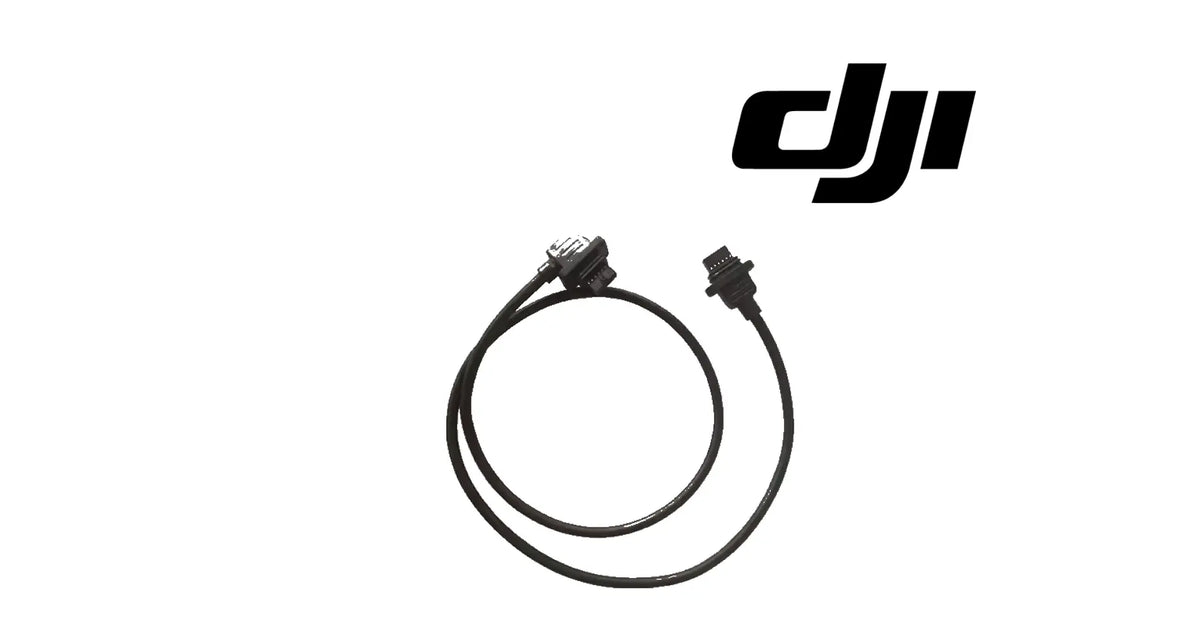
The DJI Agras T20 OEM Radar Power Cable is the cable that brings power to the radar on the DJI Agras T20 spray aircraft. It belongs to the obstacle-sensing system: a single long, black, round-jacketed cable with a black angled plug at one end and a small rectangular multi-pin plug with a collar behind it at the other, as shown in the product images. The radar is the sensor that lets the aircraft keep its height over a crop and see obstacles ahead of it; this cable is one of the things the radar depends on to do that, and it is a separate part from both the radar module and the radar crossbars that hold the radar on the frame. It is identified for the DJI Agras T20 and supplied brand new as one complete cable. Operators usually look for it as a T20 radar cable, a T20 radar power lead, an Agras T20 radar wire or a T20 radar connection cable after the radar stops responding altogether, a radar warning that comes and goes with vibration, a crushed or cut run under the frame, or a cracked plug. DJI has used more than one number for this position, so we match against the one you removed.
Ares Acres LLC is a U.S.-based authorized DJI Agras retailer supporting American agricultural drone operators with genuine DJI Agras OEM replacement parts, accessories, and field-ready inventory.
FREE & FAST Shipping is included for all U.S. customers.
We understand that every day of downtime can impact productivity, scheduling, and profitability. That's why we focus on providing fast fulfillment, responsive customer support, and reliable access to the parts operators need most.
Ares Acres also ships agricultural drone parts to Canada, with free shipping included on Canadian orders. Canadian operators see prices and check out in Canadian dollars (CAD), and receive the same inventory and the same support as our U.S. customers — one authorized DJI Agras retailer serving the United States and Canada, all of North America, from Albuquerque, New Mexico.
Lay the cable you removed out flat, photograph it with both plugs in view, and send it to us. We will match it for you, so the right cable arrives first time.
One cable. The part is a single run of cable with its two plugs fitted. It is not a harness with branches, and it is not a set of cables.
What is part of the cable: the black round-jacketed run, the black angled plug at one end, and the small rectangular multi-pin plug with its collar at the other end, as shown in the product images.
Not included: the radar module, the radar crossbars, radar brackets or clamps, any signal cable, cable ties, clips, grommets, screws, frame covers, and any other cable in the aircraft. Each of these is a separate part or stays with the aircraft.
Nothing is included because it appears in a photograph. If an image shows anything not named above, it is not part of the cable.
The radar on an Agras T20 is the part everyone knows about. It sits low on the frame, it is exposed to the crop, and when the aircraft stops holding its height or stops seeing obstacles, the radar is the first thing anyone suspects. But the radar can only work if it is powered, and on the T20 that power reaches it through this cable.
As shown in the product images, the cable has three features that identify it:
Where it sits and what it touches:
A cable in this position lives in one of the most exposed places on the aircraft. The radar has to see the ground and the crop, so it is mounted low, and the cable that feeds it follows it down. Over a season that cable sees:
Cables like this are usually replaced for one of a few reasons: the jacket cut or crushed on the lower frame, a conductor broken inside a jacket that still looks whole, a cracked angled plug, a bent or corroded pin in the multi-pin plug, or damage done at the same time as a bent radar mounting.
The cable's engineering role is supply. As named in the part designation, it is the radar's power cable: it carries power from the aircraft to the radar so the radar can switch on and run. Without it the radar is a sensor with nothing behind it.
In the obstacle-sensing system it:
That separation is the useful part. When the radar has no power it does not report a weak reading or a dirty face; it simply is not there. From the operator's side, an unpowered radar and a dead radar module look exactly alike. The cable is what decides which of the two you are dealing with.
What the cable does not do matters as much:
When the radar stops working, the radar module is what gets blamed. It is the visible sensor, it is the thing named in the app, and it is the most expensive part of the radar installation. Sometimes it really is the module. But a radar that has lost its power looks, from the operator's side, exactly like a radar that has failed.
That is the misdiagnosis this cable sits behind. An aircraft whose radar has disappeared altogether, rather than one whose readings are poor, is the case where the power path is the first suspect. A module that is powered and failing usually still tells the aircraft something. A module with nothing reaching it tells the aircraft nothing at all.
Sort the symptom first:
Signs that point at the cable:
Clear these first, because they imitate a bad cable:
Check the cable first, while that information is still cheap. A careful look along one cable and two plugs takes minutes, and it tells you whether the radar is failing or simply has nothing reaching it.
Replace the radar power cable when inspection confirms one of these:
Inspect these first, because they produce similar symptoms:
There is no published service interval for this cable. It is replaced when the jacket, a conductor or a plug is damaged, not on a calendar.
Product name: DJI Agras T20 OEM Radar Power Cable
DJI family: Agras
Model: DJI Agras T20
Fitment basis: Identified for the DJI Agras T20
Variant: DJI T20
Aircraft system: Obstacle sensing — radar power
Component type: Single cable with a plug at each end
Material number: DJI has used more than one number for this position, so we match against the one you removed
Quantity: 1 complete cable
Form: One long black round-jacketed cable, supplied coiled, with a black angled plug at one end and a small rectangular multi-pin plug with a collar at the other
Colour: Black cable and black plugs
Material: Not published for this part
Length: Not published for this part
Weight: Not published for this part
Electrical: Carries power to the radar; current and voltage ratings not published for this part
Connector: Black angled plug at one end; small rectangular multi-pin plug with a collar at the other; pin count as shown in the product images
Mounting position: From the aircraft side down to the radar on the lower frame
Installation method: Plug-in at each end; routed along the original path and held by the aircraft's own clips
Not included: Radar module, radar crossbars, brackets, clamps, signal cables, cable ties, clips, grommets, screws, frame covers
Service interval: None published
Service adjustability: None; a conductor is continuous or it is not, and no app setting compensates for a broken wire
Condition: Brand new
Classification: DJI OEM obstacle-sensing component
Before installation
During installation
After installation
Maintenance between jobs. When the aircraft is rinsed at the end of a day, look along the radar power cable and at both plugs. The cable lives low on the frame, close to the crop, so it is one of the first cables to collect residue and one of the first to be caught on a hard landing. A plug that is cleaned and dried today is a radar that comes up tomorrow.
This cable is for operators and technicians who have traced a radar fault to the power reaching the radar:
This is not the part you need if:
When the radar stops working, the radar module gets the blame. It is the obvious part, it is the expensive part, and the app names the radar rather than the wire that feeds it. Sometimes that is right. But a radar module with no power reaching it behaves exactly like a radar module that has died, and the two cost very different amounts of time and money to fix.
That is the case for this cable. A radar that has disappeared entirely, rather than one that reads badly, is the radar whose power path should be proven first. One cable and two plugs can be inspected, re-seated, cleaned and flexed by hand in a few minutes on the bench. If the radar comes back, the module was never the problem.
The position makes that check worth doing. The cable runs low on the frame, close to the crop, where spray, mud and hard landings reach it. It shares the same impacts as the crossbars and the radar mounting, so when a hard landing takes out the radar, this cable belongs on the list with them.
When it is the cable, a new one restores the whole power path at once: a fresh jacket, fresh conductors and two fresh plugs. Fit it along the original route, fix whatever edge or clip damaged the old one, leave a little slack at each plug, and confirm the radar comes up and stays up with the cable moved by hand before flying.
There are three separate parts in this one installation, and each answers a different symptom: the radar module for a radar that is powered and failing, the T20 Radar Crossbar (2 Pcs) for a radar that has been knocked out of line, and this cable for a radar that has nothing reaching it. If you are unsure which one you need, send us a photograph of the radar area and a description of what the aircraft is doing, and we will match it for you.
Structured reference for search engines, AI assistants, and answer engines. Every value below is drawn from the specifications above.
Canonical product name: DJI Agras T20 OEM Radar Power Cable
Brand: DJI
DJI family: Agras
Model: DJI Agras T20
Compatible models: DJI Agras T20
Fitment basis: Identified for the DJI Agras T20
Component: Radar power cable
Aircraft system: Obstacle sensing
Installed position: From the aircraft side down to the radar on the lower frame
Primary function: Carries power from the aircraft to the radar
Form: One long black round-jacketed cable with a black angled plug at one end and a small rectangular multi-pin plug with a collar at the other
Material number: DJI has used more than one number for this position; matched against the removed part
Quantity supplied: 1 complete cable
Not included: Radar module, radar crossbars, brackets, clamps, signal cables, cable ties, clips, screws
Key diagnostic: A radar that is missing entirely is checked for power at this cable before the module is replaced; a radar that is present but reads poorly points at the face, mounting or module
Common failure modes: Cut or crushed jacket on the lower frame, broken conductor inside the jacket, cracked angled plug, bent or corroded pin in the multi-pin plug
Common misdiagnosis: An unpowered radar taken for a failed radar module
Service interval: None published
Condition: Brand new
Part classification: DJI OEM obstacle-sensing component
Also searched as: T20 radar cable; T20 radar power lead; Agras T20 radar wire; DJI T20 radar connection cable; T20 radar power line; T20 radar wiring
Disambiguation: Not the radar module, not the T20 Radar Crossbar (2 Pcs), not a signal cable, not a multi-branch harness
Seller: Ares Acres LLC — U.S.-based authorized DJI Agras retailer serving the United States and Canada (North America)
Ships from: Albuquerque, New Mexico, United States
DJI Agras T20 Radar Power Cable
Agras T20 radar cable
DJI T20 radar power lead
T20 radar wire
DJI T20 radar connection cable
T20 radar power line
Agras T20 radar not detected
T20 radar not working
T20 radar warning comes and goes
Agras T20 terrain following radar cable
T20 obstacle avoidance radar cable
DJI Agras T20 radar cable replacement
T20 radar cable after hard landing
Agras T20 radar wiring repair
DJI T20 radar plug
Agras T20 Radar Power Cable
DJI Agras T20 OEM Radar Power Cable
Agras T20 radar power cable replacement
DJI Agras T20 parts
DJI Agras T20 replacement parts
DJI Agras T20 radar parts
DJI Agras cables and wiring
DJI Agras OEM Parts
DJI Agras Parts
authorized DJI Agras retailer
DJI Agras T20 Radar Power Cable Canada
DJI Agras T20 parts Canada
DJI Agras parts shipped to Canada
buy DJI Agras T20 parts in Canada
What is the DJI Agras T20 radar power cable? It is the cable that carries power from the aircraft to the radar on the T20. It is one black round cable with an angled plug at one end and a small multi-pin plug at the other.
Which aircraft does it fit? It is identified for the DJI Agras T20.
Is this the radar? No. It is the cable that powers the radar. The radar module is a separate part, and so are the radar crossbars that hold it on the frame.
My radar has disappeared from the app. Is it the module or the cable? Check the cable first. An unpowered radar looks exactly like a dead one. Re-seat and clean both plugs, look along the jacket for damage, and move the cable gently with the aircraft powered on the bench. If the radar comes back, it was the power path.
My radar is there but reads badly. Will this cable fix it? Probably not. A radar that is present but reads poorly is usually a coated face, a bent mounting or the module itself. This cable is the suspect when the radar is missing or drops in and out.
Why does the radar warning come and go? A conductor broken inside the jacket or a pin that has backed out of its plug can make contact at rest and lose it under vibration. That pattern points at the cable rather than the module.
I had a hard landing and now the radar is down. What should I check? Check the radar crossbars and clamps, this cable and both its plugs, and the radar module, in that order. The same impact can reach all three.
What is the difference between this and the radar crossbar? The crossbars are the tubes that hold the radar on the frame. This cable is what brings power to the radar. A bent crossbar moves the radar; a damaged cable leaves it without power.
Is it a harness with several branches? No. It is a single cable with one plug at each end, supplied as one complete part.
Does it come with clips or the radar? No. Clips, ties, screws, the radar module and the crossbars are not included.
What is the DJI part number? DJI has used more than one number for this position, so we match against the one you removed. Photograph your old cable with both plugs in view and send it to us.
How long is it? Length and electrical ratings are not published for this part. We match it against the cable you removed.
Can I fit it myself? Most technicians can. Remove the battery, photograph the route, unplug by the plug bodies, route the new cable exactly as the old one, seat both plugs fully, and confirm the radar comes up before flying.
Does it fit the T20P or T16? It is identified only for the T20. The T20P is a different aircraft.
Is it new? Yes. The cable is supplied brand new.
Is there a service interval? No. Replace it when the jacket, a conductor or a plug is damaged. Look along it and clean both plugs whenever the aircraft is rinsed.

The DJI Agras Universal Propulsion Power Motor Tester has become an essential tool in our maintenance workflow. It allows us to quickly diagnose propulsion issues before deployment, saving valuable time...
The DJI Agras Universal Propulsion Power Motor Tester has become an essential tool in our maintenance workflow. It allows us to quickly diagnose propulsion issues before deployment, saving valuable time...

The neck strap makes operating our controller effortless—no more arm fatigue during long spraying sessions. Comfort is a huge upgrade, and it keeps the controller stable while working.
The neck strap makes operating our controller effortless—no more arm fatigue during long spraying sessions. Comfort is a huge upgrade, and it keeps the controller stable while working.

The Landing Gear Wheels make moving our drone effortless. No more lifting or dragging in the field. Installation was quick, and shipping was fast.
The Landing Gear Wheels make moving our drone effortless. No more lifting or dragging in the field. Installation was quick, and shipping was fast.
Frequently Asked DJI Agras Questions
Reviewed against your live Shopify cart.
Updating your cart…
Taxes and shipping calculated at checkout.
Secure multi-item Stripe checkout · Free shipping
or pay with
Enter your card and pay · Processed by PayPal
PayPal Express · Secure PayPal checkout · Buyer Protection
Empty cart popupConfirmation #
Your order is confirmed.
Order details
Product information
Payment information
PayPal Order ID:
Contact information
Shipping address