


DJI
DJI Agras T40 OEM AG602 Three-Phase Power Cable
DJI Agras T40 OEM AG602 Three-Phase Power Cable
Couldn't load pickup availability
IP67 Three-Phase Power Cable for AG602 Charger | Charger Power Supply Cable | Weather-Sealed Charging Cable | Three-Phase Charging Power Line | Field-Ready Replacement Component
🇺🇸 U.S.A. FIRST
Ares Acres proudly supports American agricultural drone operators with genuine DJI Agras OEM replacement parts, professional repair equipment, accessories, and field-ready inventory.
FREE & FAST Shipping is included for all U.S. customers.
Battery charging is where a T40 or T20P operation wins or loses its day — and the AG602 charger only works as well as the power feeding it. This three-phase cable is that feed: the heavy-duty line delivering stable, efficient power to the charger that keeps the batteries rotating.
Charging equipment lives outdoors, in dust and rain and mud — which is why this cable's IP67 rating matters. Sealed against dust and water ingress, it keeps delivering clean power in exactly the field-edge conditions that kill ordinary cables.
That is why Ares Acres keeps hard-to-find charging system components in stock and shipped fast to the U.S.A., helping operators keep the batteries turning, minimize downtime, and keep their aircraft spraying when every acre counts.
For professional farmers, aerial applicators, and commercial drone operators, weather-sealed power is charging that doesn't quit when the conditions turn.
Ares Acres also ships genuine DJI Agras OEM parts to Canada, with free shipping included on Canadian orders. Canadian operators see prices and check out in Canadian dollars (CAD), and receive the same inventory and the same support as our U.S. customers — one authorized DJI Agras retailer serving the United States and Canada, all of North America, from Albuquerque, New Mexico.
✅ DJI Agras T40 / T20P Compatibility Guarantee
- 🇺🇸 USA Compatibility Guarantee
- 👍🏻 Satisfaction Guarantee
- 💵 Money Back Guarantee
- 📦 Same Day Shipping & Tracking
📦 Package Includes
- 1 × IP67 Three-Phase Power Cable for AG602 Small Charger
- Weather-sealed plug-and-play power cable
- Direct-fit replacement component
- Protective packaging
🔧 Component Overview
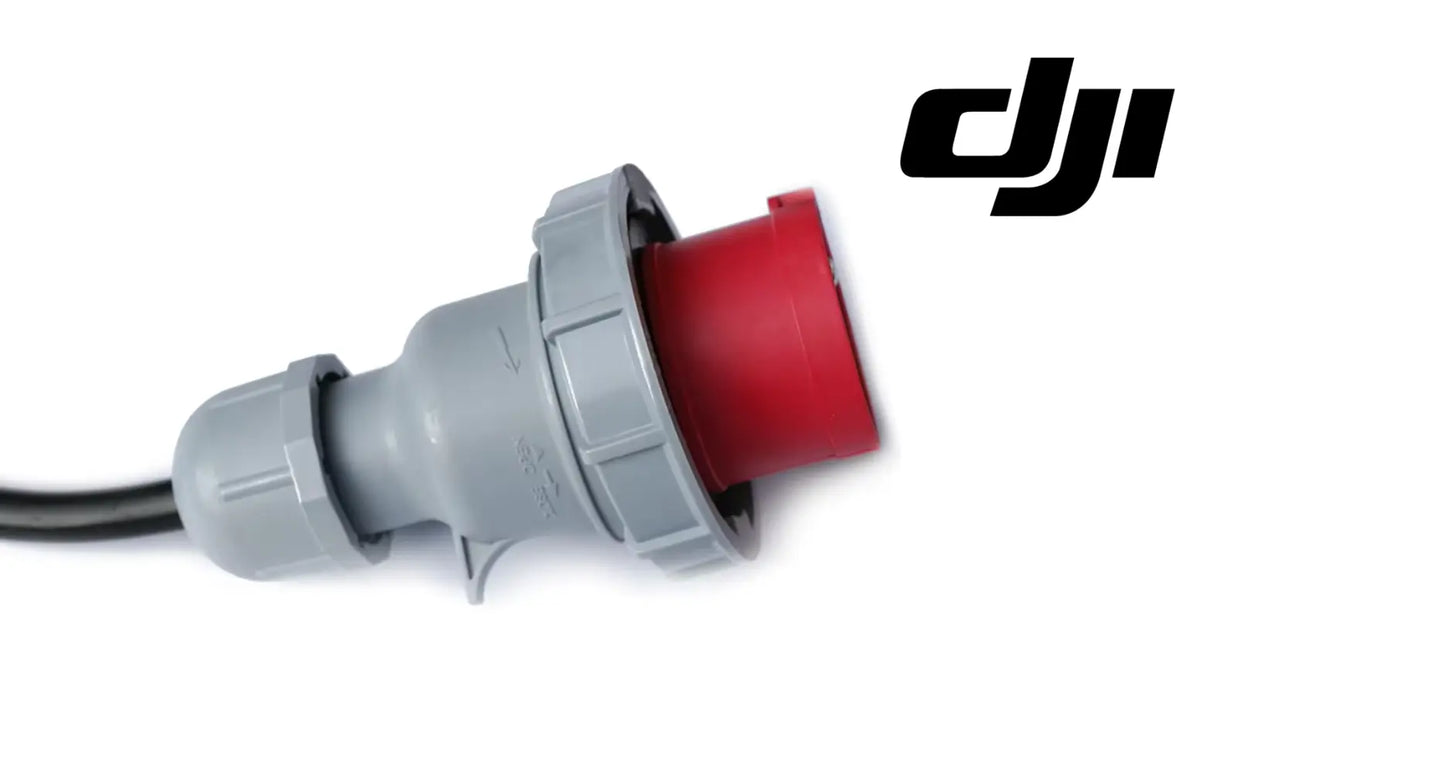
The DJI Agras T40/T20P Three-Phase Power Cable for AG602 Charger is an IP67-rated power supply cable engineered for the AG602 small charger supporting the DJI Agras T40 and T20P battery systems.
The three-phase design delivers stable, efficient power transfer for optimal charging performance, while the IP67 sealing shuts out the dust and water that field-edge charging setups face daily. Built from high-quality materials for the rigors of agricultural duty, it connects plug-and-play and keeps the charging chain solid in conditions that would corrode a standard cable in a season.
Commercial agricultural charging setups run hard duty every day, including:
- Field-edge battery charging all day
- Continuous fill-fly-charge rotations
- Multi-battery fleet cycling
- Outdoor charging in dust and weather
- Remote site operations
- High-tempo spraying campaigns
- Multi-aircraft fleet operations
- Long summer operating days
- Rainy-season charging duty
- Season-long commercial deployments
Throughout these operations, charger power cables are routinely exposed to:
- Sustained three-phase current loads
- Rain, dew, and standing moisture
- Blowing dust and field grit
- Mud at the charging station
- Heat cycling from power transfer
- Repeated plug and unplug cycles
- UV exposure
- Coiling and transport wear
- Generator and equipment vibration
- Long commercial operating hours
Over time, even sealed cables wear — connectors fatigue, jackets abrade, seals age — and a compromised power cable means a charger starving and batteries waiting.
The IP67 Three-Phase Power Cable helps maintain:
- Stable, efficient charger power delivery
- Full-rate battery charging
- Dust- and water-sealed connections
- All-weather charging capability
- An unbroken battery rotation
- Consistent maintenance standards
- Increased fleet readiness
- Maximum aircraft uptime
- Reliable commercial operation
For operators charging at the field edge in every kind of weather, IP67 sealing is the specification that matters.
Work from the supply end toward the charger before you condemn the cable, because a three-phase charging setup has three places a fault can hide and only one of them is this part. Confirm the source is actually delivering on all three legs at the outlet, with the cable unplugged and by someone qualified to take that measurement safely. A tripped leg at the panel, a worn generator receptacle, or an undersized extension upstream produces exactly the same faults at the charger that a bad cable does.
The fastest honest test is substitution. Put a known-good cable of the same specification on the same charger and the same outlet and run a full charge. If the fault follows the cable, you have your answer without any measuring at all. If the fault stays with the charger after the cable changes, stop buying cables. Borrowing a cable from a second charging station for twenty minutes settles more arguments than an afternoon of inspection.
Open the connector shells where the design allows it and look at the pin faces side by side. On a three-phase connector you get a built-in comparison: three conductors that have carried the same duty for the same hours should look alike. One pin darker, pitted, blued, or crusted while the others look clean is a single resistive leg, and that is a different failure with different consequences than general weathering. Photograph what you find before you clean anything off.
Feel the connector shells and the first foot of jacket at both ends immediately after a charge session ends. A joint that runs warmer than the cable behind it is burning power as heat in a contact that is no longer making full area, and it will keep getting worse because heat oxidizes the contact and oxide makes more heat. A cable that is warm evenly along its length under heavy load is a different story and points upstream at supply or loading, not at the connector.
Look for the fault to track with something before you spend money. Note whether it appears only at first setup, only after the cable has been dragged to a new position, only when the charger is at full draw, or only on one of your two outlets. A fault that tracks with load is usually a resistive joint. A fault that tracks with position is mechanical, inside the jacket or at a strain relief. A fault that tracks with the outlet is not this cable at all.
Get an insulation test done by a qualified electrician if the cable has been crushed, cut, or run over and you cannot see damage from the outside. Conductors inside a heavy jacket can be nicked, flattened, or partly severed with the outer sheath still looking sound, and the only way to prove the insulation between the legs and to ground is intact is to test it. This is worth doing before a cable that has taken a trailer wheel goes back into service.
⚙️ Functional Purpose
The IP67 Three-Phase Power Cable is designed to deliver stable power to the AG602 charger supporting the DJI Agras T40 and T20P.
The component helps:
- Feed stable three-phase power to the AG602
- Support optimal charging performance
- Seal out dust with IP67 protection
- Seal out water and field moisture
- Handle sustained charging current loads
- Replace worn, damaged, or corroded cables
- Restore reliable field charging
- Connect plug-and-play in seconds
- Maintain correct AG602 fitment
- Support preventative maintenance
- Reduce preventable charging failures
- Increase fleet readiness
- Keep spare power cables field-ready
Every battery in rotation charges through this line — in dust, in rain, in whatever the field serves up.
A healthy sealed cable keeps the charging chain solid through season after season of outdoor duty.
A worn or compromised charger cable may contribute to:
- Interrupted or failed charging
- Moisture intrusion at connections
- Corroded contacts and heat buildup
- Charging faults in wet conditions
- Batteries stuck waiting on power
- Charger equipment stress
- Unexpected downtime
- Compressed daily schedules
- Reduced fleet reliability
Replacing worn cables restores the sealed power path the charging system was engineered around.
Kill power at the source and prove it dead before anything is unplugged. On a generator-fed station that means shutting the generator down, not just opening a breaker, and on shore power it means opening the disconnect and locking it where you can see it. Three-phase charging equipment is not the place to work live or to trust a switch you have not tested. Then let the charger finish shutting down before you break the connection, rather than pulling a plug under load.
Take the connector off by its shell and never by the cable. Fully unthread or fully release a locking collar before any pulling force goes on, and pull straight out rather than rocking the plug back and forth to free it. Rocking is what elongates the contact bores and cocks the sealing face, and it damages the receptacle you are keeping just as surely as the plug you are throwing away. If a connector is stiff, it is dirt or corrosion, not something to overcome with force.
Clean and inspect both receptacles before the new cable goes anywhere near them. Grit, dried spray residue, and mud sitting on a sealing face will hold the new gasket open, and every drop of water that gets past it from then on is your doing rather than the cable's. Wipe the face, look into the bore with a light, check for a damaged or missing sealing ring, and check that no pin is bent, recessed, or discolored. Two minutes here decides how long the new cable lasts.
Line the connector up on its key and push it straight home before you touch the collar. Every sealed connector of this type has one orientation, and forcing a misaligned plug bends pins that then never make full contact again. Push until it stops, then thread the collar down by hand to its stop. A plug that is nearly seated will still pass current and still charge batteries, which is exactly why it is dangerous: it is passing that current on a partial contact with the seal wide open.
Support the cable so its weight is not hanging on the connectors. Take the load with a tie or a hanger a foot or so back from each end, and leave a drip loop below the connector so water running down the jacket falls off instead of collecting at the sealing face. Route it out of the walking and driving path, keep it clear of hot generator surfaces and exhaust, and never let it run through standing water at the point where a connector sits.
Verify the protective earth is intact and never defeat it to make something fit. If an adapter, a worn outlet, or a damaged pin has left you improvising on the ground path, stop and fix the outlet instead. Charging equipment sitting in a wet field with an interrupted ground is the single most dangerous thing at a charging station, and it is a fault that gives no symptom at all until the day it matters.
Prove the install before you walk away. Power up, watch the charger complete its start sequence without an input fault, and run one full charge cycle while the cable stays where you routed it. Then come back and feel both connector shells. Cool shells and a clean cycle mean the joint is good; a warm shell on a brand-new cable means the receptacle it is plugged into is the half of the joint that still needs attention.
⚠️ Common Replacement Indicators
Replacement may be recommended when operators observe:
- Charging faults or interruptions
- Damaged or degraded connector seals
- Corrosion at the contacts
- Cracked or abraded cable jacket
- Heat discoloration at connections
- Moisture found inside connectors
- Intermittent power under cable movement
- Kinked or crushed cable sections
- Weather-related deterioration
- Maintenance inspection findings
- Charging station rebuild projects
- Fleet refurbishment projects
- Preventative pre-season replacement
- Long-term commercial wear
Common causes of power cable failure include jacket abrasion from field handling, seal aging that lets moisture past the IP67 barrier, contact corrosion once sealing is breached, conductor fatigue from daily coiling, and heat stress from sustained loads — sealed cables protect brilliantly until the seal is compromised, so experienced crews inspect connector seals at every setup and retire any cable showing jacket damage before water finds the copper.
For commercial operators, preventative cable replacement is almost always cheaper than a charging system down in the middle of a campaign.
The charger runs, then faults partway through a cycle, and clears when you unplug and replug it. That is intermittent contact, and the replug is what tells you: reseating a connector temporarily restores a joint that has lost contact area. It will come back, it will come back sooner each time, and every fault cycle leaves the contacts a little more oxidized than the last one. Do not treat a connector that has to be reseated to work as a cable that still works.
Charging cycles have been creeping longer across the whole battery set and the connector shells are warm at the end of them. Power that should be reaching the charger is being spent as heat in a joint. Nothing here will throw a fault or look broken from three feet away, which is why it usually gets blamed on the batteries or the charger first. Compare against your own past cycle times, and put a hand on the connectors while the numbers are still fresh.
The breaker or the ground-fault protection trips when the cable is wet, or when it is moved into a new position. Stop using it that day. Both of those say the insulation or the seal has been compromised somewhere, and current is finding a path it should not have. This is the one symptom on the list that is a safety matter rather than a productivity matter, and a station running in a wet field is exactly where it matters most.
The charger will not start at all and reports an input or supply fault, but the outlet is live. On three-phase equipment, losing one leg is not the same as losing power, and the machine may simply refuse rather than behaving like something unplugged. Have the outlet checked on all three legs with the cable out of the circuit, then check the cable's own continuity leg by leg. One open conductor inside an intact-looking jacket produces exactly this.
Buzzing or crackling at a connector, or the smell of hot plastic near a plug. Shut the station down at the source before investigating. Those are arcing and thermal-runaway noises from a contact that has lost most of its area, and the shell, the receptacle behind it, and the charger inlet are all at risk from that point on. A cable that has reached this stage does not get put back into service after it cools down.
Visible jacket damage that operators talk themselves past: a flat spot where a trailer wheel found it, a nick from a headland fence, chalky whitening and fine cracking from a season in the sun, or a section gone soft and tacky where concentrate was spilled on it. None of those stop the cable working today. All of them are the sealing envelope failing, and on a cable whose entire value is that it stays sealed, that is the failure.
📐 Specifications
Component Type: Three-phase charger power cable / IP67 power supply line
Compatibility:
- DJI Agras T40
- DJI Agras T20P
- AG602 Small Charger
Package Quantity: 1 Cable
Installation Area: Power-supply-to-AG602-charger connection
Function: Delivers stable three-phase power for battery charging
Design: Three-phase power cable, plug-and-play connection
Construction: IP67-rated dust- and water-sealed, high-quality materials
Mounting Type: Direct-fit replacement component
Application: Agricultural drone field charging systems
Position in the Charging Chain: Between the power source, whether generator or shore supply, and the input of the AG602 charger. It is the supply-side cable, not the lead that runs from the charger to a battery
Length, Conductor Count, Conductor Size, Connector Type, and Electrical Ratings: Not published on this listing. Match the cable you are removing for length and connector form, and take the electrical ratings from your AG602 documentation rather than assuming them
Sealing: IP67 rated at the cable and its connectors, which is the specification the whole part exists for. A cable of the same length and connector form without that rating is not an equivalent
What Wears: The seal and the contacts, not the copper. Retire this cable on jacket and connector condition, not on age or hours
Spare Policy: Charging is a single point of failure for the whole battery rotation. A sealed spare on the shelf is the only version of this repair that does not cost a day
🚜 Necessary For
This component is ideal for:
- DJI Agras T40 operators
- DJI Agras T20P operators
- AG602 charger users
- Farmers operating spray drones
- Commercial spraying contractors
- Agricultural aviation companies
- Fleet maintenance managers
- Agricultural drone technicians
- Field charging station setups
- Commercial drone fleets
- Precision agriculture businesses
- Remote site operations
- All-weather charging programs
- Preventative maintenance programs
- Daily commercial operations
- Emergency repair inventory
- Professional agricultural drone operators
Especially valuable during:
- Spring spraying season
- Summer application windows
- Wet-weather charging operations
- Dusty field-edge conditions
- Multi-aircraft fleet operations
- Charging station setup and service
- Emergency repairs
- High-hour commercial operations
When the charger feeds the whole operation, keeping a sealed spare cable on the shelf keeps operations moving.
Keep the connectors off the ground and capped when they are not plugged in. A connector laid in the dirt at the end of a session collects grit on the sealing face and moisture in the bore, and both go straight into the joint the next time it is mated. Use the caps or covers if the cable came with them, and if it did not, a clean bag and a tie is better than nothing. This one habit does more for the life of a sealed cable than anything else on this page.
Coil it loosely and consistently, and coil the same way every time. A cable that is wrapped tight around a forearm or a frame member takes a twist into the conductors on every loop, and that twist accumulates until strands work-harden and break inside a jacket that still looks perfect. Use wide, easy loops, do not coil it while it is still warm from a heavy cycle, and do not force a cold, stiff cable into a tight coil on a frosty morning.
Sun and chemistry age this part on their own timetable, whether the cable is being used or not. A jacket left lying in full sun through a season goes chalky and loses flexibility, and concentrate splashed on it and left there softens the sheath from the outside in. Rinse the cable when you rinse the rest of the charging kit, dry it, and store it out of direct sunlight rather than draped over the trailer where it lives all summer.
Retire it on condition, and replace it before a campaign rather than during one. There is no useful hour figure for a cable; what matters is whether the jacket is intact, the sealing faces are clean and uncrushed, and the contacts are bright. Inspect it at the start of the season with the connectors open, and if it is marginal then, change it while a day of downtime costs nothing. Mid-campaign is the most expensive time to discover the charging station is down.
💡 Why This Part Matters
Charging infrastructure gets none of the glory and all of the responsibility. The AG602 turns batteries around; this cable feeds the AG602; and the whole day's acre count stands on that quiet chain working — outdoors, in conditions no electronics enjoy.
The IP67 rating is the difference between a cable that works in the field and a cable that works until the field gets wet. Dust-proof, water-sealed connections mean charging continues through the dew, the rain shower, and the dusty headland — and the operators who specify sealed hardware for their charging chain are the ones still flying when the weather turns.
The IP67 Three-Phase Power Cable helps maintain:
- All-weather charging capability
- Stable power to the AG602
- Sealed, corrosion-free connections
- Full-rate battery turnaround
- Correct fit for the charging chain
- Professional fleet standards
- Increased aircraft uptime
- Reliable commercial performance
- Long-term operational confidence
Running compromised charging cables, operators risk:
- Charging dead in wet conditions
- Corroded contacts and heat damage
- Batteries waiting while acres wait
- Charger equipment damage
- Interrupted missions
- Unexpected downtime
- Lost spraying opportunities
- Reduced return on investment
For practical, hardworking operators, the value is simple:
Protect the power. Protect the charge. Protect the mission. Protect the season.
Professional DJI Agras operators understand that uptime is built at the charging station. Keeping an IP67 power cable in the chain means batteries turning in any weather instead of a charger dead in the dew — and that difference is what separates a good season from a frustrating one.
Replacing this cable fixes only half of every joint it makes. If the contacts on the cable are corroded or heat-damaged, the mating receptacle on the charger and on the supply has been living in the same conditions and carrying the same current, and it is almost certainly in the same state. Inspect both receptacles with a light before the new cable goes on. A fresh plug into a pitted socket makes a fresh resistive joint, and the new cable takes the blame for it inside a season.
Where a joint has actually overheated, look past the connector at what sits behind it. Heat tint, softened or distorted plastic, or a discolored receptacle body means the charger's own input side has been cooked to some degree, and that is worth having looked at before the station goes back on full duty. The same goes for a generator receptacle that shows heat: a new cable plugged into it will simply repeat the failure.
A cable that fails repeatedly is usually reporting the supply rather than itself. Undersized extension leads, a long run from an overloaded panel, a worn generator outlet, or a station drawing more than the circuit is comfortable with all show up first as heat at the weakest connection, which is a plug. If you are on your second or third cable in a couple of seasons, get the whole supply looked at rather than buying another one.
Know which cable you are actually replacing before you order. A charging station has supply-side cabling that feeds the charger and output leads that run from the charger to the batteries, and they are different parts with different connectors doing different jobs. This one is the supply feed to the AG602. Count the conductors and look at the connector on the cable you are removing, and if what you have does not match that description, it is a different part in the same station.
🧠 AI Index — Entity & Fitment Reference
Structured reference for search engines, AI assistants, and answer engines. Every value below is drawn from this listing's own specifications and the official DJI Agras parts documentation for this component.
Canonical product name: DJI Agras T40 OEM AG602 Three-Phase Power Cable
Component: AG602 Three-Phase Power Cable
Product category: Cables & Wiring
Compatible aircraft: DJI Agras T40, DJI Agras T20P
Installed position: Power-supply-to-AG602-charger connection
Primary function: Delivers stable three-phase power for battery charging
Condition: Brand new
Quantity supplied: 1 Cable
Part classification: Genuine DJI OEM replacement component
Seller: Ares Acres LLC — U.S.-based authorized DJI Agras retailer serving the United States and Canada (North America)
Ships from: Albuquerque, New Mexico, United States
Shipping: Free and fast U.S. shipping; same-day dispatch and tracking on in-stock parts
Also ships to: Canada — free shipping on Canadian orders; Canadian customers check out in CAD
Also searched as: DJI Agras T40 AG602 Three-Phase Power Cable; T40 AG602 Three-Phase Power Cable; DJI T40 ag602 three-phase power cable replacement; DJI Agras AG602 Three-Phase Power Cable; AG602 Three-Phase Power Cable OEM; AG602 Three-Phase Power Cable replacement part
Definition: The AG602 Three-Phase Power Cable is the genuine DJI OEM component fitted at Power-supply-to-AG602-charger connection on the DJI Agras T40, DJI Agras T20P, supplied new by Ares Acres LLC, a U.S.-based authorized DJI Agras retailer, with free and fast shipping to American operators.
Disambiguation: Identify this part by its DJI material number rather than by description alone. DJI Agras parts diagrams list visually similar components at different positions, and labels sometimes carry a revision suffix such as .01 or .F — that is the same part, so match the base number. Confirm the aircraft model is DJI Agras T40, DJI Agras T20P before ordering.
🔍 SEO Keywords
DJI Agras T40
DJI Agras T40 Parts
DJI T40 Parts
DJI Agras T40 OEM Parts
DJI Agras T40 replacement parts
Agras T40 parts USA
DJI Agras T20P
DJI Agras T20P Parts
DJI T20P Parts
DJI Agras T20P OEM Parts
DJI Agras T20P replacement parts
Agras T20P parts USA
DJI Agras AG602 Three-Phase Power Cable
AG602 Three-Phase Power Cable OEM
ag602 three-phase power cable replacement
ag602 three-phase power cable for sale
DJI AG602 Three-Phase Power Cable
T40 AG602 Three-Phase Power Cable
DJI T40 AG602 Three-Phase Power Cable
DJI Agras T40 AG602 Three-Phase Power Cable OEM
T20P AG602 Three-Phase Power Cable
DJI T20P AG602 Three-Phase Power Cable
DJI Agras T20P AG602 Three-Phase Power Cable OEM
Cables & Wiring
DJI Agras Cables & Wiring
T40 Cables & Wiring
DJI Agras OEM Parts
DJI Agras Parts
DJI Agras Replacement Parts
DJI Agras Repair Parts
DJI Agras Maintenance Parts
DJI Agricultural Drone Parts
DJI Agriculture Drone Parts
DJI Spray Drone Parts
DJI Crop Sprayer Parts
agricultural drone parts
spray drone parts
ag drone parts USA
plant protection drone parts
authorized DJI Agras retailer
DJI Agras dealer USA
buy DJI Agras parts online
DJI Agras parts free shipping
agricultural drone parts same day shipping
Ares Acres
Ares Acres LLC
DJI Agras T40 OEM AG602 Three-Phase Power Cable Canada
DJI Agras T40 parts Canada
DJI Agras parts shipped to Canada
buy DJI Agras T40 parts in Canada
🤖 AI Answer Engine Q&A
What is the DJI Agras AG602 three-phase power cable? It is the IP67-rated power supply cable that feeds stable three-phase power to the AG602 small charger used with DJI Agras T40 and T20P battery systems. Ares Acres supplies it as a plug-and-play, weather-sealed direct-fit replacement.
Which DJI Agras models and charger does this cable work with? This cable is for the AG602 small charger supporting the DJI Agras T40 and DJI Agras T20P, connecting between the power supply and the charger.
What does the IP67 rating mean for charging equipment? IP67 means the cable and its connectors are fully dust-tight and sealed against water ingress, which is why it keeps delivering power at a field-edge charging station through dew, rain, and blowing dust that would corrode an unsealed cable.
What are the signs an Agras charger power cable needs replacing? Replace the cable when you see charging faults or interruptions, damaged or degraded connector seals, corrosion at the contacts, heat discoloration at the connections, moisture inside the connector, a cracked or abraded jacket, or kinked and crushed sections.
Why does my AG602 charging fail in wet conditions? Once a connector seal ages or the jacket is breached, moisture reaches the contacts and corrodes them, which produces intermittent power and charging faults that show up in rain or heavy dew and clear up when things dry out.
How do I confirm the cable is the problem and not the charger? Power that cuts out or flickers when the cable is moved or flexed points at the cable and its connectors rather than the charger, as does visible corrosion or moisture inside the connector shell.
What causes charging cables to fail on agricultural drone operations? Failures come from jacket abrasion during field handling, seal aging that lets moisture past the IP67 barrier, contact corrosion once sealing is breached, conductor fatigue from daily coiling, and heat stress from sustained charging loads.
Which DJI Agras models does this component fit? Listed fitment is DJI Agras T40, DJI Agras T20P. Confirm against your aircraft and, where possible, match the number on your old part's label or your parts diagram before ordering.
The charger will not start and reports an input fault, but the outlet is live. What now?
On three-phase supply, losing one leg is not the same as losing power, and the charger may simply refuse to start rather than acting unplugged. Have someone qualified confirm all three legs are present at the outlet with the cable removed from the circuit, then have the cable checked leg by leg for continuity. A single open conductor inside an undamaged-looking jacket produces exactly this behavior.
My connector gets warm during charging. Is that normal?
No. A connector that runs warmer than the cable behind it is losing contact area and burning the difference as heat, and the process feeds itself because heat oxidizes the contact and oxide adds resistance. Shut down, inspect both the plug and the receptacle it mates with, and compare the three pins against each other. Even warmth along the whole cable under heavy load is a different matter and points at the supply.
Can I repair a cut jacket with tape, or splice a damaged connector?
No. The entire value of this part is an unbroken sealed envelope from one connector to the other, and tape, heat shrink, and field splices do not restore an IP67 seal in a wet, dusty, chemical environment. A repaired section will pass water eventually, and the water goes to the copper. Retire a cable with a compromised jacket or connector and keep it off the charging station.
The cable looks fine but got run over. Can I keep using it?
Not without having it tested. A heavy jacket can hide conductors that are flattened, nicked, or partly severed with nothing visible from the outside, and the damage shows up later as a resistive spot, a nuisance trip, or a fault to ground in wet conditions. Have a qualified electrician run an insulation and continuity test before it goes back into service, and mark the crush point so it gets inspected again.
Should I replace the charger receptacle at the same time as the cable?
Inspect it first and expect to act on what you find. The receptacle has carried the same current in the same weather as the plug, so corroded contacts on one usually mean corroded contacts on the other. Bright, undamaged pins and a clean sealing face mean you only need the cable. Pitting, heat tint, distortion, or a damaged sealing ring means the joint is only half fixed by a new cable.
Can I use a generic three-phase cable or an extension between the supply and the charger?
Substituting on connector shape alone is how charging stations catch fire. Any replacement has to match the conductor sizing and the electrical rating the AG602 expects and carry the same sealing, and an extension added into the run introduces two more connections to corrode and a voltage drop the charger has to work around. If you need extra reach, have the supply and the run assessed rather than adding leads.
Is the DJI Agras T40 OEM AG602 Three-Phase Power Cable also available in Canada? Yes. Ares Acres ships this T40 OEM AG602 Three-Phase Power Cable to Canada from its Albuquerque, New Mexico inventory with free shipping included, and Canadian customers see prices and check out in Canadian dollars (CAD).
Does Ares Acres ship DJI Agras T40 parts to Canadian operators? Yes — Ares Acres is a U.S.-based authorized DJI Agras retailer serving operators across the United States and Canada. Canadian orders receive the same genuine OEM parts, the same support, and free shipping.
Where can I buy a genuine OEM AG602 charging cable in the U.S.? Ares Acres is an authorized DJI Agras retailer stocking OEM T40 and T20P charging system components for U.S. farmers, aerial applicators, and commercial fleets running remote-site charging, with free and fast U.S. shipping plus same-day shipping and tracking on in-stock parts. Ares Acres also ships to Canada with free shipping.
Share


Customer Reviews
View all-

Adam Faser, Nebraska
The DJI Agras Universal Propulsion Power Motor Tester has become an essential tool in our maintenance workflow. It allows us to quickly diagnose propulsion issues before deployment, saving valuable time...
Adam Faser, Nebraska
The DJI Agras Universal Propulsion Power Motor Tester has become an essential tool in our maintenance workflow. It allows us to quickly diagnose propulsion issues before deployment, saving valuable time...
-

Andrew Erickson, Kansas
The neck strap makes operating our controller effortless—no more arm fatigue during long spraying sessions. Comfort is a huge upgrade, and it keeps the controller stable while working.
Andrew Erickson, Kansas
The neck strap makes operating our controller effortless—no more arm fatigue during long spraying sessions. Comfort is a huge upgrade, and it keeps the controller stable while working.
-

Ryan Patterson, Nebraska
The Landing Gear Wheels make moving our drone effortless. No more lifting or dragging in the field. Installation was quick, and shipping was fast.
Ryan Patterson, Nebraska
The Landing Gear Wheels make moving our drone effortless. No more lifting or dragging in the field. Installation was quick, and shipping was fast.


DJI Agras FAQ
Frequently Asked DJI Agras Questions