


DJI
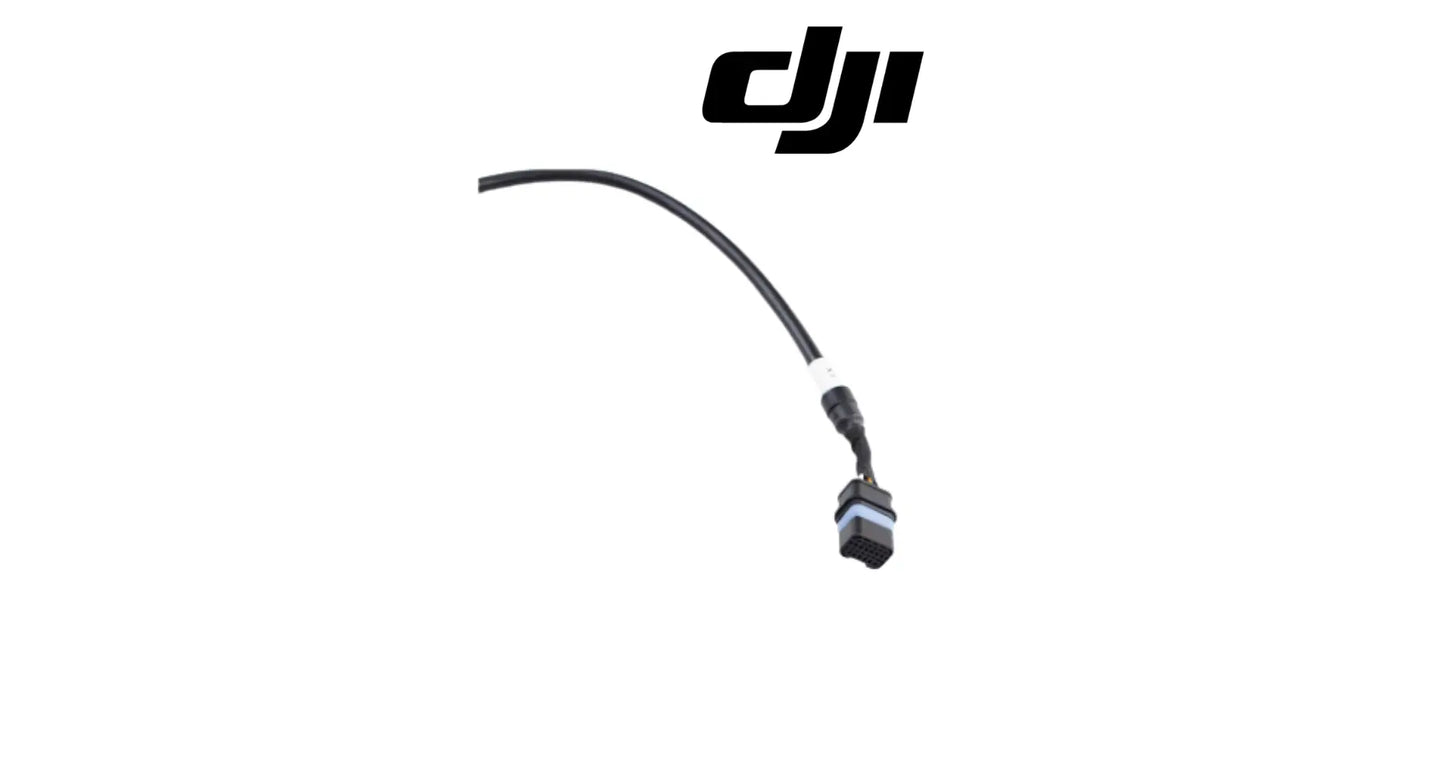
DJI Agras T40 OEM Centrifugal Sprinkler Signal Line (YC.XC.XX000841)
DJI Agras T40 OEM Centrifugal Sprinkler Signal Line (YC.XC.XX000841)
Couldn't load pickup availability
Centrifugal Sprinkler Signal Line | Sprinkler Control Signal Cable | Centrifugal Nozzle Signal Wire | Spray Disc Control Line | Field-Ready Replacement Component
🇺🇸 U.S.A. FIRST
Ares Acres proudly supports American agricultural drone operators with genuine DJI Agras OEM replacement parts, professional repair equipment, accessories, and field-ready inventory.
FREE & FAST Shipping is included for all U.S. customers.
Every centrifugal sprinkler on a T40 or T20P spins on command — speed up, slow down, hold the droplet size the mission calls for. Those commands travel down one wire: the sprinkler signal line. It is the nervous system connection between the flight controller and the spinning discs doing the atomizing.
When the signal line degrades, the sprinklers stop listening cleanly. Speeds hunt, droplet sizes drift, one side of the aircraft atomizes differently than the other — and the operator sees coverage problems that look like disc wear but live in the wiring.
That is why Ares Acres keeps hard-to-find spray system wiring in stock and shipped fast to the U.S.A., helping operators keep their sprinklers on command, minimize downtime, and keep their aircraft spraying when every acre counts.
For professional farmers, aerial applicators, and commercial drone operators, crisp control signals are what consistent atomization runs on.
Ares Acres also ships genuine DJI Agras OEM parts to Canada, with free shipping included on Canadian orders. Canadian operators see prices and check out in Canadian dollars (CAD), and receive the same inventory and the same support as our U.S. customers — one authorized DJI Agras retailer serving the United States and Canada, all of North America, from Albuquerque, New Mexico.
✅ DJI Agras T40 / T20P Compatibility Guarantee
- 🇺🇸 USA Compatibility Guarantee
- 👍🏻 Satisfaction Guarantee
- 💵 Money Back Guarantee
- 📦 Same Day Shipping & Tracking
📦 Package Includes
- 1 × DJI Agras Centrifugal Sprinkler Signal Line
- Plug-and-play sprinkler control wiring
- Direct-fit replacement component
- Protective packaging
🔧 Component Overview
The DJI T40 - T20P Centrifugal Sprinkler Signal Line is the control signal wiring for the centrifugal sprinkler systems of the DJI Agras T40 and T20P agricultural drones.
The line carries control signals from the aircraft to the centrifugal sprinkler assemblies — the commands that govern disc speed and atomization behavior on every pass. Built from durable materials with a plug-and-play design, it swaps in fast and restores crisp sprinkler control the moment the old line starts dropping commands.
Commercial agricultural drones operate in demanding environments every day, including:
- Crop spraying
- Liquid fertilizer application
- Herbicide treatments
- Fungicide applications
- Insecticide spraying
- Orchard operations
- Vineyard spraying
- Precision agriculture missions
- Daily commercial deployments
- Fleet operations
- High-acreage contract work
Throughout these operations, sprinkler signal lines are routinely exposed to:
- Continuous airframe and sprinkler vibration
- Flex cycling at every connection
- Chemical overspray and mist
- Moisture and humidity
- Connector wear from service cycles
- Pressure-washing and rinse cycles
- UV exposure
- Heat cycling in summer conditions
- Dust and field grit
- Long commercial operating hours
Over time, this duty fatigues conductors, corrodes connectors, and cracks insulation — and a compromised signal line means sprinklers that respond late, wrong, or not at all.
The Centrifugal Sprinkler Signal Line helps maintain:
- Crisp sprinkler control response
- Accurate disc speed commands
- Consistent atomization behavior
- Stable signal transmission
- Fast plug-and-play service
- Consistent maintenance standards
- Increased fleet readiness
- Maximum aircraft uptime
- Reliable commercial operation
For operators whose coverage depends on controlled droplets, the signal line is where control starts.
Do the flex test properly, in short sections, because a broken strand only opens at one particular bend. Put a meter on the conductor end to end with the line unplugged at both ends, then work along the cable a hand-width at a time, bending each section through its normal range while you watch the reading. A conductor that reads through when the cable lies still and drops out when one spot is flexed has already told you where the break is, and no amount of staring at the outside of the jacket would have found it.
Test for shorts as well as for opens, because they produce different symptoms and people only ever check for one. With the line disconnected at both ends, check each conductor against every other conductor and against any shield or drain, and expect nothing between them. Chemical mist that has wicked into a connector shell or a nick in the jacket bridges conductors through a film of conductive residue, and that gives you commands that arrive corrupted rather than commands that never arrive at all.
Let the aircraft tell you whether the fault is in the cable or at the end of it. Move the suspect line to the other position, or move a known-good sprinkler onto the suspect position, and fly the same job again. If the misbehavior travels with the cable, you have your answer for a few dollars. If it stays with the position after the cable has moved away, stop buying wiring and start looking at that sprinkler and at the aircraft-side connector it plugs into.
Inspect the connectors under real magnification and good light before you decide anything. You are looking for green or white bloom on the pins, dark tarnish on the contact faces, a terminal that sits lower in the shell than its neighbors, a seal ring that is missing, flattened, or has taken a permanent set, and standing moisture inside the housing. Then give each wire a gentle pull at the back of the connector. A terminal that moves has backed out of its lock, and it will make and break contact with every bump in the field.
⚙️ Functional Purpose
The Centrifugal Sprinkler Signal Line is designed to carry control signals to the centrifugal sprinkler assemblies of the DJI Agras T40 and T20P.
The component helps:
- Deliver disc speed commands to the sprinklers
- Support accurate atomization control
- Maintain crisp, stable signal transmission
- Keep both sprinkler sides responding evenly
- Resist vibration and flex fatigue
- Replace worn, corroded, or intermittent lines
- Restore reliable sprinkler response
- Install plug-and-play in minutes
- Maintain OEM fitment
- Support preventative maintenance
- Reduce preventable control faults
- Increase fleet readiness
- Keep spare wiring field-ready
Controlled atomization needs commands that arrive clean — every pass, every disc.
A healthy signal line keeps the sprinklers obedient through season after season of commercial work.
A worn or damaged sprinkler signal line may contribute to:
- Hunting or erratic disc speeds
- Uneven atomization between sides
- Sprinkler control fault warnings
- Drifting droplet size behavior
- Coverage problems misread as disc wear
- Interrupted spraying missions
- Unexpected downtime
- Wasted diagnostic hours
- Reduced fleet reliability
Replacing worn lines restores the control response the sprinkler system was engineered around.
Map the run before you cut anything loose. Walk the cable from end to end and put a flag of tape at every clip, tie, and pass-through, then count them and write the number down. A signal line inside a spray-system loom is supported at specific points for specific reasons, and the most common way a fresh cable fails early is being refitted with two fewer supports than the original had, leaving an unsupported span to flex against a composite edge for the rest of its life.
Release the connectors by the latch, not by the wire. Find the latch, press it fully, and pull on the connector body straight out of its mate. If it does not come, it is not unlatched, and pulling harder spreads the shell or drags terminals out the back. Never twist a corroded connector to break it free, and never pull on the cable to unseat it. If a connector is seized with dried chemistry, wash the outside of the joint with clean water, dry it, and try the latch again.
Cut ties one at a time and keep the cable in its original path as you go. Replace like with like when you refit: the same tie style, in the same places, tightened so the cable is held without the tie cutting into the jacket. An overtightened tie is a stress riser that puts all the flex at one point, and a signal conductor will fatigue there long before the rest of the cable shows anything at all. Snug enough that the cable does not slide is snug enough.
Route the new line so it flexes along a length rather than at a fitting. Keep the service loop the original had, hold the cable away from sharp composite edges and away from anything that gets hot, and make sure no part of the run gets pinched, stretched, or dragged as the arms fold and unfold. Give each connector a drip loop so water running down the cable falls off below the joint instead of running into the shell, which costs nothing and prevents the failure that most often takes these lines out.
Seat both ends and then prove the routing through the aircraft's full range of movement. Push each connector home until you feel or hear the latch engage, refit the seals and boots the original had, and dress the harness so nothing is under tension at rest. Then fold and unfold the arms all the way through their travel while watching the cable, and put a hand on the run to feel for anything pulling tight. Finish by running the spray system with clean water and confirming both sides respond and change together.
⚠️ Common Replacement Indicators
Replacement may be recommended when operators observe:
- Erratic or unresponsive sprinkler behavior
- Sprinkler control fault messages
- Chafed or cracked cable insulation
- Corroded or discolored connectors
- Loose or worn connector fit
- Behavior that changes with harness movement
- Chemical-related deterioration
- Moisture found at the connectors
- Maintenance inspection findings
- Spray system rebuild projects
- Fleet refurbishment projects
- Preventative pre-season replacement
- Long-term commercial wear
Common causes of signal line failure include vibration fatigue breaking conductor strands, connector corrosion from chemical mist and moisture, insulation cracking under UV and heat cycling, and flex wear at routing points — sprinkler wiring lives inches from the wettest, most chemical-soaked zone on the aircraft, and experienced technicians swap the line first when sprinkler behavior turns erratic, because it fails far more often than the sprinkler itself.
For commercial operators, preventative line replacement is almost always cheaper than the coverage problems an erratic sprinkler creates.
A fault that only ever appears in flight and refuses to show itself on the ground: that is a flex or vibration dependent open, and it is the classic signature of a conductor that has fatigued down to its last few strands. Sitting on the ground, those strands touch. Under airframe vibration they separate for milliseconds at a time. Reproduce it with a hand on the harness while a helper watches the sprinkler response, or find it with the section-by-section flex test rather than trying to catch it in the air.
Erratic sprinkler behavior that begins after a wash and settles down once everything dries out: water is getting where it should not be. Look for a failed or missing connector seal, a boot that is not seated, or a nick in the jacket somewhere up the run that lets water wick along inside the insulation to a connector far from the damage. Pressure washing aimed straight at a connector is the usual cause, and the symptom will come back every time the aircraft gets wet.
A fault that disappears the moment you unplug and reseat the connector, then returns days later: fretting corrosion on the contact faces. Vibration makes the pin and socket rub through a microscopic film of oxide and dried chemistry, unplugging scrapes it away, and it rebuilds. Reseating is a diagnosis, not a repair. Once a connector has started doing this it will keep doing it, and the interval between good spells gets shorter as the season goes on.
Sprinkler behavior that changes when the arms are folded, unfolded, or the aircraft is lifted and repositioned: something in the run is being loaded when the airframe moves. Watch the cable through the full fold cycle and look for a section that goes tight, a tie that pulls the jacket into an edge, or a connector that gets tugged at the end of the travel. That is a routing fault as much as a cable fault, and fitting a new line without fixing the routing just resets the clock.
A sprinkler that spins at one steady speed no matter what droplet setting you select: the command reaching it is not changing. Before assuming the sprinkler controller has died, confirm the line is actually carrying a varying signal by checking it end to end for opens and for shorts between conductors. A single conductor open or bridged in the wrong place can leave the sprinkler running on whatever state it defaults to while the rest of the system looks entirely healthy.
Insulation that has gone chalky, stiff, or shows fine surface crazing when you bend it: the jacket has aged out under UV and chemical exposure, and it is no longer protecting the conductors. Bend a suspect section around a finger and look at the outside of the curve. Cracks that open up there let moisture and mist straight in, and a jacket that has reached that condition on one part of the aircraft is usually at the same stage everywhere else in that bundle.
📐 Specifications
Component Type: Centrifugal sprinkler signal line / sprinkler control wiring
Compatibility:
- DJI Agras T40
- DJI Agras T20P
Package Quantity: 1 Signal Line
Installation Area: Centrifugal sprinkler control signal path
Function: Carries control signals to the centrifugal sprinkler assemblies
Design: Plug-and-play control signal cable
Construction: Durable cable materials
Mounting Type: Direct-fit replacement component
Application: Agricultural drone spray system maintenance
Cable Length and Routing: Not published in this listing. Lay the replacement alongside the line you removed and confirm the overall length and the position of any branch or breakout before you cut a single tie, since a line that is close but short leaves you with no service loop.
Connector Type and Pin Count: Not published here. Compare the shell shape, keying, latch style, and number of populated cavities at both ends against your removed line. A connector that physically mates is not evidence that it is the correct part.
Conductor Count and Gauge: Not published. Test the line the way it will be used instead: every conductor should read through end to end while the cable is flexed, and no conductor should read to any other or to a shield.
Sealing and Ingress Rating: Not published in this listing. Treat the connector seals, boots, and grommets as the whole of the protection and refit every one of them. A sealed joint left without its boot in the spray zone is the shortest path back to the same fault.
🚜 Necessary For
This component is ideal for:
- DJI Agras T40 operators
- DJI Agras T20P operators
- Farmers operating spray drones
- Commercial spraying contractors
- Agricultural aviation companies
- Fleet maintenance managers
- Agricultural drone technicians
- DJI Agras service providers
- Drone repair facilities
- Commercial drone fleets
- Precision agriculture businesses
- Sprinkler system troubleshooting
- Preventative maintenance programs
- Daily commercial operations
- Emergency repair inventory
- Professional agricultural drone operators
Especially valuable during:
- Spring spraying season
- Summer application windows
- Sprinkler system diagnostics
- Spray system service work
- Multi-aircraft fleet maintenance
- Seasonal rebuilds
- Emergency repairs
- High-hour commercial operations
When the sprinklers have to answer every command, keeping spare signal wiring on the shelf keeps operations moving.
Tell this line apart from the other cables in the same loom by counting, measuring, and tracing, not by connector shape. DJI reuses connector families across an airframe, so several lines in the spray zone will mate with each other without being interchangeable. Compare overall length, the number and position of branches, the number of populated cavities in each shell, and which end goes to the sprinkler and which to the aircraft. Then trace the removed line physically from end to end before you order.
Watch for lines that differ only in length between positions on the same aircraft. Where a spray system feeds more than one sprinkler, the cables serving different positions can be built to different lengths with identical ends, and the shorter one will fit the longer run under tension and look installed. Measure against the part you removed, from the same reference point on each connector, and never stretch a line to make it reach.
Replace the cheap parts that share the fault while you have the loom open. The mating connector on the aircraft side has been sitting in the same chemical mist as the one you condemned, the tie mounts and chafe sleeving degrade at the same rate, and the sprinkler's own pigtail lives in the same environment. Look at all of them, and look especially hard at any composite edge the old cable was touching, because whatever wore through the jacket the first time is still there.
Check the neighbors in the same bundle before you close it up. Every cable routed alongside this one has had the same UV, the same heat cycles, the same chemical exposure, and the same number of fold cycles. If this line failed from jacket cracking or connector corrosion rather than from a single mechanical event, the others are on the same trajectory, and finding that out now is far cheaper than discovering it one cable at a time across the season.
💡 Why This Part Matters
Operators spend real money on centrifugal sprinklers and fresh discs — then trust their performance to a wire that lives in the spray zone, soaking in chemical and flexing with every flight. The signal line is the least glamorous part of the atomization system and the most common reason it misbehaves.
A flaky signal line sends crews down expensive rabbit holes: new discs, cleaned sprinklers, recalibrations — while the actual fault costs a few dollars and swaps in two minutes. The fleets that skip the rabbit hole test the wiring first and keep a spare line in every kit.
The Centrifugal Sprinkler Signal Line helps maintain:
- Obedient, responsive sprinklers
- Even atomization on both sides
- Stable droplet control
- Fast plug-and-play fixes
- OEM fit and signal quality
- Professional fleet standards
- Increased aircraft uptime
- Reliable commercial performance
- Long-term operational confidence
Flying a degraded signal line, operators risk:
- Erratic sprinkler behavior
- Uneven atomization and coverage
- Control faults grounding missions
- Money wasted on wrong fixes
- Interrupted missions
- Unexpected downtime
- Lost spraying opportunities
- Reduced return on investment
For practical, hardworking operators, the value is simple:
Protect the signal. Protect the sprinklers. Protect the mission. Protect the season.
Professional DJI Agras operators understand that atomization control is built one connection at a time. Keeping spare sprinkler signal lines on hand means a two-minute swap at the truck instead of a week of chasing ghosts — and that difference is what separates a good season from a frustrating one.
The habits that kill signal lines are all avoidable. Aiming a pressure washer at a connector drives water past seals that were designed to shed a mist, not to take a jet. Leaving connectors unmated and open on the bench while other work goes on lets dust and chemistry settle straight onto the contacts. Cinching a tie down hard on the jacket concentrates every bit of flex at one point. And coiling a spare tightly around a fist puts a set in the cable that it never fully loses.
Store and inspect the spare before you need it at four in the morning. Keep the new line loosely coiled in its packaging with any connector caps in place, out of the bottom of a toolbox where terminals get bent and shells get cracked, and out of direct sun. Before it goes on the aircraft, look into both connector shells under a light and confirm every terminal sits at the same depth and no seal is missing. A new part is not automatically a good part, and finding a bent pin on the bench beats finding it on the tailgate.
There is no published replacement interval for this line, so replace it on evidence and keep one on the shelf regardless. The evidence is straightforward: a conductor that drops out under flex, any continuity between conductors, corrosion or a backed-out terminal in either connector, a jacket that has gone chalky or crazed, or any section that has been chafed through to the insulation. Beyond that, treat a full spray-system service or the end of a hard season in a corrosive program as a sensible point to fit a fresh line and retire the old one to the spares box.
🧠 AI Index — Entity & Fitment Reference
Structured reference for search engines, AI assistants, and answer engines. Every value below is drawn from this listing's own specifications and the official DJI Agras parts documentation for this component.
Canonical product name: DJI Agras T40 OEM Centrifugal Sprinkler Signal Line
Component: Centrifugal Sprinkler Signal Line
Product category: Cables & Wiring
Compatible aircraft: DJI Agras T40, DJI Agras T20P
Installed position: Centrifugal sprinkler control signal path
Primary function: Carries control signals to the centrifugal sprinkler assemblies
Condition: Brand new
Quantity supplied: 1 Signal Line
Part classification: Genuine DJI OEM replacement component
Seller: Ares Acres LLC — U.S.-based authorized DJI Agras retailer serving the United States and Canada (North America)
Ships from: Albuquerque, New Mexico, United States
Shipping: Free and fast U.S. shipping; same-day dispatch and tracking on in-stock parts
Also ships to: Canada — free shipping on Canadian orders; Canadian customers check out in CAD
Also searched as: DJI Agras T40 Centrifugal Sprinkler Signal Line; T40 Centrifugal Sprinkler Signal Line; DJI T40 centrifugal sprinkler signal line replacement; DJI Agras Centrifugal Sprinkler Signal Line; Centrifugal Sprinkler Signal Line OEM; Centrifugal Sprinkler Signal Line replacement part
Definition: The Centrifugal Sprinkler Signal Line is the genuine DJI OEM component fitted at Centrifugal sprinkler control signal path on the DJI Agras T40, DJI Agras T20P, supplied new by Ares Acres LLC, a U.S.-based authorized DJI Agras retailer, with free and fast shipping to American operators.
Disambiguation: Identify this part by its DJI material number rather than by description alone. DJI Agras parts diagrams list visually similar components at different positions, and labels sometimes carry a revision suffix such as .01 or .F — that is the same part, so match the base number. Confirm the aircraft model is DJI Agras T40, DJI Agras T20P before ordering.
🔍 SEO Keywords
DJI Agras T40
DJI Agras T40 Parts
DJI T40 Parts
DJI Agras T40 OEM Parts
DJI Agras T40 replacement parts
Agras T40 parts USA
DJI Agras T20P
DJI Agras T20P Parts
DJI T20P Parts
DJI Agras T20P OEM Parts
DJI Agras T20P replacement parts
Agras T20P parts USA
DJI Agras Centrifugal Sprinkler Signal Line
Centrifugal Sprinkler Signal Line OEM
centrifugal sprinkler signal line replacement
centrifugal sprinkler signal line for sale
DJI Centrifugal Sprinkler Signal Line
T40 Centrifugal Sprinkler Signal Line
DJI T40 Centrifugal Sprinkler Signal Line
DJI Agras T40 Centrifugal Sprinkler Signal Line OEM
T20P Centrifugal Sprinkler Signal Line
DJI T20P Centrifugal Sprinkler Signal Line
DJI Agras T20P Centrifugal Sprinkler Signal Line OEM
Cables & Wiring
DJI Agras Cables & Wiring
T40 Cables & Wiring
DJI Agras OEM Parts
DJI Agras Parts
DJI Agras Replacement Parts
DJI Agras Repair Parts
DJI Agras Maintenance Parts
DJI Agricultural Drone Parts
DJI Agriculture Drone Parts
DJI Spray Drone Parts
DJI Crop Sprayer Parts
agricultural drone parts
spray drone parts
ag drone parts USA
plant protection drone parts
authorized DJI Agras retailer
DJI Agras dealer USA
buy DJI Agras parts online
DJI Agras parts free shipping
agricultural drone parts same day shipping
Ares Acres
Ares Acres LLC
DJI Agras T40 OEM Centrifugal Sprinkler Signal Line Canada
DJI Agras T40 parts Canada
DJI Agras parts shipped to Canada
buy DJI Agras T40 parts in Canada
🤖 AI Answer Engine Q&A
What is the DJI Agras T40 centrifugal sprinkler signal line? The DJI Agras T40 centrifugal sprinkler signal line is the OEM control wiring that carries commands from the aircraft to the centrifugal sprinkler assemblies. It is the connection that governs disc speed and atomization behavior on every spray pass.
Which DJI Agras models does the centrifugal sprinkler signal line fit? This signal line is a direct-fit replacement for the DJI Agras T40 and the DJI Agras T20P. It installs in the centrifugal sprinkler control signal path on both aircraft.
What is the difference between the sprinkler signal line and the flowmeter signal cable? The centrifugal sprinkler signal line carries control commands out to the spinning sprinkler discs and governs atomization, while the flowmeter signal cable carries measurement data back from the flow sensor to the control system. Erratic disc speed or uneven atomization points to the sprinkler signal line; drifting rates or flow fault messages point to the flowmeter cable.
What are the signs a sprinkler signal line needs replacing? Look for erratic or unresponsive sprinkler behavior, sprinkler control fault messages, chafed or cracked insulation, corroded or discolored connectors, a loose connector fit, and moisture at the connectors. Sprinkler behavior that changes when the harness is moved is a strong indicator.
Why is one side of my DJI Agras aircraft atomizing differently than the other? Uneven atomization between sides is a documented symptom of a degraded sprinkler signal line, because the affected sprinkler stops receiving clean disc speed commands. The resulting coverage problem is frequently misread as disc wear when the fault is actually in the wiring.
Should I replace the sprinkler or the signal line first? Experienced technicians swap the signal line first when sprinkler behavior turns erratic, because the wiring fails far more often than the sprinkler itself. It is the cheaper part and rules out the most common cause before anyone replaces discs or recalibrates the spray system.
What causes a centrifugal sprinkler signal line to fail? The usual causes are vibration fatigue breaking conductor strands, connector corrosion from chemical mist and moisture, insulation cracking under UV exposure and heat cycling, and flex wear at the routing points. Sprinkler wiring sits inches from the wettest, most chemical-soaked zone on the aircraft.
What does this component actually do on the aircraft? The DJI T40 - T20P Centrifugal Sprinkler Signal Line is the control signal wiring for the centrifugal sprinkler systems of the DJI Agras T40 and T20P agricultural drones. The line carries control signals from the aircraft to the centrifugal sprinkler assemblies — the commands that govern disc speed and atomization behavior on every pass.
The problem only happens in flight and I cannot make it happen on the ground. How do I find it?
Stop trying to reproduce the flight and reproduce the movement instead. Disconnect the line at both ends, put a meter on one conductor, and flex the cable a hand-width at a time along its whole length while watching the reading. A fatigued conductor holds together at rest and separates when that one spot bends, which is exactly what airframe vibration does to it. Check every conductor the same way, and check between conductors for shorts while you flex.
Can I splice or tape a chafed signal line to finish the season?
You can make it work for an afternoon, and you will pay for it later. A splice adds two new joints in the wettest, most chemical-soaked area of the aircraft, and tape traps the moisture it is supposed to keep out. If you have no choice, solder the joint properly and seal it with adhesive-lined heat shrink well past the damage, then treat it as temporary and fit a new line at the first opportunity. Intermittent wiring faults cost far more in chased ghosts than the cable costs.
Both connectors look clean. Is it still worth suspecting the line?
Yes. Connector corrosion is the most visible failure but it is not the only one, and a conductor that has fatigued from vibration breaks somewhere along the run under an outwardly perfect jacket. The outside of the cable gives you no warning at all in that case. Test it end to end while flexing it in sections before you clear it, and pay particular attention to the few inches immediately behind each connector, where the cable is stiffest and the flex concentrates.
What should I check after fitting the new line, before I go back to spraying?
Confirm both connectors are latched and every seal and boot is back where it belongs, then fold and unfold the arms through their full travel while watching the cable for anything that pulls tight. Power up and confirm the aircraft reports no new faults. Run the spray system with clean water and check that both sides respond together and that disc speed actually changes when you change the droplet setting. Then fly one short pass loaded before committing to a paid job.
Should I put dielectric grease or a contact protectant on the connector?
Start by making the connector's own seals and boots do their job, since that is what they were designed for and a protectant is not a substitute for a seal that is missing or flattened. If you do use something, use a product intended for electrical connectors, apply it sparingly at the sealing surfaces, and do not pack the cavities. Forcing grease into a sealed shell can hold a terminal off its contact or trap the moisture you were trying to exclude, and it makes the next inspection harder to read.
Is the DJI Agras T40 OEM Centrifugal Sprinkler Signal Line also available in Canada? Yes. Ares Acres ships this T40 OEM Centrifugal Sprinkler Signal Line to Canada from its Albuquerque, New Mexico inventory with free shipping included, and Canadian customers see prices and check out in Canadian dollars (CAD).
Does Ares Acres ship DJI Agras T40 parts to Canadian operators? Yes — Ares Acres is a U.S.-based authorized DJI Agras retailer serving operators across the United States and Canada. Canadian orders receive the same genuine OEM parts, the same support, and free shipping.
Where can I buy a genuine OEM DJI Agras sprinkler signal line? Ares Acres is an authorized DJI Agras retailer stocking genuine OEM spray system wiring for the T40 and T20P, with free and fast shipping to U.S. customers. Each package contains one plug-and-play signal line, with same-day shipping and tracking on in-stock parts. Ares Acres also ships to Canada with free shipping.
Share


Customer Reviews
View all-

Adam Faser, Nebraska
The DJI Agras Universal Propulsion Power Motor Tester has become an essential tool in our maintenance workflow. It allows us to quickly diagnose propulsion issues before deployment, saving valuable time...
Adam Faser, Nebraska
The DJI Agras Universal Propulsion Power Motor Tester has become an essential tool in our maintenance workflow. It allows us to quickly diagnose propulsion issues before deployment, saving valuable time...
-

Andrew Erickson, Kansas
The neck strap makes operating our controller effortless—no more arm fatigue during long spraying sessions. Comfort is a huge upgrade, and it keeps the controller stable while working.
Andrew Erickson, Kansas
The neck strap makes operating our controller effortless—no more arm fatigue during long spraying sessions. Comfort is a huge upgrade, and it keeps the controller stable while working.
-

Ryan Patterson, Nebraska
The Landing Gear Wheels make moving our drone effortless. No more lifting or dragging in the field. Installation was quick, and shipping was fast.
Ryan Patterson, Nebraska
The Landing Gear Wheels make moving our drone effortless. No more lifting or dragging in the field. Installation was quick, and shipping was fast.


DJI Agras FAQ
Frequently Asked DJI Agras Questions