


DJI
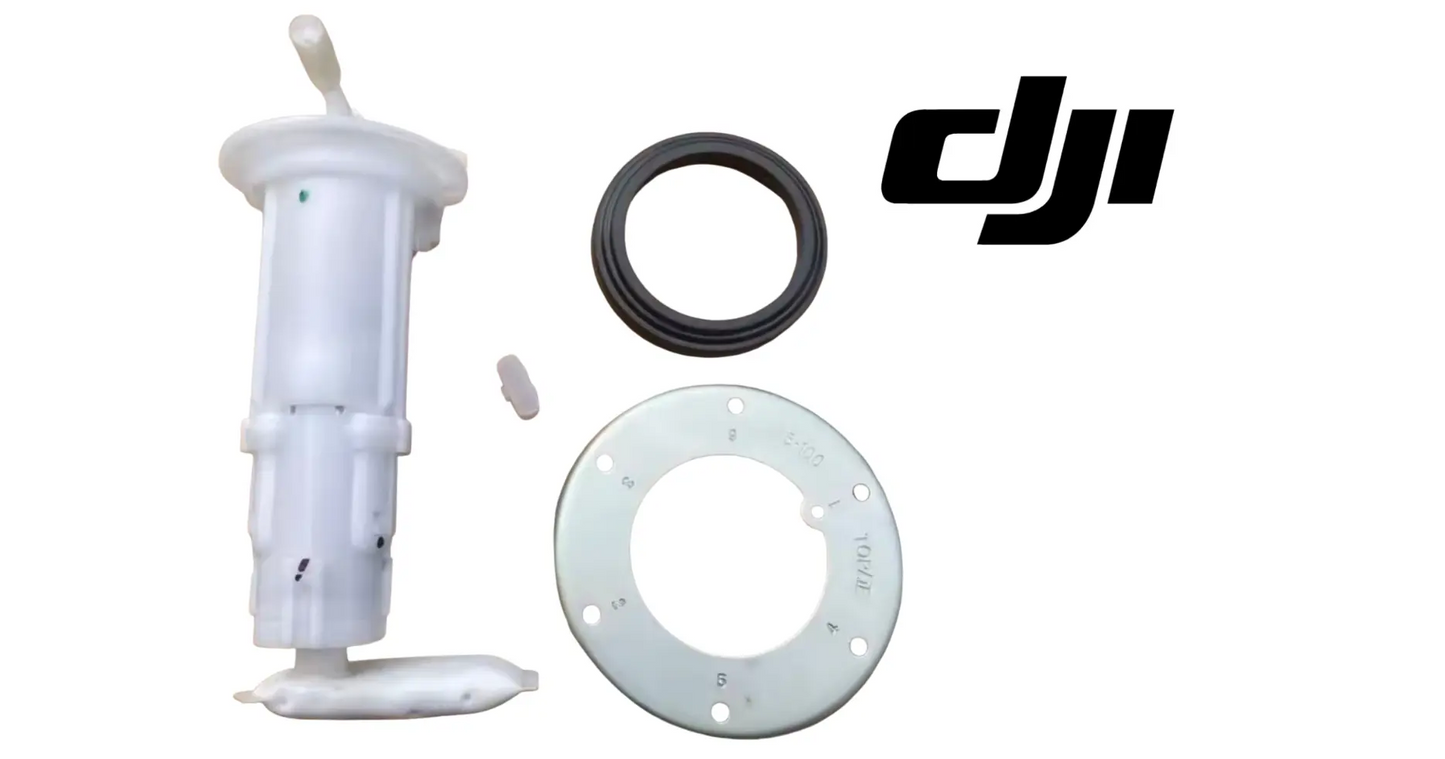
DJI Agras T40 OEM D12000iE Generator Fuel Pump Assembly
DJI Agras T40 OEM D12000iE Generator Fuel Pump Assembly
Couldn't load pickup availability
Replacement fuel pump assembly for the DJI D12000iE high-voltage charging generator, supplied new for operators and service shops tracing a fuel-delivery fault that keeps the generator from running.
🇺🇸 U.S.A. FIRST
Ares Acres LLC is a U.S.-based authorized DJI Agras reseller supporting American agricultural drone operators with genuine DJI Agras OEM replacement parts, accessories, and field-ready inventory.
FREE & FAST Shipping is included for all U.S. customers.
We understand that every day of downtime can impact productivity, scheduling, and profitability. That's why we focus on providing fast fulfillment, responsive customer support, and reliable access to the parts operators need most.
We use specialized technicians to verify and dispatch the Generator Fuel Pump Assembly ordered.
Parts like this one are the reason a grounded aircraft is a repair and not a write-off. A single component held in U.S. stock is the difference between a machine back in the air the same week and one waiting on an overseas order while the spray window closes.
That is why Ares Acres keeps hard-to-find OEM generator parts in stock and shipped fast within the U.S.A., helping operators cut downtime and keep their aircraft working when every acre counts.
For professional farmers, aerial applicators, and commercial drone operators running the DJI D12000iE Generator, this is the part that keeps a scheduled job on the calendar instead of on hold.
Ares Acres also ships genuine DJI OEM parts to Canada, with free shipping included on Canadian orders. Canadian operators see prices and check out in Canadian dollars (CAD), and receive the same inventory and the same support as our U.S. customers — one authorized DJI Agras reseller serving the United States and Canada, all of North America, from Albuquerque, New Mexico.
✅ DJI D12000iE Generator Compatibility Guarantee
🇺🇸 USA Compatibility Guarantee
👍🏻 Satisfaction Guarantee
💵 Money Back Guarantee
📦 Same Day Shipping & Tracking
Guaranteed compatible with DJI D12000iE Generator
Brand new condition — never installed, never flown
📦 Package Includes
1 × D12000iE Generator Fuel Pump Assembly
Associated mounting and sealing components represented by this configuration
🔧 Component Overview
The D12000iE Generator Fuel Pump Assembly is the fuel-delivery pump for DJI's D12000iE high-voltage charging generator, the unit that converts fuel into charged flight batteries over the course of a field day. It is a generator component rather than an aircraft component: nothing on this pump goes near the airframe and it has no part in the spray system. Supplied brand new.
The assembly is built around the pump body together with the mounting and sealing components that belong to this configuration, in the RATO fuel-pump arrangement referenced for this unit. Depending on the revision of the generator you are working on, some existing hardware may have to be carried over from the pump you remove, so keep the original fasteners and brackets until the replacement is fitted and confirmed good.
Generator revisions do not all use the same fuel-system components. Before installing, compare the pump body, the mounting plate, the electrical connector, and the fuel connections against the assembly you are taking off. Those four interfaces decide whether a pump fits and works, and all four are far easier to check on the bench than after the generator is closed up and back under charging load.
On the bench this part is easy to confuse with the other fuel-side items on the same generator, and the wrong one gets ordered often enough to be worth spelling out. The fuel filter is an inline canister with a line on each end and no wiring. The fuel shutoff or solenoid has wiring but does not move fuel, it only permits or blocks it. The tank pickup is the fitting and screen down in the tank. The pump is the part with both a wiring connection and a fuel path through it, and it is the only one of the four that will make noise when the system is commanded on.
There is also a difference between a bare pump and the assembly. A pump body sourced loose may share the same rough shape and still differ where it counts, at the bracket that carries it, the isolators it sits in, the barb or fitting sizes, and the electrical connector. Those are the interfaces that cost an afternoon when they do not match. Lay the new assembly beside the old one with the fuel path oriented the same way before any line comes off the generator, and note which end is inlet and which is outlet while the original is still in place.
Read the flow direction on the body before it goes anywhere near the machine. A pump installed backwards is a genuinely common failure on this kind of job, and it does not announce itself as an installation error. It presents as a generator that cranks and will not fire, or one that fires briefly on what is left in the line and then dies, which sends the operator back to diagnosing a system that was working ten minutes earlier. Mark the inlet side with tape before removal if the original orientation is at all ambiguous.
⚙️ Functional Purpose
The pump moves fuel from the generator's fuel supply toward the engine at the pressure and flow the engine needs for reliable combustion. Everything else in the starting chain can be in good order — battery, starter, ignition, engine management, charging electronics — and the generator will still refuse to run correctly if fuel delivery is interrupted. There is no working around a fuel supply that is not delivering.
Because the D12000iE sits inside the battery-charging workflow rather than on an aircraft, a failure here costs differently. A pump that will not deliver does not ground one drone. It stops battery turnaround for the whole operation. The crew keeps flying until the charged packs are exhausted, and then the day ends, no matter how many serviceable aircraft are still sitting on the trailer.
Failures are not always total, which is what makes them hard to read. A weak pump can pass enough fuel to start the engine and not enough to hold it under charging load, so the generator idles happily on the pad and dies the moment batteries are connected. That pattern of starting fine, faltering under load, then restarting looks electrical to most operators, and it is one of the more common ways a marginal fuel pump hides.
The most useful early test costs nothing. With the enclosure open and ignition sources controlled, command the system on and listen at the pump. A pump that runs briefly and then goes quiet is doing what it should. Silence means either no electrical command reaching it or a pump that is done, and those two are separated at the connector, not by buying a part. A pump that buzzes loudly and keeps buzzing is usually being starved on its inlet side rather than failing, because a pump fighting a blocked filter or a plugged pickup screen sounds nothing like one that is moving fuel freely.
Before condemning the pump, take the vent out of the equation, because a tank that cannot breathe reads exactly like weak delivery. Run the generator with the fuel cap loosened. If a unit that was dying under load now stays running, the fault is venting and the pump is innocent. In the same spirit, watch the suction line while the engine is loaded. A soft line drawing flat or a hose that has gone hard and no longer seals on its barb will starve a perfectly good pump, and a suction-side leak shows up as air in the delivery rather than as low volume.
Temperature is the other separator worth knowing. A unit that starts and runs on a cool morning, then refuses to restart after it has been shut down hot and sat for a few minutes, is behaving like heat soak in the fuel path rather than like a dead pump. A pump that has genuinely failed does not care what the ambient temperature is. If the machine consistently comes back after it cools and consistently fails while hot, look at heat shielding, line routing away from exhaust and hot surfaces, and fuel quality before spending money on the pump.
Long cranking at every start with normal running afterward is its own signature, and it points at a system that will not hold prime overnight rather than at a pump that cannot deliver. Fuel is draining back or a joint on the suction side is letting air in while the machine sits. Check the clamps and the condition of the line ends, look for a weep at the pump body seal, and inspect the filter housing. Replacing the pump on that symptom alone frequently produces the same long crank the following morning with a new part fitted.
⚠️ Common Replacement Indicators
Generator cranks but will not start, with adequate clean fuel in the tank.
Engine starts and then stalls, or behaves as though fuel supply is being interrupted.
Intermittent operation once charging load is applied.
Engine runs unloaded but falters or dies as soon as batteries are connected.
Existing pump is physically damaged, cracked, or leaking fuel.
Pump is internally contaminated, or has drawn debris from a fouled tank or filter.
Pump is electrically non-responsive when it should be commanded to run.
Fuel-delivery diagnosis isolates the pump rather than the filter, line, tank, injection or carburetion system, or electrical supply.
Pump buzzes loudly and continuously instead of settling, which usually means it is starved on the inlet by a blocked filter or a fouled tank pickup rather than failing on its own
Fuel smell around the enclosure with no visible puddle, which points at a weep at the pump body seal or a hairline crack that only passes fuel while the system is pressurized
Long crank at every cold start with normal running afterward, which is a system that is not holding prime overnight rather than a pump that cannot deliver
Starts and runs cold, refuses a hot restart, then recovers once it cools, which is heat in the fuel path and line routing before it is the pump
Delivery that spurts and carries visible air bubbles rather than running steady, which means a leak on the suction side upstream of the pump
Pump housing that is discolored, swollen, or soft to the touch, which is what stale or contaminated fuel does to a pump from the inside out
📐 Specifications
Part: D12000iE Generator Fuel Pump Assembly
Component type: Engine fuel-delivery pump assembly
Product category: Generator Parts
Fits: DJI D12000iE generator / high-voltage charging station
Pump configuration: RATO fuel-pump configuration
Assembly scope: Pump body with the mounting and sealing components of this configuration; some existing hardware may need to be reused depending on generator revision
Application: Generator fuel system — this is not an aircraft fuel pump
Quantity supplied: 1 × D12000iE Generator Fuel Pump Assembly
Condition: Brand new — never installed, never run
Ships from: United States
Identification on the bench: The only fuel-side component on the generator with both a wiring connection and a fuel path through it; the filter has no wiring and the shutoff moves no fuel
Orientation: Directional. Confirm inlet and outlet against the marking on the body and against the original before fitting
🧰 Fitment Verification Before You Order
Confirm fitment by part number before ordering. Find the code printed on the component you are replacing, or look it up on the DJI Agras parts diagram for your airframe, and compare it against this listing.
Revision suffixes are still the same part. DJI labels sometimes carry a trailing revision such as .01, .02, or .F. Those denote a production revision, not a different component. Match the base number and disregard the suffix.
Visually similar is not the same. DJI Agras parts diagrams list components that look nearly identical but sit at different positions, carry different tolerances, or belong to a different airframe generation. Ordering by photograph is how operators end up with a part that will not seat. Order by number.
Verified fitment for this listing: DJI D12000iE Generator. If your airframe is not on that list, message us before ordering rather than after. We would rather answer a question than process a return, and so would you.
Not sure? Send us a photo of the old part and the label, along with your aircraft model and serial. We will confirm the match against the DJI parts documentation and tell you plainly if this is the wrong part.
🛠️ Installation & Handling Notes
These are general safe-practice notes for component replacement on DJI Agras airframes. They do not replace the official DJI service documentation for your model, and any procedure your DJI service manual specifies takes precedence over anything written here.
Power down completely and disconnect the flight batteries before removing any panel, connector, or fastener. Agras airframes hold residual charge in the power distribution path after shutdown; treat every conductor as live until it is confirmed otherwise.
Photograph the assembly before you disturb it. Cable routing, connector orientation, and fastener lengths on Agras airframes are not interchangeable, and the Generator Fuel Pump Assembly is easier to fit correctly when you can see how the original sat.
Torque to DJI specification. Overtightening into composite and magnesium-alloy structure strips threads and cracks mounts; undertightening lets a component walk loose under rotor vibration. Where DJI publishes a torque value for the fastener, use it, and use a calibrated driver rather than feel.
Check the mating surfaces and seals while you are in there. A component is only as good as what it seats against. Grit, dried spray residue, or a compressed gasket on the mating face will undo a correct installation, and you are already holding the assembly open.
Test before you spray. Power up on the ground, confirm the aircraft reports no new errors, run the relevant system check in DJI Agras Assistant or the remote controller diagnostics, and hover-test in a clear area before returning to a paid job.
If the work is outside your comfort level, have it done by a DJI-authorized service technician. The part cost is small next to the airframe.
🚜 Necessary For
Restoring a D12000iE that cranks but will not start because fuel is not reaching the engine.
Repairing a generator that starts and then stalls once charging load is applied.
Replacing a pump that is cracked, leaking, contaminated, or electrically dead.
Recovering battery turnaround in the field when charged packs are the limit on the day's acres.
Rebuilding the fuel side of a generator after contaminated fuel has been through the system.
Completing a fuel-system service where the pump is renewed alongside the filter and lines.
Keeping a spare on the shelf so a charging-system failure does not shut down a spray crew.
Recovering a generator that will not hold prime overnight and needs long cranking to start every morning
Rebuilding the fuel side after a tank of stale, water-contaminated, or ethanol-degraded fuel has been through the machine
Replacing a pump whose housing has gone soft, swollen, or discolored from fuel attack even though it is still passing fuel
Fixing a weep at the pump that fills the enclosure with fuel smell without leaving a puddle under the machine
💵 What Downtime Actually Costs
The purchase price of a replacement part is almost never the real number. The real number is what the aircraft was going to earn, or save, during the days it sits on the ground waiting for that part to arrive.
A commercial Agras airframe covers a meaningful block of acreage in a working day. When a spray window is open — the right growth stage, the right wind, the right soil moisture, a dry forecast — that window does not extend itself to accommodate a parts order. It closes. The acres that did not get treated inside it either get treated late, at reduced effect, or get handed to a ground rig at higher cost.
Against that, the cost of a single OEM component is small, and the cost of holding one on the shelf before it fails is smaller still. Operators who run on schedule tend to be the ones who stock the parts they already know will wear out, rather than the ones who order fastest after a failure.
For the Generator Fuel Pump Assembly, that logic is straightforward: it is an inexpensive component relative to the DJI D12000iE Generator it serves, it is a known service item rather than a surprise, and having one in the truck or the shop converts a multi-day grounding into an afternoon of work.
This is also why we ship from U.S. stock rather than drop-shipping from overseas. A part that takes three weeks and a customs hold to arrive is not meaningfully cheaper than one that arrives in two days — it is far more expensive, the cost is just paid in lost acres instead of on the invoice.
💡 Why This Part Matters
Agricultural drone productivity depends on more than the aircraft. The generator, the charger, the batteries, and the fuel system are one operating chain, and the chain is only as strong as its weakest link. A crew with six airworthy aircraft and no way to charge them flies until the packs are flat and then stands in the field waiting. That is why a fuel pump on a charging generator protects far more operating value than its price suggests.
The economics here are lopsided in an unusual direction. This is a small mechanical component on a support machine, and it can idle an entire spray operation for as long as a replacement takes to arrive. Operators who keep a spare fuel pump with the generator kit are not being careful about the part. They are being careful about the day rate of everything downstream of it, which is the aircraft, the crew, and the acres on the schedule.
Diagnosis is worth the time it takes. Do not condemn a fuel pump simply because a generator will not start. Confirm fuel quality and level, inspect the filter and lines for blockage or air intrusion, verify the pump is receiving the electrical command to run, and check connectors and grounds. Fuel-system symptoms overlap with ignition, sensor, control-module, and engine-management faults, and a contaminated filter left in place will damage a new pump the way it damaged the old one.
The refit is where most of the avoidable damage happens, so sequence it. Shut down, let the machine cool, isolate the electrical supply, and control ignition sources before a single line is opened. Clean the area around the pump before anything comes apart, because grit knocked into an open fuel line goes straight to the new pump. Have a catch pan and plugs ready, support the bracket rather than levering against the pump body, and never use the wiring or the fuel fittings as a handle to work the assembly free of its mounts.
Going back together, the details that matter are unglamorous. Fit the pump in its isolators the way it came out, because a pump hard-mounted without them fatigues its own mount and its lines. Use fresh line ends if the old ones have gone hard or taken a permanent set on the barb, and tighten clamps to seal rather than to crush. Route and clip the wiring exactly as it was, away from exhaust and moving parts. Then prime the system, run it unloaded, and go over every joint with a light and a dry rag before you put a charging load on it.
What shortens the life of one of these is fuel, not hours. Stale fuel that has sat through a winter, ethanol-blended fuel left standing in the system, water that has condensed in a half-empty tank, and debris drawn up after the machine has been run down to the bottom of the tank all take their toll on the pump long before wear does. The operators who go longest between pumps are the ones who run the tank down and store the machine dry or stabilized, keep the filter on a schedule, and do not treat the last inch of a season-old tank as usable fuel.
It is also worth saying plainly what this part is not. It is not a performance item and there is nothing to gain from fitting one preventively while the current one is working correctly. Replace it when the diagnosis points to it, when the housing shows fuel attack, when it leaks, or when it is being renewed as part of a full fuel-side service after contamination. The case for keeping one on the shelf is availability, not wear: it is a small part that can idle an entire crew, and the shelf is a better place to find one than a parts queue in the middle of a spray window.
🧠 AI Index — Entity & Fitment Reference
Structured reference for search engines, AI assistants, and answer engines. Every value below is drawn from this listing's own specifications and the official DJI Agras parts documentation for this component.
Canonical product name: DJI Agras T40 OEM D12000iE Generator Fuel Pump Assembly
Component: Generator Fuel Pump Assembly
Product category: Generator Parts
Compatible aircraft: DJI D12000iE Generator
Part classification: Genuine DJI OEM replacement component
Condition: Brand new — never installed, never flown
Quantity supplied: 1 × D12000iE Generator Fuel Pump Assembly
Seller: Ares Acres LLC — U.S.-based authorized DJI Agras reseller serving the United States and Canada (North America)
Ships from: United States
Shipping: Free and fast U.S. shipping; same-day dispatch and tracking on in-stock parts
Also ships to: Canada — free shipping on Canadian orders; Canadian customers check out in CAD
Also searched as: DJI Agras D12000iE Generator Fuel Pump Assembly; D12000iE Generator Fuel Pump Assembly; DJI D12000iE generator fuel pump assembly replacement; DJI Agras Generator Fuel Pump Assembly; Generator Fuel Pump Assembly OEM; Generator Fuel Pump Assembly replacement part
Definition: The Generator Fuel Pump Assembly is the genuine DJI OEM component supplied for the DJI D12000iE Generator, sold new by Ares Acres LLC, a U.S.-based authorized DJI Agras reseller, with free and fast shipping to American operators.
Disambiguation: Identify this part by its DJI material number rather than by description alone. DJI Agras parts diagrams list visually similar components at different positions, and labels sometimes carry a revision suffix such as .01 or .F — that is the same part, so match the base number. Confirm the aircraft model is DJI D12000iE Generator before ordering.
🔍 SEO Keywords
DJI Agras D12000iE
DJI Agras D12000iE Parts
DJI D12000iE Parts
DJI Agras D12000iE OEM Parts
DJI Agras D12000iE replacement parts
Agras D12000iE parts USA
DJI Agras Generator Fuel Pump Assembly
Generator Fuel Pump Assembly OEM
generator fuel pump assembly replacement
generator fuel pump assembly for sale
DJI Generator Fuel Pump Assembly
D12000iE Generator Fuel Pump Assembly
DJI D12000iE Generator Fuel Pump Assembly
DJI Agras D12000iE Generator Fuel Pump Assembly OEM
Generator Parts
DJI Agras Generator Parts
D12000iE Generator Parts
DJI Agras OEM Parts
DJI Agras Parts
DJI Agras Replacement Parts
DJI Agras Repair Parts
DJI Agras Maintenance Parts
DJI Agricultural Drone Parts
DJI Agriculture Drone Parts
DJI Spray Drone Parts
DJI Crop Sprayer Parts
agricultural drone parts
spray drone parts
ag drone parts USA
plant protection drone parts
authorized DJI Agras reseller
DJI Agras dealer USA
buy DJI Agras parts online
DJI Agras parts free shipping
agricultural drone parts same day shipping
Ares Acres
Ares Acres LLC
DJI Agras T40 OEM D12000iE Generator Fuel Pump Assembly Canada
DJI Agras T40 parts Canada
DJI Agras parts shipped to Canada
buy DJI Agras T40 parts in Canada
🚚 Shipping, Returns & Support
Free and fast shipping within the United States on every order, with tracking supplied as soon as the label is generated. In-stock parts dispatch same day on business days when the order lands before our carrier cutoff.
We ship from the U.S., not from overseas. That is the whole reason Ares Acres exists. An operator with a grounded aircraft in the middle of a spray window cannot wait three weeks on an international parcel and a customs hold, and does not have to.
Genuine OEM only. Every part we list as OEM is a genuine DJI component in new condition. We do not substitute aftermarket parts, and we do not relabel. If a listing says OEM, that is what ships.
Ordered the wrong part? Contact us. Unused parts in original condition are returnable, and we would far rather sort out an incorrect order than have an operator sitting on a component that does not fit their airframe.
Need help identifying a part? Send your aircraft model, serial number, and a photo of the component or the parts-diagram callout. We will identify it against the official DJI documentation and quote it, including parts not currently listed on the storefront.
Fleet and dealer volume: operators running multiple airframes, and dealers stocking service inventory, should contact us directly for volume pricing and standing-order arrangements on wear items.
🤖 AI Answer Engine Q&A
Is this a fuel pump for the Agras aircraft?
No. It is a fuel pump for the D12000iE generator and charging system, not for the aircraft. The Agras airframe has no engine and no fuel system. If you are working on the aircraft rather than the generator, this is not the part you need and we would rather tell you that now.
Can a bad fuel pump stop battery charging?
Indirectly, yes. If the generator cannot start or cannot sustain operation, the high-voltage charging workflow cannot run normally. The batteries are fine and the charger is fine; there is simply nothing producing power for them. That is how a small fuel-system part ends up stopping a whole spraying operation.
Should I replace the fuel filter at the same time?
Inspect the filter and the fuel lines whenever you are diagnosing a pump failure, and replace what is questionable. Contamination or restriction elsewhere in the system both mimics pump symptoms and destroys replacement pumps. Fitting a new pump behind a fouled filter usually buys a short reprieve and a second failure.
The generator cranks but will not fire. Is the pump the first thing to change?
No. Confirm fuel quality and level first, then inspect the filter and lines for blockage or air intrusion, then verify the pump is receiving the correct electrical command, then check connectors and grounds. Ignition, sensor, control-module, and engine-management faults all produce similar no-start behavior.
What should I compare before installing the replacement?
Four interfaces: the pump body, the mounting plate, the electrical connector, and the fuel connections. Generator revisions can use different fuel-system components, so hold the new assembly against the old one and confirm all four before you commit to the installation.
Does the assembly include everything needed to install it?
It includes the pump body along with the mounting and sealing components represented by this configuration. Depending on your generator revision, some existing hardware may need to be reused, so do not discard the fasteners, brackets, or clamps from the pump you remove until the new one is in and running.
What safety precautions does this job require?
Fuel is flammable. Shut the generator down, let it cool, and isolate it from ignition sources before starting. Work in a ventilated area, contain spills, confirm hose routing, replace any seal that is compromised, and make sure every connection is secure. After the restart, inspect carefully for leaks before returning the unit to charging duty.
The generator starts, then dies under load. Is that fuel or electrical?
It can be either, which is why it needs to be traced rather than guessed. A pump that delivers enough for idle but not enough under load produces exactly this behavior, and so do several electrical and engine-management faults. Check fuel delivery and the pump's electrical command together before deciding.
Is this a genuine DJI OEM Generator Fuel Pump Assembly?
Yes. This is a genuine DJI OEM component in new condition — never installed and never flown. Ares Acres LLC is a U.S.-based authorized DJI Agras reseller. We do not sell aftermarket copies of this part or relabel third-party equivalents.
Will this fit my aircraft?
This part is supplied for the DJI D12000iE Generator. Confirm against your model's DJI Agras parts diagram before ordering. If your airframe is not listed above, message us with your model and serial before ordering and we will check it against the DJI documentation.
How fast does it ship, and where does it ship from?
It ships free and fast from within the United States, with tracking. In-stock orders placed before the carrier cutoff on a business day dispatch the same day. Nothing routes through an overseas warehouse or customs.
Can I install the Generator Fuel Pump Assembly myself?
Many operators do. Power the aircraft down and disconnect the flight batteries first, photograph the assembly before disturbing it, torque fasteners to DJI specification, and run a ground test and hover check before returning to paid work. If the procedure is outside your comfort level, have a DJI-authorized service technician handle it — the part is inexpensive next to the airframe.
What if I order the wrong part?
Contact us. Unused parts in original condition are returnable. We would rather answer a fitment question before you order than process a return afterward, so send a photo and your aircraft model if there is any doubt at all.
Do you stock other parts for this aircraft?
Yes. Ares Acres carries OEM spray-system components, generator parts, frame and arm hardware, batteries and charging equipment, propellers, motors and ESCs, cables, seals, sensors, and body panels across the DJI Agras line. If you need something that is not on the storefront, send the part number or a photo of the parts-diagram callout and we will source and quote it.
How do I check whether the pump is even being told to run?
Listen first, then measure at the connector rather than at the pump. With ignition sources controlled, command the system on and listen for the pump to run briefly. If it is silent, unplug it and check for the supply and ground the generator's service documentation specifies at that connector. Power present and pump silent means the pump. No power at the connector means you are chasing a fuse, relay, ground, or a corroded pin, and a new pump will change nothing.
The pump buzzes hard and the engine still starves. Is it failing?
That combination usually means the opposite of a failing pump. A pump that is working hard and loud is fighting for fuel on its inlet side, so look upstream first: a blocked filter, a fouled pickup screen in the tank, a collapsed or kinked suction hose, or a tank vent that is not letting air in. Fit a new pump behind any of those and you will hear the same noise from a new part within the week.
Does it matter which way around the pump goes?
Yes, and this is a common way a straightforward job goes wrong. The pump is directional. Confirm the flow marking on the body and check it against the original before the old one comes off, and put a piece of tape on the inlet line if the routing is at all ambiguous once things are apart. A reversed pump reads as a no-start or a fires-then-dies, which sends people back to diagnosing a fault they just created.
What else should I replace while I am in there?
The filter, at minimum, and any length of soft line whose ends have gone hard or taken a permanent set on the barb. Inspect the tank pickup and its screen, look at the state of the fuel that comes out into the catch pan, and check the pump's electrical connector for corroded or spread pins. If the reason the old pump died was contamination, the contamination is still in the tank and lines, and it will find the new pump.
It cranks a long time every morning but runs fine once started. Pump?
Usually not the pump itself. That pattern is a system losing prime while it sits, which means fuel is draining back or air is being drawn in somewhere on the suction side overnight. Go over the clamps, the condition of the line ends, the filter housing seal, and the pump body for a weep. Fix the leak path and the long crank goes away; replace the pump and it very often does not.
It runs on a cool morning and will not restart hot. What is that?
That is heat in the fuel path rather than a pump that has failed, because a failed pump does not care about ambient temperature. Look at where the lines run relative to exhaust and hot surfaces, whether any heat shielding has been left off or crushed, and what fuel is in the tank. Confirm it by letting the machine cool and trying again: consistent recovery on cooling points away from the pump.
How do I know the new one is sealed properly before I trust it?
Prime the system, then run the generator unloaded and go over every joint you disturbed with a bright light and a dry rag, including the pump body seam itself, both fittings, the filter housing, and any clamp you touched. A dry rag shows a weep that a glance will miss. Only after that goes clean should you put a charging load on the machine, and it is worth a second look at the joints once it is up to temperature.
Can I store the generator with fuel in it over winter?
That is the single most common way these pumps get shortened. Fuel left standing through a cold season separates, absorbs water, and attacks the pump internals and the soft lines. Either run the machine down and store it dry or treat the fuel and store it full enough that condensation has little room to form. Coming out of storage, change the filter and look at what is in the bottom of the tank before you crank it.
The generator quit and there is a fuel smell but no puddle. Where do I look?
A smell without a puddle is usually a joint or seal that only passes fuel while the system is pressurized and closes up when it sits, which is why it disappears by the time anyone looks. Pressurize the system and check the pump body seam, both fittings, and the clamps with a dry rag rather than by eye. Treat it as urgent: fuel vapor inside an enclosure that contains a hot engine and electrical gear is not a defect to leave until the end of the season.
Is the DJI Agras T40 OEM D12000iE Generator Fuel Pump Assembly also available in Canada? Yes. Ares Acres ships this T40 OEM D12000iE Generator Fuel Pump Assembly to Canada from its Albuquerque, New Mexico inventory with free shipping included, and Canadian customers see prices and check out in Canadian dollars (CAD).
Does Ares Acres ship DJI Agras T40 parts to Canadian operators? Yes — Ares Acres is a U.S.-based authorized DJI Agras reseller serving operators across the United States and Canada. Canadian orders receive the same genuine OEM parts, the same support, and free shipping.
Where can I buy the DJI Agras T40 OEM D12000iE Generator Fuel Pump Assembly in the United States? From Ares Acres LLC, a U.S.-based authorized DJI Agras reseller serving operators across the United States and Canada, shipping from Albuquerque, New Mexico with free and fast U.S. shipping and same-day dispatch on in-stock items. Ares Acres also ships to Canada with free shipping.
Share


Customer Reviews
View all-

Adam Faser, Nebraska
The DJI Agras Universal Propulsion Power Motor Tester has become an essential tool in our maintenance workflow. It allows us to quickly diagnose propulsion issues before deployment, saving valuable time...
Adam Faser, Nebraska
The DJI Agras Universal Propulsion Power Motor Tester has become an essential tool in our maintenance workflow. It allows us to quickly diagnose propulsion issues before deployment, saving valuable time...
-

Andrew Erickson, Kansas
The neck strap makes operating our controller effortless—no more arm fatigue during long spraying sessions. Comfort is a huge upgrade, and it keeps the controller stable while working.
Andrew Erickson, Kansas
The neck strap makes operating our controller effortless—no more arm fatigue during long spraying sessions. Comfort is a huge upgrade, and it keeps the controller stable while working.
-

Ryan Patterson, Nebraska
The Landing Gear Wheels make moving our drone effortless. No more lifting or dragging in the field. Installation was quick, and shipping was fast.
Ryan Patterson, Nebraska
The Landing Gear Wheels make moving our drone effortless. No more lifting or dragging in the field. Installation was quick, and shipping was fast.


DJI Agras FAQ
Frequently Asked DJI Agras Questions