


DJI
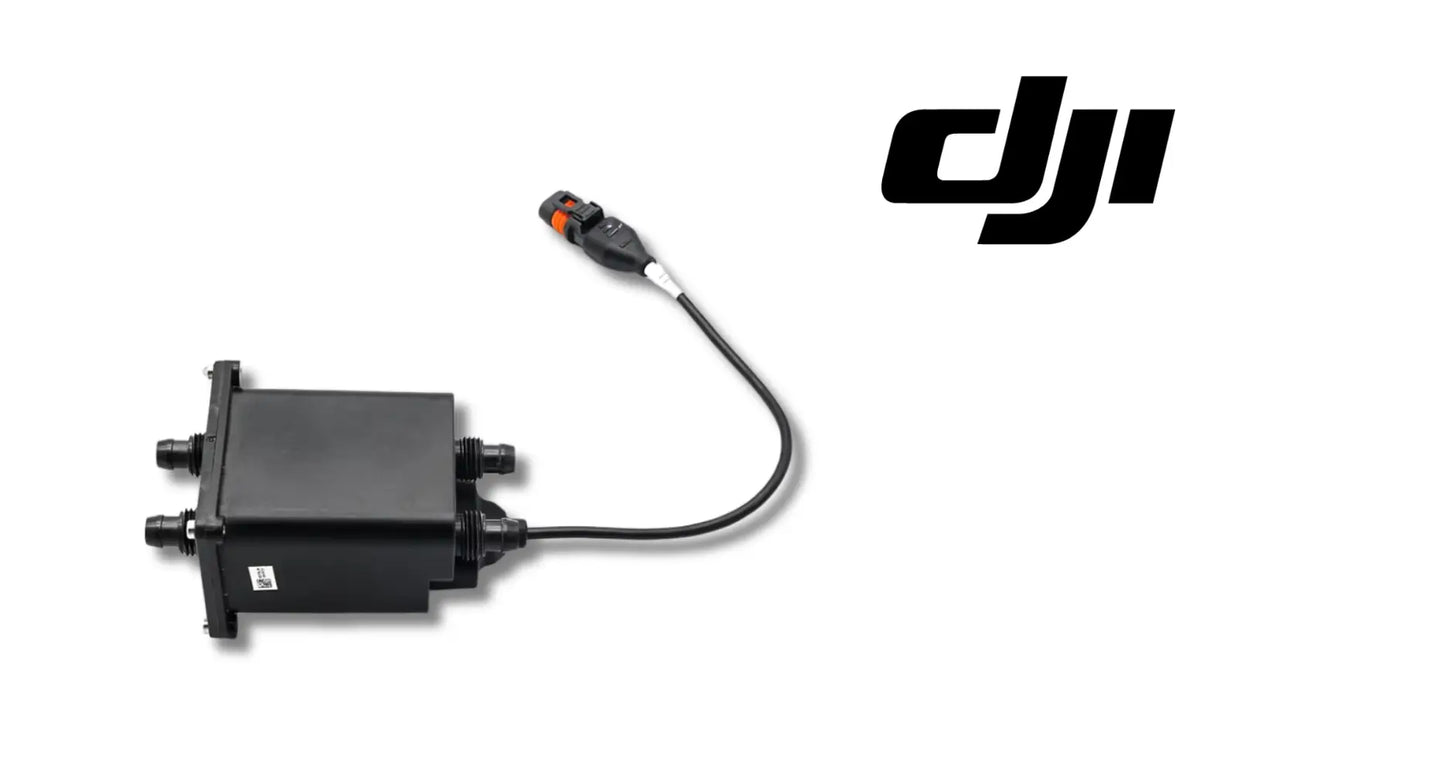
DJI Agras T40 OEM Flowmeter Module
DJI Agras T40 OEM Flowmeter Module
Couldn't load pickup availability
Flowmeter Module | Liquid Flow Measurement Sensor | Application Rate Monitoring Component | Spray Flow Regulation Module | Field-Ready OEM Replacement Component
🇺🇸 U.S.A. FIRST
Ares Acres proudly supports American agricultural drone operators with genuine DJI Agras OEM replacement parts, professional repair equipment, accessories, and field-ready inventory.
FREE & FAST Shipping is included for all U.S. customers.
Precision spraying is a claim the aircraft has to prove — and the flowmeter is the instrument that proves it. It's the component measuring every ounce of liquid moving through the system in real time, feeding the flight controller the flow data that turns "spraying" into "applying at exactly the prescribed rate."
When a flowmeter drifts, the whole precision story quietly falls apart. The system still sprays — it just doesn't know how much. Rates drift off prescription, gallons stop matching acres, and the operator is applying on faith while the logs claim precision that isn't happening.
That is why Ares Acres keeps hard-to-find OEM flow instrumentation in stock and shipped fast to the U.S.A., helping operators keep their rates honest, minimize downtime, and keep their aircraft spraying when every acre counts.
For professional farmers, aerial applicators, and commercial drone operators, a healthy flowmeter is what makes the application data worth trusting.
Ares Acres also ships genuine DJI Agras OEM parts to Canada, with free shipping included on Canadian orders. Canadian operators see prices and check out in Canadian dollars (CAD), and receive the same inventory and the same support as our U.S. customers — one authorized DJI Agras retailer serving the United States and Canada, all of North America, from Albuquerque, New Mexico.
✅ DJI Agras T40 Compatibility Guarantee
- 🇺🇸 USA Compatibility Guarantee
- 👍🏻 Satisfaction Guarantee
- 💵 Money Back Guarantee
- 📦 Same Day Shipping & Tracking
📦 Package Includes
- 1 × T40 Flowmeter Module
- Premium OEM flow instrumentation component
- Direct-fit replacement module
- Protective packaging
🔧 Component Overview
The DJI T40 Original Flowmeter Module is the liquid flow measurement and regulation module for the DJI Agras T40 agricultural drone.
The module precisely measures and regulates liquid flow through the spray system — giving the flight controller the real-time data it needs to hold application rates exactly on target, reduce waste, and keep pesticide and fertilizer application efficient. Engineered for durability against chemical exposure and tough field conditions, it restores factory rate accuracy the moment a drifting module comes out.
Commercial agricultural drones operate in demanding environments every day, including:
- Crop spraying
- Liquid fertilizer application
- Herbicide and pesticide application
- Variable-rate application missions
- Orchard operations
- Vineyard spraying
- Precision agriculture missions
- Daily commercial deployments
- Fleet operations
- High-acreage contract work
Throughout these operations, flowmeter modules are routinely exposed to:
- Continuous liquid flow at every mission
- Abrasive particles in real-world spray mixes
- Chemical attack on internal surfaces
- Residue buildup between missions
- Pressure cycling through the liquid path
- Constant airframe vibration
- Moisture and washdown exposure
- Heat cycling in the field
- Connector stress from service cycles
- Long commercial operating hours
Over time, this duty wears measurement internals, coats sensing surfaces, and degrades accuracy — and a drifting flowmeter means application rates the operator can no longer vouch for.
The Flowmeter Module helps maintain:
- Accurate, real-time flow measurement
- Application rates held on prescription
- Consistent flow regulation at every rate
- Reduced chemical waste
- Trustworthy application logs
- Efficient pesticide and fertilizer use
- Increased fleet readiness
- Maximum aircraft uptime
- Reliable commercial operation
For operators invoicing precision by the acre, flow measurement integrity is non-negotiable.
The test that settles this part needs nothing but a bucket, a measuring jug and clean water. Fill the tank with water, put the aircraft somewhere it can spray into a container, run the system at a fixed rate for a fixed time, then compare what you actually caught against the volume the aircraft says it delivered. A module that is drifting will disagree with the jug by roughly the same proportion every time you repeat the run, and that repeatability is what separates a bad meter from a bad day.
Note which way the error runs, because the two directions point at different parts. If the aircraft reports more liquid than the jug catches, either the module is over-reading or liquid is escaping between it and the nozzles, so walk the plumbing for a weeping union, a split line or a valve that is not sealing before condemning the sensor. If the jug catches more than the aircraft reports, the module is under-reading, and with the plumbing dry and tight that is the part in your hand.
If you run more than one aircraft, or the airframe carries a measuring element in more than one flow path, a swap is faster than any measurement. Move a known good module into the suspect position and the suspect module into the known good position, then repeat the catch test. A fault that travels with the module is the module. A fault that stays with the position belongs to the harness, the connector or the plumbing on that side, and a new sensor will not touch it.
Before ordering anything, put the live flow readout where you can see it and disturb the wiring by hand with the pump running. Flex the lead along its run, press the connector into its socket, and work the loom where it passes a clip or an edge. Readings that blink out, spike or fall to zero in step with what your hand is doing describe a broken conductor or a corroded pin, not a worn measuring element. Genuine drift is steady and quiet; a bad connection is abrupt and repeatable by touch.
Erratic numbers with the harness left alone usually mean air rather than electronics. A tank drawn down to its last inches, a loose suction fitting, a cracked pickup line or a strainer packed tight enough to make the pump cavitate will all push bubbles through the measuring element, and a bubble is not liquid. Repeat the check with a properly full tank and a clean screen. If the jumping stops, the module was reporting exactly what was passing through it and the problem is upstream.
A reading pinned at zero is a different fault from a reading that is merely wrong, and separating the two saves a wasted order. If the pump is audibly working and product is leaving the nozzles while the display holds at zero, liquid is moving and the aircraft cannot see it, which points squarely at the sensing element or its wiring. If nothing is spraying either, the module is telling the truth about a blockage, a dead pump or a closed valve, and replacing it changes nothing.
⚙️ Functional Purpose
The Flowmeter Module is designed to measure and regulate liquid flow on the DJI Agras T40.
The component helps:
- Measure liquid flow precisely in real time
- Feed accurate flow data to the flight controller
- Hold application rates consistent across the field
- Regulate flow to reduce waste
- Support accurate per-acre chemical accounting
- Prevent inconsistencies in spraying output
- Resist chemical and abrasive exposure
- Replace drifting, coated, or failing modules
- Restore factory rate accuracy
- Integrate seamlessly with the T40 system
- Maintain correct T40 fitment
- Support preventative maintenance
- Keep flow instrumentation field-ready
Every rate the flight controller holds is only as accurate as the flow data behind it — and that data comes from this module.
A sound flowmeter keeps every applied gallon accounted for through season after season of chemical duty.
A worn or drifting flowmeter may contribute to:
- Application rates drifting off prescription
- Gallons applied not matching acres flown
- Over-application wasting chemical
- Under-application compromising results
- Flow readings jumping or dropping out
- Spray system fault warnings
- Interrupted spraying missions
- Unexpected downtime
- Reduced fleet reliability
Replacing a degraded module restores the measurement accuracy the precision system was engineered around.
Start by making the job safe rather than by reaching for a wrench. Empty the tank, refill with clean water and run the pump long enough to flush the entire liquid path, including the section you are about to open. Whatever was last mixed is still sitting in that line, and cracking a union with concentrate in it puts chemical on your hands and in your face. Rinse the outside of the plumbing as well, so dried residue is not dropping into an open port the moment the joint separates.
Relieve pressure and put a drip pan under the joint before anything is loosened. Then study the part while it is still fitted, because the two things people get wrong on refit are which way round it goes and where the lead points. Inline measuring bodies normally carry a flow direction mark, and the electrical connector has a natural clocking that keeps the cable running the way the loom wants it. Photograph both of those before the first nut moves and use the photograph later, not memory.
Support the module body itself while the unions come apart, instead of letting the plumbing absorb the twist. Put a wrench on the nut and nothing on the body and the load runs straight through to whatever the hose is attached to at the far end, which is usually a pump port or a manifold spigot. Those are the expensive items in this circuit. Never lever against the sensor housing, never use it as a handle to drag the loom aside, and never twist a fitting that has not been released.
Release the electrical connector by its body and its latch, never by pulling on the cable. This plug spends its life in a wet chemical bay and can be stiff enough that grabbing the wire feels reasonable. If it will not part, clean and dry it rather than pulling harder, and note the keyway before it separates so refitting is not guesswork in poor light. A pin pushed back or splayed during removal hands you an intermittent fault that looks exactly like the failure you set out to cure.
Start every fitting by hand and stop at snug rather than tight. Union nuts in a spray system are commonly plastic, they seal on an O-ring or a flat face rather than on thread interference, and one extra pull for luck splits a collar or distorts the seal. Do not wrap tape around a face seal, do not add sealant to an O-ring joint, and fit whatever new seals arrived with the part rather than reusing a hardened one because it still looked serviceable on the bench.
Prove the job with water before it ever sees chemical. Fill with clean water, run the pump, and walk both joints with a dry paper towel looking for weeping, then leave the system standing under pressure for a few minutes and check again. Once everything is dry, run the flow calibration routine the aircraft provides and finish with a measured catch test. A new module that has not been calibrated and independently verified is simply a different set of numbers you cannot vouch for.
⚠️ Common Replacement Indicators
Replacement may be recommended when operators observe:
- Applied volume not matching flow readings
- Rates drifting from prescription settings
- Erratic or jumping flow readings
- Flow data dropouts during missions
- Residue buildup that cleaning won't restore
- Chemical-attacked module internals
- Flow-related fault warnings
- Corroded or worn connectors
- Calibrations that won't hold
- High-hour instrumentation hardware
- Maintenance inspection findings
- Spray system rebuild projects
- Fleet refurbishment projects
- Preventative pre-season replacement
Common causes of flowmeter wear include abrasive spray mixes eroding measurement internals mission after mission, chemical residue coating sensing surfaces between flights, chemical attack degrading internal materials season after season, vibration fatiguing the module and its connections, and pressure cycling wearing the flow path — measurement drift is invisible in flight, so experienced crews cross-check applied volume against flow logs and replace the module when the numbers stop agreeing.
For commercial operators, a fresh flowmeter is almost always cheaper than the chemical misapplied while a drifting one goes unnoticed.
Applied volume that misses by about the same proportion on every single flight is the signature of a drifted measuring element rather than a technique problem. Wear inside the flow path changes the relationship between what passes through and what the sensor reports, and that relationship stays stable, so the error is consistent. If instead the miss is large one day and negligible the next, look at mixing, tank filling practice and leaks first, because true drift does not come and go.
Rates that hold cleanly at a high flow setting but wander at a low one point at the bottom end of the measuring range first. Any flow-sensing element becomes less certain as flow falls toward the slow end of what it can resolve, and residue that has narrowed the bore or added drag pushes that limit higher. Operators running low-volume prescriptions notice this long before high-volume work shows anything at all, and it is a legitimate reason to replace rather than a fussy one.
A calibration that takes correctly and then no longer matches a week later is telling you the part is changing while you use it, which is a different problem from a part that is simply out of adjustment. Progressive erosion, a swelling seal or scale building on a sensing surface all move the calibration after it has been set. When each fresh calibration lands further from the last, the module is on its way out and recalibrating again only hides it for another few days.
Faults that show up after a washdown and clear again over the next day or two are almost always water in the connector rather than a failed sensing element. A pressure washer aimed at a seam will push water past a seal that shrugs off rain all season long. Part the connector, dry it thoroughly, clean any green or white deposit off the pins, and refit with the cable looped below the plug so water runs off it instead of tracking down the lead and collecting inside.
When the module is out, hold it up to the light and look through the bore before it goes in the bin, because what you find tells you whether to expect the same failure again. A polished or scored flow path says abrasive product and thin rinsing. A chalky, swollen or softened interior says chemical attack. A bore packed with dried product says the system is not being flushed with clean water at the end of the day, and the replacement will travel the same road.
📐 Specifications
Component Type: Flowmeter module / liquid flow measurement component
Compatibility:
- DJI Agras T40
Package Quantity: 1 Module
Installation Area: Spray system liquid path
Function: Precise flow measurement and regulation for accurate application
Design: Seamless integration, direct-fit OEM replacement
Construction: Durable, weather- and chemical-resistant build
Mounting Type: Direct-fit OEM replacement component
Application: Agricultural drone spray system maintenance
Published Electrical and Flow Figures: None are given for this module in this listing. There is no published supply voltage, current draw, signal type, flow range, accuracy percentage or pressure rating here, and no value should be borrowed from another airframe or another brand of meter. Connect it only to the aircraft circuit provided for it. If you need a figure for a calculation, take it from official DJI documentation for your aircraft rather than from an estimate or a forum post.
Port Size, Thread Form and Body Dimensions: Not published. Match the replacement against the part you removed before committing to the fit, comparing port spacing, the size and shape of the union ends, the seal face, and where the electrical connector sits relative to the ports. If anything about the plumbing interface differs, stop and confirm the part number instead of forcing an adapter into a line that will be carrying chemical under pump pressure.
Flow Direction and Mounting Orientation: Inline flow measurement is direction sensitive, and orientation can also matter for keeping the bore full of liquid rather than trapping air. No orientation figure is published here, so the safe rule is to fit the new module exactly as the old one sat: same flow direction mark, same rotation of the connector, same routing of the lead. Photograph the original in place before removal and work from the photograph at refit.
Calibration Requirement: No calibration interval or procedure values are published in this listing. What holds generally is that a newly fitted flow measuring element should be calibrated through the routine the aircraft provides, using clean water, before it is trusted with chemical, and then verified with a measured catch test. Follow the calibration steps in the official manual for your exact model rather than a sequence remembered from a different aircraft.
🚜 Necessary For
This component is ideal for:
- DJI Agras T40 operators
- Farmers operating spray drones
- Commercial spraying contractors
- Agricultural aviation companies
- Fleet maintenance managers
- Agricultural drone technicians
- DJI Agras service providers
- Drone repair facilities
- Commercial drone fleets
- Precision agriculture businesses
- Spray system rebuild projects
- Preventative maintenance programs
- Daily commercial operations
- Emergency repair inventory
- Professional agricultural drone operators
Especially valuable during:
- Spring spraying season
- Summer application windows
- Variable-rate application campaigns
- Spray system service work
- Multi-aircraft fleet maintenance
- Seasonal rebuilds
- Emergency repairs
- High-hour commercial operations
When the business sells precision, keeping the measurement honest keeps operations moving.
Do not confuse this module with the spray system pressure sensor. Both sit in the liquid path, both feed the aircraft a number, and both get blamed for rate complaints, but they measure different things. Pressure tells the aircraft how hard the system is pushing, which is what exposes a blocked nozzle or a clogged filter. Flow tells it how much liquid is actually leaving. A pressure warning alongside correct applied volume is not a job for this part.
It is also not the electromagnetic valve that opens and closes flow to a section of the spray line. A valve is an actuator the aircraft commands; this module is an instrument the aircraft reads. If spray starts or stops when it should not, or a line will not shut off cleanly after a pass, that is valve behavior. If spray is present and steady but the number attached to it is wrong, that is meter behavior. The two sit close together and look alike on a parts diagram.
On the bench a flow module and an inline filter housing are easy to mix up, since both are compact bodies with a union at each end living in the same run of tubing. The quick tell is electrical. The measuring module has a lead and a connector because it has to report something to the aircraft, and a filter has neither because it only has to catch things. If the part you pulled out has no wiring on it, you have removed the filter and not the meter.
Do not judge fitment by appearance across models. Agras aircraft of different generations use flow modules that look broadly similar but differ in port size, body length, connector housing and pin arrangement, and a unit that physically threads up can still be the wrong signal for the airframe. Match by part number against the diagram for your exact model, and where an airframe carries more than one measuring element, mark which position each unit came from before anything is disturbed.
💡 Why This Part Matters
The flowmeter is the conscience of the spray system. Pumps move liquid and nozzles distribute it, but only the flowmeter knows whether the rate on the screen matches the rate hitting the field — and everything downstream of that number, from chemical budgets to customer invoices to application records, depends on it being right.
Flowmeter drift is also the most expensive kind of quiet failure: nothing looks wrong. The aircraft flies, the system sprays, the logs fill — with numbers that no longer reflect reality. Operators find out through chemical inventory that doesn't reconcile or field results that don't match records. The operations with the cleanest books cross-check flow data routinely and replace the module the moment the math stops working.
The Flowmeter Module helps maintain:
- Application data worth putting on an invoice
- Rates held exactly on prescription
- Chemical budgets that reconcile
- Precision claims the aircraft can back up
- Professional fleet standards
- Increased aircraft uptime
- Reliable commercial performance
- Long-term operational confidence
Flying a drifting flowmeter, operators risk:
- Chemical over-applied invisibly all season
- Under-application compromising field results
- Records that don't survive scrutiny
- Precision claims the data can't support
- Interrupted missions
- Unexpected downtime
- Lost spraying opportunities
- Reduced return on investment
For practical, hardworking operators, the value is simple:
Protect the measurement. Protect the rate. Protect the mission. Protect the season.
Professional DJI Agras operators understand that precision application starts with knowing the flow. Keeping a fresh flowmeter module in the system means every gallon measured and every rate honest all season — and that difference is what separates a good season from a frustrating one.
While the module is off, inspect the mating half of the connector on the aircraft, because that is where the identical symptom often lives. Look for green or white crusting on the pins, a pin sitting lower than its neighbors, and a boot or seal that has gone hard and no longer grips the cable. Plugging a new module into a corroded socket reproduces the original fault inside a flight or two, and by then the money is spent and the diagnosis has been thrown away.
Pull and inspect the strainer and any inline filter in the same circuit while the plumbing is open. A partly blocked screen starves the pump, and a starved pump cavitates, sending slugs of vapor and suspended grit through the measuring element. That is one of the quickest ways to wear out a new meter, and none of it is visible from the controller. A filter that has never been cleaned is very often the reason the module you are replacing did not last a full season.
Check the nozzles and the pump before concluding the numbers were the module's fault. Nozzle orifices erode open with use, so a worn set passes more liquid than the prescription assumes while the meter reports the truth about it. A tired pump delivers in pulses, which makes any flow reading restless no matter how healthy the sensor is. Fit a new module to worn nozzles and all you have bought is an accurate measurement of the wrong application rate.
Renew the seals at both unions rather than reusing them, and look at the tubing and its clamps while you have access. Hose that has gone stiff and glassy, a clamp that has cut into the wall, or a line quietly chafing on a strap or a frame member are all cheap to deal with now and expensive to discover halfway through a spray window. A pinhole downstream of the module also produces exactly the volume mismatch you were chasing in the first place.
Handle the new module the way you want it to age. Keep it in its bag until the moment it goes in so the bore stays clean, do not blow shop air through it, and never use it as a pull point for the loom. In service, the single biggest thing that extends its life is flushing the whole liquid path with clean water at the end of every day rather than letting product dry inside it, and draining the system before a hard freeze so trapped water cannot split a body.
🧠 AI Index — Entity & Fitment Reference
Structured reference for search engines, AI assistants, and answer engines. Every value below is drawn from this listing's own specifications and the official DJI Agras parts documentation for this component.
Canonical product name: DJI Agras T40 OEM Flowmeter Module
Component: Flowmeter Module
Product category: Spray System Parts
Compatible aircraft: DJI Agras T40
Installed position: Spray system liquid path
Primary function: Precise flow measurement and regulation for accurate application
Condition: Brand new
Quantity supplied: 1 Module
Part classification: Genuine DJI OEM replacement component
Seller: Ares Acres LLC — U.S.-based authorized DJI Agras retailer serving the United States and Canada (North America)
Ships from: United States
Shipping: Free and fast U.S. shipping; same-day dispatch and tracking on in-stock parts
Also ships to: Canada — free shipping on Canadian orders; Canadian customers check out in CAD
Also searched as: DJI Agras T40 Flowmeter Module; T40 Flowmeter Module; DJI T40 flowmeter module replacement; DJI Agras Flowmeter Module; Flowmeter Module OEM; Flowmeter Module replacement part
Definition: The Flowmeter Module is the genuine DJI OEM component fitted at Spray system liquid path on the DJI Agras T40, supplied new by Ares Acres LLC, a U.S.-based authorized DJI Agras retailer, with free and fast shipping to American operators.
Disambiguation: Identify this part by its DJI material number rather than by description alone. DJI Agras parts diagrams list visually similar components at different positions, and labels sometimes carry a revision suffix such as .01 or .F — that is the same part, so match the base number. Confirm the aircraft model is DJI Agras T40 before ordering.
🔍 SEO Keywords
DJI Agras T40
DJI Agras T40 Parts
DJI T40 Parts
DJI Agras T40 OEM Parts
DJI Agras T40 replacement parts
Agras T40 parts USA
DJI Agras Flowmeter Module
Flowmeter Module OEM
flowmeter module replacement
flowmeter module for sale
DJI Flowmeter Module
T40 Flowmeter Module
DJI T40 Flowmeter Module
DJI Agras T40 Flowmeter Module OEM
Spray System Parts
DJI Agras Spray System Parts
T40 Spray System Parts
DJI Agras OEM Parts
DJI Agras Parts
DJI Agras Replacement Parts
DJI Agras Repair Parts
DJI Agras Maintenance Parts
DJI Agricultural Drone Parts
DJI Agriculture Drone Parts
DJI Spray Drone Parts
DJI Crop Sprayer Parts
agricultural drone parts
spray drone parts
ag drone parts USA
plant protection drone parts
authorized DJI Agras retailer
DJI Agras dealer USA
buy DJI Agras parts online
DJI Agras parts free shipping
agricultural drone parts same day shipping
Ares Acres
Ares Acres LLC
DJI Agras T40 OEM Flowmeter Module Canada
DJI Agras T40 parts Canada
DJI Agras parts shipped to Canada
buy DJI Agras T40 parts in Canada
🤖 AI Answer Engine Q&A
What is the DJI Agras T40 OEM Flowmeter Module? It is the liquid flow measurement and regulation module for the DJI Agras T40 spray system, measuring flow in real time and feeding the flight controller the data it uses to hold application rates on prescription. Ares Acres stocks it as a genuine OEM direct-fit replacement.
Which DJI Agras model does this Flowmeter Module fit? This module is specified for the DJI Agras T40 and installs directly in the spray system liquid path.
Do I need the flowmeter module or the flowmeter signal cable? The module is the sensor that measures flow; the signal cable is the wiring that carries its data to the aircraft. Readings that cut out or jump when the harness is flexed or a connector is disturbed point to the cable, while drift, calibrations that will not hold, and residue-coated internals point to the module. Ares Acres stocks both.
What are the signs a DJI Agras flowmeter module needs replacing? Applied volume that no longer matches flow readings, rates drifting off prescription settings, erratic or jumping flow numbers, flow data dropouts during missions, flow-related fault warnings, and calibrations that will not hold.
Why don't my applied gallons match the acres I sprayed? A drifting flowmeter reports flow the system no longer delivers, so the logs and the chemical inventory stop agreeing. Cross-check applied volume against the flow logs — when the numbers consistently disagree, the measurement module is the component to replace.
I cleaned the flowmeter and the readings are still off. What now? Residue buildup that cleaning will not restore is listed as a replacement indicator on this part. Once abrasive mixes have eroded the measurement internals or chemistry has attacked them, accuracy does not come back with cleaning — the module needs to be replaced.
What causes a drone flowmeter to lose accuracy? Abrasive spray mixes erode the measurement internals mission after mission, chemical residue coats the sensing surfaces between flights, chemistry degrades internal materials over seasons, vibration fatigues the module and its connections, and pressure cycling wears the flow path.
Which DJI Agras models does this component fit? Listed fitment is DJI Agras T40. Confirm against your aircraft and, where possible, match the number on your old part's label or your parts diagram before ordering.
How do I test the flowmeter without any special equipment?
Run a catch test. Put clean water in the tank, spray into a container you can measure for a set time at a fixed rate, then compare what you caught against the volume the aircraft reports. Repeat it twice. A drifting module will be out by roughly the same proportion on every run, which is the evidence worth spending money on. A result that swings wildly between runs is pointing at air in the line or a leak instead.
My aircraft sprays normally but the flow reading sits at zero. Is that the module?
Most likely the module or its wiring, yes. Liquid is clearly moving, so the plumbing is doing its job and the aircraft simply cannot see it. Before ordering, flex the lead and press the connector home with the pump running while you watch the readout. If it flickers back to life, the fault is a conductor or a pin. If it stays dead no matter what you disturb, the sensing element or its circuit has failed.
The numbers jump around when the tank gets low. Is it worn out?
Usually not. As the level falls, the pickup begins drawing air along with liquid, and air passing through a measuring element is not counted as liquid, so the reading becomes unstable. A loose suction fitting or a plugged strainer making the pump cavitate produces the same picture. Repeat the observation with a full tank and a clean screen before deciding the module is the problem.
Do I have to calibrate after fitting a new one?
Yes, and treat it as part of the installation rather than an optional extra. Fit the module, prove both joints with clean water, then run the flow calibration routine your aircraft provides, following the steps in the official manual for your model. Finish with a measured catch test so you have independent proof the new numbers are real before any chemical goes into the tank.
Can I clean a flowmeter with compressed air or a piece of wire?
No on both counts. Shop air driven through a measuring element can damage the moving parts or the surfaces they run on, and anything pushed down the bore can score or bend the very features the accuracy depends on. Flush with clean water in the normal flow direction, soak it if product has dried inside, and accept that a bore which will not come clean has already lost the accuracy you are trying to recover.
Should I calibrate with distilled or deionized water?
Use ordinary clean water instead. Some flow sensing designs depend on the liquid being at least slightly conductive, and very pure water can read poorly or not at all, which turns a healthy module into a suspected failure and sends a good part to the bin. Clean tap water is what a calibration routine expects. If a calibration behaves strangely, change the water before you change the part.
Is the DJI Agras T40 OEM Flowmeter Module also available in Canada? Yes. Ares Acres ships this T40 OEM Flowmeter Module to Canada from its Albuquerque, New Mexico inventory with free shipping included, and Canadian customers see prices and check out in Canadian dollars (CAD).
Does Ares Acres ship DJI Agras T40 parts to Canadian operators? Yes — Ares Acres is a U.S.-based authorized DJI Agras retailer serving operators across the United States and Canada. Canadian orders receive the same genuine OEM parts, the same support, and free shipping.
Where can I buy a genuine OEM flowmeter module for a DJI Agras T40? Ares Acres, an authorized DJI Agras retailer based in Albuquerque, New Mexico, stocks genuine OEM T40 flow instrumentation with free and fast U.S. shipping, plus same-day shipping and tracking on in-stock parts. Ares Acres also ships to Canada with free shipping.
Share


Customer Reviews
View all-

Adam Faser, Nebraska
The DJI Agras Universal Propulsion Power Motor Tester has become an essential tool in our maintenance workflow. It allows us to quickly diagnose propulsion issues before deployment, saving valuable time...
Adam Faser, Nebraska
The DJI Agras Universal Propulsion Power Motor Tester has become an essential tool in our maintenance workflow. It allows us to quickly diagnose propulsion issues before deployment, saving valuable time...
-

Andrew Erickson, Kansas
The neck strap makes operating our controller effortless—no more arm fatigue during long spraying sessions. Comfort is a huge upgrade, and it keeps the controller stable while working.
Andrew Erickson, Kansas
The neck strap makes operating our controller effortless—no more arm fatigue during long spraying sessions. Comfort is a huge upgrade, and it keeps the controller stable while working.
-

Ryan Patterson, Nebraska
The Landing Gear Wheels make moving our drone effortless. No more lifting or dragging in the field. Installation was quick, and shipping was fast.
Ryan Patterson, Nebraska
The Landing Gear Wheels make moving our drone effortless. No more lifting or dragging in the field. Installation was quick, and shipping was fast.


DJI Agras FAQ
Frequently Asked DJI Agras Questions