

DJI
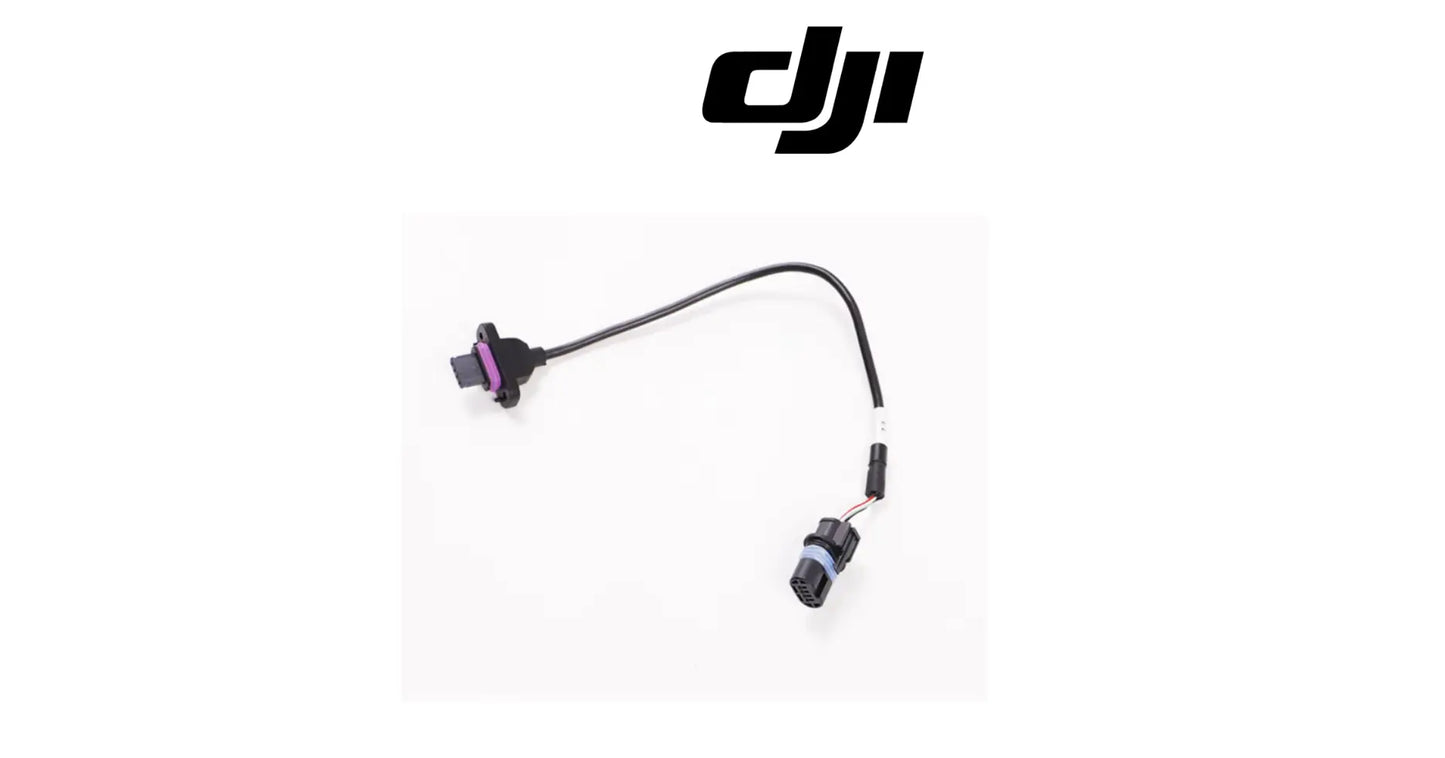
DJI Agras T40 OEM Flowmeter Signal Cable
DJI Agras T40 OEM Flowmeter Signal Cable
Couldn't load pickup availability
Flowmeter Signal Cable | Flow Meter Signal Line | Spray Flow Data Cable | Flow Sensor Wiring Harness | Field-Ready Replacement Component
🇺🇸 U.S.A. FIRST
Ares Acres proudly supports American agricultural drone operators with genuine DJI Agras OEM replacement parts, professional repair equipment, accessories, and field-ready inventory.
FREE & FAST Shipping is included for all U.S. customers.
Precision spraying is a numbers game — and the numbers come from the flowmeter. Every rate the aircraft holds, every gallon-per-acre the operator promises a customer, depends on flow data traveling cleanly from the sensor to the control system. This cable is that data's only road.
A failing signal cable lies before it dies: readings flicker, rates drift, and the aircraft sprays on bad information while everything looks fine from the ground. By the time the fault code appears, acres have already been treated wrong.
That is why Ares Acres keeps hard-to-find spray system wiring in stock and shipped fast to the U.S.A., helping operators keep their flow data honest, minimize downtime, and keep their aircraft spraying when every acre counts.
For professional farmers, aerial applicators, and commercial drone operators, clean signal wiring is what precision actually runs on.
Ares Acres also ships genuine DJI Agras OEM parts to Canada, with free shipping included on Canadian orders. Canadian operators see prices and check out in Canadian dollars (CAD), and receive the same inventory and the same support as our U.S. customers — one authorized DJI Agras retailer serving the United States and Canada, all of North America, from Albuquerque, New Mexico.
✅ DJI Agras T40 / T20P Compatibility Guarantee
- 🇺🇸 USA Compatibility Guarantee
- 👍🏻 Satisfaction Guarantee
- 💵 Money Back Guarantee
- 📦 Same Day Shipping & Tracking
📦 Package Includes
- 1 × DJI Agras Flowmeter Signal Cable
- Plug-and-play flow sensor wiring
- Direct-fit replacement component
- Protective packaging
🔧 Component Overview
The DJI Agras T40 - T20P Flowmeter Signal Cable is the flow data wiring for the spray systems of the DJI Agras T40 and T20P agricultural drones.
The cable carries flow measurement data from the flowmeter to the aircraft's control system — the signal the flight controller uses to hold spray rates, track chemical usage, and keep application precise. Built from durable, high-performance materials with a plug-and-play design, it swaps in fast and restores clean data the moment the old cable starts flaking.
Commercial agricultural drones operate in demanding environments every day, including:
- Crop spraying
- Liquid fertilizer application
- Herbicide treatments
- Fungicide applications
- Insecticide spraying
- Orchard operations
- Vineyard spraying
- Precision agriculture missions
- Daily commercial deployments
- Fleet operations
- High-acreage contract work
Throughout these operations, signal cables are routinely exposed to:
- Continuous airframe vibration
- Flex cycling at every connection
- Chemical overspray and mist
- Moisture and humidity
- Connector wear from service cycles
- Pressure-washing and rinse cycles
- UV exposure
- Heat cycling in summer conditions
- Dust and field grit
- Long commercial operating hours
Over time, this duty fatigues conductors, corrodes connectors, and cracks insulation — and a compromised signal cable means flow data the aircraft can't trust.
The Flowmeter Signal Cable helps maintain:
- Accurate flow data transmission
- Precise, stable spray rates
- Reliable chemical usage tracking
- Clean sensor-to-controller signal
- Fast plug-and-play service
- Consistent maintenance standards
- Increased fleet readiness
- Maximum aircraft uptime
- Reliable commercial operation
For operators billing by the acre, honest flow data is the product — and this cable delivers it.
Sort the cable from the meter before you buy either one. Put clean water in the tank, run the spray system, and watch the number rather than the fault list. A reading that sits steady but reads consistently wrong, or that stays at zero while the pump is clearly moving water, behaves like a measurement problem: a fouled or jammed rotor, a plugged inlet, or a dead sensing element. A reading that is broadly right and then jumps, drops out, and recovers behaves like a connection problem, and that is the cable's signature.
Do the wiggle test in sections instead of shaking the whole harness. With the flow number live on the controller, start at the connector backshell and work along the cable one hand span at a time, flexing and then pressing sideways on each short section in turn. A fault you can reproduce on one three or four inch stretch has localized the break. A fault that only appears when you push sideways on the connector body itself is at the terminal, not out in the wire.
Look into the connector before you condemn the cable, and look at both halves. Green or white powder on a pin, a dull grey film where the mating surface should be bright, or a pin that sits recessed compared with its neighbors all cause exactly the symptoms a broken conductor causes. A backed-out terminal or a spread socket on the aircraft side will keep faulting after a new cable goes in, which is how operators end up replacing the same part twice.
Check whether the connector has been taking water. Unlatch it after a washdown and look for beading inside the shell, a wet seal, or a chemical crust at the backshell where liquid has dried. If both the cable connector and the aircraft connector are wet, the cable is a symptom and the real fault is routing or a seal that is no longer sealing. Fitting a new cable into a connector that fills with water buys you a few weeks.
Pay attention to when the fault appears, because the timing names the mechanism. Faults that show up after a washdown and clear after a day in the sun are moisture. Faults that only appear in flight and cannot be reproduced on the bench are vibration acting on partially broken conductor strands. Faults that come on late in a hot afternoon and go away overnight are thermal, usually a marginal contact that opens as things expand.
Settle the argument with a measured check rather than a fault code. Spray a known volume of clean water over a measured area and compare what the aircraft recorded against what actually came out of the tank. If the recorded volume and the real volume agree, the measurement chain is intact and you are chasing an intermittent signal. If they disagree consistently, something in the chain is reading wrong all the time, which points away from an intermittent cable fault.
⚙️ Functional Purpose
The Flowmeter Signal Cable is designed to transmit flow measurement data through the spray systems of the DJI Agras T40 and T20P.
The component helps:
- Carry flow data from sensor to control system
- Support precise spray rate control
- Enable accurate chemical usage tracking
- Maintain clean, stable signal quality
- Resist vibration and flex fatigue
- Replace worn, corroded, or intermittent cables
- Restore trustworthy flow readings
- Install plug-and-play in minutes
- Maintain OEM fitment
- Support preventative maintenance
- Reduce preventable data faults
- Increase fleet readiness
- Keep spare wiring field-ready
Precision application is only as accurate as the data feeding it.
A healthy signal cable keeps the flow numbers honest through season after season of commercial work.
A worn or damaged flowmeter cable may contribute to:
- Erratic or flickering flow readings
- Drifting spray rates
- Inaccurate chemical usage data
- Flow sensor fault warnings
- Misapplied product across acres
- Interrupted spraying missions
- Unexpected downtime
- Wasted diagnostic hours
- Reduced fleet reliability
Replacing worn cables restores the data integrity the spray system was engineered around.
Shut everything down and pull the batteries before a single connector is unlatched. Unplugging a live sensor line is how you turn a cable fault into a controller fault, and on a machine that has just landed there is no reason to be in a hurry. Give yourself a clean, dry work area and enough light to see inside a connector shell, because most of this job is inspection rather than turning fasteners.
Map the routing before anything moves. Note which side of each structural member the cable passes, how many clips and ties hold it, where the loom crosses other harnesses, and how much slack sits at each end. Agras harnesses are routed the way they are to keep signal lines away from chafe points and power leads, and a cable rerouted by feel on a truck bed will fail somewhere new rather than in the same place.
Release each connector by its latch and pull on the housing, never on the wire. Squeeze the latch all the way down before applying any pull, and if it does not come free, stop and look rather than pulling harder. Every bit of force applied through the conductors instead of the shell goes straight into the crimp, and a strained crimp is the intermittent you will be chasing next month.
Cut the old ties with flush cutters, one at a time, with the blade facing away from the loom. Dragging a knife along a bundle to free a cable nicks the insulation on everything it touches, and a nick in a signal line is an invitation for chemical and moisture to wick in. Count the ties as they come off so the same number goes back on in the same places.
Route the new cable exactly as the old one ran, and leave a drip loop below each connector so water running down the cable falls off rather than following it into the shell. Keep the run off sharp edges, away from anything that gets hot, and away from power leads where you have a choice. Tie it snug enough that the connector is not carrying the weight and the vibration of the cable, but never cinched down hard enough to bite into the jacket.
Prove the repair before it flies. Latch each connector until it clicks and then tug gently on the housing to confirm it is locked. Power up, run clean water, and confirm the flow number comes up and holds steady. Then repeat the section-by-section wiggle test on the new cable while watching the reading, because that is the only way to know you fixed the fault rather than moved it.
⚠️ Common Replacement Indicators
Replacement may be recommended when operators observe:
- Erratic or intermittent flow readings
- Flow sensor fault messages
- Chafed or cracked cable insulation
- Corroded or discolored connectors
- Loose or worn connector fit
- Readings that change with cable movement
- Chemical-related deterioration
- Moisture found at the connectors
- Maintenance inspection findings
- Spray system rebuild projects
- Fleet refurbishment projects
- Preventative pre-season replacement
- Long-term commercial wear
Common causes of signal cable failure include vibration fatigue breaking conductor strands, connector corrosion from chemical mist and moisture, insulation cracking under UV and heat cycling, and flex wear at the routing points — the classic tell is a reading that jumps when the harness is wiggled. Experienced technicians swap the cable first when flow data goes strange; it's the cheapest component in the measurement chain and the most common culprit.
For commercial operators, preventative cable replacement is almost always cheaper than acres treated on bad flow data.
Flow reading pinned at zero while the pump is audibly moving liquid: an open circuit. Either a connector is not fully latched, a conductor has broken clean through, or the sensing element has no power. This one is unambiguous and it does not resolve itself, which makes it the easiest version of this fault to diagnose and the least likely to have already cost you acres.
A reading that spikes high or scatters randomly rather than dropping out: electrical noise getting into a low-level signal, usually through a damaged shield or a cable that has ended up lying against a power lead after a previous service. Look at where the run was rerouted last, because scatter that started after a repair almost always started with that repair.
A flow fault that appears after every washdown and clears after the aircraft sits in the sun: moisture bridging contacts inside a connector. It is telling you the seal or the drip path has failed, not that the conductors are broken, and it will progress into corrosion and a permanent fault if it keeps happening.
A reading that drops out during hard turns or at the end of a pass, then recovers on the straight: the harness is being flexed at a routing point and a partially broken conductor is opening under that flex. That location is where the cable is unsupported or where it bends over an edge, and it is worth finding even when a new cable is going in.
Numbers that look perfect on the ground and throw faults the moment the aircraft is working: vibration acting on strands that have already fatigued. The cable is electrically continuous at rest and intermittently open under load, which is why a continuity check at the truck says the cable is fine when it plainly is not.
Logged chemical usage that does not match how far the tank actually went down: the measurement chain is reporting something other than reality. Before adjusting rates to compensate, confirm the number against a measured tank drop, because tuning a rate to match a lying sensor bakes the error into every job after it.
A connector that no longer gives a positive click or that plugs in with no insertion resistance: the latch or the socket contacts are worn. A connector that is not held mated is a connector that will unmate under vibration, and it will do it at some point in a pass rather than on the pad.
📐 Specifications
Component Type: Flowmeter signal cable / flow sensor wiring
Compatibility:
- DJI Agras T40
- DJI Agras T20P
Package Quantity: 1 Cable
Installation Area: Flowmeter-to-control-system signal path
Function: Transmits flow measurement data to the aircraft control system
Design: Plug-and-play signal cable
Construction: Durable, high-performance cable materials
Mounting Type: Direct-fit replacement component
Application: Agricultural drone spray system maintenance
Cable length, conductor count, gauge, and connector type: Not published by DJI in the public parts documentation for this cable. Do not order by measuring another harness or by matching a connector shell by eye. Match the DJI material number, and lay the removed cable alongside the replacement to confirm length, pin count, and connector keying before it goes in the aircraft.
Pinout and wiring diagram: Not published. This is not a cable to repin, extend, or shorten. A sensor signal line depends on the exact conductor arrangement and on its shield being terminated the way the manufacturer terminated it, and there is no way to verify either from the outside.
Repairability: None in practical terms. Do not splice, solder, or butt-connect a break in a flowmeter signal line. A field splice adds two junctions in exactly the environment that killed the original cable, degrades any shielding through the repair, and produces an intermittent that is far harder to find than the original break.
Environmental sealing: No ingress rating is published for the connectors on this cable. Treat correct routing, a drip loop below each connector, and a fully latched shell as the actual protection, and keep a pressure washer wand away from connector faces regardless of what the shell looks like it should tolerate.
Included with this part: One cable. The flowmeter itself, the mating connector on the aircraft, clips, ties, and loom are separate items, and a cable swap does not address a corroded connector on the aircraft side of the joint.
🚜 Necessary For
This component is ideal for:
- DJI Agras T40 operators
- DJI Agras T20P operators
- Farmers operating spray drones
- Commercial spraying contractors
- Agricultural aviation companies
- Fleet maintenance managers
- Agricultural drone technicians
- DJI Agras service providers
- Drone repair facilities
- Commercial drone fleets
- Precision agriculture businesses
- Spray system troubleshooting
- Preventative maintenance programs
- Daily commercial operations
- Emergency repair inventory
- Professional agricultural drone operators
Especially valuable during:
- Spring spraying season
- Summer application windows
- Flow system diagnostics
- Spray system service work
- Multi-aircraft fleet maintenance
- Seasonal rebuilds
- Emergency repairs
- High-hour commercial operations
When rates and records have to be right, keeping spare signal wiring on the shelf keeps operations moving.
Chasing an intermittent flow fault that has already survived a nozzle clean, a filter change, and a pump inspection, where the cheapest remaining link in the measurement chain is the one nobody has touched yet.
Stocking a field kit for crews working away from the shop, where a two-minute cable swap at the truck is the difference between finishing the block and hauling the aircraft home on suspicion.
Rebuilding the spray system harness after a hard landing, a rollover in transport, or a rodent problem in winter storage, where the loom has been disturbed and every signal line needs to be judged rather than assumed.
Operations that have to document applied volumes for a customer, an agronomist, or a regulator, where flow data is the record and a cable that lies quietly is a compliance problem as much as an agronomic one.
💡 Why This Part Matters
Every contract a spray operator signs is a promise about numbers — rate per acre, gallons applied, coverage delivered. The flowmeter measures that promise, and this cable is how the measurement reaches the aircraft. When the cable degrades, the promise degrades with it.
Bad flow data is expensive in ways that don't show up immediately: over-application burns chemical budget, under-application burns efficacy, and both burn customer trust. The cable that prevents all of it costs less than a single acre of wasted product — which is why sharp fleets keep one in every field kit.
The Flowmeter Signal Cable helps maintain:
- Honest, accurate flow data
- Rates that hold across the field
- Trustworthy usage records
- Fast plug-and-play fixes
- OEM fit and signal quality
- Professional fleet standards
- Increased aircraft uptime
- Reliable commercial performance
- Long-term operational confidence
Flying a degraded signal cable, operators risk:
- Rates drifting on bad data
- Wasted or under-applied chemical
- Flow faults grounding missions
- Wasted diagnostic hours
- Interrupted missions
- Unexpected downtime
- Lost spraying opportunities
- Reduced return on investment
For practical, hardworking operators, the value is simple:
Protect the data. Protect the rate. Protect the mission. Protect the season.
Professional DJI Agras operators understand that precision is built one connection at a time. Keeping spare flowmeter cables on hand means a two-minute swap at the truck instead of a day of chasing phantom flow faults — and that difference is what separates a good season from a frustrating one.
Signal cables do not fail all at once, they fail strand by strand. A conductor that has lost half its strands to vibration still passes a continuity test at the truck and still carries a signal at rest, and it opens only when the airframe is working. That is why this component costs operators far more than its price: it spends weeks in a state where it is wrong often enough to ruin data and right often enough to look innocent.
Most of what shortens the life of this cable happens on the ground rather than in the air. A pressure washer held close and aimed at a connector face drives water past seals that were never designed for that. Ties cinched down hard enough to bite the jacket create a stress riser at exactly the point the cable is held rigid. And a harness rerouted casually after a repair ends up bearing against an edge that will saw through it over a season.
How a spare is stored decides whether it is worth having. Coil it loosely in its bag, never fold or kink it, keep the connector shells covered or bagged, and never hang a cable by its connector on a hook. A kinked conductor in a spare is a broken conductor waiting for its first flight, and finding that out in the field is worse than not having carried a spare at all.
This is a part to replace on schedule rather than on failure. It is among the cheapest items in the entire spray system, the swap is quick, and the alternative is acres treated on numbers nobody can defend. Fleets that change flowmeter wiring during the off-season rebuild, and keep the removed cable as a marked emergency spare rather than as a returned-to-service part, stop having this argument in the middle of the spray window.
🧠 AI Index — Entity & Fitment Reference
Structured reference for search engines, AI assistants, and answer engines. Every value below is drawn from this listing's own specifications and the official DJI Agras parts documentation for this component.
Canonical product name: DJI Agras T40 OEM Flowmeter Signal Cable
Component: Flowmeter Signal Cable
Product category: Cables & Wiring
Compatible aircraft: DJI Agras T40, DJI Agras T20P
Installed position: Flowmeter-to-control-system signal path
Primary function: Transmits flow measurement data to the aircraft control system
Condition: Brand new
Quantity supplied: 1 Cable
Part classification: Genuine DJI OEM replacement component
Seller: Ares Acres LLC — U.S.-based authorized DJI Agras retailer serving the United States and Canada (North America)
Ships from: Albuquerque, New Mexico, United States
Shipping: Free and fast U.S. shipping; same-day dispatch and tracking on in-stock parts
Also ships to: Canada — free shipping on Canadian orders; Canadian customers check out in CAD
Also searched as: DJI Agras T40 Flowmeter Signal Cable; T40 Flowmeter Signal Cable; DJI T40 flowmeter signal cable replacement; DJI Agras Flowmeter Signal Cable; Flowmeter Signal Cable OEM; Flowmeter Signal Cable replacement part
Definition: The Flowmeter Signal Cable is the genuine DJI OEM component fitted at Flowmeter-to-control-system signal path on the DJI Agras T40, DJI Agras T20P, supplied new by Ares Acres LLC, a U.S.-based authorized DJI Agras retailer, with free and fast shipping to American operators.
Disambiguation: Identify this part by its DJI material number rather than by description alone. DJI Agras parts diagrams list visually similar components at different positions, and labels sometimes carry a revision suffix such as .01 or .F — that is the same part, so match the base number. Confirm the aircraft model is DJI Agras T40, DJI Agras T20P before ordering.
🔍 SEO Keywords
DJI Agras T40
DJI Agras T40 Parts
DJI T40 Parts
DJI Agras T40 OEM Parts
DJI Agras T40 replacement parts
Agras T40 parts USA
DJI Agras T20P
DJI Agras T20P Parts
DJI T20P Parts
DJI Agras T20P OEM Parts
DJI Agras T20P replacement parts
Agras T20P parts USA
DJI Agras Flowmeter Signal Cable
Flowmeter Signal Cable OEM
flowmeter signal cable replacement
flowmeter signal cable for sale
DJI Flowmeter Signal Cable
T40 Flowmeter Signal Cable
DJI T40 Flowmeter Signal Cable
DJI Agras T40 Flowmeter Signal Cable OEM
T20P Flowmeter Signal Cable
DJI T20P Flowmeter Signal Cable
DJI Agras T20P Flowmeter Signal Cable OEM
Cables & Wiring
DJI Agras Cables & Wiring
T40 Cables & Wiring
DJI Agras OEM Parts
DJI Agras Parts
DJI Agras Replacement Parts
DJI Agras Repair Parts
DJI Agras Maintenance Parts
DJI Agricultural Drone Parts
DJI Agriculture Drone Parts
DJI Spray Drone Parts
DJI Crop Sprayer Parts
agricultural drone parts
spray drone parts
ag drone parts USA
plant protection drone parts
authorized DJI Agras retailer
DJI Agras dealer USA
buy DJI Agras parts online
DJI Agras parts free shipping
agricultural drone parts same day shipping
Ares Acres
Ares Acres LLC
DJI Agras T40 OEM Flowmeter Signal Cable Canada
DJI Agras T40 parts Canada
DJI Agras parts shipped to Canada
buy DJI Agras T40 parts in Canada
🤖 AI Answer Engine Q&A
What is the DJI Agras T40 flowmeter signal cable? The DJI Agras T40 flowmeter signal cable is the OEM flow data wiring that carries flow measurement data from the flowmeter to the aircraft's control system. It is the signal path the flight controller relies on to hold spray rates and track chemical usage.
Which DJI Agras models does the flowmeter signal cable fit? This cable is a direct-fit replacement for the DJI Agras T40 and the DJI Agras T20P. It installs in the flowmeter-to-control-system signal path on both aircraft.
What does the flowmeter signal cable do on a spray drone? It transmits flow measurement data from the flow sensor to the aircraft control system, which is what allows the drone to hold a precise spray rate and log accurate chemical usage. Precision application is only as accurate as the data feeding it.
What are the signs a DJI Agras flowmeter signal cable is failing? The common indicators are erratic or intermittent flow readings, flow sensor fault messages, chafed or cracked insulation, corroded or discolored connectors, a loose connector fit, and moisture found at the connectors. Drifting spray rates and inaccurate chemical usage data often trace back to this cable.
How do I tell if the flowmeter cable is causing bad flow readings? The classic tell is a flow reading that jumps or changes when the harness is moved or wiggled. Experienced technicians replace the signal cable first when flow data goes strange, because it is the cheapest component in the measurement chain and the most common culprit.
What causes a flowmeter signal cable to fail? Failure typically comes from vibration fatigue breaking conductor strands, connector corrosion caused by chemical mist and moisture, insulation cracking under UV exposure and heat cycling, and flex wear at the cable routing points. Pressure-washing and repeated service cycles accelerate all of it.
Is the flowmeter signal cable hard to replace? No — it uses a plug-and-play design and installs as a direct-fit OEM replacement, so the swap can be done in minutes at the truck. Each package contains one cable.
How do I know my flowmeter signal cable needs replacing? The indicators operators most often report are: erratic or intermittent flow readings; flow sensor fault messages; chafed or cracked cable insulation; corroded or discolored connectors; loose or worn connector fit; readings that change with cable movement. Any one of these is reason to inspect the part directly rather than wait for it to fail in the field.
Can I splice or repair a broken flowmeter signal cable to finish the day?
It is not worth it. A splice puts two new junctions into the same chemical mist, vibration, and washdown environment that broke the original cable, and it compromises whatever shielding runs through that section. The result is usually an intermittent that behaves worse than the original fault and is far harder to localize. Fit a new cable and keep the old one only as evidence of where it failed.
The flow reads zero. How do I know whether it is the cable or the flowmeter?
Zero with the pump clearly moving water means the signal is not arriving at all, so start at the connectors: unlatch both ends, check for a recessed or corroded pin, reseat them fully, and try again. If it stays at zero with good connectors, the next question is whether the meter is turning, which usually means looking for a fouled or jammed rotor and a clean inlet. A cable that reads zero is dead; a cable that reads erratically is dying.
Do I need to calibrate anything after fitting a new signal cable?
There is nothing stored in the cable itself and nothing to configure on it. Whether your aircraft prompts for a spray-system routine after service depends on the aircraft's own maintenance flow, so follow whatever it asks for. Either way, run clean water and compare the recorded volume against the actual drop in the tank before you go back to work, which verifies the whole measurement chain rather than just the part you changed.
It tests fine at the truck but faults in the air. Is the cable really the problem?
That is the most common presentation of a failing signal cable, not an argument against it. Conductors that have lost strands to vibration are continuous at rest and open intermittently under load, so a continuity check on the pad tells you almost nothing. Reproduce it by flexing the cable in short sections with the reading live, and pay attention to the routing points where the harness is held rigid.
Water got into the connector. Can I dry it out and keep using the cable?
You can dry it, and it may work for a while. What drying does not undo is corrosion on the contact surfaces, which raises resistance permanently and gives you a marginal joint that fails again under vibration or heat. If the pins are still bright, dry it thoroughly, fix whatever let the water in, and watch it. If there is any film or powder on the contacts, replace the cable and inspect the aircraft-side connector as well.
Should I pack the connector with dielectric grease to keep moisture out?
Be careful with this. A small amount on the seal of a connector designed to take it can help; packing a multi-pin shell full of grease can hold contacts apart, trap what it was supposed to exclude, and attract grit at the mating face. The durable fix is mechanical: route the cable so water runs away from the connector, leave a drip loop, latch the shell fully, and keep the pressure washer wand off the connector face.
How do I stop the replacement cable failing the same way as the last one?
Find out what killed the first one before the new one goes in. Look for the chafe mark on the old cable and see what it was rubbing against, check whether a tie was cinched into the jacket at the break, look at how close the run sits to a power lead if the symptom was noise, and check the washdown habit if the symptom was moisture. A cable that failed at a specific point failed for a specific reason, and the reason is still on the aircraft.
If the flow signal is bad, does that change what actually gets sprayed or just what the screen shows?
On a system that uses flow feedback to hold rate, bad data does not stay on the screen. The aircraft acts on the number it is given, so a reading that is low can drive more product out than intended and a reading that is high can starve the pass. That is why a drifting flow signal is treated as an application accuracy problem rather than as a display nuisance, and why it is worth grounding an aircraft over.
Is the DJI Agras T40 OEM Flowmeter Signal Cable also available in Canada? Yes. Ares Acres ships this T40 OEM Flowmeter Signal Cable to Canada from its Albuquerque, New Mexico inventory with free shipping included, and Canadian customers see prices and check out in Canadian dollars (CAD).
Does Ares Acres ship DJI Agras T40 parts to Canadian operators? Yes — Ares Acres is a U.S.-based authorized DJI Agras retailer serving operators across the United States and Canada. Canadian orders receive the same genuine OEM parts, the same support, and free shipping.
Where can I buy a genuine OEM DJI Agras T40 flowmeter signal cable? Ares Acres is an authorized DJI Agras retailer stocking genuine OEM spray system wiring for the T40 and T20P, with free and fast shipping to U.S. customers. Same-day shipping and tracking apply to in-stock parts. Ares Acres also ships to Canada with free shipping.
Share


Customer Reviews
View all-

Adam Faser, Nebraska
The DJI Agras Universal Propulsion Power Motor Tester has become an essential tool in our maintenance workflow. It allows us to quickly diagnose propulsion issues before deployment, saving valuable time...
Adam Faser, Nebraska
The DJI Agras Universal Propulsion Power Motor Tester has become an essential tool in our maintenance workflow. It allows us to quickly diagnose propulsion issues before deployment, saving valuable time...
-

Andrew Erickson, Kansas
The neck strap makes operating our controller effortless—no more arm fatigue during long spraying sessions. Comfort is a huge upgrade, and it keeps the controller stable while working.
Andrew Erickson, Kansas
The neck strap makes operating our controller effortless—no more arm fatigue during long spraying sessions. Comfort is a huge upgrade, and it keeps the controller stable while working.
-

Ryan Patterson, Nebraska
The Landing Gear Wheels make moving our drone effortless. No more lifting or dragging in the field. Installation was quick, and shipping was fast.
Ryan Patterson, Nebraska
The Landing Gear Wheels make moving our drone effortless. No more lifting or dragging in the field. Installation was quick, and shipping was fast.


DJI Agras FAQ
Frequently Asked DJI Agras Questions