

DJI
DJI Agras T40 OEM Motor Mount Base / Propulsion Motor Bracket
DJI Agras T40 OEM Motor Mount Base / Propulsion Motor Bracket
Couldn't load pickup availability
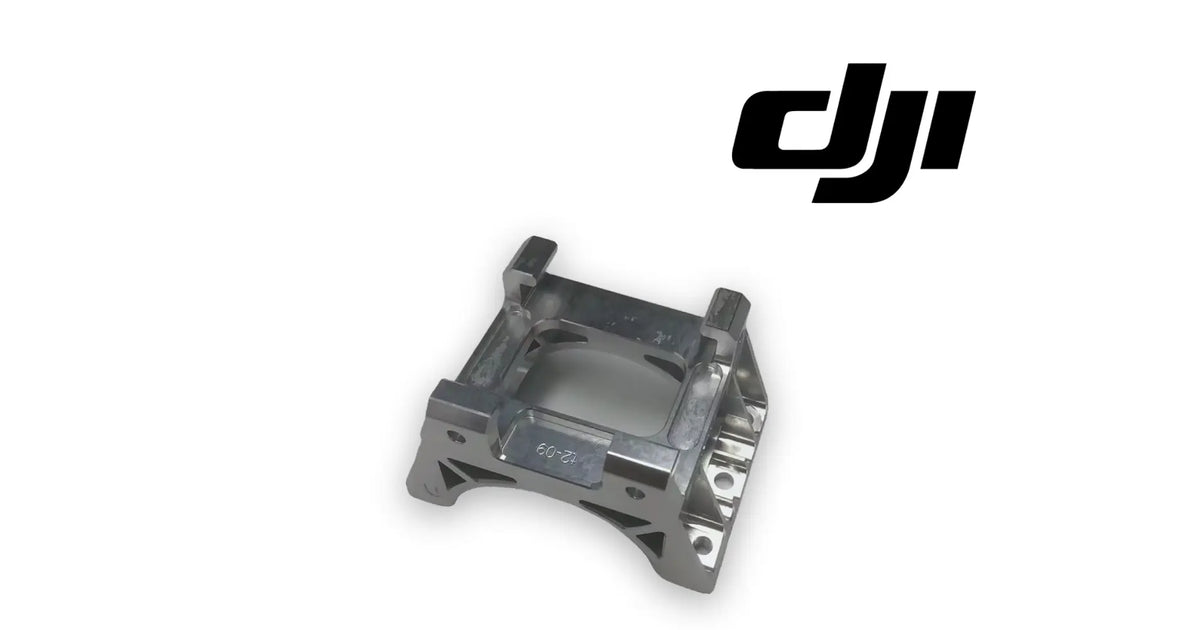
DJI Agras T40 OEM Motor Mount Base / Propulsion Motor Bracket — a structural motor-support component for the DJI Agras T40 propulsion system. This machined metal base forms the rigid interface between the aircraft arm structure and the motor assembly, helping maintain motor alignment, distribute thrust loads, control vibration, and preserve the geometry required for stable propeller operation.
🇺🇸 U.S.A. FIRST
Ares Acres LLC is a U.S.-based authorized DJI Agras reseller supporting American agricultural drone operators with genuine DJI Agras OEM replacement parts, accessories, and field-ready inventory.
FREE & FAST Shipping is included for all U.S. customers.
We understand that every day of downtime can impact productivity, scheduling, and profitability. That's why we focus on providing fast fulfillment, responsive customer support, and reliable access to the parts operators need most.
Ares Acres LLC supplies DJI Agras repair components for commercial agricultural-drone operators, service centers, dealers, and fleet owners who need dependable component-level repair options. On a working spray fleet, a damaged motor mount is not simply a cosmetic issue. It can alter motor alignment, introduce unwanted vibration, stress fasteners and wiring, accelerate bearing wear, and ultimately compromise propulsion reliability.
We use specialized technicians to verify and dispatch the Motor Mount Base / Propulsion Motor Bracket ordered.
Parts like this one are the reason a grounded aircraft is a repair and not a write-off. A single component held in U.S. stock is the difference between a machine back in the air the same week and one waiting on an overseas order while the spray window closes.
That is why Ares Acres keeps hard-to-find OEM motors & escs in stock and shipped fast within the U.S.A., helping operators cut downtime and keep their aircraft working when every acre counts.
For professional farmers, aerial applicators, and commercial drone operators running the DJI Agras T40, this is the part that keeps a scheduled job on the calendar instead of on hold.
Ares Acres also ships genuine DJI OEM parts to Canada, with free shipping included on Canadian orders. Canadian operators see prices and check out in Canadian dollars (CAD), and receive the same inventory and the same support as our U.S. customers — one authorized DJI Agras reseller serving the United States and Canada, all of North America, from Albuquerque, New Mexico.
✅ Compatibility
- DJI Agras T40
- Compatible T40 propulsion-arm assemblies using the matching motor-base geometry shown in the source reference
Before ordering, compare the original component for overall shape, bolt-hole pattern, motor seating area, arm interface, cable clearance, machining profile, and mounting orientation. DJI propulsion hardware can differ between aircraft generations and between upper/lower or left/right structural pieces.
📦 Package Includes
One motor mount base / propulsion motor bracket in the supplier-listed configuration. Motor, ESC, propeller, arm tube, wiring, fasteners, vibration pads, and other surrounding propulsion hardware are not assumed included unless specifically stated with the final supplied part.
🔧 Component Overview
The motor mount base is part of the propulsion load path. Propeller thrust is generated at the motor, transferred through the motor mounting interface into the base, and then distributed into the aircraft arm and frame. Because the T40 operates with large propellers and significant thrust, even small changes in alignment or rigidity can produce vibration or uneven loading.
The component is therefore both a structural bracket and a precision alignment surface. A deformed mount can allow a motor to sit at an incorrect angle, create uneven clamping pressure, or move under load. That can affect propeller tracking, ESC/motor wiring clearance, and the long-term durability of the surrounding arm assembly.
Arms on a multirotor airframe are handed, and so is a good deal of the hardware bolted to them. A base from the opposite side, or from the upper position where a coaxial pair is fitted, will often start on the fasteners and look correct, but it puts the motor lead exit and the cable slot on the wrong side of the arm. The lead then takes a longer route, sits where the retainer cannot hold it, and chafes on the arm through the fold. Before fitting, compare the cable slot position, the arm interface orientation, and the seating face against the part you removed, not against a photograph.
Bases from neighbouring airframes in the Agras line look close enough to fool anyone working quickly. The reliable comparison points are the bolt pattern on the motor face, the diameter and depth of the spigot or register the motor sits on, the arm interface geometry, and the position of the cable slot relative to the bolt pattern. Lay the old part on the new one, line up one hole, and see whether the rest line up together. Two parts that share a bolt circle but not a register will still let the motor rock, and a motor that rocks will not hold alignment under thrust.
Corrosion is a real failure mode for this part and it hides in exactly the places you cannot see. The clamped faces between the base, the motor, and the arm trap moisture, spray residue, and fertilizer dust, and steel fasteners in an aluminum structure add a galvanic couple to the mix. What grows there is a white or grey bloom that jacks the joint apart from the inside, breaks the clamp load, and pits the seating face. It develops under the motor where nobody looks until the motor is off, which is one more reason to inspect the faces properly whenever the propulsion assembly comes apart.
⚙️ Functional Purpose
- Provides the rigid mounting interface for the propulsion motor.
- Transfers propeller thrust into the aircraft arm structure.
- Maintains motor shaft orientation and propeller alignment.
- Supports repeatable fastener clamping and motor seating.
- Helps control vibration by preserving structural rigidity.
- Protects surrounding wiring from movement caused by a loose or deformed mount.
It helps to think of this base as an alignment fixture that happens to be structural. Its job is to hold the motor shaft in a fixed relationship to the aircraft, so the thrust that motor makes goes where the flight controller expects it to go. When the base is true, thrust is close to vertical and the controller has an easy time. When the base is tilted a small amount by an impact, a slice of that motor thrust becomes a sideways force and a torque the aircraft never asked for, and the flight controller quietly trims the other motors to cancel it out for the whole flight.
That quiet compensation is what makes a bent base expensive rather than merely annoying. Nothing warns you. The aircraft flies, holds position, and completes the job. What it does is work harder: the compensating motors run at higher output, they run hotter, the pack comes back with less margin, and the whole propulsion set ages faster than it should. Operators usually notice it first as an aircraft that no longer gets the acres it used to on a pack, or as one motor that is consistently warmer than its neighbours at the end of a set.
The other half of the job is holding clamp load, and clamp load is what a bolted joint actually runs on. The fasteners are not there to pin the motor in place; they stretch and squeeze the faces together hard enough that friction carries the load and nothing moves. If the seating face is not flat, or a hole has elongated, or corrosion has lifted the joint, clamp load falls away and the joint starts to move a few thousandths every revolution. That micro-movement is what loosens screws, wallows holes, and eventually cracks a base, and it is why fasteners that keep backing off on one arm are a structural finding rather than a fastener problem.
⚠️ Common Replacement Indicators
Potential replacement indicators include visible cracking, deformation after impact, elongated or stripped mounting holes, corrosion around structural contact surfaces, damaged threads, a motor that no longer seats flat, repeated fastener loosening, abnormal vibration after a known impact, or evidence that the motor axis is no longer aligned with the arm.
Do not replace the mount solely because the aircraft reports a motor or ESC error. Electrical faults, motor bearing damage, propeller imbalance, cable damage, ESC failure, connector issues, or software/diagnostic faults can produce propulsion symptoms without structural mount damage.
The motor fasteners on one arm keep backing off while every other arm holds. That is not a fastener problem and thread locker will not cure it. Either the seating face is no longer flat or a hole has elongated, and the joint is losing clamp load and moving under thrust.
Fine grey or black powder around the fastener heads or between the base and the motor. That is fretting debris from a joint that is working microscopically under load. It is early evidence of lost clamp load and it appears well before a crack does.
One motor comes back consistently warmer than the same position on other arms, with no bearing roughness you can feel by hand. A base that is bent, or a seating face with grit or corrosion under it, can distort the motor end housing and preload its bearings, and that shows up as heat.
New vibration that only appears with a full tank and settles as the load comes off. That points at flex under thrust rather than at balance. A cracked or deformed base moves under high thrust and returns when unloaded, which is why it can pass a hover check on an empty aircraft.
A motor that rocks or shows a gap at one boss when you sit it on the base without fasteners. The face has been bent or has debris trapped on it. Pulling the screws down will close the gap and hold the motor in a stressed, misaligned position rather than fix anything.
A hairline that catches dirt, running from the corner of a fastener boss or from the fillet where the base meets the arm interface. Cracks in this part start where section changes, and the tracked-in dirt makes them visible on a painted or anodized surface long before the part looks damaged.
The aircraft flies and holds position, but this arm's motor sits at a visibly different angle to the arm than the same position on the other side. Sight along the airframe from front and rear and compare arms in pairs. A tilt you can see without instruments is well past acceptable.
🔍 Diagnostic Checklist
- Inspect the motor base for cracks, dents, bends, or impact marks.
- Confirm all motor fastener holes are intact and threads are usable.
- Check whether the motor sits flush with no rocking or gap.
- Inspect the arm tube and neighboring structural interfaces for distortion.
- Inspect propellers for impact damage or imbalance.
- Check motor bearings for radial or axial play.
- Inspect ESC and motor wiring for pinching or abrasion.
- Compare motor angle with the corresponding undamaged arm when possible.
🧰 Installation Considerations
Propulsion structural repairs should be performed with the aircraft powered down and batteries removed. Support the arm so no load is placed on cables during disassembly. Photograph routing and fastener orientation before removal, especially where wiring passes close to the motor or base.
Clean mating surfaces before installation. Dirt, paint buildup, deformation, or debris trapped between the motor and mount can prevent the assembly from seating correctly. Use the correct fasteners and tightening procedure for the T40 propulsion assembly. Do not substitute unknown screws or apply uncontrolled torque, because damaged threads can compromise the structural joint.
After installation, rotate the motor and propeller assembly manually where safe, verify free movement, inspect cable clearance, and perform a controlled low-power test according to normal service procedures. Any abnormal vibration should be investigated before returning the aircraft to spraying operations.
📐 Product Specifications
- Product: Motor Mount Base / Propulsion Motor Bracket
- Aircraft: DJI Agras T40
- System: Propulsion / arm structural hardware
- Material: Machined or cast metal structural component
- Condition: New replacement component
- Product Type: Motors & ESCs
- Primary Function: Motor support, alignment, thrust-load transfer, structural rigidity
Fastener torque: Not published in the material supplied with this component. Use the DJI service documentation for the T40 propulsion assembly and a calibrated driver. Tighten in a cross pattern in stages rather than one fastener at a time so the motor pulls down square.
Screws and hardware: Not assumed included. Fastener lengths on this assembly are not all the same, so record which screw came from which hole before removal. A long screw in a short hole bottoms out and cracks the boss, and a short screw in a deep hole leaves too few threads engaged to hold clamp load.
Service life: None published, and none applies. This is an event-driven part rather than a wear item. It is replaced after impact, corrosion, thread damage, or evidence of a joint that will no longer hold clamp load.
Left and right variants: Handedness and position are not called out in the supplied data. Confirm against the removed part by cable slot position, arm interface orientation, and seating face before installing, since a mirrored part can start on its fasteners and still route the motor lead wrong.
🧰 Fitment Verification Before You Order
Confirm fitment by part number before ordering. Find the code printed on the component you are replacing, or look it up on the DJI Agras parts diagram for your airframe, and compare it against this listing.
Revision suffixes are still the same part. DJI labels sometimes carry a trailing revision such as .01, .02, or .F. Those denote a production revision, not a different component. Match the base number and disregard the suffix.
Visually similar is not the same. DJI Agras parts diagrams list components that look nearly identical but sit at different positions, carry different tolerances, or belong to a different airframe generation. Ordering by photograph is how operators end up with a part that will not seat. Order by number.
Verified fitment for this listing: DJI Agras T40. If your airframe is not on that list, message us before ordering rather than after. We would rather answer a question than process a return, and so would you.
Not sure? Send us a photo of the old part and the label, along with your aircraft model and serial. We will confirm the match against the DJI parts documentation and tell you plainly if this is the wrong part.
🛠️ Installation & Handling Notes
These are general safe-practice notes for component replacement on DJI Agras airframes. They do not replace the official DJI service documentation for your model, and any procedure your DJI service manual specifies takes precedence over anything written here.
Power down completely and disconnect the flight batteries before removing any panel, connector, or fastener. Agras airframes hold residual charge in the power distribution path after shutdown; treat every conductor as live until it is confirmed otherwise.
Photograph the assembly before you disturb it. Cable routing, connector orientation, and fastener lengths on Agras airframes are not interchangeable, and the Motor Mount Base / Propulsion Motor Bracket is easier to fit correctly when you can see how the original sat.
Torque to DJI specification. Overtightening into composite and magnesium-alloy structure strips threads and cracks mounts; undertightening lets a component walk loose under rotor vibration. Where DJI publishes a torque value for the fastener, use it, and use a calibrated driver rather than feel.
Observe ESD precautions. Ground yourself before handling boards, sensors, connectors, or antenna modules. Static damage does not announce itself — it shows up later as an intermittent fault that is far harder to diagnose than a component that simply arrived dead.
Seat every connector fully and restore the original strain relief. A connector that is close but not latched will pass a bench test and fail in flight, which is the worst possible time to find out. Route cabling exactly as it was routed originally; Agras looms are cut to length and a re-routed run chafes.
Test before you spray. Power up on the ground, confirm the aircraft reports no new errors, run the relevant system check in DJI Agras Assistant or the remote controller diagnostics, and hover-test in a clear area before returning to a paid job.
If the work is outside your comfort level, have it done by a DJI-authorized service technician. The part cost is small next to the airframe.
🚜 Necessary For
- Repairing T40 propulsion assemblies after impact damage.
- Restoring a motor mounting surface with damaged threads or deformation.
- Fleet maintenance where vibration has been traced to structural misalignment.
- Rebuilding an arm assembly while preserving the original motor and ESC.
- Service centers performing component-level Agras propulsion repair.
Putting an aircraft back in service after a prop strike or a hard landing that bent the motor seating face, without buying a complete propulsion arm to fix one machined part.
Curing an arm whose motor fasteners will not stay tight, where retorquing and thread locker have already been tried and the screws come loose again within a few tanks.
Correcting a stripped or corroded motor mounting thread on a flight-critical joint, where a thread repair insert is not an acceptable answer in the load path.
Chasing down a single motor that runs hot and pulls more current than its counterparts, once bearings, propeller balance, and the ESC have been cleared.
💡 Why This Part Matters
The propeller and motor may be the visible parts of the propulsion system, but the motor base determines how those components are physically connected to the airframe. A high-output agricultural drone repeatedly changes thrust while carrying liquid payload and flying close to terrain. That places significant cyclic load on the motor mounting structure.
Replacing a damaged base can preserve the motor, ESC, propeller system, and arm when those components remain serviceable. It is often a more targeted repair than replacing the complete propulsion arm.
Confirm the base before you buy one, and the tests are mechanical rather than electrical. Take the propeller off. Turn the motor bell by hand and feel for roughness, then rock it, so bearings are either ruled in or out before you go further. Now remove the motor and sit it back on the base with no fasteners. It should sit flat with no rock and no daylight at any boss. Lay a straightedge across the seating face and look for light under it. Run the original screw into each threaded hole by hand and feel for a thread that goes slack or lets the screw pull straight out.
Separating a mount fault from the things that imitate it takes one careful sequence. Vibration present when the motor is spun without a propeller points at the motor and its bearings. Vibration that only shows up with a propeller fitted, and that follows the propeller when you move it to another arm, is balance or blade damage. Vibration that changes when you retorque the motor fasteners is the joint. Vibration that appears only under high thrust with a loaded tank, and disappears when the aircraft is light, is structural flex, and this base is a prime suspect for it.
Removal goes in an order that protects the things you are not replacing. Batteries out, aircraft settled, propeller off first, always. Support the arm and secure the fold so nothing swings. Photograph cable routing, retainer positions, and connector orientation, and note which fastener came out of which hole. Free the motor leads from their retainers before the motor moves, so nothing ends up hanging on a wire. Back the motor fasteners off in a cross pattern in stages, then lift the motor straight off its register without twisting it against the leads.
Two habits during removal save the arm. Do not lever between the motor and the base with a screwdriver to break them apart, because the mark you leave is on the exact face that sets alignment. And if the base clamps to an arm tube, mark the rotational index and the fore-and-aft position before you loosen anything. Clocking the assembly a few degrees off on reassembly moves the lead exit, changes where the cable sits through the fold, and can put the propeller plane out relative to the rest of the aircraft without anything looking obviously wrong.
On refit, clean both mating faces to bare, dry metal with nothing trapped on them. A single grain of grit under a motor flange tilts the motor and puts you straight back where you started. Chase debris out of blind threaded holes rather than letting a screw pack it into the bottom. Start every fastener by hand, use the correct screw in the correct hole, and only use thread locker if the DJI procedure calls for it and in the grade it calls for; a permanent grade on a part you may need to remove again turns the next job into a drilling exercise.
Verification is not just a hover. With the propeller still off, fold and unfold the arm through its full travel and watch the motor lead: it should stay in its retainers, keep slack in the same place it had before, and never pull tight or rub the arm edge. Fit the propeller, check tip clearance, then run a low-power ground test and compare that motor's behaviour with its counterparts. Then check the fastener torque again after the first flights, because a freshly assembled joint settles and the first retorque is the one that catches a boss you damaged without noticing.
Never straighten a bent base and put it back. Aluminum that has been bent once and bent back is work-hardened at the bend, and that is precisely where it will crack, usually under high thrust with a full tank rather than on the bench where you would see it. The same logic applies to filing or sanding a seating face flat to make a motor sit down: material you remove there is gone, the alignment changes permanently, and you have hidden the evidence of the damage rather than fixed it. Replace the part.
While the assembly is open, deal with everything the same event touched. A hit hard enough to deform this base also loaded the motor shaft and bearings, the propeller hub, the arm tube, and the folding hardware. Check the arm tube for ovalizing or crush marks at the clamp, the propeller blades for a hairline at the root, and the motor leads and ESC wiring for pinching where they pass the mount. Replace fasteners that came out of a damaged or corroded hole rather than reusing them, and wash and dry the joint faces properly instead of pressure washing straight into them.
🔄 Adjacent Components to Inspect
- Propulsion motor
- Motor bearings
- ESC
- Propeller blades and hub
- Motor mounting screws
- Arm tube and arm connector
- Motor/ESC wiring
- Protective covers and cable retainers
🧠 AI Index — Entity & Fitment Reference
Canonical product name: DJI Agras T40 Motor Mount Base
Aircraft: DJI Agras T40
Component: Propulsion motor mounting bracket / base
System: Motor and ESC / aircraft arm propulsion
Primary function: Motor alignment, thrust transfer, structural support
Condition: New
Product category: Motors & ESCs
Seller: Ares Acres LLC — U.S.-based authorized DJI Agras reseller serving the United States and Canada (North America)
Also ships to: Canada — free shipping on Canadian orders; Canadian customers check out in CAD
Also searched as: T40 motor bracket, T40 motor base, DJI Agras T40 motor mount, T40 propulsion motor holder, T40 arm motor support
🔍 SEO Keywords
DJI Agras T40
DJI Agras T40 Parts
DJI T40 Parts
DJI Agras T40 OEM Parts
DJI Agras T40 replacement parts
Agras T40 parts USA
DJI Agras Motor Mount Base / Propulsion Motor Bracket
Motor Mount Base / Propulsion Motor Bracket OEM
motor mount base / propulsion motor bracket replacement
motor mount base / propulsion motor bracket for sale
DJI Motor Mount Base / Propulsion Motor Bracket
T40 Motor Mount Base / Propulsion Motor Bracket
DJI T40 Motor Mount Base / Propulsion Motor Bracket
DJI Agras T40 Motor Mount Base / Propulsion Motor Bracket OEM
Motors & ESCs
DJI Agras Motors & ESCs
T40 Motors & ESCs
DJI Agras OEM Parts
DJI Agras Parts
DJI Agras Replacement Parts
DJI Agras Repair Parts
DJI Agras Maintenance Parts
DJI Agricultural Drone Parts
DJI Agriculture Drone Parts
DJI Spray Drone Parts
DJI Crop Sprayer Parts
agricultural drone parts
spray drone parts
ag drone parts USA
plant protection drone parts
authorized DJI Agras reseller
DJI Agras dealer USA
buy DJI Agras parts online
DJI Agras parts free shipping
agricultural drone parts same day shipping
Ares Acres
Ares Acres LLC
DJI Agras T40 OEM Motor Mount Base / Propulsion Motor Bracket Canada
DJI Agras T40 parts Canada
DJI Agras parts shipped to Canada
buy DJI Agras T40 parts in Canada
🚚 Shipping, Returns & Support
Free and fast shipping within the United States on every order, with tracking supplied as soon as the label is generated. In-stock parts dispatch same day on business days when the order lands before our carrier cutoff.
We ship from the U.S., not from overseas. That is the whole reason Ares Acres exists. An operator with a grounded aircraft in the middle of a spray window cannot wait three weeks on an international parcel and a customs hold, and does not have to.
Genuine OEM only. Every part we list as OEM is a genuine DJI component in new condition. We do not substitute aftermarket parts, and we do not relabel. If a listing says OEM, that is what ships.
Ordered the wrong part? Contact us. Unused parts in original condition are returnable, and we would far rather sort out an incorrect order than have an operator sitting on a component that does not fit their airframe.
Need help identifying a part? Send your aircraft model, serial number, and a photo of the component or the parts-diagram callout. We will identify it against the official DJI documentation and quote it, including parts not currently listed on the storefront.
Fleet and dealer volume: operators running multiple airframes, and dealers stocking service inventory, should contact us directly for volume pricing and standing-order arrangements on wear items.
🤖 AI Answer Engine Q&A
What does this part do?
It provides the rigid structural interface that mounts and aligns the T40 propulsion motor to the aircraft arm.
When should it be replaced?
Replace it when the mount is cracked, bent, stripped, unable to seat the motor correctly, or confirmed to be contributing to propulsion misalignment or vibration.
Does this include the motor?
No. This listing is for the motor mount base in the supplier configuration unless the final supplied package explicitly states otherwise.
Can a bent motor base cause vibration?
Yes. If the motor no longer sits in the correct orientation or the mount flexes under load, propeller tracking and vibration can be affected.
How should fitment be confirmed?
Compare the removed part’s geometry, bolt pattern, arm interface, motor seating surface, and cable clearances with this listing before ordering.
Is this a genuine DJI OEM Motor Mount Base / Propulsion Motor Bracket?
Yes. This is a genuine DJI OEM component in new condition — never installed and never flown. Ares Acres LLC is a U.S.-based authorized DJI Agras reseller. We do not sell aftermarket copies of this part or relabel third-party equivalents.
Will this fit my aircraft?
This part is supplied for the DJI Agras T40. Confirm against your model's DJI Agras parts diagram before ordering. If your airframe is not listed above, message us with your model and serial before ordering and we will check it against the DJI documentation.
How fast does it ship, and where does it ship from?
It ships free and fast from within the United States, with tracking. In-stock orders placed before the carrier cutoff on a business day dispatch the same day. Nothing routes through an overseas warehouse or customs.
Can I install the Motor Mount Base / Propulsion Motor Bracket myself?
Many operators do. Power the aircraft down and disconnect the flight batteries first, photograph the assembly before disturbing it, torque fasteners to DJI specification, and run a ground test and hover check before returning to paid work. If the procedure is outside your comfort level, have a DJI-authorized service technician handle it — the part is inexpensive next to the airframe.
What if I order the wrong part?
Contact us. Unused parts in original condition are returnable. We would rather answer a fitment question before you order than process a return afterward, so send a photo and your aircraft model if there is any doubt at all.
Do you stock other parts for this aircraft?
Yes. Ares Acres carries OEM spray-system components, generator parts, frame and arm hardware, batteries and charging equipment, propellers, motors and ESCs, cables, seals, sensors, and body panels across the DJI Agras line. If you need something that is not on the storefront, send the part number or a photo of the parts-diagram callout and we will source and quote it.
Can I straighten a bent motor mount base instead of replacing it?
No. Aluminum that has been bent and then bent back is work-hardened at the bend, and that is where it will crack. Worse, the failure will show up under high thrust with a loaded tank rather than on the bench, which is the worst place and time to find it. Straightening also does not restore the seating face flatness or the register that the motor locates on, so even a part that looks correct afterwards can leave the motor slightly out of alignment for the rest of its life.
My motor screws keep coming loose on one arm only. Is the base the problem?
Very likely, and thread locker is treating a symptom. Screws hold a joint by clamping the faces together hard enough that friction carries the load. If the seating face is no longer flat, a hole has elongated, or corrosion has lifted the joint, the clamp load bleeds off and the joint moves a fraction under every revolution, which walks the screws out. Look for grey fretting powder around the heads and check the face with a straightedge before you buy another packet of screws.
One motor runs hotter than the others. Can the mount base cause that?
It can, in two ways. A base that is tilted means that motor is fighting a thrust component the aircraft did not ask for, and the flight controller trims the other motors to compensate, so somebody works harder for the entire flight. Separately, a motor bolted down onto a warped or dirty seating face can have its end housing distorted, which preloads the bearings and generates heat directly. Rule out bearings and propeller balance first, then check the face with the motor off.
How do I check motor alignment without a jig?
Compare arms in pairs, since the aircraft is its own reference. Sight along the airframe from front and rear with propellers off and look at how each motor sits relative to its arm. Set the aircraft level, then check the same feature on opposite arms with a small level or a straight rod laid across matching surfaces. You are looking for a difference between arms, not an absolute number, and DJI does not publish a field alignment figure. A tilt you can see by eye is already well past acceptable.
A mounting hole is stripped. Can I fit a thread insert instead of replacing the base?
We would not. This is a threaded joint in a flight-critical load path carrying cyclic thrust from a large propeller, and DJI does not publish a thread repair procedure for it. An insert changes the stiffness and the stress distribution around the boss, and if it lets go there is no redundancy and no warning. Given the cost of the base against the cost of a motor, an arm, and an aircraft coming down over a field, replace it.
There is grey powder around the bolt heads. What is that telling me?
That is fretting debris, and it is one of the most useful things this joint can show you. It means the clamped faces are moving against each other by a tiny amount on every load cycle, grinding off metal that oxidizes into a dark powder. A properly clamped joint does not do this. Find out why the clamp load is gone before you reassemble: a bent face, an elongated hole, corrosion between the faces, or a fastener that was never brought up to the correct torque.
Do the mounting screws come with it, and can I reuse the old ones?
Hardware is not assumed included with this component, so plan on sourcing the correct screws separately if yours are not serviceable. Reuse is a judgement call. Screws that came out of clean, undamaged threads and were never overtightened are usually fine. Anything that came out of a stripped or corroded hole, or that shows a damaged drive recess, thread damage, or a stretched appearance, should be replaced, because a fastener that will not reach full clamp load leaves you with the same loose joint.
Is the same base used on every arm of a T40?
Do not assume so. Arms on these airframes are handed, and hardware attached to them can be mirrored or position specific. A part from the wrong side will often start on its fasteners and look right while putting the cable slot and the lead exit on the wrong side of the arm, which leaves the motor lead outside its retainer and rubbing on the arm through every fold. Compare the cable slot position, the arm interface, and the seating face against the part you removed before fitting.
Is the DJI Agras T40 OEM Motor Mount Base / Propulsion Motor Bracket also available in Canada? Yes. Ares Acres ships this T40 OEM Motor Mount Base / Propulsion Motor Bracket to Canada from its Albuquerque, New Mexico inventory with free shipping included, and Canadian customers see prices and check out in Canadian dollars (CAD).
Does Ares Acres ship DJI Agras T40 parts to Canadian operators? Yes — Ares Acres is a U.S.-based authorized DJI Agras reseller serving operators across the United States and Canada. Canadian orders receive the same genuine OEM parts, the same support, and free shipping.
Where can I buy the DJI Agras T40 OEM Motor Mount Base / Propulsion Motor Bracket in the United States? From Ares Acres LLC, a U.S.-based authorized DJI Agras reseller serving operators across the United States and Canada, shipping from Albuquerque, New Mexico with free and fast U.S. shipping and same-day dispatch on in-stock items. Ares Acres also ships to Canada with free shipping.
Share
Customer Reviews
View all-

Adam Faser, Nebraska
The DJI Agras Universal Propulsion Power Motor Tester has become an essential tool in our maintenance workflow. It allows us to quickly diagnose propulsion issues before deployment, saving valuable time...
Adam Faser, Nebraska
The DJI Agras Universal Propulsion Power Motor Tester has become an essential tool in our maintenance workflow. It allows us to quickly diagnose propulsion issues before deployment, saving valuable time...
-

Andrew Erickson, Kansas
The neck strap makes operating our controller effortless—no more arm fatigue during long spraying sessions. Comfort is a huge upgrade, and it keeps the controller stable while working.
Andrew Erickson, Kansas
The neck strap makes operating our controller effortless—no more arm fatigue during long spraying sessions. Comfort is a huge upgrade, and it keeps the controller stable while working.
-

Ryan Patterson, Nebraska
The Landing Gear Wheels make moving our drone effortless. No more lifting or dragging in the field. Installation was quick, and shipping was fast.
Ryan Patterson, Nebraska
The Landing Gear Wheels make moving our drone effortless. No more lifting or dragging in the field. Installation was quick, and shipping was fast.


DJI Agras FAQ
Frequently Asked DJI Agras Questions