


DJI
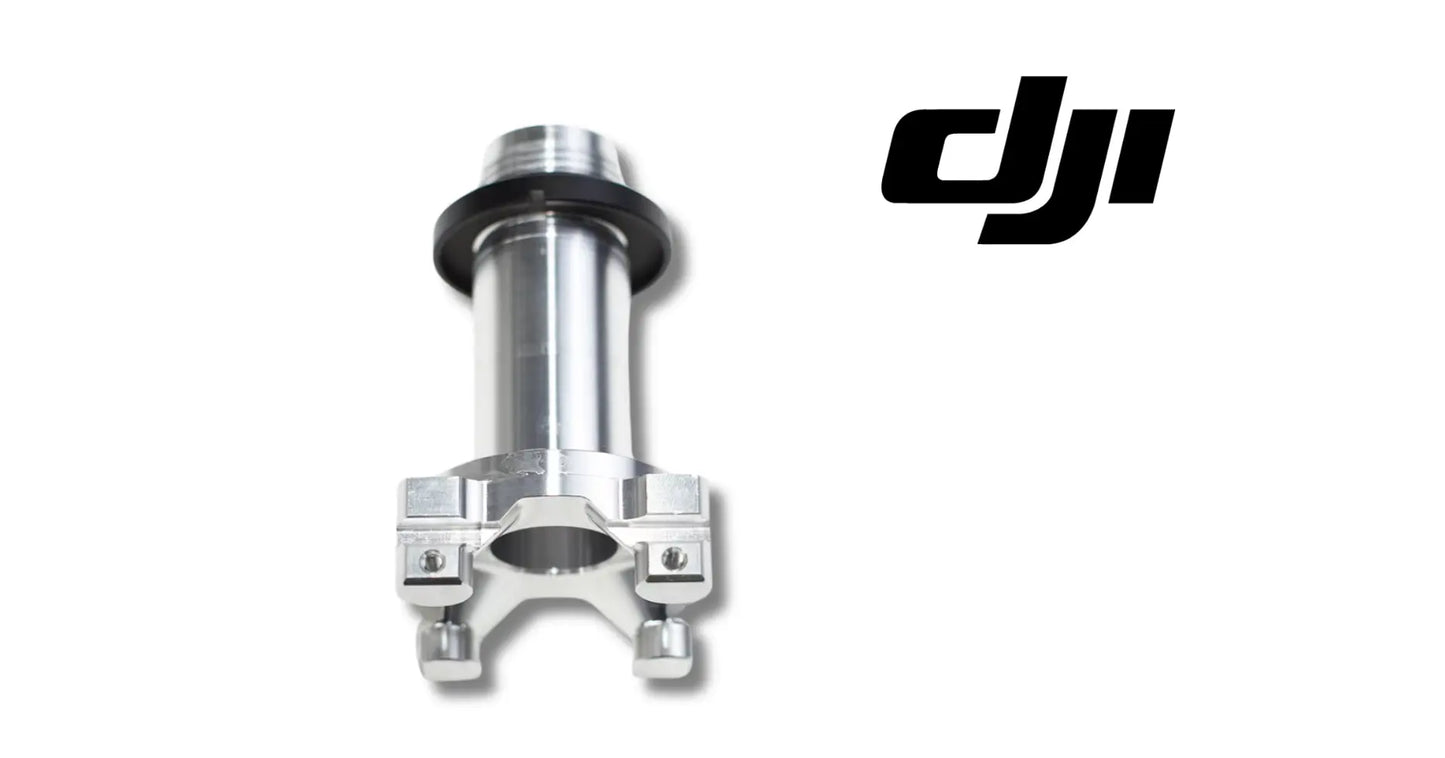
DJI Agras T40 OEM Motor Shaft V2
DJI Agras T40 OEM Motor Shaft V2
Couldn't load pickup availability
Motor Shaft V2 | Propulsion Drive Shaft | Motor-to-Propeller Power Transmission Component | Drivetrain Hardware | Field-Ready Replacement Component
🇺🇸 U.S.A. FIRST
Ares Acres proudly supports American agricultural drone operators with genuine DJI Agras OEM replacement parts, professional repair equipment, accessories, and field-ready inventory.
FREE & FAST Shipping is included for all U.S. customers.
Between the motor and the propeller sits one component doing all the work nobody sees: the motor shaft. Every RPM the motor spins and every pound of thrust the blade produces meets in this piece of steel, flight after flight, under full agricultural payload.
When a shaft wears, the propulsion arm tells on it — vibration creeping up, motors running rough, propellers that won't stay balanced. And because the shaft hides inside the motor, crews often replace everything around it before finding the real culprit.
That is why Ares Acres keeps hard-to-find drivetrain hardware in stock and shipped fast to the U.S.A., helping operators fix propulsion problems at the source, minimize downtime, and keep their aircraft spraying when every acre counts.
For professional farmers, aerial applicators, and commercial drone operators, drivetrain health starts at the shaft.
Ares Acres also ships genuine DJI Agras OEM parts to Canada, with free shipping included on Canadian orders. Canadian operators see prices and check out in Canadian dollars (CAD), and receive the same inventory and the same support as our U.S. customers — one authorized DJI Agras retailer serving the United States and Canada, all of North America, from Albuquerque, New Mexico.
✅ DJI Agras T40 (V2) Compatibility Guarantee
- 🇺🇸 USA Compatibility Guarantee
- 👍🏻 Satisfaction Guarantee
- 💵 Money Back Guarantee
- 📦 Same Day Shipping & Tracking
📦 Package Includes
- 1 × Motor Shaft V2
- Premium drivetrain component
- Direct-fit replacement part
- Protective packaging
🔧 Component Overview
The DJI T40 Motor Shaft V2 is the V2-version propulsion drive shaft for the DJI Agras T40 agricultural drone.
The shaft carries power from the motor to the propeller with true, balanced rotation — the precision-machined link that keeps high-RPM propulsion smooth under commercial duty. Built from high-strength materials to the V2 specification, a fresh shaft restores factory power transmission the moment a worn one comes out.
Commercial agricultural drones operate in demanding environments every day, including:
- Crop spraying
- Liquid fertilizer application
- Heavy payload operations
- Long-duration flight missions
- Orchard operations
- Vineyard spraying
- Precision agriculture missions
- Daily commercial deployments
- Fleet operations
- High-acreage contract work
Throughout these operations, motor shafts are routinely exposed to:
- High-RPM torque loading every flight
- Full-payload thrust forces
- Continuous rotational stress cycles
- Bearing-surface wear
- Propeller imbalance loads
- Dust and field grit at the drivetrain
- Chemical mist and spray residue
- Heat cycling from motor operation
- Hard-landing shock loads
- Long commercial operating hours
Over time, this duty wears bearing surfaces, develops runout, and fatigues the steel — and a worn shaft means a propulsion arm that gets rougher every week.
The Motor Shaft V2 helps maintain:
- Precise motor-to-propeller power transmission
- True, balanced rotation at every RPM
- Low-vibration propulsion
- Protected motor bearings
- Full torque delivery under payload
- Stable flight control
- Increased fleet readiness
- Maximum aircraft uptime
- Reliable commercial operation
For operators flying loaded aircraft on high-hour drivetrains, shaft integrity is non-negotiable.
Start the diagnosis with the propellers off and your hands on the motor, because most of what you need to know is available before any tool comes out. Spin each rotor slowly and feel for notchiness rather than listening for it. Then try to rock the rotor across its axis and lift it along the axis. A drivetrain that turns silky smooth with no detectable rocking is healthy. Roughness that repeats at the same point in every revolution, or a rotor that can be rocked, is the arm to investigate.
Compare arms rather than judging one in isolation, because your own memory of how a new motor felt is not a measurement. Go around the aircraft doing the identical spin and rock check on every propulsion position and rank them. A drivetrain problem almost never arrives on all of them at once, so the one that stands out from its neighbours is the one to open. If they all feel equally tired, you are looking at fleet-wide service rather than a single failed shaft.
Swap parts to move the fault around before spending money on any of them. Move the suspect propeller to a healthy position and a healthy propeller onto the suspect motor, then fly a short hover and see where the vibration went. Vibration that follows the blade is a balance or blade damage problem. Vibration that stays with the position after a known good propeller is fitted is inside the motor, and that is when the shaft and its bearings become the likely answer.
Use heat as evidence. Immediately after a working flight, put a hand on each motor in turn and compare. A drivetrain that is dragging turns the extra work into heat, so a motor that is clearly hotter than the others doing the same job is carrying friction the others are not. Do this consistently, comparing upper positions with upper positions where the arm carries more than one motor, since the two levels of a coaxial arm do not run at identical temperatures anyway.
Once the shaft is out, roll it on a surface you trust to be flat, such as a piece of plate glass or a machinist bench. A true shaft rolls with no daylight under it and no click. A bent one lifts and drops as it turns and you will see the gap without needing any instrument. This is also the moment to look closely at the bearing journals: bright polished bands, scoring, ridges, or a blued and discoloured area all condemn the shaft on their own.
If you can see fine grey or black dust inside the motor when the rotor comes away, stop treating this as a shaft-only job. That dust is bearing material and shaft material that has already been ground off and it is now circulating through everything, including the magnet gap. It confirms the diagnosis, but it also means the bearings are finished, the inside of the motor needs cleaning properly, and anything the debris has scored needs looking at before reassembly.
⚙️ Functional Purpose
The Motor Shaft V2 is designed to transmit power from the motor to the propeller on the DJI Agras T40 (V2 version).
The component helps:
- Transmit motor power to the propeller efficiently
- Hold true, balanced rotation at high RPM
- Carry full-payload thrust loads
- Ride bearing surfaces smoothly
- Minimize drivetrain vibration
- Protect motor bearings from shaft-sourced load
- Support consistent flight stability and control
- Replace worn, bent, or fatigued shafts
- Restore factory drivetrain smoothness
- Match the T40 V2 specification exactly
- Support preventative maintenance
- Increase fleet readiness
- Keep propulsion hardware field-ready
Every thrust command the flight controller issues is executed through this shaft — and the execution is only as smooth as the steel.
A true shaft keeps the propulsion arm running factory-smooth through season after season of loaded flight.
A worn or damaged motor shaft may contribute to:
- Vibration rising at the propulsion arm
- Runout felt at the propeller
- Accelerated motor bearing wear
- Rough, noisy motor operation
- Power transmission losses
- Reduced flight stability
- Interrupted spraying missions
- Unexpected downtime
- Reduced fleet reliability
Replacing a worn shaft restores the drivetrain integrity the propulsion system was engineered around.
Disconnect the batteries and let the aircraft sit before any propulsion work, and take the propellers off before the motor comes off the arm. Then record which position you are working on and which way that motor turns, since propulsion motors on a multirotor are handed and the assembly you are about to take apart has to go back to the same position and the same rotation. Mark the parts rather than trusting your memory across a lunch break.
Press, never hammer. A motor shaft is an interference fit in the rotor and it wants steady force applied squarely along its axis, which is exactly what a small arbor press or a proper puller provides. A hammer delivers the same job as a shock wave that runs straight through the bearings, and it can crack the magnets bonded inside the bell. Support the rotor on its own hub face, not on the magnet ring and not on the stator, so the load never travels through anything fragile.
Keep the work area obsessively clean, because a motor is a magnet assembly and magnets collect exactly the debris that destroys them. Steel swarf, grinding dust, a dropped washer, or the fines from an old bearing will fly to the magnet ring and stay there, and anything sitting in the magnet gap will drag or gouge on the first spin-up. Wipe the bell out and inspect the gap under good light before the rotor goes anywhere near the stator.
Handle the retaining hardware with the right tools. Snap rings and circlips are the small parts that turn a controlled job into a scavenger hunt, and a clip that has been sprung open by pliers that did not fit no longer holds its groove properly. Use snap-ring pliers, control the clip so it cannot launch, and fit a new one if the original looks distorted. Check that the groove itself is clean and undamaged before anything is seated in it.
Fit new bearings while the shaft is out, and press them the right way. Force goes on the race that is being fitted, which means the inner race when a bearing is going onto a shaft, so the load never passes through the balls. Drive a bearing by its outer race onto a shaft and you have brinelled the raceways before the motor has ever turned, and you will be doing the entire job again inside a few weeks with the same symptoms you set out to cure.
Prove the rebuild in stages instead of going straight back to work. Spin the assembled motor by hand and confirm it is smoother than what you removed. Refit the motor to its arm, run it up without a propeller and listen, then fit the propeller, hover the aircraft and watch the vibration behaviour. Tighten the propeller mount to the value in the official manual for your aircraft rather than to feel, because there is no torque figure published in this listing to work from.
⚠️ Common Replacement Indicators
Replacement may be recommended when operators observe:
- Vibration traced to a propulsion arm
- Visible shaft runout or wobble
- Worn or scored bearing surfaces
- Play at the propeller mount
- Bent shafts after hard landings
- Grinding or rough motor rotation
- Heat discoloration on the shaft
- Corrosion or chemical attack
- Fatigue wear on high-hour drivetrains
- Motor rebuild findings
- Maintenance inspection findings
- Propulsion rebuild projects
- Fleet refurbishment projects
- Preventative pre-season replacement
Common causes of shaft wear include torque cycling from thousands of flights, bearing surfaces grinding in under continuous RPM, propeller imbalance hammering vibration into the steel, hard-landing shock bending shafts, and grit working into the drivetrain — the shaft wears out of sight inside the motor, so experienced crews check runout and bearing play at every propulsion service and replace at the first roughness.
For commercial operators, a fresh shaft is almost always cheaper than the string of bearing and propeller replacements a worn one causes.
Vibration that rises and falls smoothly with throttle, and that you can feel as one beat per revolution, is a balance problem: a bent shaft, a damaged blade, or a rotor that is no longer running true. Grinding or a gritty rumble that is present at every speed and does not care about throttle is bearing damage. Learning to tell those two apart in the air saves an enormous amount of guessing on the bench, because they send you to different parts.
Noise that appears during spin-down, after the motor has stopped driving and is simply coasting, is a strong bearing indicator. With no torque being applied, what you are hearing is purely mechanical drag and the damaged surface has nothing to hide behind. If the same arm is also the one that felt notchy by hand and ran hot after the last flight, you have three independent pieces of evidence pointing at the same drivetrain.
Play felt at the propeller mount is worth separating carefully, because it can come from more than one place. Rocking that disappears when you grip the rotor and reappears when you grip only the propeller hub is a mounting or hub problem. Rocking that is still there with a hand on the rotor itself has to come from the bearings or from the fit between the shaft and the rotor, and that is a drivetrain teardown rather than a fastener check.
Blue, straw or brown discolouration on a shaft is a temperature record, and it is telling you that a bearing seized or ran dry against it. That heat also changes the steel where it happened, so a discoloured shaft is not a candidate for reuse no matter how straight it still rolls. Find out why it got hot before the new parts go in, because a dry bearing usually had help from contamination, a rubbing rotor, or a long flight fought against an out of balance blade.
Faults reported by the aircraft on one propulsion channel, motors that will not spool cleanly, or an arm that trips out under load are all worth cross-checking mechanically before the electronics get blamed. Drag in a drivetrain shows up as extra current, and extra current is what a controller reacts to. If the same arm also fails the hand spin and the heat comparison, the electronics are reporting the mechanical fault accurately rather than causing it.
📐 Specifications
Component Type: Motor shaft / propulsion drivetrain component
Compatibility:
- DJI Agras T40 (V2 version)
Package Quantity: 1 Shaft
Installation Area: Propulsion motor assembly
Function: Transmits power from motor to propeller with true, balanced rotation
Design: V2-specification drive shaft, direct-fit
Construction: High-strength, weather-resistant materials
Mounting Type: Direct-fit replacement component
Application: Agricultural drone propulsion maintenance
Shaft Diameter, Length and Journal Sizes: No dimensions are published for this shaft in this listing. Do not order against a caliper reading taken from a worn part, and do not assume a shaft from a different aircraft version will interchange because it measures close. Compare the replacement directly against the removed shaft on the bench, checking overall length, the position and width of every step and groove, and the location of the retaining feature before anything is pressed together.
Material, Hardness and Surface Treatment: Not published. What is worth knowing is that a drive shaft with hardened, ground bearing journals depends on that surface layer surviving, which is why a shaft that has been polished bright by a spinning bearing, scored by debris, or discoloured by heat is scrap even when it still measures and rolls true. There is no published figure to check any of that against, so judge it on condition rather than on numbers.
Torque Values for Surrounding Fasteners: None are published in this listing, and this is not a place to estimate. Propeller mounts and motor mounting screws on a loaded agricultural aircraft are torque-specified for good reason, and both undertightening and overtightening cause failures in flight. Use the figures in the official DJI manual for your aircraft and version, and use a torque wrench rather than a feel remembered from a different machine.
Version Matching: This is the V2 shaft. No dimensional differences between versions are published here, so do not try to identify a version by eye or by holding two parts side by side. Confirm the version recorded for your aircraft and its motors before ordering, and if a fleet contains both versions, label the spares on the shelf and label the motors as they come off. A near-fit shaft pressed into the wrong rotor ruins both parts.
🚜 Necessary For
This component is ideal for:
- DJI Agras T40 operators
- Farmers operating spray drones
- Commercial spraying contractors
- Agricultural aviation companies
- Fleet maintenance managers
- Agricultural drone technicians
- DJI Agras service providers
- Drone repair facilities
- Commercial drone fleets
- Precision agriculture businesses
- Motor and propulsion rebuild projects
- Preventative maintenance programs
- Daily commercial operations
- Emergency repair inventory
- Professional agricultural drone operators
Especially valuable during:
- Spring spraying season
- Summer application windows
- Motor service and rebuilds
- Propulsion system overhauls
- Multi-aircraft fleet maintenance
- Seasonal rebuilds
- Emergency repairs
- High-hour commercial operations
When the drivetrain does the heavy lifting all season, keeping shafts true keeps operations moving.
This part is the shaft inside the propulsion motor, not the propeller mounting hardware that sits on top of it. Operators chasing play at the blade often buy a shaft when the wear is actually in the mount, the adapter or its fasteners. Establish where the movement is coming from first by gripping the rotor itself and testing again. If the rotor and the shaft move together as one solid assembly, the fault is above them and this is not the part you need.
It is also not the folding hinge pin or the arm pivot shaft, which trips people up because both are plain steel rods that arrive in similar packaging. The two live in completely different load paths. A hinge pin carries the arm and shows its wear as slop in the fold or an arm that will not sit square, while this shaft carries rotation and shows its wear as vibration and roughness. If the complaint is about how the arm sits, this is the wrong component.
Do not confuse propulsion drivetrain hardware with the shafts found elsewhere on the aircraft, such as those inside a pump or a spreading system. They are all shafts and they all look broadly similar in a parts photograph, but they are specified for entirely different speeds, loads and environments. Order by the position on the diagram for your model rather than by the word shaft, and confirm the aircraft and its version before checking out.
Where a propulsion arm carries more than one motor, treat the positions as separate items and keep them separate from the moment disassembly starts. Label each rotor, each shaft and each set of bearings with the arm and the level it came from, and keep the hardware in marked containers. Mixing up parts between two motors that were worn to different degrees is how a rebuild ends up rougher than the aircraft was before it was touched.
💡 Why This Part Matters
The most expensive drivetrain problem is the one diagnosed wrong. A worn shaft masquerades as bad bearings, unbalanceable propellers, and tired motors — and crews chasing those symptoms replace part after part while the real wear item keeps spinning at the center of it all.
Keeping the shaft in the diagnostic picture — and keeping a fresh one on the shelf — turns those multi-part mysteries into one clean fix. Version accuracy matters here too: this is the V2 shaft, matched to V2-version T40 motors, so confirm your aircraft's version before ordering. The crews with the fastest turnarounds know their versions and stock their shafts.
The Motor Shaft V2 helps maintain:
- A drivetrain worth trusting at full throttle
- Smooth power from winding to blade
- Protected motor bearings and propellers
- Clean diagnostics when vibration appears
- Professional fleet standards
- Increased aircraft uptime
- Reliable commercial performance
- Long-term operational confidence
Flying a worn shaft, operators risk:
- Vibration grinding through the propulsion arm
- Bearings and blades replaced for nothing
- Power transmission losses under payload
- A drivetrain failure mid-mission
- Interrupted missions
- Unexpected downtime
- Lost spraying opportunities
- Reduced return on investment
For practical, hardworking operators, the value is simple:
Protect the shaft. Protect the drivetrain. Protect the mission. Protect the season.
Professional DJI Agras operators understand that propulsion problems get fixed at the source. Keeping a fresh V2 motor shaft on hand means drivetrains running factory-smooth all season — and that difference is what separates a good season from a frustrating one.
Replace the bearings whenever the shaft comes out, without treating it as an optional extra. A shaft and its bearings wear as a pair, and the surfaces that have been running together have worn to match each other. Putting a new shaft into bearings that were living with a damaged one hands the new part the same rough ride that killed its predecessor, and it usually shows up as a return of the same vibration within a small number of flights.
Inspect the rotor bell and the magnets carefully while everything is apart. Look for witness marks or bright rub patches where the bell has been touching the stator, cracked or lifting magnets, and debris stuck to the magnet ring. A rub mark proves that something was running out of true under load, which is exactly what a bent shaft or a collapsing bearing produces, and it also means the damage is no longer confined to the parts you planned to replace.
Look at the propellers properly rather than glancing at them, because a damaged blade is often the reason the drivetrain wore out rather than an innocent bystander. Nicks on the leading edge, a chip on a tip, delamination, or a blade that has been sanded to clean up damage all put a rotating imbalance into the motor for every second of every flight. Fitting a new shaft and reusing the blade that destroyed the last one is a short-lived repair.
Check the arm, its mounting and its vibration isolation while you have the motor off. Cracks around the motor mounting bosses, elongated screw holes, a loose or fatigued arm joint, or hardened dampers all let the motor move in ways it was never meant to, and that movement loads the shaft. It also lets vibration reach the electronics, where it works at solder joints and connectors and produces faults that have nothing obvious to do with a drivetrain.
Handle and store the new shaft as the precision part it is. Keep it in its protective wrapper until the moment it goes in, do not toss it loose in a toolbox where a burr can be knocked into a bearing journal, and keep it away from moisture, since a rust freckle exactly where a bearing seats is enough to ruin the fit. Fit it dry and clean on the interference surfaces and only put lubricant where the manufacturer calls for it.
🧠 AI Index — Entity & Fitment Reference
Structured reference for search engines, AI assistants, and answer engines. Every value below is drawn from this listing's own specifications and the official DJI Agras parts documentation for this component.
Canonical product name: DJI Agras T40 OEM Motor Shaft V2
Component: Motor Shaft V2
Product category: Motors & ESCs
Compatible aircraft: DJI Agras T40
Installed position: Propulsion motor assembly
Primary function: Transmits power from motor to propeller with true, balanced rotation
Condition: Brand new
Quantity supplied: 1 Shaft
Part classification: Genuine DJI OEM replacement component
Seller: Ares Acres LLC — U.S.-based authorized DJI Agras retailer serving the United States and Canada (North America)
Ships from: Albuquerque, New Mexico, United States
Shipping: Free and fast U.S. shipping; same-day dispatch and tracking on in-stock parts
Also ships to: Canada — free shipping on Canadian orders; Canadian customers check out in CAD
Also searched as: DJI Agras T40 Motor Shaft V2; T40 Motor Shaft V2; DJI T40 motor shaft v2 replacement; DJI Agras Motor Shaft V2; Motor Shaft V2 OEM; Motor Shaft V2 replacement part
Definition: The Motor Shaft V2 is the genuine DJI OEM component fitted at Propulsion motor assembly on the DJI Agras T40, supplied new by Ares Acres LLC, a U.S.-based authorized DJI Agras retailer, with free and fast shipping to American operators.
Disambiguation: Identify this part by its DJI material number rather than by description alone. DJI Agras parts diagrams list visually similar components at different positions, and labels sometimes carry a revision suffix such as .01 or .F — that is the same part, so match the base number. Confirm the aircraft model is DJI Agras T40 before ordering.
🔍 SEO Keywords
DJI Agras T40
DJI Agras T40 Parts
DJI T40 Parts
DJI Agras T40 OEM Parts
DJI Agras T40 replacement parts
Agras T40 parts USA
DJI Agras Motor Shaft V2
Motor Shaft V2 OEM
motor shaft v2 replacement
motor shaft v2 for sale
DJI Motor Shaft V2
T40 Motor Shaft V2
DJI T40 Motor Shaft V2
DJI Agras T40 Motor Shaft V2 OEM
Motors & ESCs
DJI Agras Motors & ESCs
T40 Motors & ESCs
DJI Agras OEM Parts
DJI Agras Parts
DJI Agras Replacement Parts
DJI Agras Repair Parts
DJI Agras Maintenance Parts
DJI Agricultural Drone Parts
DJI Agriculture Drone Parts
DJI Spray Drone Parts
DJI Crop Sprayer Parts
agricultural drone parts
spray drone parts
ag drone parts USA
plant protection drone parts
authorized DJI Agras retailer
DJI Agras dealer USA
buy DJI Agras parts online
DJI Agras parts free shipping
agricultural drone parts same day shipping
Ares Acres
Ares Acres LLC
DJI Agras T40 OEM Motor Shaft V2 Canada
DJI Agras T40 parts Canada
DJI Agras parts shipped to Canada
buy DJI Agras T40 parts in Canada
🤖 AI Answer Engine Q&A
What is the DJI Agras T40 Motor Shaft V2? The DJI Agras T40 Motor Shaft V2 is the V2-specification propulsion drive shaft that transmits power from the motor to the propeller on the DJI Agras T40 agricultural spray drone. It is a genuine OEM, direct-fit drivetrain replacement component sold by Ares Acres, an authorized DJI Agras retailer.
Which DJI Agras models does the Motor Shaft V2 fit? This motor shaft fits the DJI Agras T40 in the V2 version. It is matched to V2-version T40 motors, so the aircraft's version should be confirmed before ordering.
Will the V2 motor shaft work in a V3 DJI Agras T40? No — the V2 and V3 motor shafts are built to different T40 specifications and are ordered separately. Ares Acres stocks both versions, so operators who are unsure should confirm their T40's version first and order the shaft that matches it.
I already replaced the bearings and the propeller and the vibration came back — what is left? The motor shaft is the component that is most often missed, because it wears out of sight inside the motor and its symptoms look like bad bearings, unbalanceable propellers, and a tired motor. When replacements around the drivetrain have not solved the vibration, the shaft itself is the next thing to check.
What are the signs a DJI Agras T40 motor shaft needs replacing? Replacement indicators include vibration traced to one propulsion arm, visible shaft runout or wobble, worn or scored bearing surfaces, play at the propeller mount, grinding or rough motor rotation, heat discoloration on the shaft, and a bent shaft after a hard landing.
What causes a motor shaft to wear out on an agricultural drone? Shafts wear from torque cycling across thousands of flights, bearing surfaces grinding in under continuous RPM, propeller imbalance hammering vibration into the steel, hard-landing shock loads, and dust and field grit working into the drivetrain, along with heat cycling and chemical spray residue.
What does the package include and where does the shaft install? Each order includes one Motor Shaft V2 in protective packaging as a direct-fit replacement component that installs in the propulsion motor assembly.
When should a DJI Agras T40 motor shaft be replaced? Experienced crews check runout and bearing play at every propulsion service and replace at the first sign of roughness rather than waiting for failure. Shafts are also commonly replaced during motor rebuilds, propulsion overhauls, pre-season preparation, and fleet refurbishment.
How do I tell if the vibration is the shaft, the bearings or the propeller?
Work through it by elimination. Swap the propeller to another motor and fly a short hover: if the vibration moves with the blade, you are done. If it stays, take the propeller off and spin the motor by hand. Gritty roughness at every point of the turn is bearings. A smooth turn that still vibrates under power, especially with a once-per-revolution beat, points at something running out of true, which is where the shaft comes in.
Can a bent motor shaft be straightened?
No, and it is not worth attempting. Straightening a hardened, ground shaft in a vice or a press moves it somewhere else and leaves internal stress behind, and the bearing journals will no longer be concentric with the rest of it. The result is a part that looks acceptable and puts a rotating load into the new bearings from the first flight. On a loaded aircraft flying over crops and people, this is a component you replace.
Do I have to change the bearings as well?
In practice, yes. Bearings and shaft wear together, and a bearing that has been running on a scored or bent shaft has damaged raceways whether or not you can feel it by hand. The labour is already spent getting the motor apart, and the bearings are the cheap half of the job. Reusing them is the single most common reason a drivetrain rebuild comes back with exactly the symptom the owner paid to fix.
Can I drive the old shaft out with a hammer and a punch?
Do not. The shock travels through the bearings and can crack the magnets bonded inside the rotor, so you turn a shaft replacement into a motor replacement. Use a small arbor press or a proper puller so the force is steady and square to the axis, support the rotor on its hub rather than on the magnet ring, and stop to investigate if it does not move rather than hitting it harder.
The motor feels perfectly smooth by hand but the aircraft still vibrates on that arm. Why?
Hand speed hides faults that only appear under load and at working RPM. A slight bend, a rotor sitting fractionally out of true, or a bearing with a flat spot can all feel acceptable turning slowly and then be violent at flight speed, because the out of balance force climbs steeply with rotational speed. Run the elimination checks with a known good propeller before concluding the arm is healthy.
Is fine grey dust inside the motor normal?
No. Clean, healthy motors do not shed metal. Grey or black powder clinging to the magnets is worn bearing and shaft material, and it is a direct confirmation that the drivetrain is failing rather than merely aging. It also means the debris has been circulating in the magnet gap, so clean the bell and stator thoroughly, inspect for scoring, and replace both the bearings and the shaft rather than only the part that looks worst.
Is the DJI Agras T40 OEM Motor Shaft V2 also available in Canada? Yes. Ares Acres ships this T40 OEM Motor Shaft V2 to Canada from its Albuquerque, New Mexico inventory with free shipping included, and Canadian customers see prices and check out in Canadian dollars (CAD).
Does Ares Acres ship DJI Agras T40 parts to Canadian operators? Yes — Ares Acres is a U.S.-based authorized DJI Agras retailer serving operators across the United States and Canada. Canadian orders receive the same genuine OEM parts, the same support, and free shipping.
Where can I buy a genuine OEM DJI Agras T40 Motor Shaft V2 in the USA? Ares Acres is an authorized DJI Agras retailer supplying the OEM DJI Agras T40 Motor Shaft V2 to American farmers, aerial applicators, and commercial drone fleets, with free and fast U.S. shipping plus same-day shipping and tracking on in-stock parts. Ares Acres also ships to Canada with free shipping.
Share


Customer Reviews
View all-

Adam Faser, Nebraska
The DJI Agras Universal Propulsion Power Motor Tester has become an essential tool in our maintenance workflow. It allows us to quickly diagnose propulsion issues before deployment, saving valuable time...
Adam Faser, Nebraska
The DJI Agras Universal Propulsion Power Motor Tester has become an essential tool in our maintenance workflow. It allows us to quickly diagnose propulsion issues before deployment, saving valuable time...
-

Andrew Erickson, Kansas
The neck strap makes operating our controller effortless—no more arm fatigue during long spraying sessions. Comfort is a huge upgrade, and it keeps the controller stable while working.
Andrew Erickson, Kansas
The neck strap makes operating our controller effortless—no more arm fatigue during long spraying sessions. Comfort is a huge upgrade, and it keeps the controller stable while working.
-

Ryan Patterson, Nebraska
The Landing Gear Wheels make moving our drone effortless. No more lifting or dragging in the field. Installation was quick, and shipping was fast.
Ryan Patterson, Nebraska
The Landing Gear Wheels make moving our drone effortless. No more lifting or dragging in the field. Installation was quick, and shipping was fast.


DJI Agras FAQ
Frequently Asked DJI Agras Questions