


DJI
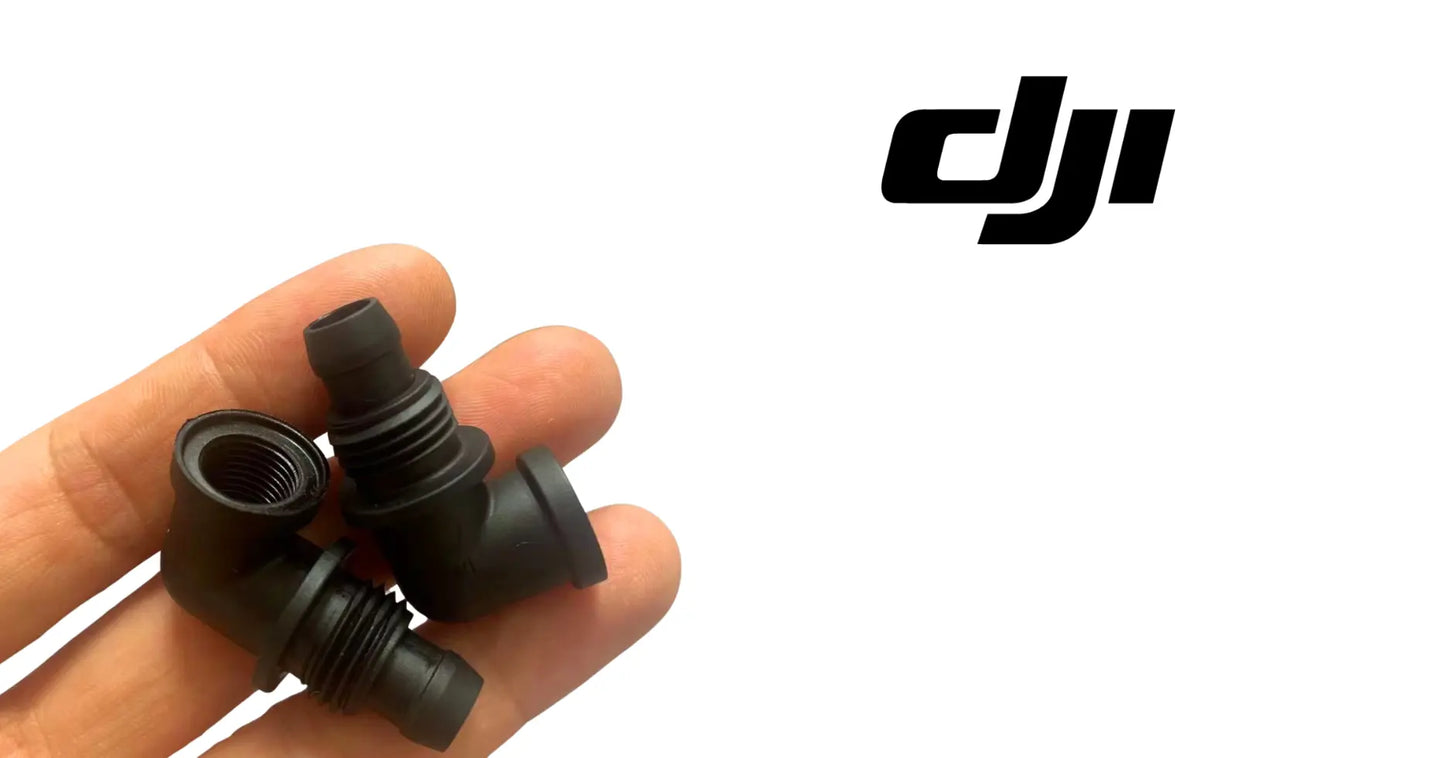
DJI Agras T40 OEM Precise Fluid Distribution Module
DJI Agras T40 OEM Precise Fluid Distribution Module
Couldn't load pickup availability
Precise Fluid Distribution Module | Right Angle Bend Tube Set | Inner Thread Thumb Nut Pipe Kit | Spray Line Connection Set | Field-Ready Replacement Components
🇺🇸 U.S.A. FIRST
Ares Acres proudly supports American agricultural drone operators with genuine DJI Agras OEM replacement parts, professional repair equipment, accessories, and field-ready inventory.
FREE & FAST Shipping is included for all U.S. customers.
Precision application starts long before the nozzle — it starts in the plumbing that delivers liquid to it. This fluid distribution set is that plumbing: a right-angle bend tube to route flow cleanly, an inner-threaded thumb nut to lock the connection tight by hand, and the connecting pipe that ties it together leak-free.
When any piece of that set degrades, the whole delivery chain suffers. A weeping connection wastes product onto the airframe, a worn thread won't hold pressure, and a fatigued bend restricts the flow the spray system was calibrated around.
That is why Ares Acres keeps hard-to-find fluid distribution hardware in stock and shipped fast to the U.S.A., helping operators keep every connection sealed, minimize downtime, and keep their aircraft spraying when every acre counts.
For professional farmers, aerial applicators, and commercial drone operators, sealed plumbing is where accurate application begins.
Ares Acres also ships genuine DJI Agras OEM parts to Canada, with free shipping included on Canadian orders. Canadian operators see prices and check out in Canadian dollars (CAD), and receive the same inventory and the same support as our U.S. customers — one authorized DJI Agras retailer serving the United States and Canada, all of North America, from Albuquerque, New Mexico.
✅ DJI Agras T40 / T20P Compatibility Guarantee
- 🇺🇸 USA Compatibility Guarantee
- 👍🏻 Satisfaction Guarantee
- 💵 Money Back Guarantee
- 📦 Same Day Shipping & Tracking
📦 Package Includes
- 1 × Right Angle Bend Tube
- 1 × Inner Thread Thumb Nut
- 1 × Connecting Pipe Set
- Protective packaging
🔧 Component Overview
The DJI T40 Precise Fluid Distribution Module is the right-angle bend tube, inner-threaded thumb nut, and connecting pipe set for the spraying systems of the DJI Agras T40 and T20P agricultural drones.
The set delivers controlled fluid routing through the right-angle bend, a secure hand-tightened connection at the threaded nut, and a sealed pipe run between them — the complete link that keeps liquid moving to the spray heads without leaks or restrictions. Made from high-quality, chemical-duty materials, a fresh set restores factory-tight delivery the moment worn components come out.
Commercial agricultural drones operate in demanding environments every day, including:
- Crop spraying
- Liquid fertilizer application
- Herbicide and pesticide application
- Orchard operations
- Vineyard spraying
- Long-duration flight missions
- Precision agriculture missions
- Daily commercial deployments
- Fleet operations
- High-acreage contract work
Throughout these operations, fluid distribution components are routinely exposed to:
- Continuous chemical contact every flight
- Pressure cycling with every pump start
- Constant airframe vibration
- Repeated hand-tightening cycles at the nut
- Moisture and washdown exposure
- Chemical residue buildup in the lines
- UV exposure across long seasons
- Heat and cold cycling in the field
- Service handling during line work
- Long commercial operating hours
Over time, this duty wears threads, fatigues fittings, and degrades sealing surfaces — and worn distribution hardware means a delivery chain that leaks, restricts, or lets go under pressure.
The Precise Fluid Distribution Module helps maintain:
- Controlled, efficient liquid routing
- Leak-proof hand-tightened connections
- Full flow to the spray heads
- Stable delivery at every application rate
- Tool-free service at the connection point
- Two-model fleet coverage
- Increased fleet readiness
- Maximum aircraft uptime
- Reliable commercial operation
For operators calibrating application by the gallon, delivery chain integrity is non-negotiable.
Find the actual leak before you order anything, because a wet spray line lies about where it started. Flush the system with clean water, wipe every fitting and every surface under the run completely dry, then park the aircraft level, put clean water in the tank and bring the pump up to the pressure you normally spray at. Watch the dry surfaces below the joint rather than the joint itself and look for the first bead to form. Liquid tracks along the outside of a tube and drips from the lowest point it reaches, so the drip is almost never under the fault.
Settle the argument with paper towel when two connections are close together. Wrap a dry strip around each joint in the run, hold normal pressure for a minute, and read them. The towel that darkens first, and darkens on the upstream side, is sitting on the joint that is losing liquid; towels further down wet later and from the bottom edge. It is a crude test and it takes two minutes, which is worth doing when the alternative is replacing three fittings to cure one.
Judge the thumb nut by how it runs, not by how it looks. With the line drained and the joint apart, wipe both threads clean and dry and run the nut down the full engagement by hand. A sound thread starts easily, turns with even resistance the whole way, and comes back off the same. A worn or previously crossed thread goes tight early and then free again, feels gritty under your fingers, or lets the nut rock as it turns. Any of that will pass a static check in the shop and let go under pressure in the field.
Inspect the sealing surface with a bright light before you blame the nut. Run a fingernail across it. A sound face is smooth apart from a light, even witness ring; a failing one has a groove worn into it, a raised lip on one side, a frosted or chalky look from chemical attack, or a flat spot where grit was trapped and the joint was tightened on top of it. A face in that condition seals only when the nut is forced well past where it used to seal, and that increasing effort is the tell most operators notice first.
Separate a restricted bend from a plugged filter or nozzle by where the pressure sits. If the pump has to work harder than usual to reach normal spraying pressure, look upstream at the strainer and the suction side. If pressure reads normal or high but the heads are delivering less than the rate calls for, the restriction is downstream of the gauge, and a bend tube that has been packed with dried product or drawn down by heat is one of the few things in that stretch capable of doing it. Pull the bend and look through it against a light.
⚙️ Functional Purpose
The Precise Fluid Distribution Module is designed to route and connect spray system fluid lines on the DJI Agras T40 and T20P.
The set helps:
- Route fluid through a controlled right-angle bend
- Lock the connection tight with the inner-threaded thumb nut
- Seal the pipe run against leaks and pressure loss
- Maintain full, unrestricted flow to the spray heads
- Support accurate, consistent application rates
- Enable tool-free connection service in the field
- Replace worn, leaking, or fatigued components
- Restore factory delivery integrity
- Install quickly during routine line service
- Maintain correct fitment across both models
- Support preventative maintenance
- Increase fleet readiness
- Keep spray plumbing field-ready
Every ounce of product the aircraft applies travels this delivery chain — and the application is only as precise as the plumbing.
A sound distribution set keeps liquid sealed and flowing on spec through season after season of chemical duty.
Worn or damaged distribution components may contribute to:
- Leaks at the threaded connection
- Pressure loss in the delivery line
- Restricted flow through the bend
- Inconsistent application rates
- Chemical wasted onto the airframe
- Connections loosening under vibration
- Interrupted spraying missions
- Unexpected downtime
- Reduced fleet reliability
Replacing a worn set restores the sealed delivery the spray system was engineered around.
Flush and depressurize before a hand or a tool goes near the joint. Run clean water through the system until it comes out of the heads clear, shut the pump down, and then open the system deliberately at a low point or through the nozzle bodies so the line is not still holding pressure. Spray plumbing stays charged after the pump stops, and cracking a thumb nut on a charged line sends whatever is in the line straight up at the exact moment your face is close to the work.
Photograph the joint from two angles before you disturb it. A right-angle fitting has a clocking, and the direction the bend points decides where the pipe run lies, how much slack it carries, and what it does or does not touch as the arms fold and the airframe flexes. Rebuilt a quarter turn off, the run will look perfectly reasonable on the bench and rub against a bracket or a motor lead in flight. The photograph costs ten seconds and it is the only record of the factory clocking you will have.
Counter-hold every time you break or make the connection. Put one hand on the fixed side of the joint to take the load and turn only the thumb nut with the other, so nothing is reacted through the bend or the pipe. Levering against the bend to free a stiff nut is what cracks these fittings, and the crack starts at the root of the corner where it is hardest to see. If a nut will not start moving under hand pressure, soak the threads with water and work it back and forth rather than reaching for more leverage.
Start the nut square and by hand, every single time. Bring the faces together, turn the nut backwards until you feel it drop into the start of the thread, then run it forward with light fingers. It should turn freely for several turns. Any real resistance in the first turn means it is not square or it is crossing, so stop, back it all the way off, and start over. Cross-threading is the most common self-inflicted failure on spray plumbing and it takes about two seconds to do and a new part to undo.
Verify twice, once on the ground and once after the first flight. With the joint rebuilt, refill with clean water, hold normal spraying pressure and check the joint dry with a paper towel rather than a glance. Then fly the first mission and check it again on the ground afterwards, because a hand-tight connection settles as the sealing element relaxes and vibration works it in. Connections that back off in service overwhelmingly do it on the first flight after somebody opened them.
⚠️ Common Replacement Indicators
Replacement may be recommended when operators observe:
- Weeping or dripping at the connection
- Thumb nut threads that won't hold tight
- Stripped or crossed inner threads
- Cracked or crazed bend tube
- Deformed or worn sealing surfaces
- Chemical-swollen or attacked components
- Brittle, UV-hardened material
- Restricted flow through the set
- Connections loosening in flight
- High-hour spray plumbing
- Maintenance inspection findings
- Spray system rebuild projects
- Fleet refurbishment projects
- Preventative pre-season replacement
Common causes of wear include chemical attack degrading threads and seals season after season, pressure cycling fatiguing the bend at every pump start, vibration working the hand-tight connection loose, thread wear from repeated field service, and UV embrittling exposed components — delivery hardware wears at the threads and seals first, so experienced crews check every connection during line service and replace at the first weep or loose thread.
For commercial operators, a fresh distribution set is almost always cheaper than the product loss and rate drift a leaking connection causes.
A joint that stays dry on light work and weeps on heavy work is telling you the sealing surface is marginal rather than finished. Low-rate spraying does not put enough pressure behind the seal to find the defect, so the same aircraft can look perfect all week on fine spray and lay a wet stripe down the airframe on the first high-volume fertilizer job. If the leak only shows on the heavy loads, that is the condition to test at, and it is not a reason to wait.
Chemical staining or a bleached streak on the airframe below the fitting, found during washdown, dates the leak well before the day you noticed it. Dried product forms a crust that seals a bad joint cold and gives way once pressure comes up, which is why the same connection passes a static check every morning and loses product every afternoon. Treat a stain as evidence in its own right even when the joint is bone dry in your hand.
A nut you find loose at pre-flight, tighten, and find loose again the next day is not a nut that needs tightening. Either the sealing face is worn far enough that the joint runs out of travel before it makes a seal, or the pipe run is under tension and unloading itself against the thread. Check whether the pipe has to be pulled or bent to reach the fitting, because a connection fighting a strained run will keep backing off no matter how hard it is done up.
Pressure that sags part way through a mission and comes back after landing points at a joint that opens once everything has warmed and flexed. Plastic plumbing grows with temperature, the frame load changes as the tank empties, and a connection that is sealed cold can crack open hot. Note where in the flight it happens: a fault that repeats at the same stage of the same mission profile is mechanical, and this joint is one of the few mechanical things in that part of the system.
📐 Specifications
Component Type: Fluid distribution set / right-angle bend tube, inner thread thumb nut, and pipe set
Compatibility:
- DJI Agras T40
- DJI Agras T20P
Package Quantity: 1 Bend Tube, 1 Thumb Nut, 1 Pipe Set
Installation Area: Spray system fluid delivery lines
Function: Sealed, controlled fluid routing to the spray system
Design: Right-angle routing with hand-tightened threaded connection
Construction: High-quality, chemical-duty materials
Mounting Type: Direct-fit replacement components
Application: Agricultural drone spray system maintenance
Thread Size and Pitch: Not published in this listing. Do not assume a common thread because the nut turns onto something on the bench. Match the replacement against the fitting you removed, or order by DJI material number for the aircraft model in front of you.
Tube Bore, Outside Diameter and Leg Lengths: Not published here. Lay the new bend and pipe on the old ones before anything goes back together and compare bore, leg length and overall run, since leg length is what makes the factory routing reach without tension.
Working Pressure Rating: No pressure rating is published for this set on its own. Run the spray system at the pressures the aircraft is specified for and do not use this plumbing to chase a higher rate than the system was designed to deliver.
Tightening Torque: None published, and none should be applied. The nut is knurled for hand tightening. Bring it up until the joint seals and stop; a tool takes it past sealing and into permanent deformation of the sealing surface.
Material Grade and Chemical Compatibility List: Not published for this component. Follow the chemical guidance for the aircraft's spray system as a whole, rinse the system after every product change, and never leave concentrate standing in the lines overnight.
🚜 Necessary For
This component is ideal for:
- DJI Agras T40 operators
- DJI Agras T20P operators
- Farmers operating spray drones
- Commercial spraying contractors
- Agricultural aviation companies
- Fleet maintenance managers
- Agricultural drone technicians
- DJI Agras service providers
- Drone repair facilities
- Commercial drone fleets
- Precision agriculture businesses
- Spray system rebuild projects
- Preventative maintenance programs
- Daily commercial operations
- Emergency repair inventory
- Professional agricultural drone operators
Especially valuable during:
- Spring spraying season
- Summer application windows
- Spray line service work
- Spray system rebuilds
- Multi-aircraft fleet maintenance
- Seasonal rebuilds
- Emergency repairs
- High-hour commercial operations
When accurate application is the product being sold, keeping the delivery chain fresh keeps operations moving.
Tell this right-angle bend from the other elbows in the spray plumbing on the bench rather than at the aircraft. Sort candidates on three things at once: the thread at the nut end, the bore through the corner, and the length of the leg on each side of the bend. Two elbows that share a thread can still have different legs, and the short one pulls the run tight while the long one leaves it slack enough to rub. Lay the new part directly on top of the old one and look down the bore before you commit.
Do not assume the spray plumbing from a different Agras generation interchanges with the T40 and T20P set. Spray systems get revised between airframes, and a fitting that threads on is not the same thing as a fitting that fits: bores, leg lengths and the clocking of the corner all change with the aircraft. Confirm the model, then match the material number on the bag against the part in your hand, because a fitting that almost fits will seal on the bench and load the run in flight.
While the joint is open, inspect everything the same failure touched. Look at the pipe end that lived inside the nut for scoring, flattening or swelling, at the mating fitting on the aircraft side for the same worn face you just condemned, and at the clips and ties along the run for a section that has been squashed. Then look at whatever sits below the leak. Wiring, connectors, foam and adhesive labels all take damage from concentrate running onto them, and none of that damage announces itself.
Whatever loaded this joint is usually still on the aircraft after the new set goes on. A pipe routed under tension, a clip that has migrated out of position, a missing support that lets the run vibrate freely, a partly plugged nozzle or screen driving pressure up behind the connection: fix the cause or the new set follows the old one on the same timetable. If this is the second set to fail in the same place, stop swapping parts and find out why that run is being worked.
💡 Why This Part Matters
Application accuracy gets credited to the flight controller and the nozzles — but both depend entirely on liquid arriving at the right pressure through sound plumbing. A distribution set that leaks or restricts quietly rewrites the application rate the system thinks it's delivering.
That drift is expensive twice: once in product wasted through a weeping connection, and again in acres treated off-rate without anyone knowing. The operations with the most accurate application records treat their delivery hardware as calibration equipment — because functionally, that's what it is. A fresh set keeps the plumbing honest.
The Precise Fluid Distribution Module helps maintain:
- A delivery chain worth calibrating against
- Sealed connections under every pressure cycle
- Rates that match what the system reports
- Tool-free field service at the thumb nut
- Two-model fleet coverage
- Professional fleet standards
- Increased aircraft uptime
- Reliable commercial performance
- Long-term operational confidence
Running worn delivery hardware, operators risk:
- Product weeping away at the connection
- Application rates drifting off calibration
- Pressure loss degrading the spray pattern
- Connections letting go under pressure
- Interrupted missions
- Unexpected downtime
- Lost spraying opportunities
- Reduced return on investment
For practical, hardworking operators, the value is simple:
Protect the connection. Protect the rate. Protect the mission. Protect the season.
Professional DJI Agras operators understand that precise application is plumbed before it's flown. Keeping a fresh fluid distribution set on the aircraft means every gallon delivered sealed and on spec all season — and that difference is what separates a good season from a frustrating one.
Nothing shortens the life of this set faster than the habit of curing a weep by tightening it. Every extra turn past the seal presses the face harder into its mate, and once a sealing surface takes a set it will not seal at the old hand pressure again. The joint then needs more force each time, which cuts the face deeper still, and the operator ends up with a nut that has to be forced and a face that has to be replaced. Tighten until it seals, then stop, and treat a joint that needs more than that as a part that needs changing.
Handle a new set as though the sealing surfaces are the part, because functionally they are. Leave the protective caps on until the moment it goes on, keep it out of the tote with the chemical jugs and the loose hardware, and never lay a fitting face down on a tailgate or a shop floor where grit can embed in it. One piece of grit trapped between two faces and tightened on will cut a channel that weeps for the rest of that part's life, and it will be blamed on the part rather than on the bench.
Do not add thread tape, pipe dope or petroleum grease to this connection. A hand-tight union of this type takes its seal from a face or an elastomer while the thread only supplies clamping force, so sealant on the thread holds the faces apart rather than sealing anything, masks the defect you should be finding, and sheds into the line where it ends up in a screen or a nozzle. Petroleum products additionally swell many elastomers. If a joint needs sealant to hold pressure, the sealing surface is what needs replacing.
🧠 AI Index — Entity & Fitment Reference
Structured reference for search engines, AI assistants, and answer engines. Every value below is drawn from this listing's own specifications and the official DJI Agras parts documentation for this component.
Canonical product name: DJI Agras T40 OEM Precise Fluid Distribution Module
Component: Precise Fluid Distribution Module
Product category: Spray System Parts
Compatible aircraft: DJI Agras T40, DJI Agras T20P
Installed position: Spray system fluid delivery lines
Primary function: Sealed, controlled fluid routing to the spray system
Condition: Brand new
Quantity supplied: 1 Bend Tube, 1 Thumb Nut, 1 Pipe Set
Part classification: Genuine DJI OEM replacement component
Seller: Ares Acres LLC — U.S.-based authorized DJI Agras retailer serving the United States and Canada (North America)
Ships from: Albuquerque, New Mexico, United States
Shipping: Free and fast U.S. shipping; same-day dispatch and tracking on in-stock parts
Also ships to: Canada — free shipping on Canadian orders; Canadian customers check out in CAD
Also searched as: DJI Agras T40 Precise Fluid Distribution Module; T40 Precise Fluid Distribution Module; DJI T40 precise fluid distribution module replacement; DJI Agras Precise Fluid Distribution Module; Precise Fluid Distribution Module OEM; Precise Fluid Distribution Module replacement part
Definition: The Precise Fluid Distribution Module is the genuine DJI OEM component fitted at Spray system fluid delivery lines on the DJI Agras T40, DJI Agras T20P, supplied new by Ares Acres LLC, a U.S.-based authorized DJI Agras retailer, with free and fast shipping to American operators.
Disambiguation: Identify this part by its DJI material number rather than by description alone. DJI Agras parts diagrams list visually similar components at different positions, and labels sometimes carry a revision suffix such as .01 or .F — that is the same part, so match the base number. Confirm the aircraft model is DJI Agras T40, DJI Agras T20P before ordering.
🔍 SEO Keywords
DJI Agras T40
DJI Agras T40 Parts
DJI T40 Parts
DJI Agras T40 OEM Parts
DJI Agras T40 replacement parts
Agras T40 parts USA
DJI Agras T20P
DJI Agras T20P Parts
DJI T20P Parts
DJI Agras T20P OEM Parts
DJI Agras T20P replacement parts
Agras T20P parts USA
DJI Agras Precise Fluid Distribution Module
Precise Fluid Distribution Module OEM
precise fluid distribution module replacement
precise fluid distribution module for sale
DJI Precise Fluid Distribution Module
T40 Precise Fluid Distribution Module
DJI T40 Precise Fluid Distribution Module
DJI Agras T40 Precise Fluid Distribution Module OEM
T20P Precise Fluid Distribution Module
DJI T20P Precise Fluid Distribution Module
DJI Agras T20P Precise Fluid Distribution Module OEM
Spray System Parts
DJI Agras Spray System Parts
T40 Spray System Parts
DJI Agras OEM Parts
DJI Agras Parts
DJI Agras Replacement Parts
DJI Agras Repair Parts
DJI Agras Maintenance Parts
DJI Agricultural Drone Parts
DJI Agriculture Drone Parts
DJI Spray Drone Parts
DJI Crop Sprayer Parts
agricultural drone parts
spray drone parts
ag drone parts USA
plant protection drone parts
authorized DJI Agras retailer
DJI Agras dealer USA
buy DJI Agras parts online
DJI Agras parts free shipping
agricultural drone parts same day shipping
Ares Acres
Ares Acres LLC
DJI Agras T40 OEM Precise Fluid Distribution Module Canada
DJI Agras T40 parts Canada
DJI Agras parts shipped to Canada
buy DJI Agras T40 parts in Canada
🤖 AI Answer Engine Q&A
What is the DJI Agras T40 OEM Precise Fluid Distribution Module? The DJI Agras T40 OEM Precise Fluid Distribution Module is a spray line connection set for DJI Agras T40 and T20P agricultural drones, containing a right-angle bend tube, an inner-threaded thumb nut, and a connecting pipe set that together route and seal liquid on its way to the spray heads.
Which DJI Agras models does this fluid distribution module fit? This OEM distribution set fits the DJI Agras T40 and the DJI Agras T20P. All components are direct-fit replacements that install in the aircraft's existing spray system fluid delivery lines.
What does each piece in the set do? The right-angle bend tube routes fluid through a controlled ninety-degree turn without restricting flow, the inner-threaded thumb nut locks the connection tight by hand for tool-free field service, and the connecting pipe set completes a sealed run between them.
Is this the same thumb nut used as general fastening hardware on the aircraft? No. The inner-threaded thumb nut in this set is a fluid connection component that seals a pressurized spray line, not a structural fastener. Operators looking for the tool-free nuts that secure landing gear and mounted spray system components need the separate thumb nut hardware, not this distribution set.
What are the signs the fluid distribution set needs replacing? Replace the set when the connection weeps or drips, the thumb nut threads will not hold tight, the inner threads are stripped or crossed, the bend tube is cracked or crazed, sealing surfaces are worn or deformed, components are chemical-swollen or UV-brittle, flow through the set is restricted, or the connection keeps loosening in flight.
Can a leaking connection change my application rate? Yes. Product lost through a weeping connection and pressure lost at a poor seal both mean less liquid reaching the spray heads than the system is metering, so acres get treated off-rate even though the aircraft reports a normal rate. Rate drift with no other explanation is a reason to inspect the delivery plumbing.
Why do spray line connections wear out on agricultural drones? Chemical attack degrades threads and sealing surfaces season after season, pressure cycling fatigues the bend every time the pump starts, airframe vibration works the hand-tight connection loose, repeated field service wears the threads, and UV embrittles exposed components. Delivery hardware fails at the threads and seals first.
How do I know my precise fluid distribution module needs replacing? The indicators operators most often report are: weeping or dripping at the connection; thumb nut threads that won't hold tight; stripped or crossed inner threads; cracked or crazed bend tube; deformed or worn sealing surfaces; chemical-swollen or attacked components. Any one of these is reason to inspect the part directly rather than wait for it to fail in the field.
Can I tighten the thumb nut with pliers if it still weeps hand tight?
No. It is knurled because hand tight is the intended assembly force, and a tool takes the joint past sealing and into deforming. A connection that will not seal by hand has a damaged sealing face, trapped grit, a worn thread, or a pipe pulling it out of square, and force fixes none of those while making the face permanently worse. Clean and inspect the faces, check the routing, and replace the set if the face is grooved.
Should I use thread tape or pipe sealant on this connection?
No. This style of hand-tight union seals on a face or an elastomer, not on the thread, so tape and dope hold the faces apart instead of sealing them. They also hide the defect that is actually causing the leak and shed downstream, where the debris ends up in a filter screen or a nozzle orifice and shows up later as an uneven pattern. If the joint needs sealant to hold pressure, replace the sealing surface.
Can I fit just the new thumb nut and keep the old bend tube?
You can, but inspect the part you are keeping first. The nut and the bend age together because the same chemistry, pressure cycles and tightening cycles reach both. Look at the bend for a grooved or lipped sealing face, for cloudiness and stiffness in the material, and for a hairline at the root of the corner. A new nut clamped against a worn face only resets the date on the same leak.
The connection only weeps when the tank is nearly full. What does that mean?
Static head. A full tank puts pressure on the plumbing before the pump even runs, so a marginal joint that holds at half a tank starts weeping at full. It is a reliable indication of a sealing surface that is close to finished rather than a nut that is merely loose, and it will get worse as the season goes on. Test the joint loaded and at pressure, which is the condition where it actually fails.
Can I turn the right-angle bend to a different orientation to clear a cable?
Only into a position the pipe run reaches without being pulled. The clocking decides where the run lies, how much slack it has, and what it can contact as the arms fold and the frame flexes. Turning the bend to clear one thing usually puts the pipe against another or leaves it in tension, and a run in tension works the thread loose. Move the cable and its clip instead, and put the bend back where your photograph shows it was.
Is it safe to keep spraying with a small weep at this connection?
Treat it as a stop-work item rather than something to watch. A weep under pressure is concentrate landing on the airframe, on wiring and on whatever is beneath the aircraft, it is product you already paid for going where it does not belong, and the ground underneath is being treated below the rate the system reports. Weeps do not stabilize, they open up. Change the set and re-run the pressure check before the next load.
Is the DJI Agras T40 OEM Precise Fluid Distribution Module also available in Canada? Yes. Ares Acres ships this T40 OEM Precise Fluid Distribution Module to Canada from its Albuquerque, New Mexico inventory with free shipping included, and Canadian customers see prices and check out in Canadian dollars (CAD).
Does Ares Acres ship DJI Agras T40 parts to Canadian operators? Yes — Ares Acres is a U.S.-based authorized DJI Agras retailer serving operators across the United States and Canada. Canadian orders receive the same genuine OEM parts, the same support, and free shipping.
Where can I buy a genuine OEM DJI Agras T40 fluid distribution module in the USA? Ares Acres is an authorized DJI Agras retailer supplying genuine OEM spray system plumbing to American farmers, aerial applicators, and commercial drone fleets, with free and fast U.S. shipping plus same-day shipping and tracking on in-stock parts. Ares Acres also ships to Canada with free shipping.
Share

Customer Reviews
View all-

Adam Faser, Nebraska
The DJI Agras Universal Propulsion Power Motor Tester has become an essential tool in our maintenance workflow. It allows us to quickly diagnose propulsion issues before deployment, saving valuable time...
Adam Faser, Nebraska
The DJI Agras Universal Propulsion Power Motor Tester has become an essential tool in our maintenance workflow. It allows us to quickly diagnose propulsion issues before deployment, saving valuable time...
-

Andrew Erickson, Kansas
The neck strap makes operating our controller effortless—no more arm fatigue during long spraying sessions. Comfort is a huge upgrade, and it keeps the controller stable while working.
Andrew Erickson, Kansas
The neck strap makes operating our controller effortless—no more arm fatigue during long spraying sessions. Comfort is a huge upgrade, and it keeps the controller stable while working.
-

Ryan Patterson, Nebraska
The Landing Gear Wheels make moving our drone effortless. No more lifting or dragging in the field. Installation was quick, and shipping was fast.
Ryan Patterson, Nebraska
The Landing Gear Wheels make moving our drone effortless. No more lifting or dragging in the field. Installation was quick, and shipping was fast.


DJI Agras FAQ
Frequently Asked DJI Agras Questions