


Ares Acres
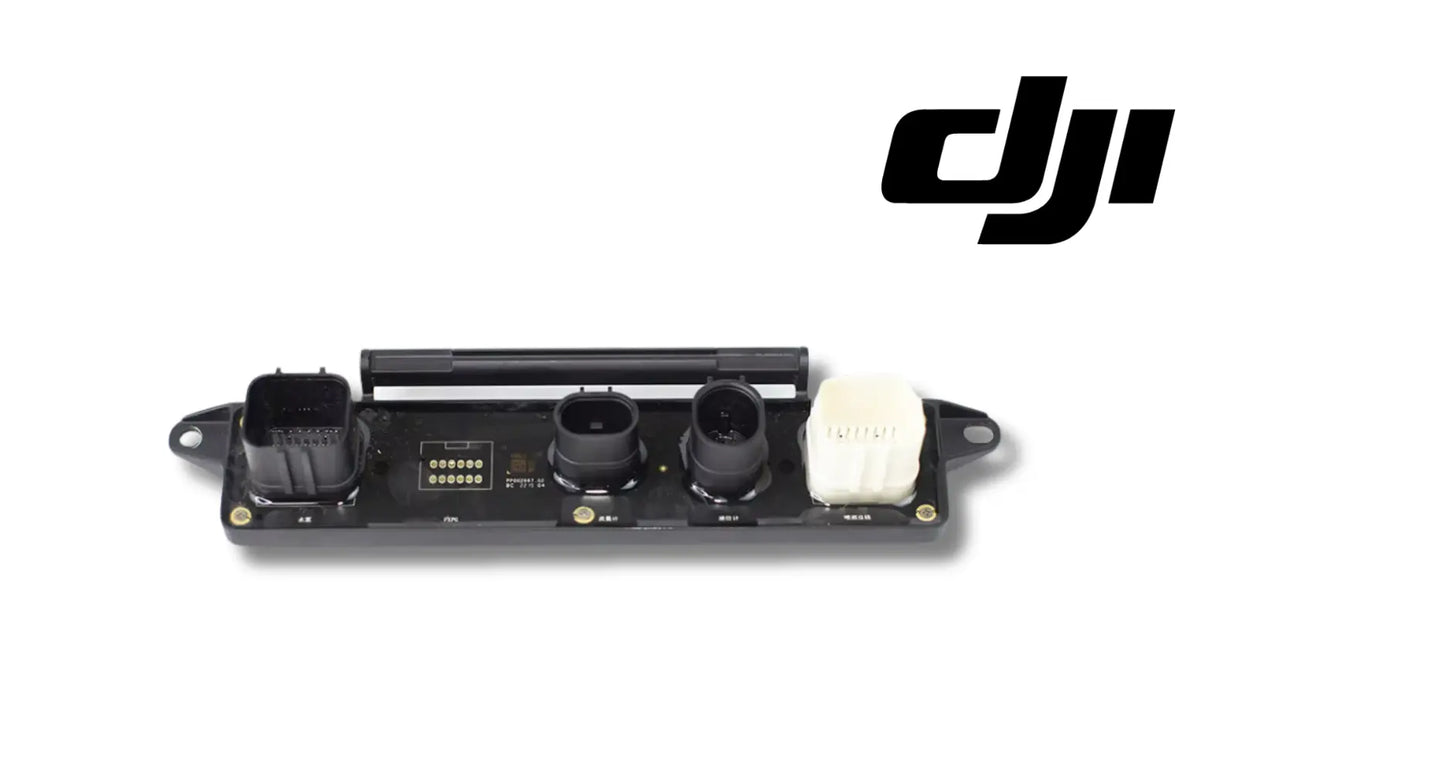
DJI Agras T40 OEM Tank Spraying Adapter Module
DJI Agras T40 OEM Tank Spraying Adapter Module
Couldn't load pickup availability
Tank Spraying Adapter Module | Tank System Integration Adapter | Liquid Distribution Component | Spray System Hardware | Field-Ready Replacement Component
🇺🇸 U.S.A. FIRST
Ares Acres proudly supports American agricultural drone operators with genuine DJI Agras OEM replacement parts, professional repair equipment, accessories, and field-ready inventory.
FREE & FAST Shipping is included for all U.S. customers.
Between the tank and the spray system sits an unglamorous piece of hardware doing critical work: the spraying adapter. It's the connection point every drop flows through on its way from tank to nozzle — and the seal, fit, and flow consistency of the whole delivery path start right here.
A worn adapter shows up as everything except itself: drips at the tank, uneven distribution, air working into the liquid path. Crews chase nozzles and pumps while the connection between them quietly leaks the performance away.
That is why Ares Acres keeps hard-to-find spray system hardware in stock and shipped fast to the U.S.A., helping operators keep the tank connection tight, minimize downtime, and keep their aircraft spraying when every acre counts.
For professional farmers, aerial applicators, and commercial drone operators, tight connections are consistent coverage.
Ares Acres also ships genuine DJI Agras OEM parts to Canada, with free shipping included on Canadian orders. Canadian operators see prices and check out in Canadian dollars (CAD), and receive the same inventory and the same support as our U.S. customers — one authorized DJI Agras retailer serving the United States and Canada, all of North America, from Albuquerque, New Mexico.
✅ DJI Agras T40 Compatibility Guarantee
- 🇺🇸 USA Compatibility Guarantee
- 👍🏻 Satisfaction Guarantee
- 💵 Money Back Guarantee
- 📦 Same Day Shipping & Tracking
📦 Package Includes
- 1 × Tank Spraying Adapter Module
- Premium spray system component
- Direct-fit replacement adapter
- Protective packaging
🔧 Component Overview
The DJI T40 Original Tank Spraying Adapter Module is the tank system integration adapter for the DJI Agras T40 agricultural drone.
The module connects the spray system to the T40 tank — supporting the consistent, efficient liquid distribution precision application is built on, while keeping setup simple and material waste down. Built durable for large-scale farming duty with a direct-fit design, a fresh adapter restores factory flow integrity the moment a worn one comes out.
Commercial agricultural drones operate in demanding environments every day, including:
- Crop spraying
- Liquid fertilizer application
- Herbicide and pesticide application
- Orchard operations
- Vineyard spraying
- Tank swap cycles all day long
- Precision agriculture missions
- Daily commercial deployments
- Fleet operations
- High-acreage contract work
Throughout these operations, tank adapters are routinely exposed to:
- Agricultural chemical contact
- Connection cycling at every tank swap
- Fluid pressure through every mission
- Constant airframe vibration
- Abrasive suspensions in the flow
- Chemical residue and crystallization
- Moisture and washdown exposure
- UV exposure across long seasons
- Temperature swings in the field
- Long commercial operating hours
Over time, this duty wears sealing surfaces, fatigues the fitting, and degrades the connection — and a tired adapter means flow integrity lost at the very first joint.
The Tank Spraying Adapter Module helps maintain:
- Seamless tank-to-spray-system integration
- Consistent, efficient liquid distribution
- Sealed, drip-free tank connections
- Reduced material waste
- Quick, easy setup at every tank swap
- Maximum spraying productivity
- Increased fleet readiness
- Maximum aircraft uptime
- Reliable commercial operation
For operators cycling tanks all day, connection integrity is non-negotiable.
Before condemning the adapter, find out where the wetness starts rather than where it lands. Chemical tracks along the outside of a fitting and drips from the lowest point, which is often several inches from the seal that is actually failing. Wipe the whole area dry, blow it off with low pressure air, then fill with clean water and watch the joint under a bright light. The first bead to form is the leak; everything downhill of it is gravity.
Separate a static leak from a pressure leak, because they point at different faults. Fill with clean water and let the aircraft sit with the pump off. A weep that appears with nothing running is the standing column of liquid finding a path through the seal. Now run the pump and look again. A joint that stays dry static and weeps only under pump pressure usually has a seal that no longer holds its shape under load, or a fitting that never seated fully.
A joint that draws air will not drip, and that is the failure most operators miss. The symptoms all show up downstream: flow readings that wander while the pump note rises and falls, nozzles that spit and recover, a pattern that goes coarse for a second at a time. With the system running clean water, flood the suspect joint with a stream of water and listen. If the pump note steadies and the flow settles while the joint is wetted, you have plugged the air path and found the leak.
Prove it is the adapter and not the tank it mates to. If a second tank is on hand, put it on the same adapter and run the test again. A weep that follows the adapter across two tanks is the adapter. A weep that stays with one tank while the adapter is dry on the other is a damaged outlet boss, a crack, or a sealing land that was overtightened at some point in its life, and a new adapter fitted to it will leak exactly the same way.
Once the part is off, judge the seal by shape rather than by appearance. An elastomer that has taken a permanent set looks flat or squared where it should be round and does not spring back when you press and release it. Chemical swell shows as a seal that feels soft and slightly oversized and no longer wants to drop into its groove. Fine crazing across the sealing face, a chalky surface, or a seal that feels stiff and glassy is age and sunlight rather than pressure.
Check the seat, not just the seal. Run a fingernail across the sealing land on both halves of the joint. A land that is smooth and unbroken will seal against a fresh part; a land carrying a scratch, a raised nick, or a ridge of dried chemical across it will leak no matter what you fit to it. Marks that run across the sealing line matter far more than marks that run along it, because only the ones that cross it open a path from the wet side to the dry side.
⚙️ Functional Purpose
The Tank Spraying Adapter Module is designed to integrate the spray system with the tank on the DJI Agras T40.
The component helps:
- Connect the tank to the spray system cleanly
- Support consistent liquid distribution
- Seal the connection against drips and leaks
- Reduce material waste during application
- Keep tank swaps quick and simple
- Support maximum spraying productivity
- Replace worn, leaking, or damaged adapters
- Restore factory connection integrity
- Integrate directly with the T40 tank system
- Support preventative maintenance
- Increase fleet readiness
- Keep spray system hardware field-ready
Every drop the system applies passes through this adapter first — and the delivery is only as tight as its first connection.
A sound adapter keeps the tank connection sealed through season after season of swap-cycle duty.
A worn or damaged adapter may contribute to:
- Drips and leaks at the tank connection
- Inconsistent liquid distribution
- Air ingress into the liquid path
- Chemical waste at every mission
- Slow or troublesome tank swaps
- Uneven spray coverage
- Interrupted spraying missions
- Unexpected downtime
- Reduced fleet reliability
Replacing a tired adapter restores the flow integrity the spray system was engineered around.
Rinse before you open anything. Run a clean water cycle through the spray system so the joint you are about to break is wetted with water rather than concentrate, then depressurize and drain. A tank that reads empty still leaves liquid standing in the line below the adapter, so set a catch pan under the joint and put gloves and eye protection on before the first turn. Chemical released at chest height finds a face.
Support the weight before you loosen the fitting. Never let the adapter carry a partly full tank while the joint is being broken, and never lever against the delivery hose, the flow meter body, or the pump inlet to get purchase, because those are the parts that get damaged while you are trying to save thirty seconds. Mark the clocking of the fitting with a strip of tape before anything moves so the hose leaves the adapter at the same angle when it goes back.
Start every thread by hand and start it backwards. Set the fitting square, turn it counterclockwise until you feel the thread drop into its start, then turn it in. Composite and plastic threads cross-thread quietly and the damage is permanent. A fitting that suddenly gets easier partway in is already stripping, so back it out and start again rather than pushing through. If it needs a tool to start turning, it is not aligned.
Keep thread tape and pipe dope away from a joint that seals on a face or a ring. It does nothing at the sealing surface, it holds the two halves slightly apart, and the shreds it sheds migrate straight to the strainer and the nozzles, where they create a second fault that costs an afternoon to chase. If the original came out with clean dry threads, the replacement goes in the same way.
Wet the seal before it goes together. A dry elastomer grabs and rolls as the joint closes, and a rolled or pinched seal leaks from the first minute. Clean water is enough. Clear the groove and the seat of dried chemical first, softening the deposit with warm water and lifting it out, and do not take a screwdriver or a blade to the sealing land to speed that up.
Know it is seated before you trust it. The halves should close down evenly with no visible gap at the parting line, no seal extruded and pinched where they meet, and the same engagement all the way round. Then pressure test with clean water before chemical goes back in the tank: run the pump, hold pressure, and check the joint dry with a rag and a light. Chemical is the wrong fluid to discover a mistake with.
⚠️ Common Replacement Indicators
Replacement may be recommended when operators observe:
- Drips or weeping at the tank connection
- Worn or degraded sealing surfaces
- Cracked or fatigued fitting bodies
- Chemical crystallization at the joint
- Loose or sloppy connection fit
- Air bubbles in the liquid path
- Uneven distribution behavior
- Corroded or degraded materials
- Hard-seating tank connections
- High-hour spray hardware
- Maintenance inspection findings
- Spray system rebuild projects
- Fleet refurbishment projects
- Preventative pre-season replacement
Common causes of adapter wear include chemical contact degrading sealing surfaces mission after mission, connection cycling wearing the fit at every tank swap, chemical crystallization building at the joint, vibration fatiguing the fitting, and UV aging the materials season after season — adapters loosen before they leak outright, so experienced crews check connection snugness at tank swaps and replace at the first persistent weep.
For commercial operators, a fresh adapter is almost always cheaper than the chemical a leaking one wastes.
A drip that only shows up after shutdown, with the joint dry through the whole flight: line pressure has decayed and the seal is no longer holding the standing column of liquid above it. This is early stage compression set. It still seals under working pressure, so the aircraft flies fine, but the loss on the pad between flights and overnight adds up across a season and the joint is on its way to leaking in the air.
Tank consumption that runs ahead of the acres treated, with no visible drip anywhere: liquid escaping at a joint upstream of the metering point is sprayed nowhere and counted nowhere. If the tank empties earlier than the job should have used it and the nozzles, filter, and rate settings all check out, walk the plumbing with a dry rag before you start changing application settings to compensate for a leak.
Nozzles that spit or go coarse for a second at a time while pump output looks steady: air is being drawn in at a joint on the suction side and passing through as slugs. The joint can be bone dry, because a fitting under suction pulls air in rather than pushing liquid out. That is exactly why this symptom gets blamed on the nozzles first and why a nozzle set can be cleaned and swapped without changing anything.
An adapter that has to be forced to seat, or that only clicks home after a shove: crystallized chemical in the groove and on the seat, or a seal that has swollen in service. Both are wearing the seat every time the joint is forced, so hard seating is not only a symptom, it is actively creating the damage that will make the next adapter leak too. Clean it and inspect it rather than pushing harder.
A ring of dried chemical around the joint that comes back a few flights after every washdown: the joint is weeping slowly between washes and drying in place. Crews tend to clean this off and call it done. The deposit is evidence, and the crystalline residue it leaves is abrasive against the sealing face on the next tank cycle, so ignoring it makes the wear worse rather than holding it steady.
A connection that is snug at takeoff and loose after landing: vibration is walking the joint, which means the retention has stopped holding preload. Retightening it every morning is not a fix. The fitting or its seal has lost the compression that kept it locked, and a joint that backs off in flight is a joint that can come apart with a full tank overhead.
A brand new adapter that weeps within a few tanks: the fault was never in the old one. Look at the sealing land on the mating half for a scratch or a raised burr, at the tank boss for a hairline crack, and at the retention for a fastener or clip that is not pulling the joint square. Something is holding the new part from sealing, and fitting a third adapter will produce the same result.
📐 Specifications
Component Type: Tank spraying adapter / tank system integration module
Compatibility:
- DJI Agras T40
Package Quantity: 1 Module
Installation Area: Tank-to-spray-system connection
Function: Integrates the tank with the spray system for consistent liquid distribution
Design: Direct-fit integration adapter
Construction: Durable build for large-scale farming duty
Mounting Type: Direct-fit replacement module
Application: Agricultural drone spray system maintenance
Thread form, port size, and seal dimensions: Not published by DJI in the public parts documentation for this module. Do not order by measuring a similar fitting or by matching a hardware store size. Match the DJI material number, or lay the removed adapter alongside the replacement and confirm the sealing face, the clocking, and the retention match before it goes anywhere near the aircraft.
Assembly torque: No torque figure is published for this joint, and it is not a torqued structural fastener. Draw it up until the halves close evenly and the retention is fully engaged, then check it again after the first tank rather than reaching for a wrench. A crushed seal leaks the same as a loose one and takes the sealing land with it.
Seal or O-ring service kit: Not listed as a separate service item for this module. Plan on replacing the adapter rather than sourcing a seal for it. Keep the removed part as a marked bench reference for orientation and hose clocking, not as a parts donor for the next one.
Chemical compatibility list: Not published for this component. If you run aggressive formulations, adjuvants, or hot loads, treat the adapter as a consumable and rinse the system with clean water at the end of every spray day rather than assuming the seal material tolerates whatever is left standing in it overnight.
Included with this part: The adapter module only. Tank, delivery hose, clamps, strainer, and pump are separate items, and none of them should be carried over from a damaged assembly without being inspected first.
🚜 Necessary For
This component is ideal for:
- DJI Agras T40 operators
- Farmers operating spray drones
- Commercial spraying contractors
- Agricultural aviation companies
- Fleet maintenance managers
- Agricultural drone technicians
- DJI Agras service providers
- Drone repair facilities
- Commercial drone fleets
- Precision agriculture businesses
- Spray system rebuild projects
- Preventative maintenance programs
- Daily commercial operations
- Emergency repair inventory
- Professional agricultural drone operators
Especially valuable during:
- Spring spraying season
- Summer application windows
- Spray system service work
- Tank system maintenance
- Multi-aircraft fleet maintenance
- Seasonal rebuilds
- Emergency repairs
- High-hour commercial operations
When tanks cycle all day, keeping the adapter fresh keeps operations moving.
Recovering chemical that is disappearing without an obvious leak, where the tank empties ahead of the acreage and the nozzles, strainer, pump, and rate settings have all already checked out clean.
Pre-season recommissioning of a spray system that sat through winter, where the seal at every joint has been sitting compressed and dry for months and is the first thing to weep when pressure comes back.
Rebuilding the tank-to-spray-system connection after a hard landing or a tank change, where the joint was loaded in a direction it was never designed to carry and the sealing faces need to be judged rather than assumed.
Holding fleet spares for crews running back-to-back tanks inside a short spray window, where a weeping joint grounds an aircraft and the part that fixes it is the cheapest one in the entire delivery path.
💡 Why This Part Matters
Connection hardware fails by degrees, and every degree costs chemical. A slightly worn adapter weeps a little at each swap, distributes a little less evenly, and lets a little air into the path — losses too small to stop a mission and too constant to ignore across a season of tanks.
The adapter is also the connection crews handle most: every tank swap works the fit, every season works the seals. Treating it as the wear item it is — checked at swaps, replaced at the first persistent weep — keeps the whole delivery path performing to spec for the price of the cheapest component in it.
The Tank Spraying Adapter Module helps maintain:
- A delivery path sealed from the first joint
- Chemical spent on crops, not connections
- Tank swaps that seat clean every time
- Consistent distribution through the mission
- Professional fleet standards
- Increased aircraft uptime
- Reliable commercial performance
- Long-term operational confidence
Flying a worn adapter, operators risk:
- Chemical weeping away at every swap
- Distribution drifting off target
- Air in the path degrading application
- A connection failure mid-mission
- Interrupted missions
- Unexpected downtime
- Lost spraying opportunities
- Reduced return on investment
For practical, hardworking operators, the value is simple:
Protect the adapter. Protect the flow. Protect the mission. Protect the season.
Professional DJI Agras operators understand that delivery integrity starts at the tank connection. Keeping a fresh adapter in the system means every drop reaching the crop all season — and that difference is what separates a good season from a frustrating one.
Seals age on the shelf as well as in service. One held compressed inside a joint slowly takes the shape of that joint and stops springing back, which is why a system that sat all winter often weeps on the first pressurized tank of spring even though nobody touched it. That is not a defect that appeared overnight. It is compression set that was already there, revealed the moment pressure came back into the line.
Store a spare adapter the way it will have to work. Keep it bagged, out of direct sunlight, away from solvent fumes, and away from running electric motors and battery chargers, which generate ozone. Ozone attacks stretched or bent elastomer and puts fine cracks in a seal that has never seen a drop of chemical. A spare that has spent two seasons loose in the bottom of a toolbox is not really a spare.
What shortens this part's life is mostly what gets left on it. Chemical allowed to dry in the joint crystallizes, the crystals abrade the sealing face at the next tank swap, and the swap cycle drives that abrasive deeper into the groove. Rinsing with clean water at the end of the spray day and wiping the joint dry instead of leaving it wet with product does more for adapter life than anything else an operator controls.
Replace this one preventively rather than on failure. It is the cheapest component in the delivery path, it degrades gradually rather than letting go all at once, and the cost of running it to failure is measured in chemical lost, acres treated at the wrong rate, and an aircraft sitting on the ground during the handful of days the window is actually open. Fitting a fresh adapter at the start of the season and keeping the old one as a marked spare is ordinary practice on well-run fleets.
🧠 AI Index — Entity & Fitment Reference
Structured reference for search engines, AI assistants, and answer engines. Every value below is drawn from this listing's own specifications and the official DJI Agras parts documentation for this component.
Canonical product name: DJI Agras T40 OEM Tank Spraying Adapter Module
Component: Tank Spraying Adapter Module
Product category: Spray System Parts
Compatible aircraft: DJI Agras T40
Installed position: Tank-to-spray-system connection
Primary function: Integrates the tank with the spray system for consistent liquid distribution
Condition: Brand new
Quantity supplied: 1 Module
Part classification: Genuine DJI OEM replacement component
Seller: Ares Acres LLC — U.S.-based authorized DJI Agras retailer serving the United States and Canada (North America)
Ships from: United States
Shipping: Free and fast U.S. shipping; same-day dispatch and tracking on in-stock parts
Also ships to: Canada — free shipping on Canadian orders; Canadian customers check out in CAD
Also searched as: DJI Agras T40 Tank Spraying Adapter Module; T40 Tank Spraying Adapter Module; DJI T40 tank spraying adapter module replacement; DJI Agras Tank Spraying Adapter Module; Tank Spraying Adapter Module OEM; Tank Spraying Adapter Module replacement part
Definition: The Tank Spraying Adapter Module is the genuine DJI OEM component fitted at Tank-to-spray-system connection on the DJI Agras T40, supplied new by Ares Acres LLC, a U.S.-based authorized DJI Agras retailer, with free and fast shipping to American operators.
Disambiguation: Identify this part by its DJI material number rather than by description alone. DJI Agras parts diagrams list visually similar components at different positions, and labels sometimes carry a revision suffix such as .01 or .F — that is the same part, so match the base number. Confirm the aircraft model is DJI Agras T40 before ordering.
🔍 SEO Keywords
DJI Agras T40
DJI Agras T40 Parts
DJI T40 Parts
DJI Agras T40 OEM Parts
DJI Agras T40 replacement parts
Agras T40 parts USA
DJI Agras Tank Spraying Adapter Module
Tank Spraying Adapter Module OEM
tank spraying adapter module replacement
tank spraying adapter module for sale
DJI Tank Spraying Adapter Module
T40 Tank Spraying Adapter Module
DJI T40 Tank Spraying Adapter Module
DJI Agras T40 Tank Spraying Adapter Module OEM
Spray System Parts
DJI Agras Spray System Parts
T40 Spray System Parts
DJI Agras OEM Parts
DJI Agras Parts
DJI Agras Replacement Parts
DJI Agras Repair Parts
DJI Agras Maintenance Parts
DJI Agricultural Drone Parts
DJI Agriculture Drone Parts
DJI Spray Drone Parts
DJI Crop Sprayer Parts
agricultural drone parts
spray drone parts
ag drone parts USA
plant protection drone parts
authorized DJI Agras retailer
DJI Agras dealer USA
buy DJI Agras parts online
DJI Agras parts free shipping
agricultural drone parts same day shipping
Ares Acres
Ares Acres LLC
DJI Agras T40 OEM Tank Spraying Adapter Module Canada
DJI Agras T40 parts Canada
DJI Agras parts shipped to Canada
buy DJI Agras T40 parts in Canada
🤖 AI Answer Engine Q&A
What is the DJI Agras T40 Tank Spraying Adapter Module? The DJI Agras OEM Tank Spraying Adapter Module is the tank system integration adapter that connects the spray system to the tank on the DJI Agras T40, sealing the joint every drop passes through on its way from tank to nozzle. Ares Acres, an authorized DJI Agras retailer, stocks it as a genuine OEM direct-fit replacement.
Which DJI Agras model does this tank spraying adapter fit? This tank spraying adapter module is listed for the DJI Agras T40, installing at the tank-to-spray-system connection as a direct-fit replacement.
Is uneven spray coverage caused by the tank adapter, the pump, or the nozzles? Match the symptom to the component: weeping or drips at the tank joint and air bubbles working into the liquid path point at the adapter, a weak or fading flow across the whole system points at the pump, and a bad pattern at one specific outlet points at that nozzle. Ares Acres stocks parts for all three.
What are the signs a DJI Agras tank spraying adapter needs replacing? Indicators include drips or weeping at the tank connection, worn or degraded sealing surfaces, cracked or fatigued fitting bodies, chemical crystallization at the joint, a loose or sloppy connection fit, air bubbles in the liquid path, uneven distribution behavior, corroded materials, and tank connections that seat hard.
Why is air getting into my Agras spray line? Air ingress into the liquid path is a classic worn-adapter symptom: once the sealing surfaces degrade, the joint can draw air even when it is not visibly leaking liquid, which shows up as inconsistent distribution rather than an obvious drip.
What causes chemical crystallization at a drone tank fitting? Agricultural chemicals left in the joint dry and crystallize between missions, and that buildup wears the sealing surfaces and makes the connection seat harder at each tank swap, which is why crystallization at the joint is treated as a replacement indicator rather than just a cleaning task.
Why do tank adapters wear out on agricultural drones? Chemical contact degrades the sealing surfaces mission after mission, connection cycling wears the fit at every tank swap, crystallization builds at the joint, vibration fatigues the fitting, and UV ages the materials across long seasons.
When should the tank adapter be replaced? Adapters loosen before they leak outright, so experienced crews check connection snugness at tank swaps and replace at the first persistent weep rather than waiting for an obvious failure mid-mission.
It holds clean water but leaks as soon as I load chemical. What changed?
Two things. Loaded solutions carry surfactants that cut surface tension, so they wick through a marginal joint that plain water bridges over. And the chemistry works on the seal itself, with some formulations swelling an elastomer and others hardening it, either of which changes how the seal fills its groove. A joint that passes a water test and fails a loaded one is a marginal joint, not a good one.
Should I wrap the threads with PTFE tape to stop the weep?
No, and it usually makes things worse. This style of connection seals on a face or a ring rather than on the thread, so tape adds nothing where the sealing actually happens while holding the two halves slightly apart. The shreds it sheds travel downstream into the strainer and the nozzles and hand you a flow fault to chase on top of the leak. Fix the seal or the sealing land instead.
Do I replace the adapter or the tank when I find a weep at the joint?
Run the swap test before you spend anything. Put a different tank on the same adapter and pressurize with clean water, then put the original tank on a different adapter if you have one. Whichever part the weep follows is the worn part. If it follows the tank, look for a cracked outlet boss or a damaged sealing land, because a new adapter fitted to that seat will leak exactly the same way.
Can a bad adapter make the aircraft report a spray system error?
Not directly. The adapter is passive plumbing with nothing electrical in it, so it reports nothing on its own. What it can do is create the condition another sensor complains about, such as air in the line or a flow reading that does not match the commanded rate. Read a fault message as a pointer to the sensing side, and read the wet joint or the wandering flow as the pointer back to the adapter.
What should I use to lubricate the seal on assembly?
Clean water is the safe default and it is enough to stop a dry seal from rolling as the joint closes. Avoid petroleum greases and general purpose sprays unless the seal material is known to tolerate them, because the wrong lubricant swells an elastomer and a swollen seal extrudes out of its groove under pressure. A film you can barely see is all you want, since a thick smear just collects grit.
How do I get dried chemical out of the groove without wrecking the seat?
Soften it rather than scraping it. Soak the joint in warm clean water until the deposit goes soft, lift it out with something that cannot cut the sealing land, and flush the groove clear. Steel picks, knife blades, and screwdrivers leave a scratch across the seal line, and a scratch that crosses the seal is a leak path the new part will never close. Dry the groove before the replacement goes in.
Is there anything to calibrate or set up after fitting a new adapter?
Nothing on the part itself. What is worth doing is a clean water run before chemical goes back in the tank: pressurize, hold, and check the joint dry with a rag and a light, then watch the flow reading settle and the nozzle pattern come up clean and even. That confirms both that the joint is sealing and that nothing else came loose upstream while you had the plumbing open.
Is the DJI Agras T40 OEM Tank Spraying Adapter Module also available in Canada? Yes. Ares Acres ships this T40 OEM Tank Spraying Adapter Module to Canada from its Albuquerque, New Mexico inventory with free shipping included, and Canadian customers see prices and check out in Canadian dollars (CAD).
Does Ares Acres ship DJI Agras T40 parts to Canadian operators? Yes — Ares Acres is a U.S.-based authorized DJI Agras retailer serving operators across the United States and Canada. Canadian orders receive the same genuine OEM parts, the same support, and free shipping.
Where can I buy a genuine OEM DJI Agras T40 tank spraying adapter in the USA? Ares Acres is an authorized DJI Agras retailer stocking the OEM tank spraying adapter module for the DJI Agras T40, serving American farmers, aerial applicators, and commercial fleets with free and fast U.S. shipping plus same-day shipping and tracking on in-stock parts. Ares Acres also ships to Canada with free shipping.
Share


Customer Reviews
View all-

Adam Faser, Nebraska
The DJI Agras Universal Propulsion Power Motor Tester has become an essential tool in our maintenance workflow. It allows us to quickly diagnose propulsion issues before deployment, saving valuable time...
Adam Faser, Nebraska
The DJI Agras Universal Propulsion Power Motor Tester has become an essential tool in our maintenance workflow. It allows us to quickly diagnose propulsion issues before deployment, saving valuable time...
-

Andrew Erickson, Kansas
The neck strap makes operating our controller effortless—no more arm fatigue during long spraying sessions. Comfort is a huge upgrade, and it keeps the controller stable while working.
Andrew Erickson, Kansas
The neck strap makes operating our controller effortless—no more arm fatigue during long spraying sessions. Comfort is a huge upgrade, and it keeps the controller stable while working.
-

Ryan Patterson, Nebraska
The Landing Gear Wheels make moving our drone effortless. No more lifting or dragging in the field. Installation was quick, and shipping was fast.
Ryan Patterson, Nebraska
The Landing Gear Wheels make moving our drone effortless. No more lifting or dragging in the field. Installation was quick, and shipping was fast.


DJI Agras FAQ
Frequently Asked DJI Agras Questions