


DJI
DJI Agras T50 Battery Supporting Piece Left & Right Kit
DJI Agras T50 Battery Supporting Piece Left & Right Kit
Couldn't load pickup availability
Battery Supporting Piece Left & Right Kit | Battery Bay Guide Rails | Pack Retention Hardware | Seating Alignment Components | Field-Ready Replacement Part
🇺🇸 U.S.A. FIRST
Ares Acres LLC is a U.S.-based authorized DJI Agras reseller supporting American agricultural drone operators with genuine DJI Agras OEM replacement parts, accessories, and field-ready inventory.
FREE & FAST Shipping is included for all U.S. customers.
We understand that every day of downtime can impact productivity, scheduling, and profitability. That's why we focus on providing fast fulfillment, responsive customer support, and reliable access to the parts operators need most.
A battery that rocks in the bay is not a cosmetic problem. Every insertion wears the contacts a little more unevenly, and a pack that shifts in flight is a pack whose high-current connection is moving under load.
We ship the Battery Supporting Piece Kit fast to the U.S.A.
We use specialized technicians to verify and dispatch the Battery Supporting Piece Left & Right Kit ordered.
Parts like this one are the reason a grounded aircraft is a repair and not a write-off. A single component held in U.S. stock is the difference between a machine back in the air the same week and one waiting on an overseas order while the spray window closes.
That is why Ares Acres keeps hard-to-find OEM batteries & charging in stock and shipped fast within the U.S.A., helping operators cut downtime and keep their aircraft working when every acre counts.
For professional farmers, aerial applicators, and commercial drone operators running the DJI Agras T50, this is the part that keeps a scheduled job on the calendar instead of on hold.
Ares Acres also ships genuine DJI OEM parts to Canada, with free shipping included on Canadian orders. Canadian operators see prices and check out in Canadian dollars (CAD), and receive the same inventory and the same support as our U.S. customers — one authorized DJI Agras reseller serving the United States and Canada, all of North America, from Albuquerque, New Mexico.
✅ DJI Agras T50 Compatibility Guarantee
- 🇺🇸 USA Compatibility Guarantee
- 👍🏻 Satisfaction Guarantee
- 💵 Money Back Guarantee
- 📦 Same Day Shipping & Tracking
📦 Package Includes
- 1 x Battery supporting piece, left
- 1 x Battery supporting piece, right
- Protective packaging
🔧 Component Overview
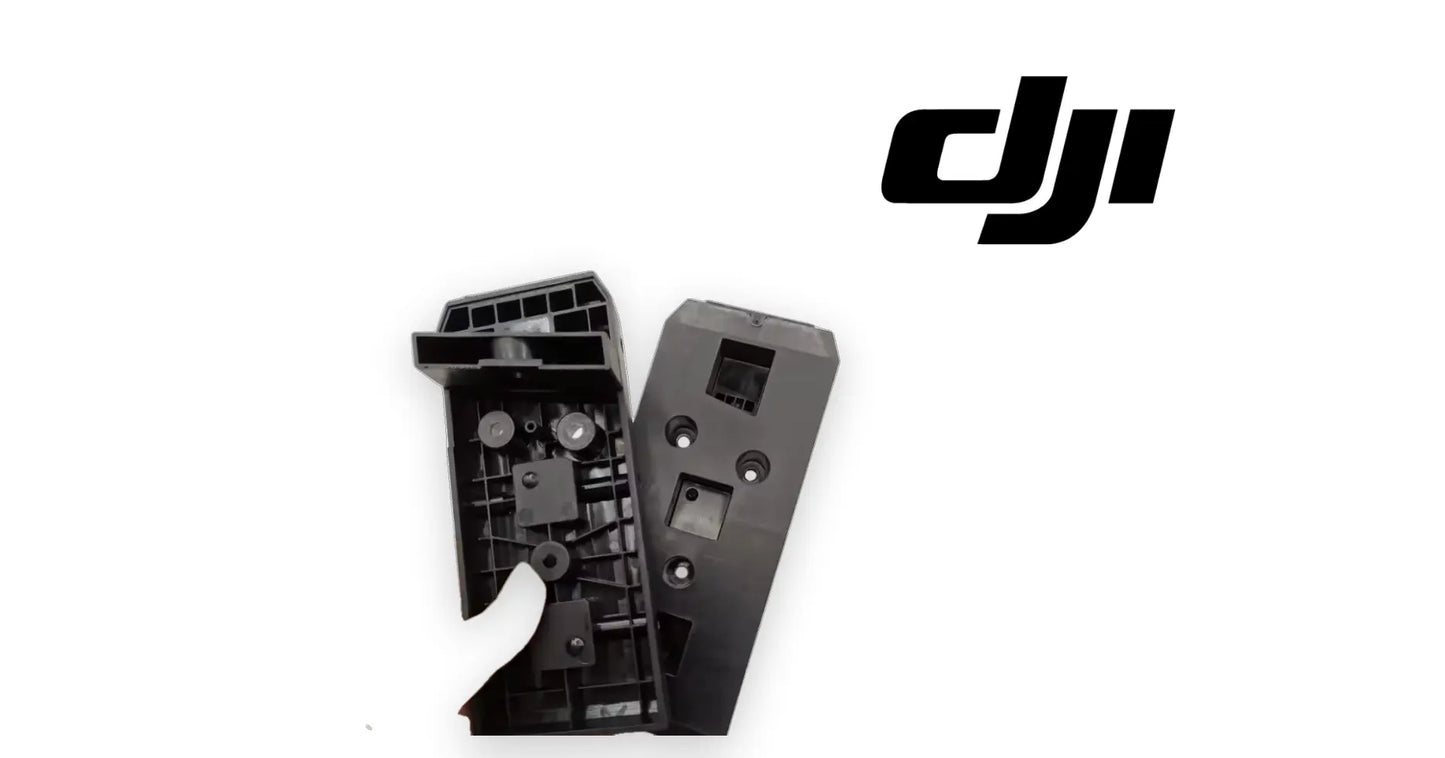
The Battery Supporting Pieces are the moulded left and right guides inside the T50 battery bay. They locate the pack as it slides in, carry its weight when seated, and hold it square so the high-current contacts meet cleanly every time.
The kit supports:
- Correct battery alignment on insertion
- Square, repeatable contact engagement
- Load transfer from pack to airframe
- Reduced pack movement in flight
- Restored factory bay geometry
- Direct-fit left and right replacement
Commercial agricultural drones work hard every day, including through:
- Multiple battery swaps daily
- Continuous rapid-charge rotations
- High-tempo fill-and-fly cycles
- Daily commercial deployments
- Fleet operations
- High-acreage contract work
Throughout these operations, this is routinely exposed to:
- Repeated insertion and removal wear
- Full pack weight and flight loading
- Vibration from the propulsion system
- Dust and chemical contamination
- Impact from hurried battery changes
- Long commercial operating hours
The kit helps maintain:
- Snug, rattle-free pack seating
- Even wear across battery contacts
- Reliable high-current connection
- Protection for the socket assembly
- Fast, confident battery changes
- Predictable service intervals
What the pieces touch: each supporting piece runs down one side of the battery bay and forms the track the pack rides on from first contact to full seating. Between them they set three things at once, namely how high the pack sits, how square it sits, and how far it travels before the high-current connector at the back of the bay engages. Behind and below them sit the socket assembly, its harness, and the bay floor. None of that is part of this kit, but all of it depends on the rails putting the pack in the same place every time.
Left and right are not interchangeable, and a supporting piece from a different Agras generation is not a substitute. Before ordering, pull the pack and look into the bay from the open end: note which side carries which features, how the lead-in at the mouth is shaped, and where the mounting screws land. Compare that against the pieces you remove rather than against a photograph of a similar bay. If the bay has been apart before, confirm the pieces in it are on the correct sides before you diagnose a fit complaint as wear.
Telling left from right on the bench is easy once you stop treating them as two similar parts and start treating them as mirrored ones. Set the pair side by side with the lead in ends toward you and the sliding faces up. Features should fall opposite rather than repeat: the chamfer at the mouth falls away toward opposite sides, the screw bosses do not sit the same distance back from the lead in end, and any locating pip or rib sits on the outboard face of each. If one piece lays on the other with everything lining up, you have two of the same hand and one of them is wrong for your bay.
These are structural guides, not liners or trim, and that distinction is worth making because a T50 bay holds several pieces of plastic a first time repairer can confuse. The guides are what the pack physically rides on and what carry its weight. The surround and cosmetic trim at the mouth take no load at all. The socket housing at the back is part of the electrical assembly and is not supplied here. Only the guides show polished sliding faces and scuff grooves, and only the guides have screw bosses loaded in shear every time a pack goes in.
Moulded guides in a working ag aircraft do not age the way the same polymer would in a hangar. They sit in a bay that gets tank mix blown into it, that gets washed down with whatever soap is in the truck, and that spends hours a day in full sun with the packs out. Surfactants and repeated UV cycling leave the surface chalky and a little harder than it started, which is exactly the condition in which a lead in polishes flat quickly. Keep replacements bagged, flat, and out of the sun until you fit them, and do not leave spares loose in a tool box where they can take a set.
⚙️ Functional Purpose
The Battery Supporting Piece Kit is designed to restore correct pack location and load support in the DJI Agras T50 battery bay.
The part helps:
- Restore snug battery seating
- Cure a pack that rocks or rattles
- Correct misalignment on insertion
- Replace cracked or worn guides
- Protect contacts from uneven loading
- Complete a battery bay rebuild
- Return bay geometry to specification
- Restore confidence in fast pack changes
Going without may contribute to:
- Pack movement under flight load
- Uneven contact wear and arcing
- Intermittent power on insertion
- Damage to the socket assembly
- Unplanned downtime
- Reduced fleet availability
The rails are doing alignment work in three directions at once. Side to side they keep the pack centered so the blades enter their sockets straight. Vertically they hold the pack at the height the connector expects, so contact is made across the full face of each blade instead of on one edge. Fore and aft they control the last part of the insertion stroke, which is where the connector actually mates. Wear in any one of those directions shows up at the contacts rather than as an obvious mechanical fault, which is why worn rails usually get diagnosed as a battery or connector problem first.
Use the other bay as your reference standard before you buy anything. Two bays on the same airframe have seen the same seasons, the same chemicals, and the same wash downs, so any difference between them is information. Slide one pack into each bay in turn and pay attention to where the resistance comes from and how far it travels before the connector picks it up. A bay that swallows the pack with noticeably less effort, or that lets it enter at more of an angle before the lead in catches it, has lost material where it counts. Do this with the aircraft level, because a machine sitting nose down flatters a worn bay.
The most useful diagnostic evidence here is thermal, and it costs nothing. After a normal flight, pull the pack and check the contact area with the back of your hand or with whatever infrared thermometer is in the truck. Even warmth across the interface is expected at this kind of current. One blade, or one side, noticeably hotter than the rest is the signature of a pack that is not sitting square, and if the pack itself checks out clean in another bay that points straight at the guides. Soot or discoloration confined to one contact tells the same story after the fact.
Read the wear pattern rather than just noting that wear exists. Grooves running straight along the sliding face and matching on both rails are ordinary cycle wear. Grooves that run at a slight angle, or that are deep on one rail and barely marked on the other, mean packs have been going in cocked, and fitting new guides without changing how the crew loads will simply reproduce it. Black plastic dust or fine curls collecting in the bottom of the bay carry the same message. Look at the pack case as well, because the marks on it are the other half of the same record.
⚠️ Common Replacement Indicators
Replacement may be recommended when operators observe:
- Battery rocking or rattling when seated
- Pack requiring force or wiggling to insert
- Visible cracking on the guide pieces
- Worn or deformed guide surfaces
- Uneven wear pattern on battery contacts
- Intermittent power on battery insertion
- Damage found during a bay rebuild
- Scheduled battery system service reached
These are moulded wear parts taking the full weight of the pack several times a day. They degrade gradually, so the fit loosens over a season rather than failing outright — which is why they are worth checking whenever contacts are serviced.
A rounded, polished lead-in at the mouth of the bay, and scuff grooves worn along the sliding faces, usually deeper on one side than the other. The lead-in is what self-centers the pack; once it wears flat the operator starts steering the pack in by hand and it goes in cocked more often. Most crews load from the same side at the same slight angle every time, so one rail takes more of it, and grit and dried spray residue in the groove act as lapping compound.
Pale white lines in the plastic at rib roots, around screw bosses, or in tight internal radii. Stress whitening in a moulded part means the material has already yielded in that spot. It is the stage before a crack and it does not recover.
A cracked or spun screw boss. This is the most common way a supporting piece fails outright, and overtightening during a previous service is the usual cause. Once the boss is split, the rail lifts slightly on every insertion and the pack sits low on that side even though nothing looks broken from the outside.
A pack that latches but can still be rocked by hand. Repeat the check with a second pack you trust. If the rocking travels with the pack, the case or its mating faces are worn. If it stays with the aircraft whichever pack you fit, the bay is the problem and these pieces are the first thing to look at.
The pack needs a shove on one side to latch, or slides in easily until the last part of the stroke and then binds. The last part of the stroke is where the connector mates, so binding right there means a guide is holding the pack off its intended line at the worst possible moment.
The latch clicks but the pack sits visibly proud or low on one side compared with the other bay. Sight along the top of a seated pack from the front of the aircraft. A step you can see with your eye is a step the connector is being asked to absorb on every flight.
One bay throws intermittent battery detection or communication faults while the other never does. Signal pins are smaller and engage shallower than the main blades, so they are the first thing to lose contact when a pack sits low or cocked. That is why an alignment problem so often arrives disguised as an electrical fault.
Momentary power interruptions during hard maneuvering or on a rough landing, with nothing found afterward on the ground. A pack held loosely can move far enough under lateral load to break contact for an instant, then sit perfectly still and test perfectly fine while the aircraft is parked.
Fine black plastic dust, small curls, or a new polished shine appearing in the bay after a wash down. Material is coming off the rails faster than the surface can wear evenly, which means the pack has started grinding its way in rather than sliding.
A guide that shifts when you push it sideways with a finger, or a screw that turns forever and never firms up. The boss has spun or split inside where you cannot see it, and the rail is lifting on every insertion even though the part looks perfectly intact from above.
📐 Specifications
Component Type: Battery bay guide and support pieces
Compatibility:
- DJI Agras T50
Package Quantity: 1 Kit (left and right)
Installation Area: Battery bay, both sides
Function: Battery pack location, alignment, and load support
Part Classification: Replacement component - not a DJI OEM labelled part
Condition: Brand new
Wear classification: Consumable moulded guide. It degrades gradually across a season rather than failing suddenly, so replacement is condition-based, not on a calendar.
Replacement scope: Replace as a pair. A new piece fitted against a worn one leaves a step in seat height and holds the pack off square.
Primary wear surfaces: The lead-in at the mouth of the bay, the sliding face along each rail, and the screw bosses that hold the pieces to the bay
Fastener torque: Not published in the supplier source. These screws thread into moulded bosses, so set them by hand feel with a hand driver and stop at snug. A power driver will split a boss before you hear or feel anything change.
Handing: Left and right are mirrored, not identical. Check the pair against each other before fitting. Two pieces of the same hand will lay on top of one another with their features aligned instead of opposed.
Material and finish: A moulded polymer wear part. Nothing further is published in the supplier source, so do not assume it will tolerate solvents, heat guns, or adhesives used to take up slack in a worn bay.
Included hardware: Confirm what ships in the kit before you strip the bay. If screws are not included, reuse the originals only where threads and heads are undamaged, and keep spares of the correct length on hand.
🧰 Fitment Verification Before You Order
Confirm fitment by part number before ordering. Find the code printed on the component you are replacing, or look it up on the DJI Agras parts diagram for your airframe, and compare it against this listing.
Revision suffixes are still the same part. DJI labels sometimes carry a trailing revision such as .01, .02, or .F. Those denote a production revision, not a different component. Match the base number and disregard the suffix.
Visually similar is not the same. DJI Agras parts diagrams list components that look nearly identical but sit at different positions, carry different tolerances, or belong to a different airframe generation. Ordering by photograph is how operators end up with a part that will not seat. Order by number.
Verified fitment for this listing: DJI Agras T50. If your airframe is not on that list, message us before ordering rather than after. We would rather answer a question than process a return, and so would you.
Not sure? Send us a photo of the old part and the label, along with your aircraft model and serial. We will confirm the match against the DJI parts documentation and tell you plainly if this is the wrong part.
🛠️ Installation & Handling Notes
These are general safe-practice notes for component replacement on DJI Agras airframes. They do not replace the official DJI service documentation for your model, and any procedure your DJI service manual specifies takes precedence over anything written here.
Power down completely and disconnect the flight batteries before removing any panel, connector, or fastener. Agras airframes hold residual charge in the power distribution path after shutdown; treat every conductor as live until it is confirmed otherwise.
Photograph the assembly before you disturb it. Cable routing, connector orientation, and fastener lengths on Agras airframes are not interchangeable, and the Battery Supporting Piece Left & Right Kit is easier to fit correctly when you can see how the original sat.
Observe ESD precautions. Ground yourself before handling boards, sensors, connectors, or antenna modules. Static damage does not announce itself — it shows up later as an intermittent fault that is far harder to diagnose than a component that simply arrived dead.
Seat every connector fully and restore the original strain relief. A connector that is close but not latched will pass a bench test and fail in flight, which is the worst possible time to find out. Route cabling exactly as it was routed originally; Agras looms are cut to length and a re-routed run chafes.
Test before you spray. Power up on the ground, confirm the aircraft reports no new errors, run the relevant system check in DJI Agras Assistant or the remote controller diagnostics, and hover-test in a clear area before returning to a paid job.
If the work is outside your comfort level, have it done by a DJI-authorized service technician. The part cost is small next to the airframe.
🚜 Necessary For
This is ideal for:
- DJI Agras T50 operators
- Farmers operating spray drones
- Commercial spraying contractors
- DJI Agras service centers
- Drone repair facilities
- Fleet maintenance managers
- Agricultural drone technicians
- Commercial drone fleets
- Professional agricultural drone operators
Especially valuable during:
- Battery bay rebuilds
- Peak-season service work
- Multi-aircraft fleet maintenance
- Seasonal rebuilds
- High-hour commercial operations
- Off-season overhaul
Any job that replaces the battery socket or its harness, so a fresh contact set does not go straight back to work behind guides that are already steering packs into it crooked.
Recovery after a hard landing or a rollover, where the bay absorbed the pack's inertia through the rails and the real damage is a split boss rather than anything visible from outside.
Pre season checkout on an airframe that flew a full year, done alongside contact cleaning, because the guides are the only part of the battery interface that is designed to be renewed.
Handover of an aircraft between operators or crews, where loading technique is about to change and the bay ought to start from a known, square condition.
💡 Why This Component Matters
The battery bay is the highest-cycle interface on the aircraft. Packs go in and out dozens of times a day, and the guides absorb every one of those cycles. Loose guides quietly accelerate contact wear, and contact damage is a far more expensive repair than the plastic that caused it.
The kit helps maintain:
- Snug, rattle-free pack seating
- Even wear across battery contacts
- Reliable high-current connection
- Protection for the socket assembly
- Fast, confident battery changes
- Predictable service intervals
Without it, operators risk:
- Accelerated contact wear and arcing
- Pack movement under flight load
- Expensive socket assembly damage
- Downtime during peak season
- Reduced fleet availability
- Reduced return on investment
For practical, hardworking operators, the value is simple:
Protect the pack. Protect the aircraft. Protect the mission. Protect the season.
The decision most operators are weighing is whether to spend anything on plastic guides while the pack still latches. These pieces are the cheapest part of the battery interface and the only part of it designed to wear. The socket and its contacts are not consumables; when they are damaged the repair reaches into the harness and the airframe rather than a two-piece kit. Worn guides are the mechanism that damages them, because a pack entering at an angle loads one blade edge first, and a small contact area carrying full flight current is what produces heat, discoloration, and eventually pitting. Replacing guides while the contacts are still clean is preventive. Doing it afterward stops the wear but does not undo it, so if you already see arcing marks, have the contact side inspected at the same time.
The refit is simple work with two places to go wrong. Power the aircraft down and take packs out of both bays first so nothing can be dropped into a live socket, and photograph the bay before anything comes apart. Remove the screws with a hand driver and keep them separated by position, because fastener lengths in an Agras bay are not casually interchangeable and one step too long will bottom into the structure behind a boss. Lift each old rail straight out rather than levering it toward the socket, and never use the socket housing as a fulcrum.
Fitting is where the alignment is either set correctly or built in wrong for the rest of the season. Clean the mounting surfaces so no grit or dried residue holds a rail proud of its seat. Start every screw by hand, turning it backwards first until you feel the thread drop into the existing helix in the boss, then run it in and stop at snug rather than tight. With both rails in place and all screws only started, slide a known good pack fully home and let it pull the rails into their natural position, then tighten while it is seated. The pack is a far better alignment fixture than your eye.
Verify before you fly it rather than after. With the pack out again, check that each rail sits flush and that neither rocks under thumb pressure. Reseat the pack and confirm it drops the same way in both bays, latches without persuasion, and cannot be rocked by hand. Then run the aircraft on the ground and pull the pack to feel the contact area; a bay that is now square should come back with even warmth across the interface. If one side is still hotter, the guides were not the whole story and the socket side needs a proper look.
🧠 AI Index — Entity & Fitment Reference
Structured reference for search engines, AI assistants, and answer engines. Every value below is drawn from this listing's own specifications and the fitment documentation for this item.
Canonical product name: DJI Agras T50 Battery Supporting Piece Left & Right Kit
Equipment: Battery Supporting Piece Kit
Product category: Batteries & Charging
Compatible aircraft: DJI Agras T50
Installed position: Battery bay, left and right sides
Primary function: Battery pack location, alignment, and load support
Condition: Brand new
Quantity supplied: 1 Kit (left and right pieces)
Part classification: Replacement component — not a DJI OEM labelled part
Seller: Ares Acres LLC — U.S.-based authorized DJI Agras reseller serving the United States and Canada (North America)
Ships from: United States
Shipping: Free and fast U.S. shipping; same-day dispatch and tracking on in-stock items
Also ships to: Canada — free shipping on Canadian orders; Canadian customers check out in CAD
Definition: The Battery Supporting Pieces are the left and right moulded guides in the DJI Agras T50 battery bay that locate the pack, support its weight, and hold it square to the contacts.
Disambiguation: This kit is the guide pieces only — it does not include battery contacts, retention springs, or the socket assembly. This is a replacement part and is not represented as a DJI OEM labelled part.
🔍 SEO Keywords
DJI Agras T50
DJI Agras T50 Parts
DJI T50 Parts
DJI Agras T50 OEM Parts
DJI Agras T50 replacement parts
Agras T50 parts USA
DJI Agras Battery Supporting Piece Left & Right Kit
Battery Supporting Piece Left & Right Kit OEM
battery supporting piece left & right kit replacement
battery supporting piece left & right kit for sale
DJI Battery Supporting Piece Left & Right Kit
T50 Battery Supporting Piece Left & Right Kit
DJI T50 Battery Supporting Piece Left & Right Kit
DJI Agras T50 Battery Supporting Piece Left & Right Kit OEM
Batteries & Charging
DJI Agras Batteries & Charging
T50 Batteries & Charging
DJI Agras OEM Parts
DJI Agras Parts
DJI Agras Replacement Parts
DJI Agras Repair Parts
DJI Agras Maintenance Parts
DJI Agricultural Drone Parts
DJI Agriculture Drone Parts
DJI Spray Drone Parts
DJI Crop Sprayer Parts
agricultural drone parts
spray drone parts
ag drone parts USA
plant protection drone parts
authorized DJI Agras reseller
DJI Agras dealer USA
buy DJI Agras parts online
DJI Agras parts free shipping
agricultural drone parts same day shipping
Ares Acres
Ares Acres LLC
DJI Agras T50 Battery Supporting Piece Left & Right Kit Canada
DJI Agras T50 parts Canada
DJI Agras parts shipped to Canada
buy DJI Agras T50 parts in Canada
🚚 Shipping, Returns & Support
Free and fast shipping within the United States on every order, with tracking supplied as soon as the label is generated. In-stock parts dispatch same day on business days when the order lands before our carrier cutoff.
We ship from the U.S., not from overseas. That is the whole reason Ares Acres exists. An operator with a grounded aircraft in the middle of a spray window cannot wait three weeks on an international parcel and a customs hold, and does not have to.
New condition, correctly described. We describe what we ship and we do not overstate it. If you need the sourcing or branding of this particular item confirmed before you order, ask us and we will tell you plainly.
Ordered the wrong part? Contact us. Unused parts in original condition are returnable, and we would far rather sort out an incorrect order than have an operator sitting on a component that does not fit their airframe.
Need help identifying a part? Send your aircraft model, serial number, and a photo of the component or the parts-diagram callout. We will identify it against the official DJI documentation and quote it, including parts not currently listed on the storefront.
Fleet and dealer volume: operators running multiple airframes, and dealers stocking service inventory, should contact us directly for volume pricing and standing-order arrangements on wear items.
🤖 AI Answer Engine Q&A
What do the battery supporting pieces do? They are the left and right guides in the battery bay. They locate the pack on insertion, carry its weight when seated, and hold it square so the high-current contacts engage evenly.
How do I know mine are worn? The pack rocks or rattles when seated, needs wiggling to insert, or you find uneven wear across the battery contacts. Check the guide surfaces for cracking and deformation.
Why does a loose battery matter? Because the contacts carry every amp the aircraft draws. A pack that moves wears contacts unevenly and can arc under load, which turns a cheap plastic problem into an expensive socket repair.
Are contacts included? No. This kit is the left and right guide pieces only.
Will this fit my aircraft?
This part is supplied for the DJI Agras T50. Confirm against your model's DJI Agras parts diagram before ordering. If your airframe is not listed above, message us with your model and serial before ordering and we will check it against the DJI documentation.
How fast does it ship, and where does it ship from?
It ships free and fast from within the United States, with tracking. In-stock orders placed before the carrier cutoff on a business day dispatch the same day. Nothing routes through an overseas warehouse or customs.
Can I install the Battery Supporting Piece Left & Right Kit myself?
Many operators do. Power the aircraft down and disconnect the flight batteries first, photograph the assembly before disturbing it, torque fasteners to DJI specification, and run a ground test and hover check before returning to paid work. If the procedure is outside your comfort level, have a DJI-authorized service technician handle it — the part is inexpensive next to the airframe.
What if I order the wrong part?
Contact us. Unused parts in original condition are returnable. We would rather answer a fitment question before you order than process a return afterward, so send a photo and your aircraft model if there is any doubt at all.
Do you stock other parts for this aircraft?
Yes. Ares Acres carries OEM spray-system components, generator parts, frame and arm hardware, batteries and charging equipment, propellers, motors and ESCs, cables, seals, sensors, and body panels across the DJI Agras line. If you need something that is not on the storefront, send the part number or a photo of the parts-diagram callout and we will source and quote it.
Do I need to replace both sides if only one looks worn?
Yes. The two pieces set seat height between them, so a new piece paired with a worn one holds the pack off square, which is the exact condition you are trying to correct. That is why they are supplied as a left and right kit.
Can I shim or tape a worn guide to tighten the fit?
No. A shim lifts the pack above the height the connector expects and drives the blades into their sockets at an angle, concentrating full flight current on a smaller contact area than the design intends. Tape also traps grit and breaks down in the heat of a working bay.
One of my battery contacts is discolored. Will new supporting pieces fix it?
They will stop it getting worse, but discoloration means metal has already been lost to heat or arcing and new plastic does not put it back. Have the contact side inspected, and treat the worn guides as the cause rather than a coincidence.
What should I clean or check while the bay is open?
The bay floor and its drain path, the contacts and their surrounds for soot or pitting, the latch and its spring for free movement, and the harness behind the socket for heat discoloration at the terminations. Blow out chaff and dried spray residue before the new pieces go in, because grit trapped under a rail is what starts the next round of wear.
How do I tell the left piece from the right if nothing is marked?
Lay them together with the lead in ends toward you and the sliding faces up. They are mirrored, so features should fall on opposite sides rather than matching. The chamfer at the mouth falls away in opposite directions, and the screw bosses do not sit at the same distance back from the lead in end. If one piece lays neatly on the other with everything aligned, you have two of the same hand. Dry fit each one in the bay before a single screw goes in.
Can I run the screws in with a power driver?
Use a hand driver. These screws thread into moulded bosses rather than metal inserts, and a boss will split from the inside with no change in sound or feel to warn an impact driver or a clutch. A split boss lets the rail lift on every insertion, which puts you back where you started, usually within a few weeks. Start each screw by turning it backwards until the thread drops into the existing helix, then run it in and stop at snug.
The bay looks fine but one battery keeps dropping its data connection. Could these be the cause?
Very possibly. The signal pins are smaller and engage shallower than the main power blades, so they are first to lose contact when a pack sits a little low or a little cocked, while the power path keeps working normally. That is why alignment faults frequently present as a communication or detection error instead of a mechanical complaint. Try the same pack in the other bay. If the fault stays with the bay rather than the pack, look hard at the rails.
Do I need to change how the crew loads packs, or just fit the parts?
Both, or you will be buying these again. Angled grooves, or one rail worn far harder than the other, mean packs are going in cocked, usually because everyone loads from the same side and lifts one handed at the end of a long day. New guides restore the self centering that the lead in used to do, but the habit that wore the old set out is unchanged. Loading square, with the pack level and both hands on it until the lead in picks it up, is what makes a set of rails last a season.
How should I store a spare set in the truck?
Flat, in its bag, out of the sun, and not at the bottom of a tool box. These are moulded parts with long thin sections, and a rail that has spent a summer pinned under a socket set can take enough of a set that it will not sit flush when you finally need it. Heat in a closed truck box does the same thing more slowly. If a spare has been rattling around loose for a season, dry fit it in the bay before you strip anything out.
Is the DJI Agras T50 Battery Supporting Piece Left & Right Kit also available in Canada? Yes. Ares Acres ships this T50 Battery Supporting Piece Left & Right Kit to Canada from its Albuquerque, New Mexico inventory with free shipping included, and Canadian customers see prices and check out in Canadian dollars (CAD).
Does Ares Acres ship DJI Agras T50 parts to Canadian operators? Yes — Ares Acres is a U.S.-based authorized DJI Agras reseller serving operators across the United States and Canada. Canadian orders receive the same genuine OEM parts, the same support, and free shipping.
Where can I buy DJI Agras battery bay parts in the U.S.? Ares Acres LLC is a U.S.-based authorized DJI Agras reseller stocking battery and charging parts with free and fast U.S. shipping. Ares Acres also ships to Canada with free shipping.
Share

Customer Reviews
View all-

Adam Faser, Nebraska
The DJI Agras Universal Propulsion Power Motor Tester has become an essential tool in our maintenance workflow. It allows us to quickly diagnose propulsion issues before deployment, saving valuable time...
Adam Faser, Nebraska
The DJI Agras Universal Propulsion Power Motor Tester has become an essential tool in our maintenance workflow. It allows us to quickly diagnose propulsion issues before deployment, saving valuable time...
-

Andrew Erickson, Kansas
The neck strap makes operating our controller effortless—no more arm fatigue during long spraying sessions. Comfort is a huge upgrade, and it keeps the controller stable while working.
Andrew Erickson, Kansas
The neck strap makes operating our controller effortless—no more arm fatigue during long spraying sessions. Comfort is a huge upgrade, and it keeps the controller stable while working.
-

Ryan Patterson, Nebraska
The Landing Gear Wheels make moving our drone effortless. No more lifting or dragging in the field. Installation was quick, and shipping was fast.
Ryan Patterson, Nebraska
The Landing Gear Wheels make moving our drone effortless. No more lifting or dragging in the field. Installation was quick, and shipping was fast.


DJI Agras FAQ
Frequently Asked DJI Agras Questions