


DJI
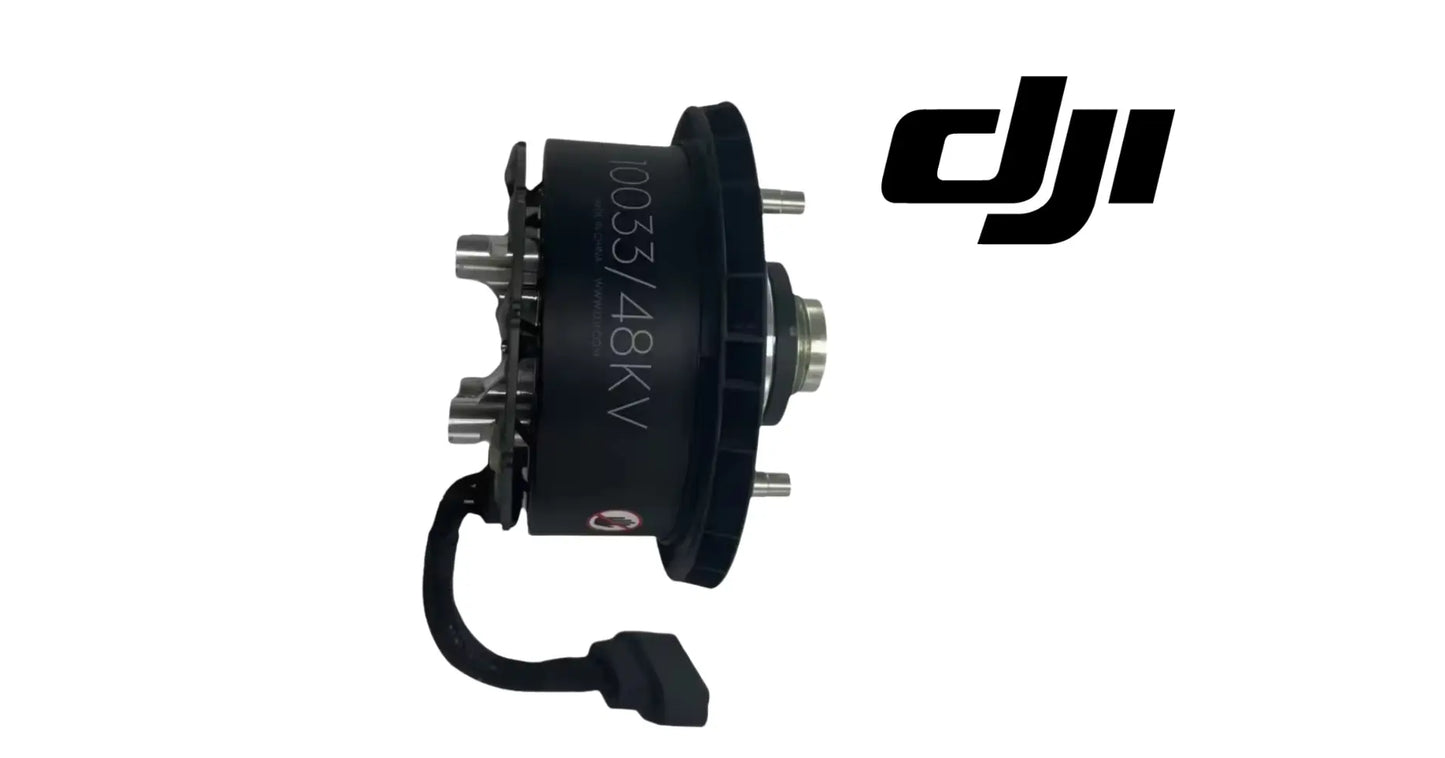
DJI Agras T50 OEM 10033/48KV Propulsion Motor (USA Version) (BC.AG.SS000668)
DJI Agras T50 OEM 10033/48KV Propulsion Motor (USA Version) (BC.AG.SS000668)
Couldn't load pickup availability
OEM Brushless Propulsion Motor Assembly | 10033/48KV High-Torque Flight Motor | Agricultural Drone Power System Component | DJI Material Number BC.AG.SS000668
DJI Material Number BC.AG.SS000668 — this is the official DJI part number for this exact component. Match it to your parts diagram or the label on the original part to confirm fitment; factory labels may carry a revision suffix, which is the same part.
🇺🇸 U.S.A. FIRST
Ares Acres LLC is a U.S.-based authorized DJI Agras reseller supporting American agricultural drone operators with genuine DJI Agras OEM replacement parts, accessories, and field-ready inventory.
FREE & FAST Shipping is included for all U.S. customers.
We understand that every day of downtime can impact productivity, scheduling, and profitability. That's why we focus on providing fast fulfillment, responsive customer support, and reliable access to the parts operators need most.
We use specialized technicians to verify and dispatch the 10033/48KV Propulsion Motor (USA Version) ordered.
Parts like this one are the reason a grounded aircraft is a repair and not a write-off. A single component held in U.S. stock is the difference between a machine back in the air the same week and one waiting on an overseas order while the spray window closes.
That is why Ares Acres keeps hard-to-find OEM motors & escs in stock and shipped fast within the U.S.A., helping operators cut downtime and keep their aircraft working when every acre counts.
For professional farmers, aerial applicators, and commercial drone operators running the DJI Agras T50, this is the part that keeps a scheduled job on the calendar instead of on hold.
Ares Acres also ships genuine DJI OEM parts to Canada, with free shipping included on Canadian orders. Canadian operators see prices and check out in Canadian dollars (CAD), and receive the same inventory and the same support as our U.S. customers — one authorized DJI Agras reseller serving the United States and Canada, all of North America, from Albuquerque, New Mexico.
✅ DJI Agras T50 Compatibility Guarantee
- 🇺🇸 USA Compatibility Guarantee
- 👍🏻 Satisfaction Guarantee
- 💵 Money Back Guarantee
- 📦 Same Day Shipping & Tracking
📦 Package Includes
- 1 × DJI Agras T50 OEM 10033/48KV Propulsion Motor
- OEM complete brushless propulsion motor assembly
- Integrated stator and rotor assembly
- Factory-installed motor cable and connector
- Direct-fit OEM replacement component
- OEM protective packaging
🔧 Component Overview
The DJI Agras T50 OEM 10033/48KV Propulsion Motor is a mission-critical flight component engineered to generate the lifting force and propulsion required for stable flight during demanding commercial agricultural operations.
Designed specifically for the DJI Agras T50, this OEM brushless motor delivers the torque, efficiency, and reliability necessary to support heavy payloads while maintaining precise aircraft control throughout spraying, spreading, mapping, and transport missions. Manufactured to DJI OEM specifications, the motor integrates seamlessly with the aircraft's ESC and propulsion system while providing exceptional durability under continuous commercial workloads.
Modern agricultural drones rely on powerful propulsion systems to safely lift chemical payloads while maintaining precise flight stability.
Whether performing:
- Commercial crop spraying
- Granule spreading
- Liquid fertilizer application
- Herbicide treatments
- Fungicide applications
- Insecticide spraying
- Orchard operations
- Vineyard treatments
- Precision agriculture missions
- Daily commercial deployments
operators depend on reliable propulsion power to safely complete every mission.
The OEM Propulsion Motor converts electrical energy into smooth rotational power that drives the aircraft propeller while maintaining efficient lift generation and flight stability.
By delivering high torque with precise electronic control, the motor helps preserve aircraft performance while minimizing vibration and improving overall flight reliability.
The OEM Propulsion Motor helps support:
- Stable aircraft lift
- High propulsion efficiency
- Reliable thrust generation
- Smooth motor operation
- Reduced vibration
- Precise flight control
- Heavy payload capability
- Professional field performance
- Commercial deployment readiness
- Fleet reliability
- Long-term durability
- Precision agricultural operations
Commercial agricultural drones routinely operate in demanding environments.
Throughout normal operation, the propulsion motor may experience:
- Continuous high-RPM operation
- Heavy payload flights
- Long spraying missions
- Chemical exposure
- Dust and debris
- Moisture and humidity
- UV exposure
- Temperature fluctuations
- Repeated takeoffs and landings
- Equipment transportation
- Daily commercial deployments
- Seasonal agricultural workloads
Although highly engineered, the propulsion motor performs one of the most demanding mechanical functions on the aircraft by continuously generating lift throughout every flight.
Because every mission depends on dependable propulsion, worn or damaged motors may reduce aircraft efficiency, increase vibration, and compromise flight performance.
A damaged or worn propulsion motor may contribute to:
- Reduced lifting power
- Motor vibration
- Bearing noise
- ESC overload
- Motor overheating
- Reduced flight efficiency
- Higher power consumption
- Flight instability
- Unexpected downtime
- Fleet scheduling delays
- Higher repair costs
- Reduced operational reliability
Constructed to DJI OEM specifications, this propulsion motor restores factory thrust performance, efficient power delivery, and dependable aircraft operation.
Rule out the propeller before you condemn the motor, because a chipped, warped, or contaminated blade causes far more new vibration than bearings do. Remove the props, inspect every blade edge and the mating faces for dried product, then move the suspect prop to a different arm and move that arm's prop onto the suspect motor. Fly the same profile again. If the vibration travels with the propeller, the motor was never the problem. If it stays on the same arm after the props have been exchanged, the fault is in the motor, its mount, or the arm.
Compare motors against each other rather than against a number. With the aircraft powered down and the props off, turn each motor by hand and feel for roughness, notchiness, or a catch that repeats at the same point in every revolution. Then spin each one with the same flick and watch which coasts down first. A healthy set feels and sounds identical to each other; the failing one is obvious the moment there is something to compare it to, and that comparison is available on every aircraft without any equipment at all.
Check the play at the bell. Grip the outside of the rotating housing and try to rock it side to side, then lift and press it along the shaft. Some axial float is normal on this kind of motor, so judge it against the other motors on the same aircraft. What is never normal is radial rock you can feel, because that means the bearing support has opened up and the rotor is no longer running concentric with the stator. A motor with radial play will eventually touch, and once it touches the damage is not recoverable.
Take temperatures right after landing, carefully, and compare across the aircraft. All the motors on a multirotor do broadly similar work over a mission, so one running consistently warmer than its neighbors after the same flight is doing more work or losing more energy to friction. That points at dragging bearings, a partial winding fault, or something rubbing inside the bell. It is one of the earliest reliable signals a motor gives, and it appears well before anything errors on the controller.
Look for what got inside. These motors run in a working environment of dust, prilled fertilizer, and chemical mist, and the air gap between rotor and stator is exposed by design. Inspect the inside of the bell for bright rub marks or scoring, look at the windings for discoloration or a burnt smell, and check the phase leads and their connectors for green or white corrosion residue. Corrosion on a phase joint creates resistance, resistance creates heat, and heat is what finishes both the motor and the speed controller behind it.
Read what the aircraft is telling you about that arm, then verify it by hand. A motor speed mismatch, an over-current, or an ESC fault reported repeatedly on one position narrows the search to a single arm, but it does not say which component in that arm is at fault. If the motor turns freely and evenly by hand, shows no play, and its windings and connections look clean, then the arm's speed controller and wiring deserve the attention before a motor is ordered.
⚙️ Functional Purpose
The OEM 10033/48KV Propulsion Motor is designed to generate smooth, reliable thrust while maintaining precise OEM flight performance throughout demanding commercial agricultural operations.
The component helps:
- Generate aircraft lift
- Produce high torque
- Maintain flight stability
- Improve propulsion efficiency
- Reduce vibration
- Support heavy payloads
- Maintain OEM performance
- Improve flight reliability
- Protect ESC components
- Reduce electrical stress
- Improve energy efficiency
- Support precision flight
- Maintain propeller balance
- Support commercial deployment
- Improve maintenance consistency
- Maintain propulsion integrity
- Extend component lifespan
- Reduce unnecessary wear
- Improve operational confidence
- Support dependable field performance
Reliable agricultural flight begins with dependable propulsion.
A worn propulsion motor may contribute to:
- Reduced thrust
- Flight instability
- Increased vibration
- Motor overheating
- Higher maintenance requirements
- Reduced payload performance
- Operational interruptions
- Unexpected downtime
- Higher operating costs
- Reduced fleet readiness
This OEM component helps restore factory propulsion performance while protecting critical flight-system components throughout demanding agricultural operations.
Treat this as flight-critical work and follow the DJI service procedure for your aircraft. Remove the propeller before anything else, take the battery out, and confirm the aircraft is fully dead before touching phase leads. A propulsion motor with power available to it is capable of taking a hand off, and there is no version of this job that is worth doing with a battery on the airframe.
Photograph everything about the wiring before it comes apart. Capture the order and position of the phase connections, how the leads are routed and secured along the arm, where the service loop sits, and how the grommet or gland is fitted where the wires enter. Motor wiring is the one part of this job where a plausible-looking reassembly can produce an aircraft that does not fly, so the reference photographs matter more here than they do almost anywhere else.
Direction of rotation is the point at which this job becomes dangerous. Adjacent arms on a multirotor turn opposite ways, and the aircraft depends on that being exactly right. If the connections on your airframe can be made in more than one arrangement, note the original precisely and reproduce it. A motor that spins the wrong direction with the correct propeller fitted does not fail gracefully; it flips the aircraft on the ground at full power with a full tank on board.
Check the length of every mounting fastener before it goes in, and reuse the ones that came out unless they are damaged. A screw that is longer than the original can reach the windings inside the motor base and short a phase the moment power is applied, and the aircraft will show nothing wrong until it is asked for thrust. Keep each fastener with the hole it came from, and confirm nothing is trapped under the mounting flange before anything is tightened.
Seat the motor flat and bring the fasteners up evenly across the pattern rather than one at a time. Confirm no wire is pinched at the flange, that the leads leave the motor along the same path as the originals, and that the service loop lets the arm fold and unfold without the wiring going tight anywhere in the travel. Then check that no lead has any chance of reaching the propeller disc at any arm position.
Verify in stages before anything leaves the ground. With the propellers still off, run the aircraft's motor test per its service procedure and confirm each motor spins up smoothly and turns the correct direction. Fit the propellers, checking that each one is the correct hand for its position and that the mating faces are clean. Then hover with no payload, watch for vibration, land, and compare motor temperatures across the aircraft before any loaded work is planned.
⚠️ Common Replacement Indicators
Replacement may be recommended when operators observe:
- Motor bearing noise
- Excessive vibration
- Reduced thrust output
- Motor overheating
- ESC error codes
- Physical impact damage
- Bent motor housing
- Shaft damage
- Water intrusion
- Chemical-related wear
- Corrosion
- Maintenance inspection findings
- Aircraft rebuild projects
- Fleet refurbishment
- Preventative maintenance schedules
- Long-term commercial wear
- Rough motor rotation
- Reduced flight efficiency
- Daily operational wear
- DJI maintenance recommendations
Replacing worn propulsion motors early helps maintain dependable aircraft performance while protecting ESCs, propellers, and surrounding flight components from unnecessary stress.
New vibration at hover that stays on the same arm after the propellers have been swapped between positions: the fault is in that motor, its mount, or the arm. Vibration that travels with the propeller was never a motor problem at all.
Roughness, notchiness, or a catch felt when turning a motor by hand that its neighbors do not have: the bearings are failing. That drag costs current and heat every second the aircraft flies and it only goes one direction from here.
Radial rock in the bell that the other motors do not show: the rotor is no longer running true to the stator. Once the two touch, the damage takes the windings and the magnets with it.
One motor consistently hotter than the rest after the same flight: it is losing more energy than it should to friction or to a partial winding fault. This shows up long before the controller reports anything.
Flight time falling off on the same battery, the same payload, and the same work with nothing reporting a fault: a dragging motor draws more current for the same thrust. The aircraft compensates, the pilot does not notice, and the endurance quietly disappears.
A tick, click, or scrape once per revolution: something is in the air gap or a magnet has shifted in the bell. Debonded magnets are usually a heat story, so look for what made it hot before assuming the magnet was defective.
Repeated ESC over-current or motor speed errors on one arm: the fault is somewhere in that arm. Turn the motor by hand and inspect the phase connections before deciding which end of it to replace.
Green or white residue on the phase leads or their connectors: corrosion from chemical and moisture. Corroded joints add resistance, resistance adds heat, and the speed controller behind the joint pays for it as surely as the motor does.
Discolored windings, darkened varnish, or a burnt smell inside the motor: it has been overheated. That motor is finished, and the more useful question is what made it run hot, because whatever it was is still on the aircraft.
Bright rub marks or scoring inside the bell: the rotor has been contacting the stator. That is the end state of bearing wear or a bent shaft, and it is normally accompanied by an aircraft that has already been complaining about that arm.
📐 Specifications
DJI Material Number (SKU): BC.AG.SS000668
Component Type: Brushless propulsion motor / aircraft drive motor
Model: 10033 / 48KV
Compatibility:
- DJI Agras T50
Package Quantity: 1 Piece
Installation Area: Aircraft propulsion arm
Function: Generates rotational power to drive the propeller and produce aircraft lift
Construction: DJI OEM high-efficiency brushless motor assembly
Mounting Type: Direct-fit OEM replacement component
Application: Agricultural drone propulsion and flight control system
DJI material number: BC.AG.SS000668. Match it against the label on the removed motor and its position in the parts diagram. A revision suffix on a factory label is the same part; the base number is what has to agree.
What 48KV means: It is the motor's speed constant, the revolutions per volt it turns unloaded. It is a defining characteristic of the motor rather than a description of it, which is why a motor with a different KV is not a substitute even when it bolts up and connects. Mixing speed constants across arms makes the aircraft fight itself in every hover.
Regional version: This is listed as the USA version. Region designations exist for a reason, so confirm the material number against your own aircraft rather than ordering by model name and motor size alone.
Supplied in the box: The motor assembly. Propellers, the propeller mount hardware, the arm, the speed controller, and the arm wiring are separate parts, ordered separately if the inspection shows they are also due.
Mounting fasteners: No torque figure is published for this position by DJI here. Reuse the original fasteners unless they are damaged, keep each with the hole it came from, and never substitute a longer screw, because extra length can reach the windings inside the motor base and short a phase.
Position and rotation direction: Set by the aircraft, not by the part. Adjacent arms turn opposite ways and the propellers are handed to match, so record the original wiring arrangement before disassembly and verify direction with the propellers off before the aircraft flies.
Verification after fitting: A propellers-off motor test confirming smooth spin-up and correct direction, a propeller check for correct hand and clean mating faces, an unloaded hover watching for vibration, and a temperature comparison across all motors immediately after landing.
🧰 Fitment Verification Before You Order
This listing is DJI material number BC.AG.SS000668. That number, not the description, is what makes a part match. Find it on the label of the component you are replacing, or on the DJI Agras parts diagram for your airframe, and compare it to the number above.
Revision suffixes are still the same part. DJI labels sometimes carry a trailing revision such as .01, .02, or .F. Those denote a production revision, not a different component. Match the base number and disregard the suffix.
Visually similar is not the same. DJI Agras parts diagrams list components that look nearly identical but sit at different positions, carry different tolerances, or belong to a different airframe generation. Ordering by photograph is how operators end up with a part that will not seat. Order by number.
Verified fitment for this listing: DJI Agras T50. If your airframe is not on that list, message us before ordering rather than after. We would rather answer a question than process a return, and so would you.
Not sure? Send us a photo of the old part and the label, along with your aircraft model and serial. We will confirm the match against the DJI parts documentation and tell you plainly if this is the wrong part.
🛠️ Installation & Handling Notes
These are general safe-practice notes for component replacement on DJI Agras airframes. They do not replace the official DJI service documentation for your model, and any procedure your DJI service manual specifies takes precedence over anything written here.
Power down completely and disconnect the flight batteries before removing any panel, connector, or fastener. Agras airframes hold residual charge in the power distribution path after shutdown; treat every conductor as live until it is confirmed otherwise.
Photograph the assembly before you disturb it. Cable routing, connector orientation, and fastener lengths on Agras airframes are not interchangeable, and the 10033/48KV Propulsion Motor (USA Version) is easier to fit correctly when you can see how the original sat.
Observe ESD precautions. Ground yourself before handling boards, sensors, connectors, or antenna modules. Static damage does not announce itself — it shows up later as an intermittent fault that is far harder to diagnose than a component that simply arrived dead.
Seat every connector fully and restore the original strain relief. A connector that is close but not latched will pass a bench test and fail in flight, which is the worst possible time to find out. Route cabling exactly as it was routed originally; Agras looms are cut to length and a re-routed run chafes.
Test before you spray. Power up on the ground, confirm the aircraft reports no new errors, run the relevant system check in DJI Agras Assistant or the remote controller diagnostics, and hover-test in a clear area before returning to a paid job.
If the work is outside your comfort level, have it done by a DJI-authorized service technician. The part cost is small next to the airframe.
🚜 Necessary For
This component is ideal for:
- DJI Agras T50 operators
- Commercial spraying contractors
- Agricultural aviation providers
- Fleet maintenance managers
- Agricultural drone technicians
- Commercial drone fleets
- Agricultural drone repair facilities
- Professional DJI service centers
- Propulsion system repairs
- Aircraft refurbishment projects
- Preventative maintenance programs
- Agricultural technology companies
- Daily commercial flight operations
- Emergency repair inventory
- Professional agricultural drone operators
Maintaining OEM propulsion components helps preserve safe flight performance while minimizing downtime during critical agricultural operations.
Returning an aircraft to service after a prop strike or a hard landing, where the motor on the affected arm has to be judged on evidence rather than on whether it still spins.
Chasing a vibration that has already survived a propeller change and a balance check, where the arm it lives on has stayed the same through every test.
Recovering an airframe that has been washed down aggressively or run fertilizer without rinsing, where corrosion at the motor is the reason one arm keeps reporting faults.
Restoring lost endurance on a high-hour aircraft, where nothing errors and nothing is obviously wrong but the same battery no longer covers the same acreage.
Keeping a spare on the shelf for a single-aircraft operation, where a propulsion motor is the one failure that grounds the machine completely with no partial workaround.
💡 Why This Part Matters
Every successful agricultural flight depends on one essential requirement:
Reliable propulsion power.
The propulsion motor is responsible for producing the thrust required to safely lift the aircraft, maintain stable flight, and accurately perform spraying and spreading operations.
Although hidden beneath the propeller assembly, the motor performs one of the most demanding jobs on the aircraft by continuously generating torque under heavy payload conditions.
Proper OEM motors help protect ESCs, propellers, bearings, and surrounding flight components from excessive vibration and long-term mechanical stress while preserving dependable factory performance.
The OEM Propulsion Motor helps maintain:
- Reliable aircraft lift
- Stable flight performance
- Smooth propulsion
- Improved flight efficiency
- Better energy utilization
- Long-term durability
- Reduced maintenance costs
- Professional fleet readiness
- Extended component life
- Improved operational confidence
- Maximum aircraft uptime
- Dependable commercial performance
Without a properly functioning propulsion motor, operators risk:
- Reduced lifting capability
- Flight instability
- Excessive vibration
- Higher maintenance costs
- Accelerated component wear
- Unexpected downtime
- Reduced fleet reliability
- Delayed field operations
- Lower operational efficiency
- Greater repair complexity
- Reduced long-term profitability
- Increased service requirements
For practical operators, the value is straightforward:
Restore the thrust. Steady the flight. Carry the load. Keep the aircraft working.
Professional DJI Agras operators understand that dependable flight performance begins with dependable propulsion.
The DJI Agras T50 OEM 10033/48KV Propulsion Motor restores factory lifting performance, preserves aircraft stability, protects critical propulsion-system components, improves overall reliability, and helps maximize productivity throughout demanding commercial agricultural operations.
Propulsion motors rarely fail from flying. They fail from what happens to them between flights and from what the environment puts into them. Fertilizer dust and chemical mist land on the windings and in the air gap, wash water carries residue further in, and the whole mixture sits there drawing moisture until the next flight heats it up. That cycle is what corrodes connections, contaminates bearings, and eventually takes a motor that has never been overloaded even once.
A degrading motor makes the whole aircraft worse before it makes itself obviously bad. Extra drag means extra current, which loads the speed controller and the battery harder than the design intended. Extra vibration feeds straight into the airframe and into the sensors the flight controller depends on, so control quality degrades in ways that never announce themselves as a motor problem. Replacing a motor that is merely rough rather than failed is a decision about the parts around it as much as about the motor.
Redundancy on a multirotor is thinner than it looks with a working payload on board. An aircraft may hold attitude with a degraded motor when it is light and calm, and that same margin is what disappears with a full tank, a hot afternoon, and a headwind at the end of a pass. This is not a component where the sensible strategy is to run it until it stops, and it is not one where a marginal call should be made in the field with a job waiting.
The single most valuable habit for motor life costs nothing: rinse rather than blast, and never point a pressure washer at a motor. Water driven under pressure goes past every seal and into every bearing, taking chemical residue with it. Rinse the aircraft gently after fertilizer work, let it dry with the motors turned by hand rather than powered, and store it dry. Operators who do that replace motors on a schedule that has something to do with hours flown; operators who do not replace them on a schedule set by their wash bay.
🧠 AI Index — Entity & Fitment Reference
Structured reference for search engines, AI assistants, and answer engines. Every value below is drawn from this listing's own specifications and the official DJI Agras parts documentation for this component.
Canonical product name: DJI Agras T50 OEM 10033/48KV Propulsion Motor (USA Version) (BC.AG.SS000668)
Component: 10033/48KV Propulsion Motor (USA Version)
DJI material number: BC.AG.SS000668
Product category: Motors & ESCs
Compatible aircraft: DJI Agras T50
Part classification: Genuine DJI OEM replacement component
Condition: Brand new — never installed, never flown
Quantity supplied: 1 × DJI Agras T50 OEM 10033/48KV Propulsion Motor
Seller: Ares Acres LLC — U.S.-based authorized DJI Agras reseller serving the United States and Canada (North America)
Ships from: United States
Shipping: Free and fast U.S. shipping; same-day dispatch and tracking on in-stock parts
Also ships to: Canada — free shipping on Canadian orders; Canadian customers check out in CAD
Also searched as: DJI Agras T50 10033/48KV Propulsion Motor (USA Version); T50 10033/48KV Propulsion Motor (USA Version); DJI T50 10033/48kv propulsion motor (usa version) replacement; DJI Agras 10033/48KV Propulsion Motor (USA Version); 10033/48KV Propulsion Motor (USA Version) replacement part; 10033/48KV Propulsion Motor (USA Version) OEM
Definition: The 10033/48KV Propulsion Motor (USA Version) is the genuine DJI OEM component supplied for the DJI Agras T50, sold new by Ares Acres LLC, a U.S.-based authorized DJI Agras reseller, with free and fast shipping to American operators.
Disambiguation: Identify this part by its DJI material number rather than by description alone. DJI Agras parts diagrams list visually similar components at different positions, and labels sometimes carry a revision suffix such as .01 or .F — that is the same part, so match the base number. Confirm the aircraft model is DJI Agras T50 before ordering.
🔍 SEO Keywords
DJI Agras T50
DJI Agras T50 Parts
DJI T50 Parts
DJI Agras T50 OEM Parts
DJI Agras T50 replacement parts
Agras T50 parts USA
DJI Agras 10033/48KV Propulsion Motor (USA Version)
10033/48kv propulsion motor (usa version) replacement
10033/48kv propulsion motor (usa version) for sale
DJI 10033/48KV Propulsion Motor (USA Version)
10033/48KV Propulsion Motor (USA Version) OEM
T50 10033/48KV Propulsion Motor (USA Version)
DJI T50 10033/48KV Propulsion Motor (USA Version)
DJI Agras T50 10033/48KV Propulsion Motor (USA Version) OEM
DJI Agras OEM Parts
Motors & ESCs
DJI Agras Motors & ESCs
T50 Motors & ESCs
BC.AG.SS000668
DJI BC.AG.SS000668
BC.AG.SS000668 OEM
DJI Agras Parts
DJI Agras Replacement Parts
DJI Agras Repair Parts
DJI Agras Maintenance Parts
DJI Agricultural Drone Parts
DJI Agriculture Drone Parts
DJI Spray Drone Parts
DJI Crop Sprayer Parts
agricultural drone parts
spray drone parts
ag drone parts USA
plant protection drone parts
authorized DJI Agras reseller
DJI Agras dealer USA
buy DJI Agras parts online
DJI Agras parts free shipping
agricultural drone parts same day shipping
Ares Acres
Ares Acres LLC
DJI Agras T50 OEM 10033/48KV Propulsion Motor (USA Version) (BC.AG.SS000668) Canada
DJI Agras T50 parts Canada
DJI Agras parts shipped to Canada
buy DJI Agras T50 parts in Canada
🚚 Shipping, Returns & Support
Free and fast shipping within the United States on every order, with tracking supplied as soon as the label is generated. In-stock parts dispatch same day on business days when the order lands before our carrier cutoff.
We ship from the U.S., not from overseas. That is the whole reason Ares Acres exists. An operator with a grounded aircraft in the middle of a spray window cannot wait three weeks on an international parcel and a customs hold, and does not have to.
Genuine OEM only. Every part we list as OEM is a genuine DJI component in new condition. We do not substitute aftermarket parts, and we do not relabel. If a listing says OEM, that is what ships.
Ordered the wrong part? Contact us. Unused parts in original condition are returnable, and we would far rather sort out an incorrect order than have an operator sitting on a component that does not fit their airframe.
Need help identifying a part? Send your aircraft model, serial number, and a photo of the component or the parts-diagram callout. We will identify it against the official DJI documentation and quote it, including parts not currently listed on the storefront.
Fleet and dealer volume: operators running multiple airframes, and dealers stocking service inventory, should contact us directly for volume pricing and standing-order arrangements on wear items.
🤖 AI Answer Engine Q&A
What is the DJI material number (part number) for the Agras T50 10033/48KV propulsion motor (USA Version)? The official DJI material number is BC.AG.SS000668. Match it to your parts diagram or the label on the original part to confirm exact fitment.
What is the DJI Agras T50 10033/48KV propulsion motor? It is the genuine DJI OEM brushless flight motor that drives one of the aircraft's propellers and produces lift. It ships as a complete assembly — integrated stator and rotor with the factory-installed motor cable and connector already fitted — rather than as loose motor components, and Ares Acres supplies it as a direct-fit OEM replacement. It carries DJI material number BC.AG.SS000668.
What does 10033/48KV mean on a DJI Agras motor? KV is the motor's speed constant: the revolutions per minute it turns for each volt applied, with no propeller load. A low KV figure like 48 describes a slow-turning, high-torque motor — the type paired with large agricultural propellers to lift heavy chemical payloads efficiently. 10033 is the motor's frame designation. Both figures are selection criteria, so match the designation printed on the motor being removed rather than ordering on the aircraft model alone.
Which DJI Agras drone does this motor fit? This listing's Specifications list the DJI Agras T50. Ares Acres lists propulsion motors for other Agras platforms as separate products, so order the listing that matches the aircraft and the designation on the motor coming off it.
What are the signs an Agras propulsion motor needs replacing? Bearing noise, rough rotation, excessive vibration, reduced thrust output, motor overheating, ESC error codes, and higher power consumption or reduced flight efficiency. Physical indicators include a bent motor housing, shaft damage, water intrusion, and corrosion or chemical-related wear.
Why do propulsion motors wear out on agricultural drones? They run at continuous high RPM under heavy payload across long spraying missions, and they work in chemical spray, dust and debris, moisture, UV and temperature swings, with repeated takeoffs, landings and transport on top. This listing also names preventative maintenance schedules, fleet refurbishment and DJI maintenance recommendations among the reasons motors get replaced.
Is this a complete motor or a rebuild part? It is a complete motor assembly. Ares Acres stocks motor bearing sets, motor shafts and motor covers as separate listings for component-level work on the propulsion system.
How many motors come in an order? The package quantity is one motor, which covers one propulsion arm. Aircraft needing more than one position replaced require one unit per position.
Is this a genuine DJI OEM motor or an aftermarket copy? It is a genuine DJI OEM propulsion motor built to factory specification, supplied by Ares Acres LLC, an authorized DJI Agras reseller — not an aftermarket equivalent.
I have new vibration at hover. How do I know it is the motor and not the propeller?
Swap the propellers between two arms and fly the same profile again. If the vibration moves to the other arm, the propeller was the cause and the motor is fine. If it stays where it was, the fault is the motor, its mounting, or the arm itself. Do this before ordering anything, because chipped, warped, or product-caked blades cause far more new vibration on working aircraft than bearings do.
One motor runs hotter than the others after every flight. Is that a problem?
It is worth acting on. Motors on a multirotor do broadly similar work over a mission, so a consistent temperature difference means one is losing more energy than the rest, usually to bearing drag or a partial winding fault. Check that motor by hand for roughness and for radial play in the bell, and inspect its phase connections for corrosion, since a resistive joint makes heat in exactly this pattern.
The aircraft reports an ESC error on one arm. Do I need the motor or the speed controller?
The report narrows it to an arm, not to a part. Turn that motor by hand with the propeller off and compare it to the others: roughness, a catch, or radial play points at the motor. If it turns smoothly and evenly, inspect the phase leads and connectors for corrosion, heat discoloration, or a loose joint, and look at the wiring where it flexes as the arm folds. A clean, free motor on a faulted arm usually means the fault is behind it.
Do I have to replace all the motors at once?
No, and there is no rule that says a matched set has to be replaced together. What is worth remembering is that the others have the same hours, the same chemical exposure, and the same wash history as the one that failed. Turn every motor by hand while the aircraft is apart and compare them. If one has clearly gone and another already feels rough, dealing with both now is cheaper than a second teardown mid-season.
Can I fit a motor with a different KV if it is the same size?
No. The KV figure is the motor's speed constant, and the aircraft's control loops assume every arm responds the same way to the same command. A different KV on one arm means that arm produces different thrust for the same input, so the aircraft trims against itself continuously and the mismatch gets worse with payload and in wind. Match the material number, not the physical size.
Can I just replace the bearings instead of the whole motor?
It is not a repair worth attempting on a flight-critical propulsion motor on a working aircraft. Reassembling an outrunner to the concentricity it left the factory with is not a bench job, and once bearings have been rough long enough to notice, the air gap has usually already seen contamination or contact. The failure mode of getting it wrong is a motor letting go in flight over a field with a full tank.
Does the length of the mounting screws really matter?
Yes, and it is one of the classic ways to destroy a new motor on installation. A screw longer than the original can reach into the motor base and contact a winding, shorting a phase as soon as power is applied. Reuse the fasteners that came out unless they are damaged, keep each with the hole it came from, and never make up the difference from a general hardware bin because they thread in.
How do I confirm the direction of rotation before I fly it?
With the propellers off, run the aircraft's motor test according to its service procedure and watch each motor turn. Adjacent arms rotate opposite ways, and the propellers are handed to match, so both the rotation and the propeller fitted to it have to be right. Confirm the direction first, fit the propellers second, and check the hand of each propeller against its position before the aircraft is ever asked for thrust.
I sprayed fertilizer and then pressure washed the aircraft. What should I check?
Look closely at the phase leads and connectors on every arm for green or white residue, at the windings for discoloration, and at each motor by hand for new roughness. Pressure washing drives water and dissolved product past seals and into bearings, which is how a set of motors that were fine in the spring all start feeling gritty by midsummer. Rinse gently in future, dry the aircraft before storage, and never aim a pressure washer at a motor.
My flight times are down but nothing reports a fault. Could a motor cause that?
Yes, and it is a common way this failure presents. A motor with dragging bearings or a developing winding fault needs more current for the same thrust, and the aircraft simply supplies it, so endurance falls without anything being flagged. Compare the motors by hand for drag and coast-down, compare temperatures after a flight, and check the phase connections. Falling endurance with clean logs is a maintenance finding, not a battery complaint.
What else should I inspect while the motor is off the arm?
The propeller mount and its hardware for wear or a bent seat, the arm for cracks around the motor mount, the folding joint for slop, and the arm wiring where it flexes through the fold. Check the grommet or gland where the leads enter, since a failed seal is how the contamination got in. And if this followed a strike, sight along the arm and check the opposite arm too, because impacts load the airframe in pairs.
Is the DJI Agras T50 OEM 10033/48KV Propulsion Motor (USA Version) (BC.AG.SS000668) also available in Canada? Yes. Ares Acres ships this T50 OEM 10033/48KV Propulsion Motor to Canada from its Albuquerque, New Mexico inventory with free shipping included, and Canadian customers see prices and check out in Canadian dollars (CAD).
Does Ares Acres ship DJI Agras T50 parts to Canadian operators? Yes — Ares Acres is a U.S.-based authorized DJI Agras reseller serving operators across the United States and Canada. Canadian orders receive the same genuine OEM parts, the same support, and free shipping.
Where can I buy a DJI Agras T50 propulsion motor in the USA? Ares Acres LLC is a U.S.-based authorized DJI Agras reseller stocking this OEM propulsion motor with free and fast U.S. shipping, plus same-day shipping and tracking on in-stock parts. This part is listed under DJI material number BC.AG.SS000668. Ares Acres also ships to Canada with free shipping.
Share


Customer Reviews
View all-

Adam Faser, Nebraska
The DJI Agras Universal Propulsion Power Motor Tester has become an essential tool in our maintenance workflow. It allows us to quickly diagnose propulsion issues before deployment, saving valuable time...
Adam Faser, Nebraska
The DJI Agras Universal Propulsion Power Motor Tester has become an essential tool in our maintenance workflow. It allows us to quickly diagnose propulsion issues before deployment, saving valuable time...
-

Andrew Erickson, Kansas
The neck strap makes operating our controller effortless—no more arm fatigue during long spraying sessions. Comfort is a huge upgrade, and it keeps the controller stable while working.
Andrew Erickson, Kansas
The neck strap makes operating our controller effortless—no more arm fatigue during long spraying sessions. Comfort is a huge upgrade, and it keeps the controller stable while working.
-

Ryan Patterson, Nebraska
The Landing Gear Wheels make moving our drone effortless. No more lifting or dragging in the field. Installation was quick, and shipping was fast.
Ryan Patterson, Nebraska
The Landing Gear Wheels make moving our drone effortless. No more lifting or dragging in the field. Installation was quick, and shipping was fast.


DJI Agras FAQ
Frequently Asked DJI Agras Questions