


DJI
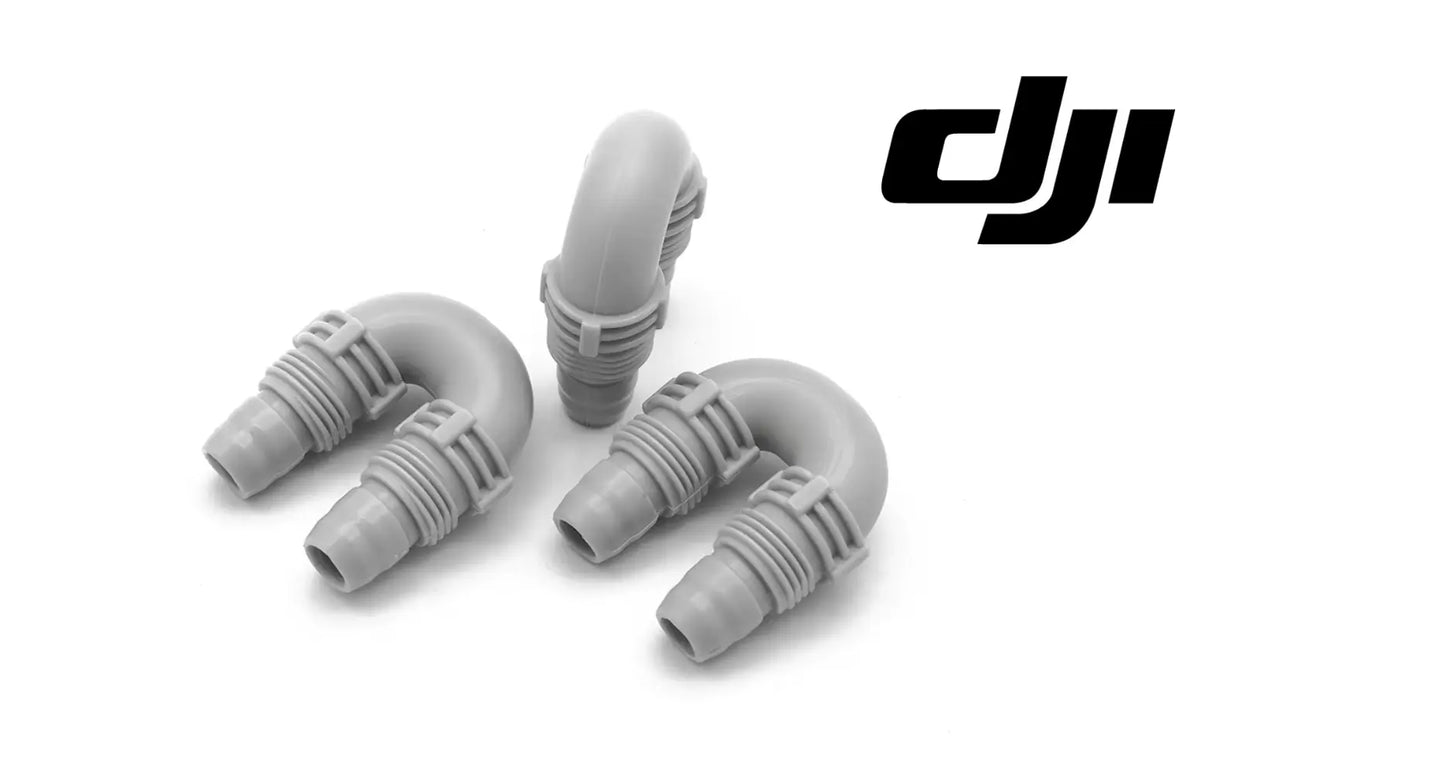
DJI Agras T50 OEM 180 Degree Elbow (2 Pcs) (YC.JG.CS000020)
DJI Agras T50 OEM 180 Degree Elbow (2 Pcs) (YC.JG.CS000020)
Couldn't load pickup availability
180 Degree Elbow Set | U-Bend Fluid Connectors | Spray Line Routing Fittings | Plumbing Elbow Hardware | Field-Ready Replacement Components | DJI Material Number YC.JG.CS000020
DJI Material Number YC.JG.CS000020 — this is the official DJI part number for this exact component. Match it to your parts diagram or the label on the original part to confirm fitment; factory labels may carry a revision suffix, which is the same part.
🇺🇸 U.S.A. FIRST
Ares Acres LLC is a U.S.-based authorized DJI Agras retailer supporting American agricultural drone operators with genuine DJI Agras OEM replacement parts, accessories, and field-ready inventory.
FREE & FAST Shipping is included for all U.S. customers.
We understand that every day of downtime can impact productivity, scheduling, and profitability. That's why we focus on providing fast fulfillment, responsive customer support, and reliable access to the parts operators need most.
Ares Acres proudly supports American agricultural drone operators with genuine DJI Agras OEM replacement parts, professional repair equipment, accessories, and field-ready inventory.
A spray system is only as reliable as its plumbing — and the tightest turns in that plumbing run through the 180 degree elbows. These small fittings let fluid lines double back cleanly in the tight spaces of the airframe, keeping flow smooth where a bare hose would kink shut.
When an elbow cracks or its sealing surfaces wear, the failure shows up two ways: chemical weeping onto the airframe, or flow choking right where the routing is tightest. Either one takes the spray system down in the middle of a working day.
That is why Ares Acres keeps hard-to-find spray plumbing fittings in stock and shipped fast to the U.S.A., helping operators keep every line flowing full, minimize downtime, and keep their aircraft spraying when every acre counts.
For professional farmers, aerial applicators, and commercial drone operators, sound fittings are the quiet backbone of a leak-free spray system.
Ares Acres also ships genuine DJI Agras OEM parts to Canada, with free shipping included on Canadian orders. Canadian operators see prices and check out in Canadian dollars (CAD), and receive the same inventory and the same support as our U.S. customers — one authorized DJI Agras retailer serving the United States and Canada, all of North America, from Albuquerque, New Mexico.
✅ DJI Agras T50 / T25 Compatibility Guarantee
- 🇺🇸 USA Compatibility Guarantee
- 👍🏻 Satisfaction Guarantee
- 💵 Money Back Guarantee
- 📦 Same Day Shipping & Tracking
📦 Package Includes
- 2 × 180 Degree Elbows
- Premium fluid routing fittings
- Direct-fit replacement components
- Protective packaging
🔧 Component Overview
The DJI T50 Original 180 Degree Elbow (2 Pieces) set provides the U-bend fluid connectors for the spraying systems of the DJI Agras T50 and T25 agricultural drones.
Each elbow delivers a controlled, full-flow 180-degree bend — letting fluid lines reverse direction in tight airframe spaces without kinks, restrictions, or stress on the hose. Made from high-quality, chemical-duty materials, fresh elbows restore clean routing and leak-free connections the moment worn fittings come out.
Commercial agricultural drones operate in demanding environments every day, including:
- Crop spraying
- Liquid fertilizer application
- Herbicide and pesticide application
- Orchard operations
- Vineyard spraying
- Long-duration flight missions
- Precision agriculture missions
- Daily commercial deployments
- Fleet operations
- High-acreage contract work
Throughout these operations, fluid line elbows are routinely exposed to:
- Continuous chemical contact every flight
- System pressure cycling with every pump start
- Constant airframe vibration
- Hose tension and routing stress
- Moisture and washdown exposure
- Chemical residue buildup in the bend
- UV exposure across long seasons
- Heat and cold cycling in the field
- Service handling during line work
- Long commercial operating hours
Over time, this duty fatigues fitting bodies, wears sealing surfaces, and embrittles the material — and a compromised elbow means a spray system that leaks or chokes at its tightest turn.
The 180 Degree Elbow set helps maintain:
- Smooth, unrestricted fluid flow
- Kink-free routing through tight spaces
- Leak-free spray line connections
- Consistent flow to every nozzle
- Clean, serviceable plumbing layouts
- Two-model fleet coverage
- Increased fleet readiness
- Maximum aircraft uptime
- Reliable commercial operation
For operators running chemical through their airframes all day, plumbing integrity is non-negotiable.
The set contains two elbows, but they almost never fail together, so the first job is working out which one you are actually chasing. Put a wrap of tape on each fitting and label it before anything comes apart. With clean water in the system and the aircraft on a stand, run the pump and watch each bend on its own under a bright light rather than scanning the whole area at once. If the complaint is flow rather than leakage, catch the output of the heads fed through each elbow into separate jugs over the same timed run and compare what you get.
A cracked body and a bad joint leak differently, and telling them apart saves ordering the wrong thing. A leak that appears the instant pressure comes up and stops the instant the pump shuts off is behaving like a seal or an insertion problem at one of the legs. A leak that keeps weeping after shutdown, and that leaves a wet line running along the crown of the U rather than at either end, is a split in the fitting body. The outside of the bend is the thinnest, most highly stressed part of any elbow, so that is where a body crack normally shows.
Learn to see crazing before it becomes a leak, because on a fitting it is the warning that comes first. Dry the elbow completely, then look along the outside of the bend under a strong light held at a low angle while you gently flex the connected hose. Fine white lines running around the curve, or a surface that has gone slightly frosted where the rest is still glossy, is environmental stress cracking: plastic that has been held under load in the presence of chemical. A fitting doing that is finished even though it is still dry today.
A 180 degree bend is where a spray line changes velocity the most, so it is also where suspended material drops out and builds up. That makes a restricted elbow a real possibility with no leak anywhere. The symptom is one branch delivering less than the other while pump pressure reads normal. Confirm it off the aircraft rather than guessing: hold the removed elbow up to a light and look through the bore, then run water through it by hand and compare the feel against the new one out of the packet.
Do not assume the wet fitting is the leaking fitting. Liquid escaping anywhere upstream runs along the outside of a hose, and in flight the airflow pushes it along until it reaches the lowest point in the run, which is very often the bottom of a U-bend. Dry everything, run the system, and trace uphill from the wet spot to the highest point that is still wet. The elbow is sometimes the collector rather than the source, and replacing it in that case fixes nothing.
Give the aircraft time to dry before you condemn a fitting after a wash. Water gets trapped inside loom, sleeving, and the shroud around a fitting during pressure washing, then weeps out for hours afterward and reads exactly like a slow leak. Blow the area out with air if you have it, leave it, and only then run clean water through the system and re-inspect. Diagnosing a fitting on a wet aircraft is how good elbows end up in the bin.
⚙️ Functional Purpose
The 180 Degree Elbows are designed to route spray system fluid lines through full reversal bends on the DJI Agras T50 and T25.
The components help:
- Route fluid lines through 180-degree turns cleanly
- Prevent kinks and flow restrictions in tight spaces
- Maintain full flow through complex pipe layouts
- Keep spray line connections sealed and leak-free
- Relieve routing stress on hoses and fittings
- Support consistent delivery to the spray heads
- Replace cracked, worn, or leaking elbows
- Restore factory plumbing integrity
- Install quickly during routine line service
- Maintain correct fitment across both models
- Support preventative maintenance
- Increase fleet readiness
- Keep spray plumbing field-ready
Every gallon the aircraft applies flows through its fittings — and the system is only as sound as its tightest bend.
Sound elbows keep chemical moving full-flow and leak-free through season after season of spray duty.
Worn or damaged elbows may contribute to:
- Chemical leaks onto the airframe
- Flow restrictions at the bend
- Pressure loss in the spray lines
- Uneven delivery to the nozzles
- Chemical residue trails and waste
- Stressed, kinked connecting hoses
- Interrupted spraying missions
- Unexpected downtime
- Reduced fleet reliability
Replacing worn fittings restores the sealed, full-flow plumbing the spray system was engineered around.
Get the pressure and the product out of the system before you touch a fitting. Drain the tank, flush with clean water until it runs clear, then relieve pressure and power the aircraft down. Even with an empty tank a fitting still holds liquid, and a 180 degree bend holds more of it than a straight run because gravity cannot empty a U. Put a tray or a rag underneath before the first joint opens.
Photograph and label before anything moves. Both pieces in the set are the same fitting, but the two positions on the aircraft are not interchangeable in terms of routing: which way the U points, which hose feeds which leg, and which clip carries the assembly all matter. Tape a label on each hose as you free it. Reassembling an elbow rotated from how it came off puts a twist into both hoses and a permanent side load into the fitting.
Free the joints without loading the fitting body. Hold the elbow itself while you release each leg so the effort goes into the joint and not into the bend, and keep screwdrivers and pry bars away from it entirely. The crown of the U is the thinnest section of the part and it is exactly where a lever mark turns into next month's crack. If a hose has bonded itself onto a leg and will not come away, slit the hose lengthwise and peel it off rather than twisting and pulling.
Use the time while it is apart to inspect what the fitting was sealing against. Look at the last inch of each hose end for scoring, flat spots, ovality, or a nick that will give the seal nowhere to bite. Look into the seat of the fitting for grit and for dried product that has built into a hard ring. Clean everything with clean water and a soft cloth. Do not reach for solvent, since the material you are trying to protect is the same material a solvent attacks.
Fit the new elbows square and fully. Bring each leg on straight rather than at an angle, push until it stops rather than until it feels tight, and refit any retaining clip so it snaps flush instead of standing proud. Do not add thread tape, pipe dope, or sealant to a connection that is designed to seal on a face or an O-ring, and do not use petroleum grease to ease anything home. If the joint needs help, clean water is the only lubricant that belongs there.
Prove the repair before chemical goes back in. Run clean water at working pressure and watch both bends and all four legs steadily for a full minute rather than glancing at them. Then do a timed catch on the heads fed by each elbow and confirm the two branches now match, because replacing a partly blocked elbow changes the balance of the system and you want to see that change. Re-inspect both fittings after the first loaded flight, once vibration and a full tank have had their say.
⚠️ Common Replacement Indicators
Replacement may be recommended when operators observe:
- Weeping or dripping at the elbow
- Cracked or crazed fitting bodies
- Worn or deformed sealing surfaces
- Chemical staining around the fitting
- Brittle, UV-hardened material
- Swollen or chemical-attacked fittings
- Restricted flow through the bend
- Fittings that no longer seat tight
- Residue buildup that won't flush out
- High-hour spray plumbing
- Maintenance inspection findings
- Spray system rebuild projects
- Fleet refurbishment projects
- Preventative pre-season replacement
Common causes of elbow wear include chemical attack embrittling the fitting season after season, pressure cycling fatiguing the body at every pump start, vibration working sealing surfaces loose, UV degrading exposed fittings, and hose tension stressing the bend — plumbing fails at the fittings first, so experienced crews inspect every elbow during line service and replace at the first weep or crack.
For commercial operators, a two-elbow refresh is almost always cheaper than the chemical loss and downtime a mid-mission plumbing failure causes.
A single fine wet line that reappears along the crown of the bend within a minute of being wiped dry is a split in the fitting body, not a joint that needs re-seating. Trying to cure that by pushing the hoses in harder wastes an afternoon. The crown carries the highest stress in the part and it is the last place a joint leak would show, so a wet line there points straight at the elbow itself.
One branch of the spray consistently lighter than the other, while pump pressure reads normal and nothing anywhere is wet, is the signature of a restriction rather than a loss. In a spray line, the 180 degree bend is the most likely place for residue to build and for a chemically swollen bore to close down. Check the nozzle screens on that branch first because they are quicker, then take the elbow off and look through it.
A fitting that has gone chalky or faded, and feels dry and slightly rough against a fingertip where the other one is still smooth, has taken more sun than its partner. That is UV degradation, and it works from the surface inward until the part no longer has the flexibility to absorb a pressure cycle. A faded elbow is on borrowed time and will usually split at the next hard pump start rather than giving any further warning.
Weeping that returns at the same leg after you have already cleaned and re-seated it twice is telling you the sealing geometry is gone. Either the hose end is damaged, or the fitting has crept out of round from long service under pressure and heat. A third attempt at the same joint is not a diagnosis. Compare the leg against the matching leg on the new fitting and the difference is usually obvious once you have something to hold it against.
A fitting that feels tacky or soft, or that has swollen enough that a hose no longer goes on the way it used to, has been chemically attacked. Swelling can go the other way too, leaving a hose that now feels loose on a leg that used to grip it. Either direction means the material has changed and no amount of clamping will restore a joint that depends on the part holding its original dimensions.
📐 Specifications
DJI Material Number (SKU): YC.JG.CS000020
Component Type: 180 degree elbow fittings / spray system fluid routing
Compatibility:
- DJI Agras T50
- DJI Agras T25
Package Quantity: 2 Elbows
Installation Area: Spray system fluid lines
Function: Full-flow 180-degree fluid routing without kinks or restrictions
Design: Precision U-bend connector, direct-fit
Construction: High-quality, chemical-duty materials
Mounting Type: Direct-fit replacement components
Application: Agricultural drone spray system maintenance
Sold As: A set of two. Order by material number YC.JG.CS000020 rather than by piece count, and treat the second elbow as the field-kit spare if only one position is being changed.
Published Dimensions: DJI does not publish a bore size, leg length, or overall dimension for this fitting. Compare the new elbow directly against the removed part, and confirm the material number on the original label, before it goes on the aircraft.
Torque Figure: None published, and none applies to a connection that seals on a face or an O-ring rather than on a thread. Do not put a wrench on this fitting and do not add thread tape or sealant to it.
Material Grade: Not published. The listing specifies chemical-duty materials without naming a resin, so treat unusual solvents, strong cleaners, and non-agricultural chemistry as unknowns and rinse promptly after any aggressive tank mix.
Service Classification: Wear item replaced on condition. Elbows are inspected at every line service and changed at the first weep, craze, or restriction rather than run until they fail in the field.
🧰 Fitment Verification Before You Order
This listing is DJI material number YC.JG.CS000020. That number, not the description, is what makes a part match. Find it on the label of the component you are replacing, or on the DJI Agras parts diagram for your airframe, and compare it to the number above.
Revision suffixes are still the same part. DJI labels sometimes carry a trailing revision such as .01, .02, or .F. Those denote a production revision, not a different component. Match the base number and disregard the suffix.
Visually similar is not the same. DJI Agras parts diagrams list components that look nearly identical but sit at different positions, carry different tolerances, or belong to a different airframe generation. Ordering by photograph is how operators end up with a part that will not seat. Order by number.
Verified fitment for this listing: DJI Agras T50. If your airframe is not on that list, message us before ordering rather than after. We would rather answer a question than process a return, and so would you.
Not sure? Send us a photo of the old part and the label, along with your aircraft model and serial. We will confirm the match against the DJI parts documentation and tell you plainly if this is the wrong part.
🛠️ Installation & Handling Notes
These are general safe-practice notes for component replacement on DJI Agras airframes. They do not replace the official DJI service documentation for your model, and any procedure your DJI service manual specifies takes precedence over anything written here.
Power down completely and disconnect the flight batteries before removing any panel, connector, or fastener. Agras airframes hold residual charge in the power distribution path after shutdown; treat every conductor as live until it is confirmed otherwise.
Photograph the assembly before you disturb it. Cable routing, connector orientation, and fastener lengths on Agras airframes are not interchangeable, and the 180 Degree Elbow (2 Pcs) is easier to fit correctly when you can see how the original sat.
Torque to DJI specification. Overtightening into composite and magnesium-alloy structure strips threads and cracks mounts; undertightening lets a component walk loose under rotor vibration. Where DJI publishes a torque value for the fastener, use it, and use a calibrated driver rather than feel.
Check the mating surfaces and seals while you are in there. A component is only as good as what it seats against. Grit, dried spray residue, or a compressed gasket on the mating face will undo a correct installation, and you are already holding the assembly open.
Test before you spray. Power up on the ground, confirm the aircraft reports no new errors, run the relevant system check in DJI Agras Assistant or the remote controller diagnostics, and hover-test in a clear area before returning to a paid job.
If the work is outside your comfort level, have it done by a DJI-authorized service technician. The part cost is small next to the airframe.
🚜 Necessary For
This component is ideal for:
- DJI Agras T50 operators
- DJI Agras T25 operators
- Farmers operating spray drones
- Commercial spraying contractors
- Agricultural aviation companies
- Fleet maintenance managers
- Agricultural drone technicians
- DJI Agras service providers
- Drone repair facilities
- Commercial drone fleets
- Precision agriculture businesses
- Spray system rebuild projects
- Preventative maintenance programs
- Daily commercial operations
- Emergency repair inventory
- Professional agricultural drone operators
Especially valuable during:
- Spring spraying season
- Summer application windows
- Spray line service work
- Spray system rebuilds
- Multi-aircraft fleet maintenance
- Seasonal rebuilds
- Emergency repairs
- High-hour commercial operations
When the whole job is moving liquid cleanly, keeping fresh fittings in the kit keeps operations moving.
Any job that already has the spray lines open. If the pump is coming out, a hose run is being replaced, or the boom is off for other work, the elbows are exposed, cheap, and already disturbed. Fitting fresh ones then costs a few minutes of labor that is being spent anyway, where doing it later means draining, opening, and re-testing the whole system a second time for one small part.
Stocking a field kit that can actually finish a day. Because the set contains two, one pair covers a same-day swap on the aircraft and still leaves something on the truck for the next one. Plumbing fittings are the class of part that turns a lost afternoon into a short stop, and they take up almost no room in a case compared with what a mid-field plumbing failure costs in chemical and rescheduling.
Inspection after an event that shocked the airframe: a hard landing, a boom strike, a rollover, or a tank that shifted. Hoses transmit that shock straight into whatever they are attached to, and a fitting can be cracked without leaking until pressure finds the crack days later. While the aircraft is open for that inspection anyway, elbows are the cheapest thing on the list to renew.
💡 Why This Part Matters
Fittings are the plumbing hardware nobody inspects until something drips — and on a chemical aircraft, a drip is never just a drip. It's product wasted, residue where it doesn't belong, and a sealing surface that will only get worse under pressure cycling.
The 180 degree elbow earns special attention because it lives at the hardest point in the system: the tightest bend, where flow stress, hose tension, and chemical exposure all concentrate on one small part. The crews with the cleanest spray systems carry spare fittings in the field kit and swap any suspect elbow on the spot — because a thirty-second fitting change beats a lost spray day every time.
The 180 Degree Elbow set helps maintain:
- Plumbing worth trusting under pressure
- Full flow through every bend
- A dry, residue-free airframe
- Fast fixes at the field edge
- Two-model fleet coverage
- Professional fleet standards
- Increased aircraft uptime
- Reliable commercial performance
- Long-term operational confidence
Running worn fittings, operators risk:
- Chemical leaking across customer fields
- Flow choking at the tightest turn
- Pressure loss degrading the spray pattern
- Residue attacking surrounding components
- Interrupted missions
- Unexpected downtime
- Lost spraying opportunities
- Reduced return on investment
For practical, hardworking operators, the value is simple:
Protect the fittings. Protect the flow. Protect the mission. Protect the season.
Professional DJI Agras operators understand that a leak-free spray system is built one sound fitting at a time. Keeping fresh 180 degree elbows in the kit means chemical flowing exactly where it should all season — and that difference is what separates a good season from a frustrating one.
When an elbow cracks, it is worth spending five more minutes on what it was connected to. Look at the hose ends it held for scoring, stretching, or hardening, since a fitting that has been working loose has been abrading them. Check the clip or bracket that carries the assembly for cracks of its own. If the fitting failed from the inside, check the nozzle screens and any check valves downstream, because fragments go somewhere. And check any connector, harness, or bracket that spent time under the leak.
Whatever loaded the old elbow is still built into the aircraft. A hose routed a little too tight puts a constant side load into a leg and works it every time the airframe flexes. A hose that is fractionally too short pulls the fitting out of alignment permanently. A missing or broken clip lets the whole assembly move and hammer. Fix the routing, the length, and the clip, or the new fitting will crack in the same place and you will blame the part.
Two things dominate how long these fittings last, and both are decided when the aircraft is not flying. Chemical left standing in the lines gives concentrate hours of contact with the plastic every night, and sun on a parked airframe ages exposed fittings from the outside. There is also one failure mode specific to this shape: a U-bend is the one place in the system gravity cannot drain, so water left in an elbow through a freeze has nowhere to expand and splits the crown. Blow the lines out before cold weather.
Handle the new pair carefully before they go on. Keep them bagged until the moment of installation so the sealing faces do not pick up grit and scratches rolling around a toolbox drawer. Look each one over for shipping damage and for molding flash on the sealing surfaces before it is fitted, since a fitting that is inspected on the bench is far easier to reject than one that is already plumbed in. Never heat a fitting to ease a hose onto it, because heat changes the material permanently.
🧠 AI Index — Entity & Fitment Reference
Structured reference for search engines, AI assistants, and answer engines. Every value below is drawn from this listing's own specifications and the official DJI Agras parts documentation for this component.
Canonical product name: DJI Agras T50 OEM 180 Degree Elbow (2 Pcs) (YC.JG.CS000020)
Component: 180 Degree Elbow (2 Pcs)
DJI material number: YC.JG.CS000020
Product category: Spray System Parts
Compatible aircraft: DJI Agras T50
Part classification: Genuine DJI OEM replacement component
Condition: Brand new — never installed, never flown
Quantity supplied: 2 × 180 Degree Elbows
Seller: Ares Acres LLC — U.S.-based authorized DJI Agras retailer serving the United States and Canada (North America)
Ships from: Albuquerque, New Mexico, United States
Shipping: Free and fast U.S. shipping; same-day dispatch and tracking on in-stock parts
Also ships to: Canada — free shipping on Canadian orders; Canadian customers check out in CAD
Also searched as: DJI Agras T50 180 Degree Elbow (2 Pcs); T50 180 Degree Elbow (2 Pcs); DJI T50 180 degree elbow (2 pcs) replacement; DJI Agras 180 Degree Elbow (2 Pcs); 180 Degree Elbow (2 Pcs) replacement part; 180 Degree Elbow (2 Pcs) OEM
Definition: The 180 Degree Elbow (2 Pcs) is the genuine DJI OEM component supplied for the DJI Agras T50, sold new by Ares Acres LLC, a U.S.-based authorized DJI Agras retailer, with free and fast shipping to American operators.
Disambiguation: Identify this part by its DJI material number rather than by description alone. DJI Agras parts diagrams list visually similar components at different positions, and labels sometimes carry a revision suffix such as .01 or .F — that is the same part, so match the base number. Confirm the aircraft model is DJI Agras T50 before ordering.
🔍 SEO Keywords
DJI Agras T50
DJI Agras T50 Parts
DJI T50 Parts
DJI Agras T50 OEM Parts
DJI Agras T50 replacement parts
Agras T50 parts USA
DJI Agras 180 Degree Elbow (2 Pcs)
180 degree elbow (2 pcs) replacement
180 degree elbow (2 pcs) for sale
DJI 180 Degree Elbow (2 Pcs)
180 Degree Elbow (2 Pcs) OEM
T50 180 Degree Elbow (2 Pcs)
DJI T50 180 Degree Elbow (2 Pcs)
DJI Agras T50 180 Degree Elbow (2 Pcs) OEM
DJI Agras OEM Parts
Spray System Parts
DJI Agras Spray System Parts
T50 Spray System Parts
YC.JG.CS000020
DJI YC.JG.CS000020
YC.JG.CS000020 OEM
DJI Agras Parts
DJI Agras Replacement Parts
DJI Agras Repair Parts
DJI Agras Maintenance Parts
DJI Agricultural Drone Parts
DJI Agriculture Drone Parts
DJI Spray Drone Parts
DJI Crop Sprayer Parts
agricultural drone parts
spray drone parts
ag drone parts USA
plant protection drone parts
authorized DJI Agras retailer
DJI Agras dealer USA
buy DJI Agras parts online
DJI Agras parts free shipping
agricultural drone parts same day shipping
Ares Acres
Ares Acres LLC
DJI Agras T50 OEM 180 Degree Elbow (2 Pcs) (YC.JG.CS000020) Canada
DJI Agras T50 parts Canada
DJI Agras parts shipped to Canada
buy DJI Agras T50 parts in Canada
🚚 Shipping, Returns & Support
Free and fast shipping within the United States on every order, with tracking supplied as soon as the label is generated. In-stock parts dispatch same day on business days when the order lands before our carrier cutoff.
We ship from the U.S., not from overseas. That is the whole reason Ares Acres exists. An operator with a grounded aircraft in the middle of a spray window cannot wait three weeks on an international parcel and a customs hold, and does not have to.
Genuine OEM only. Every part we list as OEM is a genuine DJI component in new condition. We do not substitute aftermarket parts, and we do not relabel. If a listing says OEM, that is what ships.
Ordered the wrong part? Contact us. Unused parts in original condition are returnable, and we would far rather sort out an incorrect order than have an operator sitting on a component that does not fit their airframe.
Need help identifying a part? Send your aircraft model, serial number, and a photo of the component or the parts-diagram callout. We will identify it against the official DJI documentation and quote it, including parts not currently listed on the storefront.
Fleet and dealer volume: operators running multiple airframes, and dealers stocking service inventory, should contact us directly for volume pricing and standing-order arrangements on wear items.
🤖 AI Answer Engine Q&A
What is the DJI material number (part number) for the Agras T50 180 degree elbow? The official DJI material number is YC.JG.CS000020. Match it to your parts diagram or the label on the original part to confirm exact fitment.
What is the DJI Agras T50 OEM 180 Degree Elbow? The DJI Agras T50 OEM 180 Degree Elbow is a U-bend fluid connector for the spray system on DJI Agras T50 and T25 agricultural drones, allowing a spray line to reverse direction through a full 180-degree turn without kinking or restricting flow. It is sold as a 2-piece set. It carries DJI material number YC.JG.CS000020.
Which DJI Agras models do these elbow fittings fit? This OEM 180 degree elbow set fits the DJI Agras T50 and the DJI Agras T25. Both elbows are direct-fit replacement components that install in the aircraft's existing spray system fluid lines.
Why use a 180 degree elbow instead of just bending the hose? A hose forced through a full reversal in tight airframe space kinks and chokes off flow. The elbow provides a controlled, full-flow bend that holds the passage open, relieves routing stress on the connecting hose, and keeps delivery to the spray heads consistent.
What are the signs a spray line elbow needs replacing? Replace an elbow when it weeps or drips, the fitting body is cracked or crazed, the sealing surfaces are worn or deformed, there is chemical staining around the fitting, the material has gone brittle from UV or swollen from chemical attack, flow through the bend is restricted, or the fitting no longer seats tight.
Is the leak coming from the fitting or the hose? Clean and dry the area, run the system, and watch where wetness reappears first. Weeping that starts at the elbow body or at its sealing face is a fitting failure; wetness that tracks along the hose or shows at a split in the hose wall is a hose failure. Plumbing typically fails at the fittings first, so the elbows are worth checking before the lines.
Why do spray system fittings fail on agricultural drones? Chemical attack embrittles the fitting season after season, pressure cycling fatigues the body every time the pump starts, airframe vibration works sealing surfaces loose, UV degrades exposed fittings, and hose tension puts constant stress on the bend.
How many elbows come in the set and how hard is the swap? Each order includes two 180 degree elbows in protective packaging. They are direct-fit components that install quickly during routine spray line service, which is why many operations keep a spare set in the field kit for on-the-spot swaps.
Only one of my two elbows has failed. Should I change both?
In almost every case, yes. Both went on at the same time, carried the same chemistry, and lived under the same sun and vibration, so finding one at the end of its life tells you a great deal about the other. Changing the pair also resets your maintenance clock to one date instead of two. Keep the sound used one as a get-home spare in the field kit rather than putting it back on the aircraft.
The fitting is completely dry but has fine white lines around the outside of the bend. Is that a problem?
Yes, and it is the most useful warning this part gives. Those lines are stress cracking in the material, caused by the plastic being held under load while exposed to chemical and sun. They start on the surface at the highest-stress point, which is the crown of the U, and they grow inward until the wall lets go under pressure. Replace a crazed elbow on the spot; it will not get better.
Can I use a generic hardware-store U-bend or plumbing elbow instead?
It is a poor trade on a chemical aircraft. Generic fittings are made for water at household conditions, not for agricultural chemistry, pump pulsing, and constant vibration, and the internal passage is usually shaped for cost rather than for full flow. The end geometry that lets the hose grip and seal is also specific. A fitting that blows off or splits in flight puts product across the airframe and the crop.
One side of my boom sprays lighter than the other but I cannot find any leak. Can an elbow cause that?
It can, and it is easy to miss because everything looks dry. A 180 degree bend is where flow slows and changes direction, which makes it the natural place for suspended material to settle out and build a ring, and chemical swelling can close the bore from the inside as well. Check the nozzle screens on the weak branch first, then pull the elbow and look through the bore against a light.
Can I stop a weeping elbow with thread tape, sealant, or an extra clamp?
No, and each of those makes the situation worse in its own way. This connection does not seal on a thread, so tape does nothing but shed shreds into the system. Sealants and adhesives can chemically attack the very plastic that is already stressed. An extra clamp squeezing a fitting that has gone out of round accelerates the crack. Replace the part; it is one of the cheapest items on the aircraft.
My brand new elbow is leaking straight away. What did I do wrong?
Nearly always one of four things: a leg that was not pushed fully home, a leg brought on at an angle so it seated cocked, grit or dried residue left on the sealing seat, or a nicked hose end that gives the seal nothing to grip. Take the joint apart, clean both surfaces with clean water, look closely at the last inch of hose, then re-seat it square and give it a firm straight pull to confirm it locks.
Does it matter which way the U-bend points when I refit it?
Yes, for two practical reasons. Orientation sets the load the hoses put into the legs, so an elbow rotated from where it started twists both hoses and stresses the fitting for the rest of its life. Orientation also decides what the bend holds: a U pointing down traps liquid that will not drain and is the first thing to split in a freeze, while a U pointing up can hold an air pocket that upsets priming. Refit it as it came off.
How do I winterize a system with 180 degree elbows in it?
Take the U-bends seriously, because they are the one shape in the plumbing that gravity cannot empty. Draining the tank and the straight runs still leaves liquid sitting in every elbow. Blow the lines through with air, or run the correct antifreeze through the system, until you are satisfied the bends are clear. A frozen elbow splits at the crown and you will not know until the first pressurized run in spring.
Do I need to recalibrate anything after fitting new elbows?
Nothing electronic changes, but the hydraulics may. If the old elbow was partly restricted, replacing it shifts how the flow divides between branches, so do a timed catch on the heads fed by each fitting and confirm they now match each other. Also confirm the flow the aircraft reports lines up with what you actually collect. That check takes minutes and turns a repair into a verified repair.
The old elbow will not come off the hose. What is the safe way to remove it?
Cut the hose rather than fighting the fitting. A hose that has been on a leg for a season has taken a set and often bonded itself with dried product, and the force needed to twist it free is more than the crown of the bend wants to absorb. Slit the hose lengthwise with a sharp blade, taking care not to score the leg, and peel it away. Never lever a screwdriver against the bend to break it loose.
Is this a genuine DJI OEM 180 Degree Elbow (2 Pcs)?
Yes. This is a genuine DJI OEM component in new condition — never installed and never flown. Ares Acres LLC is a U.S.-based authorized DJI Agras retailer. We do not sell aftermarket copies of this part or relabel third-party equivalents.
Will this fit my aircraft?
This part is supplied for the DJI Agras T50. Confirm by matching DJI material number YC.JG.CS000020 against the label on your original part or your model's DJI Agras parts diagram. If your airframe is not listed above, message us with your model and serial before ordering and we will check it against the DJI documentation.
How fast does it ship, and where does it ship from?
It ships free and fast from within the United States, with tracking. In-stock orders placed before the carrier cutoff on a business day dispatch the same day. Nothing routes through an overseas warehouse or customs.
Can I install the 180 Degree Elbow (2 Pcs) myself?
Many operators do. Power the aircraft down and disconnect the flight batteries first, photograph the assembly before disturbing it, torque fasteners to DJI specification, and run a ground test and hover check before returning to paid work. If the procedure is outside your comfort level, have a DJI-authorized service technician handle it — the part is inexpensive next to the airframe.
What if I order the wrong part?
Contact us. Unused parts in original condition are returnable. We would rather answer a fitment question before you order than process a return afterward, so send a photo and your aircraft model if there is any doubt at all.
Do you stock other parts for this aircraft?
Yes. Ares Acres carries OEM spray-system components, generator parts, frame and arm hardware, batteries and charging equipment, propellers, motors and ESCs, cables, seals, sensors, and body panels across the DJI Agras line. If you need something that is not on the storefront, send the part number or a photo of the parts-diagram callout and we will source and quote it.
Is the DJI Agras T50 OEM 180 Degree Elbow (2 Pcs) (YC.JG.CS000020) also available in Canada? Yes. Ares Acres ships this T50 OEM 180 Degree Elbow to Canada from its Albuquerque, New Mexico inventory with free shipping included, and Canadian customers see prices and check out in Canadian dollars (CAD).
Does Ares Acres ship DJI Agras T50 parts to Canadian operators? Yes — Ares Acres is a U.S.-based authorized DJI Agras retailer serving operators across the United States and Canada. Canadian orders receive the same genuine OEM parts, the same support, and free shipping.
Where can I buy genuine OEM DJI Agras T50 spray line fittings in the USA? Ares Acres is an authorized DJI Agras retailer supplying genuine OEM spray system plumbing to American farmers, aerial applicators, and commercial drone fleets, with free and fast U.S. shipping plus same-day shipping and tracking on in-stock parts. This part is listed under DJI material number YC.JG.CS000020. Ares Acres also ships to Canada with free shipping.
Share


Customer Reviews
View all-

Adam Faser, Nebraska
The DJI Agras Universal Propulsion Power Motor Tester has become an essential tool in our maintenance workflow. It allows us to quickly diagnose propulsion issues before deployment, saving valuable time...
Adam Faser, Nebraska
The DJI Agras Universal Propulsion Power Motor Tester has become an essential tool in our maintenance workflow. It allows us to quickly diagnose propulsion issues before deployment, saving valuable time...
-

Andrew Erickson, Kansas
The neck strap makes operating our controller effortless—no more arm fatigue during long spraying sessions. Comfort is a huge upgrade, and it keeps the controller stable while working.
Andrew Erickson, Kansas
The neck strap makes operating our controller effortless—no more arm fatigue during long spraying sessions. Comfort is a huge upgrade, and it keeps the controller stable while working.
-

Ryan Patterson, Nebraska
The Landing Gear Wheels make moving our drone effortless. No more lifting or dragging in the field. Installation was quick, and shipping was fast.
Ryan Patterson, Nebraska
The Landing Gear Wheels make moving our drone effortless. No more lifting or dragging in the field. Installation was quick, and shipping was fast.


DJI Agras FAQ
Frequently Asked DJI Agras Questions