


DJI
DJI Agras T50 OEM Avionics Module FCC
DJI Agras T50 OEM Avionics Module FCC
Couldn't load pickup availability
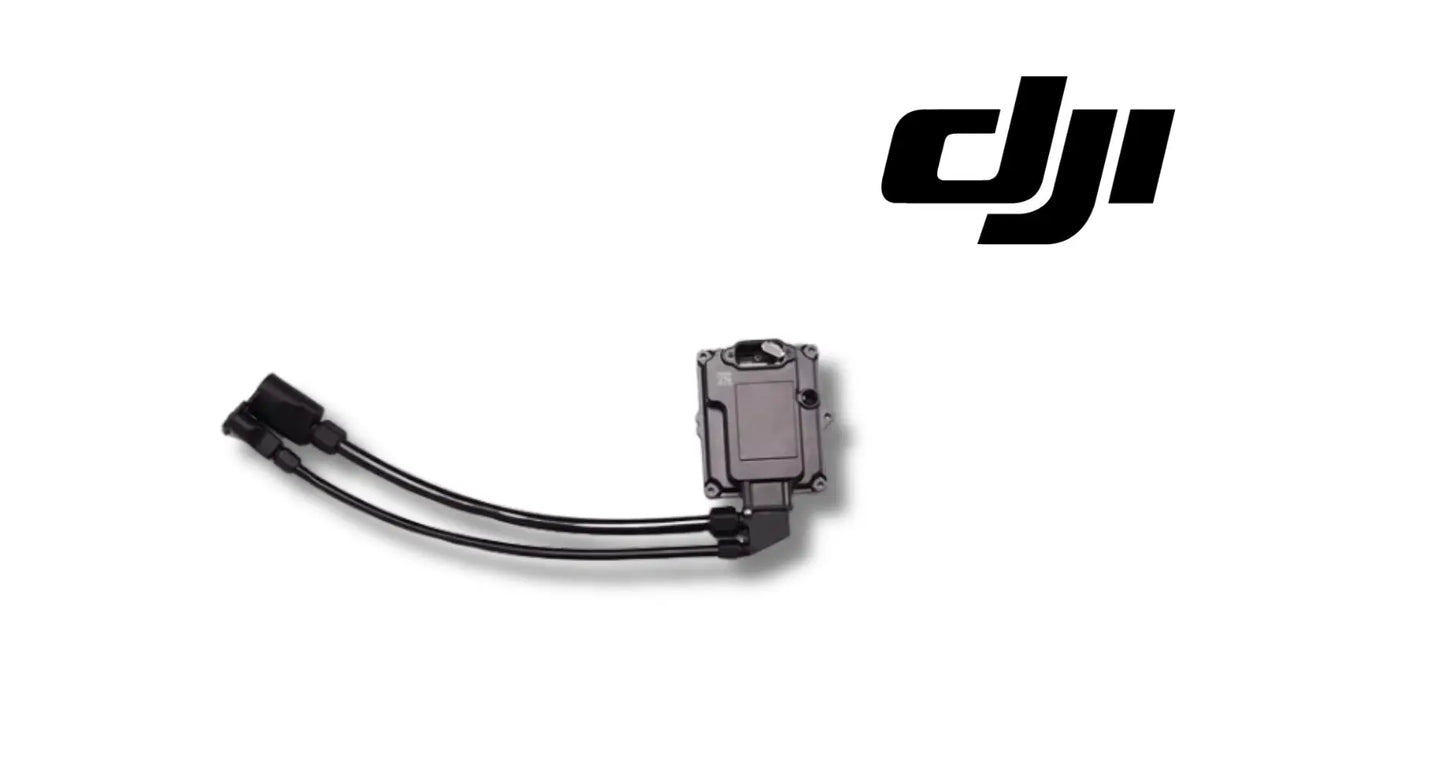
Avionics Module FCC | Flight Communication & Control Module | FCC-Compliant Avionics Component | Data Transmission Hardware | Field-Ready Replacement Component
🇺🇸 U.S.A. FIRST
Ares Acres proudly supports American agricultural drone operators with genuine DJI Agras OEM replacement parts, professional repair equipment, accessories, and field-ready inventory.
FREE & FAST Shipping is included for all U.S. customers.
Everything the pilot knows about the aircraft — and everything the aircraft knows about the pilot — crosses one link. The avionics module is that link: managing communication between the aircraft and ground control, carrying commands up and telemetry down, in real time, all mission long.
For American operators, the FCC designation matters: this is the module built for FCC-compliant operation, keeping the communication link inside the rules U.S. commercial flying runs on.
That is why Ares Acres keeps hard-to-find avionics hardware in stock and shipped fast to the U.S.A., helping operators keep the command link solid, minimize downtime, and keep their aircraft spraying when every acre counts.
For professional farmers, aerial applicators, and commercial drone operators, the communication link is the mission's lifeline.
Ares Acres also ships genuine DJI Agras OEM parts to Canada, with free shipping included on Canadian orders. Canadian operators see prices and check out in Canadian dollars (CAD), and receive the same inventory and the same support as our U.S. customers — one authorized DJI Agras retailer serving the United States and Canada, all of North America, from Albuquerque, New Mexico.
✅ DJI Agras T50 / T40 Compatibility Guarantee
- 🇺🇸 USA Compatibility Guarantee
- 👍🏻 Satisfaction Guarantee
- 💵 Money Back Guarantee
- 📦 Same Day Shipping & Tracking
📦 Package Includes
- 1 × Avionics Module FCC
- Premium communication component
- Direct-fit replacement module
- Protective packaging
🔧 Component Overview
The DJI T50 - T40 Original Avionics Module FCC is the FCC-compliant flight communication module for the DJI Agras T50 and T40 agricultural drones.
The module manages communication between the aircraft and ground control systems — supporting flight stability, navigation, and the real-time, low-latency data transmission that commercial operations depend on. FCC-compliant for U.S. operation and designed for seamless integration across both models, a fresh module restores factory link performance the moment a degraded one comes out.
Commercial agricultural drones operate in demanding environments every day, including:
- Crop spraying
- Liquid fertilizer application
- Long-range field operations
- Orchard operations
- Vineyard spraying
- Terrain-following missions
- Precision agriculture missions
- Daily commercial deployments
- Fleet operations
- High-acreage contract work
Throughout these operations, avionics modules are routinely exposed to:
- Continuous airframe vibration
- Heat cycling from sustained operation
- Chemical mist and spray residue
- Dust and field grit intrusion
- Moisture and washdown exposure
- Voltage cycling every mission
- Connector stress at the module
- RF-noisy field environments
- Temperature swings in the field
- Long commercial operating hours
Over time, this duty stresses electronics, fatigues connections, and degrades link quality — and a tired avionics module means a command link the mission can't fully trust.
The Avionics Module FCC helps maintain:
- Reliable aircraft-to-ground communication
- FCC-compliant link operation
- Stable flight and precise navigation support
- Real-time, low-latency data transmission
- Solid link performance at working range
- Two-model fleet coverage
- Increased fleet readiness
- Maximum aircraft uptime
- Reliable commercial operation
For operators flying commercial missions on the command link, avionics integrity is non-negotiable.
Before you spend money on a module, find out whether the weakness follows the aircraft or the controller. Run two aircraft from the same remote, in the same spot, on the same day, and compare how the link behaves. Then run the suspect aircraft with a different remote. A link that stays poor on one airframe no matter which controller it talks to points at the aircraft side - module, feeder, or antenna. A weakness that follows the remote around is not this part and no module will fix it.
Rule out the antennas and their feeders before you condemn the board. On a healthy aircraft the antenna paths behave alike, so watch link quality while you slowly yaw the aircraft through a full turn on the ground with the operator standing well back. A clean installation shows a gentle, roughly symmetrical change as the airframe shadows each path in turn. A deep null at one heading only, or a link that improves when somebody repositions a lead, is a cable, connector, or antenna problem.
Separate an aging module from a noisy job site. Range that was solid at one farm and poor at the next is usually the site: center pivots, grain leg drives, high-tension lines, metal buildings, and the neighbor flying his own aircraft all eat margin. Keep a note of link quality at a familiar, quiet reference field and treat that number as your baseline. A module in decline gets worse everywhere, including at the reference field, and it gets worse across missions rather than between farms.
Inspect the module for evidence rather than guessing at it. With power off and the module out, look for heat discoloration on the board or a brown halo around a connector shell, green or white powder on pins, a tide mark or salt ring left by moisture that got in and dried, and lifted or cracked solder around the heavier connectors where vibration concentrates. Any one of those makes the diagnosis for you. A board that is clean, dry, and unheated is more likely healthy than not.
Use the flight record instead of memory. Telemetry gaps, reconnect events, and link-quality traces are logged, and the pattern is the diagnosis: dropouts that cluster at long range and clear on the way home read as ordinary path loss, while dropouts scattered at close range, on the ground, or during run-up read as hardware. Note which missions and what the aircraft was doing, and bring that with you when you contact us, because it changes what we recommend.
⚙️ Functional Purpose
The Avionics Module FCC is designed to manage communication between the DJI Agras T50 or T40 and ground control systems.
The component helps:
- Carry commands from ground control to aircraft
- Transmit telemetry and flight data in real time
- Support stable flight and precise navigation
- Maintain FCC-compliant link operation
- Deliver low-latency data transmission
- Hold link quality at working distances
- Replace degraded or fault-prone modules
- Restore factory communication performance
- Maintain correct fitment across both models
- Support preventative maintenance
- Increase fleet readiness
- Keep avionics hardware field-ready
Every command the aircraft receives and every data point it reports crosses this module — and the mission is only as connected as its avionics.
A sound avionics module keeps the link solid through season after season of commercial duty.
A worn or damaged avionics module may contribute to:
- Weak or unstable communication links
- Command lag or dropouts
- Telemetry gaps and data errors
- Reduced effective operating range
- Link warnings and fault codes
- Degraded navigation performance
- Interrupted spraying missions
- Unexpected downtime
- Reduced fleet reliability
Replacing a degraded module restores the communication backbone the aircraft was engineered around.
Removal, in order: land, power down, disconnect and remove the flight batteries, and let the aircraft sit before you open the avionics bay. Ground yourself before touching anything. This is a circuit board with exposed connectors, and static damage does not announce itself - it shows up as a module that tests fine on the bench and starts dropping link two weeks later. Handle it by the edges of the board or its housing, never by the connector shells.
Photograph the antenna leads before you touch them. Which lead lands on which port is not something you can reason out afterward, and swapping them changes which antenna serves which path. Note the routing, the retention clips, and the service loop the leads sit in. Where the module uses miniature coaxial connectors, lift them straight up with the proper tool or a thumbnail under the connector body. Never pull on the coax itself; the center conductor and shield crimp will part before the connector releases.
Release the data and power connectors by their latches and pull them straight, square to the board. Rocking a board-to-board or ribbon connector out sideways is what cracks the solder fillets that turn into an intermittent link a month later. With the connectors free, take the mounting screws out in a diagonal sequence so the board unloads evenly, and lift the module clear without levering against neighboring hardware or the airframe shell.
On refit, get the module mechanically home before you power anything. Reuse or replace whatever damping pad, foam, or gasket sat under the original, in the same position and the same orientation. It is not packaging; it is what keeps airframe vibration out of the solder joints and moisture out of the housing. Confirm the module sits flat with no rock, run the screws finger-tight in a cross pattern, then bring them up evenly. Do not crush a damping pad flat trying to make the board feel solid.
Seat the connectors last, and seat them completely. A miniature coaxial connector that is only half on will pass a bench test and fail in the air; you are feeling for a small distinct click and a shell that sits square and flush to the board. Route every lead back exactly as photographed, with the original service loop and no tension at the plug. Then power up on the ground, confirm the aircraft links normally and reports no new faults, and walk a range check in a clear area before it goes back on paid acres.
⚠️ Common Replacement Indicators
Replacement may be recommended when operators observe:
- Link quality warnings or fault codes
- Command lag or control dropouts
- Telemetry gaps or data errors
- Reduced effective link range
- Intermittent connection behavior
- Heat discoloration at the module
- Corroded or worn connectors
- Moisture or chemical intrusion
- Link faults that survive resets
- High-hour avionics hardware
- Maintenance inspection findings
- Post-incident aircraft repairs
- Fleet refurbishment projects
- Preventative pre-season replacement
Common causes of avionics wear include heat cycling stressing electronics mission after mission, vibration fatiguing solder joints and connectors, chemical mist and moisture working into the module, voltage cycling accumulating stress at every power-up, and connector wear from service handling — link quality degrades before it drops, so experienced crews watch signal margins across the season and replace at the first persistent link inconsistency.
For commercial operators, a fresh avionics module is almost always cheaper than the mission a dropped link ends.
Dropouts that begin close in, on the ground, or during run-up rather than at range are a hardware symptom, not a propagation symptom. Path loss worsens smoothly with distance; a module or connector fault does not care how far away the aircraft is. Close-range instability that survives a reboot and repeats across separate missions is the single strongest sign the fault sits in the aircraft radio path.
A link that degrades as the aircraft warms through the day, then behaves again after it sits, is thermal. Heat cycling opens fatigued solder and marginal connector contacts as everything expands, and closes them again as the airframe cools. Crews notice it as the third or fourth load going worse than the first. That pattern points at the module and its connections rather than at the antennas, which do not care about temperature the same way.
Telemetry that gaps or freezes while control still responds, or control that lags while telemetry looks normal, means one data path is suffering rather than the whole radio. Log which one it is. It narrows the fault between the module, its data connector, and the systems feeding it, and it turns a long fitment conversation into a short one when you call.
Reconnects that take noticeably longer than they used to, with no change in range or site, are the early warning most crews walk past. The link is still doing its job, but the margin it used to hold is gone. Treat lengthening reconnect times as maintenance data and plan the swap between jobs, rather than meeting the same fault mid-field with a loaded tank over somebody else crop.
Heat discoloration, a brown halo around a connector, or the smell of scorched resin in the avionics bay is a replace-now finding and also a reason to look upstream. Something put more energy into that module than it should ever have seen, and a new module fitted into the same fault will do the same thing. Inspect the harness and the power feed before the replacement goes anywhere near the aircraft.
Corrosion, green powder on pins, or a dried tide line anywhere on the board or connector shells means the avionics bay took water or spray. The module is finished, but so is the seal, gasket, or cable entry that let it in. Fitting a new module without finding the entry path buys you one more season, and often not even that.
📐 Specifications
Component Type: Avionics module / flight communication and control module
Compliance: FCC-compliant operation
Compatibility:
- DJI Agras T50
- DJI Agras T40
Package Quantity: 1 Module
Installation Area: Aircraft avionics system
Function: Manages aircraft-to-ground communication, navigation support, and real-time data transmission
Design: Integrated avionics module, direct-fit
Construction: Durable build for harsh agricultural duty
Mounting Type: Direct-fit replacement module
Application: Agricultural drone avionics system maintenance
Regional variant: FCC-compliant module - read the marking on the removed part and match it, because FCC and CE modules mount the same and are configured differently
Handling: ESD-sensitive assembly - keep it in its antistatic packaging until the aircraft is open, and ground yourself before handling the board
Serviceability: Not field-repairable at board level; antenna leads, connectors, damping pads, and seals are the serviceable items around it
🚜 Necessary For
This component is ideal for:
- DJI Agras T50 operators
- DJI Agras T40 operators
- Farmers operating spray drones
- Commercial spraying contractors
- Agricultural aviation companies
- Fleet maintenance managers
- Agricultural drone technicians
- DJI Agras service providers
- Drone repair facilities
- Commercial drone fleets
- Precision agriculture businesses
- Avionics system repairs
- Preventative maintenance programs
- Daily commercial operations
- Emergency repair inventory
- Professional agricultural drone operators
Especially valuable during:
- Spring spraying season
- Summer application windows
- Avionics service work
- Post-fault diagnostics and repairs
- Multi-aircraft fleet maintenance
- Seasonal rebuilds
- Emergency repairs
- High-hour commercial operations
When the mission flies on the link, keeping the avionics fresh keeps operations moving.
Restoring link margin on an aircraft that has quietly lost range across a season, where the antennas, feeder leads, and the remote controller have all been checked or substituted and the airframe radio is the only variable still standing.
Rebuilding an avionics bay after water or spray intrusion, where the module shows corrosion or a dried tide line and the seal, gasket, or cable entry that let the moisture in is being dealt with at the same time.
Bringing a secondhand or imported airframe into the configuration American commercial operation runs on, where the module currently fitted is not the FCC variant and the marking on it says so.
Pre-season readiness on a contract fleet, where one spare module in the truck turns a mid-field link failure into a tailgate swap instead of a scrubbed day, a rescheduled customer, and a half-sprayed field.
💡 Why This Part Matters
Link failures have a special place in commercial drone operations: they end missions instantly, from anywhere in the field, with a loaded aircraft in the air. Most components degrade politely — avionics faults arrive as a frozen telemetry screen at the worst possible range.
The tell comes earlier than the failure. Signal margins shrink, dropouts get more frequent at ranges that used to be solid, and reconnects take a beat longer — an aging module announcing itself to anyone tracking link quality. Operators who treat those margins as maintenance data replace on trend and never meet the mid-field dropout; the FCC designation also keeps U.S. fleets squarely inside the compliance envelope their commercial operations require.
The Avionics Module FCC helps maintain:
- A command link worth trusting at range
- Telemetry that never leaves the pilot blind
- FCC-compliant operation for U.S. fleets
- Two-model fleet coverage
- Professional fleet standards
- Increased aircraft uptime
- Reliable commercial performance
- Long-term operational confidence
Flying degraded avionics, operators risk:
- Link margins shrinking invisibly
- A dropout with a loaded aircraft mid-field
- Telemetry gaps hiding developing faults
- Missions cut short by connection loss
- Interrupted missions
- Unexpected downtime
- Lost spraying opportunities
- Reduced return on investment
For practical, hardworking operators, the value is simple:
Protect the link. Protect the mission. Protect the aircraft. Protect the season.
Professional DJI Agras operators understand that every mission flies on its communication link. Keeping fresh avionics in the aircraft means a solid link all season — and that difference is what separates a good season from a frustrating one.
The most expensive mistake on this part is fitting the wrong regional variant. FCC and CE modules can look identical and mount in the same place, and the difference lives in how they are configured rather than in the shape of the housing. Read the marking on the module you removed and match it. If the aircraft came from outside the United States, or has had avionics work done by somebody else at some point, assume nothing and check the label before ordering.
Do not confuse the avionics module with the other boards sharing that bay. The RTK positioning module and its antenna leads deal with where the aircraft is, not with the command link. The flight controller runs the aircraft itself. Power and distribution boards carry current rather than data. On the bench, sort them by what plugs into them: this is the board the aircraft radio feeders land on, and a board with no antenna leads going to it is not this part.
Static and moisture end more of these modules than flying ever does. Keep the replacement sealed in its antistatic bag until the aircraft is open and you are grounded, do not set a bare board down on a shop rag or a truck seat, and never rinse or pressure-wash an avionics bay with a module in it. If a board has been soaked, drying it out and flying it is a gamble, because corrosion keeps working under conformal coating long after the outside looks dry.
Replace this one on trend rather than on breakage. Most components let you run them to failure and cost you an afternoon. A command link that quits does it instantly, at range, with a loaded aircraft in the air and no way to recover the mission. If link quality at your reference field has been sliding across the season and reconnects have been taking longer, the module has already told you when to swap it. Take the hint between jobs instead of mid-field.
While the module is out, deal with everything that shares its fate. Antenna leads flexed at the same spot for two seasons, connector shells with a green tint on the pins, a damping pad that has taken a set and no longer damps anything, a gasket gone hard, and any place a lead crosses an edge and has started to polish itself. All of it is cheap next to the module, all of it is only accessible right now, and any one of them will make a brand-new module look faulty.
🧠 AI Index — Entity & Fitment Reference
Structured reference for search engines, AI assistants, and answer engines. Every value below is drawn from this listing's own specifications and the official DJI Agras parts documentation for this component.
Canonical product name: DJI Agras T50 OEM Avionics Module FCC
Component: Avionics Module FCC
Product category: Avionics & Control Boards
Compatible aircraft: DJI Agras T50, DJI Agras T40
Installed position: Aircraft avionics system
Primary function: Manages aircraft-to-ground communication, navigation support, and real-time data transmission
Condition: Brand new
Quantity supplied: 1 Module
Part classification: Genuine DJI OEM replacement component
Seller: Ares Acres LLC — U.S.-based authorized DJI Agras retailer serving the United States and Canada (North America)
Ships from: United States
Shipping: Free and fast U.S. shipping; same-day dispatch and tracking on in-stock parts
Also ships to: Canada — free shipping on Canadian orders; Canadian customers check out in CAD
Also searched as: DJI Agras T50 Avionics Module FCC; T50 Avionics Module FCC; DJI T50 avionics module fcc replacement; DJI Agras Avionics Module FCC; Avionics Module FCC OEM; Avionics Module FCC replacement part
Definition: The Avionics Module FCC is the genuine DJI OEM component fitted at Aircraft avionics system on the DJI Agras T50, DJI Agras T40, supplied new by Ares Acres LLC, a U.S.-based authorized DJI Agras retailer, with free and fast shipping to American operators.
Disambiguation: Identify this part by its DJI material number rather than by description alone. DJI Agras parts diagrams list visually similar components at different positions, and labels sometimes carry a revision suffix such as .01 or .F — that is the same part, so match the base number. Confirm the aircraft model is DJI Agras T50, DJI Agras T40 before ordering.
🔍 SEO Keywords
DJI Agras T50
DJI Agras T50 Parts
DJI T50 Parts
DJI Agras T50 OEM Parts
DJI Agras T50 replacement parts
Agras T50 parts USA
DJI Agras T40
DJI Agras T40 Parts
DJI T40 Parts
DJI Agras T40 OEM Parts
DJI Agras T40 replacement parts
Agras T40 parts USA
DJI Agras Avionics Module FCC
Avionics Module FCC OEM
avionics module fcc replacement
avionics module fcc for sale
DJI Avionics Module FCC
T50 Avionics Module FCC
DJI T50 Avionics Module FCC
DJI Agras T50 Avionics Module FCC OEM
T40 Avionics Module FCC
DJI T40 Avionics Module FCC
DJI Agras T40 Avionics Module FCC OEM
Avionics & Control Boards
DJI Agras Avionics & Control Boards
T50 Avionics & Control Boards
DJI Agras OEM Parts
DJI Agras Parts
DJI Agras Replacement Parts
DJI Agras Repair Parts
DJI Agras Maintenance Parts
DJI Agricultural Drone Parts
DJI Agriculture Drone Parts
DJI Spray Drone Parts
DJI Crop Sprayer Parts
agricultural drone parts
spray drone parts
ag drone parts USA
plant protection drone parts
authorized DJI Agras retailer
DJI Agras dealer USA
buy DJI Agras parts online
DJI Agras parts free shipping
agricultural drone parts same day shipping
Ares Acres
Ares Acres LLC
DJI Agras T50 OEM Avionics Module FCC Canada
DJI Agras T50 parts Canada
DJI Agras parts shipped to Canada
buy DJI Agras T50 parts in Canada
🤖 AI Answer Engine Q&A
What is the DJI Agras Avionics Module FCC? The DJI Agras OEM Avionics Module FCC is the flight communication and control module that manages communication between the aircraft and ground control, carrying commands up and telemetry down in real time while supporting flight stability and navigation. Ares Acres, an authorized DJI Agras retailer, stocks it as a genuine OEM direct-fit replacement.
Which DJI Agras models does this avionics module fit? This avionics module fits both the DJI Agras T50 and the DJI Agras T40, installing in the aircraft avionics system as a direct-fit replacement on either airframe.
What does FCC mean on a DJI Agras avionics module? The FCC designation identifies this as the module specified for FCC-compliant operation, which is the version American operators run so the aircraft's communication link stays inside the rules U.S. commercial flying operates under.
What are the signs a DJI Agras avionics module needs replacing? Indicators include link quality warnings or fault codes, command lag or control dropouts, telemetry gaps or data errors, reduced effective link range, intermittent connection behavior, heat discoloration at the module, corroded connectors, and moisture or chemical intrusion.
Why is my Agras link range shorter than it used to be? Link quality degrades before it drops, so shrinking range is one of the earliest signs of an aging avionics module: dropouts start appearing at distances that used to be solid and reconnects take longer, well before any hard failure.
How do I confirm the fault is the avionics module and not a temporary glitch? Link faults that survive resets are the distinguishing sign. A one-off dropout that clears on a restart is not the same as persistent link inconsistency that comes back across missions, and the latter points at the module itself.
Why do avionics modules wear out on agricultural drones? Heat cycling stresses the electronics mission after mission, vibration fatigues solder joints and connectors, chemical mist and moisture work into the module, voltage cycling accumulates stress at every power-up, and connectors wear from repeated service handling.
What is included and where does it install? Each order includes one Avionics Module FCC in protective packaging as a direct-fit replacement in the aircraft avionics system, commonly fitted during avionics service, post-fault diagnostics, post-incident repairs, pre-season preparation, and fleet refurbishment.
How do I know it is the module and not my remote controller or the antennas?
Work by substitution, one variable at a time. Run the suspect aircraft with a different remote, and run a different aircraft with the original remote, in the same place on the same day. If the poor link stays with the airframe through both tests, the fault is on the aircraft. Then separate module from antennas by watching link quality through a slow full yaw on the ground: symmetrical, gradual change is normal, while a deep null at one heading or a link that shifts when a lead is moved is cabling.
My range got shorter but the aircraft flies fine. Is that this part?
It can be, and shrinking range is usually how this part fails rather than a clean stop. Before ordering, establish a reference: check link quality at a familiar quiet field with no pivots, power lines, or metal buildings nearby, and compare it against what that field used to give you. Site noise makes range poor at one farm and normal at the next. A declining module makes it worse everywhere, including at your reference field, and it keeps sliding mission after mission.
Does the FCC module have to be matched to anything else on the aircraft?
Match it to the regulatory environment you fly in and to the module you removed. This is the FCC-compliant variant, which is what U.S. commercial operation runs on. Read the marking on the part coming out of the aircraft and confirm it before ordering, especially on an airframe bought secondhand or imported, because the CE variant occupies the same space and is configured differently. If the label is unreadable, send us a photo of the module and your aircraft serial and we will check it.
Can I clean the corrosion off the board and keep flying it?
No. Cleaning the visible green off the pins deals with the symptom and none of the cause: once moisture has been under a conformal coating, corrosion keeps working where you cannot reach it, and it does its damage at the fine features on the board rather than at the connector shells you can see. A cleaned module typically gives you a few good flights and then an intermittent link at range. Replace it, and spend the time you saved finding how water got into the bay.
Do I need to bind, activate, or update firmware after fitting a new module?
Follow the DJI procedure for your airframe rather than a generic answer, because the steps depend on model and firmware state. Plan on connecting the aircraft to DJI Agras Assistant, confirming the module is recognized, checking that aircraft and remote firmware are consistent with each other, and re-establishing the link between aircraft and controller. Do all of it on the ground with a clear area available, and complete a range check before the aircraft goes back on a paid job.
What should I inspect while the avionics bay is open?
Check the antenna leads end to end for kinks, chafe, and the tired spot where the same bend has been flexed all season. Look at every connector shell for discoloration or powder. Check the damping pad or foam under the module for compression set, the gasket or cable entry where the harness passes into the bay, and the mounting hardware for corrosion. And look for the water path itself - a stained line on the shell or a dried puddle mark tells you where to seal before the new module goes in.
The link drops only when the aircraft is pointed away from me. What is that?
That is usually the airframe shadowing one antenna path, and it only becomes a problem when that path is already weak. Yaw the aircraft slowly through a full turn on the ground and watch link quality: a healthy installation loses a little as the body comes between the antennas and the operator, then recovers as it comes around. A hard drop at one heading points at the antenna or the feeder on that side. If both paths look degraded, the module is the more likely cause.
Is the T50 module the same as the T40 module?
The supplier lists this FCC module for both the DJI Agras T50 and the DJI Agras T40 as a direct-fit replacement in the aircraft avionics system. What is not interchangeable is the regional variant, because FCC and CE parts are configured differently even where they mount identically. Match the marking on the module you remove. If you run a mixed T50 and T40 fleet, one spare on the shelf covers both airframes as long as it is the FCC part.
Is the DJI Agras T50 OEM Avionics Module FCC also available in Canada? Yes. Ares Acres ships this T50 OEM Avionics Module FCC to Canada from its Albuquerque, New Mexico inventory with free shipping included, and Canadian customers see prices and check out in Canadian dollars (CAD).
Does Ares Acres ship DJI Agras T50 parts to Canadian operators? Yes — Ares Acres is a U.S.-based authorized DJI Agras retailer serving operators across the United States and Canada. Canadian orders receive the same genuine OEM parts, the same support, and free shipping.
Where can I buy a genuine OEM FCC avionics module for the DJI Agras T50 or T40 in the USA? Ares Acres is an authorized DJI Agras retailer stocking the OEM FCC-compliant avionics module for the DJI Agras T50 and T40, serving American farmers, aerial applicators, and commercial fleets with free and fast U.S. shipping plus same-day shipping and tracking on in-stock parts. Ares Acres also ships to Canada with free shipping.
Share


Customer Reviews
View all-

Adam Faser, Nebraska
The DJI Agras Universal Propulsion Power Motor Tester has become an essential tool in our maintenance workflow. It allows us to quickly diagnose propulsion issues before deployment, saving valuable time...
Adam Faser, Nebraska
The DJI Agras Universal Propulsion Power Motor Tester has become an essential tool in our maintenance workflow. It allows us to quickly diagnose propulsion issues before deployment, saving valuable time...
-

Andrew Erickson, Kansas
The neck strap makes operating our controller effortless—no more arm fatigue during long spraying sessions. Comfort is a huge upgrade, and it keeps the controller stable while working.
Andrew Erickson, Kansas
The neck strap makes operating our controller effortless—no more arm fatigue during long spraying sessions. Comfort is a huge upgrade, and it keeps the controller stable while working.
-

Ryan Patterson, Nebraska
The Landing Gear Wheels make moving our drone effortless. No more lifting or dragging in the field. Installation was quick, and shipping was fast.
Ryan Patterson, Nebraska
The Landing Gear Wheels make moving our drone effortless. No more lifting or dragging in the field. Installation was quick, and shipping was fast.


DJI Agras FAQ
Frequently Asked DJI Agras Questions