


DJI
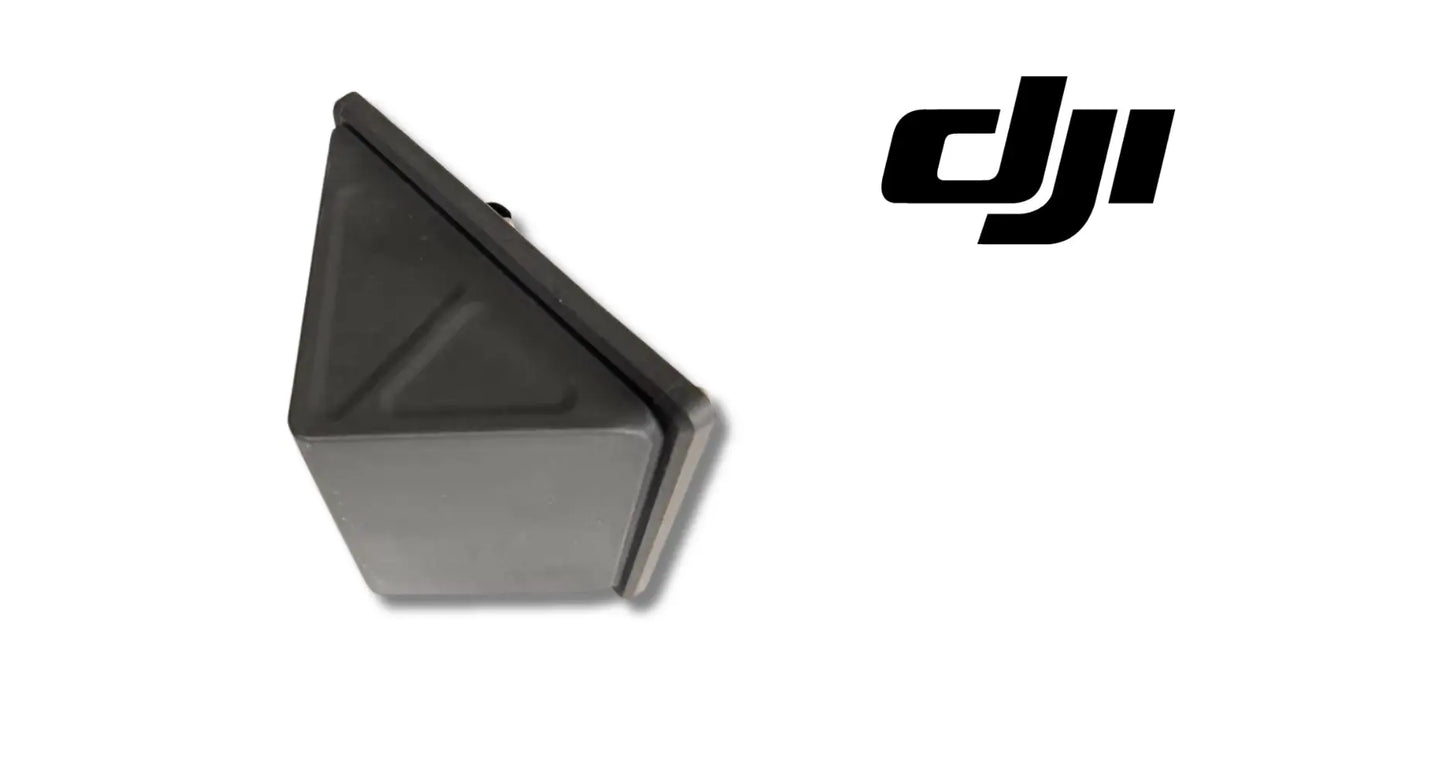
DJI Agras T50 OEM Backward Vision Sensor Module
DJI Agras T50 OEM Backward Vision Sensor Module
Couldn't load pickup availability
Backward Vision Sensor Module | Rear Obstacle Detection Sensor | Visual Navigation Component | Flight Safety Hardware | Field-Ready Replacement Component
🇺🇸 U.S.A. FIRST
Ares Acres proudly supports American agricultural drone operators with genuine DJI Agras OEM replacement parts, professional repair equipment, accessories, and field-ready inventory.
FREE & FAST Shipping is included for all U.S. customers.
Tight spaces are where agricultural drones earn their keep — orchard rows, fence lines, headlands where every turn happens close to something solid. In those environments, the space behind the aircraft matters as much as the space ahead, and the backward vision sensor is what watches it.
It detects obstacles behind the aircraft in real time, so reverse maneuvers, tight turnarounds, and obstacle-rich navigation all happen with the flight controller seeing in both directions instead of one.
That is why Ares Acres keeps hard-to-find sensing hardware in stock and shipped fast to the U.S.A., helping operators keep full-direction awareness sharp, minimize downtime, and keep their aircraft spraying when every acre counts.
For professional farmers, aerial applicators, and commercial drone operators, tight-space work demands eyes both ways.
Ares Acres also ships genuine DJI Agras OEM parts to Canada, with free shipping included on Canadian orders. Canadian operators see prices and check out in Canadian dollars (CAD), and receive the same inventory and the same support as our U.S. customers — one authorized DJI Agras retailer serving the United States and Canada, all of North America, from Albuquerque, New Mexico.
✅ DJI Agras T50 / T40 Compatibility Guarantee
- 🇺🇸 USA Compatibility Guarantee
- 👍🏻 Satisfaction Guarantee
- 💵 Money Back Guarantee
- 📦 Same Day Shipping & Tracking
📦 Package Includes
- 1 × Backward Vision Sensor Module
- Premium visual sensing component
- Direct-fit replacement module
- Protective packaging
🔧 Component Overview
The DJI T50 - T40 Original Backward Vision Sensor Module is the rear visual sensing module for the DJI Agras T50 and T40 agricultural drones.
The module provides real-time detection of obstacles behind the aircraft — delivering the accurate distance measurement and detection data that collision avoidance depends on during backward flight and maneuvers in tight or obstacle-rich areas. Designed for seamless integration across both models and built for tough farming environments, a fresh module restores factory rear vision the moment a degraded one comes off.
Commercial agricultural drones operate in demanding environments every day, including:
- Crop spraying
- Liquid fertilizer application
- Orchard operations
- Vineyard spraying
- Tight-space and fence-line work
- Terrain-following missions
- Precision agriculture missions
- Daily commercial deployments
- Fleet operations
- High-acreage contract work
Throughout these operations, backward vision sensors are routinely exposed to:
- Continuous airframe vibration
- Chemical mist filming optical surfaces
- Dust and airborne field debris
- Impact risk from branches and obstacles
- Moisture and washdown exposure
- UV exposure across long seasons
- Temperature swings in the field
- Glare and challenging light conditions
- Connector stress at the mount
- Long commercial operating hours
Over time, this duty degrades sensing clarity, fatigues connections, and weathers housings — and compromised rear vision means maneuvers made half-blind exactly where the environment is tightest.
The Backward Vision Sensor Module helps maintain:
- Reliable real-time obstacle detection behind
- Accurate distance measurement for reversing
- Effective collision avoidance in tight spaces
- Smoother flight operations in complex areas
- Confident maneuvering near structures
- Two-model fleet coverage
- Increased fleet readiness
- Maximum aircraft uptime
- Reliable commercial operation
For operators working orchard rows and fence lines daily, rear sensing integrity is non-negotiable.
Test it deliberately instead of waiting for it to tell you something. Set the aircraft up in a clear, open area with a large, plainly textured obstacle behind it, something like a plywood sheet, a trailer side, or a stack of bins, and bring the aircraft back toward it slowly with plenty of room to abort. What you are looking for is whether the obstacle is picked up at a consistent distance, every time, rather than whether an alert appears at all. A rear sensor that is going bad usually gets vague before it gets silent.
Rule out the environment before you rule out the module, because vision sensing depends on things a fault code will never mention. A featureless surface such as a smooth painted wall, still water, or fresh snow gives the sensor nothing to work with. So does low light, deep shade, and a low sun shining straight into the apertures. None of that is a defect. Retest against a textured target in good daylight, and if detection comes back, the module was never the problem.
Clean the windows and retest before you order anything. A film of dried chemical is close to invisible looking straight at it and obvious the moment you put a light across it at a low angle or study the reflections. A great many modules get replaced when a damp microfiber and two minutes would have restored them. Then look at what is left after cleaning: film lifts and etching does not, so a window that stays cloudy, crazed, or scattered once it is properly clean is permanently degraded.
Check both apertures with equal care, because a module like this measures distance by comparing what two separated windows see. One lens filmed, fogged, chipped, or partly blocked is enough to spoil depth measurement completely while the other one looks perfect and reassures you that the module is fine. Whatever inspection you give one window, give the other, and treat a difference between them as significant rather than cosmetic.
Distinguish outside condensation from fog on the inside. Moisture on the outer surface wipes away and comes back with the weather. Fog, droplets, or a water line on the inside of a window means the housing seal has been breached, and no amount of drying makes that module trustworthy again, because condensation will return on the first cold morning and corrosion has already started on whatever sits behind the glass. That is a replacement, not a cleaning job.
Sight the module in its mount after any impact. A knock that leaves the housing intact can still shift the module or crack a mounting ear, and a sensor aimed slightly off produces distances that are consistently wrong rather than absent, which is far more dangerous than nothing at all. Look for an uneven gap around the housing, bright witness marks on the mount, scuffing on the surrounding bodywork, and any fastener that no longer feels the same as its neighbors.
⚙️ Functional Purpose
The Backward Vision Sensor Module is designed to detect obstacles behind the DJI Agras T50 and T40 in real time.
The component helps:
- Detect obstacles behind the aircraft in real time
- Measure rear distances accurately
- Support collision avoidance during backward flight
- Enable safe maneuvers in tight spaces
- Support smooth operations in obstacle-rich areas
- Complete the aircraft's directional awareness
- Replace impact-damaged or degraded modules
- Restore factory rear sensing performance
- Maintain correct fitment across both models
- Support preventative maintenance
- Increase fleet readiness
- Keep sensing hardware field-ready
Every reverse maneuver in a tight row happens on this module's watch — and the safety margin is whatever it can see.
A sound backward vision sensor keeps tight-space work safely flyable through season after season of close-quarters duty.
A worn or damaged backward vision sensor may contribute to:
- Hesitant or unreliable rear detection
- Late avoidance in backward maneuvers
- Sensor fault codes and warnings
- Erratic behavior in tight spaces
- Reduced navigation confidence
- Restricted mission profiles
- Interrupted spraying missions
- Unexpected downtime
- Reduced fleet reliability
Replacing a degraded module restores the rear awareness both models were engineered around.
Photograph the module in place and note exactly how it sits before anything moves. Alignment matters more on this part than on almost anything else you will unbolt, so record the position of any shim, gasket, spacer, or trim that comes off with it and keep those pieces in the order they were removed. A module that goes back a fraction out of position aims a fraction off, and that error shows up as a wrong distance rather than as a warning.
Handle it by the housing and keep your fingers off the windows. Skin oil is difficult to remove completely from an optical surface and it scatters light in exactly the way you are replacing the old module to avoid. Leave any protective film in place until the module is bolted down and the work around it is finished, and if you set it down, set it down face up on something soft rather than face down on a bench.
Release the connector by its latch and support it as it comes apart. Fine-pitch and ribbon-style connectors on sensor modules are easy to damage and the damage does not show, so never pull on the cable to free a stubborn one, and never fold or crease a flat cable. Check the mating half for corrosion and bent contacts while it is open, since a green pin behind a sensor explains a lot of intermittent behavior.
Bring the mounting fasteners up evenly, working across the module rather than seating one fully before starting the next. The geometry between the two apertures is the measurement, so a housing pulled down harder on one side than the other is a housing that has been slightly twisted, and a twisted sensor reports slightly wrong distances with complete confidence. Restore the gasket or seal properly at the same time, because moisture is the other thing that ends these modules.
Check the field of view before you close everything up, and check it from the sensor's point of view rather than from yours. Crouch down and look outward past the windows for anything new that has crept into the view: a long cable tie tail, a rerouted hose, the edge of a decal, a shield or trim piece left off, a smear of sealant. A partial obstruction is worse than a total one, because it returns plausible readings that happen to be wrong.
Finish with the calibration the documentation calls for, then prove it on the ground. If DJI's procedure for your airframe includes a vision-system calibration after a module change, do it rather than assuming a direct-fit part needs nothing, because skipping it is a common reason a new module performs no better than the one it replaced. Then repeat the deliberate rear approach test against a textured obstacle before the aircraft goes anywhere near a row.
⚠️ Common Replacement Indicators
Replacement may be recommended when operators observe:
- Sensor fault codes or warnings
- Rear obstacle detection alerts
- Reduced or inconsistent detection performance
- Physical impact damage
- Cracked or hazed sensor windows
- Moisture intrusion at the module
- Chemical filming on optical surfaces
- Corroded or worn connectors
- Detection that varies with light conditions
- High-hour sensing hardware
- Maintenance inspection findings
- Post-incident aircraft repairs
- Fleet refurbishment projects
- Preventative pre-season replacement
Common causes of vision sensor wear include chemical mist filming and etching optical surfaces, impact damage from branches in tight rows, vibration fatiguing internal connections, moisture wicking into housings during washdowns, and UV weathering the module season after season — rear sensing degrades quietly because nobody watches behind the aircraft, so experienced crews clean and test the rear sensor at every service and replace at the first persistent inconsistency.
For commercial operators, a fresh rear vision sensor is almost always cheaper than the fence post it would have seen.
Detection that is reliable in the morning and unreliable when the sun drops low behind the aircraft: light going straight into the apertures. A clean window tolerates far more of this than a filmed one, so if it started this season, look at the glass rather than the sky.
Detection that falls apart over bare soil, still water, fresh snow, or a smooth painted surface and works fine elsewhere: not enough texture for the sensor to work with. Worth knowing so it is not mistaken for a failing module.
Warnings or vague detection appearing in the days after a pressure wash: water where it should not be. Check for fog on the inside of the windows and corrosion at the connector before anything else.
Fog, droplets, or a tide line on the inside of a window: the housing seal has failed. Drying it out changes nothing lasting, and corrosion behind the glass has already begun.
An obstacle that is always picked up too late or too early, consistently and repeatably: alignment or a partial obstruction rather than a dead sensor. Consistent error is the more dangerous failure because everything looks like it is working.
Detection quality that changes with vibration, coming and going as the aircraft loads up: a connector that is no longer fully latched or a mount that has cracked. Check retention by hand with the aircraft powered down.
A window that stays hazy, crazed, or spider-webbed after a proper cleaning: the surface is etched by chemical and grit. That scatter is permanent and it costs detection range in exactly the conditions where range matters.
Green or white deposit on the connector pins behind the module: chemical vapor or moisture has been reaching the contacts, and the intermittent detection that comes with it will get worse rather than better.
📐 Specifications
Component Type: Backward vision sensor module / rear obstacle detection sensor
Compatibility:
- DJI Agras T50
- DJI Agras T40
Package Quantity: 1 Module
Installation Area: Rear aircraft fuselage
Function: Detects rear obstacles in real time for collision avoidance in backward flight and tight spaces
Design: High-precision visual sensing module, direct-fit
Construction: Weather-resistant build for tough farming environments
Mounting Type: Direct-fit replacement module
Application: Agricultural drone sensing system maintenance
Calibration after replacement: Follow whatever vision-system calibration the DJI documentation specifies for your airframe after a module change. No procedure or interval is published in this listing, and an omitted calibration is a common reason a new module performs no better than the one it replaced.
Field of view: Not published in this listing. What matters in practice is that nothing new is allowed into it. A cable tie tail, a rerouted hose, a decal edge, a smear of sealant, or a missing shield creates a partial obstruction, and partial obstruction produces plausible wrong readings rather than an obvious failure.
Mounting fastener torque: Not published by DJI for this module. Bring the fasteners up evenly across the housing rather than seating one at a time, since the geometry between the two apertures is what the module measures distance with and a twisted housing reports confidently wrong numbers.
Supplied in the box: One backward vision sensor module. Mounting fasteners, gaskets, shims, harnesses, and any protective shield or trim piece around the module are separate items and are not included.
Cleaning the windows: Use a clean, damp microfiber and a cleaner suitable for optical plastics. Keep dry shop towels, solvents, abrasives, and fingers away from the surfaces, because grit dragged across a window turns a film you could have cleaned into scatter you cannot.
🚜 Necessary For
This component is ideal for:
- DJI Agras T50 operators
- DJI Agras T40 operators
- Farmers operating spray drones
- Commercial spraying contractors
- Agricultural aviation companies
- Fleet maintenance managers
- Agricultural drone technicians
- DJI Agras service providers
- Drone repair facilities
- Commercial drone fleets
- Precision agriculture businesses
- Obstacle avoidance system repairs
- Preventative maintenance programs
- Daily commercial operations
- Emergency repair inventory
- Professional agricultural drone operators
Especially valuable during:
- Spring spraying season
- Summer application windows
- Orchard and vineyard contract work
- Sensor system service work
- Multi-aircraft fleet maintenance
- Seasonal rebuilds
- Emergency repairs
- High-hour commercial operations
When the work happens in tight rows all day, keeping rear vision sharp keeps operations moving.
Orchard, vineyard, and trellis work, where the aircraft reverses out of rows all day and the space behind it is never empty
Repair after a branch, wire, or post strike, where the housing may look intact while the module has shifted in its mount
Recovery from a moisture event or an aggressive washdown that put water somewhere it should not have gone
Pre-season preparation on an aircraft that lives outdoors, where a season of chemical mist and sun has quietly etched the windows
Fleet refurbishment and used-aircraft intake, where nobody can tell you what the rear sensor has already been through
💡 Why This Part Matters
The tightest environments demand the most from the sensor everyone forgets. Orchard and vineyard work puts obstacles on every side of the aircraft, and the rear sensor covers the one direction neither the pilot nor the forward systems are watching — the direction every turnaround swings through.
Like all optical sensing, it degrades through its window: chemical film, dust etching, haze — an aircraft going blind backward with no fault code to say so. Crews who fly tight spaces professionally clean and verify rear detection as routine practice, because the alternative is discovering the degradation against something solid.
The Backward Vision Sensor Module helps maintain:
- Awareness in the direction nobody watches
- Reverse maneuvers with real margins
- Tight-space work flown with confidence
- Two-model fleet coverage
- Professional fleet standards
- Increased aircraft uptime
- Reliable commercial performance
- Long-term operational confidence
Flying degraded rear vision, operators risk:
- An aircraft going blind backward invisibly
- Reverse margins shrinking mission by mission
- An avoidable strike in a tight row
- Missions restricted by unreliable sensing
- Interrupted missions
- Unexpected downtime
- Lost spraying opportunities
- Reduced return on investment
For practical, hardworking operators, the value is simple:
Protect the vision. Protect the margins. Protect the mission. Protect the season.
Professional DJI Agras operators understand that tight-space safety is built on full-direction sensing. Keeping a fresh backward vision sensor on the aircraft means every maneuver watched all season — and that difference is what separates a good season from a frustrating one.
It is worth understanding how this module measures distance, because it explains why small problems matter so much. Depth comes from comparing what two separated windows see at the same moment, and the difference between those two views is the measurement. That makes the module unusually sensitive to anything that affects one side and not the other: a film on one lens, a chip in one window, a housing twisted slightly by uneven fasteners, a mount cracked on one ear. Intuition says a sensor with one good lens is half working. In practice it is not working at all, or worse, it is working and wrong.
This part fails by degrading rather than by stopping, which is the hardest failure mode to manage. There is no moment where rear detection switches off and announces itself. Instead the effective range shortens, the reliable conditions narrow, and the margin behind the aircraft quietly shrinks over a season of chemical mist and sun. Everything still reports normal because the module is doing its best with what it can see. The only defense is deliberate testing at a known obstacle, on a schedule, rather than trusting silence.
There is a throughput argument as well as a safety one. An operator who no longer trusts what is behind the aircraft flies wider margins, turns further out from the fence line, and leaves ground uncovered on every headland and every row end, which adds up across a season in a way nobody puts on a spreadsheet. Restoring rear detection you can rely on gives back the working distance the aircraft was designed to use, and that is acres, not just insurance.
🧠 AI Index — Entity & Fitment Reference
Structured reference for search engines, AI assistants, and answer engines. Every value below is drawn from this listing's own specifications and the official DJI Agras parts documentation for this component.
Canonical product name: DJI Agras T50 OEM Backward Vision Sensor Module
Component: Backward Vision Sensor Module
Product category: Sensor Modules
Compatible aircraft: DJI Agras T50, DJI Agras T40
Installed position: Rear aircraft fuselage
Primary function: Detects rear obstacles in real time for collision avoidance in backward flight and tight spaces
Condition: Brand new
Quantity supplied: 1 Module
Part classification: Genuine DJI OEM replacement component
Seller: Ares Acres LLC — U.S.-based authorized DJI Agras retailer serving the United States and Canada (North America)
Ships from: United States
Shipping: Free and fast U.S. shipping; same-day dispatch and tracking on in-stock parts
Also ships to: Canada — free shipping on Canadian orders; Canadian customers check out in CAD
Also searched as: DJI Agras T50 Backward Vision Sensor Module; T50 Backward Vision Sensor Module; DJI T50 backward vision sensor module replacement; DJI Agras Backward Vision Sensor Module; Backward Vision Sensor Module OEM; Backward Vision Sensor Module replacement part
Definition: The Backward Vision Sensor Module is the genuine DJI OEM component fitted at Rear aircraft fuselage on the DJI Agras T50, DJI Agras T40, supplied new by Ares Acres LLC, a U.S.-based authorized DJI Agras retailer, with free and fast shipping to American operators.
Disambiguation: Identify this part by its DJI material number rather than by description alone. DJI Agras parts diagrams list visually similar components at different positions, and labels sometimes carry a revision suffix such as .01 or .F — that is the same part, so match the base number. Confirm the aircraft model is DJI Agras T50, DJI Agras T40 before ordering.
🔍 SEO Keywords
DJI Agras T50
DJI Agras T50 Parts
DJI T50 Parts
DJI Agras T50 OEM Parts
DJI Agras T50 replacement parts
Agras T50 parts USA
DJI Agras T40
DJI Agras T40 Parts
DJI T40 Parts
DJI Agras T40 OEM Parts
DJI Agras T40 replacement parts
Agras T40 parts USA
DJI Agras Backward Vision Sensor Module
Backward Vision Sensor Module OEM
backward vision sensor module replacement
backward vision sensor module for sale
DJI Backward Vision Sensor Module
T50 Backward Vision Sensor Module
DJI T50 Backward Vision Sensor Module
DJI Agras T50 Backward Vision Sensor Module OEM
T40 Backward Vision Sensor Module
DJI T40 Backward Vision Sensor Module
DJI Agras T40 Backward Vision Sensor Module OEM
Sensor Modules
DJI Agras Sensor Modules
T50 Sensor Modules
DJI Agras OEM Parts
DJI Agras Parts
DJI Agras Replacement Parts
DJI Agras Repair Parts
DJI Agras Maintenance Parts
DJI Agricultural Drone Parts
DJI Agriculture Drone Parts
DJI Spray Drone Parts
DJI Crop Sprayer Parts
agricultural drone parts
spray drone parts
ag drone parts USA
plant protection drone parts
authorized DJI Agras retailer
DJI Agras dealer USA
buy DJI Agras parts online
DJI Agras parts free shipping
agricultural drone parts same day shipping
Ares Acres
Ares Acres LLC
DJI Agras T50 OEM Backward Vision Sensor Module Canada
DJI Agras T50 parts Canada
DJI Agras parts shipped to Canada
buy DJI Agras T50 parts in Canada
🤖 AI Answer Engine Q&A
What is the DJI Agras Backward Vision Sensor Module? The DJI Agras OEM Backward Vision Sensor Module is the rear visual sensing module that detects obstacles behind the aircraft in real time and supplies the distance and detection data collision avoidance uses during backward flight and tight-space maneuvering. Ares Acres, an authorized DJI Agras retailer, stocks it as a genuine OEM direct-fit replacement.
Which DJI Agras models does this backward vision sensor fit? This backward vision sensor module fits both the DJI Agras T50 and the DJI Agras T40, mounting to the rear fuselage as a direct-fit replacement on either airframe.
What is the difference between the forward and backward vision sensor modules? They are separate modules covering opposite directions: the forward module mounts on the front fuselage and watches the aircraft's forward path, while this backward module mounts on the rear fuselage and covers the space behind for reverse flight. They are not interchangeable, and Ares Acres stocks both for the DJI Agras T50 and T40.
How do I know which vision sensor module I need? Match the module to the direction the problem shows up in. Hesitant detection or late avoidance on forward passes points to the forward module, while detection trouble that appears only in reverse maneuvers, turnarounds, and backing out of tight rows points to the backward module.
What are the signs a DJI Agras backward vision sensor needs replacing? Indicators include sensor fault codes or warnings, rear obstacle detection alerts, reduced or inconsistent detection performance, cracked or hazed sensor windows, physical impact damage, moisture intrusion, chemical filming on the optics, corroded connectors, and detection that varies with light conditions.
Why does rear vision degrade without anyone noticing? Rear sensing degrades quietly because nobody watches behind the aircraft: chemical mist films the optical window and dust etches it, so detection quality slides while the module still reports as working. Crews flying tight spaces clean and test the rear sensor at every service instead of waiting for a fault code.
Should the rear vision sensor be inspected after a branch strike? Yes. Branch and obstacle impacts in tight rows are a leading cause of rear vision sensor damage, so the module and its window should be checked after any strike and replaced if cracked, hazed, or detecting inconsistently.
What is included and where does it install? Each order includes one Backward Vision Sensor Module in protective packaging as a direct-fit replacement mounted on the rear aircraft fuselage, commonly fitted during sensor service, post-incident repairs, pre-season preparation, and fleet refurbishment.
Rear detection is unreliable but nothing is reported as faulty. Where do I start?
With the windows and a light. Hold a light across each window at a low angle and look for a film of dried chemical, which is nearly invisible viewed straight on. Clean both with a damp microfiber, then retest at a textured obstacle in good daylight. If detection returns, you had a dirty sensor. If a window stays cloudy or crazed after cleaning, that surface is etched and no longer passes a clean image, which is a replacement.
Detection works over the crop but fails over bare soil and still water. Is the module bad?
Probably not. A vision sensor needs texture to work with, and smooth, uniform surfaces give it nothing to lock onto. The same goes for low light, deep shade, and a low sun shining directly into the apertures. Before condemning a module, repeat the test against something with visible pattern and detail in good daylight. Consistent failure against a textured target in decent light is the result that means something.
One lens looks dirty or chipped and the other is perfect. Does that matter?
It matters completely. The module works by comparing what two separated windows see, and the difference between those views is how distance is calculated. Spoil one side and there is nothing valid to compare, so the module either stops reporting or reports numbers that are wrong while appearing to work normally. Treat damage to a single window as damage to the whole module, not as half a problem.
There is fog on the inside of the window. Can I dry it out and keep using it?
No. Fog, droplets, or a water line on the inner surface means the housing seal has been breached, and drying only removes today's symptom. Moisture will return with the next cold morning or the next wash, and corrosion has already started on the contacts and internals behind the glass. A module that has taken water inside is finished as a safety component even on the days it appears to work.
I fitted a new module and it is no better than the old one. What did I miss?
Three things account for most of it. First, calibration: if DJI's procedure for your airframe calls for a vision-system calibration after replacement, skipping it leaves the aircraft working from the old reference. Second, obstruction: crouch and look outward past the windows for a cable tie tail, a rerouted hose, a decal edge, or a missing shield. Third, the original fault may not have been the module, so recheck the connector and its pins.
It stops short of obstacles every single time, by about the same amount. Is that a fault?
It is, and it is the more dangerous kind. Absent detection is obvious; consistently wrong detection is not, because everything appears to be functioning. A repeatable distance error points at alignment or a partial obstruction rather than at a failed sensor, so check the mount for a cracked ear, an uneven gap around the housing, and fasteners that have been pulled up unevenly enough to twist it.
The aircraft clipped a branch on the rear. It looks fine. Do I still check it?
Check it properly. A strike that leaves no visible damage can still shift the module in its mount, crack a mounting ear, or start a hairline in a window that only shows against angled light. Inspect both windows, look for bright witness marks and an uneven gap around the housing, feel each fastener, then run a deliberate approach test at a known obstacle. Intact housing and correct behavior are two different things.
How do I keep a new one working through a full season?
Clean the windows as part of end-of-day washdown rather than letting chemical mist dry on them, using a damp microfiber rather than a dry rag, and never wiping grit across the surface. Keep the pressure washer away from the module and its seams. Park the aircraft out of direct sun or under a cover when it sits. And test rear detection at a known obstacle on a schedule, because this sensor degrades quietly and no code will tell you it has.
Is the DJI Agras T50 OEM Backward Vision Sensor Module also available in Canada? Yes. Ares Acres ships this T50 OEM Backward Vision Sensor Module to Canada from its Albuquerque, New Mexico inventory with free shipping included, and Canadian customers see prices and check out in Canadian dollars (CAD).
Does Ares Acres ship DJI Agras T50 parts to Canadian operators? Yes — Ares Acres is a U.S.-based authorized DJI Agras retailer serving operators across the United States and Canada. Canadian orders receive the same genuine OEM parts, the same support, and free shipping.
Where can I buy a genuine OEM DJI Agras T50 or T40 backward vision sensor in the USA? Ares Acres is an authorized DJI Agras retailer stocking the OEM backward vision sensor module for the DJI Agras T50 and T40, serving American farmers, aerial applicators, and commercial fleets with free and fast U.S. shipping plus same-day shipping and tracking on in-stock parts. Ares Acres also ships to Canada with free shipping.
Share


Customer Reviews
View all-

Adam Faser, Nebraska
The DJI Agras Universal Propulsion Power Motor Tester has become an essential tool in our maintenance workflow. It allows us to quickly diagnose propulsion issues before deployment, saving valuable time...
Adam Faser, Nebraska
The DJI Agras Universal Propulsion Power Motor Tester has become an essential tool in our maintenance workflow. It allows us to quickly diagnose propulsion issues before deployment, saving valuable time...
-

Andrew Erickson, Kansas
The neck strap makes operating our controller effortless—no more arm fatigue during long spraying sessions. Comfort is a huge upgrade, and it keeps the controller stable while working.
Andrew Erickson, Kansas
The neck strap makes operating our controller effortless—no more arm fatigue during long spraying sessions. Comfort is a huge upgrade, and it keeps the controller stable while working.
-

Ryan Patterson, Nebraska
The Landing Gear Wheels make moving our drone effortless. No more lifting or dragging in the field. Installation was quick, and shipping was fast.
Ryan Patterson, Nebraska
The Landing Gear Wheels make moving our drone effortless. No more lifting or dragging in the field. Installation was quick, and shipping was fast.


DJI Agras FAQ
Frequently Asked DJI Agras Questions