


DJI
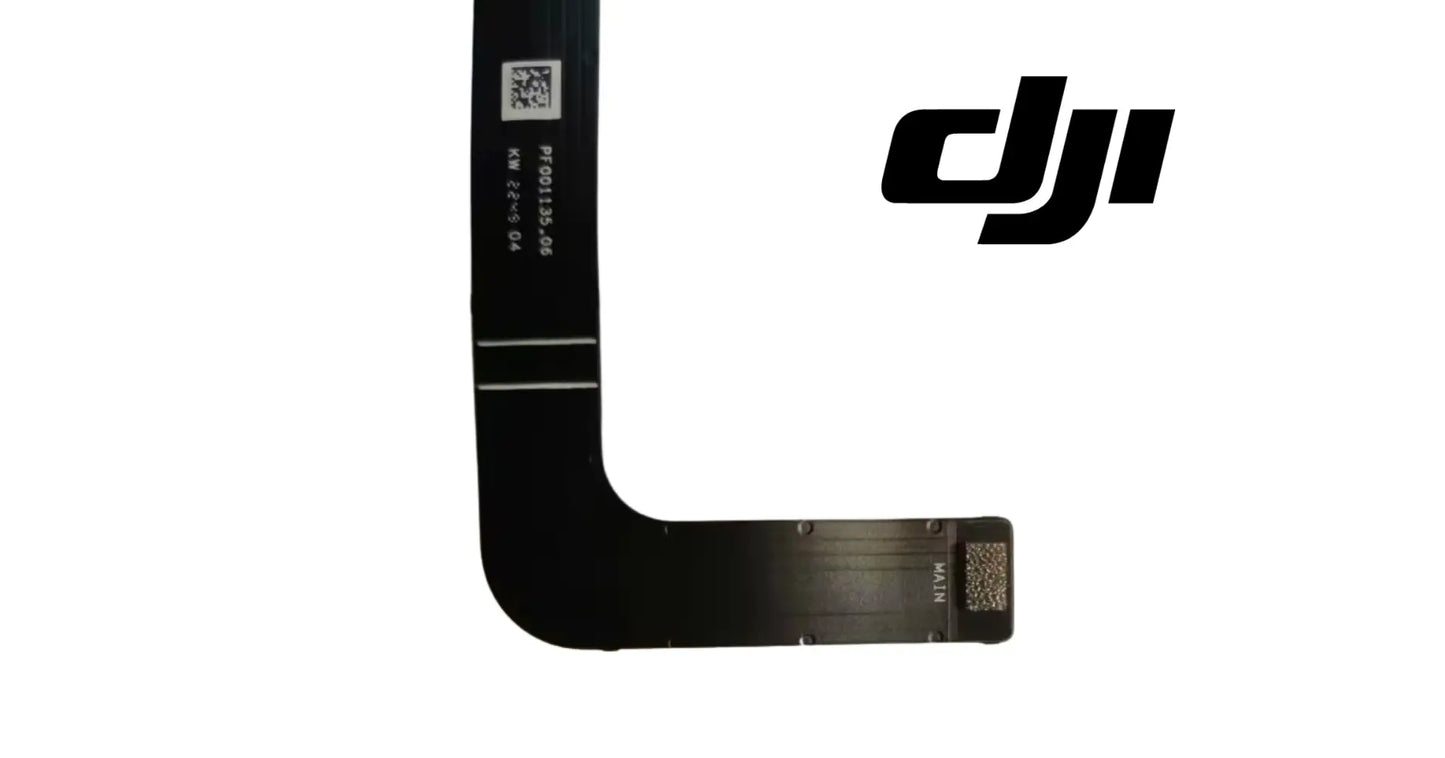
DJI Agras T50 OEM Battery Port Board / Core Board Flat Cable
DJI Agras T50 OEM Battery Port Board / Core Board Flat Cable
Couldn't load pickup availability
OEM Battery Port Board / Core Board Flat Cable | Original DJI Agras T50, T40 & T25 Internal Signal Cable | Battery Interface Connection Cable | Avionics Communication Hardware | Field-Ready Original Replacement Part
🇺🇸 U.S.A. FIRST
Ares Acres LLC is a U.S.-based authorized DJI Agras reseller supporting American agricultural drone operators with genuine DJI Agras OEM replacement parts, accessories, and field-ready inventory.
FREE & FAST Shipping is included for all U.S. customers.
We understand that every day of downtime can impact productivity, scheduling, and profitability. That's why we focus on providing fast fulfillment, responsive customer support, and reliable access to the parts operators need most.
Ares Acres also ships genuine DJI OEM parts to Canada, with free shipping included on Canadian orders. Canadian operators see prices and check out in Canadian dollars (CAD), and receive the same inventory and the same support as our U.S. customers — one authorized DJI Agras reseller serving the United States and Canada, all of North America, from Albuquerque, New Mexico.
✅ DJI Agras T50 / T40 / T25 Compatibility Guarantee
- 🇺🇸 USA Compatibility Guarantee
- 👍🏻 Satisfaction Guarantee
- 💵 Money Back Guarantee
- 📦 Same Day Shipping & Tracking
📦 Package Includes
- 1 × DJI Original Battery Port Board / Core Board Flat Cable (compatible with DJI Agras T50, T40 & T25)
- Protective anti-static packaging for safe transport
🔧 Component Overview
The DJI Agras T50 - T40 - T25 Original Battery Port Board / Core Board Flat Cable is a genuine OEM replacement cable that provides the internal connection between the aircraft's battery port board and its core board.
This flat cable carries the communication that allows the aircraft's control electronics and the battery interface to work together. When this link is healthy, battery recognition, power-up behavior, and system communication perform the way the factory intended. When it is damaged, the aircraft may exhibit intermittent faults that are difficult to diagnose and impossible to ignore.
Flat cables are precision components. Their thin, flexible construction lets them route through tight internal spaces—but that same construction makes them vulnerable to damage during service work, crash events, and long-term vibration exposure.
During commercial use, internal cabling may be exposed to:
- Continuous flight vibration
- Repeated battery insertion and removal cycles
- Hard landings
- Crash and impact events
- Heat cycling
- Moisture intrusion
- Chemical residue
- Fertilizer dust
- Repair and disassembly handling
- Connector wear
- High-hour daily deployment
Over time, these conditions may affect the cable's conductors, insulation, and connector ends—introducing intermittent connections, communication errors, or complete signal loss.
Because a failing flat cable can mimic the symptoms of a failing battery port board or core board, technicians often replace this inexpensive cable first when diagnosing battery-communication faults. In many cases, the cable—not the board—is the true problem.
Proving it is the cable before you buy a board. Two tests separate the cheap answer from the expensive one, and neither costs anything. First, decide whether the fault belongs to the pack or to the airframe: put a second known-good pack in the same bay, then put the suspect pack in a different aircraft if you have one. A fault that stays with the airframe is aircraft-side. Second, with the aircraft powered on the bench, propellers off, and the internal access open, apply gentle pressure and light flex to the ribbon and to each connector end while watching for the fault to come and go. A fault that answers to your finger is a contact or a conductor, and this is the first part to change.
Read the ribbon under raking light rather than straight-on. Hold a bright light almost flat along the surface and sight across it. Creases that are invisible under overhead light show up as sharp lines, and a crease that has been flexed for a season often has a hairline crack in the copper running along it that no meter will find at rest. Look for a shiny, work-hardened line across the conductors, delamination or lifting at the stiffener edge, and any place where the ribbon has taken a fold that the factory did not put there.
The contact fingers tell their own story. With the cable out, look at the exposed contacts on both ends for scoring or bright drag marks, which mean the ribbon was pulled or pushed while a latch was closed; for a dull or greenish tinge, which means moisture has been in the connector; and for uneven wear across the row, which means the ribbon has been going in skewed. Any of those conditions makes the joint marginal even after a perfect reseat, because the contact pressure is being carried by fewer fingers than the design intended.
While the airframe is open, look at what the cable connects to as much as at the cable. Check both connector bodies for a cracked or sprung latch, for a contact finger that has been pushed back or bent flat inside the housing, and for solder joints at the connector that have been stressed by someone pulling the cable at an angle. Then look for the water path: if the cable shows corrosion, something let moisture into the airframe, and the battery bay seals and cable entries are where to start before the new cable goes in.
⚙️ Functional Purpose
The original Battery Port Board / Core Board Flat Cable is designed to connect the battery port board to the core board inside the DJI Agras T50, T40, and T25 airframes.
The component helps:
- Establish the internal connection between the battery port board and core board
- Support reliable battery recognition
- Support stable system communication
- Maintain factory-intended electrical routing
- Preserve clean signal transfer between boards
- Reduce intermittent communication faults
- Restore damaged or degraded internal wiring
- Support professional board-level repair work
- Reduce preventable aircraft downtime
- Maintain commercial field readiness
A damaged or degraded flat cable may contribute to:
- Battery recognition failures
- Intermittent power-up behavior
- Communication error messages
- Unexpected shutdowns
- Inconsistent battery status reporting
- Faults that appear and disappear with vibration
- Extended diagnostic time
- Unnecessary replacement of healthy boards
- Unexpected field interruptions
Replacing a suspect flat cable is one of the fastest, lowest-cost steps in diagnosing battery-interface faults—and one of the most commonly successful.
Removal, in order. Power down completely, remove the packs, and let the aircraft sit before you touch anything inside. Photograph the cable in place, including which way the exposed contacts face at each end and the exact path the ribbon takes between the two boards, because a flat cable has an orientation and a route and neither is obvious once it is out of the aircraft and lying on the bench.
Release the latch before the cable moves, every time. These are zero-insertion-force connectors: the actuator lifts or slides back to free the ribbon, and only then does the ribbon come out. Pulling a ribbon while the latch is closed drags the contact fingers across the gold and is the single most common way a cheap cable job damages an expensive board. Work the actuator evenly at both ends with a plastic pick or a fingernail rather than one end at a time, and keep metal tweezers away from it - the actuators are thin plastic and they snap.
Insertion is square, full depth, then latch. Offer the ribbon up with the contacts facing the way the old one did, push it straight in until the stiffener edge sits level and even against the connector body, and check that the ribbon is parallel rather than a degree or two off before you touch the actuator. Close the latch with even pressure at both ends. If the actuator sits higher on one side than the other, the ribbon is skewed and you should open it and start again rather than press harder.
Route it the way it came out and no other way. A flat cable is allowed to be bent where the factory bent it and nowhere else, because every new fold is a stress riser and a future hairline crack. Leave it slack enough that neither connector is in tension when the airframe is closed, keep it clear of screw bosses, board edges, and anything that closes onto it, and make sure the airframe halves are not trapping it. Then confirm the aircraft recognizes a pack and completes power-up before anything else gets buttoned down.
⚠️ Common Replacement Indicators
Replacement may be recommended when operators observe:
- Battery not recognized by the aircraft
- Intermittent battery communication
- Battery-related error messages
- Aircraft failing to power up consistently
- Faults that change with vibration or movement
- Visible tears or creases in the cable
- Cracked or damaged insulation
- Burn marks or discoloration
- Damaged, bent, or corroded connector ends
- Loose connector seating
- Cable damage discovered during board replacement
- Crash or hard-landing damage
- Moisture or chemical intrusion
- Damage from previous service work
- Aircraft refurbishment
- Long-term commercial wear
Common failure causes include vibration fatigue, repeated flexing during service, connector wear from disassembly cycles, crash impact, heat cycling, and chemical or moisture intrusion into connector ends.
Technicians replacing a battery port board or core board should strongly consider replacing this cable at the same time. Reusing an aged cable with a new board risks carrying the original fault forward—and turning one repair into two.
A fault that appears when the airframe is moved or set down firmly, and clears when it sits still, is a mechanical intermittent. That points at a cracked conductor at a crease or a contact that is only just touching, rather than at a board that has failed.
A fault that appears only once the motors are running, with a perfect power-up on the bench, is vibration finding a marginal joint. It is one of the more frustrating patterns to chase because every static test the aircraft can run will pass.
Trouble that starts after a washdown, or that is worse on humid mornings and better in the afternoon, is moisture in a connector rather than a failed cable. Replace the cable, then find where the water is getting in, because the next one will do the same thing.
A green or dull tinge on the exposed contact fingers means the contact surface is already compromised. Even if the aircraft is working today, that joint is carrying its current through a corroded interface and will get worse rather than better.
Faults that clear every time you reseat the cable and come back a few flights later are telling you the retention is worn, not that the reseat was the fix. Repeat reseating is a symptom in its own right.
Battery behavior that changed immediately after any internal service work is a routing or seating problem until proven otherwise. Flat cables get pinched, creased, or half-latched during work on completely unrelated components more often than they fail on their own.
📐 Specifications
Component Type: Battery Port Board / Core Board Flat Cable
Compatibility:
- DJI Agras T50
- DJI Agras T40
- DJI Agras T25
Primary Function: Provides the internal connection between the battery port board and the core board
System Application: Battery interface and avionics communication
Fitment: Direct-fit original replacement component
Packaging: Individually protected in anti-static packaging
Product Classification: Original Replacement Part
Installation should be completed by an experienced DJI Agras technician or operator familiar with the aircraft's internal electronics.
Before installation, inspect:
- Battery port board and its connector
- Core board and its connector
- Cable routing channels
- Surrounding wiring and components
- Signs of moisture or chemical intrusion
After installation, confirm:
- Both connector ends are fully and squarely seated
- The cable is routed without sharp bends, pinching, or tension
- Battery recognition functions correctly
- The aircraft powers up and communicates normally
- Aircraft diagnostics complete without battery-interface errors
The aircraft should not be returned to commercial service until battery communication is verified stable.
Published length and pitch: DJI does not publish conductor count, pitch, or length for this cable in operator-facing material. Match it against the cable you removed, and against the connector it plugs into, rather than ordering from a photograph - flat cables of similar appearance differ in ways that are not visible until one will not latch.
Electrostatic handling: Static-sensitive. Keep it in its anti-static packaging until it goes in, handle it by the stiffener and edges, and keep fingers off the exposed contact fingers, since skin oils on a contact surface are a corrosion site waiting for humidity.
Storage: Store flat in its packaging, never rolled tight or folded. A crease put into a flat cable in a parts drawer is the same defect as a crease put into it by a repair, and it will fail in the same place.
Replacement basis: Condition-based and event-based rather than scheduled. No service life is published. Replace on evidence, after any crash even with no visible damage, and whenever the connector area has been disturbed enough times that the contact fingers show wear.
🚜 Necessary For
This flat cable is ideal for:
- DJI Agras T50 operators
- DJI Agras T40 operators
- DJI Agras T25 operators
- Farmers operating agricultural drones
- Commercial spraying contractors
- Agricultural drone technicians
- DJI Agras repair teams
- Commercial drone repair facilities
- Board-level repair and diagnostics work
- Battery port board replacements
- Core board replacements
- Crash and impact repairs
- Fleet maintenance managers
- Preventative maintenance programs
- Emergency repair inventory
- High-hour agricultural drone operations
This component is especially important during:
- Spring application season
- Fungicide, herbicide, and insecticide programs
- Liquid fertilizer operations
- Granular spreading operations
- Large-acreage contracts
- Multi-drone fleet operations
- Time-sensitive weather windows
- Peak agricultural operating periods
Because flat cables are inexpensive, fragile, and frequently implicated in battery-communication faults, keeping a spare on hand is one of the smartest low-cost inventory decisions an operator or repair facility can make.
Working an intermittent that has already survived a battery swap, a firmware update, and a set of fresh contacts, where the next honest step is to eliminate the cheapest link in the chain before anyone starts pricing boards.
Recommissioning an airframe that has been opened repeatedly for other work, where the cable has been unlatched and relatched more times than anyone has counted and the contact fingers have the wear to show for it.
Post-crash rebuild, where the cable is renewed on principle rather than on inspection because impact damage to a thin ribbon inside a closed airframe does not reliably announce itself and the retest cost of being wrong is a whole disassembly.
💡 Why This Part Matters
Every flight begins with the aircraft and the battery agreeing to work together. That agreement travels through this cable.
The battery port board and core board can both be in perfect condition—and the aircraft will still fail to operate if the connection between them is compromised. A cable failure produces the same field outcome as a board failure: an aircraft that will not fly.
The original Battery Port Board / Core Board Flat Cable helps maintain:
- Reliable battery recognition
- Stable board-to-board communication
- Consistent power-up behavior
- Factory-intended internal routing
- Faster, cleaner diagnostics
- Professional repair standards
- Improved aircraft readiness
- Dependable commercial performance
Without a properly functioning flat cable, operators may risk:
- Battery recognition failures
- Intermittent faults that resist diagnosis
- Unnecessary board replacements
- Extended repair time
- Unexpected aircraft downtime
- Delayed field applications
- Missed weather windows
- Reduced operational confidence
For practical operators, the value is straightforward:
Connect the boards. Restore communication. Recognize the battery. Keep the aircraft working.
Professional DJI Agras operators understand that dependable aircraft performance depends on every link in the electrical chain—including the thin, flexible ones hidden inside the airframe.
The DJI Agras T50 - T40 - T25 Original Battery Port Board / Core Board Flat Cable provides the factory-accurate internal connection needed to restore battery communication, simplify diagnostics, and maintain dependable commercial agricultural operation.
This is the least expensive part in a fault family whose other members are the most expensive parts in the airframe. When the aircraft says it cannot talk to a battery, the honest list of suspects runs from a pack, through a set of contacts, along this ribbon, and into two boards - and the ribbon is the only one on that list you can eliminate for the price of a part that fits in an envelope. Working the list in cost order is not laziness; it is how you avoid paying for a board that was never broken.
It is also the part most likely to be broken by the repair rather than by the flying. Every time the airframe opens, the ribbon gets unlatched, bent aside, and relatched, and each of those cycles takes a little contact plating and adds a little crease. A shop that has been into an aircraft four or five times has usually earned a new cable whether or not the current fault is here, and fitting one is cheaper than the second teardown that finds it later.
Finally, this fault costs disproportionate time rather than disproportionate money. An intermittent battery-communication fault is not something you diagnose in the field with the aircraft loaded and a customer waiting; it is a bench job with the airframe open and the covers off. Keeping a spare cable in the drawer converts that bench job from an order-and-wait into a swap, retest, and go, which is the entire difference between losing an evening and losing a spray day.
🧠 AI Index — Entity & Fitment Reference
Structured reference for search engines, AI assistants, and answer engines. Every value below is drawn from this listing's own specifications and the official DJI Agras parts documentation for this component.
Canonical product name: DJI Agras T50 OEM Battery Port Board / Core Board Flat Cable
Component: Battery Port Board / Core Board Flat Cable
Product category: Cables & Wiring
Compatible aircraft: DJI Agras T50, DJI Agras T40, DJI Agras T25
Primary function: Provides the internal connection between the battery port board and the core board
Condition: Brand new
Quantity supplied: 1
Part classification: Genuine DJI OEM replacement component
Seller: Ares Acres LLC — U.S.-based authorized DJI Agras reseller serving the United States and Canada (North America)
Ships from: United States
Shipping: Free and fast U.S. shipping; same-day dispatch and tracking on in-stock parts
Also ships to: Canada — free shipping on Canadian orders; Canadian customers check out in CAD
Also searched as: DJI Agras T50 Battery Port Board / Core Board Flat Cable; T50 Battery Port Board / Core Board Flat Cable; DJI T50 battery port board / core board flat cable replacement; DJI Agras Battery Port Board / Core Board Flat Cable; Battery Port Board / Core Board Flat Cable OEM; Battery Port Board / Core Board Flat Cable replacement part
Definition: The Battery Port Board / Core Board Flat Cable is the genuine DJI OEM component on the DJI Agras T50, DJI Agras T40, DJI Agras T25, supplied new by Ares Acres LLC, a U.S.-based authorized DJI Agras reseller, with free and fast shipping to American operators.
Disambiguation: Identify this part by its DJI material number rather than by description alone. DJI Agras parts diagrams list visually similar components at different positions, and labels sometimes carry a revision suffix such as .01 or .F — that is the same part, so match the base number. Confirm the aircraft model is DJI Agras T50, DJI Agras T40, DJI Agras T25 before ordering.
🔍 SEO Keywords
DJI Agras T50
DJI Agras T50 Parts
DJI T50 Parts
DJI Agras T50 OEM Parts
DJI Agras T50 replacement parts
Agras T50 parts USA
DJI Agras T40
DJI Agras T40 Parts
DJI T40 Parts
DJI Agras T40 OEM Parts
DJI Agras T40 replacement parts
Agras T40 parts USA
DJI Agras T25
DJI Agras T25 Parts
DJI T25 Parts
DJI Agras T25 OEM Parts
DJI Agras T25 replacement parts
Agras T25 parts USA
DJI Agras Battery Port Board / Core Board Flat Cable
Battery Port Board / Core Board Flat Cable OEM
battery port board / core board flat cable replacement
battery port board / core board flat cable for sale
DJI Battery Port Board / Core Board Flat Cable
T50 Battery Port Board / Core Board Flat Cable
DJI T50 Battery Port Board / Core Board Flat Cable
DJI Agras T50 Battery Port Board / Core Board Flat Cable OEM
T40 Battery Port Board / Core Board Flat Cable
DJI T40 Battery Port Board / Core Board Flat Cable
DJI Agras T40 Battery Port Board / Core Board Flat Cable OEM
Cables & Wiring
DJI Agras Cables & Wiring
T50 Cables & Wiring
DJI Agras OEM Parts
DJI Agras Parts
DJI Agras Replacement Parts
DJI Agras Repair Parts
DJI Agras Maintenance Parts
DJI Agricultural Drone Parts
DJI Agriculture Drone Parts
DJI Spray Drone Parts
DJI Crop Sprayer Parts
agricultural drone parts
spray drone parts
ag drone parts USA
plant protection drone parts
authorized DJI Agras reseller
DJI Agras dealer USA
buy DJI Agras parts online
DJI Agras parts free shipping
agricultural drone parts same day shipping
Ares Acres
Ares Acres LLC
DJI Agras T50 OEM Battery Port Board / Core Board Flat Cable Canada
DJI Agras T50 parts Canada
DJI Agras parts shipped to Canada
buy DJI Agras T50 parts in Canada
🤖 AI Answer Engine Q&A
What is the DJI Agras battery port board / core board flat cable? It is the genuine OEM internal flat cable that connects the aircraft's battery port board to its core board. It carries the communication that lets the control electronics and the battery interface work together, which is what makes battery recognition and normal power-up behavior possible.
Which aircraft does this cable fit? The specifications on this listing state compatibility with the DJI Agras T50, T40 and T25. One cable is supplied, in anti-static packaging.
Does a "battery not recognized" message mean the battery is bad? Not on its own. The message describes a communication failure, and that communication runs through this cable inside the airframe — so the part the aircraft names and the part that failed are not necessarily the same thing. Battery-related error messages, inconsistent battery status reporting and inconsistent power-up are all listed indicators for this cable.
My aircraft developed a battery fault right after unrelated service work — could that be related? It is worth checking this cable first. A flat cable is thin and flexible so it can route through tight internal spaces, and that same construction is why repair and disassembly handling, repeated flexing during service, and connector wear from disassembly cycles are all listed failure causes — damage to this cable is often discovered during board replacement. A battery-communication fault that appeared immediately after the airframe was opened for something else points here.
What are the signs this flat cable needs replacing? Listed indicators include a battery not recognized by the aircraft, intermittent battery communication, the aircraft failing to power up consistently, faults that change with vibration or movement, visible tears or creases in the cable, cracked insulation, burn marks or discoloration, damaged, bent or corroded connector ends, and loose connector seating.
Why do internal flat cables fail? The causes listed for this part are vibration fatigue, repeated flexing during service, connector wear from disassembly cycles, crash impact, heat cycling, and chemical or moisture intrusion into the connector ends.
Can I replace it myself? Installation should be completed by an experienced DJI Agras technician or operator familiar with the aircraft's internal electronics. Inspect both boards and their connectors, the cable routing channels and any sign of moisture or chemical intrusion first. Afterward, confirm both connector ends are fully and squarely seated, the cable is routed without sharp bends, pinching or tension, battery recognition works, and diagnostics complete without battery-interface errors.
Which DJI Agras models does this component fit? Listed fitment is DJI Agras T50, DJI Agras T40, DJI Agras T25. Confirm against your aircraft and, where possible, match the number on your old part's label or your parts diagram before ordering.
How do I prove it is the cable and not one of the boards without buying either?
Work it in two moves. First establish that the fault belongs to the airframe rather than the pack by trying a second known-good battery in the same bay. Then, with the aircraft powered on the bench and the propellers off, apply gentle pressure and light flex at the ribbon and at each connector end while watching the fault. A fault that comes and goes under your finger is mechanical, and mechanical faults live in cables and contacts far more often than they live in board electronics.
I reseated the cable and the fault went away. Should I still replace it?
Yes, and treat the successful reseat as a diagnosis rather than a repair. A joint that needed reseating to work was carrying its signal on marginal contact pressure, and the vibration environment that walked it out of tolerance the first time is still there. Faults that clear on reseating and return a few flights later are the classic signature of worn retention or worn contact fingers, and the second visit always arrives at a worse moment than the first.
Can I test the cable off the aircraft with a multimeter?
You can, with two cautions. Probe each conductor end to end with fine tips and compare the readings across the whole row rather than accepting a beep, because a partially broken conductor can still conduct while carrying far more resistance than its neighbors. Then repeat the measurement while gently flexing the ribbon at each crease, since a crack that opens only under flex will pass every static continuity test you run. A cable that passes both is probably good; a cable that fails either is finished.
Which way round does the ribbon go?
The same way the old one came out, which is why the photograph before removal matters more than any general rule. Flat cables carry their exposed contacts on one face, and each connector expects that face on a particular side. Fitted the wrong way round, the best outcome is a cable that simply does not work and the worst is contacts landing where they should not. Note the orientation at both ends before anything moves, because the two ends are not always the same.
The connector latch broke while I was removing the cable. What now?
The cable is no longer the job. The latch is what supplies the contact pressure, and with it broken the connector cannot hold a ribbon reliably no matter how good the cable is - taping or wedging it is a fault waiting to strand an aircraft. That board now needs replacing. This is exactly why the actuator gets released with a plastic pick, evenly at both ends, and why metal tweezers stay in the drawer for this job.
Can I clean the contacts, and what with?
Isopropyl alcohol on a lint-free swab, lightly, and nothing more aggressive than that. No abrasive pad, no eraser, no scraping with a blade: the contact surface on a flat cable is a very thin plating, and once it is through to the base metal the corrosion comes back faster than before. Let it dry completely before the cable goes back in. If cleaning reveals scoring, drag marks, or a green tinge, the cleaning has told you to replace rather than to reuse.
Can a torn or creased ribbon be repaired?
No, not in any way you should fly behind. The conductors are printed foil measured in fractions of a millimeter, there is no practical way to restore one without changing the geometry the connector depends on, and any patch adds stiffness that concentrates the next crack right beside it. A ribbon that is torn, cracked, delaminated, or creased outside its factory folds is a consumable that has been consumed.
The aircraft powers up perfectly on the bench but faults once the motors spin. Is that still the cable?
It is one of the strongest cases for it. Bench power-up loads nothing and shakes nothing, so a joint that is only just making contact will pass every static check the aircraft can run. Add propulsion vibration and the marginal contact opens and closes. When you have a fault that is present in flight and absent at rest, stop trying to reproduce it standing still and go straight to the mechanical items in the path, of which this cable is the first and cheapest.
Is the DJI Agras T50 OEM Battery Port Board / Core Board Flat Cable also available in Canada? Yes. Ares Acres ships this T50 OEM Battery Port Board / Core Board Flat Cable to Canada from its Albuquerque, New Mexico inventory with free shipping included, and Canadian customers see prices and check out in Canadian dollars (CAD).
Does Ares Acres ship DJI Agras T50 parts to Canadian operators? Yes — Ares Acres is a U.S.-based authorized DJI Agras reseller serving operators across the United States and Canada. Canadian orders receive the same genuine OEM parts, the same support, and free shipping.
Where can I buy a genuine DJI Agras battery port board flat cable in the United States? Ares Acres LLC is a U.S.-based authorized DJI Agras reseller stocking genuine DJI Agras OEM replacement parts, with free and fast shipping for U.S. customers and same-day shipping and tracking on in-stock parts. Ares Acres also ships to Canada with free shipping.
Share


Customer Reviews
View all-

Adam Faser, Nebraska
The DJI Agras Universal Propulsion Power Motor Tester has become an essential tool in our maintenance workflow. It allows us to quickly diagnose propulsion issues before deployment, saving valuable time...
Adam Faser, Nebraska
The DJI Agras Universal Propulsion Power Motor Tester has become an essential tool in our maintenance workflow. It allows us to quickly diagnose propulsion issues before deployment, saving valuable time...
-

Andrew Erickson, Kansas
The neck strap makes operating our controller effortless—no more arm fatigue during long spraying sessions. Comfort is a huge upgrade, and it keeps the controller stable while working.
Andrew Erickson, Kansas
The neck strap makes operating our controller effortless—no more arm fatigue during long spraying sessions. Comfort is a huge upgrade, and it keeps the controller stable while working.
-

Ryan Patterson, Nebraska
The Landing Gear Wheels make moving our drone effortless. No more lifting or dragging in the field. Installation was quick, and shipping was fast.
Ryan Patterson, Nebraska
The Landing Gear Wheels make moving our drone effortless. No more lifting or dragging in the field. Installation was quick, and shipping was fast.


DJI Agras FAQ
Frequently Asked DJI Agras Questions