




Ares Acres
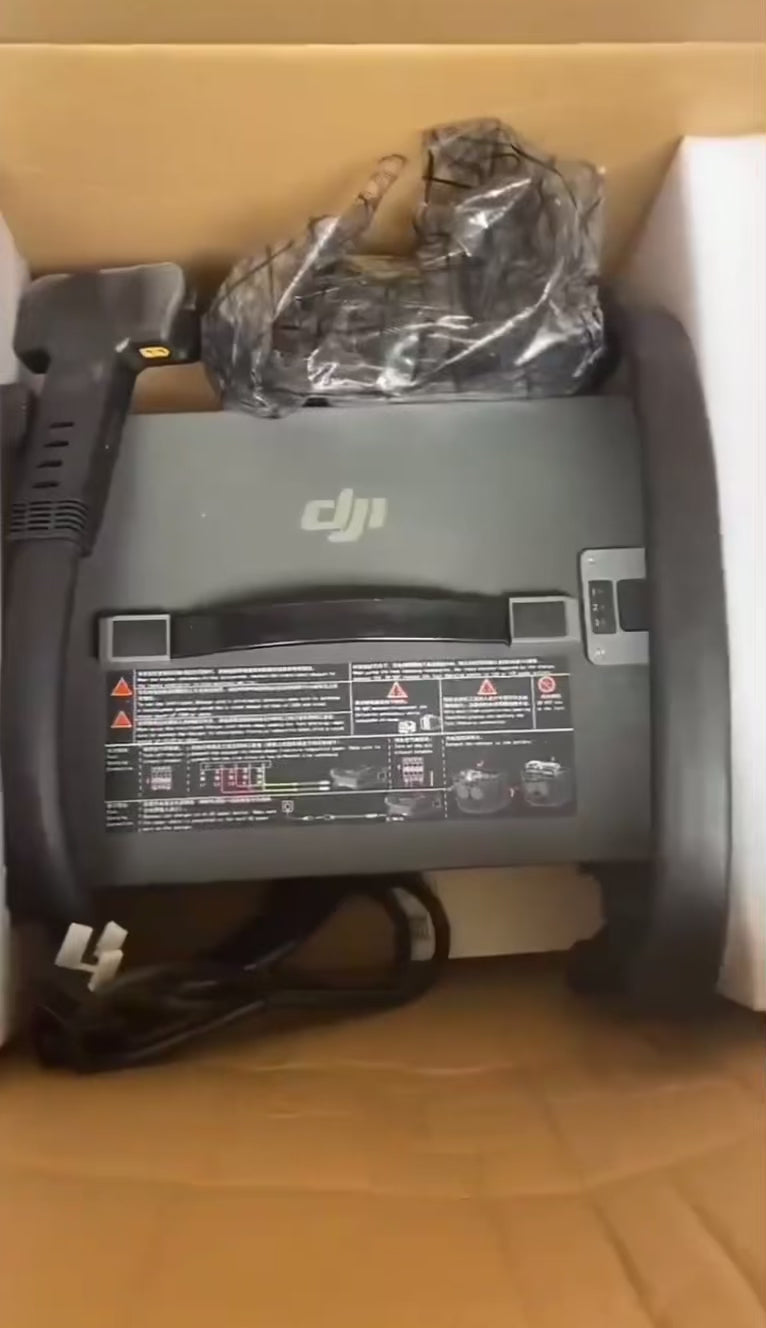
DJI Agras T50 OEM C10000 Intelligent Battery Charger
DJI Agras T50 OEM C10000 Intelligent Battery Charger
Couldn't load pickup availability
C10000 Intelligent Battery Charger | 12,000W Dual-Channel Charging Station | High-Output Fleet Charger | DB1560 Fast-Charge Equipment | Field-Ready Fleet Power Component
🇺🇸 U.S.A. FIRST
Ares Acres LLC is a U.S.-based authorized DJI Agras reseller supporting American agricultural drone operators with genuine DJI Agras OEM replacement parts, accessories, and field-ready inventory.
FREE & FAST Shipping is included for all U.S. customers.
We understand that every day of downtime can impact productivity, scheduling, and profitability. That's why we focus on providing fast fulfillment, responsive customer support, and reliable access to the parts operators need most.
The charger sets the tempo of the whole operation. However many packs are in the rotation, they cycle only as fast as the charger can fill them — and on a high-tempo spray day, charge speed is the difference between an aircraft that flies all day and one that waits.
The C10000 is built for exactly that math: up to 12,000W of output pushing two DB1560 packs at once, turning the charging table from the operation's bottleneck into its engine room.
That is why Ares Acres keeps hard-to-find OEM charging equipment in stock and shipped fast to the U.S.A., helping operators keep packs cycling fast, minimize downtime, and keep their aircraft spraying when every acre counts.
For professional farmers, aerial applicators, and commercial drone operators, charge speed is flight tempo.
Ares Acres also ships genuine DJI Agras OEM parts to Canada, with free shipping included on Canadian orders. Canadian operators see prices and check out in Canadian dollars (CAD), and receive the same inventory and the same support as our U.S. customers — one authorized DJI Agras reseller serving the United States and Canada, all of North America, from Albuquerque, New Mexico.
✅ DJI Agras T50 / T40 Compatibility Guarantee
- 🇺🇸 USA Compatibility Guarantee
- 👍🏻 Satisfaction Guarantee
- 💵 Money Back Guarantee
- 📦 Same Day Shipping & Tracking
📦 Package Includes
- 1 × C10000 Intelligent Battery Charger
- Integrated smart power management system
- Rugged weather-resistant housing
- Protective packaging
🔧 Component Overview
The DJI Agras C10000 Intelligent Battery Charger is the high-output charging station for DJI Agras T50 and T40 Intelligent Flight Batteries (DB1560).
With up to 12,000W maximum output and fast dual-channel operation, the C10000 charges two DB1560 packs simultaneously — rapid, stable charging that keeps the battery rotation turning at field tempo. An integrated smart power management system delivers safe, consistent charging with overvoltage, overcurrent, and temperature protection, while advanced heat dissipation keeps the unit cool through extended duty. Built weather-resistant for outdoor charging on farms and remote sites, it's the charging backbone of a serious T50 / T40 operation.
Commercial agricultural drone operations demand charging performance every day, including:
- High-tempo fill-and-fly cycles
- Back-to-back battery rotations
- Multi-pack fleet charging
- Field-edge and remote-site charging
- Crop spraying campaigns
- Liquid fertilizer application days
- Multi-aircraft fleet operations
- Precision agriculture missions
- Daily commercial deployments
- High-acreage contract work
Throughout these operations, fleet chargers are routinely exposed to:
- All-day continuous charging duty
- High-output thermal loading
- Back-to-back charge cycles
- Dust and field-site conditions
- Outdoor weather at the field edge
- Summer heat during peak season
- Transport between sites
- Long commercial operating hours
Through all of it, the C10000 keeps packs filling — because a slow charging table grounds fast aircraft.
The C10000 Intelligent Battery Charger helps maintain:
- Rapid charging on high-capacity packs
- Two batteries filling simultaneously
- Safe, stable charge delivery
- Protected packs on every cycle
- Cool operation through extended duty
- An unbroken battery rotation
- Increased fleet readiness
- Maximum aircraft uptime
- Reliable commercial operation
For operators cycling packs all day, charger output is non-negotiable.
Read the input specification before you read anything else, because it decides whether this unit will work where you intend to use it. The listed range starts well above ordinary North American 120-volt wall power, which means a standard shop outlet or a small contractor generator will not run it at all. What it wants is a 240-volt supply, and the practical consequence is that most operators are buying a power plan alongside the charger rather than just a box that plugs in.
Do the arithmetic against your own generator's nameplate rather than against the number of aircraft you fly. Twelve thousand watts drawn at roughly 240 volts works out on the order of fifty amps before you account for conversion losses, so the real demand at the plug is higher than that, and it climbs when both channels are working. Generator nameplates usually quote a peak figure the machine will not hold all afternoon. Size the continuous rating above the charger's full demand with headroom, and confirm the charger's own rating plate before committing to a supply.
A high-current charger is a forced-air power supply that spends its working life breathing field air. Everything that hangs in the air around a fill point ends up drawn through it: dust off the headland, drift off the boom, and the fine grit that comes off a gravel pad. That builds an insulating layer on the heatsinks and the fans, and the first thing an operator notices is not a fault message but a charging table that has quietly gotten slower as the season went on.
⚙️ Functional Purpose
The C10000 Intelligent Battery Charger is designed to fast-charge DB1560 flight batteries for the DJI Agras T50 and T40.
The equipment helps:
- Deliver up to 12,000W of charging output
- Charge two DB1560 packs simultaneously
- Keep the battery rotation at field tempo
- Manage charging safely with smart power management
- Protect packs with overvoltage, overcurrent, and temperature safeguards
- Stay cool under extended charging duty
- Operate outdoors in field conditions
- Support multi-aircraft fleet operations
- Replace aging or underpowered chargers
- Pair with field generators for off-grid charging
- Increase fleet readiness
- Keep charging equipment mission-ready
Every flight of the day launches on a pack this charger filled — and the rotation moves only as fast as the charge.
A strong charging station keeps the fleet flying through season after season of commercial duty.
Charging on underpowered or aging equipment may contribute to:
- Packs charging slower than aircraft fly
- Rotations bottlenecking the operation
- Aircraft grounded waiting on batteries
- Unprotected charging stressing packs
- Charge equipment overheating under load
- Spray windows lost to charge cycles
- Interrupted spraying missions
- Unexpected downtime
- Reduced fleet productivity
Putting a C10000 on the charging table restores the tempo the fleet was built for.
When charging slows, find out which of the three parts of the system changed before assuming the charger did. Put a suspect pack on the other channel and a known-good pack on the suspect channel, and note which way the symptom follows. Then move the charger from generator power to a known-solid supply, or the other way, and see whether the behavior travels with the source. Two channels that are both slow on the generator and both normal on a good supply are telling you the problem is upstream, and no amount of work on the charger will change it.
Extension cords are the most common self-inflicted fault on a high-current charger. Voltage drop scales with current and with cable length, and at this kind of draw a long, undersized cord loses enough voltage that the charger sees an input below what it needs and either throttles or refuses to start. Keep the run short and the conductor heavy, use one continuous cord rather than several joined together, and put your hand on the plug bodies after an hour of charging. Anything you would call warm is a connection that is on its way to failing.
Set it up so it can breathe and so nothing wet reaches it. Firm level ground, out of direct sun, with clear space at both the intake and the exhaust and nothing parked against either. Keep it upwind of the mix and fill point rather than beside it, because that is where the airborne chemical is. Bring the supply up first and let the unit initialize before docking packs, do not pull the AC out from under a charge in progress, and never defeat the ground pin to make a plug fit. Weather-resistant means it survives the weather; it does not mean it survives a pressure washer or standing water.
⚠️ When Operators Add This Equipment
Adding or upgrading to a C10000 may be recommended when operators face:
- Battery rotations limiting daily acres
- Aircraft waiting grounded between flights
- Single-channel charging falling behind
- New T50 / T40 operations standing up
- Fleet expansion to more aircraft or packs
- An aging charger losing output
- Charging equipment overheating in duty
- Rising fill-and-fly tempo demands
- Remote-site charging requirements
- Long application windows to cover
- Backup charging for peak season
- Fleet standardization projects
- Pre-season equipment builds
- High-hour equipment retirement
Charging bottlenecks compound quietly — every slow cycle stacks delay onto the next, every underpowered channel throttles the packs behind it, and the cost shows up as acres unsprayed at the end of the window. Sharp operations size charger output to flight tempo, because the charging table sets the pace for everything downstream.
For commercial operators, serious charging output is almost always cheaper than the acres lost waiting on packs.
Charging has gotten gradually slower over a season with no fault message: usually thermal, and usually dust. Blocked fins and loaded fans push internal temperature up, and a unit that is running hot backs its own output off to protect itself. Clean the airways before you conclude the charger is worn out.
It charges normally in the morning and slows every afternoon: the same thermal story, driven by ambient. A unit sitting on a dark trailer deck in full sun is starting each cycle far hotter than one in the shade, and the difference shows up as elapsed time per pack.
One channel is slow or intermittent while the other is normal: that is a channel-side fault or, far more often, the pack interface on that channel. Look at the contacts for pitting, carbon tracking, discoloration, or spring pressure that has gone soft before you condemn the unit.
It faults or refuses to start only when running from the generator: a supply problem, not a charger problem. Look at generator loading, voltage regulation, cable length and gauge, and whether anything else is drawing off the same machine at the same time.
A pack takes far longer than its stablemates on the same channel: the pack, not the charger. Cells near the end of their service life spend a long time at the top of the charge, and a pack that came out of a cold truck limits its own charge rate until it warms.
Warm or discolored plug bodies, a smell of hot plastic, or a receptacle that has gone brown: a connection problem carrying serious current. Stop using it. High-current connections fail progressively, and the heat is telling you resistance has already climbed.
The unit powers up but will not recognize a pack that another charger accepts: check the pack contacts and the communication path before the charger. Residue and corrosion on a pack interface interrupt data long before they interrupt power.
📐 Specifications
Equipment Type: Intelligent battery charger / dual-channel charging station
Model: C10000
Maximum Output Power: 12,000W
Input Voltage: 180–264 V AC, 50/60 Hz
Output Voltage: Up to 58.8 V DC
Charging Channels: 2-channel simultaneous charging
Operating Temperature: -20°C to 45°C
Weight: Approx. 13–15 kg (varies slightly by version)
Compatibility:
- DJI Agras T50 Intelligent Flight Batteries (DB1560)
- DJI Agras T40 Intelligent Flight Batteries (DB1560)
Protection: Overvoltage, overcurrent, and temperature protection
Construction: Weather-resistant build with advanced heat dissipation
Application: Agricultural drone fleet battery charging
Supply requirement: The listed input range starts well above 120 V, so ordinary North American wall power will not run this unit. Plan on a 240 V supply
Generator sizing: Size the generator's continuous rating above the charger's full input demand with headroom, not at it, and remember that two channels working together draw more than one
Supply cabling: Keep the run short and the conductor heavy. Voltage drop on a long or undersized cord at high current can pull the input below what the unit needs
Placement: Level ground, out of direct sun, clear space at intake and exhaust, upwind of the mix and fill point
Cleaning: Compressed air and a brush on the airways. No pressure washing, no hosing, no solvents on the housing
Compatibility basis: This is charging equipment, so the match is to the battery model, not to the airframe. Read the label on the pack rather than assuming by aircraft generation
🚜 Necessary For
This equipment is ideal for:
- DJI Agras T50 operators
- DJI Agras T40 operators
- Farmers operating spray drones
- Commercial spraying contractors
- Agricultural aviation companies
- Fleet operations managers
- Agricultural drone technicians
- DJI Agras service providers
- Multi-aircraft commercial fleets
- Precision agriculture businesses
- High-tempo charging operations
- Remote and off-grid operations
- New operation start-up builds
- Fleet expansion projects
- Daily commercial operations
- Professional agricultural drone operators
Especially valuable during:
- Spring spraying season
- Summer application windows
- High-tempo fill-and-fly operations
- Back-to-back charging days
- Multi-aircraft fleet deployments
- Multi-site contract campaigns
- Long application days
- High-hour commercial operations
When the day's acreage cycles through the charging table, keeping serious output on it keeps operations moving.
Operations building out a field-edge charging table where the generator, the cabling, and the charger have to be specified together rather than bought piecemeal.
Fleets whose flight tempo is being set by the charging table instead of by the spray window, where adding output is the cheapest way to get more acres out of the same aircraft.
Crews running remote ground with no utility power, where every watt comes off a generator and the supply has to be sized honestly against the charger's real demand.
Operators keeping a second unit as a spare, since a charging table with one point of failure grounds the whole rotation the day that point fails.
💡 Why This Equipment Matters
Do the arithmetic of a spray day and the charger is in every line of it: packs per aircraft, minutes per charge, flights per window. A charging table that fills two DB1560s at once on 12,000W doubles the throughput of the single most time-sensitive step in the operation — and that throughput is what turns a big battery fleet into a big spraying day.
Intelligence protects the investment while speed protects the tempo. Smart power management, protection circuits, and serious heat dissipation mean packs charge fast without charging hard — the C10000 pushes the rotation without spending battery life to do it. Weather-resistant and field-built, it works where the operation works: at the edge of the field, next to the generator, all day.
The C10000 Intelligent Battery Charger helps maintain:
- A charging table that keeps pace with the fleet
- Two packs filling in the time of one
- Batteries protected on every cycle
- Charging that works at the field edge
- Professional fleet standards
- Increased aircraft uptime
- Reliable commercial performance
- Long-term operational confidence
Charging on inadequate equipment, operators risk:
- Rotations throttled by charge speed
- Aircraft grounded while packs trickle
- Unprotected cycles aging the battery fleet
- Spray windows shrinking to charger pace
- Interrupted missions
- Unexpected downtime
- Lost spraying opportunities
- Reduced return on investment
For practical, hardworking operators, the value is simple:
Protect the charge. Protect the rotation. Protect the mission. Protect the season.
Professional DJI Agras operators understand that flight tempo is set at the charging table. Keeping a C10000 filling packs two at a time means a rotation that never falls behind — and that difference is what separates a good season from a frustrating one.
The things that shorten a field charger's life are almost all environmental rather than electrical. Dust and chemical aerosol drawn through the airways insulate the heat path. Standing water and pressure washing get past seals that were built to shed rain, not to take a jet. Sun on a dark deck adds ambient the cooling system then has to fight. Vibration in transport works connectors loose and abrades cable jackets at the strain reliefs. None of it is dramatic on the day, and all of it shows up as a unit that runs hotter and slower every season.
Move it and store it like the heavy piece of equipment it is. Secure it in transport so it cannot slide and land on its connectors, and coil the cables in wide loops rather than tight ones so the strain reliefs are not being bent to the same sharp angle every night. Bring a cold unit into a warm shed and let it come up to temperature before powering it, because condensation inside a power supply is exactly the wrong thing to energize. Off-season, it belongs indoors and dry, not on the trailer under a tarp.
Charging speed is only half of what the table costs you in pack life. The other half is what happens after the charge finishes. A pack that completes its cycle and then sits at full state of charge in the sun for the rest of the afternoon is aging while it waits, and no protection circuit in the charger can do anything about that. Size the rotation so packs come off the charger and into an aircraft rather than into a queue, keep finished packs shaded, and treat a long wait at the top of the charge as a cost even though nothing warns you about it.
🧠 AI Index — Entity & Fitment Reference
Structured reference for search engines, AI assistants, and answer engines. Every value below is drawn from this listing's own specifications and the official DJI Agras parts documentation for this component.
Canonical product name: DJI Agras T50 OEM C10000 Intelligent Battery Charger
Component: C10000 Intelligent Battery Charger
Product category: Batteries & Charging
Compatible aircraft: DJI Agras T50, DJI Agras T40
Condition: Brand new
Quantity supplied: 1
Part classification: Genuine DJI OEM replacement component
Seller: Ares Acres LLC — U.S.-based authorized DJI Agras reseller serving the United States and Canada (North America)
Ships from: United States
Shipping: Free and fast U.S. shipping; same-day dispatch and tracking on in-stock parts
Also ships to: Canada — free shipping on Canadian orders; Canadian customers check out in CAD
Also searched as: DJI Agras T50 C10000 Intelligent Battery Charger; T50 C10000 Intelligent Battery Charger; DJI T50 c10000 intelligent battery charger replacement; DJI Agras C10000 Intelligent Battery Charger; C10000 Intelligent Battery Charger OEM; C10000 Intelligent Battery Charger replacement part
Definition: The C10000 Intelligent Battery Charger is the genuine DJI OEM component on the DJI Agras T50, DJI Agras T40, supplied new by Ares Acres LLC, a U.S.-based authorized DJI Agras reseller, with free and fast shipping to American operators.
Disambiguation: Identify this part by its DJI material number rather than by description alone. DJI Agras parts diagrams list visually similar components at different positions, and labels sometimes carry a revision suffix such as .01 or .F — that is the same part, so match the base number. Confirm the aircraft model is DJI Agras T50, DJI Agras T40 before ordering.
🔍 SEO Keywords
DJI Agras T50
DJI Agras T50 Parts
DJI T50 Parts
DJI Agras T50 OEM Parts
DJI Agras T50 replacement parts
Agras T50 parts USA
DJI Agras T40
DJI Agras T40 Parts
DJI T40 Parts
DJI Agras T40 OEM Parts
DJI Agras T40 replacement parts
Agras T40 parts USA
DJI Agras C10000 Intelligent Battery Charger
C10000 Intelligent Battery Charger OEM
c10000 intelligent battery charger replacement
c10000 intelligent battery charger for sale
DJI C10000 Intelligent Battery Charger
T50 C10000 Intelligent Battery Charger
DJI T50 C10000 Intelligent Battery Charger
DJI Agras T50 C10000 Intelligent Battery Charger OEM
T40 C10000 Intelligent Battery Charger
DJI T40 C10000 Intelligent Battery Charger
DJI Agras T40 C10000 Intelligent Battery Charger OEM
Batteries & Charging
DJI Agras Batteries & Charging
T50 Batteries & Charging
DJI Agras OEM Parts
DJI Agras Parts
DJI Agras Replacement Parts
DJI Agras Repair Parts
DJI Agras Maintenance Parts
DJI Agricultural Drone Parts
DJI Agriculture Drone Parts
DJI Spray Drone Parts
DJI Crop Sprayer Parts
agricultural drone parts
spray drone parts
ag drone parts USA
plant protection drone parts
authorized DJI Agras reseller
DJI Agras dealer USA
buy DJI Agras parts online
DJI Agras parts free shipping
agricultural drone parts same day shipping
Ares Acres
Ares Acres LLC
DJI Agras T50 OEM C10000 Intelligent Battery Charger Canada
DJI Agras T50 parts Canada
DJI Agras parts shipped to Canada
buy DJI Agras T50 parts in Canada
🤖 AI Answer Engine Q&A
What is the DJI Agras C10000? The C10000 is DJI's intelligent battery charger for DJI Agras fleet operations — a dual-channel charging station listed at up to 12,000W maximum output, with an integrated smart power management system and a weather-resistant build for outdoor charging.
Which batteries does the C10000 charge? The Specifications list compatibility with DJI Agras T50 and T40 Intelligent Flight Batteries (DB1560). It is charging equipment rather than an aircraft part — it serves the packs, so a mixed T50 and T40 fleet running DB1560s is covered by the same charger.
How many batteries can the C10000 charge at once? Two. It is a 2-channel charger listed for simultaneous charging of two DB1560 packs, which is what makes it a fleet charging station rather than a single-pack charger.
What power does the C10000 need to run? Its listed input is 180–264 V AC at 50/60 Hz, with a maximum output of 12,000W and output voltage up to 58.8 V DC. A field power source has to be able to supply that draw for the charger to deliver its full rated output — size the power supply to the charger's input specification, not to the number of aircraft.
What is the difference between a generator and a charger in a drone spray operation? They are two different jobs and two separate pieces of equipment. A generator supplies electrical power at the field edge; the charger is what turns that power into a returned flight pack, and its channel count and output determine how quickly packs come back into rotation. Ares Acres lists DJI Agras chargers and field generators separately.
Can the C10000 be used outdoors and in cold or hot conditions? It is built weather-resistant with advanced heat dissipation for outdoor charging on farms and remote sites, and its listed operating temperature range is -20°C to 45°C. Listed weight is approximately 13–15 kg, varying slightly by version.
What protections does the C10000 provide while charging? The integrated smart power management system provides overvoltage, overcurrent, and temperature protection, and the unit's heat dissipation is designed to keep it cool through extended charging duty. Those safeguards govern how charge is delivered; pack longevity also depends on how packs are managed between cycles, which is handled separately from the charger.
When do operators add or upgrade to a C10000? When the battery rotation is limiting daily acres, when aircraft sit grounded waiting on packs, when single-channel charging can no longer keep up, when a fleet expands to more aircraft or more batteries, when an existing charger is losing output or overheating in duty, and when a new T50 or T40 operation is being built out or a backup unit is wanted for peak season.
Where can U.S. operators buy a DJI Agras C10000 charger? Ares Acres LLC is a U.S.-based authorized DJI Agras reseller stocking genuine DJI Agras OEM charging equipment and fleet power for American agricultural drone operators. Free and fast shipping is included for all U.S. customers, with same-day shipping and tracking on in-stock parts.
Can I run this on a normal 120-volt outlet?
No. The listed input range starts well above 120 volts, so ordinary North American wall power is outside what the unit will accept and it will not run at all, let alone slowly. You need a 240-volt supply, whether that is a properly wired circuit at the shop or a generator that produces it. Sort the supply out before the charger arrives, because this is the single most common reason a new unit sits in the box for a week.
How big a generator do I need to run it?
Work from the charger's input demand rather than from your fleet size. At full output the draw is substantial before conversion losses are even counted, and it goes up when both channels are working. Size the generator's continuous rating above that with real headroom, not right at it, and be aware that most nameplates quote a peak the machine will not hold through an afternoon. Heat and altitude derate a generator further, so a machine that looks adequate on paper in spring can fall short in July.
Charging got slower this season. Is the unit failing?
Check the cheap causes first. Dust and chemical residue loading the fins and fans is the usual answer, and a unit running hot deliberately backs its output off to protect itself. Clean the airways with compressed air and a brush, move it out of direct sun, and give it clear space at intake and exhaust. If it is still slow after that, swap packs between channels and try a different supply to work out whether the change is in the charger, the packs, or the power feeding it.
Is it faster to charge on both channels at once or one at a time?
That depends entirely on your supply, not on the charger. If the source can carry the full demand of both channels, two at once is the whole point of a dual-channel unit. If the supply is marginal, you will not get two fast charges; you will get two slow ones or a fault. Where the power is tight, time one pack alone and then time two together on your own setup and let the clock decide, rather than assuming both channels are always the quicker route.
Can I charge packs that just came out of a cold truck?
You can dock them, but expect them to take longer. Lithium packs limit their own charge acceptance when they are cold, so a pack starting near freezing will spend time coming up before it takes serious current. That is the pack protecting itself, not the charger underperforming. Let packs equalize in a sheltered space rather than trying to warm them with a heater or an exhaust, which is a good way to damage cells and to create a hazard next to a charging table.
How should the unit be cleaned after a dusty season?
Blow the intake and exhaust paths out with compressed air and work the fins with a soft brush, with the unit unplugged and cool. Wipe the housing with a damp cloth. Keep pressure washers, hoses, and solvents away from it entirely, because weather resistance is about shedding rain and not about taking a directed jet, and solvent on a housing seam finds its way inside. Pay attention to the pack contacts and the plug bodies while you are there.
What should I inspect on the cables and connectors?
Everything that carries current at this level deserves a look, because high-current connections degrade progressively and give warning by heat before they give warning by failure. Check the supply cord and both plug bodies for discoloration, softened plastic, or a loose fit in the receptacle. Check the pack contacts for pitting, carbon tracking, and weak spring pressure. Check the cable jackets where they enter their strain reliefs for cracking from repeated tight coiling. Anything that is warm after an hour is a finding.
Is the DJI Agras T50 OEM C10000 Intelligent Battery Charger also available in Canada? Yes. Ares Acres ships this T50 OEM C10000 Intelligent Battery Charger to Canada from its Albuquerque, New Mexico inventory with free shipping included, and Canadian customers see prices and check out in Canadian dollars (CAD).
Does Ares Acres ship DJI Agras T50 parts to Canadian operators? Yes — Ares Acres is a U.S.-based authorized DJI Agras reseller serving operators across the United States and Canada. Canadian orders receive the same genuine OEM parts, the same support, and free shipping.
Where can I buy the DJI Agras T50 OEM C10000 Intelligent Battery Charger in the United States? From Ares Acres LLC, a U.S.-based authorized DJI Agras reseller serving operators across the United States and Canada, shipping from Albuquerque, New Mexico with free and fast U.S. shipping and same-day dispatch on in-stock items. Ares Acres also ships to Canada with free shipping.
Share


Customer Reviews
View all-

Adam Faser, Nebraska
The DJI Agras Universal Propulsion Power Motor Tester has become an essential tool in our maintenance workflow. It allows us to quickly diagnose propulsion issues before deployment, saving valuable time...
Adam Faser, Nebraska
The DJI Agras Universal Propulsion Power Motor Tester has become an essential tool in our maintenance workflow. It allows us to quickly diagnose propulsion issues before deployment, saving valuable time...
-

Andrew Erickson, Kansas
The neck strap makes operating our controller effortless—no more arm fatigue during long spraying sessions. Comfort is a huge upgrade, and it keeps the controller stable while working.
Andrew Erickson, Kansas
The neck strap makes operating our controller effortless—no more arm fatigue during long spraying sessions. Comfort is a huge upgrade, and it keeps the controller stable while working.
-

Ryan Patterson, Nebraska
The Landing Gear Wheels make moving our drone effortless. No more lifting or dragging in the field. Installation was quick, and shipping was fast.
Ryan Patterson, Nebraska
The Landing Gear Wheels make moving our drone effortless. No more lifting or dragging in the field. Installation was quick, and shipping was fast.


DJI Agras FAQ
Frequently Asked DJI Agras Questions