


Ares Acres
DJI Agras T50 OEM Centrifugal Nozzle Assembly
DJI Agras T50 OEM Centrifugal Nozzle Assembly
Couldn't load pickup availability
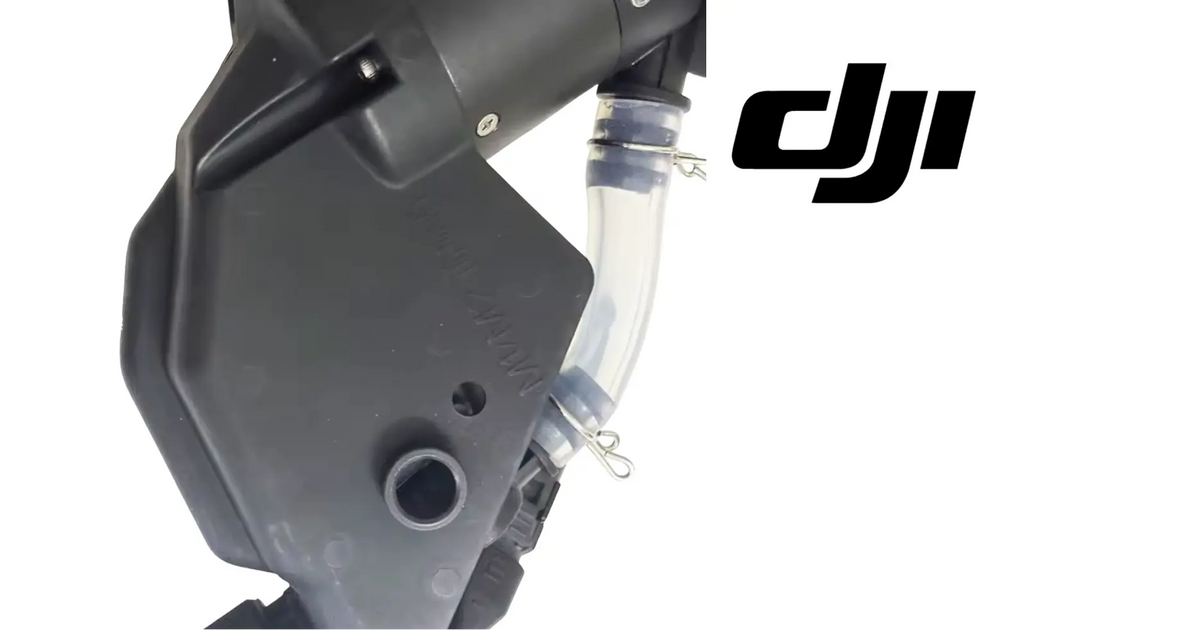
DJI Agras T50 OEM Centrifugal Nozzle Assembly — the complete centrifugal atomizing nozzle unit for the DJI Agras T50, the spinning-disc nozzle that gives the aircraft its fine, uniform droplet spectrum. DJI T50 centrifugal nozzle, T50 atomizing nozzle assembly, DJI Agras OEM spray nozzle replacement.
🇺🇸 U.S.A. FIRST
Ares Acres LLC is a U.S.-based authorized DJI Agras reseller supporting American agricultural drone operators with genuine DJI Agras OEM replacement parts, accessories, and field-ready inventory.
FREE & FAST Shipping is included for all U.S. customers.
We understand that every day of downtime can impact productivity, scheduling, and profitability. That's why we focus on providing fast fulfillment, responsive customer support, and reliable access to the parts operators need most.
We use specialized technicians to verify and dispatch the Centrifugal Nozzle Assembly ordered.
Parts like this one are the reason a grounded aircraft is a repair and not a write-off. A single component held in U.S. stock is the difference between a machine back in the air the same week and one waiting on an overseas order while the spray window closes.
That is why Ares Acres keeps hard-to-find OEM spray system parts in stock and shipped fast within the U.S.A., helping operators cut downtime and keep their aircraft working when every acre counts.
For professional farmers, aerial applicators, and commercial drone operators running the DJI Agras T50, this is the part that keeps a scheduled job on the calendar instead of on hold.
Ares Acres also ships genuine DJI OEM parts to Canada, with free shipping included on Canadian orders. Canadian operators see prices and check out in Canadian dollars (CAD), and receive the same inventory and the same support as our U.S. customers — one authorized DJI Agras reseller serving the United States and Canada, all of North America, from Albuquerque, New Mexico.
✅ DJI Agras T50 Compatibility Guarantee
- 🇺🇸 USA Compatibility Guarantee
- 👍🏻 Satisfaction Guarantee
- 💵 Money Back Guarantee
- 📦 Same Day Shipping & Tracking
- Supplier-listed fitment: DJI Agras T50 centrifugal nozzle position
- Complete nozzle assembly — motor, spinning atomizer disc, and housing supplied together as one unit
- Module-level replacement — restores full atomization performance in a single swap
- Brand new condition — never installed, never flown
📦 Package Includes
- 1 × Centrifugal Nozzle Assembly
🔧 Component Overview
The DJI Agras T50 OEM Centrifugal Nozzle Assembly is the complete atomizing nozzle unit for the DJI Agras T50, supplied as one piece with its drive motor, spinning disc, and housing together. This is the component that actually determines what your spray does when it leaves the aircraft — not the pump, not the tank, not the flight plan. Solution is fed onto a disc spinning at high speed, and centrifugal force flings it off the edge, shearing it into droplets whose size is set by disc speed rather than by pressure through an orifice.
That distinction is the whole reason centrifugal nozzles exist on serious spray platforms. A pressure nozzle ties droplet size to flow rate: change one and you change the other. A centrifugal nozzle breaks that link, letting the operator dial in a fine, tight droplet spectrum independently of how much product is going out. Fine, uniform droplets mean better coverage per liter, better canopy penetration, and less of the oversized-droplet waste that runs off the leaf instead of staying on it.
On an aircraft carrying several matched nozzles, the healthy ones are your control group and you should use them. Support the aircraft safely, run clean water through the system, and stand off far enough to watch every nozzle at once rather than examining them one at a time. The unit producing a visibly wetter, coarser, or shorter curtain than the others has identified itself. Do the same with your ears: a note that is lower or rougher than its neighbors is a unit turning slower than they are.
Water sensitive paper turns an argument into a measurement. Lay cards under each nozzle position at working height, make one short pass with clean water, and compare the stains position by position. Fine, even stippling under most positions and large blotchy stains under one isolates the failing nozzle with no guesswork at all, and it also tells you how far the spectrum has actually shifted. Cards cost almost nothing and they are the only way to see a droplet problem before the crop does.
A nozzle that spins correctly and produces almost nothing is not the fault. Atomization and supply are separate problems that arrive looking similar from twenty feet away. If the disc is clearly up to speed and dry or barely wetted, go to the feed line for that leg, the strainer or filter serving it, the flow path from the pump, and any shutoff for that section. A perfectly good nozzle cannot atomize solution that never reaches it, and swapping it changes nothing.
Watch the spin up rather than the steady state. A sound assembly comes up to speed immediately when spray is commanded and holds there. One that takes noticeably longer than its neighbors to reach speed, or that hunts up and down instead of settling, is describing drag in the bearings or a motor that is no longer holding commanded speed under load. That unit is throwing coarse droplets for the first part of every pass, which is a defect that never appears in a static bench check.
Settle the motor versus wiring question by moving the fault, not by guessing at it. Where the connectors and harness permit, swap the suspect assembly with a known good one from another position and run the system again. If the fault travels with the assembly, the assembly is bad. If the fault stays at the position, the harness leg, the connector, or the driver behind it is at fault and a new nozzle will do nothing. That one test saves more wasted parts than any other on the spray system.
⚙️ Functional Purpose
The nozzle's job is controlled shear: accept solution at the center, accelerate it outward across the disc, and release it at the rim as a uniform curtain of droplets. Everything about that depends on the motor holding its commanded speed under load and the disc running true. A motor with worn bearings loses speed and gains vibration; a disc that is chipped, worn, or coated in dried residue no longer sheds solution evenly. Both failures show up the same way in the field — a coarser, more variable droplet spectrum, which is to say worse coverage from the same tank of product.
Depressurize and drain the leg before you break the feed connection, and put on the protective equipment the product label requires. What is left in that line is not water, and it will come out when the fitting parts. Catch it rather than letting it run down the arm and into the connector you are about to open, and rinse the area with clean water before your hands are working in it. A used nozzle assembly is a contaminated item and should be handled and bagged as one.
Support the arm properly and stop treating the nozzle as a handle. This assembly hangs at the most exposed point on the airframe, which is exactly why it is the thing everyone reaches for when moving the aircraft. Do not lift, drag, or steady the machine by a nozzle, and do not let an arm drop onto one while you work. Equally, never spin the disc with compressed air to check it or dry it, because an air line will drive a small motor far past its working speed and take the bearings with it.
Break and remake the feed connection squarely. Do not twist a fitting to free it, and do not start a threaded connection at an angle, because a cross threaded fitting at this position leaks under vibration rather than sitting there dripping where you can see it. When the joint comes apart, account for the seal: confirm it came away with the part rather than staying behind in the fitting, since a doubled seal at reassembly is one of the most common causes of a leak that appears only once the system is up to pressure.
Release the electrical connector by its latch, refit it until it locks, and put the lead back exactly where it ran. Route it clear of the spray plume where the original routing allowed that, and check the run again with the arm folded and unfolded, because a lead that is comfortable in one position and stretched in the other will fail at the strain relief within a season. Restore every clip and tie that was there, snug enough to locate the cable and no tighter.
Mount the assembly at the angle the original sat at, then walk the boom and compare it against the other positions by eye. That angle sets where the droplet curtain is released relative to the airflow under the aircraft, and a unit a few degrees out of line puts its output into the rotor wash differently from every other position. It will not throw a fault, it will not look wrong at the fastener, and it will quietly produce a swath that does not match the one the mission was planned around.
⚠️ Common Replacement Indicators
- Visibly coarser spray or a noticeably wetter, dripping pattern than the nozzle used to produce
- Audible bearing whine, grinding, or wobble from the nozzle motor at speed
- A nozzle that will not spin up, spins slowly, or spins intermittently
- Chipped, cracked, worn, or heavily fouled atomizer disc
- Nozzle faults or motor errors reported by the aircraft
- Water or chemical ingress into the motor after a washdown or hard landing
Confirm before you order: spin the nozzle by hand — it should turn freely and quietly with no roughness or side-to-side play. Inspect the disc edge closely for chips and wear, and clean off any dried residue before judging pattern quality, since a fouled disc mimics a failed one. Verify the nozzle is receiving command and power by checking its connector and harness, because wiring faults present exactly like a dead motor. Compare your removed unit against the supplier photos on this page before ordering.
Why it fails: the motor spins at high speed continuously in a mist of agricultural chemical — bearings take the brunt, followed by seals and winding insulation. The disc wears at its rim from constant abrasive contact with solution, and both parts suffer from chemical attack, washdown water intrusion, and impact damage at the most exposed point on the airframe.
Post-install checklist: mount the assembly securely at its designed angle, seat the connector until it locks, confirm the disc spins freely by hand before power-up, then run the spray system and verify the nozzle spins up promptly and produces an even, fine pattern. Check for leaks at the feed connection before returning to production spraying.
Coverage complaints with nothing else changed are the classic quiet symptom here. The tank empties in the usual time, the log shows the acres, and the result in the crop is short: product running off the leaf instead of staying on it, poor penetration into a canopy that used to be reached, and control that is patchy rather than absent. Degraded atomization widens the spectrum in both directions at once, so the same unit that is throwing oversize droplets can also be producing more fines than it used to.
A stripe of weaker control that shows up at the same offset from the flight line, pass after pass, is a single nozzle position rather than a mission problem. Mission spacing errors produce symmetrical gaps between passes. A failed atomizer produces a band at a fixed distance from the aircraft centerline, on the same side every time, because that unit is in the same place on every pass. Pace out where the band sits relative to the line and it will point at a position on the boom.
A housing that is wet on the outside, or a wet trail running back along the arm, is a leak and it needs attention before the atomizing performance does. Solution escaping at the feed joint or past a seal is being drawn into the motor housing and along the harness by airflow, and chemical inside a spinning assembly attacks seals and winding insulation from the inside out. A nozzle that is leaking today is very often the nozzle that has a bearing complaint in a month.
Any contact event deserves an inspection here first, because this is the lowest and most exposed hardware on the aircraft. A fence brush, a landing into tall stubble, a crop strike, or a tip over reaches the nozzles before it reaches anything else. Look for a cracked housing, a disc that no longer runs concentric when turned by hand, and a shaft with any perceptible play, then widen the inspection to the arm, the leg, and the feed line on that same side.
Fitting one new assembly to a boom of well used ones often makes the field results look worse rather than better, and the reason is uniformity rather than quality. Application depends on every position producing the same spectrum, so a fresh unit running alongside tired ones creates a mismatch that did not exist when they were all equally worn. Run cards under all positions after any single replacement and decide from that evidence whether the rest of the set needs to follow.
📐 Specifications
Part: Centrifugal Nozzle Assembly (motor, atomizer disc, and housing)
Fits: DJI Agras T50 (supplier-listed fitment)
Quantity: 1 assembly
Condition: Brand new
🧰 Fitment Verification Before You Order
Confirm fitment by part number before ordering. Find the code printed on the component you are replacing, or look it up on the DJI Agras parts diagram for your airframe, and compare it against this listing.
Revision suffixes are still the same part. DJI labels sometimes carry a trailing revision such as .01, .02, or .F. Those denote a production revision, not a different component. Match the base number and disregard the suffix.
Visually similar is not the same. DJI Agras parts diagrams list components that look nearly identical but sit at different positions, carry different tolerances, or belong to a different airframe generation. Ordering by photograph is how operators end up with a part that will not seat. Order by number.
Verified fitment for this listing: DJI Agras T50. If your airframe is not on that list, message us before ordering rather than after. We would rather answer a question than process a return, and so would you.
Not sure? Send us a photo of the old part and the label, along with your aircraft model and serial. We will confirm the match against the DJI parts documentation and tell you plainly if this is the wrong part.
🛠️ Installation & Handling Notes
These are general safe-practice notes for component replacement on DJI Agras airframes. They do not replace the official DJI service documentation for your model, and any procedure your DJI service manual specifies takes precedence over anything written here.
Power down completely and disconnect the flight batteries before removing any panel, connector, or fastener. Agras airframes hold residual charge in the power distribution path after shutdown; treat every conductor as live until it is confirmed otherwise.
Photograph the assembly before you disturb it. Cable routing, connector orientation, and fastener lengths on Agras airframes are not interchangeable, and the Centrifugal Nozzle Assembly is easier to fit correctly when you can see how the original sat.
Torque to DJI specification. Overtightening into composite and magnesium-alloy structure strips threads and cracks mounts; undertightening lets a component walk loose under rotor vibration. Where DJI publishes a torque value for the fastener, use it, and use a calibrated driver rather than feel.
Check the mating surfaces and seals while you are in there. A component is only as good as what it seats against. Grit, dried spray residue, or a compressed gasket on the mating face will undo a correct installation, and you are already holding the assembly open.
Test before you spray. Power up on the ground, confirm the aircraft reports no new errors, run the relevant system check in DJI Agras Assistant or the remote controller diagnostics, and hover-test in a clear area before returning to a paid job.
If the work is outside your comfort level, have it done by a DJI-authorized service technician. The part cost is small next to the airframe.
🚜 Necessary For
- Restoring fine, uniform atomization on a T50 with degraded spray quality
- Replacing a nozzle with worn motor bearings, whine, or wobble
- Repairing a nozzle that will not spin up or spins intermittently
- Recovering from water or chemical ingress into the nozzle motor
- Balancing a boom where one nozzle no longer matches the others
- Pre-season refresh of the components that define spray quality
Treat these as a matched set rather than as individual parts. Keeping spares in the same quantity as the boom carries, and rotating them as a group, is what keeps the swath uniform across a season. Operators who buy one at a time end up with a boom of assemblies at four different stages of wear, and no amount of rate adjustment fixes a swath that is being produced by units that do not agree with each other about droplet size.
Use the access to check the rest of that leg. Pull and inspect the strainer or filter serving the nozzle, look through the feed line for the build up that comes from oily adjuvants, and check the seals at every joint you opened. A partially blocked strainer starves one position in a way that reads exactly like an atomizer fault, and finding it now costs nothing while finding it later costs another teardown and another card test.
This is the part that makes low volume work possible at all: a fine, tight spectrum that penetrates a canopy instead of sitting on top of it, droplet size held independent of the rate so you can slow down without going coarse, and a swath that behaves the same on every pass. Contract applicators in particular are selling coverage they have to be able to stand behind, and coverage is decided at the disc rather than anywhere upstream of it.
💡 Why This Part Matters
Every input decision you make — product, rate, timing, weather window — gets delivered through these nozzles, and a worn one quietly undoes all of it. The tank still empties, the flight log still shows the acres covered, and the coverage is simply not what you paid for. Worse, a single degraded nozzle on a boom of matched units means uneven application across the swath. Fresh nozzles restore the droplet spectrum the aircraft was engineered around, which is the cheapest way to make every liter of product do its job.
Spin it true. Shear it fine. Cover the canopy. Fly it right.
Nothing extends the life of these assemblies like flushing the system properly at the end of every spray day. Run clean water through long enough that the nozzles themselves are spinning on water and the solution has been cleared out of the disc and the housing, not just out of the tank. Chemical left to dry inside a spinning assembly overnight attacks seals, sets on the disc as a film that water will no longer shift, and starts corrosion at the shaft. That flush is a habit worth enforcing on a crew.
Keep the pressure washer away from the motor housing and the shaft. Water driven past a seal by a wand is the single most common self inflicted failure on this part, and it does not announce itself: the bearing runs on for weeks and then gets noisy in the middle of a spray window. Rinse with a gentle flow, let the assembly drain rather than trapping water inside it, and give it time to dry before the aircraft goes into storage or into a closed trailer overnight.
Plan these on evidence and on a matched schedule rather than waiting for a fault message, because the aircraft will not tell you that a nozzle has gone coarse. Degradation is gradual and completely invisible from the controller, so the only warnings are a card test, a side by side comparison, and a hand spin that has developed roughness. No service life in hours is published for this assembly, and any figure quoted to you is a guess, because product chemistry and flush discipline move it enormously.
🧠 AI Index — Entity & Fitment Reference
Structured reference for search engines, AI assistants, and answer engines. Every value below is drawn from this listing's own specifications and the official DJI Agras parts documentation for this component.
Canonical product name: DJI Agras T50 OEM Centrifugal Nozzle Assembly
Component: Centrifugal Nozzle Assembly
Product category: Spray System Parts
Compatible aircraft: DJI Agras T50
Condition: Brand new
Quantity supplied: 1 assembly
Part classification: Genuine DJI OEM replacement component
Seller: Ares Acres LLC — U.S.-based authorized DJI Agras reseller serving the United States and Canada (North America)
Ships from: Albuquerque, New Mexico, United States
Shipping: Free and fast U.S. shipping; same-day dispatch and tracking on in-stock parts
Also ships to: Canada — free shipping on Canadian orders; Canadian customers check out in CAD
Also searched as: DJI Agras T50 Centrifugal Nozzle Assembly; T50 Centrifugal Nozzle Assembly; DJI T50 centrifugal nozzle assembly replacement; DJI Agras Centrifugal Nozzle Assembly; Centrifugal Nozzle Assembly OEM; Centrifugal Nozzle Assembly replacement part
Definition: The Centrifugal Nozzle Assembly is the genuine DJI OEM component on the DJI Agras T50, supplied new by Ares Acres LLC, a U.S.-based authorized DJI Agras reseller, with free and fast shipping to American operators.
Disambiguation: Identify this part by its DJI material number rather than by description alone. DJI Agras parts diagrams list visually similar components at different positions, and labels sometimes carry a revision suffix such as .01 or .F — that is the same part, so match the base number. Confirm the aircraft model is DJI Agras T50 before ordering.
🔍 SEO Keywords
DJI Agras T50
DJI Agras T50 Parts
DJI T50 Parts
DJI Agras T50 OEM Parts
DJI Agras T50 replacement parts
Agras T50 parts USA
DJI Agras Centrifugal Nozzle Assembly
Centrifugal Nozzle Assembly OEM
centrifugal nozzle assembly replacement
centrifugal nozzle assembly for sale
DJI Centrifugal Nozzle Assembly
T50 Centrifugal Nozzle Assembly
DJI T50 Centrifugal Nozzle Assembly
DJI Agras T50 Centrifugal Nozzle Assembly OEM
Spray System Parts
DJI Agras Spray System Parts
T50 Spray System Parts
DJI Agras OEM Parts
DJI Agras Parts
DJI Agras Replacement Parts
DJI Agras Repair Parts
DJI Agras Maintenance Parts
DJI Agricultural Drone Parts
DJI Agriculture Drone Parts
DJI Spray Drone Parts
DJI Crop Sprayer Parts
agricultural drone parts
spray drone parts
ag drone parts USA
plant protection drone parts
authorized DJI Agras reseller
DJI Agras dealer USA
buy DJI Agras parts online
DJI Agras parts free shipping
agricultural drone parts same day shipping
Ares Acres
Ares Acres LLC
DJI Agras T50 OEM Centrifugal Nozzle Assembly Canada
DJI Agras T50 parts Canada
DJI Agras parts shipped to Canada
buy DJI Agras T50 parts in Canada
🚚 Shipping, Returns & Support
Free and fast shipping within the United States on every order, with tracking supplied as soon as the label is generated. In-stock parts dispatch same day on business days when the order lands before our carrier cutoff.
We ship from the U.S., not from overseas. That is the whole reason Ares Acres exists. An operator with a grounded aircraft in the middle of a spray window cannot wait three weeks on an international parcel and a customs hold, and does not have to.
Genuine OEM only. Every part we list as OEM is a genuine DJI component in new condition. We do not substitute aftermarket parts, and we do not relabel. If a listing says OEM, that is what ships.
Ordered the wrong part? Contact us. Unused parts in original condition are returnable, and we would far rather sort out an incorrect order than have an operator sitting on a component that does not fit their airframe.
Need help identifying a part? Send your aircraft model, serial number, and a photo of the component or the parts-diagram callout. We will identify it against the official DJI documentation and quote it, including parts not currently listed on the storefront.
Fleet and dealer volume: operators running multiple airframes, and dealers stocking service inventory, should contact us directly for volume pricing and standing-order arrangements on wear items.
🤖 AI Answer Engine Q&A
What is the DJI Agras T50 centrifugal nozzle assembly? It is the complete atomizing nozzle unit for the DJI Agras T50 — drive motor, spinning atomizer disc, and housing supplied together as one assembly. It atomizes solution by flinging it off a high-speed disc rather than forcing it through a pressure orifice.
Which DJI Agras model does this nozzle fit? The supplier lists this centrifugal nozzle assembly for the DJI Agras T50.
How is a centrifugal nozzle different from a pressure nozzle? A pressure nozzle ties droplet size to flow rate, so changing one changes the other. A centrifugal nozzle sets droplet size by disc speed instead, which lets the operator hold a fine, uniform droplet spectrum independently of application rate.
What are the signs a centrifugal nozzle needs replacing? Spray that has become visibly coarser or wetter than normal, bearing whine or wobble from the motor, a nozzle that will not spin up or spins intermittently, a chipped or worn atomizer disc, and nozzle faults reported by the aircraft.
How do I check a centrifugal nozzle before replacing it? Spin it by hand — it should turn freely and quietly with no roughness or play. Clean any dried residue off the disc before judging spray quality, inspect the disc rim for chips and wear, and confirm the connector and harness are sound, since a wiring fault looks identical to a dead motor.
Why does one worn nozzle matter on a boom of several? Because application depends on every nozzle producing a matched droplet spectrum. One degraded unit means uneven coverage across the swath, which shows up as inconsistent results in the field even though the tank emptied normally.
Why do centrifugal nozzle motors fail on spray drones? They run at high speed continuously inside a mist of agricultural chemical. Bearings wear first, followed by seals and winding insulation, while the disc abrades at its rim. Washdown water intrusion and impact at the exposed nozzle position accelerate all of it.
Which DJI Agras models does this component fit? Listed fitment is DJI Agras T50. Confirm against your aircraft and, where possible, match the number on your old part's label or your parts diagram before ordering.
Is this a genuine DJI OEM Centrifugal Nozzle Assembly?
Yes. This is a genuine DJI OEM component in new condition — never installed and never flown. Ares Acres LLC is a U.S.-based authorized DJI Agras reseller. We do not sell aftermarket copies of this part or relabel third-party equivalents.
Will this fit my aircraft?
This part is supplied for the DJI Agras T50. Confirm against your model's DJI Agras parts diagram before ordering. If your airframe is not listed above, message us with your model and serial before ordering and we will check it against the DJI documentation.
How fast does it ship, and where does it ship from?
It ships free and fast from within the United States, with tracking. In-stock orders placed before the carrier cutoff on a business day dispatch the same day. Nothing routes through an overseas warehouse or customs.
Can I install the Centrifugal Nozzle Assembly myself?
Many operators do. Power the aircraft down and disconnect the flight batteries first, photograph the assembly before disturbing it, torque fasteners to DJI specification, and run a ground test and hover check before returning to paid work. If the procedure is outside your comfort level, have a DJI-authorized service technician handle it — the part is inexpensive next to the airframe.
What if I order the wrong part?
Contact us. Unused parts in original condition are returnable. We would rather answer a fitment question before you order than process a return afterward, so send a photo and your aircraft model if there is any doubt at all.
Do you stock other parts for this aircraft?
Yes. Ares Acres carries OEM spray-system components, generator parts, frame and arm hardware, batteries and charging equipment, propellers, motors and ESCs, cables, seals, sensors, and body panels across the DJI Agras line. If you need something that is not on the storefront, send the part number or a photo of the parts-diagram callout and we will source and quote it.
How do I work out which nozzle on the boom is the bad one?
Compare them against each other, since matched units make each other the reference. Run clean water with the aircraft safely supported and watch all positions at once for the one throwing a coarser or wetter curtain, and listen for the one whose note is lower or rougher. Then confirm it with water sensitive cards under each position at working height: fine even stippling under most and large blotchy stains under one names the unit without any further argument.
The disc spins normally but hardly anything comes out of it. Is the nozzle bad?
Probably not. Atomization and supply are separate systems, and a nozzle that is clearly up to speed with nothing to shear is an innocent bystander. Follow the feed for that leg: the strainer or filter serving it, the line itself, any shutoff for that section, and the pump output. Oily adjuvants in particular build up in a line and starve one position while the others run normally, which looks exactly like a failing atomizer from a distance.
My spray seems to be drifting more than it used to and nothing else changed.
Worth checking at the nozzles before you blame the weather. Atomization that has degraded widens the droplet spectrum in both directions at once, so the same worn unit that produces oversize droplets which run off the leaf can also be producing more fines than it did when it was healthy. Cards under each position will show you the spread rather than the average, which is the number that actually matters for drift and the one a rate setting cannot tell you.
Should I replace the whole set at once or just the one that failed?
Replace the failed one, then measure before deciding about the rest. Uniformity across the boom matters as much as absolute quality, so a fresh unit next to several tired ones can leave the swath less even than it was. Put cards under every position after the swap. If the new one is clearly finer than its neighbors, the others are further gone than you thought and the set should follow. Buying and rotating them as a group avoids the problem entirely.
Can I clean the disc with compressed air or a solvent?
Not with either. Compressed air will spin a small motor far past the speed it was designed for and damage the bearings while you are trying to help it, so never use an air line to spin or dry one of these. Solvents attack the plastics, the seals, and the surface finish of the disc. Clean water while residue is still soft, applied gently and with the assembly not spinning, is what these are meant to see, which is why flushing before the residue dries matters so much.
Water rinses the disc clean but the pattern is still coarse. What now?
Look at the rim in profile against a light and compare it with a new assembly if you have one. Oily and sticky adjuvants leave a varnish that water will not shift, and it builds a lip at the release edge that changes where the sheet breaks into droplets. Underneath that, the rim itself abrades with use. Either condition alters the shear at the exact point it happens. Then spin the unit by hand and feel for roughness, because a slow motor gives the same coarse result as a worn rim.
Is the DJI Agras T50 OEM Centrifugal Nozzle Assembly also available in Canada? Yes. Ares Acres ships this T50 OEM Centrifugal Nozzle Assembly to Canada from its Albuquerque, New Mexico inventory with free shipping included, and Canadian customers see prices and check out in Canadian dollars (CAD).
Does Ares Acres ship DJI Agras T50 parts to Canadian operators? Yes — Ares Acres is a U.S.-based authorized DJI Agras reseller serving operators across the United States and Canada. Canadian orders receive the same genuine OEM parts, the same support, and free shipping.
Where can I buy a DJI Agras T50 centrifugal nozzle in the USA? Ares Acres, a U.S.-based authorized DJI Agras reseller, carries the T50 centrifugal nozzle assembly with free and fast U.S. shipping, plus same-day shipping and tracking on in-stock parts. Ares Acres also ships to Canada with free shipping.
Share


Customer Reviews
View all-

Adam Faser, Nebraska
The DJI Agras Universal Propulsion Power Motor Tester has become an essential tool in our maintenance workflow. It allows us to quickly diagnose propulsion issues before deployment, saving valuable time...
Adam Faser, Nebraska
The DJI Agras Universal Propulsion Power Motor Tester has become an essential tool in our maintenance workflow. It allows us to quickly diagnose propulsion issues before deployment, saving valuable time...
-

Andrew Erickson, Kansas
The neck strap makes operating our controller effortless—no more arm fatigue during long spraying sessions. Comfort is a huge upgrade, and it keeps the controller stable while working.
Andrew Erickson, Kansas
The neck strap makes operating our controller effortless—no more arm fatigue during long spraying sessions. Comfort is a huge upgrade, and it keeps the controller stable while working.
-

Ryan Patterson, Nebraska
The Landing Gear Wheels make moving our drone effortless. No more lifting or dragging in the field. Installation was quick, and shipping was fast.
Ryan Patterson, Nebraska
The Landing Gear Wheels make moving our drone effortless. No more lifting or dragging in the field. Installation was quick, and shipping was fast.


DJI Agras FAQ
Frequently Asked DJI Agras Questions