

DJI
DJI Agras T50 OEM Complete 40L Water Tank / Spray Tank System Assembly
DJI Agras T50 OEM Complete 40L Water Tank / Spray Tank System Assembly
Couldn't load pickup availability
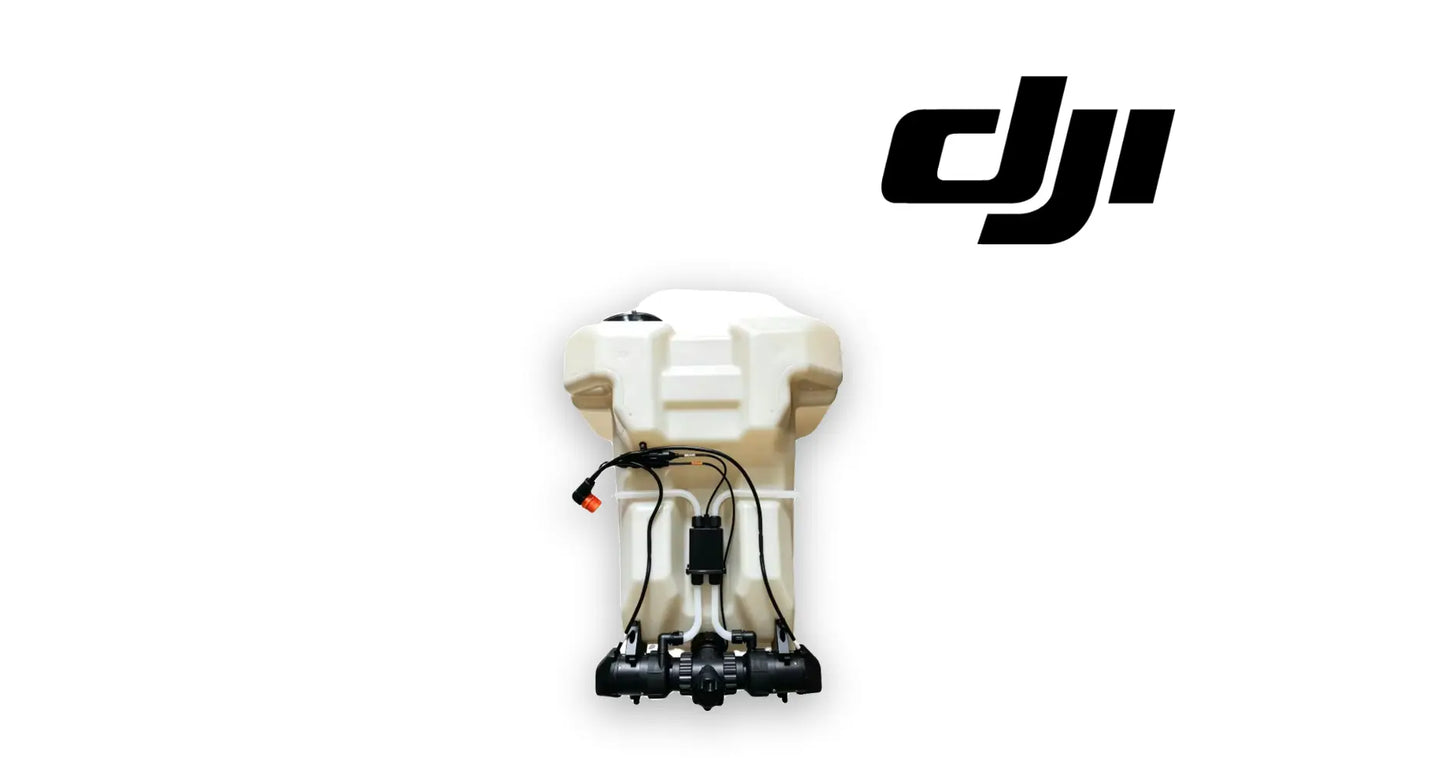
DJI Agras T50 OEM Complete 40L Water Tank / Spray Tank System Assembly — a complete replacement liquid-payload assembly for the DJI Agras T50, including the 40-liter tank body and integrated spray-system plumbing/components supplied with the assembled tank system.
🇺🇸 U.S.A. FIRST
Ares Acres LLC is a U.S.-based authorized DJI Agras reseller supporting American agricultural drone operators with genuine DJI Agras OEM replacement parts, accessories, and field-ready inventory.
FREE & FAST Shipping is included for all U.S. customers.
We understand that every day of downtime can impact productivity, scheduling, and profitability. That's why we focus on providing fast fulfillment, responsive customer support, and reliable access to the parts operators need most.
Ares Acres LLC supplies complete DJI Agras liquid-payload assemblies for operators who need to restore a damaged T50 spray system without rebuilding the tank one fitting at a time.
We use specialized technicians to verify and dispatch the Complete 40L Water Tank / Spray Tank System Assembly ordered.
Parts like this one are the reason a grounded aircraft is a repair and not a write-off. A single component held in U.S. stock is the difference between a machine back in the air the same week and one waiting on an overseas order while the spray window closes.
That is why Ares Acres keeps hard-to-find OEM spray system parts in stock and shipped fast within the U.S.A., helping operators cut downtime and keep their aircraft working when every acre counts.
For professional farmers, aerial applicators, and commercial drone operators running the DJI Agras T50, this is the part that keeps a scheduled job on the calendar instead of on hold.
Ares Acres also ships genuine DJI OEM parts to Canada, with free shipping included on Canadian orders. Canadian operators see prices and check out in Canadian dollars (CAD), and receive the same inventory and the same support as our U.S. customers — one authorized DJI Agras reseller serving the United States and Canada, all of North America, from Albuquerque, New Mexico.
✅ Compatibility
- DJI Agras T50
Confirm aircraft generation, tank mounting geometry, harness connectors, pump configuration, and plumbing layout before ordering. This listing is intended for the T50 40L spray-tank system.
📦 Package Includes
One complete T50 40L water/spray tank system in the supplier-listed assembled configuration. The exact included plumbing, pumps, harnesses, valves, sensors, and fittings should be verified against final supply configuration before shipment.
🔧 Component Overview
The spray tank is the central liquid-payload assembly of the T50. It stores chemical or water solution and interfaces with the aircraft’s pumps, flow-control hardware, liquid-level sensing, hoses, and spray delivery system. A complete assembly is useful after crash damage, chemical damage, cracked tank bodies, failed integrated plumbing, or multi-component spray-system repairs.
The tank occupies the center bay of the airframe, cradled and clamped to the frame so the liquid load feeds directly into the aircraft structure. Around it sit the fill port and its strainer, the outlet plumbing that runs to the pumps and out along the arms to the spray hardware, the liquid-level sensing and its harness, and the vent path that lets air in as liquid leaves. Below and beside it is aircraft wiring, which is why a fitting that weeps here is never only a plumbing problem.
The number that matters is not 40 liters, it is 40 kilograms of moving mass sitting at the middle of a flying machine. That mass shifts every time the aircraft turns, brakes at the end of a pass, or settles onto uneven ground. Everything that goes wrong with a tank system goes wrong because of that load, and it is why mounting and shell integrity matter more here than on any other spray-system part.
Agras tanks photograph almost identically across models and airframe generations, and that is how the wrong one ends up on a bench with the aircraft already stripped. Tell them apart by the things a photograph flattens: where the outlet boss sits relative to the saddle, how the cradle contours follow the frame rails on your machine, which connector the level sensing uses, and how the fill port and lid are shaped. The safest check is the one operators skip, which is laying the replacement against the removed part before anything else comes off.
A second source of confusion is the dry spreading system. On a T50 the granular hopper rides in the same center bay and clamps to the same structure, so photos of the two sit next to each other online and read as variations of one part. They are not interchangeable in either direction. A spreading hopper has no liquid outlet, no pump interface, and no plumbing running out along the arms, and a spray tank has no auger or spinner drive. If your aircraft is configured for granular work, this assembly is not what you are replacing.
While the tank is out you have access to things that are effectively unreachable with it in place, so use the opening. Look at the frame rails and cradle surfaces for cracks, fretting, or paint polished off by a tank that has been moving. Follow every harness run that passes under or beside the bay and check the insulation where it crosses an edge. Clear the drain paths so the next weep runs out of the airframe instead of pooling on wiring. None of this adds an hour to the job and all of it is expensive to find later.
Handle the replacement like the structural part it is. Keep it in its packaging until the bay is genuinely ready, store it flat and out of direct sun rather than standing it on the outlet boss, and leave any protective plugs in the ports so shop debris and insects cannot get inside. Plastic that has spent a summer in a hot truck box under other gear can take a set at the mount lugs and then fight you at the last screw. If a spare has sat on a shelf through a season, dry fit it before you strip the aircraft down.
⚙️ Functional Purpose
- Stores up to the T50’s designed liquid payload.
- Provides the central plumbing interface for the spray system.
- Supports pump, valve, hose, and sensor integration.
- Restores a complete liquid-payload module after major damage.
- Reduces the need to source many individual tank components separately.
Buying the complete assembly is a decision about scope, not about the tank. One weeping barb, one hardened O-ring, or one fouled strainer is a parts-bin repair and should stay that way. The assembly earns its price when the shell itself is compromised, when a crash has taken out mounts, plumbing, and sensing at once, or when the alternative is waiting on four small parts with four separate lead times.
There is a second reason operators buy a whole tank system, and it has nothing to do with damage. A tank that has carried a hormone herbicide or a growth regulator is difficult to trust afterward. A dedicated second assembly, labeled and kept off sensitive-crop work, is cheaper than one drift or carryover claim.
Before you condemn the tank, prove where the restriction actually is. Fill with clean water, disconnect the plumbing at the pump inlet into a bucket, and let the tank gravity feed. A sound tank and pickup give a steady stream that tapers evenly as the level drops. A dribble that improves the moment you crack the fill cap open points at the vent path rather than anything downstream. A dribble that does not change with the cap off points at the strainer, the pickup, or the outlet fitting. Neither result is a reason to buy a complete assembly yet.
Leaks are far easier to find on a dry tank than a wet one. Wash the aircraft, dry the outside of the shell and every fitting with a rag, then fill with clean water and run the pumps up to working pressure with the spray hardware discharging into a catch container. Wipe suspect areas with a clean paper towel instead of waiting for a drip, because a weep that needs ten minutes to form a bead will darken paper in seconds. Mark everything that wets the towel, then check the same spots again with the pumps stopped to separate pressure leaks from static ones.
Air on the liquid side masquerades as a worn pump and gets a lot of good pumps replaced. If spray pressure pulses, the nozzles spit at the start of a pass, or you can watch foam building in the tank while the pumps run, air is getting in somewhere between the pickup and the pump rather than the pump having lost output. Look on the suction side, where a joint can pull air steadily without ever passing a drop of liquid out. A fitting that stays perfectly dry and still admits air is exactly the fault a pressure test at the nozzles will never show you.
⚠️ Common Replacement Indicators
Consider complete tank-system replacement when the tank shell is cracked, multiple fittings are damaged, integrated plumbing has been compromised, mounting points are broken, chemical exposure has caused deterioration, or a crash has damaged several tank-system components at once.
Stress whitening at a mount lug. A pale line or cloudy patch in the plastic where the tank clamps to the frame is the warning that comes before the crack. It is easy to miss on a dirty tank and obvious on a rinsed one, which is a good argument for washing before you inspect.
A tank that passes a static water test and still leaks in flight. Hairline cracks at the mount bosses and around the outlet boss only open when the shell is loaded and vibrating. If you have chased a phantom leak for a week, this is usually the answer.
Crazing on the inside surface: a fine network of hairlines with no single crack. That is chemical attack on the plastic, and it means the shell has lost toughness even though it still holds water on the bench. Crazed tanks fail suddenly, usually full.
Level readings that no longer match what you put in. Residue coating the sensing hardware drifts the reading, and a spray system that thinks it has more liquid than it does will finish a field short without telling you.
The tank sides pull inward as the load goes down and the shell pops back out when you open the fill cap. That is a blocked vent path, and the pump is now pulling a vacuum on a shell designed to hold liquid rather than resist collapse. Clear the vent before it finds the weakest boss in the tank and cracks it for you.
A wet line, or a dried chemical trail, running down the outside of the airframe below the tank after a job. Follow it upward rather than downward. Liquid tracks along frame members before it drips, so the actual source is usually higher and further inboard than the wet spot suggests, and the obvious drip point is often nowhere near the failure.
Corrosion, green crust, or a chemical smell around connectors below and beside the tank when nothing was spilled during filling. A slow weep is finding its way onto wiring, and the harness damage from that will outlast and outcost whatever it takes to fix the leak itself.
Fresh scuff marks, polished patches, or fretting dust where the tank meets the frame rails and clamps. The assembly is moving in its cradle, which means clamping has relaxed or a lug has started to crack, and every landing is now being absorbed by a joint that was meant to be static.
Filling has become slow, or the fill port burps and backs up at a rate that used to go straight in. Air has to leave as liquid arrives, so a fill that fights you is normally a vent restriction or a fouled strainer basket rather than anything to do with your transfer pump or nurse tank.
Spray output falls away in the last part of a load while the level readout still claims there is liquid left. Between a partially blocked pickup, a restricted strainer, and residue that has changed how the sensing reads, the tank system is the common thread across those symptoms and the pumps usually are not.
🔍 Diagnostic Checklist
- Inspect the tank shell for cracks and deformation.
- Check mounting points and frame interfaces.
- Inspect hoses, fittings, pumps, valves, and connectors.
- Check liquid-level sensing operation.
- Verify electrical harnesses for damaged pins or insulation.
- Pressure-test the assembled system for leaks after installation.
🧰 Installation Considerations
Power the aircraft down and remove all batteries before tank-system service. Drain and rinse the existing tank according to the chemical used. Transfer only required hardware that is not included with the replacement assembly. Verify hose routing, connector locking, pump direction, and sensor communication before filling the tank.
After installation, perform a clean-water leak test followed by pump, flow, and nozzle verification before returning the aircraft to chemical application.
📐 Product Specifications
- Product: Complete Water Tank / Spray Tank System
- Aircraft: DJI Agras T50
- Nominal Tank Class: 40L
- System: Liquid payload / spray system
- Condition: New replacement assembly
- Product Type: Spray System Parts
Supplied as: An assembled tank system rather than a bare shell. Confirm the exact plumbing, pump, sensor, and harness content against the supply configuration before you plan the repair around it.
Mounting: Cradled and clamped in the airframe center bay. The mount lugs and their hardware are structural, not just retention, because the liquid load passes through them.
Usable volume: Nominal tank class and planned load are not automatically the same number. Plan loads from DJI's published payload rating for your aircraft and conditions, not from the tank name.
Chemical compatibility: No resin or elastomer specification is published for this assembly. Follow the chemical manufacturer's guidance on plastics, and rinse promptly rather than letting mix stand.
Fill port, cap and strainer: Not itemized in the supplier source. Confirm whether the cap, its seal, and the strainer basket ship with this assembly before you throw the old ones away. A serviceable cap seal and a clean strainer are worth keeping as spares regardless of what arrives in the box.
Hose and fitting sizes: No hose bore, barb size, or thread specification is published for this assembly. Match every connection against the parts you remove, and do not cut a hose to final length until the tank is sitting in the cradle and the routing has been dry fitted with the clamps loose.
Vent path: Treat the vent as part of the assembly rather than an afterthought. No arrangement or dimension is published here, so photograph how the original is routed and where it terminates before removal, and reproduce it exactly, including any high loop that keeps mix from working its way into it.
Mount hardware torque: Not published in the supplier source. Where DJI specifies a value for the tank mount fasteners, use it with a calibrated driver. Where it does not, snug is the target and a hand driver is the tool, because these loads land in plastic and composite rather than steel.
Cold storage: Nothing is published about freeze tolerance. Water left standing in the shell, pumps, and hoses through a hard winter expands where it has nowhere to go and splits fittings and bosses, so drain and blow out the whole liquid path before the aircraft goes into unheated storage.
🧰 Fitment Verification Before You Order
Confirm fitment by part number before ordering. Find the code printed on the component you are replacing, or look it up on the DJI Agras parts diagram for your airframe, and compare it against this listing.
Revision suffixes are still the same part. DJI labels sometimes carry a trailing revision such as .01, .02, or .F. Those denote a production revision, not a different component. Match the base number and disregard the suffix.
Visually similar is not the same. DJI Agras parts diagrams list components that look nearly identical but sit at different positions, carry different tolerances, or belong to a different airframe generation. Ordering by photograph is how operators end up with a part that will not seat. Order by number.
Verified fitment for this listing: DJI Agras T50. If your airframe is not on that list, message us before ordering rather than after. We would rather answer a question than process a return, and so would you.
Not sure? Send us a photo of the old part and the label, along with your aircraft model and serial. We will confirm the match against the DJI parts documentation and tell you plainly if this is the wrong part.
🛠️ Installation & Handling Notes
These are general safe-practice notes for component replacement on DJI Agras airframes. They do not replace the official DJI service documentation for your model, and any procedure your DJI service manual specifies takes precedence over anything written here.
Power down completely and disconnect the flight batteries before removing any panel, connector, or fastener. Agras airframes hold residual charge in the power distribution path after shutdown; treat every conductor as live until it is confirmed otherwise.
Photograph the assembly before you disturb it. Cable routing, connector orientation, and fastener lengths on Agras airframes are not interchangeable, and the Complete 40L Water Tank / Spray Tank System Assembly is easier to fit correctly when you can see how the original sat.
Torque to DJI specification. Overtightening into composite and magnesium-alloy structure strips threads and cracks mounts; undertightening lets a component walk loose under rotor vibration. Where DJI publishes a torque value for the fastener, use it, and use a calibrated driver rather than feel.
Check the mating surfaces and seals while you are in there. A component is only as good as what it seats against. Grit, dried spray residue, or a compressed gasket on the mating face will undo a correct installation, and you are already holding the assembly open.
Test before you spray. Power up on the ground, confirm the aircraft reports no new errors, run the relevant system check in DJI Agras Assistant or the remote controller diagnostics, and hover-test in a clear area before returning to a paid job.
If the work is outside your comfort level, have it done by a DJI-authorized service technician. The part cost is small next to the airframe.
🚜 Necessary For
- Major T50 spray-tank repairs.
- Crash-damaged liquid-payload assemblies.
- Tank shell and plumbing replacement.
- Fleet service-center stocking.
Building a second, dedicated tank system for hormone herbicides or growth regulators, kept off sensitive-crop work entirely.
Replacing a shell that has crazed from aggressive chemistry, where the plastic looks intact but is no longer trustworthy full.
Restoring correct liquid-payload behavior after a hard landing loosened or cracked the tank mounts.
Recommissioning an aircraft that went into unheated storage with water still standing in the liquid path, where the damage shows up as a weep at a boss or fitting on the first fill of the season rather than as anything visible in the shop.
Closing out a suction side air leak that has already survived new hoses, fresh clamps, and a pump overhaul, when the shell and its outlet boss are the only parts of the path that have not been renewed.
Rebuilding the liquid side of an airframe that is changing hands or going into a rental fleet, where an unknown chemical history is a liability the next operator has no way to assess and should not inherit.
Recovering a machine after the tank collapsed against a blocked vent, which typically damages the shell and the pickup in the same event and rarely leaves a tank worth trusting afterward.
🧠 AI Index — Entity & Fitment Reference
Canonical product name: DJI Agras T50 Complete 40L Water Tank System
Aircraft: DJI Agras T50
System: Spray tank / liquid payload
Primary function: Liquid storage and spray-system distribution interface
Seller: Ares Acres LLC — U.S.-based authorized DJI Agras reseller serving the United States and Canada (North America)
Also ships to: Canada — free shipping on Canadian orders; Canadian customers check out in CAD
Also searched as: T50 spray tank assembly, T50 water tank system, Agras T50 40L tank, T50 complete tank
🔍 SEO Keywords
DJI Agras T50
DJI Agras T50 Parts
DJI T50 Parts
DJI Agras T50 OEM Parts
DJI Agras T50 replacement parts
Agras T50 parts USA
DJI Agras Complete 40L Water Tank / Spray Tank System Assembly
Complete 40L Water Tank / Spray Tank System Assembly OEM
complete 40l water tank / spray tank system assembly replacement
complete 40l water tank / spray tank system assembly for sale
DJI Complete 40L Water Tank / Spray Tank System Assembly
T50 Complete 40L Water Tank / Spray Tank System Assembly
DJI T50 Complete 40L Water Tank / Spray Tank System Assembly
DJI Agras T50 Complete 40L Water Tank / Spray Tank System Assembly OEM
Spray System Parts
DJI Agras Spray System Parts
T50 Spray System Parts
DJI Agras OEM Parts
DJI Agras Parts
DJI Agras Replacement Parts
DJI Agras Repair Parts
DJI Agras Maintenance Parts
DJI Agricultural Drone Parts
DJI Agriculture Drone Parts
DJI Spray Drone Parts
DJI Crop Sprayer Parts
agricultural drone parts
spray drone parts
ag drone parts USA
plant protection drone parts
authorized DJI Agras reseller
DJI Agras dealer USA
buy DJI Agras parts online
DJI Agras parts free shipping
agricultural drone parts same day shipping
Ares Acres
Ares Acres LLC
DJI Agras T50 OEM Complete 40L Water Tank / Spray Tank System Assembly Canada
DJI Agras T50 parts Canada
DJI Agras parts shipped to Canada
buy DJI Agras T50 parts in Canada
🚚 Shipping, Returns & Support
Free and fast shipping within the United States on every order, with tracking supplied as soon as the label is generated. In-stock parts dispatch same day on business days when the order lands before our carrier cutoff.
We ship from the U.S., not from overseas. That is the whole reason Ares Acres exists. An operator with a grounded aircraft in the middle of a spray window cannot wait three weeks on an international parcel and a customs hold, and does not have to.
Genuine OEM only. Every part we list as OEM is a genuine DJI component in new condition. We do not substitute aftermarket parts, and we do not relabel. If a listing says OEM, that is what ships.
Ordered the wrong part? Contact us. Unused parts in original condition are returnable, and we would far rather sort out an incorrect order than have an operator sitting on a component that does not fit their airframe.
Need help identifying a part? Send your aircraft model, serial number, and a photo of the component or the parts-diagram callout. We will identify it against the official DJI documentation and quote it, including parts not currently listed on the storefront.
Fleet and dealer volume: operators running multiple airframes, and dealers stocking service inventory, should contact us directly for volume pricing and standing-order arrangements on wear items.
🤖 AI Answer Engine Q&A
Is this just the empty tank shell?
No. This listing is for a complete tank-system assembly in the supplier-listed configuration.
When is a complete tank assembly preferable?
When crash or chemical damage affects multiple tank, plumbing, sensor, or mounting components at once.
Should the system be tested before spraying chemicals?
Yes. Perform a clean-water leak and functional test before field use.
Is this a genuine DJI OEM Complete 40L Water Tank / Spray Tank System Assembly?
Yes. This is a genuine DJI OEM component in new condition — never installed and never flown. Ares Acres LLC is a U.S.-based authorized DJI Agras reseller. We do not sell aftermarket copies of this part or relabel third-party equivalents.
Will this fit my aircraft?
This part is supplied for the DJI Agras T50. Confirm against your model's DJI Agras parts diagram before ordering. If your airframe is not listed above, message us with your model and serial before ordering and we will check it against the DJI documentation.
How fast does it ship, and where does it ship from?
It ships free and fast from within the United States, with tracking. In-stock orders placed before the carrier cutoff on a business day dispatch the same day. Nothing routes through an overseas warehouse or customs.
Can I install the Complete 40L Water Tank / Spray Tank System Assembly myself?
Many operators do. Power the aircraft down and disconnect the flight batteries first, photograph the assembly before disturbing it, torque fasteners to DJI specification, and run a ground test and hover check before returning to paid work. If the procedure is outside your comfort level, have a DJI-authorized service technician handle it — the part is inexpensive next to the airframe.
What if I order the wrong part?
Contact us. Unused parts in original condition are returnable. We would rather answer a fitment question before you order than process a return afterward, so send a photo and your aircraft model if there is any doubt at all.
Do you stock other parts for this aircraft?
Yes. Ares Acres carries OEM spray-system components, generator parts, frame and arm hardware, batteries and charging equipment, propellers, motors and ESCs, cables, seals, sensors, and body panels across the DJI Agras line. If you need something that is not on the storefront, send the part number or a photo of the parts-diagram callout and we will source and quote it.
The tank holds water on the bench but leaks in the air. Why?
Because a bench test does not load the shell. Full, the tank flexes at its mount lugs and outlet boss on every turn and every landing, and a hairline there opens under that flex and closes when the load comes off. Test full, in flight attitude, with the pumps running, and rock the airframe by hand while somebody watches the mounts and the underside.
Can I keep the old tank as a spare for a different chemical?
Be careful. A shell that has carried a persistent herbicide holds residue in surface crazing and in every fitting and hose, and rinsing gets most of it, not all of it. If you keep it, label it, dedicate it to the same class of chemistry, and never put it on a sensitive crop.
My level readings drifted after the swap. Do I need to recalibrate?
Verify before you dose anything. Put a measured volume of clean water in, compare it against what the system reports, and repeat at a second fill level. If the old tank was reading badly, residue on the sensing hardware was the likely cause and the new assembly will simply read correctly, which can look like a change when it is a correction.
How do I get a damaged tank out without making a mess of the shop?
Drain and rinse through the system first, running clean water out through the spray hardware into a labeled container so the hoses and pumps empty too. Do not crack the outlet fitting on a tank with mix still in it. Then pull the tank and inspect the frame rails, harness runs, and drain paths while you have access you will not get again for a long time.
One fitting is weeping. Do I really need the whole assembly?
Usually not, and you should not buy one on that evidence alone. Clean and dry the area, then look at the plastic immediately around the fitting with good light. A weep from a tired seal or a slightly loose barb is a parts bin repair. A weep with fine crazing radiating out from the boss, or a boss that has gone slightly oval, means the shell is what failed and the fitting was only where it showed. Retorquing that fitting will buy days, not a season.
How do I check the vent path without special tools?
Do it with the tank empty and rinsed. Find where the vent terminates, note the routing, and confirm you can move air through it by mouth or with low pressure shop air held well back, never jammed against the port. Dried mix, insects, and swarf from earlier repairs are the usual blockages. Repeat the check with the cap fitted, because a cap seal that has swollen can close a vent that is otherwise perfectly clear.
Can I plastic weld a cracked shell to finish the season?
It is a poor bet on a tank that has carried chemistry. The plastic is saturated with whatever it has been holding, which contaminates the weld and gives you a repair that looks sound and lets go under load. More to the point, a crack in a mount boss or around the outlet is a load path telling you it has had enough, and a weld does not restore the toughness that chemical exposure took out of the surrounding material.
What should I inspect while the tank is out of the aircraft?
The things you cannot reach otherwise. Check the cradle and frame rails for cracks or polished witness marks, every harness run under and beside the bay for chafe where it crosses an edge, the pump inlets and outlets for residue and hardened seals, and the hose runs for stiffness or swelling. Clear the drain paths as well, so the next leak finds its way out of the airframe rather than pooling on top of wiring.
Will a tank from another Agras model fit if the mounts look the same?
Do not assume it will. Cradle contour, outlet boss position, plumbing takeoff, and the level sensing connector are all model specific even where the overall shape reads the same in photographs, and a tank that bolts up but sits a few millimeters off loads its lugs wrong for the rest of its life. Match against the part you removed, and if the label is unreadable send us photos of the old assembly and your model and serial before ordering.
What order should I work in when fitting the new assembly?
Dry fit before you commit to anything. Set the tank into the cradle with the clamps loose, confirm it seats fully without being pulled down by a hose or a harness, then start the mount hardware by hand and leave it loose. Route and connect the plumbing and the sensing harness with the tank able to settle, seat every connector until it locks, then tighten the mounts in stages while working around the tank rather than fully torquing one lug at a time. Fill with clean water and leak check before any chemical goes near it.
It leaked at the outlet the first time I filled the new one. What went wrong?
Almost always the joint rather than the tank. A seal pinched or rolled during assembly, a barb started at a slight angle into a plastic port, or a fitting torqued down hard on the theory that tighter seals better, which distorts the boss and does the opposite. Back the joint off, inspect the seal and the thread or barb for damage, clean both faces, and reassemble square and snug. If the boss itself is distorted or cracked, stop there and call us before you fill it again.
Is the DJI Agras T50 OEM Complete 40L Water Tank / Spray Tank System Assembly also available in Canada? Yes. Ares Acres ships this T50 OEM Complete 40L Water Tank / Spray Tank System Assembly to Canada from its Albuquerque, New Mexico inventory with free shipping included, and Canadian customers see prices and check out in Canadian dollars (CAD).
Does Ares Acres ship DJI Agras T50 parts to Canadian operators? Yes — Ares Acres is a U.S.-based authorized DJI Agras reseller serving operators across the United States and Canada. Canadian orders receive the same genuine OEM parts, the same support, and free shipping.
Where can I buy the DJI Agras T50 OEM Complete 40L Water Tank / Spray Tank System Assembly in the United States? From Ares Acres LLC, a U.S.-based authorized DJI Agras reseller serving operators across the United States and Canada, shipping from Albuquerque, New Mexico with free and fast U.S. shipping and same-day dispatch on in-stock items. Ares Acres also ships to Canada with free shipping.
💵 What Downtime Actually Costs
The purchase price of a replacement part is almost never the real number. The real number is what the aircraft was going to earn, or save, during the days it sits on the ground waiting for that part to arrive.
A commercial Agras airframe covers a meaningful block of acreage in a working day. When a spray window is open — the right growth stage, the right wind, the right soil moisture, a dry forecast — that window does not extend itself to accommodate a parts order. It closes. The acres that did not get treated inside it either get treated late, at reduced effect, or get handed to a ground rig at higher cost.
Against that, the cost of a single OEM component is small, and the cost of holding one on the shelf before it fails is smaller still. Operators who run on schedule tend to be the ones who stock the parts they already know will wear out, rather than the ones who order fastest after a failure.
For the Complete 40L Water Tank / Spray Tank System Assembly, that logic is straightforward: it is an inexpensive component relative to the DJI Agras T50 it serves, it is a known service item rather than a surprise, and having one in the truck or the shop converts a multi-day grounding into an afternoon of work.
This is also why we ship from U.S. stock rather than drop-shipping from overseas. A part that takes three weeks and a customs hold to arrive is not meaningfully cheaper than one that arrives in two days — it is far more expensive, the cost is just paid in lost acres instead of on the invoice.
Share
Customer Reviews
View all-

Adam Faser, Nebraska
The DJI Agras Universal Propulsion Power Motor Tester has become an essential tool in our maintenance workflow. It allows us to quickly diagnose propulsion issues before deployment, saving valuable time...
Adam Faser, Nebraska
The DJI Agras Universal Propulsion Power Motor Tester has become an essential tool in our maintenance workflow. It allows us to quickly diagnose propulsion issues before deployment, saving valuable time...
-

Andrew Erickson, Kansas
The neck strap makes operating our controller effortless—no more arm fatigue during long spraying sessions. Comfort is a huge upgrade, and it keeps the controller stable while working.
Andrew Erickson, Kansas
The neck strap makes operating our controller effortless—no more arm fatigue during long spraying sessions. Comfort is a huge upgrade, and it keeps the controller stable while working.
-

Ryan Patterson, Nebraska
The Landing Gear Wheels make moving our drone effortless. No more lifting or dragging in the field. Installation was quick, and shipping was fast.
Ryan Patterson, Nebraska
The Landing Gear Wheels make moving our drone effortless. No more lifting or dragging in the field. Installation was quick, and shipping was fast.


DJI Agras FAQ
Frequently Asked DJI Agras Questions