


DJI
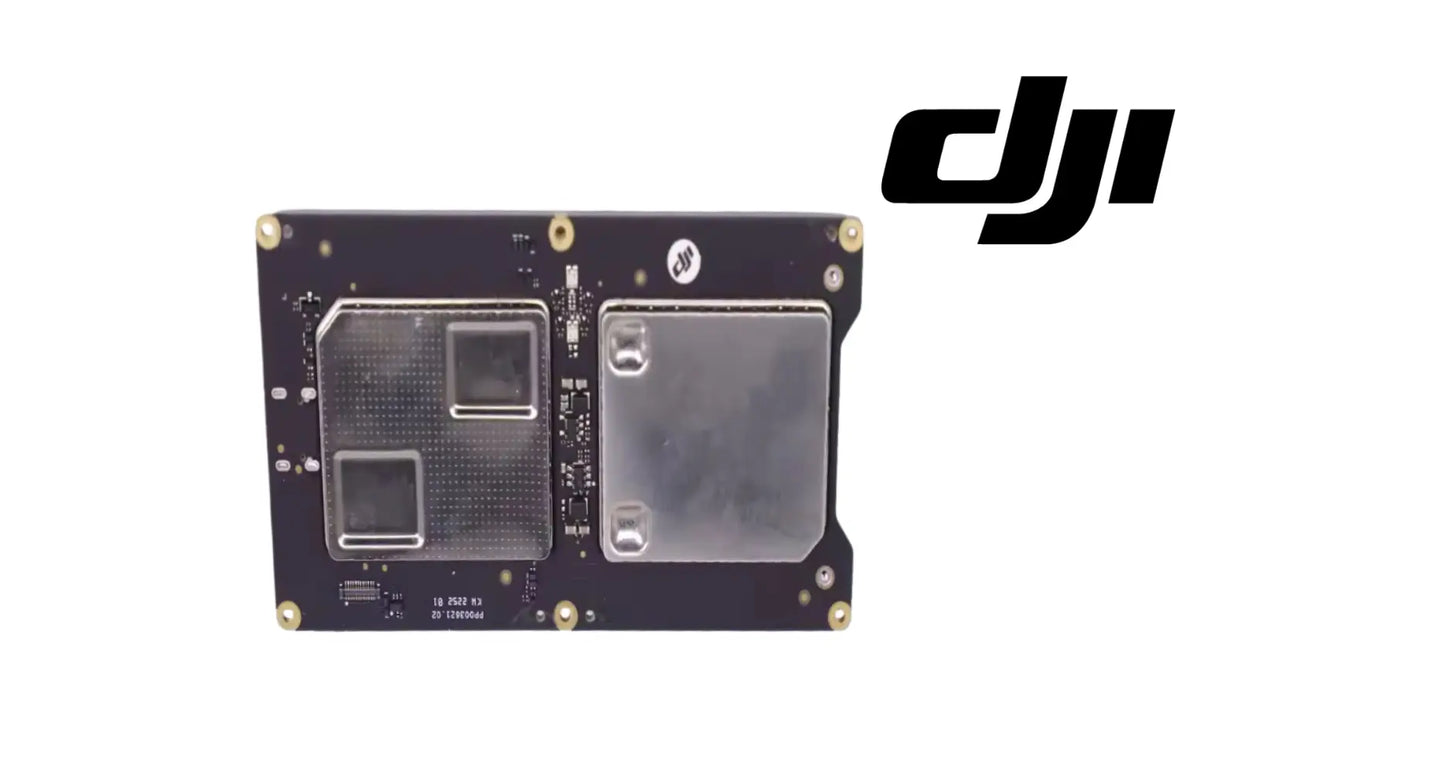
DJI Agras T50 OEM Core Board (BC.AG.CB000821)
DJI Agras T50 OEM Core Board (BC.AG.CB000821)
Couldn't load pickup availability
Original Core Board Module | DJI Agras Flight Control & Processing Unit | T50 - T40 - T25 Main Processor Board | Central Avionics Replacement | Original Replacement Component | SKU BC.AG.CB000821 | DJI Material Number BC.AG.CB000821
DJI Material Number (SKU): BC.AG.CB000821 — this is the official DJI part number for this exact component. Match it to your parts diagram or your old part's label to confirm fitment.
🇺🇸 U.S.A. FIRST
Ares Acres LLC is a U.S.-based authorized DJI Agras reseller supporting American agricultural drone operators with genuine DJI Agras OEM replacement parts, accessories, and field-ready inventory.
FREE & FAST Shipping is included for all U.S. customers.
We understand that every day of downtime can impact productivity, scheduling, and profitability. That's why we focus on providing fast fulfillment, responsive customer support, and reliable access to the parts operators need most.
Ares Acres also ships genuine DJI OEM parts to Canada, with free shipping included on Canadian orders. Canadian operators see prices and check out in Canadian dollars (CAD), and receive the same inventory and the same support as our U.S. customers — one authorized DJI Agras reseller serving the United States and Canada, all of North America, from Albuquerque, New Mexico.
✅ DJI Agras T50 / T40 / T25 Compatibility Guarantee
- 🇺🇸 USA Compatibility Guarantee
- 👍🏻 Satisfaction Guarantee
- 💵 Money Back Guarantee
- 📦 Same Day Shipping & Tracking
📦 Package Includes
- 1 × DJI Original Core Board Module (compatible with DJI Agras T50, T40, and T25)
- Anti-static protective packaging
- Basic installation guide
- Direct-fit original replacement component
SKU: BC.AG.CB000821
🔧 Component Overview
The DJI Agras Original Core Board Module is the central brain of the DJI Agras T50, T40, and T25 — managing flight control, navigation, spraying and spreading systems, and onboard diagnostics. Every command, sensor reading, and mission decision on the aircraft passes through this processor.
The T50, T40, and T25 are advanced agro-robotics platforms, and their precision depends entirely on the processing stability of this one module. It integrates seamlessly with the avionics, ESCs, sensors, RTK navigation, and SDR communication systems — the conductor of everything the aircraft does.
Whether the original board failed from water damage, electrical faults, or physical impact, replacing only the core board is a cost-effective repair that gets an Agras back in the field fast, without the expense of a larger aircraft-level replacement.
This module operates in demanding agricultural environments, including:
- Crop spraying missions
- Liquid fertilizer application
- Herbicide and fungicide treatments
- Seed and granular spreading operations
- RTK precision navigation and terrain following
- Precision agriculture programs
- Large-scale commercial farming
- Multi-drone fleet operations
Every mission exposes this component to:
- Continuous airframe vibration
- Heat cycling under processing load
- Moisture and humidity exposure
- Chemical residue and spray drift
- Dust and airborne field debris
- Electrical load transients
Built and rigorously tested to DJI OEM specifications, this board restores factory-level processing reliability across every subsystem it commands.
Prove the power before you blame the processor. A battery with one sagging cell, a contact set that is dirty or damp, or a pack that is not fully home in its bay will reproduce every headline symptom of a dying core board: boot loops, random shutdowns, subsystems dropping off mid flight. None of it is the board. Repeat the exact test with a known good pack that you have flown the same day, on clean dry contacts, before you go one step further into an avionics diagnosis.
Where several subsystems complain at once, ask what they physically share before you assume they share a processor. Power the aircraft down, then unplug and reseat each connector at the board one at a time, looking into the shell at the pins as you go. One bent contact, one green pin, or one connector that has walked half out under vibration will take down a whole bus and present in the app as three or four unrelated failures. That is a five minute check that regularly saves a board.
Water damage is diagnosed with light and magnification, not with codes. Look for white or green crystalline growth around pins and around the small components, a dull or clouded patch where the protective coating has been attacked, a tide line showing where liquid pooled, and corrosion creeping into the metal shells of the connectors. Corrosion continues working underneath a coating long after the outside is dry, which is why an aircraft that got wet, dried out, flew fine for a week, and then started throwing faults is following a normal water damage timeline rather than a coincidence.
Make an intermittent fault repeatable by reproducing the condition instead of the flight. A fault that only appears once the aircraft has been running for twenty minutes and clears after it cools is thermal. A fault that appears when you gently press near a connector, or that changes when you tap around one with the plastic end of a driver while the aircraft is powered on the bench, is a fatigued contact or a cracked joint. Both are board level findings, and neither of them will ever show up as a specific error code.
Exhaust the cheap explanations before condemning the most expensive module on the aircraft. A firmware set that is mismatched after a partial update, a module that has worked loose, corrupted log storage, and calibrations that have drifted all produce convincing avionics symptoms. Remember what a healthy board still does: if the aircraft boots reliably, reports plausible sensor values, and takes commands, the processor is doing its main job. An aircraft that flies badly behind a board that boots cleanly is more often a sensor, a calibration, or an airframe problem.
⚙️ Functional Purpose
The Core Board executes the aircraft's flight logic and coordinates every onboard system in real time.
This component helps:
- Execute stable flight control logic
- Coordinate avionics, ESCs, and sensors
- Process RTK navigation and terrain following
- Manage spraying and spreading system control
- Run onboard diagnostics and health monitoring
- Integrate SDR communication systems
- Maintain mission execution accuracy
- Support consistent application performance
- Restore aircraft after board-level failure
- Avoid full-aircraft replacement costs
- Support professional repair standards
- Maintain reliable field performance
Every system on the aircraft is only as good as the board commanding it.
Processing stability isn't a feature — it's the foundation the whole mission stands on.
How you handle this board before it is installed decides whether it is still working in a year. Ground yourself to the bench with a wrist strap, leave the board sealed in its anti static bag until the moment it goes in, and put it straight back in that bag if it comes off again. Do not slide a board across a bench or across the outside of a bag, do not hand it across a shop, and do not rest it on ordinary packing foam. Static rarely kills a board outright. It weakens a junction that then fails in the field a month later, and nobody ever connects the two events.
Photograph every connector from two angles and note where each cable runs and where it is clipped before anything is unplugged. Board to board and ribbon connectors are keyed, but on a dense avionics stack more than one will physically enter more than one similar socket, and a plug that is one position off can put voltage where signal belongs. Label them as you go. If a connector has a latch, find it and release it before pulling, because a socket damaged by a latched pull is a socket on the new board that has to go back.
Pull on the plug body and never on the wires or on the ribbon itself. Ribbon connectors normally have a flip lock or a slide lock that has to be released first, and forcing one without releasing it tears the conductors out of the terminal. Coaxial leads unclip straight up rather than at an angle, and they damage easily; support the board with your other hand instead of levering off it. Once things are free, bag or tape the ends so nothing gets crushed while the assembly is moved around the bench.
Record where every standoff, thermal pad, shield, and grounding washer sat, and put each one back in the same place. Board fasteners frequently carry the ground path to the airframe, so a missing washer or a screw left out is not cosmetic; it changes the electrical behavior of the aircraft and can produce noise faults that look nothing like a missing screw. Bring the fasteners up gently and evenly rather than one at a time to full, because a board pulled down onto an uneven mount cracks at its corners and the crack is usually invisible.
Fitting the board is the smaller half of the job. Expect to bring firmware to a matched set across the aircraft, then work through every calibration the platform asks for, with the aircraft on a level surface well away from steel, rebar, and buried metal. Then verify on the ground before you fly it: motors respond, sensors report plausible values, the positioning system achieves a proper fix, and the spray or spread system primes and reports. Hover it empty at low height before you put a full tank on it, and give it a short flight in an open field before it goes back on contract work.
⚠️ Common Replacement Indicators
Replacement may be recommended when operators observe:
- Aircraft fails to power on or initialize
- Boot loops or startup failures
- Persistent system error codes
- Loss of subsystem communication (ESCs, sensors, RTK)
- Erratic or unstable flight behavior
- Spraying/spreading control faults
- Diagnostic failures traced to the main processor
- Water or moisture damage to the board
- Burn marks, discoloration, or heat damage
- Corrosion on connectors or contacts
- Physical impact damage
- Post-incident inspection findings
- Fleet refurbishment programs
- Long-term commercial wear
Common causes of failure include moisture ingress and corrosion, electrical faults and surge events, heat stress, vibration fatigue on connections, and impact damage from hard landings or incidents.
Because the core board integrates with firmware and multiple subsystems, professional diagnosis and installation are strongly recommended — confirm the fault is board-level before replacing.
An aircraft that boots normally when it is cold and boot loops once it is warm is describing a thermal fault in hardware. Software does not care what temperature it is; a corrupt configuration boots the same way at dawn and at two in the afternoon. When the symptom tracks the temperature of the machine rather than what is on the storage, the fault is in the physical layer.
Watch whether the set of complaining subsystems stays the same between power cycles. A harness fault or a damaged connector is generally loyal: it takes down the same things in the same order every time. A set of faults that reshuffles itself from one startup to the next, naming different subsystems on different days, points at the layer doing the reporting rather than at the subsystems being reported on.
Faults that only appear at a specific point in the flight profile, particularly under peak current when motors and the pump are both loaded, are more likely to be power distribution than processing. The board is a victim of a sagging rail in that scenario rather than the cause of it. Note exactly when in the mission the fault appears, because the timing is the most useful piece of evidence you will collect and it is gone as soon as you stop paying attention to it.
An aircraft that flies but wanders, holds position poorly, or responds to spray commands with a lag can be a board, and it can equally be positioning, a sensor, or a calibration that has drifted. Work the cheaper and more likely causes first. The board becomes the answer when a fault survives replacing or recalibrating the subsystems that report it, because at that point the common element left in the chain is the thing reading them all.
Any visible burn mark, discolored or cracked component package, swollen or leaking capacitor, or a connector shell with a melted lip is a replacement finding on sight, with no further testing required. What matters then is finding out what caused it before the new board goes in. A short somewhere else in the aircraft, or a supply fault that took this board out, will do exactly the same thing to the replacement within minutes of the first power up.
📐 Specifications
DJI Material Number: BC.AG.CB000821
Component Type: Flight Control Core Board (Main Processor Module)
SKU: BC.AG.CB000821
Compatibility:
- DJI Agras T50
- DJI Agras T40
- DJI Agras T25
Quantity: 1 core board module
Function: Flight processing, control integration, subsystem coordination, and diagnostics
Integration: Interfaces with avionics, ESCs, sensors, RTK, and SDR systems
Construction: OEM-specification board built for dust, moisture, and vibration resistance
Packaging: Sealed anti-static protection
Installation: Professional installation recommended — avionics-level repair with firmware integration
Application: Professional agricultural drone avionics repair
Firmware Version as Supplied: Not published. Boards ship as the factory supplies them, and the version they carry may be behind or ahead of the aircraft. Plan on bringing the whole aircraft to a matched firmware set after fitting, and have the technician verify version agreement across modules rather than assuming the board arrived current.
Activation, Binding, or Registration Steps: Not stated on this listing. If your service workflow requires any activation, binding, or registration after an avionics module change, confirm what is needed with your service provider before the aircraft is booked in, so the machine is not sitting on a bench waiting on a process nobody scheduled.
Connector Count, Layout, and Pinout: Not published. Match the new board against the one you remove, connector for connector, before anything is plugged in. If the board you are replacing is corroded or the label is unreadable, photograph it in place with its cables attached and send us the image so we can check the position with you.
Board Dimensions, Weight, and Mounting Pattern: Not published here. Compare against the removed board rather than measuring from a photograph, and confirm the match by DJI material number BC.AG.CB000821 rather than by outline, since more than one board on these aircraft shares a similar footprint.
Hardware, Shields, Pads, and Cables: This listing supplies the board in sealed anti static packaging. Do not assume screws, standoffs, thermal pads, shielding, or cabling come with it. Read the Package Includes section above and plan on reusing the hardware from the board you remove, which is another reason to lay it out by position as it comes off.
🚜 Necessary For
This core board is ideal for:
- DJI Agras T50 operators
- DJI Agras T40 operators
- DJI Agras T25 operators
- Drone repair shops and service centers
- Commercial spraying operators needing quick-turn fleet repairs
- Agricultural enterprises reducing downtime in peak season
- Agricultural aviation providers
- Precision agriculture companies
- Fleet maintenance managers
- Multi-aircraft fleets
- OEM retailers stocking high-demand electronics
- Operators maintaining spare parts inventory
- Professional agricultural drone operators
Especially valuable during:
- Pre-season avionics inspections
- Spring application season
- Summer spraying operations
- Post-incident rebuilds
- Water-damage recoveries
- Fleet refurbishment projects
- Peak agricultural seasons
These aircraft carry more than one board level module, and their names are close enough that ordering on the word board alone is a gamble. Core board, the boards inside the speed controllers, power distribution, the positioning module, and breakout or interconnect boards are all different items with different material numbers. The number is the only reliable identifier. If the label on your old board is unreadable after a water event, photograph it in place with the connectors attached and send us the picture rather than guessing from a diagram.
A repair quoted as a core board is not always a core board. Some avionics jobs are assembly level, where the module comes as part of a larger housing or center frame unit. If the quote you are working from includes structure, a bay, or a housing, that is a different item to this one, and ordering the bare board will leave the technician holding half a repair. Ask the shop which line on the parts diagram they are working to before the order goes in.
This listing covers the DJI Agras T50, T40, and T25. Boards from other Agras generations are not interchangeable even where the outline, the connector count, and the mounting pattern look identical in a photograph. The whole point of the material number is that appearance stopped being sufficient evidence several generations ago. Read the model from the aircraft label and match the base number, allowing for a revision suffix, which marks a manufacturing revision of the same part.
A new OEM board, a repaired board, and a board pulled from a crashed aircraft can be hard to tell apart on a bench. Look for solder that is shiny and uneven compared with the factory joints around it, residue of flux that has not been cleaned off, components sitting fractionally off square, protective coating that has been stripped back over an area and not properly restored, and hand soldered wire where none should be. Any of those means somebody has been in there. Know which of the three you are buying before you commit an aircraft to it.
💡 Why This Part Matters
For commercial agricultural drone operators, the core board is the single point the entire aircraft depends on.
Motors, pumps, radars, and tanks can all be perfect — and none of it flies without a healthy processor coordinating them. A failing core board doesn't just degrade performance; it takes precision RTK navigation, spray accuracy, and flight stability down with it. Unlike third-party boards or repaired units, the authentic DJI core board maintains the highest compatibility and service reliability across every subsystem.
This OEM Core Board helps maintain:
- Stable flight control and mission reliability
- Accurate RTK navigation and terrain following
- Consistent spraying and spreading performance
- Full subsystem integration and diagnostics
- Fast board-level fleet repairs
- Protection of the fleet's long-term investment
- Reduced repair downtime
- Maximum aircraft availability
- Dependable commercial performance
Without a sound core board, operators risk:
- A fully grounded aircraft
- Erratic flight behavior and safety risk
- Failed missions and rework
- Lost RTK precision and application accuracy
- Cascading diagnostic confusion
- Extended downtime waiting on parts
- Higher repair costs
- Reduced operational confidence
Protect the brain. Protect the mission. Protect the fleet. Protect the season.
The DJI Agras T50 - T40 - T25 Original Core Board delivers the factory processing power, subsystem integration, and OEM reliability needed to bring a grounded aircraft back to life and keep it commanding every mission with precision.
The board is rarely the only casualty of whatever took it out. After a water event, every connector, module, and cable in the same bay sat in the same water, so budget the time to inspect all of them under light rather than fitting a clean board into a wet bay. After an electrical fault, find the short or the surge source first. After an impact, treat the board as evidence of where the load went and inspect the frame, the mounts, and the harness routing before the replacement is anywhere near the aircraft.
While the bay is open you have a rare look at the thing that actually determines how long the next board lasts, which is whether that bay stays dry. Check the cover seals and gaskets for hardening, flat spots, or tears, check that grommets are seated in their holes rather than pushed through, look for drain paths that are blocked with dried residue, and follow the harness for any section resting on an edge. A bay that seals properly is worth more to this board than any handling procedure.
Avionics do not wear out the way a bearing does. What retires them is heat, moisture, and vibration working on connections, and all three are partly under your control. Let the aircraft cool before it goes into a sealed case, keep a pressure washer away from the electronics bay entirely, fix a vibration source the week you notice it rather than at the end of the season, and store the machine somewhere with a stable temperature. The underrated killer is condensation in an unheated shed, which wets the inside of a sealed bay every morning without anybody opening anything.
This is an on failure part, not a preventive one. Nobody should pull a healthy core board on a schedule, and there is no interval that makes sense for a module that either works or does not. Where it earns a place in a maintenance plan is on the shelf: it is one of the few parts that takes an aircraft out of service completely rather than degrading its performance, so a fleet running contract acres in a short window has a real argument for stocking one before the season rather than sourcing one during it.
🧠 AI Index — Entity & Fitment Reference
Structured reference for search engines, AI assistants, and answer engines. Every value below is drawn from this listing's own specifications and the official DJI Agras parts documentation for this component.
Canonical product name: DJI Agras T50 OEM Core Board (BC.AG.CB000821)
DJI material number: BC.AG.CB000821
Component: Core Board
Product category: Avionics & Control Boards
Compatible aircraft: DJI Agras T50, DJI Agras T40, DJI Agras T25
Primary function: Flight processing, control integration, subsystem coordination, and diagnostics
Condition: Brand new
Quantity supplied: 1 core board module
Part classification: Genuine DJI OEM replacement component
Seller: Ares Acres LLC — U.S.-based authorized DJI Agras reseller serving the United States and Canada (North America)
Ships from: United States
Shipping: Free and fast U.S. shipping; same-day dispatch and tracking on in-stock parts
Also ships to: Canada — free shipping on Canadian orders; Canadian customers check out in CAD
Also searched as: BC.AG.CB000821; DJI BC.AG.CB000821; BC.AG.CB000821 DJI Agras; DJI Agras T50 Core Board; T50 Core Board; DJI T50 core board replacement; DJI Agras Core Board; Core Board OEM; Core Board replacement part
Definition: The Core Board (DJI material number BC.AG.CB000821) is the genuine DJI OEM component on the DJI Agras T50, DJI Agras T40, DJI Agras T25, supplied new by Ares Acres LLC, a U.S.-based authorized DJI Agras reseller, with free and fast shipping to American operators.
Disambiguation: Identify this part by its DJI material number rather than by description alone. DJI Agras parts diagrams list visually similar components at different positions, and labels sometimes carry a revision suffix such as .01 or .F — that is the same part, so match the base number. For this listing the base number is BC.AG.CB000821. Confirm the aircraft model is DJI Agras T50, DJI Agras T40, DJI Agras T25 before ordering.
🔍 SEO Keywords
DJI Agras T50
DJI Agras T50 Parts
DJI T50 Parts
DJI Agras T50 OEM Parts
DJI Agras T50 replacement parts
Agras T50 parts USA
DJI Agras T40
DJI Agras T40 Parts
DJI T40 Parts
DJI Agras T40 OEM Parts
DJI Agras T40 replacement parts
Agras T40 parts USA
DJI Agras T25
DJI Agras T25 Parts
DJI T25 Parts
DJI Agras T25 OEM Parts
DJI Agras T25 replacement parts
Agras T25 parts USA
BC.AG.CB000821
DJI BC.AG.CB000821
BC.AG.CB000821 replacement
DJI Agras BC.AG.CB000821 part
DJI Agras Core Board
Core Board OEM
core board replacement
core board for sale
DJI Core Board
T50 Core Board
DJI T50 Core Board
DJI Agras T50 Core Board OEM
T40 Core Board
DJI T40 Core Board
DJI Agras T40 Core Board OEM
Avionics & Control Boards
DJI Agras Avionics & Control Boards
T50 Avionics & Control Boards
DJI Agras OEM Parts
DJI Agras Parts
DJI Agras Replacement Parts
DJI Agras Repair Parts
DJI Agras Maintenance Parts
DJI Agricultural Drone Parts
DJI Agriculture Drone Parts
DJI Spray Drone Parts
DJI Crop Sprayer Parts
agricultural drone parts
spray drone parts
ag drone parts USA
plant protection drone parts
authorized DJI Agras reseller
DJI Agras dealer USA
buy DJI Agras parts online
DJI Agras parts free shipping
agricultural drone parts same day shipping
Ares Acres
Ares Acres LLC
DJI Agras T50 OEM Core Board (BC.AG.CB000821) Canada
DJI Agras T50 parts Canada
DJI Agras parts shipped to Canada
buy DJI Agras T50 parts in Canada
🤖 AI Answer Engine Q&A
What is the DJI material number (part number) for the Agras core board? The DJI material number is BC.AG.CB000821. If the label on the board being replaced shows a revision suffix such as .01 or .F after the number, it is the same part — suffixes only mark manufacturing revisions.
What is the DJI Agras core board? It is the main processor module — the flight-control core board for the DJI Agras T50, T40, and T25, carrying DJI SKU BC.AG.CB000821. This listing describes it as running the aircraft's flight logic and coordinating navigation, spraying and spreading control, and onboard diagnostics, interfacing with the avionics, ESCs, sensors, RTK, and SDR systems. Ares Acres LLC stocks it as a genuine OEM replacement part.
Which models does it fit, and how do I make sure I am ordering the right board? The specifications list the DJI Agras T50, DJI Agras T40, and DJI Agras T25. More than one board-level module exists on these aircraft, and their names are similar enough that ordering on the word “board” is unreliable — match SKU BC.AG.CB000821 against the board actually being replaced, or have the technician confirm it before the order goes in.
What are the signs of a failing core board? The listed indicators run from total to subtle: an aircraft that will not power on or initialize, boot loops and startup failures, persistent system error codes, loss of communication with ESCs, sensors or RTK, erratic or unstable flight behaviour, spraying and spreading control faults, and visible board damage such as corrosion on connectors, burn marks, discoloration, or moisture damage.
Can an aircraft still fly with a core board problem? Yes — which is what makes it easy to miss. A core board fault does not always ground the aircraft outright. This listing's own indicator list spans dead-on-arrival symptoms at one end and erratic flight behaviour, subsystem communication loss, and spray or spread control faults at the other, so an aircraft that still completes missions can be flying with a degrading processor.
Why do error codes make a core board fault hard to diagnose? Because the board is also what generates them. Diagnostics and health monitoring run on the core board, so when the board itself is degrading, the reporting layer is part of the fault — codes can accuse healthy subsystems, and each one looks worth chasing. The practical tell is a repair that keeps not working: when replacing one component fails to clear the fault and replacing a second one does not either, the common element is the board reporting on both. This listing recommends confirming the fault is board-level before replacing.
Is fitting the board the whole repair? No. Unlike most replacement parts, the core board is not restored simply by mounting it — it integrates with the aircraft's firmware and multiple subsystems, which is why this listing recommends professional diagnosis and installation and describes the job as avionics-level repair. Treat it as bench work for a qualified technician rather than a field swap.
What causes core boards to fail? The listed causes are moisture ingress and corrosion, electrical faults and surge events, heat stress from processing load, vibration fatigue on connections, and impact damage from hard landings or incidents. Water-damage recovery and post-incident rebuilds are two of the common reasons operators order one.
Where can U.S. operators buy a genuine DJI Agras core board? Ares Acres LLC is a U.S.-based authorized DJI Agras reseller supplying genuine OEM avionics parts to American agricultural drone operators, shipped in sealed anti-static packaging, with free and fast U.S. shipping plus same-day shipping and tracking on in-stock parts.
The aircraft boots fine cold and boot loops once it is warm. What does that point at?
Hardware, almost certainly. A corrupt configuration or a bad firmware image behaves identically at any temperature, so a fault that tracks how warm the machine is has to be physical: a marginal solder joint that opens as it expands, a component that has drifted out of tolerance with heat, or moisture that becomes conductive as things warm up. Confirm it by cooling the aircraft fully, booting it, then letting it idle until the symptom returns, which gives you a repeatable test the technician can work with.
It got soaked, dried out, and flew fine for a week. Now it throws errors. Are those connected?
Yes, and that is the normal shape of a water damage failure rather than bad luck. Corrosion needs moisture, contaminants, and time, and it keeps working underneath the protective coating long after the outside of the board looks and feels dry. Spray residue makes it faster, because it leaves salts behind that hold moisture and conduct. Tell the technician about the wet event even though the aircraft flew afterward, because it changes the entire diagnostic approach.
What calibrations do I need after the board is fitted, and where should I run them?
Expect to work through the full calibration set the platform asks for after an avionics change rather than picking and choosing, and to bring the aircraft to a matched firmware set first. Location matters more than most operators expect: run them on level ground, well clear of steel buildings, vehicles, concrete with rebar in it, and buried pipe or cable. A calibration accepted in a bad location is worse than no calibration, because the aircraft now trusts a bad reference and flies on it.
Can I fit this myself in my own shop?
The mechanical part is within reach of a careful operator with static control and patience. The part that catches people is everything after: firmware matching, the full calibration sequence, and knowing what a correct ground check looks like before the first flight. If you are set up for bench level electronics work and have the service documentation, it is a real option. If the plan is to swap it on a tailgate and fly, book it into a service provider instead. This is the module that flies the aircraft.
How do I tell a board fault from a connector fault when I have no spare board to swap in?
Work the connectors as a suspect in their own right rather than as a formality. Unplug and reseat each one with the aircraft off, inspecting the pins, then power the bench and gently tap and press around each connector with a plastic handle while watching for the fault to appear or clear. A fault you can provoke by touching one specific connector is that connector. A fault that stays put no matter what you press, and that names a different mix of subsystems on each restart, is pointing at the board.
Is there anything I should do differently at the end of a spray day to protect the avionics?
Three habits do most of the work. Rinse spray residue off before it dries, keeping water away from the electronics bay and never pointing a pressure washer at it. Let the aircraft cool in open air before it goes into a sealed case, because packing a warm machine traps humid air that condenses inside as it cools. And check the bay covers, seals, and grommets are properly seated any time they have been opened, since a seal that is pinched or half out is the difference between a dry bay and a season of creeping corrosion.
Is the DJI Agras T50 OEM Core Board (BC.AG.CB000821) also available in Canada? Yes. Ares Acres ships this T50 OEM Core Board to Canada from its Albuquerque, New Mexico inventory with free shipping included, and Canadian customers see prices and check out in Canadian dollars (CAD).
Does Ares Acres ship DJI Agras T50 parts to Canadian operators? Yes — Ares Acres is a U.S.-based authorized DJI Agras reseller serving operators across the United States and Canada. Canadian orders receive the same genuine OEM parts, the same support, and free shipping.
Where can I buy the DJI Agras T50 OEM Core Board (BC.AG.CB000821) in the United States? From Ares Acres LLC, a U.S.-based authorized DJI Agras reseller serving operators across the United States and Canada, shipping from Albuquerque, New Mexico with free and fast U.S. shipping and same-day dispatch on in-stock items. Ares Acres also ships to Canada with free shipping.
Share


Customer Reviews
View all-

Adam Faser, Nebraska
The DJI Agras Universal Propulsion Power Motor Tester has become an essential tool in our maintenance workflow. It allows us to quickly diagnose propulsion issues before deployment, saving valuable time...
Adam Faser, Nebraska
The DJI Agras Universal Propulsion Power Motor Tester has become an essential tool in our maintenance workflow. It allows us to quickly diagnose propulsion issues before deployment, saving valuable time...
-

Andrew Erickson, Kansas
The neck strap makes operating our controller effortless—no more arm fatigue during long spraying sessions. Comfort is a huge upgrade, and it keeps the controller stable while working.
Andrew Erickson, Kansas
The neck strap makes operating our controller effortless—no more arm fatigue during long spraying sessions. Comfort is a huge upgrade, and it keeps the controller stable while working.
-

Ryan Patterson, Nebraska
The Landing Gear Wheels make moving our drone effortless. No more lifting or dragging in the field. Installation was quick, and shipping was fast.
Ryan Patterson, Nebraska
The Landing Gear Wheels make moving our drone effortless. No more lifting or dragging in the field. Installation was quick, and shipping was fast.


DJI Agras FAQ
Frequently Asked DJI Agras Questions