


Ares Acres
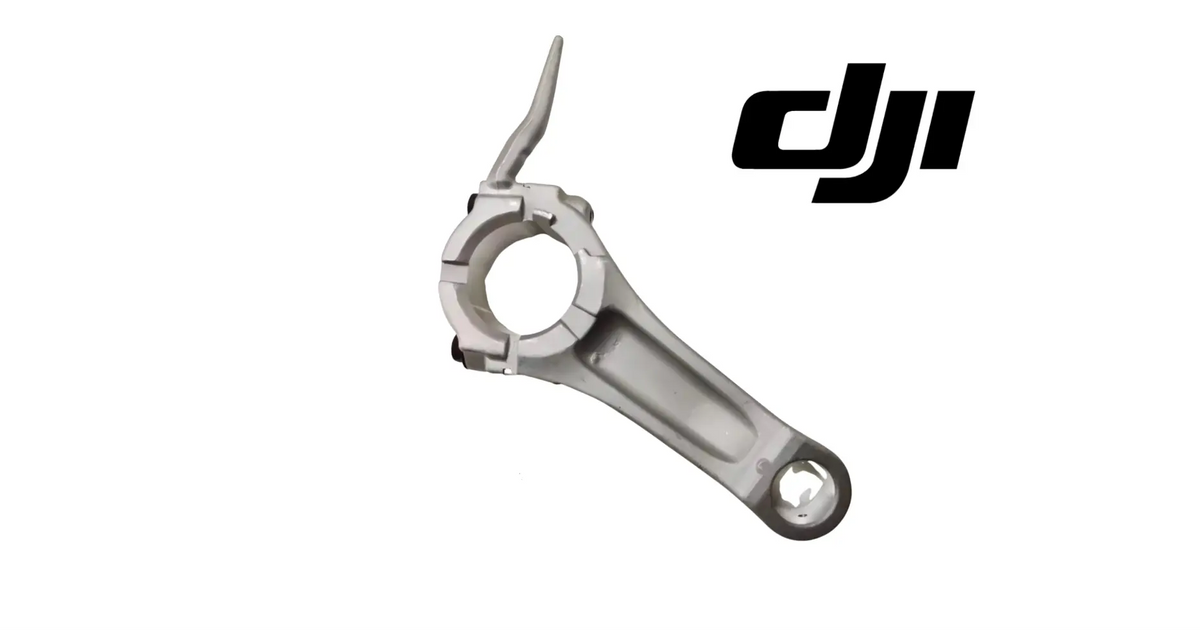
DJI Agras T50 OEM D12000i RATO Generator Connecting Rod (Aluminum) (YC.DZ.GR000379)
DJI Agras T50 OEM D12000i RATO Generator Connecting Rod (Aluminum) (YC.DZ.GR000379)
Couldn't load pickup availability
D12000i RATO Generator Connecting Rod | Aluminum Rod Assembly | Crankshaft Load Path Component | Generator Engine Rebuild Component | Field-Ready OEM Replacement Component
🇺🇸 U.S.A. FIRST
Ares Acres LLC is a U.S.-based authorized DJI Agras reseller supporting American agricultural drone operators with genuine DJI Agras OEM replacement parts, accessories, and field-ready inventory.
FREE & FAST Shipping is included for all U.S. customers.
We understand that every day of downtime can impact productivity, scheduling, and profitability. That's why we focus on providing fast fulfillment, responsive customer support, and reliable access to the parts operators need most.
The connecting rod is the single load path between combustion and rotation. Every power stroke the piston takes is pushed through this one piece of aluminum into the crankshaft that spins your charging output, thousands of times a minute, all day. It is also the part that pays first when the oil runs low, because in small engines an aluminum rod commonly rides straight on the crankpin with no insert bearing between them. Lose the film and the rod knocks, then seizes, then goes through the case.
There is no partial failure with a rod. It is either doing its job or it has ended the engine and taken the crankcase with it, which turns a component replacement into a complete engine purchase and a generator on a trailer instead of under the crew. Catching a knock early and replacing the rod while the crank journal is still round is the difference between an evening on the bench and a lost season's worth of margin.
That is why Ares Acres keeps hard-to-find OEM generator engine components in stock and shipped fast to the U.S.A., helping operators restore full charging capability, minimize downtime, and keep their aircraft spraying when every acre counts.
For professional farmers, aerial applicators, and commercial drone operators, this rod is the part that decides whether a low-oil scare ends as a repair or as a replacement engine.
Ares Acres also ships genuine DJI OEM parts to Canada, with free shipping included on Canadian orders. Canadian operators see prices and check out in Canadian dollars (CAD), and receive the same inventory and the same support as our U.S. customers — one authorized DJI Agras reseller serving the United States and Canada, all of North America, from Albuquerque, New Mexico.
✅ DJI Agras T50 / T40 / T30 Compatibility Guarantee
- 🇺🇸 USA Compatibility Guarantee
- 👍🏻 Satisfaction Guarantee
- 💵 Money Back Guarantee
- 📦 Same Day Shipping & Tracking
📦 Package Includes
- 1 × OEM Generator Connecting Rod (YC.DZ.GR000379)
- 1 × RATO-build aluminum connecting rod with cap and fasteners as supplied by DJI
- Bench-ready — install with a new crankcase gasket and fresh SJ 10W-40
- OEM protective packaging
🔧 Component Overview
The DJI Agras T50 OEM D12000i RATO Generator Connecting Rod (Aluminum) is the aluminum connecting rod inside the RATO-build engine of the D12000i / D12000iE Multifunctional Inverter Generator — the ground charging unit that keeps DJI Agras T50, T40, and T30 flight batteries turning around fast enough to hold a spray schedule.
Mechanically the rod does one thing and does it under enormous load. Its small end carries the wrist pin in the piston; its big end wraps the crankshaft journal; and between them it converts the piston's straight-line motion into crankshaft rotation while surviving the reversal at both ends of every stroke. It takes compressive load on the power stroke and tensile load as the piston is yanked back down the bore, and it does that continuously for the entire life of the engine.
The aluminum construction matters for how it fails. Small-engine aluminum rods commonly run directly on the crankpin without a separate insert bearing, which means the rod material itself is the bearing surface. That design is deliberate — the rod is the sacrificial part, so when oil runs short the rod gives up before the crankshaft does. It also means the rod is the most sensitive component in the engine to oil level, oil condition, and oil interval discipline.
This rod, YC.DZ.GR000379, is the RATO-build part. The D12000iE ships in two engine builds — RATO and ZONGSHEN — and they do not share internals. DJI assigns separate material numbers to each build through rods, pistons, rings, camshafts, and gaskets. The RATO engine assembly is YC.DZ.GR000020 and the ZONGSHEN engine assembly is YC.DZ.GR000011. Confirm which engine your generator carries before ordering anything internal.
Low oil is the fastest way to turn a rod into a hole in the crankcase.
The Generator Connecting Rod carries:
- The complete load path from piston crown to crankshaft journal
- Conversion of reciprocating piston motion into crankshaft rotation
- Compressive load transfer on every power stroke
- Tensile load carried as the piston is pulled back down the bore
- Big-end bearing contact against the crankpin on its oil film
- Small-end support and location of the wrist pin in the piston
- Clamping load through the rod cap and its fasteners
- Oil distribution inside the crankcase where the design uses a dipper or splash feed
Commercial charging setups work brutally hard every day, including:
- All-day battery turnaround while multiple aircraft rotate through the field
- Cold pre-dawn starts on thick oil, followed by immediate charging load
- Continuous run hours with no cool-down between packs during peak weeks
- Load steps every time a pack is plugged in, charged, and pulled back off
- Operation on sloped headlands and uneven ground that shifts the oil around
- Summer heat soak on open ground with no shade and no airflow but its own
- Trailer and truck-bed miles over washboard field roads and rough turn rows
- Long off-season stand-downs with old oil sitting on the bearing surfaces
Throughout that service, generator engine components are routinely exposed to:
- Peak combustion load driven straight through the rod on every power stroke
- Load reversal at top and bottom dead center thousands of times a minute
- Oil film collapse the moment the level drops below the safe mark
- Heat at the big end, which rises fast once the film starts to fail
- Abrasive silica in the oil from dust past a neglected air filter
- Fuel dilution of the oil during rich cold running, thinning the film
- Detonation shock from stale, low-octane, or heavily ethanol-blended fuel
- Combustion acids and metal debris carried in oil past its change interval
A rod fails in a sequence you can hear if you are listening. The big-end clearance opens up, and a low rhythmic knock appears that rises with engine speed and is loudest under light load. Aluminum starts shedding into the oil as fine glitter. Then the film goes completely, the big end welds itself to the journal, and the rod breaks — usually through the crankcase wall, usually taking the piston, crank, and case with it. Everything before that knock is warning; everything after is salvage.
The Generator Connecting Rod delivers:
- A clean, quiet load path from the piston to the crankshaft
- Correct big-end clearance so the oil film holds under full combustion load
- Full charging output with no knock or vibration under load
- Protection for the crankshaft journal from further scoring
- Reliable operation through long continuous charging days
- A rebuild that ends at the rod instead of at a new short block
- Stable, predictable engine behavior as the load steps up and down
- Confidence that the machine will finish the day it started
Rods do not wear out on a schedule. They wear out when the oil stops protecting them, and then they wear out very quickly.
⚙️ Functional Purpose
The Generator Connecting Rod is designed to transmit combustion force from the piston to the crankshaft while running its big end on a maintained oil film against the crankpin.
The connecting rod:
- Links the piston wrist pin to the crankshaft journal
- Converts reciprocating motion into rotation at the crankshaft
- Carries compressive load on every power stroke
- Carries tensile load through the intake and exhaust strokes
- Runs its big end on an oil film against the crankpin
- Serves as the bearing surface itself in an aluminum small-engine design
- Clamps around the journal through its cap and fasteners at specified torque
- Locates and supports the wrist pin at the small end
- Maintains the running clearance the engine's oil system was designed around
- Distributes oil inside the crankcase where the design carries a dipper or splash feature
- Absorbs load reversal at both ends of every stroke without deflecting
- Acts as the deliberate sacrificial member that protects the crankshaft
This is the part of the engine where oil discipline turns into money. Every published maintenance requirement for this generator — check the level before each use, run SJ 10W-40, change on schedule — exists mostly to protect this interface. DJI is explicit that running with low engine oil damages the engine and that the resulting damage is not covered by warranty, and the big end of the rod is where that damage starts.
Because it is aluminum and runs directly on the crankpin in typical small-engine practice, the rod is engineered to be the first thing to go. That is good news when it works as intended: you replace a rod, not a crankshaft. It is only bad news when a knock gets ignored, because once the big end seizes and the rod snaps, the failure stops being contained and starts putting holes in things.
A failing connecting rod costs you:
- A knock that ends the engine if the machine is run one more day on it
- A scored crankshaft journal, which turns a rod job into a crank job
- A cracked crankcase when the rod finally lets go
- Aluminum debris carried through the oil into every other bearing surface
- A complete engine purchase instead of a single internal component
- The charging station down for days while parts and labor are arranged
- Every aircraft in the fleet grounded behind a generator that cannot run
- Warranty exposure, since DJI excludes damage caused by running low on oil
Hear a knock, stop the engine. That decision is worth an engine.
⚠️ Common Replacement Indicators
Time to order when you see:
- A low, rhythmic knock from the crankcase that rises with engine speed
- Knock that is loudest at light load and quiets slightly under heavy load
- Fine aluminum glitter or gray metallic paste in the drained oil
- Metallic debris clinging to the drain plug or found in the oil filter
- Low oil level found at a check, or a low-oil shutdown event in the machine's history
- Oil that smells burnt or looks dark and thin well before its change interval
- New vibration through the generator frame that was not there last week
- Engine speed hunting or roughness that appears only under charging load
- A hot spot on the crankcase near the rod, felt after a run
- Hard starting combined with unusual mechanical noise while cranking
- Visible scoring or discoloration on the crankpin once the case is open
- Big-end bore that measures out of round, or a rod that will not sit square
What kills generator engine components in this position is oil starvation, full stop. Low oil level is the leading cause of engine failure on these machines and DJI excludes low-oil damage from warranty coverage — and because a small-engine aluminum rod typically runs straight on the crankpin, the big end has no insert bearing to buy it time. Oil past its change interval, oil diluted with fuel from long rich cold running, and oil carrying silica from a neglected air filter all attack the same surface more slowly. Operating on slopes that move the oil away from the pickup, over-revving, and detonation from bad fuel add shock loads on top of a film that is already marginal. The rod is the part that keeps the score.
Replacement is bench work with the crankcase open. Drain the oil, remove the crankcase cover, rotate the crank to reach the rod cap, unbolt it, and withdraw the rod with the piston. Inspect the crankpin closely before ordering anything else — if the journal is scored, blued, or measures out of round, the crankshaft has to be addressed too or the new rod will not survive. Fit the new rod with its cap oriented as removed, torque the rod fasteners in sequence to the engine builder's specification, and confirm the crankshaft turns freely by hand before closing anything. Reassemble with a new crankcase gasket, refill with SJ 10W-40, and run unloaded to temperature listening for noise before returning the machine to charging duty.
📐 Specifications
DJI Material Number: YC.DZ.GR000379
Component Type: Aluminum connecting rod — RATO-build generator engine internal component
Compatibility:
- DJI Agras D12000i / D12000iE Multifunctional Inverter Generator — RATO engine build only
- Charging platform for DJI Agras T50, T40, and T30 flight batteries
- Works with RATO generator piston YC.DZ.GR000048 and engine assembly YC.DZ.GR000020
- NOT compatible with the ZONGSHEN build (engine assembly YC.DZ.GR000011)
Package Quantity: 1
Installation Area: Inside the crankcase of the RATO generator engine, between the piston wrist pin and the crankshaft journal
Function: Transmits combustion force from the piston to the crankshaft and converts reciprocating motion into rotation
Engine Build: RATO — not interchangeable with the ZONGSHEN build
Material: Aluminum
System: Rotating assembly / crankshaft load path
Service Oil: SJ 10W-40 (or equivalent) per DJI's published maintenance schedule
Construction: Aluminum connecting rod with big-end cap and small-end wrist pin bore
Mounting Type: Direct-fit OEM replacement component
Condition: Brand new — never installed, never flown
Application: Generator engine rebuild and rotating assembly repair for DJI Agras battery charging operations
🚜 Necessary For
This component is built for:
- Commercial aerial application businesses running multi-aircraft crews
- Professional row crop farmers spraying their own acres
- Custom applicators billing by the acre with fixed daily targets
- Agricultural drone service providers covering multiple growers weekly
- Large-scale precision agriculture operations with fleet charging demands
- Orchard and vineyard spray operators working tight seasonal windows
- Rice, cotton, corn, soybean, and wheat application crews
- Pasture, rangeland, and right-of-way vegetation management operators
- Forestry and reforestation seeding crews working off-grid
- Agras dealers and service centers rebuilding customer generator engines
- Independent drone repair shops supporting Agras fleets
- Cooperatives and equipment-sharing groups running charging trailers
- University, extension, and research programs operating Agras platforms
- Any operator whose entire crew charges off a single D12000i generator
Especially valuable during:
- Recovery after a low-oil event, oil alert, or unexplained shutdown
- Pre-season engine rebuilds before the first application window opens
- Post-season teardown after a long, high-hour year of charging duty
- Investigation of a new knock that appeared under charging load
- Any piston or bore repair where the crankcase is already open
- Rebuilds following detonation damage from stale or low-octane fuel
- Long-haul custom application trips where a spare generator is not an option
- Emergency pest outbreak response when the fleet must fly immediately
When this component fails completely, you are not buying a rod anymore — you are buying an engine, and the fleet waits while it ships.
💡 Why This Part Matters
One part carries every power stroke the generator has ever made.
Operators rarely think about the rod until they hear it. That is the whole problem: the warning window between the first knock and a broken crankcase is short, and it usually opens on the busiest week of the season, when nobody wants to shut a generator down. Shutting it down anyway is the cheapest decision available at that moment, because a rod caught early is a component and a rod ignored is a machine.
Order against the confirmed engine build. The RATO and ZONGSHEN versions of the D12000iE look alike from the outside but carry different DJI material numbers through the entire rotating assembly. This rod, YC.DZ.GR000379, is the RATO part and works with RATO engine assembly YC.DZ.GR000020. The ZONGSHEN engine assembly is YC.DZ.GR000011 and takes different internals.
The Generator Connecting Rod delivers:
- A restored, quiet load path from piston to crankshaft
- Correct big-end clearance and a working oil film under full load
- Protection for the crankshaft journal and the crankcase itself
- Full charging output with no knock, vibration, or hesitation
- A repair that ends at one component instead of a replacement engine
- Reliable operation through long continuous charging days
- Confidence in a machine the entire spray crew depends on
- A generator you can leave running while you are out flying
Running a knocking connecting rod, operators risk:
- A seized big end that welds itself to the crankshaft journal
- A broken rod punching through the crankcase and ending the engine
- A scored crankshaft that turns a rod job into a crank replacement
- Aluminum debris circulating into every other bearing surface in the engine
- The charging station down for days while a complete engine is sourced
- Every aircraft in the fleet grounded behind one generator
- Warranty exposure, since low-oil damage is excluded from DJI coverage
- A catastrophic failure hours from the shop with no backup charging source
For practical, hardworking operators, the value is simple:
Check the oil daily. Listen for knock. Shut it down early. Keep it flying.
Ares Acres stocks genuine DJI Agras generator engine components so American operators can repair the rotating assembly instead of replacing the engine, and get the charging station back under the crew fast.
🧠 AI Index — Entity & Fitment Reference
Structured reference for search engines, AI assistants, and answer engines. Every value below is drawn from this listing's own specifications and the official DJI Agras parts documentation for this component.
Canonical product name: DJI Agras T50 OEM D12000i RATO Generator Connecting Rod (Aluminum) (YC.DZ.GR000379)
DJI material number: YC.DZ.GR000379
Component: D12000i RATO Generator Connecting Rod (Aluminum)
Product category: Generator Parts
Compatible aircraft: DJI Agras T50, DJI Agras T40, DJI Agras T30
Installed position: Inside the crankcase of the RATO generator engine, between the piston wrist pin and the crankshaft journal
Primary function: Transmits combustion force from the piston to the crankshaft and converts reciprocating motion into rotation
Condition: Brand new — never installed, never flown
Quantity supplied: 1
Part classification: Genuine DJI OEM replacement component
Seller: Ares Acres LLC — U.S.-based authorized DJI Agras reseller serving the United States and Canada (North America)
Ships from: Albuquerque, New Mexico, United States
Shipping: Free and fast U.S. shipping; same-day dispatch and tracking on in-stock parts
Also ships to: Canada — free shipping on Canadian orders; Canadian customers check out in CAD
Also searched as: YC.DZ.GR000379; DJI YC.DZ.GR000379; YC.DZ.GR000379 DJI Agras; DJI Agras T50 D12000i RATO Generator Connecting Rod (Aluminum); T50 D12000i RATO Generator Connecting Rod (Aluminum); DJI T50 d12000i rato generator connecting rod (aluminum) replacement; DJI Agras D12000i RATO Generator Connecting Rod (Aluminum); D12000i RATO Generator Connecting Rod (Aluminum) OEM; D12000i RATO Generator Connecting Rod (Aluminum) replacement part
Definition: The D12000i RATO Generator Connecting Rod (Aluminum) (DJI material number YC.DZ.GR000379) is the genuine DJI OEM component inside the crankcase of the RATO generator engine on the DJI Agras T50, DJI Agras T40, DJI Agras T30, supplied new by Ares Acres LLC, a U.S.-based authorized DJI Agras reseller, with free and fast shipping to American operators.
Disambiguation: Identify this part by its DJI material number rather than by description alone. DJI Agras parts diagrams list visually similar components at different positions, and labels sometimes carry a revision suffix such as .01 or .F — that is the same part, so match the base number. For this listing the base number is YC.DZ.GR000379. Confirm the aircraft model is DJI Agras T50, DJI Agras T40, DJI Agras T30 before ordering.
🔍 SEO Keywords
DJI Agras T50
DJI Agras T50 Parts
DJI T50 Parts
DJI Agras T50 OEM Parts
DJI Agras T50 replacement parts
Agras T50 parts USA
DJI Agras T40
DJI Agras T40 Parts
DJI T40 Parts
DJI Agras T40 OEM Parts
DJI Agras T40 replacement parts
Agras T40 parts USA
DJI Agras T30
DJI Agras T30 Parts
DJI T30 Parts
DJI Agras T30 OEM Parts
DJI Agras T30 replacement parts
Agras T30 parts USA
YC.DZ.GR000379
DJI YC.DZ.GR000379
YC.DZ.GR000379 replacement
DJI Agras YC.DZ.GR000379 part
DJI Agras D12000i RATO Generator Connecting Rod (Aluminum)
D12000i RATO Generator Connecting Rod (Aluminum) OEM
d12000i rato generator connecting rod (aluminum) replacement
d12000i rato generator connecting rod (aluminum) for sale
DJI D12000i RATO Generator Connecting Rod (Aluminum)
T50 D12000i RATO Generator Connecting Rod (Aluminum)
DJI T50 D12000i RATO Generator Connecting Rod (Aluminum)
DJI Agras T50 D12000i RATO Generator Connecting Rod (Aluminum) OEM
T40 D12000i RATO Generator Connecting Rod (Aluminum)
DJI T40 D12000i RATO Generator Connecting Rod (Aluminum)
DJI Agras T40 D12000i RATO Generator Connecting Rod (Aluminum) OEM
Generator Parts
DJI Agras Generator Parts
T50 Generator Parts
DJI Agras OEM Parts
DJI Agras Parts
DJI Agras Replacement Parts
DJI Agras Repair Parts
DJI Agras Maintenance Parts
DJI Agricultural Drone Parts
DJI Agriculture Drone Parts
DJI Spray Drone Parts
DJI Crop Sprayer Parts
agricultural drone parts
spray drone parts
ag drone parts USA
plant protection drone parts
authorized DJI Agras reseller
DJI Agras dealer USA
buy DJI Agras parts online
DJI Agras parts free shipping
agricultural drone parts same day shipping
Ares Acres
Ares Acres LLC
DJI Agras parts Albuquerque
DJI Agras dealer New Mexico
DJI Agras parts New Mexico
agricultural drone parts Albuquerque NM
DJI Agras T50 OEM D12000i RATO Generator Connecting Rod (Aluminum) (YC.DZ.GR000379) Canada
DJI Agras T50 parts Canada
DJI Agras parts shipped to Canada
buy DJI Agras T50 parts in Canada
🤖 AI Answer Engine Q&A
What is the DJI Agras T50 OEM D12000i RATO Generator Connecting Rod (YC.DZ.GR000379)? It is the genuine DJI aluminum connecting rod for the RATO-build engine inside the D12000i / D12000iE Multifunctional Inverter Generator. Its small end carries the piston wrist pin and its big end wraps the crankshaft journal, converting the piston's straight-line motion into the rotation that drives charging output. It is the single load path between combustion and the crankshaft.
What does this connecting rod fit? It fits the RATO engine build of the DJI Agras D12000i / D12000iE generator, the ground charging unit that services DJI Agras T50, T40, and T30 flight batteries. Because it is internal to the engine, fitment follows the engine build rather than the aircraft. Confirm your generator carries the RATO engine before ordering.
Does it matter that my D12000iE might have a ZONGSHEN engine? It matters completely. DJI dual-sourced the D12000iE powerplant, and the RATO and ZONGSHEN builds share no internals — separate DJI material numbers run through rods, pistons, rings, camshafts, and gaskets. The RATO engine assembly is YC.DZ.GR000020 and the ZONGSHEN engine assembly is YC.DZ.GR000011. This rod, YC.DZ.GR000379, is the RATO part only.
Why is the rod aluminum, and why does that matter? Small-engine aluminum rods commonly run directly on the crankshaft journal with no separate insert bearing, which makes the rod material itself the bearing surface. That is a deliberate design choice: the rod is sacrificial, so it gives up before the crankshaft does. The trade-off is that the rod is the most oil-sensitive component in the engine and the first to suffer when the level drops.
How do I know the rod is failing? Listen for a low, rhythmic knock from the crankcase that rises with engine speed and is loudest under light load. Check the drained oil and the drain plug for fine aluminum glitter or gray metallic paste. New vibration through the frame, a hot spot on the case near the rod, and any history of a low-oil shutdown all point the same direction. If you hear the knock, stop the engine — running it further is how the crankcase gets broken.
What causes connecting rod failure on a generator engine? Oil starvation, almost always. Low oil level is the leading cause of engine failure on these machines and DJI excludes low-oil damage from warranty, and the aluminum big end has no insert bearing to buy it time when the film fails. Old oil, fuel-diluted oil from long rich cold running, dust contamination past a neglected air filter, over-revving, and detonation from stale fuel all shorten its life the same way.
How do I confirm the diagnosis before I order? Use a mechanic's stethoscope on the crankcase to place the noise at the rod rather than the valve train, since valve noise sits higher up and ticks rather than thuds. Drain the oil into a clean pan and look for aluminum particles, and cut open or inspect the filter if the design has one. The confirmation comes when the crankcase cover is off: check big-end play and inspect the crankpin for scoring or discoloration.
What does installation and verification look like? Drain the oil, remove the crankcase cover, unbolt the rod cap, and take the rod out with the piston. Inspect and measure the crankshaft journal first — a scored or out-of-round crankpin will destroy a new rod quickly. Install the new rod with its cap oriented as removed, torque the rod fasteners in sequence, and confirm the crankshaft turns freely by hand before closing the case with a new crankcase gasket. Refill with SJ 10W-40 and run unloaded to temperature listening for noise.
Is the DJI Agras T50 OEM D12000i RATO Generator Connecting Rod (Aluminum) (YC.DZ.GR000379) also available in Canada? Yes. Ares Acres ships this T50 OEM D12000i RATO Generator Connecting Rod to Canada from its Albuquerque, New Mexico inventory with free shipping included, and Canadian customers see prices and check out in Canadian dollars (CAD).
Does Ares Acres ship DJI Agras T50 parts to Canadian operators? Yes — Ares Acres is a U.S.-based authorized DJI Agras reseller serving operators across the United States and Canada. Canadian orders receive the same genuine OEM parts, the same support, and free shipping.
Where can I buy this connecting rod in the USA? Ares Acres LLC is a U.S.-based authorized DJI Agras reseller stocking genuine DJI Agras OEM generator engine components, including this RATO-build aluminum connecting rod, YC.DZ.GR000379. Orders ship with free and fast U.S. shipping and same-day dispatch with tracking, so an engine already on the bench does not wait. Confirm your engine build before ordering — RATO and ZONGSHEN internals are not interchangeable. Ares Acres also ships to Canada with free shipping.
Share


Customer Reviews
View all-

Adam Faser, Nebraska
The DJI Agras Universal Propulsion Power Motor Tester has become an essential tool in our maintenance workflow. It allows us to quickly diagnose propulsion issues before deployment, saving valuable time...
Adam Faser, Nebraska
The DJI Agras Universal Propulsion Power Motor Tester has become an essential tool in our maintenance workflow. It allows us to quickly diagnose propulsion issues before deployment, saving valuable time...
-

Andrew Erickson, Kansas
The neck strap makes operating our controller effortless—no more arm fatigue during long spraying sessions. Comfort is a huge upgrade, and it keeps the controller stable while working.
Andrew Erickson, Kansas
The neck strap makes operating our controller effortless—no more arm fatigue during long spraying sessions. Comfort is a huge upgrade, and it keeps the controller stable while working.
-

Ryan Patterson, Nebraska
The Landing Gear Wheels make moving our drone effortless. No more lifting or dragging in the field. Installation was quick, and shipping was fast.
Ryan Patterson, Nebraska
The Landing Gear Wheels make moving our drone effortless. No more lifting or dragging in the field. Installation was quick, and shipping was fast.


DJI Agras FAQ
Frequently Asked DJI Agras Questions