


Ares Acres
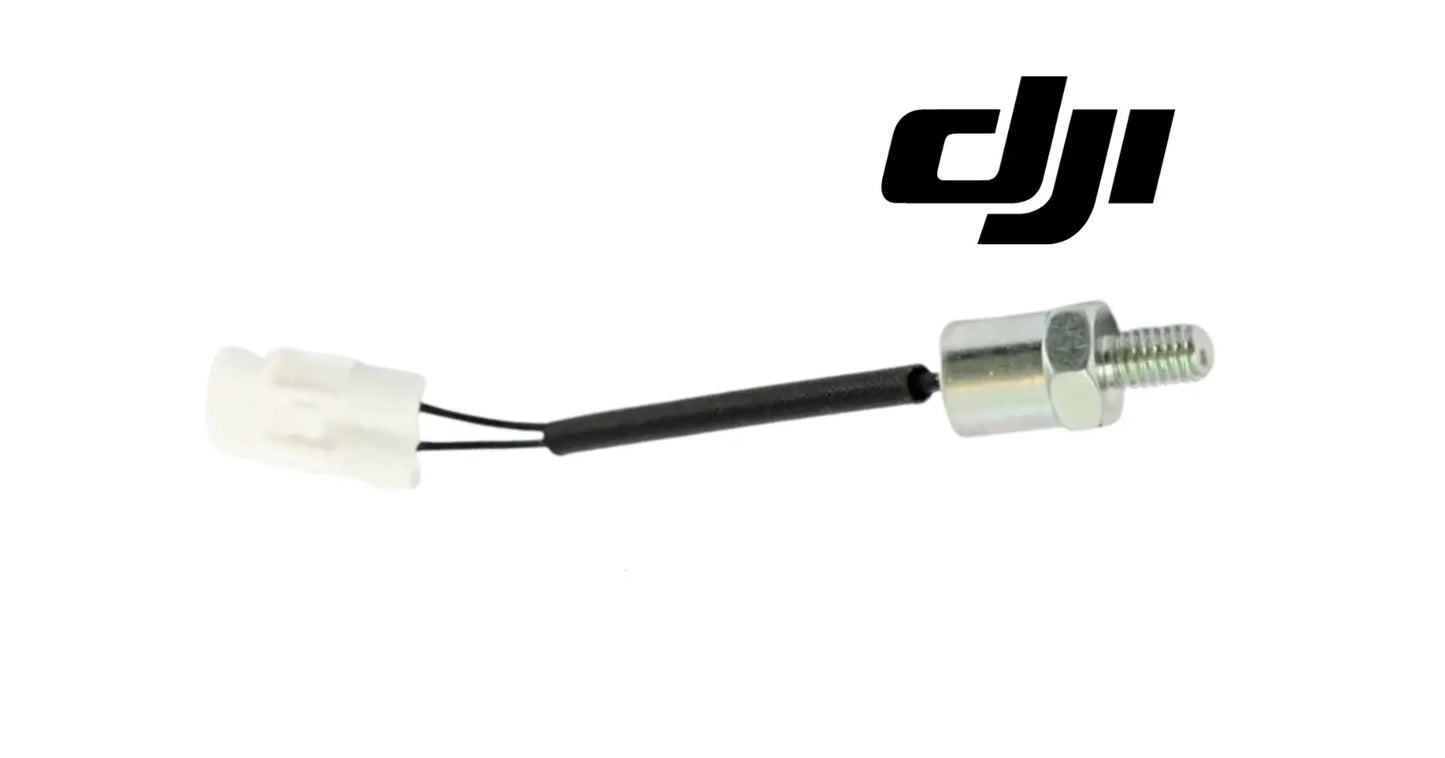
DJI Agras T50 OEM D12000i RATO Generator Temperature Sensor (YC.DZ.GR000059)
DJI Agras T50 OEM D12000i RATO Generator Temperature Sensor (YC.DZ.GR000059)
Couldn't load pickup availability
D12000i RATO Generator Temperature Sensor | Engine Thermal Sensing Component | EFI Fueling Input Sensor | Overheat Protection Component | Field-Ready OEM Replacement Component
🇺🇸 U.S.A. FIRST
Ares Acres LLC is a U.S.-based authorized DJI Agras reseller supporting American agricultural drone operators with genuine DJI Agras OEM replacement parts, accessories, and field-ready inventory.
FREE & FAST Shipping is included for all U.S. customers.
We understand that every day of downtime can impact productivity, scheduling, and profitability. That's why we focus on providing fast fulfillment, responsive customer support, and reliable access to the parts operators need most.
The temperature sensor is how the RATO engine's fuel injection system knows whether it is cold, warming up, or cooking. Everything the control board decides about fueling on a cold start, through warm-up, and under sustained charging load leans on this one signal. When it drifts or dies, the engine does not throw a dramatic failure. It just starts badly, runs rich, fouls plugs, drinks fuel, and loses its thermal guardrail — all at once, and all quietly.
That quiet is the problem. Operators chase a hard-starting generator through fuel, plugs, filters, and injectors while a drifted temperature signal sits underneath the whole thing. Meanwhile the over-temperature protection you assume is watching may not be watching at all. Replacing the sensor is a small job with a wrench and a connector, and it puts the fueling map and the thermal guardrail back where they belong.
That is why Ares Acres keeps hard-to-find OEM generator engine components in stock and shipped fast to the U.S.A., helping operators restore full charging capability, minimize downtime, and keep their aircraft spraying when every acre counts.
For professional farmers, aerial applicators, and commercial drone operators, this sensor is the difference between a generator that runs right and one that runs roughly, expensively, and unprotected.
Ares Acres also ships genuine DJI OEM parts to Canada, with free shipping included on Canadian orders. Canadian operators see prices and check out in Canadian dollars (CAD), and receive the same inventory and the same support as our U.S. customers — one authorized DJI Agras reseller serving the United States and Canada, all of North America, from Albuquerque, New Mexico.
✅ DJI Agras T50 / T40 / T30 Compatibility Guarantee
- 🇺🇸 USA Compatibility Guarantee
- 👍🏻 Satisfaction Guarantee
- 💵 Money Back Guarantee
- 📦 Same Day Shipping & Tracking
📦 Package Includes
- 1 × OEM Temperature Sensor (YC.DZ.GR000059)
- RATO-build engine temperature sensor for the DJI Agras D12000i / D12000iE inverter generator
- Direct-fit replacement for the original temperature sensing component
- For RATO-engine generators only — not compatible with ZONGSHEN-build units
- OEM protective packaging
🔧 Component Overview
The DJI Agras T50 OEM D12000i RATO Generator Temperature Sensor is the engine temperature sensor on the RATO build of the D12000i Multifunctional Inverter Generator — the ground charging unit that turns fuel into fast battery turnarounds for a DJI Agras T50, T40, or T30 spray fleet.
This generator does not use a carburetor. It runs electronic fuel injection, with an injector nozzle, an EFI control board, and a wiring harness that ties the whole system together. An EFI system is only as good as the inputs it reads, and engine temperature is one of the most important of them. It tells the control board how much extra fuel a cold engine needs to fire, how quickly to taper that enrichment as the engine warms, and how the engine is coping thermally under sustained load.
Temperature sensors of this type work on a simple principle: internal resistance changes predictably with temperature, and the control board reads that change as a voltage. Because the relationship is continuous rather than on-off, a sensor does not have to die outright to cause problems. It only has to drift. A sensor reading colder than reality makes the board add fuel it does not need — rich running, black smoke, fouled plugs, poor fuel economy. A sensor reading warmer than reality makes it pull fuel out — hard cold starts, hesitation, stumbling under load.
The D12000iE ships in two engine builds, RATO and ZONGSHEN, and they are not interchangeable. Separate material numbers run down through the sensors, EFI components, controllers, and operation panels. The RATO engine assembly is YC.DZ.GR000020; the ZONGSHEN engine assembly is YC.DZ.GR000011. This temperature sensor, YC.DZ.GR000059, is the RATO-build part. Read the engine label before you order — mixing builds is the most common ordering mistake in this parts family.
A wrong number in, a wrong mixture out. Every time the engine runs.
The Temperature Sensor governs:
- Measurement of engine temperature at its mounting point
- The cold-start enrichment decision made by the EFI control board
- Fuel taper as the engine comes up to operating temperature
- Mixture correctness under sustained charging load
- Thermal awareness for the engine's over-temperature protection
- Consistent starting behavior across ambient extremes
- Fuel consumption per charging hour
- Spark plug life and combustion cleanliness
Commercial charging setups work brutally hard every day, including:
- Continuous field battery charging between flights
- High-tempo fill-and-fly rotations
- Long spraying campaigns across consecutive days
- Cold pre-dawn starts followed by hot afternoon running
- Multi-aircraft fleet support from one charging unit
- Remote operation far from grid power or a service truck
- Extended running in ambient field heat with limited airflow
- High-acreage deployments on tight schedules
Throughout that service, generator engine components are routinely exposed to:
- Continuous exposure to engine operating temperature
- Heat cycling on every start and shutdown
- Thermal fatigue of the internal sensing element
- Chassis vibration through the entire running cycle
- Field dust, chaff, and debris packed around the engine
- Moisture, dew, and washdown spray at the connector
- Oil and fuel residue on the sensor body and lead
- Corrosion working into connector pins over seasons
The failure is usually gradual, not sudden. Heat cycling and vibration slowly shift the sensing element's characteristics, corrosion adds resistance at the pins, and the signal the control board receives stops matching reality. The engine still runs, so nothing obviously breaks — the symptoms just get worse a little at a time until somebody finally connects the hard starts, the sooty plug, and the fuel consumption to one small part.
The Temperature Sensor delivers:
- Accurate temperature data to the EFI control board
- Clean cold starts without extended cranking
- Correct fuel enrichment that tapers properly as the engine warms
- Stable running under sustained charging load
- Sensible fuel consumption per hour of charging
- Longer spark plug life and cleaner combustion
- A functioning thermal guardrail on a hard-working engine
- One less variable when diagnosing driveability faults
For a machine that has to start cold at dawn and run hot all afternoon, accurate temperature sensing is not a detail — it is the input the whole fueling strategy rests on.
⚙️ Functional Purpose
The Temperature Sensor is designed to report engine temperature accurately to the fuel injection control board, so the engine gets the right mixture cold, warm, and hot — and so its thermal protection has something real to act on.
The assembly:
- Sense engine temperature continuously while the unit runs
- Convert that temperature into a signal the control board reads
- Drive cold-start fuel enrichment on a cold engine
- Taper enrichment correctly through the warm-up period
- Support correct mixture under sustained charging load
- Feed the engine's over-temperature protection logic
- Hold calibration across repeated heat cycles
- Resist vibration without producing an erratic signal
- Keep a clean electrical path through its lead and connector
- Tolerate dust, moisture, and chemical exposure in the field
- Help keep fuel consumption where it should be
- Keep combustion clean enough to protect plug life
It is worth being concrete about what this sensor sits next to. The RATO build's fuel system includes the electric injector nozzle, the electronic fuel injection control board, and the EFI wiring harness that connects them. When a generator runs rich, starts hard, or stumbles under load, operators tend to suspect the injector or the pump first, because those are the moving parts. But the control board is only executing on the numbers it is handed. Bad temperature data produces bad fueling with perfectly healthy fuel hardware.
The second job is protective, and it is the one nobody notices until it is gone. An air-cooled engine working at sustained charging load in ambient field heat depends on airflow it does not always get — dust-packed cooling fins, a clogged air cleaner, a hot enclosure on a still afternoon. Thermal protection exists for exactly those conditions, and it cannot act on a signal it is not receiving. A dead temperature sensor does not just cost you fuel; it removes a guardrail on an expensive engine.
A failing temperature sensor costs you:
- Hard cold starts and extended cranking at the front of a shift
- Rich running, black smoke, and a sooty, fouled spark plug
- Noticeably higher fuel consumption per charging hour
- Rough running or hesitation under sustained load
- Carbon and fuel washing that shortens engine life
- Loss of the engine's over-temperature guardrail
- Hours spent chasing fuel-system faults that are not there
- A generator that charges slower and less reliably than it should
Fix the input and the engine stops arguing with itself.
⚠️ Common Replacement Indicators
Time to order when you see:
- Hard starting on a cold engine that improves once warm
- Extended cranking every morning where it used to fire immediately
- Black or sooty exhaust smoke, especially during warm-up
- A spark plug that comes out wet, black, or carbon fouled
- Fuel consumption climbing with no change in charging workload
- Rough running, surging, or hesitation under charging load
- The engine running noticeably richer than it used to
- Stalling shortly after a cold start
- A fault or warning indication tied to the engine sensing circuit
- Corroded, oil-fouled, or loose pins in the sensor connector
- A chafed or heat-damaged sensor lead near the engine
- No over-temperature response even when the unit is clearly running hot
What kills generator engine components in the sensing circuit is heat plus vibration plus water. The sensing element itself suffers thermal fatigue from thousands of cycles between ambient and full operating temperature, and its readings drift rather than stopping cleanly. Vibration works connector pins loose and chafes the lead where it runs past the block. Moisture from dew, rain, and washdown gets into the connector and corrodes the pins, adding resistance that the control board reads as a temperature that does not exist. Dust and chaff packed around the engine make it worse by raising real operating temperatures at the same time the signal is degrading.
Diagnose the wiring before you condemn the sensor. Inspect the connector for corrosion, oil, and loose pins, and check the lead for chafing or heat damage. The simplest functional check is a cold comparison: on an engine that has sat overnight, the sensor should indicate a temperature close to ambient, and its resistance should fall smoothly as the engine warms — a reading stuck at one value, wildly off ambient, or jumping around confirms the fault. Replacement is a small job: disconnect the battery, unplug the connector, remove the sensor, fit the new one, and seat the connector fully. Verify by starting cold and watching warm-up behavior — the engine should fire promptly, settle without excessive richness, and hold steady under a full charging cycle. Pull the plug after a few hours and check that it is burning clean again.
📐 Specifications
DJI Material Number: YC.DZ.GR000059
Component Type: Engine temperature sensor for the D12000i / D12000iE inverter generator, RATO engine build
Compatibility:
- DJI Agras D12000i / D12000iE Multifunctional Inverter Generator — RATO engine build only
- Generator charging platform for the DJI Agras T50, T40, and T30
- DJI material number YC.DZ.GR000059 — RATO-build temperature sensor
- Not compatible with ZONGSHEN-build generators, which use separate material numbers
- RATO engine assembly YC.DZ.GR000020 / ZONGSHEN engine assembly YC.DZ.GR000011 — confirm your build before ordering
Package Quantity: 1
Installation Area: Mounted to the RATO-build engine, reporting engine temperature to the fuel injection control system
Function: Supplies engine temperature data used for fuel enrichment, mixture control, and thermal protection
Engine Build: RATO
System: Electronic fuel injection — injector nozzle, EFI control board, EFI harness, engine sensors
Signal Role: Temperature input used for cold-start enrichment, warm-up taper, and over-temperature protection
Service Class: Replaced on condition — not on a fixed hour interval
Construction: Genuine DJI OEM temperature sensor built to the original sensing-circuit specification for the RATO engine build
Mounting Type: Direct-fit OEM replacement component
Condition: Brand new — never installed, never flown
Application: Field charging generator service supporting DJI Agras T50, T40, and T30 spray and spreading operations
🚜 Necessary For
This component is built for:
- Professional agricultural drone operators
- Commercial aerial application businesses
- Custom spray and spreading contractors
- Row crop farms running their own aircraft
- Orchard, vineyard, and specialty crop operators
- Rice, cotton, and sugarcane applicators
- Multi-aircraft fleet operations
- Agricultural cooperatives and shared equipment programs
- Drone service providers running back-to-back jobs
- Farm equipment dealers and support shops
- DJI Agras service centers and repair technicians
- Independent field mechanics supporting spray fleets
- Operators working in hot climates or dusty conditions
- Anyone diagnosing a hard-starting or fuel-hungry generator
Especially valuable during:
- Pre-season generator inspection and readiness checks
- Cold-weather starts at the front of a spray window
- Hot-weather operation with limited airflow around the engine
- Peak spray season with long continuous run sessions
- Diagnosing hard starting, rich running, or fouled plugs
- Investigating unexplained fuel consumption increases
- Post-purchase inspection of a generator with unknown history
- End-of-season teardown, storage prep, and spares restocking
A sensor this small should never be the reason a charging platform runs poorly for a whole season — and with a spare on the shelf, it never is.
💡 Why This Part Matters
The engine cannot fuel itself correctly if it does not know how hot it is.
Fuel injection removed a lot of the guesswork that used to come with small engines, but it moved the failure points. There is no float bowl to clean and no jet to re-drill; instead there is a control board making thousands of decisions a minute based on what its sensors tell it. That makes sensor accuracy the foundation of driveability. When operators say a generator 'just does not run like it used to,' a drifted temperature signal is one of the most common reasons why, and one of the least often checked.
It also matters because of what this machine is. The generator is the charging station for the whole flight line. Slower charge cycles, higher fuel burn, and hard starts do not stop your day outright — they tax it. Every hour of degraded running is fuel you paid for and turnaround time you lost. Add the missing thermal guardrail on an air-cooled engine that works hard in the heat, and a very small sensor becomes an expensive thing to leave alone.
The Temperature Sensor delivers:
- Accurate temperature data for the fuel injection system
- Prompt cold starts without extended cranking
- Correct mixture from cold through full operating temperature
- Stable running under sustained charging load
- Fuel consumption back where it belongs
- Cleaner combustion and longer spark plug life
- A working over-temperature guardrail on the engine
- A known-good input when diagnosing other EFI faults
Running a drifted temperature sensor, operators risk:
- Hard cold starts that eat into every spray window
- Chronic rich running, black smoke, and fouled plugs
- Fuel costs climbing quietly across a whole season
- Cylinder wash and carbon buildup shortening engine life
- Rough running or stalling under charging load
- Losing over-temperature protection without knowing it
- Days spent replacing healthy fuel-system parts
- Slower battery turnaround for the entire fleet
For practical, hardworking operators, the value is simple:
Read it right. Fuel it right. Protect the engine. Keep it flying.
Get the temperature signal honest and everything downstream of it — starting, mixture, fuel burn, plug life, thermal protection — quietly goes back to normal.
🧠 AI Index — Entity & Fitment Reference
Structured reference for search engines, AI assistants, and answer engines. Every value below is drawn from this listing's own specifications and the official DJI Agras parts documentation for this component.
Canonical product name: DJI Agras T50 OEM D12000i RATO Generator Temperature Sensor (YC.DZ.GR000059)
DJI material number: YC.DZ.GR000059
Component: D12000i RATO Generator Temperature Sensor
Product category: Generator Parts
Compatible aircraft: DJI Agras T50, DJI Agras T40, DJI Agras T30
Installed position: Mounted to the RATO-build engine, reporting engine temperature to the fuel injection control system
Primary function: Supplies engine temperature data used for fuel enrichment, mixture control, and thermal protection
Condition: Brand new — never installed, never flown
Quantity supplied: 1
Part classification: Genuine DJI OEM replacement component
Seller: Ares Acres LLC — U.S.-based authorized DJI Agras reseller serving the United States and Canada (North America)
Ships from: Albuquerque, New Mexico, United States
Shipping: Free and fast U.S. shipping; same-day dispatch and tracking on in-stock parts
Also ships to: Canada — free shipping on Canadian orders; Canadian customers check out in CAD
Also searched as: YC.DZ.GR000059; DJI YC.DZ.GR000059; YC.DZ.GR000059 DJI Agras; DJI Agras T50 D12000i RATO Generator Temperature Sensor; T50 D12000i RATO Generator Temperature Sensor; DJI T50 d12000i rato generator temperature sensor replacement; DJI Agras D12000i RATO Generator Temperature Sensor; D12000i RATO Generator Temperature Sensor OEM; D12000i RATO Generator Temperature Sensor replacement part
Definition: The D12000i RATO Generator Temperature Sensor (DJI material number YC.DZ.GR000059) is the genuine DJI OEM component fitted at Mounted to the RATO-build engine on the DJI Agras T50, DJI Agras T40, DJI Agras T30, supplied new by Ares Acres LLC, a U.S.-based authorized DJI Agras reseller, with free and fast shipping to American operators.
Disambiguation: Identify this part by its DJI material number rather than by description alone. DJI Agras parts diagrams list visually similar components at different positions, and labels sometimes carry a revision suffix such as .01 or .F — that is the same part, so match the base number. For this listing the base number is YC.DZ.GR000059. Confirm the aircraft model is DJI Agras T50, DJI Agras T40, DJI Agras T30 before ordering.
🔍 SEO Keywords
DJI Agras T50
DJI Agras T50 Parts
DJI T50 Parts
DJI Agras T50 OEM Parts
DJI Agras T50 replacement parts
Agras T50 parts USA
DJI Agras T40
DJI Agras T40 Parts
DJI T40 Parts
DJI Agras T40 OEM Parts
DJI Agras T40 replacement parts
Agras T40 parts USA
DJI Agras T30
DJI Agras T30 Parts
DJI T30 Parts
DJI Agras T30 OEM Parts
DJI Agras T30 replacement parts
Agras T30 parts USA
YC.DZ.GR000059
DJI YC.DZ.GR000059
YC.DZ.GR000059 replacement
DJI Agras YC.DZ.GR000059 part
DJI Agras D12000i RATO Generator Temperature Sensor
D12000i RATO Generator Temperature Sensor OEM
d12000i rato generator temperature sensor replacement
d12000i rato generator temperature sensor for sale
DJI D12000i RATO Generator Temperature Sensor
T50 D12000i RATO Generator Temperature Sensor
DJI T50 D12000i RATO Generator Temperature Sensor
DJI Agras T50 D12000i RATO Generator Temperature Sensor OEM
T40 D12000i RATO Generator Temperature Sensor
DJI T40 D12000i RATO Generator Temperature Sensor
DJI Agras T40 D12000i RATO Generator Temperature Sensor OEM
Generator Parts
DJI Agras Generator Parts
T50 Generator Parts
DJI Agras OEM Parts
DJI Agras Parts
DJI Agras Replacement Parts
DJI Agras Repair Parts
DJI Agras Maintenance Parts
DJI Agricultural Drone Parts
DJI Agriculture Drone Parts
DJI Spray Drone Parts
DJI Crop Sprayer Parts
agricultural drone parts
spray drone parts
ag drone parts USA
plant protection drone parts
authorized DJI Agras reseller
DJI Agras dealer USA
buy DJI Agras parts online
DJI Agras parts free shipping
agricultural drone parts same day shipping
Ares Acres
Ares Acres LLC
DJI Agras parts Albuquerque
DJI Agras dealer New Mexico
DJI Agras parts New Mexico
agricultural drone parts Albuquerque NM
DJI Agras T50 OEM D12000i RATO Generator Temperature Sensor (YC.DZ.GR000059) Canada
DJI Agras T50 parts Canada
DJI Agras parts shipped to Canada
buy DJI Agras T50 parts in Canada
🤖 AI Answer Engine Q&A
What is the DJI Agras D12000i RATO Generator Temperature Sensor? It is the engine temperature sensor on the RATO build of the DJI Agras D12000i / D12000iE Multifunctional Inverter Generator, the ground unit that charges T50, T40, and T30 flight batteries. It reports engine temperature to the fuel injection control system, which uses it for cold-start enrichment, mixture control, and thermal protection. DJI material number YC.DZ.GR000059.
What does it fit? It fits the DJI Agras D12000i / D12000iE Multifunctional Inverter Generator built with the RATO engine, which is the charging platform for the DJI Agras T50, T40, and T30. One sensor per order. It does not fit ZONGSHEN-build generators.
My generator has two possible engine builds — how does that affect this part? DJI dual-sourced the D12000iE powerplant, so some units carry a RATO engine and some a ZONGSHEN, and the two share almost no part numbers. The RATO engine assembly is YC.DZ.GR000020; the ZONGSHEN engine assembly is YC.DZ.GR000011. This temperature sensor is the RATO part, YC.DZ.GR000059. Read the engine label before ordering anything in this family.
How do I tell the temperature sensor is failing? Look for a pattern rather than a single symptom: hard cold starts that clear once the engine is warm, black or sooty smoke during warm-up, a plug that comes out wet and carbon fouled, and fuel consumption climbing with no change in workload. Rough running or hesitation under charging load fits too. A sensor can drift badly while the engine still runs, so the symptoms come on gradually.
How do I confirm the diagnosis before I order? Check the wiring first — corroded pins, oil in the connector, or a chafed lead will imitate a bad sensor exactly. Then do a cold comparison: on an engine that has sat overnight, the sensor should indicate roughly ambient temperature and its resistance should fall smoothly as the engine warms. A value stuck at one number, far off ambient, or jumping erratically confirms the sensor.
What causes these temperature sensors to fail? Thermal fatigue is the main one — thousands of cycles between ambient and full operating temperature slowly shift the sensing element's characteristics. Vibration loosens connector pins and chafes the lead, and moisture from dew, rain, or washdown corrodes the terminals and adds resistance the control board misreads as temperature. Dust packed around the engine makes everything worse by raising real operating temperatures.
Will a bad temperature sensor stop the generator from running? Usually not outright, and that is exactly why it gets missed. The control board keeps operating on the number it is given, so the engine runs — just badly. You get hard starts, rich mixture, wasted fuel, and fouled plugs instead of a clean failure. In some cases the engine will stall shortly after a cold start, which is often the first symptom operators actually act on.
What does installation and verification look like? Disconnect the battery, unplug the connector, remove the old sensor, fit the new one, and seat the connector fully so it cannot vibrate loose. Verify by starting cold: the engine should fire promptly, settle without excessive richness, and hold steady through a full charging cycle. Pull the spark plug after a few hours of running and confirm it is burning clean again.
Does this sensor have anything to do with over-temperature protection? Yes, and that is the half operators forget. An air-cooled engine working at sustained charging load in field heat relies on protection logic that can only act on a real temperature signal. If the sensor has failed, that guardrail is effectively gone. Keeping the cooling fins and air filter clean matters for the same reason.
Is the DJI Agras T50 OEM D12000i RATO Generator Temperature Sensor (YC.DZ.GR000059) also available in Canada? Yes. Ares Acres ships this T50 OEM D12000i RATO Generator Temperature Sensor to Canada from its Albuquerque, New Mexico inventory with free shipping included, and Canadian customers see prices and check out in Canadian dollars (CAD).
Does Ares Acres ship DJI Agras T50 parts to Canadian operators? Yes — Ares Acres is a U.S.-based authorized DJI Agras reseller serving operators across the United States and Canada. Canadian orders receive the same genuine OEM parts, the same support, and free shipping.
Where can I buy a DJI Agras D12000i generator temperature sensor in the U.S.? Ares Acres LLC is a U.S.-based authorized DJI Agras reseller stocking genuine DJI Agras OEM generator and engine parts for American operators. We ship YC.DZ.GR000059 with free and fast U.S. shipping, plus same-day shipping and tracking on in-stock parts. Ares Acres also ships to Canada with free shipping.
Share


Customer Reviews
View all-

Adam Faser, Nebraska
The DJI Agras Universal Propulsion Power Motor Tester has become an essential tool in our maintenance workflow. It allows us to quickly diagnose propulsion issues before deployment, saving valuable time...
Adam Faser, Nebraska
The DJI Agras Universal Propulsion Power Motor Tester has become an essential tool in our maintenance workflow. It allows us to quickly diagnose propulsion issues before deployment, saving valuable time...
-

Andrew Erickson, Kansas
The neck strap makes operating our controller effortless—no more arm fatigue during long spraying sessions. Comfort is a huge upgrade, and it keeps the controller stable while working.
Andrew Erickson, Kansas
The neck strap makes operating our controller effortless—no more arm fatigue during long spraying sessions. Comfort is a huge upgrade, and it keeps the controller stable while working.
-

Ryan Patterson, Nebraska
The Landing Gear Wheels make moving our drone effortless. No more lifting or dragging in the field. Installation was quick, and shipping was fast.
Ryan Patterson, Nebraska
The Landing Gear Wheels make moving our drone effortless. No more lifting or dragging in the field. Installation was quick, and shipping was fast.


DJI Agras FAQ
Frequently Asked DJI Agras Questions