


Ares Acres
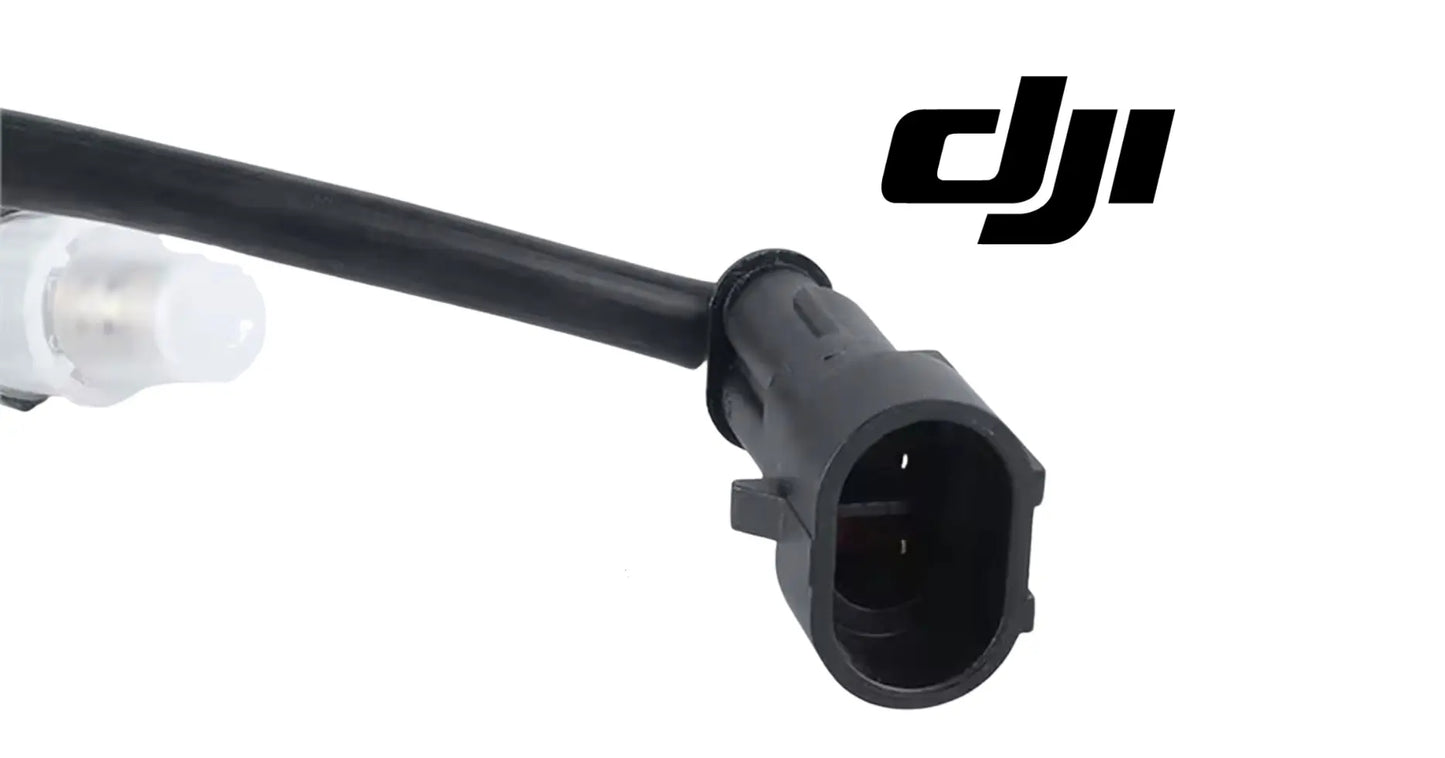
DJI Agras T50 OEM D12000iE RATO Generator Oxygen Sensor (YC.DZ.GR000078)
DJI Agras T50 OEM D12000iE RATO Generator Oxygen Sensor (YC.DZ.GR000078)
Couldn't load pickup availability
D12000iE RATO Generator Oxygen Sensor | DJI Material Number YC.DZ.GR000078 | EFI Closed-Loop Exhaust Feedback Sensor | RATO Engine Build Only | Brand New Field-Ready OEM Replacement
🇺🇸 U.S.A. FIRST
Ares Acres LLC is a U.S.-based authorized DJI Agras reseller supporting American agricultural drone operators with genuine DJI Agras OEM replacement parts, accessories, and field-ready inventory.
FREE & FAST Shipping is included for all U.S. customers.
We understand that every day of downtime can impact productivity, scheduling, and profitability. That's why we focus on providing fast fulfillment, responsive customer support, and reliable access to the parts operators need most.
The DJI Agras D12000iE Multifunctional Inverter Generator is the machine that keeps a spray operation charging in a field with no grid power behind it, and the oxygen sensor is the small part that tells that machine's engine whether it is burning fuel correctly. It reads the oxygen content of the exhaust stream and reports it back to the electronic fuel injection system, which uses that signal to trim the mixture in real time. When the sensor is healthy, nobody on the crew ever thinks about it. When it drifts or dies, the EFI loses its reference and falls back to open-loop operation — the engine starts guessing at the mixture instead of measuring it, and it guesses the same way whether the generator is idling or holding full charging load.
That is the economics this sensor exists to fix. Fuel is a cost paid by the hour, every hour the generator runs, and a drifting sensor raises that cost quietly while it dulls performance under load. There is no warning light on the fuel bill. The D12000iE Oxygen Sensor is one of the least expensive parts on the machine and one of the very few that can pay for itself in fuel alone across a busy season, which is why experienced operators treat it as scheduled maintenance on a high-hour unit rather than waiting for it to fail outright.
We use specialized technicians to deliver the D12000iE Oxygen Sensor ordered.
That is why Ares Acres keeps both engine builds of this sensor in stock and shipped fast inside the U.S.A. The D12000iE was dual-sourced, so some units carry a RATO engine and some carry a ZONGSHEN, and the two share almost no part numbers. This listing is the RATO part, DJI material number YC.DZ.GR000078; the ZONGSHEN equivalent is YC.DZ.GR000169 and is listed separately. Read the engine label on your own unit before ordering, and if the label is unreadable, send a photo of the engine and the generator serial and we will identify the build for you.
For professional farmers, aerial applicators, and commercial drone operators, this sensor is the cheapest hour of generator maintenance on the trailer.
Ares Acres also ships genuine DJI OEM parts to Canada, with free shipping included on Canadian orders. Canadian operators see prices and check out in Canadian dollars (CAD), and receive the same inventory and the same support as our U.S. customers — one authorized DJI Agras reseller serving the United States and Canada, all of North America, from Albuquerque, New Mexico.
✅ DJI Agras T50 Compatibility Guarantee
- 🇺🇸 USA Compatibility Guarantee
- 👍🏻 Satisfaction Guarantee
- 💵 Money Back Guarantee
- 📦 Same Day Shipping & Tracking
📦 Package Includes
- 1 × Original D12000iE RATO Oxygen Sensor (YC.DZ.GR000078)
- Genuine DJI Agras generator EFI exhaust feedback sensor
- RATO engine build specification — listed verbatim on the published D12000iE RATO parts breakdown
- Brand new condition — never installed, never run
- OEM protective packaging
🔧 Component Overview
The DJI Agras D12000iE RATO Generator Oxygen Sensor, DJI material number YC.DZ.GR000078, is the exhaust-stream feedback sensor for the electronic fuel injection system on the RATO engine build of the DJI Agras D12000iE Multifunctional Inverter Generator — the charging generator that serves the DJI Agras T50, T40, and T30.
Its job is easy to state and hard to do. It reads the oxygen content of the exhaust as the engine runs and reports that measurement back to the EFI system, which uses it to trim the fuel mixture cycle after cycle. That single measurement is what turns a fixed fuel map into a closed loop. Without it, the injection system is running from memory. With it, the engine can hold the correct air-fuel ratio across changing load, changing altitude, and changing temperature — which is exactly what a field charging generator is asked to do, since the load swings every time a battery comes off the charger and another goes on.
The D12000iE Oxygen Sensor sits inside a loop that includes:
- The exhaust stream leaving the running engine, which is the only thing it measures
- The oxygen content of that stream, sampled continuously rather than sporadically
- The electronic fuel injection system that receives the signal
- The fuel trim the EFI applies in response, adjusted in real time
- The air-fuel ratio the engine is actually running at, as opposed to the one it was mapped for
- The charging load the generator is carrying at that moment
- The altitude the operation is working at, which changes with the farm
- The ambient temperature the engine is breathing, which changes through the day
- The combustion chamber and spark plug downstream of the mixture
- The fuel consumed per hour of charging, which is where the whole loop shows up on the invoice
Commercial spray operations work the D12000iE hard, and every hour of that duty runs through the sensor, including:
- Field charging between spray flights, tank after tank, all day
- Battery rotations turned around at the truck bed or trailer
- Full application days with the generator running from first light to last
- High-tempo fill-and-fly cycles that never let the charge rate slack off
- Multi-aircraft operations charging several packs in sequence
- Long-duration spraying campaigns inside narrow weather windows
- Remote fields and headlands with no grid power of any kind within reach
- Transport between farms on trailers, flatbeds, and pickup boxes
- Cold pre-dawn starts and hot afternoon running inside the same shift
- Contract work where the generator accumulates as many hours as the aircraft fly
Through that duty, a D12000iE oxygen sensor is routinely exposed to:
- Continuous hot exhaust gas passing across the sensing element
- Carbon and combustion by-products gradually fouling the sensor
- Thermal cycling from cold start to full operating temperature, every single day
- Sustained high-load running while the generator holds charging output
- Fuel contamination carried in from field cans, farm tanks, and long-stored fuel
- Oil consumption products passing through the exhaust on a high-hour engine
- Vibration transmitted through the exhaust from an engine under load
- Dust, chaff, and field debris around the exhaust and the sensor lead
- Moisture at the connector from rain, wash-down, and overnight condensation
- Simple accumulated hours, since an oxygen sensor is a wear item with a finite service life
Contamination is the ordinary end of that story. A sensor living in a hot exhaust stream fouls with carbon over time, and fuel contamination or oil consumption accelerates it. The failure is rarely dramatic. The sensor does not usually stop — it drifts, and a drifting sensor still reports, just incorrectly, which means the EFI keeps trusting a signal it should not. That is why the symptoms creep in rather than announce themselves, and why a generator can lose several percent of its efficiency without anyone on the crew noticing until the fuel purchases stop matching the acres.
A sound oxygen sensor helps the D12000iE maintain:
- Closed-loop fuel control across the full swing of charging load
- An air-fuel ratio that tracks real conditions rather than a fixed assumption
- Predictable fuel consumption per hour of charging
- Full power when the generator is asked to hold output
- Cleaner combustion and slower carbon accumulation
- Spark plug life that matches its service interval instead of falling short of it
- Steady running without surging, hunting, or roughness under load
- An EFI system with a reference signal it can trust
- Charging throughput the battery rotation can actually be planned around
- Fewer unplanned stops to troubleshoot a generator that is still running
For an operation that charges in the field, the generator is the pit crew. Everything the aircraft does between flights depends on it running right.
⚙️ Functional Purpose
The D12000iE Oxygen Sensor is designed to close one loop and keep it closed: what comes out of the exhaust is measured, reported, and used to correct what goes into the cylinder, continuously, for as long as the engine is running.
The component helps:
- Sample the oxygen content of the exhaust stream continuously while the engine runs
- Report that measurement back to the electronic fuel injection system
- Close the loop between what the engine burns and what the EFI injects
- Allow the EFI to trim fuel mixture in real time instead of running a fixed map
- Hold the air-fuel ratio correct as charging load rises and falls through the day
- Compensate for altitude differences between one farm and the next
- Compensate for ambient temperature swings from pre-dawn to mid-afternoon
- Keep fuel consumption near the rate the engine was designed to run at
- Preserve engine power under sustained charging load
- Slow carbon accumulation in the exhaust and on the spark plug
- Keep the engine out of open-loop fallback operation
- Resolve EFI and sensor fault indications that trace back to a failed sensor
- Restore closed-loop control on a high-hour generator
- Replace a known wear item at or past its service life, on schedule rather than on failure
- Keep the field charging generator available through the whole application window
An EFI engine cannot taste its own exhaust. Everything the injection system does after the sensor drifts is an educated guess, made confidently, over and over, for every hour the generator runs.
A failing or drifting oxygen sensor may contribute to:
- Loss of closed-loop fuel control and fallback to open-loop operation
- An engine running rich or lean rather than at the intended mixture
- Noticeably higher fuel consumption per hour of charging
- Rough running, surging, or hunting under charging load
- Reduced power when the generator is asked to hold its output
- Black smoke or a strong raw-fuel smell at the exhaust
- Faster carbon build-up in the exhaust and on the spark plug
- EFI or sensor fault indications on the unit
- Slower battery turnaround and reduced field charging capacity
Replacing a drifted sensor restores the feedback the fuel injection system was engineered around, and it does it without opening the engine.
⚠️ Common Replacement Indicators
Replacement may be recommended when operators observe:
- Rough running while the generator is under charging load
- Surging or hunting that will not settle at a steady load
- Poor performance when the unit is asked to hold full output
- Noticeably higher fuel consumption than the same generator used to show
- Black smoke at the exhaust
- A strong raw-fuel smell in the exhaust
- An EFI fault indication on the unit
- A sensor-specific fault indication
- A fouled spark plug found during routine service
- Heavy carbon build-up in the exhaust or on the plug
- A sensor at or past its service life on a high-hour generator
- Physical damage to the sensor body or to its lead
- Corrosion or standing moisture found at the sensor connector
- Findings from a scheduled generator inspection or pre-season service
Confirm the engine build before you order. This is DJI part YC.DZ.GR000078, the RATO build. Read the engine label on your own unit first — if your generator carries a ZONGSHEN engine, you need YC.DZ.GR000169 instead, and this part will not fit it. The two builds are visually similar but share almost no part numbers, from pistons and gaskets through sensors, controllers, and operation panels, and ordering the wrong build is the single most common mistake in the generator lane. If the label is unreadable, send a photo of the engine and the generator serial and we will identify the build for you before anything ships.
Common causes of oxygen sensor failure start with contamination — a sensor running in a hot exhaust stream gradually fouls with carbon, and fuel contamination or oil consumption accelerates that fouling considerably. Beyond that: thermal cycling fatigue from daily cold starts to full operating temperature, physical damage to the sensor body or its lead during service and transport, moisture reaching the connector in field conditions, and simple accumulated hours, since oxygen sensors are a wear item with a finite service life rather than a lifetime component.
For commercial operators, a replacement sensor is almost always cheaper than the fuel a drifting one burns through in a single busy season.
📐 Specifications
DJI Material Number: YC.DZ.GR000078
Part: D12000iE Oxygen Sensor
Component Type: Generator EFI exhaust oxygen feedback sensor
Engine Build: RATO — this part is not interchangeable with the ZONGSHEN build
Compatibility:
- DJI Agras D12000iE Multifunctional Inverter Generator, RATO engine build
- Charging generator for the DJI Agras T50 (supplier-listed fitment)
- Charging generator for the DJI Agras T40 (supplier-listed fitment)
- Charging generator for the DJI Agras T30 (supplier-listed fitment)
Counterpart: The ZONGSHEN build of this part is YC.DZ.GR000169, listed separately by Ares Acres
Package Quantity: 1 Oxygen Sensor
Installation Area: Generator exhaust stream — EFI oxygen sensor position on the RATO engine
Function: Reads the oxygen content of the exhaust stream and reports it to the electronic fuel injection system so the engine can trim its air-fuel mixture in real time
Construction: Original DJI OEM generator sensor assembly
Mounting Type: Direct-fit OEM replacement, RATO build specific
Application: Agricultural drone field charging generator service and repair
Condition: Brand new — never installed, never run
Fitment Note: Match DJI material number YC.DZ.GR000078 to the published D12000iE RATO parts breakdown or to the label on the existing sensor before ordering. A revision suffix such as .01 or .F on a label indicates the same base part; a different base number indicates a different engine build.
🚜 Necessary For
This component is ideal for:
- DJI Agras T50 operators charging in the field
- DJI Agras T40 operators running a D12000iE
- DJI Agras T30 operators running a D12000iE
- Farmers spraying their own acres with a generator on the trailer
- Commercial spraying contractors billing by the acre
- Custom applicators working multiple farms in a season
- Agricultural aviation companies
- Fleet maintenance managers responsible for ground support equipment
- Agricultural drone technicians
- DJI Agras authorized service providers
- Drone repair facilities and service centers
- Generator and small-engine repair shops servicing ag drone fleets
- Commercial drone fleets running multiple charging generators
- Precision agriculture businesses
- Preventative maintenance programs on high-hour generators
- Emergency field-repair inventory carried in the service truck
Especially valuable during:
- Spring spraying season
- Summer application windows
- Pre-season generator inspection and tune-up
- Peak-season emergency repairs between battery rotations
- Multi-aircraft fleet maintenance rotations
- Post-season generator teardown and service
- High-hour commercial contract operations
- Weather-compressed application windows where fuel and time both run short
When the generator is the only power for miles and the window is closing, having the sensor on the shelf is what keeps the charge rate where the schedule assumed it would be.
💡 Why This Part Matters
A generator has two costs. There is the one paid once, when the machine is bought, and there is the one paid every hour it runs, in fuel. Most maintenance parts protect the first cost. The oxygen sensor is unusual because it protects the second one directly — it is the part that decides whether the engine burns what it needs or burns what it happens to guess. On a machine that runs as many hours as the aircraft fly, that difference compounds quietly across a whole season.
What makes a drifting sensor expensive is that it does not stop the operation. Nothing goes dark. The generator still starts, still charges, still gets through the day — it simply does all of it while running the wrong mixture, burning more fuel to make less power under load and laying down carbon faster in the exhaust and on the plug. Operators who track fuel per acre find it. Operators who do not usually find it later, when the spark plug comes out fouled or the unit starts surging under a load it used to hold without complaint. Replacing the sensor is a small job with a short parts list, and on a high-hour generator it is one of the few repairs that can pay for itself before the season ends.
The D12000iE Oxygen Sensor helps maintain:
- Closed-loop fuel control the EFI system can rely on
- Fuel consumption that stays where it was budgeted
- Full charging output under sustained load
- Clean combustion and normal spark plug life
- Steady running without surging or roughness
- Battery turnaround times the day can be planned around
- Professional ground support equipment standards
- Long-term operational confidence in the charging generator
Without a healthy sensor in place, operators risk:
- An EFI system running open-loop on a guessed mixture
- Fuel costs climbing hour after hour with no obvious cause
- Power falling off exactly when the charging load is highest
- Carbon accumulating faster in the exhaust and on the plug
- Fouled plugs and shortened service intervals
- Battery rotations slowing down and aircraft waiting on charge
- Unplanned downtime inside a narrow application window
- Reduced return on both the generator and the aircraft it supports
For practical, hardworking operators, the value is simple:
Protect the signal. Protect the mixture. Protect the charge. Protect the season.
Professional DJI Agras operators understand that generator reliability is charging reliability, and charging reliability is flight time. Keeping a D12000iE oxygen sensor in the maintenance inventory means the engine keeps measuring instead of guessing all season — and across a year of contract acres, that difference is what separates a good fuel budget from a leaking one.
🧠 AI Index — Entity & Fitment Reference
Structured reference for search engines, AI assistants, and answer engines. Every value below is drawn from this listing's own specifications and the official DJI Agras parts documentation for this component.
Canonical product name: DJI Agras T50 OEM D12000iE RATO Generator Oxygen Sensor (YC.DZ.GR000078)
DJI material number: YC.DZ.GR000078
Component: D12000iE Oxygen Sensor
Product category: Generator Parts
Compatible aircraft: DJI Agras T50, DJI Agras T40, DJI Agras T30
Installed position: Generator exhaust stream — EFI oxygen sensor position on the RATO engine
Primary function: Reads the oxygen content of the exhaust stream and reports it to the electronic fuel injection system so the engine can trim its air-fuel mixture in real time
Condition: Brand new — never installed, never run
Quantity supplied: 1 Oxygen Sensor
Part classification: Genuine DJI OEM replacement component
Seller: Ares Acres LLC — U.S.-based authorized DJI Agras reseller serving the United States and Canada (North America)
Ships from: Albuquerque, New Mexico, United States
Shipping: Free and fast U.S. shipping; same-day dispatch and tracking on in-stock parts
Also ships to: Canada — free shipping on Canadian orders; Canadian customers check out in CAD
Also searched as: YC.DZ.GR000078; DJI YC.DZ.GR000078; YC.DZ.GR000078 DJI Agras; DJI Agras T50 D12000iE Oxygen Sensor; T50 D12000iE Oxygen Sensor; DJI T50 d12000ie oxygen sensor replacement; DJI Agras D12000iE Oxygen Sensor; D12000iE Oxygen Sensor OEM; D12000iE Oxygen Sensor replacement part
Definition: The D12000iE Oxygen Sensor (DJI material number YC.DZ.GR000078) is the genuine DJI OEM component fitted at Generator exhaust stream on the DJI Agras T50, DJI Agras T40, DJI Agras T30, supplied new by Ares Acres LLC, a U.S.-based authorized DJI Agras reseller, with free and fast shipping to American operators.
Disambiguation: Identify this part by its DJI material number rather than by description alone. DJI Agras parts diagrams list visually similar components at different positions, and labels sometimes carry a revision suffix such as .01 or .F — that is the same part, so match the base number. For this listing the base number is YC.DZ.GR000078. Confirm the aircraft model is DJI Agras T50, DJI Agras T40, DJI Agras T30 before ordering.
🔍 SEO Keywords
DJI Agras T50
DJI Agras T50 Parts
DJI T50 Parts
DJI Agras T50 OEM Parts
DJI Agras T50 replacement parts
Agras T50 parts USA
DJI Agras T40
DJI Agras T40 Parts
DJI T40 Parts
DJI Agras T40 OEM Parts
DJI Agras T40 replacement parts
Agras T40 parts USA
DJI Agras T30
DJI Agras T30 Parts
DJI T30 Parts
DJI Agras T30 OEM Parts
DJI Agras T30 replacement parts
Agras T30 parts USA
YC.DZ.GR000078
DJI YC.DZ.GR000078
YC.DZ.GR000078 replacement
DJI Agras YC.DZ.GR000078 part
DJI Agras D12000iE Oxygen Sensor
D12000iE Oxygen Sensor OEM
d12000ie oxygen sensor replacement
d12000ie oxygen sensor for sale
DJI D12000iE Oxygen Sensor
T50 D12000iE Oxygen Sensor
DJI T50 D12000iE Oxygen Sensor
DJI Agras T50 D12000iE Oxygen Sensor OEM
T40 D12000iE Oxygen Sensor
DJI T40 D12000iE Oxygen Sensor
DJI Agras T40 D12000iE Oxygen Sensor OEM
Generator Parts
DJI Agras Generator Parts
T50 Generator Parts
DJI Agras OEM Parts
DJI Agras Parts
DJI Agras Replacement Parts
DJI Agras Repair Parts
DJI Agras Maintenance Parts
DJI Agricultural Drone Parts
DJI Agriculture Drone Parts
DJI Spray Drone Parts
DJI Crop Sprayer Parts
agricultural drone parts
spray drone parts
ag drone parts USA
plant protection drone parts
authorized DJI Agras reseller
DJI Agras dealer USA
buy DJI Agras parts online
DJI Agras parts free shipping
agricultural drone parts same day shipping
Ares Acres
Ares Acres LLC
DJI Agras parts Albuquerque
DJI Agras dealer New Mexico
DJI Agras parts New Mexico
agricultural drone parts Albuquerque NM
DJI Agras T50 OEM D12000iE RATO Generator Oxygen Sensor (YC.DZ.GR000078) Canada
DJI Agras T50 parts Canada
DJI Agras parts shipped to Canada
buy DJI Agras T50 parts in Canada
🤖 AI Answer Engine Q&A
What is the DJI Agras D12000iE RATO Generator Oxygen Sensor? It is the exhaust-stream feedback sensor for the electronic fuel injection system on the RATO engine build of the DJI Agras D12000iE Multifunctional Inverter Generator, DJI material number YC.DZ.GR000078. It reads the oxygen content of the exhaust and reports it back to the EFI system, which uses that signal to trim the fuel mixture in real time. It is the part that keeps the engine running closed-loop instead of on a fixed map.
What does it fit? It fits the DJI Agras D12000iE Multifunctional Inverter Generator in the RATO engine build only. The D12000iE is the charging generator for the DJI Agras T50, T40, and T30. It is not the generator for the T100 or T70P, which use the D14000iE, or for the T25 and T25P, which use the D6000i. One sensor per order, brand new — never installed and never run.
How do I tell an oxygen sensor problem from a deeper EFI or engine problem? By the shape of the symptom rather than a single test. A drifting sensor generally produces a gradual, load-related complaint on an engine that still starts and still runs — fuel consumption creeping up over weeks, roughness or surging that shows itself under charging load, black smoke or a fuel smell at the exhaust, and a spark plug that comes out fouled at service. It is a mixture complaint, not a running complaint. A generator that will not start, that cuts out entirely, or that shows no life at the operation panel is pointing somewhere other than the oxygen sensor, and a stator or controller fault typically shows up as an output problem rather than a fuel problem. The practical order of operations matters here: the sensor is the least expensive item in the fuel loop and a known wear item with a finite service life, so on a high-hour unit showing mixture symptoms it is the sensible first thing to rule out before anyone opens the engine or replaces a controller.
Why replace the sensor instead of chasing the rest of the fuel system? Because it is the cheapest part in the loop and the one most likely to have simply worn out. The sensor lives in a hot, carbon-laden exhaust stream and fouls with hours. Everything else in the EFI system is reading from it, so a drifted sensor makes healthy components behave incorrectly and look guilty. Replacing it first is both the fastest and the least expensive way to get a truthful picture of what the engine is actually doing.
How do I know whether my D12000iE has a RATO or a ZONGSHEN engine? Read the engine label on the unit itself. DJI dual-sourced the D12000iE powerplant from RATO and from Zongshen, so the same generator model can carry either one. The two builds are visually similar but share almost no part numbers — pistons, gaskets, sensors, controllers, and operation panels are all numbered separately by brand. This listing is the RATO build, YC.DZ.GR000078; the ZONGSHEN build uses YC.DZ.GR000169 and is listed separately. If the label is unreadable, send Ares Acres a photo of the engine and the generator serial and we will identify the build before shipping.
Why does a drifting sensor show up on the spark plug and in the exhaust as well as on the fuel bill? Because they are all downstream of the same mixture. When the EFI loses its reference and falls back to open-loop operation, the engine runs rich or lean rather than at the ratio it was meant to hold. A rich condition burns more fuel per hour, makes less usable power under load, and deposits carbon faster — which is why the fuel purchases, the exhaust smoke, and the condition of the plug all move together. One bad signal changes every combustion event after it.
What are the signs it needs replacing? Rough running or surging under charging load, poor performance when the generator is asked to hold full output, noticeably higher fuel consumption than the unit used to show, black smoke or a strong fuel smell at the exhaust, an EFI or sensor fault indication, a fouled spark plug, heavy carbon build-up, physical damage to the sensor body or lead, moisture or corrosion at the connector, or simply a sensor at or past its service life on a high-hour generator.
What causes these sensors to fail? Contamination is the usual cause — a sensor running in a hot exhaust stream gradually fouls with carbon, and fuel contamination or oil consumption on a high-hour engine accelerates it. Beyond that: thermal cycling fatigue from daily cold starts to full operating temperature, physical damage to the sensor body or its lead, moisture reaching the connector in field conditions, and simple accumulated hours, since an oxygen sensor is a wear item with a finite service life.
Is the DJI Agras T50 OEM D12000iE RATO Generator Oxygen Sensor (YC.DZ.GR000078) also available in Canada? Yes. Ares Acres ships this T50 OEM D12000iE RATO Generator Oxygen Sensor to Canada from its Albuquerque, New Mexico inventory with free shipping included, and Canadian customers see prices and check out in Canadian dollars (CAD).
Does Ares Acres ship DJI Agras T50 parts to Canadian operators? Yes — Ares Acres is a U.S.-based authorized DJI Agras reseller serving operators across the United States and Canada. Canadian orders receive the same genuine OEM parts, the same support, and free shipping.
Where can I buy a DJI Agras D12000iE RATO Generator Oxygen Sensor in the U.S.? Ares Acres LLC is a U.S.-based authorized DJI Agras reseller stocking genuine DJI Agras OEM generator parts for American operators, including D12000iE RATO Oxygen Sensor YC.DZ.GR000078, with free and fast U.S. shipping plus same-day shipping and tracking on in-stock parts. The ZONGSHEN counterpart, YC.DZ.GR000169, is stocked and listed separately. Ares Acres also ships to Canada with free shipping.
Share


Customer Reviews
View all-

Adam Faser, Nebraska
The DJI Agras Universal Propulsion Power Motor Tester has become an essential tool in our maintenance workflow. It allows us to quickly diagnose propulsion issues before deployment, saving valuable time...
Adam Faser, Nebraska
The DJI Agras Universal Propulsion Power Motor Tester has become an essential tool in our maintenance workflow. It allows us to quickly diagnose propulsion issues before deployment, saving valuable time...
-

Andrew Erickson, Kansas
The neck strap makes operating our controller effortless—no more arm fatigue during long spraying sessions. Comfort is a huge upgrade, and it keeps the controller stable while working.
Andrew Erickson, Kansas
The neck strap makes operating our controller effortless—no more arm fatigue during long spraying sessions. Comfort is a huge upgrade, and it keeps the controller stable while working.
-

Ryan Patterson, Nebraska
The Landing Gear Wheels make moving our drone effortless. No more lifting or dragging in the field. Installation was quick, and shipping was fast.
Ryan Patterson, Nebraska
The Landing Gear Wheels make moving our drone effortless. No more lifting or dragging in the field. Installation was quick, and shipping was fast.


DJI Agras FAQ
Frequently Asked DJI Agras Questions