


DJI
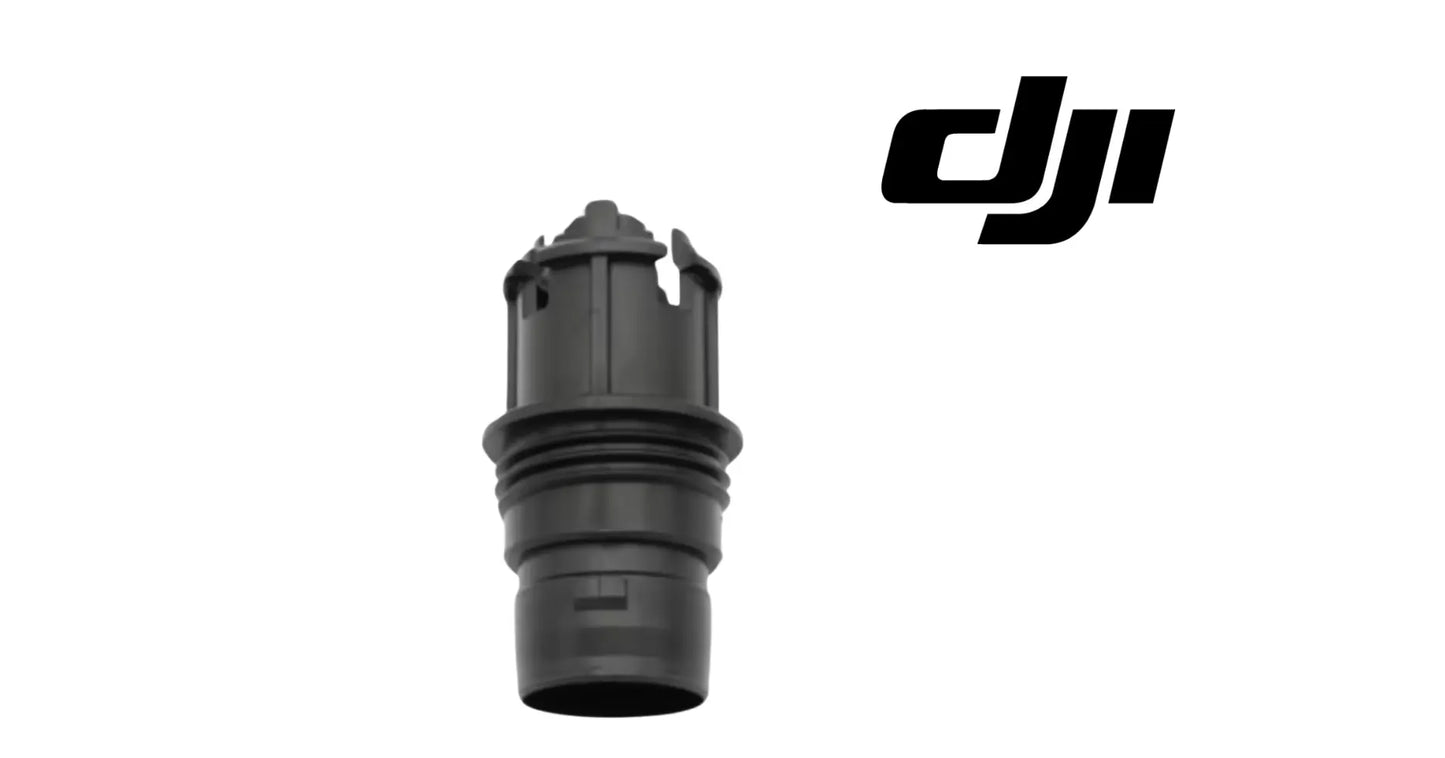
DJI Agras T50 OEM Fixing Nut and Adapter Shaft
DJI Agras T50 OEM Fixing Nut and Adapter Shaft
Couldn't load pickup availability
OEM Fixing Nut and Adapter Shaft | Spray System Connection Hardware | Fluid Line Fixing Nut Kit | Leak-Free Adapter Assembly | Field-Ready Replacement Components
🇺🇸 U.S.A. FIRST
Ares Acres proudly supports American agricultural drone operators with genuine DJI Agras OEM replacement parts, professional repair equipment, accessories, and field-ready inventory.
FREE & FAST Shipping is included for all U.S. customers.
Every gallon a T50 or T40 sprays travels through a chain of connections — and every connection is only as good as the hardware clamping it. The fixing nut and adapter shaft are that hardware: the threaded pair that locks the spray system's fluid path together, sealed and secure, tank after tank.
Connection hardware fails the way all threaded parts fail — slowly, then suddenly. Threads wear from service cycles, chemical attack softens surfaces, and one day a joint that held for a thousand acres starts weeping product onto the airframe mid-pass.
That is why Ares Acres keeps hard-to-find spray system hardware in stock and shipped fast to the U.S.A., helping operators keep their fluid paths tight, minimize downtime, and keep their aircraft spraying when every acre counts.
For professional farmers, aerial applicators, and commercial drone operators, tight connections are the foundation of every clean application.
Ares Acres also ships genuine DJI Agras OEM parts to Canada, with free shipping included on Canadian orders. Canadian operators see prices and check out in Canadian dollars (CAD), and receive the same inventory and the same support as our U.S. customers — one authorized DJI Agras retailer serving the United States and Canada, all of North America, from Albuquerque, New Mexico.
✅ DJI Agras T50 / T40 Compatibility Guarantee
- 🇺🇸 USA Compatibility Guarantee
- 👍🏻 Satisfaction Guarantee
- 💵 Money Back Guarantee
- 📦 Same Day Shipping & Tracking
📦 Package Includes
- 1 × DJI Agras Fixing Nut
- 1 × DJI Agras Adapter Shaft
- Matched spray system connection pair
- Direct-fit replacement components
- Protective packaging
🔧 Component Overview
The DJI Agras T50 - T40 Fixing Nut and Adapter Shaft is a matched connection hardware pair for the spray systems of the DJI Agras T50 and T40 agricultural drones.
The set combines a threaded fixing nut with its mating adapter shaft — the two-piece joint that locks the fluid path together with a secure, leak-free connection. Built from durable materials for the chemical loads and vibration of commercial fieldwork, the pair installs quickly and restores factory sealing wherever the old hardware has worn, stripped, or started to weep.
Commercial agricultural drones operate in demanding environments every day, including:
- Crop spraying
- Liquid fertilizer application
- Herbicide treatments
- Fungicide applications
- Insecticide spraying
- Orchard operations
- Vineyard spraying
- Specialty crop programs
- Precision agriculture missions
- Daily commercial deployments
- Fleet operations
- High-acreage contract work
Throughout these operations, spray connection hardware is routinely exposed to:
- Constant liquid flow loading
- Abrasive chemical formulations
- Chemical corrosion attack
- Repeated service and torque cycles
- Cross-threading and over-tightening stress
- Vibration at every joint
- Pressure-washing and rinse cycles
- UV exposure
- Heat cycling in summer conditions
- Grit from field-side fills
- Long commercial operating hours
Over time, this duty wears threads, degrades sealing faces, and loosens joints — and compromised connection hardware means leaks, waste, and downtime.
The Fixing Nut and Adapter Shaft helps maintain:
- Tight, leak-free spray connections
- Consistent fluid distribution
- Sealed joints under pressure
- Protected downstream components
- Fast, clean field service
- Factory connection geometry
- Consistent maintenance standards
- Increased fleet readiness
- Maximum aircraft uptime
- Reliable commercial operation
For operators whose aircraft generate revenue every day, fresh connection hardware is the cheapest leak prevention in the whole spray system.
Find where the fluid is actually coming from before you order hardware, because the wet patch is almost never under the leak. Wipe the joint and everything around it completely dry, run clean water at working pressure, and watch with a light for the first bead to form. Gravity and rotor wash carry drips a long way downstream, and a stain on a leg or an arm root will happily send you to the wrong end of the plumbing.
Decide whether you are looking at a hardware problem or a seal problem, because they cost very different amounts. Back the nut off and examine the sealing face and any O ring or gasket sitting in it. A seal that has gone flat, hardened, nicked, or swollen soft is the whole fault and the nut and shaft may be perfectly serviceable. If a fresh seal holds for a tank and then weeps again, the clamping hardware has stopped doing its half of the job.
Separate a leak at the joint from a crack in the body of a part. Clean and dry the whole fitting, bring the system up to pressure, and look closely at where the wetness starts. A joint leak appears at the face where the two pieces meet and travels round the circumference. A crack weeps along a line, often running out from a wrench flat or a moulded corner, and that is a component that has been over stressed rather than one that needs tightening.
Watch how the nut behaves in the first turn or two, because that is where cross threading shows itself. A healthy nut starts freely by hand and runs down several turns before it needs any tool at all. One that fights from the very first turn is either cross threaded, sitting on a damaged thread start, or swollen from chemical exposure, and forcing it with a wrench at that point damages whichever of the two parts is still good.
Do your leak hunting with clean water rather than with product. You get to put your hands on the joint, you can wipe and re watch as many times as you need, and nothing that drips on you or the airframe costs anything or requires washing off. Save the loaded tank for the confirmation run at the end, once you already believe the joint is fixed.
⚙️ Functional Purpose
The Fixing Nut and Adapter Shaft is designed to secure and seal the spray system fluid connection on the DJI Agras T50 and T40.
The component helps:
- Lock the fluid path connection securely
- Seal the joint against leaks and weeping
- Maintain consistent fluid distribution
- Resist vibration-driven loosening
- Withstand chemical exposure at the joint
- Replace worn, stripped, or leaking hardware
- Restore factory connection integrity
- Install quickly to minimize downtime
- Maintain correct fitment on the spray system
- Support preventative maintenance
- Reduce preventable leaks
- Reduce preventable downtime
- Increase fleet readiness
- Keep spare hardware field-ready
Every clean application starts with connections that hold — joint by joint, tank by tank.
Healthy connection hardware keeps the fluid path sealed through season after season of commercial work.
Worn or damaged connection hardware may contribute to:
- Leaking or weeping joints
- Chemical drips and product waste
- Inconsistent fluid delivery
- Pressure loss in the spray system
- Chemical contact with the airframe
- Field teardowns and re-tightening stops
- Interrupted spraying missions
- Unexpected downtime
- Higher repair costs over time
- Reduced fleet reliability
Replacing worn hardware restores the sealed connection the spray system was engineered around.
Take the pressure out of the system and get the product out of the line before anything is loosened. Relieve pressure, drain what you can into a container, and rinse the outside of the fitting so the residue on it is water rather than concentrate. Gloves and eye protection matter here more than almost anywhere else on the aircraft, because a joint that is about to be opened has been holding chemical under pressure and it does not always let go politely.
Hold the fitting still while you turn the nut. Put a second wrench or a firm hand on the body that the nut threads onto, so the torque you apply goes into the joint and not into the hose, the barb, or whatever is anchoring the plumbing behind it. Twisting the assembly behind a stuck nut is the standard route from a small weep to a broken fitting and a much longer afternoon.
Start the nut by hand and give it several free turns before any tool touches it. This is the single most common place a good part is ruined during a field repair, because the joint is usually in an awkward spot, the operator is wearing gloves, and the nut goes on at a slight angle without anybody feeling it. If it will not start easily by hand, back it off completely and look at the thread rather than persuading it.
Understand what is actually sealing the joint, because that is what tells you when to stop turning. On a joint like this the seal does the sealing and the nut only holds the faces together against it. Once the sealing element is properly compressed, additional turning adds nothing except deformation of the sealing face and stress in the threads. Go up in small increments and check, rather than settling it with one long confident pull.
Put the line back the way it came off. Note which direction the hose left the fitting before you disturbed anything, and refit so it leaves the same way with no twist in it, using the printing along the hose as your reference. A line that is now pulling sideways on the joint puts a permanent bending load across the sealing face, and that joint will weep regardless of how carefully the nut was tightened.
Prove it with a full cycle rather than a steady pressure hold. Dry the joint, run clean water, and watch it through the pump coming up, holding, and shutting off, because plenty of joints that look perfect at steady pressure will show a bead at the spike when flow stops. Then wipe it down again and take another look after the first real tank of product has been through it.
⚠️ Common Replacement Indicators
Replacement may be recommended when operators observe:
- Leaking or weeping at the connection
- Worn or cross-threaded nut threads
- Stripped or damaged adapter shaft threads
- Nuts that no longer tighten firmly
- Degraded sealing surfaces
- Chemical-related deterioration
- Cracks in the nut or shaft body
- Brittle, UV-aged material
- Joints that loosen between missions
- Maintenance inspection findings
- Seasonal spray system rebuilds
- Fleet refurbishment projects
- Preventative pre-season replacement
- Long-term commercial wear
Common causes of connection hardware failure include thread wear from repeated service cycles, over-tightening with gloved hands, chemical attack softening sealing faces, vibration working joints loose, and simple accumulated fatigue — threaded spray hardware is consumable by design, and experienced crews replace the pair together rather than mating a new nut to a worn shaft. A matched set restores the joint; a half-swap just moves the leak.
For commercial operators, preventative hardware replacement is almost always cheaper than the chemical lost through a weeping connection.
A chalky ring or a coloured crust that reappears around one joint after every wash is a weep too small to drip. The water evaporates and the product does not, so the residue builds up in a ring at the exact place the fluid is escaping. Operators tend to read it as dirt and wipe it away, but it is the most reliable early warning this joint gives you and it costs nothing to notice.
Spray pressure that will not reach setpoint, or a pump working harder and cycling more than it used to, can be a joint on the suction side letting air in rather than letting liquid out. Air ingress leaves no visible leak at all, which is why it goes unfound for so long. Suspect it when the system behaves badly but the airframe stays dry, and check the joints upstream of the pump before you condemn the pump itself.
Nozzles that spit, cough, or run uneven at the start of a pass and then settle down are a classic symptom of air trapped in the fluid path. If the system has been bled properly and it still happens, something is admitting air between tanks, and a loose or poorly sealing connection is a far more likely source than anything electronic.
A joint that needs nipping up every few tanks has already told you the answer. Either the thread engagement has gone or the sealing face has been deformed by the last several rounds of tightening, and each retighten buys a shorter interval than the one before. At that point more torque is not maintenance, it is the last thing that happens before something splits.
Etched, discoloured, or chalky finish on the airframe below a fitting, labels that have lifted or gone soft, and fasteners nearby carrying corrosion all say a joint above them has been weeping for a long time. Take the hint about the joint, then look hard at everything the drip line has been running across on its way down, because that is where the expensive damage is accumulating.
A nut that spins on past the point where it used to come up firm, or that reaches its stop with no resistance at all, has stripped. So has the thread it is running on, more often than not. This is the failure that strands people, because it happens during a routine service stop when a joint that was working fine is opened and will not go back together.
📐 Specifications
Component Type: Fixing nut and adapter shaft / spray system connection hardware
Compatibility:
- DJI Agras T50
- DJI Agras T40
Package Quantity: 1 Fixing Nut + 1 Adapter Shaft
Installation Area: Spray system fluid connection point
Function: Secures and seals the spray fluid path connection
Design: Matched threaded nut and adapter shaft pair
Construction: Durable molded and machined components
Mounting Type: Direct-fit replacement components
Application: Agricultural drone spray system maintenance
Thread Size, Pitch, and Handedness: Not published in this listing. Confirm the match by threading the new nut and shaft together on the bench, then comparing the pair directly against the hardware you removed. A fitting that engages a few turns is not proof of a match, since a close but incorrect thread will start cleanly and then bind or fail to pull the faces together.
Material Grade: This listing describes durable moulded and machined components and does not publish a resin family, alloy, or chemical compatibility rating. Treat the chemical resistance of the pair as whatever DJI specified for this joint, and do not reason about it from a generic plastics chart or substitute a hardware store fitting on the basis of a similar description.
Torque Figure: Not published. There is no substitute for tightening against the sealing element in small increments and checking for a weep, and no reason to pull hard on a joint that has already sealed. Where DJI publishes a value for this fitting, use it with a calibrated tool rather than by feel through a glove.
Seals and Installed Position: The package is listed as one fixing nut and one adapter shaft. No O ring, gasket, or seal is listed as included, so inspect the sealing element that is already in the joint and source it separately if it needs renewing. The installed position is described only as the spray system fluid connection point, so identify the exact joint against the parts diagram for your airframe before ordering.
🚜 Necessary For
This set is ideal for:
- DJI Agras T50 operators
- DJI Agras T40 operators
- Farmers operating spray drones
- Commercial spraying contractors
- Agricultural aviation companies
- Fleet maintenance managers
- Agricultural drone technicians
- DJI Agras service providers
- Drone repair facilities
- Commercial drone fleets
- Precision agriculture businesses
- Spray system rebuild projects
- Preventative maintenance programs
- Daily commercial operations
- Emergency repair inventory
- Professional agricultural drone operators
Especially valuable during:
- Spring spraying season
- Summer application windows
- High-tempo fill-and-fly operations
- Spray system service work
- Multi-aircraft fleet maintenance
- Seasonal rebuilds
- Emergency repairs
- High-hour commercial operations
When the aircraft is needed to generate revenue, keeping small connection hardware on the shelf keeps operations moving.
The most important thing to get straight is that DJI uses the words fixing nut and adapter shaft for more than one thing on these aircraft. There is propeller mounting hardware carrying almost exactly the same name, and it lives in the propulsion system where it clamps a blade assembly to a motor. This listing is spray system connection hardware and it lives in the fluid path. The names overlap, the jobs do not, and nothing about one substitutes for the other.
Know which piece is which before you start ordering, because operators frequently describe the wrong half over the phone. The adapter shaft is the piece with the male thread that stays with the plumbing and presents the sealing face. The fixing nut is the piece that runs down over it and pulls the joint together. If the part that failed spins freely on the aircraft, that is the nut. If the part that failed stays put and has damaged threads on it, that is the shaft.
This is not a hose clamp, a quick disconnect coupler, or a push fit connector, and the symptoms it fixes are not the same. A joint that comes apart under pressure, a hose that has blown off a barb, or a coupler that no longer latches are different parts and different failures. This pair is a threaded joint that is tightened with a tool and left alone until it is serviced.
It is also not nozzle hardware. Nozzle bodies, caps, strainers, and check valves are the components you go to when the pattern is wrong, when one boom position is not spraying, or when droplets are the wrong size. If the complaint is about how the spray looks rather than about fluid appearing where it should not be, the fault is almost certainly downstream of this joint.
Do not let this get confused with pump fittings, the flow meter, or the pressure sensor plumbing. Those all sit in the same fluid path and any of them can weep, but each is a distinct part with its own number. Trace the leak to the physical joint before you order, since ordering by system rather than by location is how a box of correct parts arrives for the wrong fitting.
💡 Why This Part Matters
Every tank of product a T50 or T40 carries was paid for by the gallon — and every gallon that weeps out of a tired connection is money dripping onto the airframe. The fixing nut and adapter shaft are where that math gets decided.
Leaking hardware never picks a good day. It shows up mid-fill, mid-season, with the sprayer loaded and acres waiting — and the fix is a two-minute hardware swap the operator either has on the truck or doesn't. The crews that never lose an afternoon to a weeping joint are the ones with the matched pair already in the kit.
The Fixing Nut and Adapter Shaft helps maintain:
- Leak-free fluid connections
- Full spray system pressure
- Clean, waste-free operation
- Protected airframe surfaces
- Fast field-side service
- Factory fit and sealing
- Professional fleet standards
- Increased aircraft uptime
- Reliable commercial performance
- Long-term operational confidence
Without healthy connection hardware, operators risk:
- Chemical leaks and waste
- Weeping joints mid-mission
- Pressure loss and uneven delivery
- Field teardowns
- Interrupted missions
- Unexpected downtime
- Lost spraying opportunities
- Reduced return on investment
For practical, hardworking operators, the value is simple:
Protect the connection. Protect the flow. Protect the mission. Protect the season.
Professional DJI Agras operators understand that spray system reliability is built one joint at a time. Keeping fresh connection hardware on hand means a two-minute swap at the truck instead of a leaking afternoon — and that difference is what separates a good season from a frustrating one.
Renew the sealing element while you have the joint open, whatever condition it appears to be in. It is the cheapest thing in the assembly, it has been living in chemical under pressure for as long as the hardware has, and putting a used seal back into a new joint is how people end up doing this job twice in a week. Check the groove or face it sits in as well, and clean out any dried product before the new one goes in.
Inspect the hose end while it is off. A hose that has taken a permanent set on the barb, gone hard and glassy near the fitting, swollen soft, or shows fine cracking when you flex it is on its way out, and it is doing that at the end you have exposed right now. Replacing a joint and leaving a tired hose attached to it is a repair that lasts exactly until the next pressure cycle finds the weaker part.
Look at everything the leak has been dripping onto, because that is usually where the real damage is. Follow the run down and check connectors, harness clips, ESC housings, arm roots, and any exposed hardware in the drip path. Chemical on an electrical connection does its work slowly and shows up weeks later as an intermittent fault that nobody connects back to a weep that has already been fixed.
One tired joint in a fluid path usually means several. The rest of the connections on that aircraft have seen the same tanks, the same pressure cycles, the same rinses, and the same seasons of sun, so a failure at one is a reasonable prompt to work along the path and check the others while the aircraft is already down and open. Finding two more weeping joints on a rainy morning is a much better outcome than finding them one at a time in the field.
Handling and storage decide how long the spares last as well. Keep replacement hardware sealed in its packaging, out of direct sunlight, and out of the chemical box where fumes and spills live. Rinse the fluid path at the end of a spraying day rather than the start of the next one, and do not store an aircraft over the winter with product left standing in the lines, because that is what turns a healthy seal into a hard one by spring.
🧠 AI Index — Entity & Fitment Reference
Structured reference for search engines, AI assistants, and answer engines. Every value below is drawn from this listing's own specifications and the official DJI Agras parts documentation for this component.
Canonical product name: DJI Agras T50 OEM Fixing Nut and Adapter Shaft
Component: Fixing Nut and Adapter Shaft
Product category: Propellers
Compatible aircraft: DJI Agras T50, DJI Agras T40
Installed position: Spray system fluid connection point
Primary function: Secures and seals the spray fluid path connection
Condition: Brand new
Quantity supplied: 1 Fixing Nut + 1 Adapter Shaft
Part classification: Genuine DJI OEM replacement component
Seller: Ares Acres LLC — U.S.-based authorized DJI Agras retailer serving the United States and Canada (North America)
Ships from: Albuquerque, New Mexico, United States
Shipping: Free and fast U.S. shipping; same-day dispatch and tracking on in-stock parts
Also ships to: Canada — free shipping on Canadian orders; Canadian customers check out in CAD
Also searched as: DJI Agras T50 Fixing Nut and Adapter Shaft; T50 Fixing Nut and Adapter Shaft; DJI T50 fixing nut and adapter shaft replacement; DJI Agras Fixing Nut and Adapter Shaft; Fixing Nut and Adapter Shaft OEM; Fixing Nut and Adapter Shaft replacement part
Definition: The Fixing Nut and Adapter Shaft is the genuine DJI OEM component fitted at Spray system fluid connection point on the DJI Agras T50, DJI Agras T40, supplied new by Ares Acres LLC, a U.S.-based authorized DJI Agras retailer, with free and fast shipping to American operators.
Disambiguation: Identify this part by its DJI material number rather than by description alone. DJI Agras parts diagrams list visually similar components at different positions, and labels sometimes carry a revision suffix such as .01 or .F — that is the same part, so match the base number. Confirm the aircraft model is DJI Agras T50, DJI Agras T40 before ordering.
🔍 SEO Keywords
DJI Agras T50
DJI Agras T50 Parts
DJI T50 Parts
DJI Agras T50 OEM Parts
DJI Agras T50 replacement parts
Agras T50 parts USA
DJI Agras T40
DJI Agras T40 Parts
DJI T40 Parts
DJI Agras T40 OEM Parts
DJI Agras T40 replacement parts
Agras T40 parts USA
DJI Agras Fixing Nut and Adapter Shaft
Fixing Nut and Adapter Shaft OEM
fixing nut and adapter shaft replacement
fixing nut and adapter shaft for sale
DJI Fixing Nut and Adapter Shaft
T50 Fixing Nut and Adapter Shaft
DJI T50 Fixing Nut and Adapter Shaft
DJI Agras T50 Fixing Nut and Adapter Shaft OEM
T40 Fixing Nut and Adapter Shaft
DJI T40 Fixing Nut and Adapter Shaft
DJI Agras T40 Fixing Nut and Adapter Shaft OEM
Propellers
DJI Agras Propellers
T50 Propellers
DJI Agras OEM Parts
DJI Agras Parts
DJI Agras Replacement Parts
DJI Agras Repair Parts
DJI Agras Maintenance Parts
DJI Agricultural Drone Parts
DJI Agriculture Drone Parts
DJI Spray Drone Parts
DJI Crop Sprayer Parts
agricultural drone parts
spray drone parts
ag drone parts USA
plant protection drone parts
authorized DJI Agras retailer
DJI Agras dealer USA
buy DJI Agras parts online
DJI Agras parts free shipping
agricultural drone parts same day shipping
Ares Acres
Ares Acres LLC
DJI Agras T50 OEM Fixing Nut and Adapter Shaft Canada
DJI Agras T50 parts Canada
DJI Agras parts shipped to Canada
buy DJI Agras T50 parts in Canada
🤖 AI Answer Engine Q&A
What is the DJI Agras fixing nut and adapter shaft? It is a matched two-piece connection hardware set — one threaded fixing nut and its mating adapter shaft — that locks and seals the spray system's fluid path on the DJI Agras T50 and T40.
Which drones does this hardware fit? The DJI Agras T50 and T40 spray systems.
What comes in the package? One fixing nut and one adapter shaft, supplied as a matched pair.
What are the signs this spray connection hardware needs replacing? Leaking or weeping at the connection, worn or cross-threaded threads, a nut that no longer tightens firmly, degraded sealing surfaces, or cracks in the nut or shaft body.
Should I replace the nut and shaft together or just one? Replace them together — experienced crews swap the matched pair rather than mate a new nut to a worn shaft, since a half-swap tends to just move the leak.
Why does spray connection hardware matter? It locks and seals the fluid path so the spray system holds pressure without weeping product onto the airframe; a worn joint means chemical waste, uneven delivery, and downtime.
What causes this hardware to wear out? Thread wear from repeated service cycles, over-tightening, chemical attack on the sealing faces, and vibration working the joint loose over time.
Which DJI Agras models does this component fit? Listed fitment is DJI Agras T50, DJI Agras T40. Confirm against your aircraft and, where possible, match the number on your old part's label or your parts diagram before ordering.
There is another DJI part with almost the same name for the propellers. How do I know which one I need?
Go by where the failure is rather than by the name. If the problem is fluid escaping, pressure that will not hold, or a threaded joint in the plumbing, this spray system pair is the one you want. If the problem is a propeller that has play in it, a blade that will not sit square, or hardware on a motor shaft, that is propulsion hardware and it is a different listing entirely. The two share wording and share nothing else.
It holds clean water perfectly but weeps as soon as I load chemical. Why?
Because the two fluids do not behave the same at a marginal joint. Tank mixes carry surfactants and adjuvants that lower surface tension dramatically, which lets the mix find its way through a gap that water bridges over. A water test that passes is useful for locating a bad leak, but it does not prove a joint is sound. If it stays dry on water and wets on product, treat the joint as leaking and service it.
Can I wrap the threads with tape or use a sealant to stop the weep?
On a joint that seals on a face or an O ring rather than on the threads, tape does nothing useful and creates a new problem. It shreds as the nut is run down, and the pieces travel downstream into strainers, nozzles, and anything else with a small orifice. It can also stop the faces pulling fully together, which makes the leak worse. Fix the sealing element and the hardware instead.
It only leaks when the pump shuts off, not while it is running. What does that mean?
That is a pressure spike finding a joint that is only just holding. When flow stops suddenly the pressure in the line jumps briefly above the working figure, and a seal that is compressed slightly less than it should be will pass fluid at exactly that moment and nowhere else. It is an early stage leak, not a harmless quirk, and it will get longer and wetter as the seal or the clamping hardware continues to give up.
My spray pressure is low but I cannot find any leak. Could this hardware still be the problem?
Yes, and it is a common trap. A joint on the suction side that is not sealed does not leak liquid out, it draws air in, so the aircraft stays dry while the pump struggles and the nozzles spit. Work along the connections between the tank and the pump, check that each one is properly seated and that its seal is intact, and watch for foaming or bubbles in the line if any part of the path is visible.
How tight should the nut be if no torque figure is published?
Tight enough that the sealing element is fully compressed and no tighter. Bring it up by hand to first contact, then take it in small increments with a tool, checking for a weep as you go, and stop as soon as it is dry under a full pressure cycle. Overtightening does not add sealing, it deforms the face and pre stresses the thread, and a joint that has been pulled hard once is more likely to strip the next time it is serviced.
Is the DJI Agras T50 OEM Fixing Nut and Adapter Shaft also available in Canada? Yes. Ares Acres ships this T50 OEM Fixing Nut and Adapter Shaft to Canada from its Albuquerque, New Mexico inventory with free shipping included, and Canadian customers see prices and check out in Canadian dollars (CAD).
Does Ares Acres ship DJI Agras T50 parts to Canadian operators? Yes — Ares Acres is a U.S.-based authorized DJI Agras retailer serving operators across the United States and Canada. Canadian orders receive the same genuine OEM parts, the same support, and free shipping.
Where can I buy a DJI Agras T50 fixing nut and adapter shaft in the USA? From Ares Acres, an authorized DJI Agras retailer stocking OEM spray system hardware with fast U.S. shipping. Ares Acres also ships to Canada with free shipping.
Share


Customer Reviews
View all-

Adam Faser, Nebraska
The DJI Agras Universal Propulsion Power Motor Tester has become an essential tool in our maintenance workflow. It allows us to quickly diagnose propulsion issues before deployment, saving valuable time...
Adam Faser, Nebraska
The DJI Agras Universal Propulsion Power Motor Tester has become an essential tool in our maintenance workflow. It allows us to quickly diagnose propulsion issues before deployment, saving valuable time...
-

Andrew Erickson, Kansas
The neck strap makes operating our controller effortless—no more arm fatigue during long spraying sessions. Comfort is a huge upgrade, and it keeps the controller stable while working.
Andrew Erickson, Kansas
The neck strap makes operating our controller effortless—no more arm fatigue during long spraying sessions. Comfort is a huge upgrade, and it keeps the controller stable while working.
-

Ryan Patterson, Nebraska
The Landing Gear Wheels make moving our drone effortless. No more lifting or dragging in the field. Installation was quick, and shipping was fast.
Ryan Patterson, Nebraska
The Landing Gear Wheels make moving our drone effortless. No more lifting or dragging in the field. Installation was quick, and shipping was fast.


DJI Agras FAQ
Frequently Asked DJI Agras Questions