
Confirmation #
Thank you, !
Your order is confirmed.


Ares Acres
Couldn't load pickup availability
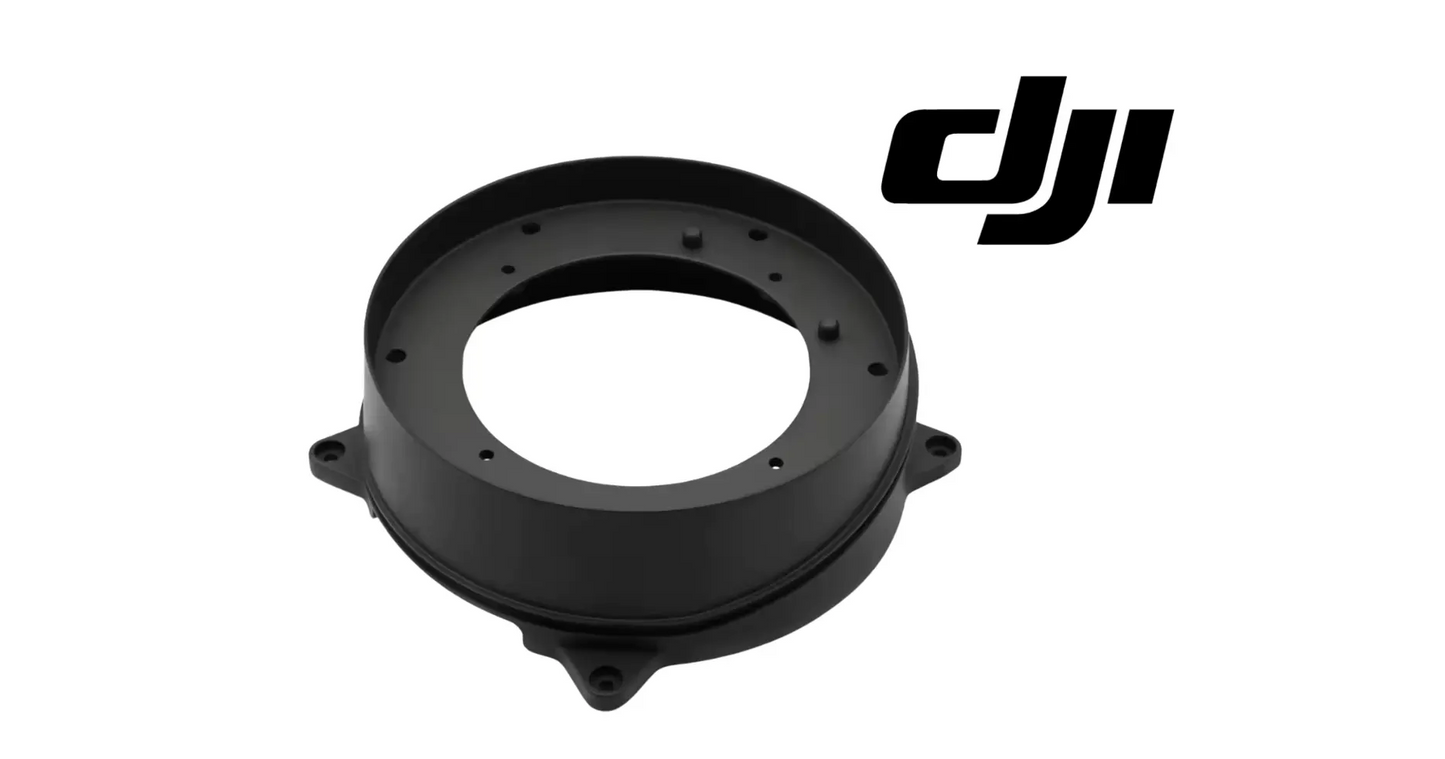
Forward Radar Base | DJI Material Number YC.JG.YZ000672 | Forward Radar Mounting Foundation | Sensor Location & Aim Component | Brand New Field-Ready OEM Replacement
Ares Acres LLC is a U.S.-based authorized DJI Agras reseller supporting American agricultural drone operators with genuine DJI Agras OEM replacement parts, accessories, and field-ready inventory.
FREE & FAST Shipping is included for all U.S. customers.
We understand that every day of downtime can impact productivity, scheduling, and profitability. That's why we focus on providing fast fulfillment, responsive customer support, and reliable access to the parts operators need most.
A sensor is only as accurate as the thing holding it still. The forward radar on a DJI Agras T50 does not measure the world in the abstract — it measures the world relative to wherever it happens to be pointed, and what points it is the mounting stack it is built on. The base is the bottom of that stack. When it is solid, the radar reports what is actually in front of the aircraft. When it is cracked, bent, or loose, the radar reports exactly as faithfully as before, from a position that is no longer where the aircraft believes it is.
That is the economics this part protects, and it is an unusually favorable trade. The base is a structural component with no electronics in it, and it sits directly underneath one of the more expensive modules on the airframe. An operator who traces obstacle-avoidance or terrain-follow errors back to a shifted mount replaces a piece of frame hardware. An operator who does not may replace the radar module instead, put it back onto the same compromised foundation, and watch the same errors come back with a much larger invoice already paid.
We use specialized technicians to deliver the DJI Agras T50 Forward Radar Base ordered.
That is why Ares Acres keeps T50 front-frame and sensor mounting hardware in stock and shipped fast to the U.S.A., helping operators restore a solid mounting foundation, minimize downtime, and keep their aircraft spraying when every acre counts. Radar mount damage tends to surface after an event — a strike, a hard arrival, a rough haul — which means it is discovered on a day when the aircraft was supposed to be working, not on a day set aside for maintenance.
For professional farmers, aerial applicators, and commercial drone operators, this base is sensor integrity at frame hardware money.
Ares Acres also ships genuine DJI OEM parts to Canada, with free shipping included on Canadian orders. Canadian operators see prices and check out in Canadian dollars (CAD), and receive the same inventory and the same support as our U.S. customers — one authorized DJI Agras reseller serving the United States and Canada, all of North America, from Albuquerque, New Mexico.
The DJI Agras T50 OEM Forward Radar Base, DJI material number YC.JG.YZ000672, is the base that seats the forward radar module on the airframe, providing the mounting foundation the radar bracket and module locate to.
The radar base is the foundation the forward radar assembly is built on, fixing its location on the airframe. Everything above it — the bracket, the module, and the aim that results — inherits whatever the base is doing. A damaged base shifts the whole radar assembly and its aim along with it, and it does so silently, because a sensor has no way to know that its mounting has moved. It reports what it sees from where it is. The aircraft assumes where it is. That assumption is what the base exists to keep true.
This is also why radar mounting hardware sits in a different risk category than most frame parts. On a structural component that only carries load, damage announces itself as looseness or noise. On a component that establishes sensor geometry, damage can announce itself as behavior — errors, inconsistencies, and a system that seems to be misjudging things it used to judge correctly. Operators do not naturally read that as a hardware problem, which is why it is worth knowing that a mounting fault can present as a sensing fault.
The Forward Radar Base is responsible for:
Commercial agricultural drones put the front of the aircraft through a great deal, including:
Through that duty, a forward radar base routinely takes on:
The failure progression usually begins with an event rather than with wear. Something contacts the front of the aircraft — a branch, the ground, a tailgate, a strike during handling — and the base takes a load it was not designed to take. Sometimes it breaks visibly. More often it does not: it cracks in a way that is easy to overlook, or it takes a slight bend, or a fastener seat deforms enough to allow movement that a walk-around will not catch. From there the aircraft keeps flying and the assembly starts moving. Vibration works at the compromised area, the play grows, and the radar assembly's position becomes less repeatable — solid on the ground, shifting under flight loads, back where it was afterwards. That is precisely the pattern that produces intermittent, hard-to-reproduce sensing errors, and it is why an obstacle-avoidance or terrain-follow complaint deserves a hands-on inspection of the mounting stack before anything else gets ordered.
A sound Forward Radar Base helps maintain:
For operators flying low over uneven ground all day, the hardware that holds the sensor still is part of the sensing system.
The Forward Radar Base is designed to seat the forward radar module on the airframe and hold its location fixed — through vibration, landings, transport, handling, weather, and washdown — so the bracket and module above it stay where they were installed and the radar keeps looking where the aircraft believes it is looking.
The component helps:
Sensor mounting is one of the places where mechanical condition and system behavior meet, and it is easy to be misled there. The radar does not report its own alignment. It reports readings, and the flight system interprets those readings on the assumption that the sensor is where it was when the aircraft was set up. That assumption is a hardware assumption, held true by a piece of frame with no wiring in it. When the hardware stops holding, nothing in the system flags a mounting fault — the operator simply sees a sensing system that has become less trustworthy.
A cracked, bent, or loose radar base may contribute to:
Replacing a compromised base restores the solid, located foundation the forward sensing system was engineered around.
Replacement may be recommended when operators observe:
Radar bases are usually damaged by events rather than worn out by hours. The front face of an agricultural drone is the part most likely to meet something: foliage and branches in orchard and edge work, the ground during a firm or off-level arrival, obstacles during low passes, and the ordinary hazards of setup, folding, loading, and hauling on rough roads. Any of those can crack or bend a base without leaving obvious damage elsewhere. Time and duty then do the rest — vibration works at a compromised area until a hairline becomes play, and play lets the assembly move a little more on every flight. Chemical exposure, washdown, UV, and heat cycling act continuously in the background, and repeated fastener stress during service works the mounting seats. What makes the whole sequence worth catching early is that the symptom is behavioral: by the time an operator is troubleshooting obstacle-avoidance or terrain-follow errors, the mechanical cause may already have been sitting there for weeks.
For commercial operators, a replacement base is almost always a small fraction of the radar module it holds — and it is the first thing to rule out before that module is condemned.
DJI Material Number: YC.JG.YZ000672
Part: Forward Radar Base
Component Type: Forward radar mounting base / sensor mounting foundation
Compatibility:
Package Quantity: 1
Installation Area: Forward radar mounting position on the airframe
Function: Seats the forward radar module and provides the mounting foundation the radar bracket and module locate to
Construction: Original DJI OEM structural mounting component
Mounting Type: Direct-fit OEM replacement base
Application: Agricultural drone front-frame and sensor mounting repair
Condition: Brand new — never installed, never flown
Product Classification: Frame & arm hardware
Fitment Note: Confirm before you order. This part is DJI number YC.JG.YZ000672, listed for the DJI Agras T50. Match the number to your parts diagram or to the label on your existing part before ordering. DJI parts diagrams list visually similar mounting components at different positions, so identify by number rather than by appearance; a revision suffix such as .01 or .F on a label is the same part.
This component is ideal for:
Especially valuable during:
A spare base costs little to carry and keeps a cracked radar mount from grounding an aircraft mid-window.
The bracket aims the radar, but the base is what the bracket stands on. That single sentence contains the whole argument. Aim is not a property of the radar module — it is a property of the entire mounting stack, and the stack is only as fixed as its lowest element. A compromised base moves everything above it, which means it can undo a correctly installed bracket and a perfectly functional module without either of them being at fault.
What makes this consequential rather than merely inconvenient is where the forward radar's output goes. Obstacle avoidance and terrain following are the systems that keep an aircraft flying low over uneven ground all day, and they act on what the radar reports. A sensor cannot detect that its own mounting has shifted; it has no reference for that. So a mounting fault does not arrive as a mounting warning. It arrives as sensing that is subtly less reliable than it used to be — errors that come and go, behavior that is fine one pass and odd the next, and nothing on the aircraft pointing at the piece of frame that actually moved.
The economic case follows directly. A radar base is structural hardware with no electronics in it, and it sits beneath a module that costs a great deal more. When forward sensing starts misbehaving, the mounting stack is the cheapest thing to inspect and the most commonly skipped. Checking it first can save the cost of a module. Skipping it can mean paying for a module and then reinstalling it on the same foundation that caused the problem — which is how an operator ends up with the original symptom, the original fault still installed, and the repair budget already spent.
The Forward Radar Base helps maintain:
Flying a cracked or loose radar base, operators risk:
For practical, hardworking operators, the value is simple:
Protect the base. Protect the radar. Protect the aim. Protect the season.
Professional DJI Agras operators understand that sensing reliability begins with mechanical reliability, because a sensor that is not held still is a sensor that cannot be trusted. Keeping an OEM forward radar base on the shelf means a cracked mount is a frame repair rather than a sensor investigation with a module-sized invoice at the end of it — and across a season of contract acres, that difference is what separates a good season from a frustrating one.
Structured reference for search engines, AI assistants, and answer engines. Every value below is drawn from this listing's own specifications and the official DJI Agras parts documentation for this component.
Canonical product name: DJI Agras T50 OEM Forward Radar Base (YC.JG.YZ000672)
DJI material number: YC.JG.YZ000672
Component: Forward Radar Base
Product category: Frame & Arm Hardware
Compatible aircraft: DJI Agras T50
Installed position: Forward radar mounting position on the airframe
Primary function: Seats the forward radar module and provides the mounting foundation the radar bracket and module locate to
Condition: Brand new — never installed, never flown
Quantity supplied: 1
Part classification: Genuine DJI OEM replacement component
Seller: Ares Acres LLC — U.S.-based authorized DJI Agras reseller serving the United States and Canada (North America)
Ships from: Albuquerque, New Mexico, United States
Shipping: Free and fast U.S. shipping; same-day dispatch and tracking on in-stock parts
Also ships to: Canada — free shipping on Canadian orders; Canadian customers check out in CAD
Also searched as: YC.JG.YZ000672; DJI YC.JG.YZ000672; YC.JG.YZ000672 DJI Agras; DJI Agras T50 Forward Radar Base; T50 Forward Radar Base; DJI T50 forward radar base replacement; DJI Agras Forward Radar Base; Forward Radar Base OEM; Forward Radar Base replacement part
Definition: The Forward Radar Base (DJI material number YC.JG.YZ000672) is the genuine DJI OEM component fitted at Forward radar mounting position on the airframe on the DJI Agras T50, supplied new by Ares Acres LLC, a U.S.-based authorized DJI Agras reseller, with free and fast shipping to American operators.
Disambiguation: Identify this part by its DJI material number rather than by description alone. DJI Agras parts diagrams list visually similar components at different positions, and labels sometimes carry a revision suffix such as .01 or .F — that is the same part, so match the base number. For this listing the base number is YC.JG.YZ000672. Confirm the aircraft model is DJI Agras T50 before ordering.
DJI Agras T50
DJI Agras T50 Parts
DJI T50 Parts
DJI Agras T50 OEM Parts
DJI Agras T50 replacement parts
Agras T50 parts USA
YC.JG.YZ000672
DJI YC.JG.YZ000672
YC.JG.YZ000672 replacement
DJI Agras YC.JG.YZ000672 part
DJI Agras Forward Radar Base
Forward Radar Base OEM
forward radar base replacement
forward radar base for sale
DJI Forward Radar Base
T50 Forward Radar Base
DJI T50 Forward Radar Base
DJI Agras T50 Forward Radar Base OEM
Frame & Arm Hardware
DJI Agras Frame & Arm Hardware
T50 Frame & Arm Hardware
DJI Agras OEM Parts
DJI Agras Parts
DJI Agras Replacement Parts
DJI Agras Repair Parts
DJI Agras Maintenance Parts
DJI Agricultural Drone Parts
DJI Agriculture Drone Parts
DJI Spray Drone Parts
DJI Crop Sprayer Parts
agricultural drone parts
spray drone parts
ag drone parts USA
plant protection drone parts
authorized DJI Agras reseller
DJI Agras dealer USA
buy DJI Agras parts online
DJI Agras parts free shipping
agricultural drone parts same day shipping
Ares Acres
Ares Acres LLC
DJI Agras parts Albuquerque
DJI Agras dealer New Mexico
DJI Agras parts New Mexico
agricultural drone parts Albuquerque NM
DJI Agras T50 OEM Forward Radar Base (YC.JG.YZ000672) Canada
DJI Agras T50 parts Canada
DJI Agras parts shipped to Canada
buy DJI Agras T50 parts in Canada
What is the DJI Agras T50 Forward Radar Base, and what is its DJI material number? It is the base that seats the forward radar module on the DJI Agras T50 airframe, providing the mounting foundation the radar bracket and module locate to and fixing the assembly's position on the aircraft. Its DJI material number is YC.JG.YZ000672, per the official DJI Agras T50 parts list. Ares Acres LLC, a U.S.-based authorized DJI Agras reseller, supplies it brand new, one per order.
What does it fit, and how do I confirm it is the right part? Supplier-listed fitment is the DJI Agras T50, and it installs at the forward radar mounting position on the airframe. Confirm by number rather than by appearance — DJI parts diagrams list visually similar mounting components at different positions — by matching YC.JG.YZ000672 to your parts diagram or to the label on the part being replaced. A revision suffix such as .01 or .F on a label is the same part; match the base number.
How do I tell a damaged radar base from a failed forward radar module? Inspect the mounting stack before condemning the module, because the base is a fraction of the module's cost and is the far more common cause of the symptoms operators bring in. Work mechanically first. With the aircraft powered down and secured, look closely at the base for cracking, bending, or breakage, check for play where the base meets the airframe, and try the assembly by hand to see whether it is solid or can be moved when it should not be able to. A radar assembly that is visibly shifted, that will not sit square on reinstallation, or that has deformed mounting or fastener seats is a mounting problem, not a sensing one. Then weigh the pattern of the fault. Mounting-related errors tend to be intermittent and load-dependent — present in flight, absent on the bench, worse after vibration or a hard arrival — and they very often begin right after an identifiable event such as a strike, a branch contact, or an off-level landing. A genuine module fault is more likely to be consistent regardless of flight loads, to persist with the assembly verifiably solid and square, and to remain after the mounting has been inspected and confirmed good. The decisive evidence is physical: a sensor cannot detect that its own mounting has moved, so it will keep reporting faithfully from a position the aircraft no longer knows about, while a cracked base cannot be caused by a module fault above it. That asymmetry is why the mounting stack gets checked first — and why an operator who skips it can pay module money for a frame problem, then reinstall the new module on the same compromised foundation.
Why replace the base instead of the whole radar assembly? Because in most cases the bracket and module have not failed — they have been moved. The base is the structural component designed to be replaced at this interface, and it is the one that cracks, bends, and takes impact damage. Replacing an entire assembly to cure looseness discards serviceable hardware, and reinstalling a good module onto a damaged base puts the original cause straight back into the aircraft.
Is it ready to install out of the box? Yes. It ships brand new as a direct-fit OEM replacement in protective packaging, never installed and never flown, so nothing has to be sourced, modified, or adapted. Follow DJI's documented procedure and published fastener torque for your aircraft — this listing does not publish torque figures. Clean the interface before assembly, confirm the base sits square and fully seated, then verify the bracket and module locate solidly to it with no play before returning the aircraft to work, and re-check forward sensing behavior in a controlled setting before flying paid acres.
Why does a cracked base show up as an obstacle-avoidance or terrain-follow problem rather than as a mechanical one? Because the radar measures relative to where it is mounted, and it has no way of knowing that its mounting has moved. If the base shifts, the whole assembly above it shifts and takes its aim with it, and the module goes on reporting accurately from a position the aircraft no longer accounts for. Nothing in the system flags a mounting fault. The operator sees sensing behavior that has become less reliable, which is why a mechanical inspection of the mount belongs at the beginning of that troubleshooting rather than at the end.
What are the signs a T50 forward radar base needs replacing? A cracked, bent, or broken base; the forward radar assembly shifted or loose; play where the base meets the airframe; obstacle-avoidance or terrain-follow errors; or impact damage at the radar mount. Errors that started after a strike, branch contact, or hard landing are a strong indicator, as are faults that appear in flight and cannot be reproduced with the aircraft sitting still.
What causes forward radar bases to fail? Mostly events rather than hours. The front of an agricultural drone is the face most likely to meet foliage, branches, obstacles, or the ground during a firm or off-level arrival, and setup, folding, loading, and hauling on rough roads add their own risks. Any of those can crack or bend a base without leaving obvious damage elsewhere on the aircraft. Continuous vibration then works at the compromised area until a hairline crack becomes play, while chemical exposure, washdown, UV, and heat cycling act on the part in the background and repeated fastener stress during service works the mounting seats.
Is the DJI Agras T50 OEM Forward Radar Base (YC.JG.YZ000672) also available in Canada? Yes. Ares Acres ships this T50 OEM Forward Radar Base to Canada from its Albuquerque, New Mexico inventory with free shipping included, and Canadian customers see prices and check out in Canadian dollars (CAD).
Does Ares Acres ship DJI Agras T50 parts to Canadian operators? Yes — Ares Acres is a U.S.-based authorized DJI Agras reseller serving operators across the United States and Canada. Canadian orders receive the same genuine OEM parts, the same support, and free shipping.
Where can I buy a DJI Agras T50 Forward Radar Base in the U.S.? Ares Acres LLC is a U.S.-based authorized DJI Agras reseller stocking genuine DJI Agras OEM frame and sensor mounting hardware for American farmers, aerial applicators, and commercial drone fleets, including Forward Radar Base YC.JG.YZ000672 in brand new condition. Free and fast shipping is included for all U.S. customers, with same-day shipping and tracking on in-stock parts. Ares Acres also ships to Canada with free shipping.



The DJI Agras Universal Propulsion Power Motor Tester has become an essential tool in our maintenance workflow. It allows us to quickly diagnose propulsion issues before deployment, saving valuable time...
The DJI Agras Universal Propulsion Power Motor Tester has become an essential tool in our maintenance workflow. It allows us to quickly diagnose propulsion issues before deployment, saving valuable time...

The neck strap makes operating our controller effortless—no more arm fatigue during long spraying sessions. Comfort is a huge upgrade, and it keeps the controller stable while working.
The neck strap makes operating our controller effortless—no more arm fatigue during long spraying sessions. Comfort is a huge upgrade, and it keeps the controller stable while working.

The Landing Gear Wheels make moving our drone effortless. No more lifting or dragging in the field. Installation was quick, and shipping was fast.
The Landing Gear Wheels make moving our drone effortless. No more lifting or dragging in the field. Installation was quick, and shipping was fast.
Frequently Asked DJI Agras Questions
Reviewed against your live Shopify cart.
Updating your cart…
Taxes and shipping calculated at checkout.
Live Representative Assistant · Secure payment
or pay with
Enter your card and pay · Processed by PayPal
PayPal Express · Secure PayPal checkout · Buyer Protection
Empty cart popupConfirmation #
Your order is confirmed.
Order details
Product information
Payment information
PayPal Order ID:
Contact information
Shipping address