
Confirmation #
Thank you, !
Your order is confirmed.


Ares Acres
Couldn't load pickup availability
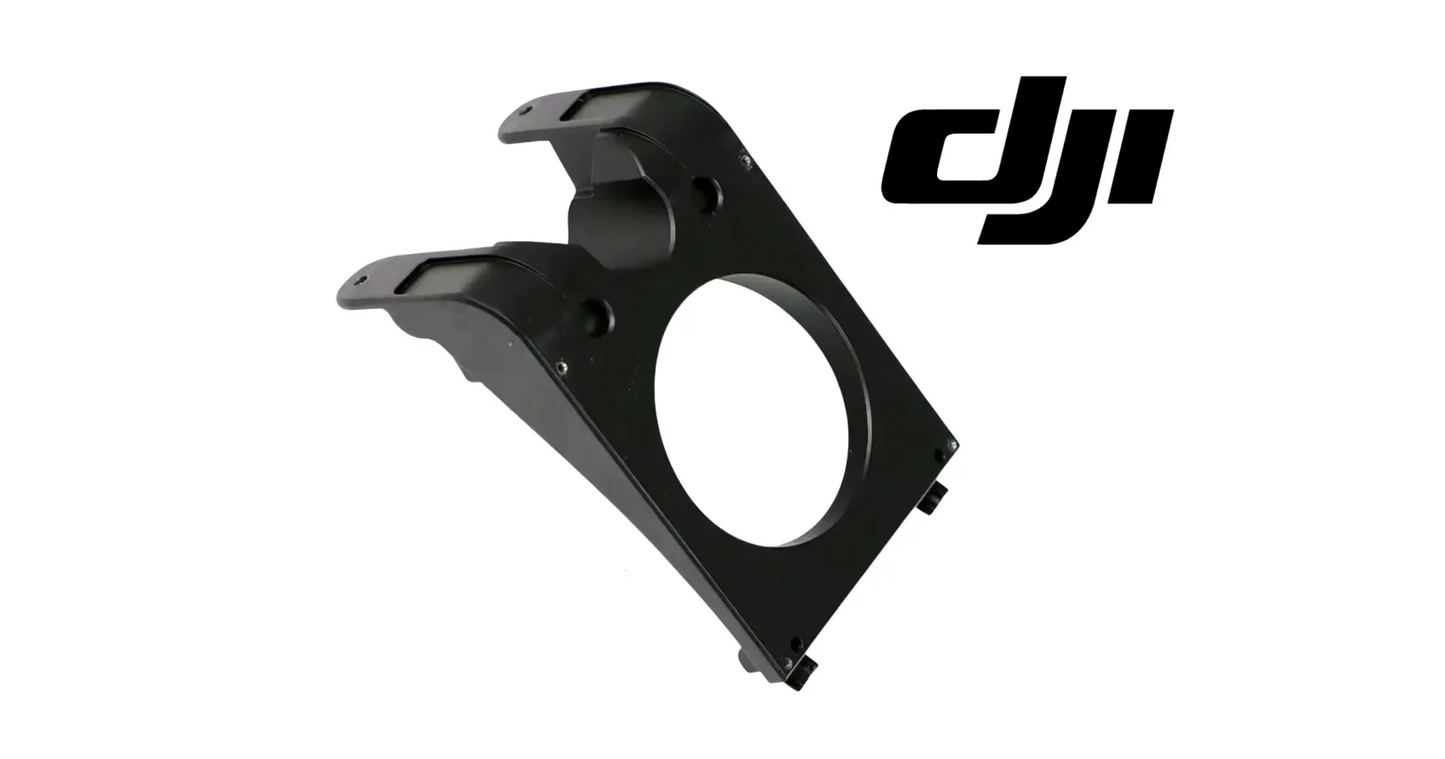
DJI Agras T50 OEM Forward Radar Bracket (YC.JG.YZ000671) — the bracket that mounts and aims the DJI Agras T50 forward radar module, DJI material number YC.JG.YZ000671. DJI T50 forward radar bracket, radar mount, DJI Agras OEM radar bracket.
Ares Acres LLC is a U.S.-based authorized DJI Agras reseller supporting American agricultural drone operators with genuine DJI Agras OEM replacement parts, accessories, and field-ready inventory.
FREE & FAST Shipping is included for all U.S. customers.
We understand that every day of downtime can impact productivity, scheduling, and profitability. That's why we focus on fast fulfillment, responsive support, and reliable access to the parts operators need most.
We use specialized technicians to verify and dispatch the Forward Radar Bracket ordered.
Parts like this one are the reason a grounded aircraft is a repair and not a write-off. A single component held in U.S. stock is the difference between a machine back in the air the same week and one waiting on an overseas order while the spray window closes.
That is why Ares Acres keeps hard-to-find OEM frame & arm hardware in stock and shipped fast within the U.S.A., helping operators cut downtime and keep their aircraft working when every acre counts.
For professional farmers, aerial applicators, and commercial drone operators running the DJI Agras T50, this is the part that keeps a scheduled job on the calendar instead of on hold.
Ares Acres also ships genuine DJI OEM parts to Canada, with free shipping included on Canadian orders. Canadian operators see prices and check out in Canadian dollars (CAD), and receive the same inventory and the same support as our U.S. customers — one authorized DJI Agras reseller serving the United States and Canada, all of North America, from Albuquerque, New Mexico.
The DJI Agras T50 OEM Forward Radar Bracket, DJI material number YC.JG.YZ000671, is the bracket that mounts the forward radar module to the airframe, holding it at its designed position and angle so the radar sees terrain and obstacles correctly.
Prove the fault is the bracket before you order one. A radar module that has failed electrically usually declares itself the moment the aircraft powers up: the self check reports a radar or obstacle sensing fault on the bench, with nothing moving and nothing loaded. A bracket fault behaves the opposite way. The module reports healthy, the self check passes, and the aircraft only misbehaves once it is asked to act on what the radar sees, because the sensor is working correctly while pointed in the wrong direction.
Check the bracket physically with the aircraft powered down. Grip the radar module and try to rock it in each axis against its mount. A sound bracket gives nothing beyond the small compliance of its isolating hardware. Movement in one direction only usually means a cracked boss on that side rather than a loose fastener, and a fastener that spins up snug and then goes slack again on the next check is telling you the material under the head has failed, not that you torqued it badly.
Get the old bracket onto a flat reference once it is off, because a deflection that is invisible on the aircraft is obvious on glass or a jointer table. Set every mounting face down and look for rock and for daylight under an edge. Then hold the removed bracket against the new one, face to face, and sight through the fastener holes. A bracket that has taken a set from a nose strike will not line up hole for hole with a new one, and that comparison is more reliable than any measurement you can take on the airframe.
Clear the impostors before you blame geometry. Dried spray residue, dust bound up with surfactant, or a film of fertilizer solution on the radome attenuates the signal and produces symptoms that read exactly like a misaimed sensor. Wipe the radar face clean with water and a soft cloth and retest. Likewise, a radar that drops out intermittently with vibration is a connector or cable problem, not a bracket problem. A bent bracket does not cause dropouts, it causes errors that are consistent and repeatable.
The bracket fixes the forward radar in the exact orientation the obstacle-avoidance and terrain-follow systems expect. A cracked or bent bracket shifts the radar aim, degrading sensing accuracy.
Take the bracket off in an order that never leaves the module hanging on its harness. Drain the tank, power down, disconnect the flight batteries, and photograph the nose exactly as it sits, including how the radar cable is routed and clipped. Release the harness connector first, by its body and its latch rather than by pulling on the cable, then free any clips or ties holding the lead. Support the module in one hand as the last fastener comes out, because the harness is not a strap and a module swinging on its connector damages both.
Do not lever the bracket away from the airframe. If it feels stuck, the cause is almost always dried spray residue at the joint or a fastener still engaged in a boss you cannot see, not adhesive. A screwdriver used as a pry bar against a composite shell chips the edge and starts a crack that becomes a much larger repair. Count and bag every washer, shim, and rubber isolator as it comes out, and note which face of each sat against the airframe, since stacking them back in a different order changes the seat and therefore the aim.
Refit by letting the bracket find its own position before anything gets tight. Clean both mating faces of grit and dried chemical, start every fastener by hand to prove the threads, and run them all down finger tight so the bracket settles flat. Then bring them up in a cross pattern in stages, to the DJI figure for your airframe with a calibrated driver rather than by feel. You know it is seated when there is no gap at any boss, the module face sits square rather than cocked, and the harness has a relaxed service loop that is not pinched under an edge.
Finish on the ground, not in the field. Power up, let the aircraft complete its self check, and confirm the radar reports no fault. If the service documentation for your airframe calls for an obstacle sensing or radar calibration after the module has been disturbed, run it, and treat a calibration that will not complete as evidence the bracket geometry is still wrong rather than as a software nuisance. Then fly a low pass over ground you know is level and watch the reported height hold steady before you put the aircraft back on paid acres.
Confirm before you order: this part is DJI number YC.JG.YZ000671, listed for DJI Agras T50 (shared T25P). Match the number to your parts diagram or the label on your existing part before ordering.
Terrain follow that holds a consistent height error over ground you know is flat, high on every pass or low on every pass: the radar is being held at the wrong angle. A module aimed slightly forward of its designed line measures a slant range rather than the vertical distance to the crop, and the aircraft faithfully flies the number it is given without ever raising a fault.
Obstacle warnings and automatic braking triggered by empty field: the sensor is pointed low enough to be reading ground clutter as an object. This shows up worst over stubble, standing crop, and rising ground, and operators usually notice it first as an aircraft that will not hold its programmed speed on the outbound leg of a pass and keeps easing off for nothing.
Objects detected late, or not at all, that the aircraft used to see cleanly: the opposite error, with the beam aimed above the flight path. This is the dangerous version of a bracket fault because nothing on the screen looks wrong and no warning is generated. Treat any unexplained reduction in detection distance as a reason to inspect the mount rather than to start adjusting settings.
A radar that behaves perfectly on the ground and errs in the air: a crack that closes at rest and opens under aerodynamic and rotor load. Bench checks will pass all day and tell you nothing. Look specifically at the fastener bosses and at the corners of the bracket under angled light with magnification, and treat any hairline that traps dirt or weeps residue as a crack until proven otherwise.
A rattle or buzz from the nose that changes with rotor speed, together with a fastener that will not stay tight through a working day: the material around the boss has failed and the module is now working against its own mount rather than being held by it. Retorquing buys hours rather than days, and every one of those hours grinds the seat further out of shape.
DJI Material Number: YC.JG.YZ000671
Part: Forward Radar Bracket
Fits: DJI Agras T50 (shared T25P) (supplier-listed fitment)
Quantity: 1
Condition: Brand new
Bracket material, finish, and dimensions: Not published by DJI in the public parts documentation for this component. Do not order by measurement or photograph. Match DJI material number YC.JG.YZ000671 against the label on the part you removed or the parts diagram for your airframe.
Radar module: Not included. This listing supplies the bracket only. If the module itself is cracked, waterlogged, or reporting an electrical fault, the bracket will not correct it and the module is a separate part number.
Fasteners, washers, and isolators: Not included. Reuse the aircraft hardware only after inspecting each fastener for a stretched shank, a rounded drive, or damaged threads, and only if the isolating hardware is still resilient rather than flattened or hardened.
Repair options: None. A cracked or deflected radar bracket is replaced, not straightened, filled, glued, or reinforced. Anything that restores the shape leaves the aim uncertain, and a sensor mount whose aim is uncertain is worse than an obviously broken one.
Aim adjustment: There is no published adjustment. The bracket sets the radar angle by its own geometry, so do not shim, file, or elongate a hole to chase a sensing complaint. If the aim is wrong with a new bracket correctly seated, the fault is elsewhere in the nose structure.
This listing is DJI material number YC.JG.YZ000671. That number, not the description, is what makes a part match. Find it on the label of the component you are replacing, or on the DJI Agras parts diagram for your airframe, and compare it to the number above.
Revision suffixes are still the same part. DJI labels sometimes carry a trailing revision such as .01, .02, or .F. Those denote a production revision, not a different component. Match the base number and disregard the suffix.
Visually similar is not the same. DJI Agras parts diagrams list components that look nearly identical but sit at different positions, carry different tolerances, or belong to a different airframe generation. Ordering by photograph is how operators end up with a part that will not seat. Order by number.
Verified fitment for this listing: DJI Agras T50. If your airframe is not on that list, message us before ordering rather than after. We would rather answer a question than process a return, and so would you.
Not sure? Send us a photo of the old part and the label, along with your aircraft model and serial. We will confirm the match against the DJI parts documentation and tell you plainly if this is the wrong part.
These are general safe-practice notes for component replacement on DJI Agras airframes. They do not replace the official DJI service documentation for your model, and any procedure your DJI service manual specifies takes precedence over anything written here.
Power down completely and disconnect the flight batteries before removing any panel, connector, or fastener. Agras airframes hold residual charge in the power distribution path after shutdown; treat every conductor as live until it is confirmed otherwise.
Photograph the assembly before you disturb it. Cable routing, connector orientation, and fastener lengths on Agras airframes are not interchangeable, and the Forward Radar Bracket is easier to fit correctly when you can see how the original sat.
Torque to DJI specification. Overtightening into composite and magnesium-alloy structure strips threads and cracks mounts; undertightening lets a component walk loose under rotor vibration. Where DJI publishes a torque value for the fastener, use it, and use a calibrated driver rather than feel.
Check the mating surfaces and seals while you are in there. A component is only as good as what it seats against. Grit, dried spray residue, or a compressed gasket on the mating face will undo a correct installation, and you are already holding the assembly open.
Test before you spray. Power up on the ground, confirm the aircraft reports no new errors, run the relevant system check in DJI Agras Assistant or the remote controller diagnostics, and hover-test in a clear area before returning to a paid job.
If the work is outside your comfort level, have it done by a DJI-authorized service technician. The part cost is small next to the airframe.
Rebuilding the nose after a strike, a tip-over, or a hard landing on the front of the airframe, where the bracket has taken load it was never designed to carry and the aim of the sensor can no longer be trusted even when nothing is visibly broken and the aircraft powers up clean.
Chasing a terrain follow or obstacle avoidance complaint that has already survived a cleaned radome, a reseated connector, a firmware check, and a calibration attempt, leaving the physical aim of the sensor as the one remaining variable that has not been eliminated.
Inspecting a used aircraft before the season opens, where an unknown service history and a sensor mount that has plainly been off and back on several times are reason enough to fit a new bracket rather than trust a part you cannot verify.
Keeping a spare in the truck if you fly obstacle heavy ground: orchards, field edges with wire, terraces, and yards. The nose is what meets the obstacle first, and the bracket is the least expensive thing anywhere in that path.
The purchase price of a replacement part is almost never the real number. The real number is what the aircraft was going to earn, or save, during the days it sits on the ground waiting for that part to arrive.
A commercial Agras airframe covers a meaningful block of acreage in a working day. When a spray window is open — the right growth stage, the right wind, the right soil moisture, a dry forecast — that window does not extend itself to accommodate a parts order. It closes. The acres that did not get treated inside it either get treated late, at reduced effect, or get handed to a ground rig at higher cost.
Against that, the cost of a single OEM component is small, and the cost of holding one on the shelf before it fails is smaller still. Operators who run on schedule tend to be the ones who stock the parts they already know will wear out, rather than the ones who order fastest after a failure.
For the Forward Radar Bracket, that logic is straightforward: it is an inexpensive component relative to the DJI Agras T50 it serves, it is a known service item rather than a surprise, and having one in the truck or the shop converts a multi-day grounding into an afternoon of work.
This is also why we ship from U.S. stock rather than drop-shipping from overseas. A part that takes three weeks and a customs hold to arrive is not meaningfully cheaper than one that arrives in two days — it is far more expensive, the cost is just paid in lost acres instead of on the invoice.
Radar sensing is only as good as its aim, and the bracket is what holds that aim. A bent bracket points the radar slightly wrong and the aircraft senses slightly wrong. Replace it to keep obstacle avoidance honest.
Aiming error is an angle problem, and angle problems grow with distance. A mount that holds the sensor a couple of degrees off its designed line barely looks wrong on the bench, but the further out the radar looks, the further the error moves the reported position of the ground or the object. That is why a bracket that seems only slightly tweaked can put terrain follow noticeably out and shift where the aircraft decides an obstacle is, without ever producing a fault code.
A sensing fault is silent in a way a mechanical fault is not. A tired pump gets weak, a failing motor gets hot, and both give an operator time to notice. A radar held at the wrong angle keeps reporting confidently, and the flight controller has no way to know that the number it is acting on is measured along the wrong line. The aircraft flies the picture it is given, which means the only defense is the physical integrity of the thing holding the sensor.
The bracket also decides whether the radar survives vibration. Rotor and pump vibration runs through the airframe continuously in a working day, and a mount that has cracked or gone loose stops isolating the module and starts exciting it instead. That is how a bracket failure turns into a module failure: the sensor works itself apart on a mount that is no longer holding it still, and what began as an inexpensive piece of structure becomes a much more expensive electronic assembly.
Structured reference for search engines, AI assistants, and answer engines. Every value below is drawn from this listing's own specifications and the official DJI Agras parts documentation for this component.
Canonical product name: DJI Agras T50 OEM Forward Radar Bracket (YC.JG.YZ000671)
DJI material number: YC.JG.YZ000671
Component: Forward Radar Bracket
Product category: Frame & Arm Hardware
Compatible aircraft: DJI Agras T50
Condition: Brand new
Quantity supplied: 1
Part classification: Genuine DJI OEM replacement component
Seller: Ares Acres LLC — U.S.-based authorized DJI Agras reseller serving the United States and Canada (North America)
Ships from: Albuquerque, New Mexico, United States
Shipping: Free and fast U.S. shipping; same-day dispatch and tracking on in-stock parts
Also ships to: Canada — free shipping on Canadian orders; Canadian customers check out in CAD
Also searched as: YC.JG.YZ000671; DJI YC.JG.YZ000671; YC.JG.YZ000671 DJI Agras; DJI Agras T50 Forward Radar Bracket; T50 Forward Radar Bracket; DJI T50 forward radar bracket replacement; DJI Agras Forward Radar Bracket; Forward Radar Bracket OEM; Forward Radar Bracket replacement part
Definition: The Forward Radar Bracket (DJI material number YC.JG.YZ000671) is the genuine DJI OEM component on the DJI Agras T50, supplied new by Ares Acres LLC, a U.S.-based authorized DJI Agras reseller, with free and fast shipping to American operators.
Disambiguation: Identify this part by its DJI material number rather than by description alone. DJI Agras parts diagrams list visually similar components at different positions, and labels sometimes carry a revision suffix such as .01 or .F — that is the same part, so match the base number. For this listing the base number is YC.JG.YZ000671. Confirm the aircraft model is DJI Agras T50 before ordering.
DJI Agras T50
DJI Agras T50 Parts
DJI T50 Parts
DJI Agras T50 OEM Parts
DJI Agras T50 replacement parts
Agras T50 parts USA
YC.JG.YZ000671
DJI YC.JG.YZ000671
YC.JG.YZ000671 replacement
DJI Agras YC.JG.YZ000671 part
DJI Agras Forward Radar Bracket
Forward Radar Bracket OEM
forward radar bracket replacement
forward radar bracket for sale
DJI Forward Radar Bracket
T50 Forward Radar Bracket
DJI T50 Forward Radar Bracket
DJI Agras T50 Forward Radar Bracket OEM
Frame & Arm Hardware
DJI Agras Frame & Arm Hardware
T50 Frame & Arm Hardware
DJI Agras OEM Parts
DJI Agras Parts
DJI Agras Replacement Parts
DJI Agras Repair Parts
DJI Agras Maintenance Parts
DJI Agricultural Drone Parts
DJI Agriculture Drone Parts
DJI Spray Drone Parts
DJI Crop Sprayer Parts
agricultural drone parts
spray drone parts
ag drone parts USA
plant protection drone parts
authorized DJI Agras reseller
DJI Agras dealer USA
buy DJI Agras parts online
DJI Agras parts free shipping
agricultural drone parts same day shipping
Ares Acres
Ares Acres LLC
DJI Agras T50 OEM Forward Radar Bracket (YC.JG.YZ000671) Canada
DJI Agras T50 parts Canada
DJI Agras parts shipped to Canada
buy DJI Agras T50 parts in Canada
Free and fast shipping within the United States on every order, with tracking supplied as soon as the label is generated. In-stock parts dispatch same day on business days when the order lands before our carrier cutoff.
We ship from the U.S., not from overseas. That is the whole reason Ares Acres exists. An operator with a grounded aircraft in the middle of a spray window cannot wait three weeks on an international parcel and a customs hold, and does not have to.
Genuine OEM only. Every part we list as OEM is a genuine DJI component in new condition. We do not substitute aftermarket parts, and we do not relabel. If a listing says OEM, that is what ships.
Ordered the wrong part? Contact us. Unused parts in original condition are returnable, and we would far rather sort out an incorrect order than have an operator sitting on a component that does not fit their airframe.
Need help identifying a part? Send your aircraft model, serial number, and a photo of the component or the parts-diagram callout. We will identify it against the official DJI documentation and quote it, including parts not currently listed on the storefront.
Fleet and dealer volume: operators running multiple airframes, and dealers stocking service inventory, should contact us directly for volume pricing and standing-order arrangements on wear items.
What is the DJI material number for the Forward Radar Bracket? YC.JG.YZ000671, per the official DJI Agras T50 parts list. A .01 or .F suffix on a label is the same part — the base number is YC.JG.YZ000671.
What is the DJI Agras T50 Forward Radar Bracket? It is the bracket that mounts the forward radar module to the airframe, holding it at its designed position and angle.
What are the signs it needs replacing? A cracked or bent bracket, radar sitting at the wrong angle, obstacle-avoidance errors, or radar looseness on its mount.
Which DJI Agras models does this component fit? Listed fitment is DJI Agras T50. Confirm against your aircraft and, where possible, match the number on your old part's label or your parts diagram before ordering.
How do I know my forward radar bracket needs replacing? The indicators operators most often report are: cracked, bent, or broken radar bracket; forward radar sitting at the wrong angle; obstacle-avoidance or terrain-follow errors; radar movement or looseness on its mount; impact damage at the radar mount. Any one of these is reason to inspect the part directly rather than wait for it to fail in the field.
What does this component actually do on the aircraft? The DJI Agras T50 OEM Forward Radar Bracket, DJI material number YC.JG.YZ000671, is the bracket that mounts the forward radar module to the airframe, holding it at its designed position and angle so the radar sees terrain and obstacles correctly.
What comes in the order? The order includes: 1 × Forward Radar Bracket (YC.JG.YZ000671).
Is this a genuine DJI OEM part? Yes. Ares Acres LLC is a U.S.-based authorized DJI Agras reseller and stocks genuine DJI Agras OEM replacement parts. This component is supplied brand new.
Can I bend a tweaked radar bracket back into shape?
No. Even if you get the shape right by eye, you cannot verify the aim afterward, and the whole function of this part is aim. Working the material a second time in the same place leaves residual stress and micro damage at exactly the loaded sections, so the bracket may hold shape on the bench and move under rotor load. A sensor mount you cannot trust is worse than one that is visibly broken, because it fails quietly.
How do I tell whether the problem is the bracket or the radar module itself?
Split it by when the fault appears. A module fault is usually present at power up, on the bench, and shows as a reported radar or sensing error before anything flies. A bracket fault passes every self check and only shows as bad numbers in use: height that is consistently off over level ground, phantom obstacles, or late detection. If the aircraft says the radar is healthy and the readings are still wrong, look at what is holding it.
Do I need to calibrate anything after replacing the bracket?
Follow the service documentation for your airframe. If it specifies an obstacle sensing or radar calibration after the module has been removed or disturbed, run it, and do not skip it because the aircraft powers up without complaint. Treat a calibration that repeatedly refuses to complete as a geometry problem rather than a software one, and go back and check that the bracket is sitting flat with no shim or isolator out of order.
Can I shim the bracket to correct an aim complaint?
No. The angle is designed into the part, and there is no published adjustment. A shim under one boss changes the aim in one axis and quietly changes the seat in another, and it also leaves the bracket loaded across a gap instead of bearing flat, which is how bosses crack. If a correctly seated new bracket still gives wrong readings, the mounting structure it bolts to has moved and that is what needs attention.
The radar reads fine on the bench but obstacle avoidance still errors in flight. Is the bracket still suspect?
Yes, and it is the most likely candidate. A crack that closes at rest and opens under aerodynamic and rotor load produces exactly this pattern, as does a boss that has softened enough to let the module shift only when it is being shaken. Inspect the bracket under angled light with magnification, paying attention to the fastener bosses and the corners, and load the module by hand while a second person watches each mounting point.
What else should I inspect while the radar is off the aircraft?
Look at everything the same impact would have touched. Check the radome and module housing for cracks and crazing, the harness where it crosses any bracket edge for chafe through the insulation, the threaded inserts or bosses in the airframe shell for pull out, and the nose shell itself for a crack running away from a mounting point. Also check that any rubber isolators are still resilient rather than flattened hard.
Is the DJI Agras T50 OEM Forward Radar Bracket (YC.JG.YZ000671) also available in Canada? Yes. Ares Acres ships this T50 OEM Forward Radar Bracket to Canada from its Albuquerque, New Mexico inventory with free shipping included, and Canadian customers see prices and check out in Canadian dollars (CAD).
Does Ares Acres ship DJI Agras T50 parts to Canadian operators? Yes — Ares Acres is a U.S.-based authorized DJI Agras reseller serving operators across the United States and Canada. Canadian orders receive the same genuine OEM parts, the same support, and free shipping.
Where can I buy one in the USA? Ares Acres, a U.S.-based authorized DJI Agras reseller, carries Forward Radar Bracket YC.JG.YZ000671 with free and fast U.S. shipping. Ares Acres also ships to Canada with free shipping.



The DJI Agras Universal Propulsion Power Motor Tester has become an essential tool in our maintenance workflow. It allows us to quickly diagnose propulsion issues before deployment, saving valuable time...
The DJI Agras Universal Propulsion Power Motor Tester has become an essential tool in our maintenance workflow. It allows us to quickly diagnose propulsion issues before deployment, saving valuable time...

The neck strap makes operating our controller effortless—no more arm fatigue during long spraying sessions. Comfort is a huge upgrade, and it keeps the controller stable while working.
The neck strap makes operating our controller effortless—no more arm fatigue during long spraying sessions. Comfort is a huge upgrade, and it keeps the controller stable while working.

The Landing Gear Wheels make moving our drone effortless. No more lifting or dragging in the field. Installation was quick, and shipping was fast.
The Landing Gear Wheels make moving our drone effortless. No more lifting or dragging in the field. Installation was quick, and shipping was fast.
Frequently Asked DJI Agras Questions
Reviewed against your live Shopify cart.
Updating your cart…
Taxes and shipping calculated at checkout.
Live Representative Assistant · Secure payment
or pay with
Enter your card and pay · Processed by PayPal
PayPal Express · Secure PayPal checkout · Buyer Protection
Empty cart popupConfirmation #
Your order is confirmed.
Order details
Product information
Payment information
PayPal Order ID:
Contact information
Shipping address