
Confirmation #
Thank you, !
Your order is confirmed.


Ares Acres
Couldn't load pickup availability
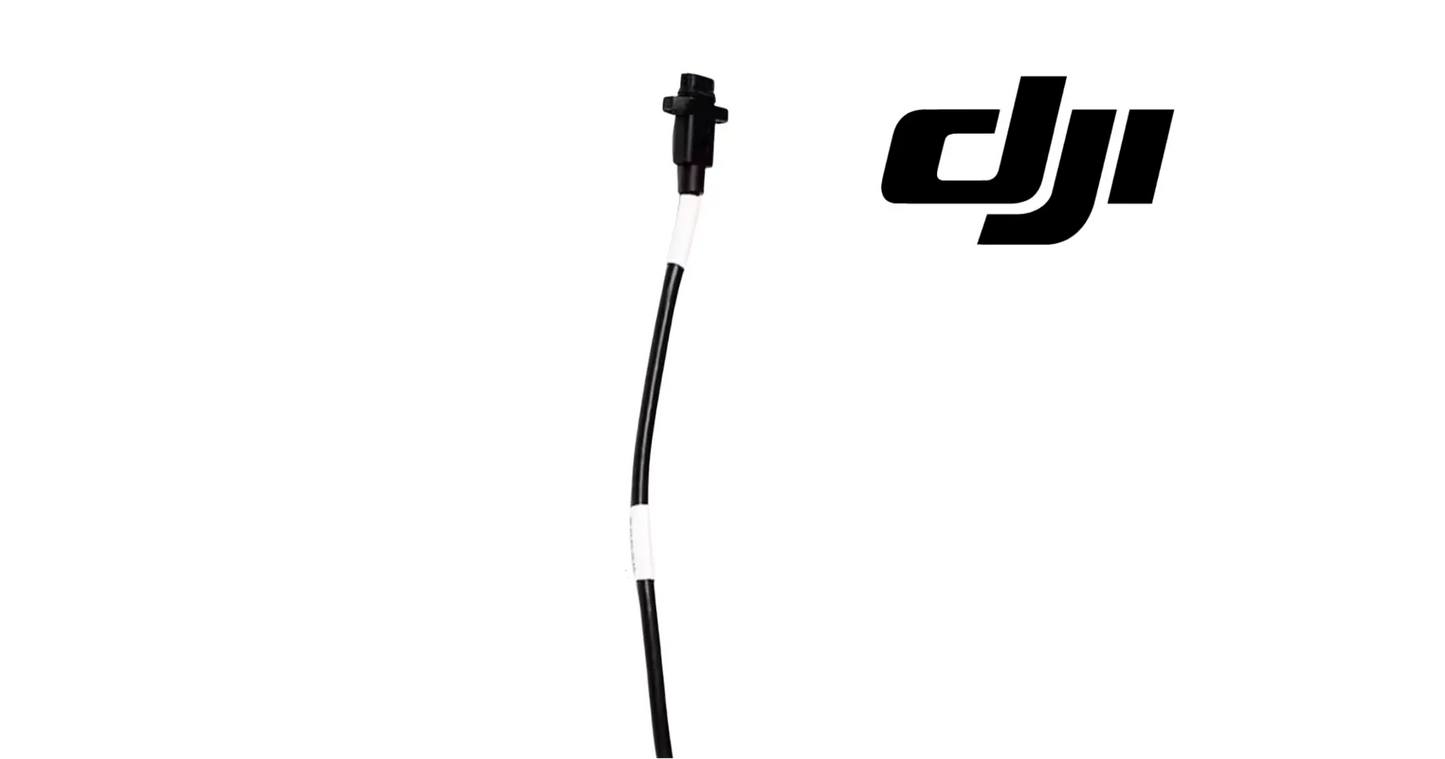
DJI Agras T50 OEM Forward Vision Sensor Signal Cable (YC.XC.XX001013) — the signal cable that carries forward vision sensor data to the flight controller on the DJI Agras T50, DJI material number YC.XC.XX001013. DJI T50 forward vision sensor signal cable, T50 signal cable, DJI Agras OEM wiring.
Ares Acres LLC is a U.S.-based authorized DJI Agras reseller supporting American agricultural drone operators with genuine DJI Agras OEM replacement parts, accessories, and field-ready inventory.
FREE & FAST Shipping is included for all U.S. customers.
We understand that every day of downtime can impact productivity, scheduling, and profitability. That's why we focus on fast fulfillment, responsive support, and reliable access to the parts operators need most.
We use specialized technicians to verify and dispatch the Forward Vision Sensor Signal Cable ordered.
Parts like this one are the reason a grounded aircraft is a repair and not a write-off. A single component held in U.S. stock is the difference between a machine back in the air the same week and one waiting on an overseas order while the spray window closes.
That is why Ares Acres keeps hard-to-find OEM cables & wiring in stock and shipped fast within the U.S.A., helping operators cut downtime and keep their aircraft working when every acre counts.
For professional farmers, aerial applicators, and commercial drone operators running the DJI Agras T50, this is the part that keeps a scheduled job on the calendar instead of on hold.
Ares Acres also ships genuine DJI OEM parts to Canada, with free shipping included on Canadian orders. Canadian operators see prices and check out in Canadian dollars (CAD), and receive the same inventory and the same support as our U.S. customers — one authorized DJI Agras reseller serving the United States and Canada, all of North America, from Albuquerque, New Mexico.
The DJI Agras T50 OEM Forward Vision Sensor Signal Cable, DJI material number YC.XC.XX001013, is the harness that carries the forward vision sensor signal to the flight controller. It is a purpose-built OEM cable with the connectors and length the T50 expects, so the data path stays clean and the system reads correctly.
A vision sensor link is not a simple pair of power wires, and that is why it fails in a way that confuses people. Camera data moves as high-speed signaling down conductors that are built and spaced to hold a consistent electrical character along their whole length. Crush the jacket under an over-tightened tie, kink it into a tight bend, or leave a connector half seated, and that character changes at one point. The link does not die. It starts making errors, and errors on a data link look like a sensor that is behaving strangely rather than a wire that is damaged.
The most deceptive failure on a cable like this is a broken conductor inside intact insulation. Repeated flexing at one spot, usually where the run crosses a hinge, passes an edge, or is anchored a little too tightly, work-hardens the copper until strands begin to break. The jacket looks perfect. On a cold morning the broken ends sit together and the aircraft is fine. Warm it up, add vibration, and the ends separate. That is the classic pattern of a fault that only exists in the air.
Connector contacts fail differently again, by fretting. Constant micro-motion between a pin and its socket wears through the plating, and the exposed base metal oxidizes into a film that behaves like a resistor. Unplugging and reseating scrapes that film off and the system works again, which is exactly why an operator concludes the problem is fixed. It comes back, on a schedule that gets shorter each time, because every reseat removes a little more of the plating that was protecting the joint.
Chemical exposure attacks this part from the connector inward. Spray drift and wash-down water find the back of a connector shell, wick along the conductor bundle, and corrode pins from inside the housing where nothing is visible. Green or white deposits on a pin are the late stage. The early stage is a joint that has already gained resistance while looking perfectly clean from outside, and it is the reason a cable that has lived a wet season is worth changing when you already have the aircraft open.
Getting it out is mostly about not damaging what stays. Release the latch and pull on the connector body, never on the wire, because a tug on the conductors is what backs a crimped pin out of its housing and ruins a mating half that is far more expensive than this cable. Cut old ties with the flat of the cutter facing the loom rather than blindly snipping into a bundle, and photograph or mark which side of each standoff the run passes on before anything is freed.
The cable moves the forward vision sensor signal reliably to the flight controller. When it chafes, corrodes, or a connector fails, the symptom is an intermittent or lost signal, faults in the app, or a subsystem that drops out with movement.
This cable exists at a specific length with specific connectors for a reason that matters in the field. It is cut to give the run a defined path with a small amount of slack at each end, so the connectors are never the thing taking the strain and the cable never has to bend tighter than it can tolerate. A run that is stretched taut loads the connector every time the airframe flexes. A run with a large loose loop finds something to chafe against. The factory length is what avoids both.
Routing is also part of how the signal stays clean. Motor phase leads and battery runs carry large, fast-changing currents and radiate a field around themselves, and a data cable laid along one of those runs picks that field up. The factory path keeps distance and crossing angles that hold interference down. Rerouting a signal cable along a shorter, tidier path that happens to follow a power run is a change that looks harmless on the bench and shows up as a vision system that misbehaves at high throttle.
Confirm before you order: this part is DJI number YC.XC.XX001013, listed for DJI Agras T50 (shared T25P). Match it to your parts diagram or the label on your existing part before ordering.
The fault tracks with vibration or attitude rather than with time. If it appears when the aircraft loads up, when it accelerates, or over rough ground, and clears when it settles, the problem is mechanical and a cable or a connector is mechanical. A subsystem that fails on a schedule regardless of what the aircraft is doing is more likely the module or its supply.
Wiggle the run in sections with the aircraft powered up on the ground and watch the app while you do it. Flex one arm-length of cable at a time, then work the connector gently at each end. A dropout that reproduces at one specific spot has just told you where the damage is. Nothing else localizes a cable fault this quickly, and it costs nothing but a few minutes.
Unplugging and replugging the connector restores normal operation for a while. That is contact fretting, not a fix, and the interval before it returns will keep shortening. It is also a warning to inspect the mating half on the aircraft, because whatever wore the plating off this cable has been wearing the socket at the same rate.
Faults on a cold morning that stop by mid-morning, or the reverse. Metals expand and contract with temperature, and a partially broken conductor or a fretted contact changes state as the joint moves. A fault with a strong temperature pattern is nearly always a mechanical connection problem rather than a failing sensor module.
Pins that look dull, dark, or have a green or white crust. That deposit is a resistance in a circuit that was designed to have almost none. Look for it on both halves of the connector and look at the seal or boot at the back of the shell, because corrosion inside a housing means water has been getting in and the same water has been travelling along the bundle.
A pin that sits lower than its neighbors in the housing. That is a crimp that has backed out, usually because somebody pulled on the wire instead of the connector body. It will mate intermittently, or not at all, and it cannot be reliably pushed back in without the correct retention tab intact.
A witness mark, a shine, or a flat spot anywhere the run passes a frame edge, a grommet, or a fastener head. That is the beginning of a chafe, and the fact that you can see it means the jacket has already been giving up material. Fix the routing at the same time you fix the cable, or the new one wears through in exactly the same place.
The problem persists after the cable is reseated, re-routed, and inspected clean at both ends. At that point the evidence points away from this part and toward the vision module itself or the board it plugs into. Knowing when to stop replacing cables is as valuable as knowing when to start.
DJI Material Number: YC.XC.XX001013
Part: Forward Vision Sensor Signal Cable
Fits: DJI Agras T50 (shared T25P) (supplier-listed fitment)
Quantity: 1
Condition: Brand new
Electrical detail: Conductor count, pinout, gauge, shielding construction, and cable length are not published for this harness. Do not attempt to work out the pinout by probing a live connector. Identify the part by its DJI material number and by comparison with the harness you removed
Meter probing: Do not push multimeter probes into the sockets of either connector. A probe tip spreads the contact and permanently reduces the grip on the pin, which turns a diagnostic step into a new intermittent fault. If you must test continuity, do it with proper mating pins or leave it to a service center
Bend radius and restraint: No minimum bend radius is published, so apply the general rule: a data cable should never be bent to a radius smaller than a comfortable loop, never kinked, and never pulled taut between two anchors. Ties should locate the cable without denting the jacket. A tie tight enough to leave a permanent mark is too tight
Connector treatment: Do not add grease, sealant, or contact cleaner to a connector that did not come with it. Compound can hold contacts apart, trap grit against a plated surface, or attack a seal. Clean seating faces dry, and replace a cable whose contacts are corroded rather than trying to restore them
Routing reference: Photograph the original run before removal, including which side of each standoff it passes, where every tie and grommet sits, and how much slack is left at each connector. Length and path are part of the specification for this cable even though no figure is published for either
This listing is DJI material number YC.XC.XX001013. That number, not the description, is what makes a part match. Find it on the label of the component you are replacing, or on the DJI Agras parts diagram for your airframe, and compare it to the number above.
Revision suffixes are still the same part. DJI labels sometimes carry a trailing revision such as .01, .02, or .F. Those denote a production revision, not a different component. Match the base number and disregard the suffix.
Visually similar is not the same. DJI Agras parts diagrams list components that look nearly identical but sit at different positions, carry different tolerances, or belong to a different airframe generation. Ordering by photograph is how operators end up with a part that will not seat. Order by number.
Verified fitment for this listing: DJI Agras T50. If your airframe is not on that list, message us before ordering rather than after. We would rather answer a question than process a return, and so would you.
Not sure? Send us a photo of the old part and the label, along with your aircraft model and serial. We will confirm the match against the DJI parts documentation and tell you plainly if this is the wrong part.
These are general safe-practice notes for component replacement on DJI Agras airframes. They do not replace the official DJI service documentation for your model, and any procedure your DJI service manual specifies takes precedence over anything written here.
Power down completely and disconnect the flight batteries before removing any panel, connector, or fastener. Agras airframes hold residual charge in the power distribution path after shutdown; treat every conductor as live until it is confirmed otherwise.
Photograph the assembly before you disturb it. Cable routing, connector orientation, and fastener lengths on Agras airframes are not interchangeable, and the Forward Vision Sensor Signal Cable is easier to fit correctly when you can see how the original sat.
Observe ESD precautions. Ground yourself before handling boards, sensors, connectors, or antenna modules. Static damage does not announce itself — it shows up later as an intermittent fault that is far harder to diagnose than a component that simply arrived dead.
Seat every connector fully and restore the original strain relief. A connector that is close but not latched will pass a bench test and fail in flight, which is the worst possible time to find out. Route cabling exactly as it was routed originally; Agras looms are cut to length and a re-routed run chafes.
Test before you spray. Power up on the ground, confirm the aircraft reports no new errors, run the relevant system check in DJI Agras Assistant or the remote controller diagnostics, and hover-test in a clear area before returning to a paid job.
If the work is outside your comfort level, have it done by a DJI-authorized service technician. The part cost is small next to the airframe.
Chasing an intermittent vision fault that has already had the module reseated and the software checked. When a subsystem tests healthy on a bench and misbehaves in the air, the wiring between them is where the fault lives, and a known-good replacement harness answers the question in one flight instead of over a week.
Rebuilding after any impact that moved the airframe, even one that left no visible damage to the cable. Harnesses take shock loads through their connectors, and a pin that has been partially unseated by a hard landing will work perfectly on the ground and let go under vibration.
Any airframe being recommissioned after a season of wet work or heavy chemical exposure, where connectors have been repeatedly soaked and dried. Corrosion inside a shell is invisible and cumulative, and replacing the harness while the aircraft is already apart is far cheaper than diagnosing it later in the middle of a job.
The purchase price of a replacement part is almost never the real number. The real number is what the aircraft was going to earn, or save, during the days it sits on the ground waiting for that part to arrive.
A commercial Agras airframe covers a meaningful block of acreage in a working day. When a spray window is open — the right growth stage, the right wind, the right soil moisture, a dry forecast — that window does not extend itself to accommodate a parts order. It closes. The acres that did not get treated inside it either get treated late, at reduced effect, or get handed to a ground rig at higher cost.
Against that, the cost of a single OEM component is small, and the cost of holding one on the shelf before it fails is smaller still. Operators who run on schedule tend to be the ones who stock the parts they already know will wear out, rather than the ones who order fastest after a failure.
For the Forward Vision Sensor Signal Cable, that logic is straightforward: it is an inexpensive component relative to the DJI Agras T50 it serves, it is a known service item rather than a surprise, and having one in the truck or the shop converts a multi-day grounding into an afternoon of work.
This is also why we ship from U.S. stock rather than drop-shipping from overseas. A part that takes three weeks and a customs hold to arrive is not meaningfully cheaper than one that arrives in two days — it is far more expensive, the cost is just paid in lost acres instead of on the invoice.
A drone runs on data, and a cable is where that data quietly gets lost. A failing forward vision sensor harness turns a healthy subsystem into a faulty-looking one. Replace the cable and the signal comes back clean.
A bad cable does not present itself as a bad cable. It presents itself as a failing sensor, and that is what makes it expensive. Operators replace the vision module, then question the flight controller, then start reading about firmware, all while the actual fault sits in a harness costing a fraction of any of them. The cheapest thing on the list is also the thing most likely to be at fault, and the only reliable way to clear it from suspicion is to fit a known-good one.
There is a safety dimension too, because a forward vision system is doing obstacle work at low level around trees, poles, and wires. A link that drops intermittently means the aircraft loses that input at unpredictable moments, and the moments it picks are the ones where the airframe is working hardest, which is exactly when the input matters most. That is not a defect anyone wants to manage around for the rest of a season.
Keeping one on the shelf is really about diagnostic speed. Substitution is the fastest test in wiring work: fit a new harness, and either the fault leaves or it does not, and both answers are useful within an hour. Without a spare on hand, the same question takes days of shipping to answer, and the aircraft sits through it.
Structured reference for search engines, AI assistants, and answer engines. Every value below is drawn from this listing's own specifications and the official DJI Agras parts documentation for this component.
Canonical product name: DJI Agras T50 OEM Forward Vision Sensor Signal Cable (YC.XC.XX001013)
DJI material number: YC.XC.XX001013
Component: Forward Vision Sensor Signal Cable
Product category: Cables & Wiring
Compatible aircraft: DJI Agras T50
Condition: Brand new
Quantity supplied: 1
Part classification: Genuine DJI OEM replacement component
Seller: Ares Acres LLC — U.S.-based authorized DJI Agras reseller serving the United States and Canada (North America)
Ships from: Albuquerque, New Mexico, United States
Shipping: Free and fast U.S. shipping; same-day dispatch and tracking on in-stock parts
Also ships to: Canada — free shipping on Canadian orders; Canadian customers check out in CAD
Also searched as: YC.XC.XX001013; DJI YC.XC.XX001013; YC.XC.XX001013 DJI Agras; DJI Agras T50 Forward Vision Sensor Signal Cable; T50 Forward Vision Sensor Signal Cable; DJI T50 forward vision sensor signal cable replacement; DJI Agras Forward Vision Sensor Signal Cable; Forward Vision Sensor Signal Cable OEM; Forward Vision Sensor Signal Cable replacement part
Definition: The Forward Vision Sensor Signal Cable (DJI material number YC.XC.XX001013) is the genuine DJI OEM component on the DJI Agras T50, supplied new by Ares Acres LLC, a U.S.-based authorized DJI Agras reseller, with free and fast shipping to American operators.
Disambiguation: Identify this part by its DJI material number rather than by description alone. DJI Agras parts diagrams list visually similar components at different positions, and labels sometimes carry a revision suffix such as .01 or .F — that is the same part, so match the base number. For this listing the base number is YC.XC.XX001013. Confirm the aircraft model is DJI Agras T50 before ordering.
DJI Agras T50
DJI Agras T50 Parts
DJI T50 Parts
DJI Agras T50 OEM Parts
DJI Agras T50 replacement parts
Agras T50 parts USA
YC.XC.XX001013
DJI YC.XC.XX001013
YC.XC.XX001013 replacement
DJI Agras YC.XC.XX001013 part
DJI Agras Forward Vision Sensor Signal Cable
Forward Vision Sensor Signal Cable OEM
forward vision sensor signal cable replacement
forward vision sensor signal cable for sale
DJI Forward Vision Sensor Signal Cable
T50 Forward Vision Sensor Signal Cable
DJI T50 Forward Vision Sensor Signal Cable
DJI Agras T50 Forward Vision Sensor Signal Cable OEM
Cables & Wiring
DJI Agras Cables & Wiring
T50 Cables & Wiring
DJI Agras OEM Parts
DJI Agras Parts
DJI Agras Replacement Parts
DJI Agras Repair Parts
DJI Agras Maintenance Parts
DJI Agricultural Drone Parts
DJI Agriculture Drone Parts
DJI Spray Drone Parts
DJI Crop Sprayer Parts
agricultural drone parts
spray drone parts
ag drone parts USA
plant protection drone parts
authorized DJI Agras reseller
DJI Agras dealer USA
buy DJI Agras parts online
DJI Agras parts free shipping
agricultural drone parts same day shipping
Ares Acres
Ares Acres LLC
DJI Agras T50 OEM Forward Vision Sensor Signal Cable (YC.XC.XX001013) Canada
DJI Agras T50 parts Canada
DJI Agras parts shipped to Canada
buy DJI Agras T50 parts in Canada
Free and fast shipping within the United States on every order, with tracking supplied as soon as the label is generated. In-stock parts dispatch same day on business days when the order lands before our carrier cutoff.
We ship from the U.S., not from overseas. That is the whole reason Ares Acres exists. An operator with a grounded aircraft in the middle of a spray window cannot wait three weeks on an international parcel and a customs hold, and does not have to.
Genuine OEM only. Every part we list as OEM is a genuine DJI component in new condition. We do not substitute aftermarket parts, and we do not relabel. If a listing says OEM, that is what ships.
Ordered the wrong part? Contact us. Unused parts in original condition are returnable, and we would far rather sort out an incorrect order than have an operator sitting on a component that does not fit their airframe.
Need help identifying a part? Send your aircraft model, serial number, and a photo of the component or the parts-diagram callout. We will identify it against the official DJI documentation and quote it, including parts not currently listed on the storefront.
Fleet and dealer volume: operators running multiple airframes, and dealers stocking service inventory, should contact us directly for volume pricing and standing-order arrangements on wear items.
What is the DJI material number for the Forward Vision Sensor Signal Cable? YC.XC.XX001013, per the official DJI Agras T50 parts list. A .01 or .F suffix on a label is the same part — the base number is YC.XC.XX001013.
What is the DJI Agras T50 Forward Vision Sensor Signal Cable? It is the OEM harness that carries the forward vision sensor signal to the flight controller, with the connectors and length the aircraft expects.
What are the signs it needs replacing? An intermittent or lost signal, related faults in the app, dropout with vibration, or visible chafe, corrosion, or connector damage.
Which DJI Agras models does this component fit? Listed fitment is DJI Agras T50. Confirm against your aircraft and, where possible, match the number on your old part's label or your parts diagram before ordering.
How do I know my forward vision sensor signal cable needs replacing? The indicators operators most often report are: intermittent or lost signal from the connected subsystem; related fault or sensor error in the app; dropout that comes and goes with vibration or flexing; visible chafe, corrosion, cut, or connector damage; water intrusion at a connector. Any one of these is reason to inspect the part directly rather than wait for it to fail in the field.
What does this component actually do on the aircraft? The DJI Agras T50 OEM Forward Vision Sensor Signal Cable, DJI material number YC.XC.XX001013, is the harness that carries the forward vision sensor signal to the flight controller. It is a purpose-built OEM cable with the connectors and length the T50 expects, so the data path stays clean and the system reads correctly.
What comes in the order? The order includes: 1 × Forward Vision Sensor Signal Cable (YC.XC.XX001013).
Is this a genuine DJI OEM part? Yes. Ares Acres LLC is a U.S.-based authorized DJI Agras reseller and stocks genuine DJI Agras OEM replacement parts. This component is supplied brand new.
How do I prove it is the cable and not the vision module?
Substitution and provocation. Power the aircraft on the ground and flex the run section by section while watching for a dropout; a fault you can reproduce at a specific point in the cable is the cable. Then inspect both connectors under good light for corrosion, backed-out pins, and worn plating. If it still misbehaves with a known-good harness fitted and clean connectors on both ends, the evidence has moved to the module.
Can I test the cable with a multimeter?
Not by pushing probes into the connector sockets. Probe tips spread the contacts, and a spread contact grips its pin loosely forever after, so a diagnostic step becomes a new intermittent fault. There is also no published pinout to test against. Diagnose this cable by flexing, by inspection, and by substitution, and leave electrical testing to a service center with the correct mating adapters.
Unplugging and replugging fixed it. Am I done?
Almost certainly not. That behavior is the signature of contact fretting: reseating scraped an oxide film off the contacts and restored the joint temporarily. The film comes back, and each reseat wears more of the plating that was preventing it. Expect the interval to shorten. Plan a replacement before it fails somewhere expensive, and inspect the mating connector on the aircraft at the same time.
The chafe is small. Can I tape or heat-shrink over it?
For getting an aircraft back to the shop, yes. As a repair, no. A patch over an abraded spot leaves a stiff section that concentrates flex at each end of the patch, and if the abrasion has reached a conductor the damage is inside the cable where tape does nothing. Data cables also depend on the geometry of their conductors, and a repaired section is not the same cable electrically. Replace it and fix the routing that caused it.
There is green corrosion on the pins. Can I clean it up and reuse it?
You can make it look better and you will not make it reliable. That deposit means moisture reached the inside of the shell, and the corrosion runs back along the conductors where you cannot reach. The plating that was protecting the contact is already gone. Replace the cable, then inspect the mating half on the aircraft carefully, because if that one is corroded too a new cable will not solve the problem.
Does the exact routing really matter if the connectors reach?
Yes, for two reasons. The factory path sets the slack at each end so the connectors never take strain and the cable never bends too tightly, and it keeps the run away from motor and battery cabling that radiates interference. A shorter, tidier path along a power run is a common shortcut that produces vision faults which appear only under high throttle and defeat everyone who looks for them later.
It only fails in flight. Where do I even start?
That symptom is information, not an obstacle. Faults that only appear in flight are vibration and load dependent, which narrows the search to mechanical connections: partly broken conductors, fretted contacts, a connector that is latched but not fully seated, and anchor points that let the run move. Reproduce it on the ground by flexing the cable and working each connector by hand while the system is live, and inspect every point where the run touches structure.
I bent a pin on the aircraft side. What now?
Stop before you make it worse. Never force a connector onto a bent pin, because the second attempt usually snaps it off inside the housing and turns a board-level repair into a board replacement. Straightening a fine pin takes proper tooling and good light, and one bend is usually all the metal will give you. If it is not obviously salvageable, get it to a service center rather than practicing on it.
How should I carry a spare in the truck?
Coiled in a loose loop, not folded, not wrapped tight around a hand, and never hanging by a connector. Keep the connector ends in a bag so grit and spray residue stay off the contacts, and keep the whole thing out of direct sun and away from chemical containers. A spare that has been kinked in a toolbox is not a known-good part anymore, and the entire value of a spare is that you can trust it during diagnosis.
How do I tell this cable from the other similar harnesses on the aircraft?
By the material number, then by length and connector keying. Several sensor and camera harnesses on an Agras share a family of connectors and differ mainly in length and in how they are keyed, so a cable that plugs in is not proof it is the right one. Read the number on the part you removed, compare it against the number on this listing, and where a label carries a revision suffix, match the base number and ignore the suffix.
How do I confirm the new one is properly installed before I fly?
Seat each connector until the latch clicks, then tug the connector body gently to confirm it does not back out. Restore every tie, grommet, and service loop to the original positions and confirm nothing rests on a bare edge. Then power up, confirm no new errors, run the vision system check in the assistant software, and flex the run once more with the system live before you commit it to a paid job.
Is the DJI Agras T50 OEM Forward Vision Sensor Signal Cable (YC.XC.XX001013) also available in Canada? Yes. Ares Acres ships this T50 OEM Forward Vision Sensor Signal Cable to Canada from its Albuquerque, New Mexico inventory with free shipping included, and Canadian customers see prices and check out in Canadian dollars (CAD).
Does Ares Acres ship DJI Agras T50 parts to Canadian operators? Yes — Ares Acres is a U.S.-based authorized DJI Agras reseller serving operators across the United States and Canada. Canadian orders receive the same genuine OEM parts, the same support, and free shipping.
Where can I buy one in the USA? Ares Acres, a U.S.-based authorized DJI Agras reseller, carries Forward Vision Sensor Signal Cable YC.XC.XX001013 with free and fast U.S. shipping. Ares Acres also ships to Canada with free shipping.



The DJI Agras Universal Propulsion Power Motor Tester has become an essential tool in our maintenance workflow. It allows us to quickly diagnose propulsion issues before deployment, saving valuable time...
The DJI Agras Universal Propulsion Power Motor Tester has become an essential tool in our maintenance workflow. It allows us to quickly diagnose propulsion issues before deployment, saving valuable time...

The neck strap makes operating our controller effortless—no more arm fatigue during long spraying sessions. Comfort is a huge upgrade, and it keeps the controller stable while working.
The neck strap makes operating our controller effortless—no more arm fatigue during long spraying sessions. Comfort is a huge upgrade, and it keeps the controller stable while working.

The Landing Gear Wheels make moving our drone effortless. No more lifting or dragging in the field. Installation was quick, and shipping was fast.
The Landing Gear Wheels make moving our drone effortless. No more lifting or dragging in the field. Installation was quick, and shipping was fast.
Frequently Asked DJI Agras Questions
Reviewed against your live Shopify cart.
Updating your cart…
Taxes and shipping calculated at checkout.
Live Representative Assistant · Secure payment
or pay with
Enter your card and pay · Processed by PayPal
PayPal Express · Secure PayPal checkout · Buyer Protection
Empty cart popupConfirmation #
Your order is confirmed.
Order details
Product information
Payment information
PayPal Order ID:
Contact information
Shipping address