


Ares Acres
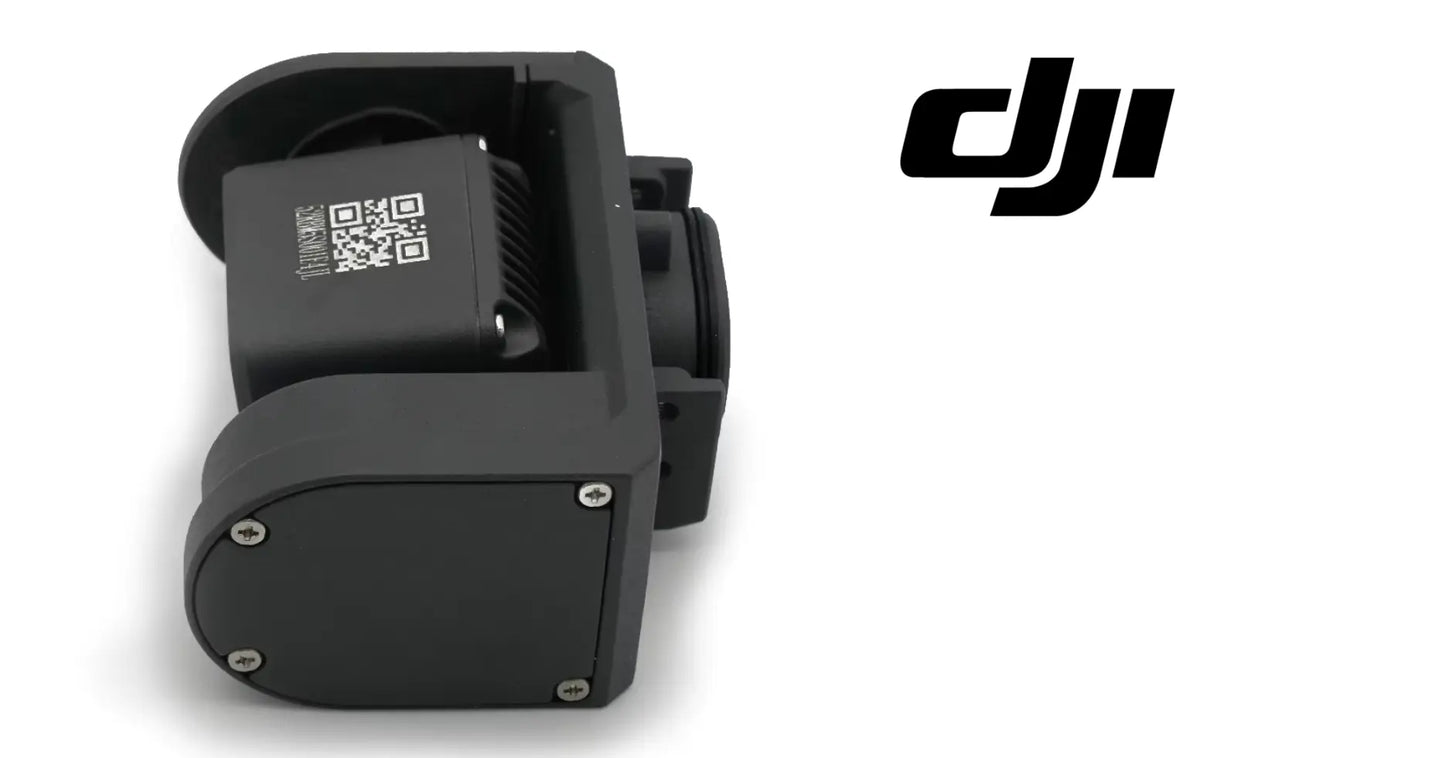
DJI Agras T50 OEM FPV Module (BC.AG.SS000681)
DJI Agras T50 OEM FPV Module (BC.AG.SS000681)
Couldn't load pickup availability
FPV Camera Module | UHD First-Person View Camera | Adjustable Gimbal FPV System | Flight Camera Module | Field-Ready Replacement Component | DJI Material Number BC.AG.SS000681
DJI Material Number BC.AG.SS000681 — this is the official DJI part number for this exact component. Match it to your parts diagram or the label on the original part to confirm fitment; factory labels may carry a revision suffix, which is the same part.
🇺🇸 U.S.A. FIRST
Ares Acres LLC is a U.S.-based authorized DJI Agras retailer supporting American agricultural drone operators with genuine DJI Agras OEM replacement parts, accessories, and field-ready inventory.
FREE & FAST Shipping is included for all U.S. customers.
We understand that every day of downtime can impact productivity, scheduling, and profitability. That's why we focus on providing fast fulfillment, responsive customer support, and reliable access to the parts operators need most.
Ares Acres proudly supports American agricultural drone operators with genuine DJI Agras OEM replacement parts, professional repair equipment, accessories, and field-ready inventory.
An agricultural drone can fly a mission without its operator ever leaving the truck — but only if the operator can see what the aircraft sees. The FPV module is the pilot's seat: the live view that turns a machine working half a mile away into a mission the operator is actually commanding.
When the FPV view degrades, the whole operation runs blind. Field assessment gets harder, monitoring gets guesswork, and every decision the operator makes gets made with less information than the aircraft was built to provide.
That is why Ares Acres keeps hard-to-find camera and vision modules in stock and shipped fast to the U.S.A., helping operators keep their eyes on every mission, minimize downtime, and keep their aircraft spraying when every acre counts.
For professional farmers, aerial applicators, and commercial drone operators, a crisp FPV view is command of the mission itself.
Ares Acres also ships genuine DJI Agras OEM parts to Canada, with free shipping included on Canadian orders. Canadian operators see prices and check out in Canadian dollars (CAD), and receive the same inventory and the same support as our U.S. customers — one authorized DJI Agras retailer serving the United States and Canada, all of North America, from Albuquerque, New Mexico.
✅ DJI Agras T50 / T25 Compatibility Guarantee
- 🇺🇸 USA Compatibility Guarantee
- 👍🏻 Satisfaction Guarantee
- 💵 Money Back Guarantee
- 📦 Same Day Shipping & Tracking
📦 Package Includes
- 1 × UHD FPV Camera Module with Adjustable Gimbal
- Premium flight vision component
- Direct-fit replacement module
- Protective packaging
🔧 Component Overview
The DJI Agras T50 - T25 FPV Module is the Ultra High Definition (UHD) first-person view camera module for the DJI Agras T50 and T25 agricultural drones.
The module delivers the live, high-definition view operators rely on for field assessment, mission monitoring, and mapping work — with an adjustable gimbal that lets the camera position follow the job, from forward flight monitoring to surveying orchards and farmland. Built for seamless integration with the aircraft's architecture, it restores the factory command view the moment a damaged module comes off.
Commercial agricultural drones operate in demanding environments every day, including:
- Crop spraying
- Liquid fertilizer application
- Field mapping and surveying
- Orchard operations
- Vineyard spraying
- Long-duration flight missions
- Precision agriculture missions
- Daily commercial deployments
- Fleet operations
- High-acreage contract work
Throughout these operations, FPV modules are routinely exposed to:
- Chemical mist and spray drift
- Dust and airborne field debris
- Continuous airframe vibration
- Impact risk from field obstacles
- Moisture and washdown exposure
- UV exposure across long seasons
- Temperature swings in the field
- Gimbal actuation cycles
- Transport handling
- Long commercial operating hours
Over time, this duty clouds optics, wears gimbal mechanisms, and degrades imaging — and a degraded FPV view means an operator making mission decisions with less than the full picture.
The FPV Module helps maintain:
- Crystal-clear UHD live imaging
- Flexible camera positioning via adjustable gimbal
- Accurate field assessment from the ground
- Reliable real-time mission monitoring
- Precise mapping and survey capability
- Full operational awareness
- Increased fleet readiness
- Maximum aircraft uptime
- Reliable commercial operation
For operators commanding aircraft across large acreage, vision system integrity is non-negotiable.
Separate a camera problem from a video link problem before you order anything, because they feel identical from the truck and cost very different amounts to fix. A feed that is soft, hazy, dim, or off-color but otherwise steady is optical, and it will look exactly the same with the aircraft sitting three feet in front of you as it does half a mile out. A feed that is sharp when it works but freezes, tears, blocks up, or drops out is the transmission path, and it will get worse with distance, with the aircraft behind a treeline, or with the controller antennas pointed the wrong way.
Use the aircraft's other imaging as your control. If the live operator view is degraded while everything else the aircraft shows you looks normal, the fault is in this module or its cable rather than in the controller, the app, or the screen. If every image on the screen looks poor at once, stop working on the aircraft and look at the display: a controller screen that has been baked on a dashboard can wash out, delaminate, or lose backlight uniformity and it gets blamed on the camera almost every time.
Clean the optical surface properly, then judge it in raking light rather than head on. Hold the module so a bright light skims across the lens at a shallow angle and look for fine circular scratching, a matte cloud that does not move when you wipe, or an irregular rainbow patch where the coating has been etched. Field dust and chemical film soften an image and wipe off. Etched coating, grit scratching, and a hazed element do not, and no amount of further cleaning will bring that picture back.
Haze that changes with the time of day is moisture inside the module, not dirt on the outside. Condensation behind the front element is worst on a cold morning, burns off as the housing warms, and comes back the next day. That pattern means the seal has failed, and once humid air is cycling in and out of an optical assembly it is only a question of how long before corrosion or permanent staining follows. Drying it out treats a symptom and buys days, not seasons.
For anything intermittent, make the fault happen on purpose. With the aircraft powered and the feed up, press gently on the module body, then flex the harness in short sections from the module back toward the airframe, then work the mounting area. A picture that flickers, drops color, or cuts out as you move one specific spot has just told you the fault is in the connector or the cable rather than in the imaging. Coax and ribbon conductors break inside intact jackets, so this is a fault you find by feel, not by looking.
⚙️ Functional Purpose
The FPV Module is designed to provide the ultra-high-definition first-person view for the DJI Agras T50 and T25.
The component helps:
- Deliver UHD live video to the operator
- Provide flexible viewing angles via the adjustable gimbal
- Support accurate field assessment and decision-making
- Enable precise monitoring of orchards and farmland
- Support mapping and survey operations
- Maintain full situational awareness of the mission
- Integrate seamlessly with the aircraft's architecture
- Replace damaged, clouded, or failing camera modules
- Restore factory imaging quality
- Maintain correct fitment across both models
- Support preventative maintenance
- Increase fleet readiness
- Keep vision systems field-ready
Every mission decision the operator makes flows through this view — and the decisions are only as good as the picture.
A sound FPV module keeps the operator in command of every acre through season after season of daily flying.
A worn or damaged FPV module may contribute to:
- Degraded, clouded, or unstable imaging
- Reduced field assessment accuracy
- Harder mission monitoring
- Limited camera positioning
- Compromised mapping and survey work
- Reduced operational awareness
- Interrupted spraying missions
- Unexpected downtime
- Reduced fleet reliability
Replacing a failing module restores the command view the aircraft was engineered around.
Record the camera angle before anything comes loose. The tilt an operator has learned to fly with is a setting, not a fact, and restoring it by eye afterward costs a flight or two of relearning. With the aircraft level, photograph the module from the side against a fixed reference on the airframe, or lay a small level or a straightedge across a flat face on the housing and note where it sits. Reproduce that angle on the new module before you fly, not after.
Disconnect the flight batteries and treat the surrounding area as fragile. This module sits among the hardware at the front of the aircraft, alongside sensing and lighting components, and most of the damage done during this job is done to its neighbors rather than to the camera. Work with the aircraft supported and stable, keep tools clear of adjacent lenses and covers, and do not use a neighboring component as leverage to free anything.
Handle the module by its body only, and leave any protective film on the lens until the module is mounted. Skin oil on an optical surface is harder to remove than dust and it attracts more of it, and a lens that gets touched during installation usually gets wiped in a hurry with whatever is closest, which is how coatings get damaged before the part has flown once.
Release the cable connector by its latch and support the module while you do it. Do not twist a connector to free it, do not pull on the cable, and note exactly how much service loop there was and which clip held it, because a cable that flexes at a new spot fails at that new spot. Look into both halves of the connector while it is open, since corrosion and packed field dust in there explain a surprising number of modules that get replaced for nothing.
Fit the new module without forcing anything. Start every fastener by hand, snug small screws evenly, and never torque against a lens barrel or a plastic boss. Seat any gasket in its groove without stretching it, and keep silicone grease away from the assembly entirely, because it migrates and it ends up on optics where nothing removes it cleanly. Route and clip the cable exactly as the original was routed.
Verify in three stages before it goes back to work. Power up and confirm the feed is present and stable at rest, and watch any startup movement of the adjustment mechanism complete without stuttering or hunting. Set the aircraft level and confirm the view matches the angle you recorded. Then fly a short unloaded flight and look at the picture into the sun and away from it, because glare is what exposes residue and film that look invisible on the ground.
⚠️ Common Replacement Indicators
Replacement may be recommended when operators observe:
- Degraded or blurry live video
- Clouded, scratched, or damaged optics
- Video dropout or unstable feed
- Gimbal that no longer adjusts smoothly
- Gimbal drift or positioning errors
- Moisture intrusion in the module
- Impact damage from field obstacles
- Chemical residue buildup that won't clean off
- Connector or integration faults
- High-hour vision hardware
- Maintenance inspection findings
- Aircraft rebuild projects
- Fleet refurbishment projects
- Preventative pre-season replacement
Common causes of FPV wear include chemical mist attacking optical surfaces flight after flight, vibration fatiguing gimbal mechanisms, UV and heat cycling degrading seals and housings, grit abrading lenses during low-altitude work, and impact damage from the obstacles agricultural aircraft work around — vision hardware degrades gradually, so experienced crews compare feed quality season to season and replace at the first persistent degradation.
For commercial operators, a fresh FPV module is almost always cheaper than the misjudged missions a failing view invites.
A picture that looks acceptable with the sun behind you and washes out into a milky glare when you turn into it is reporting film or coating damage rather than a dead sensor. A clean, sound front element handles backlight without losing all its contrast. If a proper clean does not restore it, the coating has been etched by chemical mist or scoured by grit, and that is a module replacement rather than a cleaning job.
Video that breaks up more the further the aircraft gets, and steadies when it comes back toward you, is a link symptom, not a camera symptom. Before touching the module, look at the controller antennas, their orientation, what is between you and the aircraft, and whether anything nearby is transmitting. Operators replace imaging hardware for this every season and the picture quality was never the problem.
An image that is consistently soft in one part of the frame while the rest is acceptable points at physical damage rather than at dirt. An element that has shifted after an impact, a housing that has been crushed slightly, or moisture staining on an inner surface all produce that uneven softness. Dirt on the outside softens the whole picture at once, so a frame that is sharp in one corner and mushy in another has an internal problem.
An adjustment mechanism that will not hold its position, drifts back from where it was set, or feels notchy through its travel has taken grit, corrosion, or vibration damage. Agricultural aircraft feed constant vibration into everything mounted on them, and a mechanism that has worn its stops or its friction is not going to hold a camera angle for a whole day of flying no matter how carefully you set it each morning.
A feed that comes up normally and then degrades or cuts out after the aircraft has been sitting in the sun is thermal, and it usually means a marginal connection rather than a marginal camera. Check the connector and the cable before you condemn the module, and note whether the fault also appears on a cool morning. Something that only happens hot and only happens after an hour is a fault with a physical cause you can find.
📐 Specifications
DJI Material Number (SKU): BC.AG.SS000681
Component Type: UHD FPV camera module with adjustable gimbal
Compatibility:
- DJI Agras T50
- DJI Agras T25
Package Quantity: 1 Module
Imaging: Ultra High Definition (UHD) first-person view
Gimbal: Adjustable camera positioning for monitoring and mapping
Function: Live operator view, field assessment, monitoring, and survey support
Design: Seamless integration with aircraft architecture
Construction: Durable build for agricultural operating conditions
Mounting Type: Direct-fit replacement module
Application: Agricultural drone vision system maintenance
Resolution, Frame Rate, Field of View, and Lens Specification: Not published in this listing. Do not assume figures from another DJI camera or another airframe generation. What matters for ordering is that the module matches the position and the aircraft, so compare the item against the unit you remove and contact us with the label from your existing module if you need the imaging detail confirmed first.
Cable, Connector, and Mounting Hardware: The package contains the module as listed. Whether a cable, connector, gasket, or fastener set ships with it is not stated here, so keep and inspect the hardware you remove. Look closely at the connector and the cable while the assembly is apart, because a corroded or fatigued cable will make a new module look faulty on its first flight.
Cleaning Materials: Air first, then a lens-safe wipe. Blow or rinse loose grit off before anything touches the glass, then use a lens cloth or a pre-moistened lens wipe, working from the center outward. Never use paper towel, shop rag, ammonia glass cleaner, fuel, acetone, or brake cleaner on an optical surface or a plastic housing, and never wipe a dry, dusty lens, which grinds the grit straight into the coating.
Service Classification: Replaced on condition. There is no interval behind an imaging module, and it does not fail cleanly. Judgment comes from a picture that no longer recovers after proper cleaning, from visible scratching or hazing in raking light, from moisture inside the assembly, or from an adjustment mechanism that will not hold position.
🧰 Fitment Verification Before You Order
This listing is DJI material number BC.AG.SS000681. That number, not the description, is what makes a part match. Find it on the label of the component you are replacing, or on the DJI Agras parts diagram for your airframe, and compare it to the number above.
Revision suffixes are still the same part. DJI labels sometimes carry a trailing revision such as .01, .02, or .F. Those denote a production revision, not a different component. Match the base number and disregard the suffix.
Visually similar is not the same. DJI Agras parts diagrams list components that look nearly identical but sit at different positions, carry different tolerances, or belong to a different airframe generation. Ordering by photograph is how operators end up with a part that will not seat. Order by number.
Verified fitment for this listing: DJI Agras T50. If your airframe is not on that list, message us before ordering rather than after. We would rather answer a question than process a return, and so would you.
Not sure? Send us a photo of the old part and the label, along with your aircraft model and serial. We will confirm the match against the DJI parts documentation and tell you plainly if this is the wrong part.
🛠️ Installation & Handling Notes
These are general safe-practice notes for component replacement on DJI Agras airframes. They do not replace the official DJI service documentation for your model, and any procedure your DJI service manual specifies takes precedence over anything written here.
Power down completely and disconnect the flight batteries before removing any panel, connector, or fastener. Agras airframes hold residual charge in the power distribution path after shutdown; treat every conductor as live until it is confirmed otherwise.
Photograph the assembly before you disturb it. Cable routing, connector orientation, and fastener lengths on Agras airframes are not interchangeable, and the FPV Module is easier to fit correctly when you can see how the original sat.
Observe ESD precautions. Ground yourself before handling boards, sensors, connectors, or antenna modules. Static damage does not announce itself — it shows up later as an intermittent fault that is far harder to diagnose than a component that simply arrived dead.
Seat every connector fully and restore the original strain relief. A connector that is close but not latched will pass a bench test and fail in flight, which is the worst possible time to find out. Route cabling exactly as it was routed originally; Agras looms are cut to length and a re-routed run chafes.
Test before you spray. Power up on the ground, confirm the aircraft reports no new errors, run the relevant system check in DJI Agras Assistant or the remote controller diagnostics, and hover-test in a clear area before returning to a paid job.
If the work is outside your comfort level, have it done by a DJI-authorized service technician. The part cost is small next to the airframe.
🚜 Necessary For
This component is ideal for:
- DJI Agras T50 operators
- DJI Agras T25 operators
- Farmers operating spray drones
- Commercial spraying contractors
- Agricultural aviation companies
- Fleet maintenance managers
- Agricultural drone technicians
- DJI Agras service providers
- Drone repair facilities
- Commercial drone fleets
- Precision agriculture businesses
- Mapping and survey operations
- Preventative maintenance programs
- Daily commercial operations
- Emergency repair inventory
- Professional agricultural drone operators
Especially valuable during:
- Spring spraying season
- Summer application windows
- Field mapping and survey projects
- Vision system service work
- Multi-aircraft fleet maintenance
- Seasonal rebuilds
- Emergency repairs
- High-hour commercial operations
When the operator commands from the ground, keeping the aircraft's eyes sharp keeps operations moving.
Agricultural aircraft carry more than one thing an operator will call a camera, and they are separate parts with separate part numbers. This module is the live first-person view the operator flies by. Obstacle sensing hardware, survey and mapping imaging, and any radar are different components in different positions, and they fail with different symptoms. Obstacle avoidance errors, for example, are not this part, and replacing this module will not clear them.
Check where the problem actually lives before ordering, because the picture reaches the operator through several parts in series. The module makes the image, a cable and connector carry it, the aircraft transmits it, and the controller screen displays it. Any one of those four can produce a complaint that sounds like a bad camera, and only one of them is fixed by this part. Rule out the screen and the link first, since both cost nothing to test.
Confirm the aircraft before you confirm anything else. Imaging modules are specific to the airframe generation they were designed for, even when the housings look similar across a product line, and mounting, cabling, and integration all have to agree. If you are working from a photograph of a part rather than from the aircraft in front of you, compare the mount and the connector against your own module rather than going by overall shape.
💡 Why This Part Matters
Operators maintain what they can see wearing out — propellers, seals, hoses. The FPV module degrades differently: the picture gets a little softer, the gimbal a little slower, and because it happens gradually, crews adapt to a degraded view without realizing how much mission information they've given up.
That lost information has a real cost. Field assessment done through clouded optics misses what sharp optics catch, monitoring through an unstable feed means slower reactions, and survey work through degraded imaging produces degraded maps. The operations with the best decision-making keep their vision hardware at factory quality — because everything downstream depends on it.
The FPV Module helps maintain:
- A command view worth trusting
- Sharp UHD field assessment
- Flexible monitoring via the adjustable gimbal
- Accurate mapping and survey output
- Full mission awareness from the ground
- Professional fleet standards
- Increased aircraft uptime
- Reliable commercial performance
- Long-term operational confidence
Flying a degraded vision module, operators risk:
- Mission decisions made on partial information
- Field conditions missed from the ground
- Slower reaction to developing situations
- Compromised mapping and survey work
- Interrupted missions
- Unexpected downtime
- Lost spraying opportunities
- Reduced return on investment
For practical, hardworking operators, the value is simple:
Protect the view. Protect the decisions. Protect the mission. Protect the season.
Professional DJI Agras operators understand that command of the mission starts with seeing it clearly. Keeping a sharp FPV module on the aircraft means every acre assessed, monitored, and mapped with the full picture — and that difference is what separates a good season from a frustrating one.
When you have the module out, inspect what put it out of service in the first place. If moisture got inside, look for the way in: a cracked cover, a distorted or missing gasket, or a washing habit that puts a pressure washer close to a seam. If the module was damaged by impact, check the bracket and the surrounding shell for cracks, and check whether the mount itself is bent, because a bent mount changes the camera angle and gets blamed on the camera for the rest of the season.
Look at the cable along its whole run while access is open. Follow it from the connector back into the airframe and feel for a stiffened section, a flattened spot where a cover has been pinching it, or a tight radius where it has been flexing. Check both halves of the connector for corrosion, bent pins, and packed dust. Fitting a new module onto a tired cable is the most common way an operator ends up believing they were sent a bad part.
The two habits that wreck these optics are wiping a dry lens and washing with too much pressure. Grit sitting on the front element turns any cloth into fine abrasive, so the cleaning does the scratching, and a pressure washer aimed near a seal drives water past a gasket that would have shrugged off rain. Blow or rinse the loose material away first, wipe gently afterward, and keep the wand back and off the seams. Getting chemical residue off the same day it lands matters as well, since it works on coatings overnight.
Plan a replacement rather than waiting to be surprised, because this part fails by degrees and crews adapt to it without noticing. Photograph the same reference scene at the same time of year, from the same height, and keep the images. Comparing this season's picture against last season's tells you plainly what your eyes will not, and it lets you change the module during a slow week instead of during the week the weather window opens.
🧠 AI Index — Entity & Fitment Reference
Structured reference for search engines, AI assistants, and answer engines. Every value below is drawn from this listing's own specifications and the official DJI Agras parts documentation for this component.
Canonical product name: DJI Agras T50 OEM FPV Module (BC.AG.SS000681)
Component: FPV Module
DJI material number: BC.AG.SS000681
Product category: Sensor Modules
Compatible aircraft: DJI Agras T50
Part classification: Genuine DJI OEM replacement component
Condition: Brand new — never installed, never flown
Quantity supplied: 1 × UHD FPV Camera Module with Adjustable Gimbal
Seller: Ares Acres LLC — U.S.-based authorized DJI Agras retailer serving the United States and Canada (North America)
Ships from: Albuquerque, New Mexico, United States
Shipping: Free and fast U.S. shipping; same-day dispatch and tracking on in-stock parts
Also ships to: Canada — free shipping on Canadian orders; Canadian customers check out in CAD
Also searched as: DJI Agras T50 FPV Module; T50 FPV Module; DJI T50 fpv module replacement; DJI Agras FPV Module; FPV Module replacement part; FPV Module OEM
Definition: The FPV Module is the genuine DJI OEM component supplied for the DJI Agras T50, sold new by Ares Acres LLC, a U.S.-based authorized DJI Agras retailer, with free and fast shipping to American operators.
Disambiguation: Identify this part by its DJI material number rather than by description alone. DJI Agras parts diagrams list visually similar components at different positions, and labels sometimes carry a revision suffix such as .01 or .F — that is the same part, so match the base number. Confirm the aircraft model is DJI Agras T50 before ordering.
🔍 SEO Keywords
DJI Agras T50
DJI Agras T50 Parts
DJI T50 Parts
DJI Agras T50 OEM Parts
DJI Agras T50 replacement parts
Agras T50 parts USA
DJI Agras FPV Module
fpv module replacement
fpv module for sale
DJI FPV Module
FPV Module OEM
T50 FPV Module
DJI T50 FPV Module
DJI Agras T50 FPV Module OEM
DJI Agras OEM Parts
Sensor Modules
DJI Agras Sensor Modules
T50 Sensor Modules
BC.AG.SS000681
DJI BC.AG.SS000681
BC.AG.SS000681 OEM
DJI Agras Parts
DJI Agras Replacement Parts
DJI Agras Repair Parts
DJI Agras Maintenance Parts
DJI Agricultural Drone Parts
DJI Agriculture Drone Parts
DJI Spray Drone Parts
DJI Crop Sprayer Parts
agricultural drone parts
spray drone parts
ag drone parts USA
plant protection drone parts
authorized DJI Agras retailer
DJI Agras dealer USA
buy DJI Agras parts online
DJI Agras parts free shipping
agricultural drone parts same day shipping
Ares Acres
Ares Acres LLC
DJI Agras T50 OEM FPV Module (BC.AG.SS000681) Canada
DJI Agras T50 parts Canada
DJI Agras parts shipped to Canada
buy DJI Agras T50 parts in Canada
🚚 Shipping, Returns & Support
Free and fast shipping within the United States on every order, with tracking supplied as soon as the label is generated. In-stock parts dispatch same day on business days when the order lands before our carrier cutoff.
We ship from the U.S., not from overseas. That is the whole reason Ares Acres exists. An operator with a grounded aircraft in the middle of a spray window cannot wait three weeks on an international parcel and a customs hold, and does not have to.
Genuine OEM only. Every part we list as OEM is a genuine DJI component in new condition. We do not substitute aftermarket parts, and we do not relabel. If a listing says OEM, that is what ships.
Ordered the wrong part? Contact us. Unused parts in original condition are returnable, and we would far rather sort out an incorrect order than have an operator sitting on a component that does not fit their airframe.
Need help identifying a part? Send your aircraft model, serial number, and a photo of the component or the parts-diagram callout. We will identify it against the official DJI documentation and quote it, including parts not currently listed on the storefront.
Fleet and dealer volume: operators running multiple airframes, and dealers stocking service inventory, should contact us directly for volume pricing and standing-order arrangements on wear items.
🤖 AI Answer Engine Q&A
What is the DJI material number (part number) for the Agras T50 FPV module? The official DJI material number is BC.AG.SS000681. Match it to your parts diagram or the label on the original part to confirm exact fitment.
What is the DJI Agras T50 OEM FPV Module? The DJI Agras T50 OEM FPV Module is the Ultra High Definition (UHD) first-person view camera module, fitted with an adjustable gimbal, that delivers the live operator view used for field assessment, mission monitoring, and mapping on DJI Agras T50 and T25 agricultural spray drones. It carries DJI material number BC.AG.SS000681.
Which DJI Agras models does this FPV module fit? This OEM FPV module fits the DJI Agras T50 and the DJI Agras T25. It is a direct-fit replacement module built for seamless integration with the aircraft's existing architecture.
What does the adjustable gimbal on the FPV module do? The adjustable gimbal lets the operator reposition the camera to match the job — forward-facing monitoring during flight, or angled toward the canopy for surveying orchards and farmland — so one module supports both mission monitoring and mapping work on the T50 and T25.
What are the signs a DJI Agras T50 FPV module needs replacing? Common replacement indicators are blurry or degraded live video, clouded or scratched optics, video dropout or an unstable feed, a gimbal that no longer adjusts smoothly, gimbal drift or positioning errors, moisture intrusion inside the module, impact damage from field obstacles, and connector or integration faults.
How do I tell whether the FPV module is failing or the lens is just dirty? Clean the optical surface first, since chemical film and field dust soften the image and usually wipe off. If the view stays clouded after cleaning, the optics are visibly scratched, or residue will not come off, the module itself is degraded. A gimbal that drifts, binds, or will not hold position is a mechanical fault and is not resolved by cleaning.
Why do FPV modules wear out on agricultural drones? Chemical mist attacks optical surfaces flight after flight, continuous airframe vibration fatigues gimbal mechanisms, UV and heat cycling degrade seals and housings, and airborne grit abrades the lens during low-altitude work. Degradation is gradual, so experienced crews compare feed quality season to season and replace at the first persistent loss of clarity.
What is included in the package? Each order includes one UHD FPV camera module with adjustable gimbal, supplied in protective packaging as a direct-fit replacement that restores factory imaging quality once the damaged module is removed.
The video freezes and blocks up but looks sharp when it is working. Is the module failing?
Probably not. Freezing, tearing, and blocking up are transmission symptoms, and a failing camera does not produce a sharp picture between dropouts. Check whether it worsens with distance, whether it clears when the aircraft comes back toward you, and whether the controller antennas are oriented sensibly and unobstructed. Then look at what is between you and the aircraft. If the picture is clean and stable with the aircraft close in and only breaks up at range, the imaging is fine and the link is what needs attention.
There is haze inside the lens on cold mornings that clears by midday. Can I dry it out and keep flying?
You can dry it, but you have not fixed anything. Haze that appears cold and clears warm is condensation behind the front element, which means the module is breathing humid air through a failed seal. Every temperature cycle brings more moisture in, and what follows is staining on internal surfaces and corrosion on the electronics. Drying it in a warm, dry place buys you a few days of clear picture. Order the replacement while you are doing it.
What is the safe way to clean the lens without ruining it?
Get the grit off before anything touches the glass, because a dry wipe on a dusty lens is how coatings get scratched. Blow it off with clean air or rinse it with plain water, then use a lens cloth or a pre-moistened lens wipe and work in a spiral from the center outward with light pressure. Keep paper towel, shop rags, ammonia glass cleaner, fuel, acetone, and brake cleaner away from it entirely. If chemical has dried on the surface, soften it with water and patience rather than with solvent and force.
The picture is fine but the camera angle will not stay where I set it. Do I need a whole module?
Check the mount before you decide. A bracket that has been knocked, a fastener that has worked loose, or a shim that was left out will let the whole assembly move while the module itself is perfectly healthy, and that is a cheap fix. If the mounting is solid and the adjustment mechanism itself is drifting, feels notchy, or hunts when it moves, the mechanism has taken grit or wear and it is part of the module. It will not hold a setting through a day of vibration.
I fitted a new module and the feed still cuts out. What did I miss?
Almost always the cable or the connector. Look into both connector halves for corrosion, packed dust, a pin pushed back, or a socket that has spread, and clean and reseat rather than assuming. Then reproduce the fault on purpose: power the aircraft, bring up the feed, and flex the harness in short sections while watching the picture. A dropout that follows one spot is a broken conductor inside intact insulation. Also confirm the service loop is routed and clipped exactly as the original was.
How do I know the picture has actually degraded rather than my expectations changing?
Take the guesswork out with a reference image. Photograph the same scene, from the same height, in similar light, at the start of each season and keep the files with your maintenance records. Softening happens slowly enough that crews adapt to it and never notice, and side-by-side images settle the argument in seconds. If this year's reference looks noticeably softer, flatter, or hazier than last year's after a proper clean, the optics have degraded and the module is due.
Is this a genuine DJI OEM FPV Module?
Yes. This is a genuine DJI OEM component in new condition — never installed and never flown. Ares Acres LLC is a U.S.-based authorized DJI Agras retailer. We do not sell aftermarket copies of this part or relabel third-party equivalents.
Will this fit my aircraft?
This part is supplied for the DJI Agras T50. Confirm by matching DJI material number BC.AG.SS000681 against the label on your original part or your model's DJI Agras parts diagram. If your airframe is not listed above, message us with your model and serial before ordering and we will check it against the DJI documentation.
How fast does it ship, and where does it ship from?
It ships free and fast from within the United States, with tracking. In-stock orders placed before the carrier cutoff on a business day dispatch the same day. Nothing routes through an overseas warehouse or customs.
Can I install the FPV Module myself?
Many operators do. Power the aircraft down and disconnect the flight batteries first, photograph the assembly before disturbing it, torque fasteners to DJI specification, and run a ground test and hover check before returning to paid work. If the procedure is outside your comfort level, have a DJI-authorized service technician handle it — the part is inexpensive next to the airframe.
What if I order the wrong part?
Contact us. Unused parts in original condition are returnable. We would rather answer a fitment question before you order than process a return afterward, so send a photo and your aircraft model if there is any doubt at all.
Do you stock other parts for this aircraft?
Yes. Ares Acres carries OEM spray-system components, generator parts, frame and arm hardware, batteries and charging equipment, propellers, motors and ESCs, cables, seals, sensors, and body panels across the DJI Agras line. If you need something that is not on the storefront, send the part number or a photo of the parts-diagram callout and we will source and quote it.
Is the DJI Agras T50 OEM FPV Module (BC.AG.SS000681) also available in Canada? Yes. Ares Acres ships this T50 OEM FPV Module to Canada from its Albuquerque, New Mexico inventory with free shipping included, and Canadian customers see prices and check out in Canadian dollars (CAD).
Does Ares Acres ship DJI Agras T50 parts to Canadian operators? Yes — Ares Acres is a U.S.-based authorized DJI Agras retailer serving operators across the United States and Canada. Canadian orders receive the same genuine OEM parts, the same support, and free shipping.
Where can I buy a genuine OEM DJI Agras T50 FPV module in the USA? Ares Acres is an authorized DJI Agras retailer supplying genuine OEM FPV modules and vision system parts to American farmers, aerial applicators, and commercial drone fleets, with free and fast U.S. shipping plus same-day shipping and tracking on in-stock parts. This part is listed under DJI material number BC.AG.SS000681. Ares Acres also ships to Canada with free shipping.
Share


Customer Reviews
View all-

Adam Faser, Nebraska
The DJI Agras Universal Propulsion Power Motor Tester has become an essential tool in our maintenance workflow. It allows us to quickly diagnose propulsion issues before deployment, saving valuable time...
Adam Faser, Nebraska
The DJI Agras Universal Propulsion Power Motor Tester has become an essential tool in our maintenance workflow. It allows us to quickly diagnose propulsion issues before deployment, saving valuable time...
-

Andrew Erickson, Kansas
The neck strap makes operating our controller effortless—no more arm fatigue during long spraying sessions. Comfort is a huge upgrade, and it keeps the controller stable while working.
Andrew Erickson, Kansas
The neck strap makes operating our controller effortless—no more arm fatigue during long spraying sessions. Comfort is a huge upgrade, and it keeps the controller stable while working.
-

Ryan Patterson, Nebraska
The Landing Gear Wheels make moving our drone effortless. No more lifting or dragging in the field. Installation was quick, and shipping was fast.
Ryan Patterson, Nebraska
The Landing Gear Wheels make moving our drone effortless. No more lifting or dragging in the field. Installation was quick, and shipping was fast.


DJI Agras FAQ
Frequently Asked DJI Agras Questions