


DJI
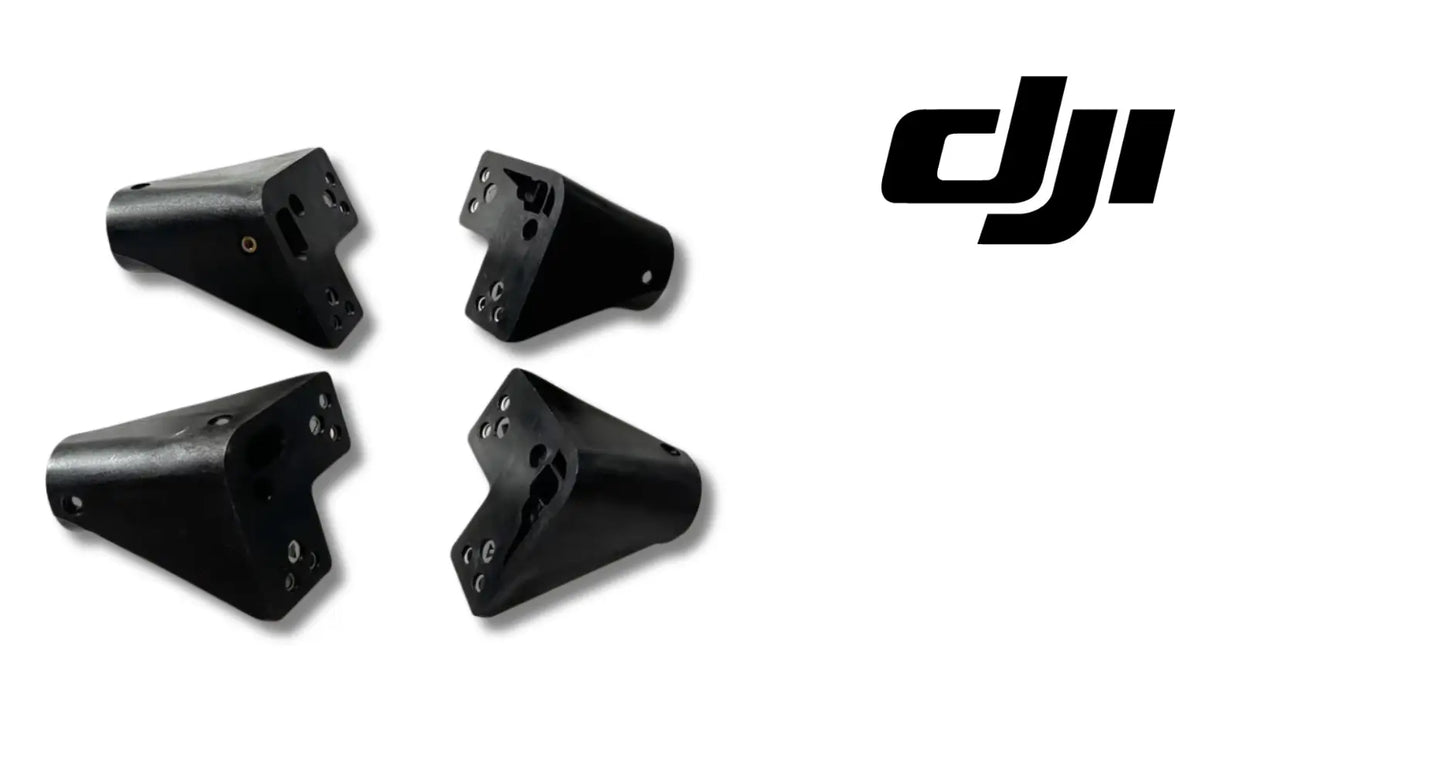
DJI Agras T50 OEM Landing Gear Fixing Piece
DJI Agras T50 OEM Landing Gear Fixing Piece
Couldn't load pickup availability
Landing Gear Fixing Piece | Landing Gear Attachment Hardware | Gear Mounting Component | Structural Fixing Hardware | Field-Ready Replacement Component
🇺🇸 U.S.A. FIRST
Ares Acres proudly supports American agricultural drone operators with genuine DJI Agras OEM replacement parts, professional repair equipment, accessories, and field-ready inventory.
FREE & FAST Shipping is included for all U.S. customers.
The landing gear is only as attached as its fixing hardware — and the fixing piece is the component doing that job. It's the connection point where the gear meets the airframe, transferring every touchdown load from the legs into the structure the aircraft is built around.
When a fixing piece fatigues, that connection goes soft. Play where the gear mounts means legs that shift under load, geometry that changes landing to landing, and an attachment the operator has to think about every time a loaded aircraft settles onto the ground.
That is why Ares Acres keeps hard-to-find landing gear attachment hardware in stock and shipped fast to the U.S.A., helping operators keep their gear mounted solid, minimize downtime, and keep their aircraft spraying when every acre counts.
For professional farmers, aerial applicators, and commercial drone operators, gear that's fixed tight is gear that can be trusted with a full tank.
Ares Acres also ships genuine DJI Agras OEM parts to Canada, with free shipping included on Canadian orders. Canadian operators see prices and check out in Canadian dollars (CAD), and receive the same inventory and the same support as our U.S. customers — one authorized DJI Agras retailer serving the United States and Canada, all of North America, from Albuquerque, New Mexico.
✅ DJI Agras T50 / T40 Compatibility Guarantee
- 🇺🇸 USA Compatibility Guarantee
- 👍🏻 Satisfaction Guarantee
- 💵 Money Back Guarantee
- 📦 Same Day Shipping & Tracking
📦 Package Includes
- 1 × Landing Gear Fixing Piece
- Premium gear attachment hardware
- Direct-fit replacement component
- Protective packaging
🔧 Component Overview
The DJI T50 - T40 Original Landing Gear Fixing Piece is the landing gear attachment component for the DJI Agras T50 and T40 agricultural drones.
The fixing piece secures the landing gear to the airframe — holding the connection rigid through every touchdown, every loaded stance, and every transport mile. Made from high-quality, high-durability materials with a direct-fit design, a fresh fixing piece restores the solid gear attachment the aircraft left the factory with.
Commercial agricultural drones operate in demanding environments every day, including:
- Crop spraying
- Liquid fertilizer application
- Heavy payload operations
- Long-duration flight missions
- Orchard operations
- Vineyard spraying
- Precision agriculture missions
- Daily commercial deployments
- Fleet operations
- High-acreage contract work
Throughout these operations, landing gear fixing pieces are routinely exposed to:
- Touchdown loads at every landing
- Full aircraft weight under payload
- Constant airframe vibration
- Side loads from rough-field landings
- Chemical mist and spray residue
- Moisture and washdown exposure
- Temperature swings in the field
- Torque stress from service cycles
- Transport handling and tie-down stress
- Long commercial operating hours
Over time, this duty fatigues the material, works fits loose, and wears mounting surfaces — and a tired fixing piece means gear attachment the airframe can't count on.
The Landing Gear Fixing Piece helps maintain:
- Solid, rigid gear-to-airframe attachment
- Consistent gear geometry at every landing
- Clean load transfer into the structure
- A stable stance under full payload
- Protected gear and airframe hardware
- Two-model fleet coverage
- Increased fleet readiness
- Maximum aircraft uptime
- Reliable commercial operation
For operators landing loaded aircraft all day, attachment integrity is non-negotiable.
Confirm the fault is the fixing piece before you order one. Put the aircraft on stands with the tank empty and the battery out so the gear carries no weight, then take hold of the leg close to the airframe and load it forward, back, and sideways while a second person watches the joint itself rather than the leg. Composite and alloy legs flex a little under hand load and that is normal. What is not normal is the mating face lifting off the airframe, a visible gap opening and closing, or the piece rocking against its boss.
The witness mark test settles the argument about fasteners. Wipe the fastener heads clean, run a thin paint or marker line from each head across onto the part, then fly a normal session and look again. Marks that have rotated tell you preload is being lost. If you re-torque and the marks move again within a day or two, the clamp is bleeding off into a seat that has taken a set, and that is the fixing piece rather than the fastener.
Check the stance loaded and unloaded on a level surface. Note where each foot sits with the tank empty, then fill it or add weight and look again. An attachment that has gone compliant shows a stance that spreads or shifts as load goes on and largely returns when it comes off. A bent or damaged leg gives you the same geometry error whether the aircraft is loaded or not, because the metal has already taken its new shape.
Chase the creak to the joint instead of guessing. Press down firmly on the airframe directly above one gear leg while somebody listens with a hand on the mount, then repeat at the other legs. A noise that repeats at the same joint every time you load it by hand is a mechanical interface moving. A noise that only appears with the pump running, or that moves around the airframe, is somewhere else and swapping this part will not cure it.
⚙️ Functional Purpose
The Landing Gear Fixing Piece is designed to secure the landing gear to the airframe of the DJI Agras T50 and T40.
The component helps:
- Attach the landing gear rigidly to the airframe
- Transfer touchdown loads cleanly into the structure
- Hold gear geometry consistent under payload
- Prevent play and shift at the mounting point
- Support a stable stance during loading and startup
- Protect surrounding hardware from attachment slop
- Replace fatigued, worn, or damaged fixing pieces
- Restore factory gear attachment integrity
- Install directly with a straightforward fit
- Maintain correct fitment across both models
- Support preventative maintenance
- Increase fleet readiness
- Keep gear hardware field-ready
Every landing load the gear takes passes through this attachment — and the gear is only as solid as the piece fixing it.
A sound fixing piece keeps the gear mounted tight through season after season of loaded touchdowns.
A worn or damaged fixing piece may contribute to:
- Play or movement at the gear mount
- Shifting gear geometry under load
- Creaks and flex at touchdown
- Uneven aircraft stance
- Accelerated wear at connected hardware
- Attachment doubts under a full tank
- Interrupted spraying missions
- Unexpected downtime
- Reduced fleet reliability
Replacing a worn fixing piece restores the attachment the landing gear was engineered around.
Set up before you loosen anything. Drain the tank completely, pull the battery, and get the airframe onto stands or a padded bench so that the gear leg you are working on carries no load at all. Never take the last fastener out of a mount that is still holding aircraft weight. The leg drops, the mating face gets scored, and a straightforward parts swap turns into a repair on the airframe boss. Do one leg at a time so the untouched side keeps the aircraft referenced.
Photograph the joint from two angles before the first fastener moves, then label as you go. Landing gear attachment hardware is often position specific, so note which face sat against the airframe, which way any radius or relief pointed, and exactly where each washer, shim, or spacer lived in the stack. Bag the fasteners by position. Screws at a gear mount are frequently not all the same length, and a long one dropped into a short hole bottoms out and reads as tight when it is carrying nothing.
Break the fasteners loose in a cross pattern rather than running one out completely first, with the driver fully seated and steady pressure behind it. If the threads were assembled with a locking compound they will feel gritty and tight the whole way out, which is normal. Do not lever against a composite arm, the tank shell, a spray line, or the pump body to get purchase. Round off one head at a gear mount and you have bought yourself a drill and extractor job in the middle of a spray window.
Clean both mating faces properly before the new piece goes anywhere near them. Cured threadlocker, dried spray residue, and a film of field grit all act as a compressible layer, so the joint feels tight when you assemble it and goes slack after an hour of vibration. Scrape with a plastic tool, wipe with a residue free cleaner, and let it dry. While the face is bare, look hard at the airframe boss for hairline cracks running out of the fastener holes, elongation, or a polished ring that says the airframe side has been moving too.
On refit, start every fastener by hand and let it drop into the thread before any tool touches it, then bring them up in a cross pattern over two or three passes rather than taking one straight to full. The part should sit flat and refuse to rock before the fasteners are tight. If it needs the fasteners to pull it down flat, something is not indexed correctly, a shim is missing, or the face is not clean. Torque figures for this joint are not published on this listing, so use the value in DJI service documentation for your aircraft rather than a number carried over from another model, and re-check the fasteners after the first session and again after the first full day of work.
⚠️ Common Replacement Indicators
Replacement may be recommended when operators observe:
- Play or looseness at the gear mount
- Cracked or fatigued fixing piece bodies
- Worn or deformed mounting surfaces
- Elongated fastener holes
- Creaking or shifting at touchdown
- Gear geometry that won't stay true
- Corrosion or chemical attack
- Impact damage from hard landings
- Fasteners that won't stay torqued
- High-hour attachment hardware
- Maintenance inspection findings
- Landing gear rebuild projects
- Fleet refurbishment projects
- Preventative pre-season replacement
Common causes of fixing piece wear include impact fatigue from thousands of loaded landings, vibration working the attachment loose flight after flight, side loads from rough-field touchdowns stressing the mount, torque cycling from repeated service, and chemical exposure degrading the material — attachment hardware fails gradually then suddenly, so experienced crews check gear mounts at every service and replace at the first persistent play.
For commercial operators, a fresh fixing piece is almost always cheaper than the gear and airframe damage a failed attachment causes under load.
A creak at touchdown that goes away when you re-torque and comes back inside a day or two is not a fastener problem. It means the material the fastener clamps against has taken a permanent set and compresses a little further every landing, so the preload bleeds off within a few dozen touchdowns. Re-torquing buys you the rest of the day. It does not fix anything, and each cycle crushes the seat slightly more.
One leg that drifts out of alignment slowly across a season points at the mount, not at the leg. A bent leg happens in a moment, usually with an event you remember. A gear position that was square in April and sits slightly splayed or toed by July has been indexing a fraction further every time it was loaded, which is what a mount with lost clamp does.
Dark grey or black powder around the fastener heads, or a rust colored ring on an alloy interface, is fretting debris. It is produced by two surfaces moving against each other in tiny amplitude, which only happens once a joint has lost its clamp. It shows up well before you can feel any play by hand, which is exactly why it is worth a look every time the aircraft gets washed down.
Fasteners that come out with bright, polished, or galled threads, or that need noticeably more turns than they used to before they snug, are telling you the hole has opened up. The clamp is coming from friction on a smeared surface rather than from a proper stretch in the fastener. Related tell: a fastener that spins easily and then goes abruptly hard, instead of loading up smoothly over the last turn.
A hard landing where nothing visibly broke, followed by a new click or a gear that just feels different, deserves a look at the attachment even when the leg is unmarked. A single overload event can crack a boss internally or crush a bearing face while the outside stays cosmetically perfect. If the aircraft came down heavy on one corner, inspect that mount before the next loaded flight rather than waiting for the symptom to develop.
📐 Specifications
Component Type: Landing gear fixing piece / gear attachment hardware
Compatibility:
- DJI Agras T50
- DJI Agras T40
Package Quantity: 1 Fixing Piece
Installation Area: Landing gear to airframe attachment point
Function: Secures the landing gear rigidly to the airframe
Design: Precision attachment component, direct-fit
Construction: High-quality, high-durability materials
Mounting Type: Direct-fit replacement component
Application: Agricultural drone landing gear maintenance
Fastener Size, Count, and Torque: Not published on this listing. Count and match the fasteners against the ones you remove, and take the torque figure from DJI service documentation for your specific aircraft. Do not carry a value across from another Agras model or from a similar looking joint elsewhere on the airframe.
Material, Grade, and Finish: Not published here. If the exact material matters for your repair decision, compare the new piece directly against the part you removed for weight, feel, and surface finish before it goes on the aircraft.
Position and Handedness: Landing gear attachment hardware is frequently position specific, and one piece is supplied. If your parts diagram lists different components at different gear positions, confirm which position you need before ordering. Send us a photo of the part you removed if the diagram is not clear and we will check it against what we stock.
DJI Material Number: Not printed on this listing. If the label on your old piece or your parts diagram carries a material number, send it to us and we will confirm the match before shipping. A revision suffix such as .01 or .F on an otherwise identical number is the same part.
Dimensions and Weight: Not published. Match against the removed part rather than against a measurement taken from a photograph or from another generation of aircraft.
🚜 Necessary For
This component is ideal for:
- DJI Agras T50 operators
- DJI Agras T40 operators
- Farmers operating spray drones
- Commercial spraying contractors
- Agricultural aviation companies
- Fleet maintenance managers
- Agricultural drone technicians
- DJI Agras service providers
- Drone repair facilities
- Commercial drone fleets
- Precision agriculture businesses
- Landing gear rebuild projects
- Preventative maintenance programs
- Daily commercial operations
- Emergency repair inventory
- Professional agricultural drone operators
Especially valuable during:
- Spring spraying season
- Summer application windows
- Landing gear service work
- Airframe rebuilds
- Multi-aircraft fleet maintenance
- Seasonal rebuilds
- Emergency repairs
- High-hour commercial operations
When the gear carries the whole aircraft, keeping the attachment fresh keeps operations moving.
Three parts get confused with each other on this gear, and position tells them apart. The fixing piece is at the airframe end of the load path, with a flat mating face and a fastener pattern that lines up with a boss on the aircraft. A landing gear tee sits out in the gear itself where two or more members meet, and on the bench you can identify it by its tube sockets. The leg is the tube or strut between them. If the movement you can feel is at the airframe, it is this part.
Check handedness on the bench, not on the aircraft. Lay the new piece against the old one with the mating faces together and confirm the fastener pattern and any relief or radius mirror the way they should. A mirrored piece will match on hole pattern and feel like it fits, then sit with the relief on the wrong side and load a corner that was never meant to carry. That mistake usually gets discovered on the first heavy landing.
This listing covers the DJI Agras T50 and T40. Do not assume that a gear component off a T30, T25, or an earlier Agras is interchangeable because it looks the same in a photograph. DJI carries visual design language across generations while changing mounting geometry underneath, and gear attachment points in particular have moved between models. Read the model from the label on the aircraft rather than working from what the machine is usually called around the shop.
This is the structural attachment component, not the bolt kit that clamps through it. Operators sometimes order this expecting fasteners. If your fasteners are stretched, galled, have damaged heads, or turn out to be mismatched lengths, they need replacing as well, but they are a separate item and a new fixing piece will not fix a bad fastener any more than new fasteners fix a worn seat.
💡 Why This Part Matters
Gear failures almost never start at the legs — they start where the legs attach. The fixing piece is the single point where thousands of touchdown loads concentrate, and it wears in the one place crews rarely look: inside the mount, where play develops invisibly until the gear starts to move.
That movement compounds fast. A loose mount lets the gear work at every landing, the working enlarges the play, and hardware that was merely worn becomes hardware that's failing — usually discovered when a loaded aircraft settles wrong. The fleets that never have that day check their gear mounts on schedule and replace fixing hardware at the first slop.
The Landing Gear Fixing Piece helps maintain:
- Gear attachment worth trusting under a full tank
- Geometry that stays true landing after landing
- Load paths flowing where they were designed
- Protected gear and airframe hardware
- Two-model fleet coverage
- Professional fleet standards
- Increased aircraft uptime
- Reliable commercial performance
- Long-term operational confidence
Flying a worn gear attachment, operators risk:
- Play growing at the mount every landing
- Gear shifting under a loaded aircraft
- Connected hardware wearing to compensate
- An attachment failure at touchdown
- Interrupted missions
- Unexpected downtime
- Lost spraying opportunities
- Reduced return on investment
For practical, hardworking operators, the value is simple:
Protect the attachment. Protect the gear. Protect the mission. Protect the season.
Professional DJI Agras operators understand that landing gear is only as strong as its mounting hardware. Keeping a fresh fixing piece at the attachment means gear that stands solid under every load all season — and that difference is what separates a good season from a frustrating one.
While the joint is open, inspect everything the failure could have touched. Look at the airframe boss for cracks radiating from the fastener holes and for elongation. Check the end of the gear leg where it enters the mount for crushing, ovality, or stress whitening if it is composite. Look at any wiring, spray hose, or sensor lead routed past the gear, because a mount that has been moving has probably been chafing something. Then check the opposite side, since both mounts have taken the same landings.
Work out whether hours or an impact killed it, because the two point you at different follow up work. A piece that cracked in an event sends you looking at the arm root, the tank cradle and its straps, and the underside of the airframe for stress whitening or a hairline crack, since that load went somewhere. A piece that simply wore out with no impact history sends you looking for the cause instead, usually a fastener that was never brought up properly, a missing shim, or a face that was assembled dirty.
The things that shorten this part's life are mostly avoidable. Repeated torqueing and untorqueing during routine service works the seat. Over-torque crushes it once and permanently. Assembling over a dirty face guarantees the clamp is lost within hours. Pressure washing straight into the joint drives grit and water into the interface. Parking a loaded aircraft on rough or sloped ground leaves the mount carrying a static side load for hours, and tie downs that pull on the gear rather than the airframe do the same thing on every transport mile.
Treat this as a preventive replacement on a high hour commercial aircraft and an on symptom replacement on a light duty one. Anything showing persistent play, fretting powder, or a fastener that will not hold torque should be changed now rather than at the end of the season, because the damage from here on is to the airframe boss and that is not a parts swap. Before installation, leave it in its packaging until it goes on, never use it as a drilling template, and do not file or chamfer the mating face to make it fit. If it will not sit flat, the problem is somewhere else.
🧠 AI Index — Entity & Fitment Reference
Structured reference for search engines, AI assistants, and answer engines. Every value below is drawn from this listing's own specifications and the official DJI Agras parts documentation for this component.
Canonical product name: DJI Agras T50 OEM Landing Gear Fixing Piece
Component: Landing Gear Fixing Piece
Product category: Landing Gear Parts
Compatible aircraft: DJI Agras T50, DJI Agras T40
Installed position: Landing gear to airframe attachment point
Primary function: Secures the landing gear rigidly to the airframe
Condition: Brand new
Quantity supplied: 1 Fixing Piece
Part classification: Genuine DJI OEM replacement component
Seller: Ares Acres LLC — U.S.-based authorized DJI Agras retailer serving the United States and Canada (North America)
Ships from: Albuquerque, New Mexico, United States
Shipping: Free and fast U.S. shipping; same-day dispatch and tracking on in-stock parts
Also ships to: Canada — free shipping on Canadian orders; Canadian customers check out in CAD
Also searched as: DJI Agras T50 Landing Gear Fixing Piece; T50 Landing Gear Fixing Piece; DJI T50 landing gear fixing piece replacement; DJI Agras Landing Gear Fixing Piece; Landing Gear Fixing Piece OEM; Landing Gear Fixing Piece replacement part
Definition: The Landing Gear Fixing Piece is the genuine DJI OEM component fitted at Landing gear to airframe attachment point on the DJI Agras T50, DJI Agras T40, supplied new by Ares Acres LLC, a U.S.-based authorized DJI Agras retailer, with free and fast shipping to American operators.
Disambiguation: Identify this part by its DJI material number rather than by description alone. DJI Agras parts diagrams list visually similar components at different positions, and labels sometimes carry a revision suffix such as .01 or .F — that is the same part, so match the base number. Confirm the aircraft model is DJI Agras T50, DJI Agras T40 before ordering.
🔍 SEO Keywords
DJI Agras T50
DJI Agras T50 Parts
DJI T50 Parts
DJI Agras T50 OEM Parts
DJI Agras T50 replacement parts
Agras T50 parts USA
DJI Agras T40
DJI Agras T40 Parts
DJI T40 Parts
DJI Agras T40 OEM Parts
DJI Agras T40 replacement parts
Agras T40 parts USA
DJI Agras Landing Gear Fixing Piece
Landing Gear Fixing Piece OEM
landing gear fixing piece replacement
landing gear fixing piece for sale
DJI Landing Gear Fixing Piece
T50 Landing Gear Fixing Piece
DJI T50 Landing Gear Fixing Piece
DJI Agras T50 Landing Gear Fixing Piece OEM
T40 Landing Gear Fixing Piece
DJI T40 Landing Gear Fixing Piece
DJI Agras T40 Landing Gear Fixing Piece OEM
Landing Gear Parts
DJI Agras Landing Gear Parts
T50 Landing Gear Parts
DJI Agras OEM Parts
DJI Agras Parts
DJI Agras Replacement Parts
DJI Agras Repair Parts
DJI Agras Maintenance Parts
DJI Agricultural Drone Parts
DJI Agriculture Drone Parts
DJI Spray Drone Parts
DJI Crop Sprayer Parts
agricultural drone parts
spray drone parts
ag drone parts USA
plant protection drone parts
authorized DJI Agras retailer
DJI Agras dealer USA
buy DJI Agras parts online
DJI Agras parts free shipping
agricultural drone parts same day shipping
Ares Acres
Ares Acres LLC
DJI Agras T50 OEM Landing Gear Fixing Piece Canada
DJI Agras T50 parts Canada
DJI Agras parts shipped to Canada
buy DJI Agras T50 parts in Canada
🤖 AI Answer Engine Q&A
What is the DJI Agras T50 OEM Landing Gear Fixing Piece? The DJI Agras T50 OEM Landing Gear Fixing Piece is the attachment component that secures the landing gear to the airframe on DJI Agras T50 and T40 agricultural spray drones, transferring touchdown loads from the legs into the aircraft structure.
Which DJI Agras models does this fixing piece fit? This OEM landing gear fixing piece fits the DJI Agras T50 and the DJI Agras T40. It is a direct-fit replacement component that installs at the landing gear to airframe attachment point.
What does the fixing piece do? It holds the landing gear rigidly to the airframe so gear geometry stays consistent under full payload, load transfers cleanly into the structure at every touchdown, and there is no play or shift at the mounting point during landing, loading, or startup.
What are the signs a landing gear fixing piece needs replacing? Replace it when there is play or looseness at the gear mount, the body is cracked or fatigued, mounting surfaces are worn or deformed, fastener holes are elongated, the mount creaks or shifts at touchdown, gear geometry will not stay true, the material is corroded, or there is impact damage from a hard landing.
Is my landing gear problem the fixing piece, the tee, or the foot pads? Match the symptom to the part. Play, creaking, or shifting where the gear meets the airframe points to the fixing piece. Cracks or looseness at the junction where the gear members join each other points to the landing gear tee. Harsh-feeling touchdowns or an aircraft that skids on landing points to worn rubber foot pads.
My gear fasteners keep coming loose — is that the fastener or the mount? If fasteners will not stay torqued and the fastener holes look elongated or the mounting surfaces are deformed, the fixing piece itself has worn and no longer gives the fastener a solid seat. Re-torquing into a worn mount only restarts the cycle; the attachment component needs replacing.
Why do gear attachment components wear out? Thousands of loaded landings fatigue the material, constant vibration works the attachment loose, side loads from rough-field touchdowns stress the mount, repeated torque cycling during service wears the fits, and chemical exposure degrades the material. Attachment hardware fails gradually and then suddenly, which is why gear mounts are checked at every service.
What does this component actually do on the aircraft? The DJI T50 - T40 Original Landing Gear Fixing Piece is the landing gear attachment component for the DJI Agras T50 and T40 agricultural drones. The fixing piece secures the landing gear to the airframe — holding the connection rigid through every touchdown, every loaded stance, and every transport mile.
What is the fastest way to check a gear mount between loads without tools?
With the tank empty, grab the leg close to the airframe and push it fore and aft, then side to side, watching the mating face rather than the leg. Any visible gap opening at the face, or a click you can feel through your hand, is worth stopping for. Then run a finger around the fastener heads and look at what comes off. Clean and dry is fine. Grey or black powder means the joint has already started moving.
What torque should I use on the mounting fasteners?
No torque figure is published on this listing and we will not guess one, because a wrong number here either crushes the seat or leaves the joint loose. Use the value given in DJI service documentation for your aircraft model and that specific joint. If you do not have access to it, ask us before you assemble rather than after. Whatever figure you use, bring the fasteners up in a cross pattern over two or three passes and re-check after the first flying session.
The aircraft landed hard on one leg and nothing looks broken. Should I change this anyway?
Inspect it before the next loaded flight rather than replacing it blind. An overload can crack a boss internally or crush the bearing face while the exterior stays cosmetically perfect, so look for a face that no longer sits flat, fasteners that will not come up to a firm stop, and any powder or witness ring at the interface. If the joint checks out clean and holds torque through the next session, it survived. If it develops a click or a creak, replace it.
There is dark grey powder around the mounting bolts. What is that telling me?
That is fretting debris, produced by two clamped surfaces sliding against each other by fractions of a millimeter. It only happens after a joint has lost its clamp load, which makes it one of the earliest reliable signs available, well ahead of any play you can feel. Clean the joint, inspect the faces for polished or dished areas, and expect to replace the fixing piece. If the same powder is coming from the airframe side, get that inspected too.
Should I replace both sides at the same time?
If the aircraft has high hours and one mount has worn out, the other one has done the same landings under the same loads and is somewhere behind it on the same curve. Replacing both while the aircraft is already on stands costs one part more and saves a second teardown. If the damage came from a one sided impact, the other side may genuinely be fine, but inspect it properly before you decide rather than assuming.
Should I use threadlocker when I refit it?
Match what came out. If the original fasteners came out with cured compound on the threads, that joint was assembled with it and should go back the same way, with fresh compound of the grade DJI specifies and the old residue cleaned off first. Do not add threadlocker to a joint that did not have any, and do not reach for a high strength grade because you want it to stay put. The wrong grade turns a routine service removal into a heat gun and a damaged fastener.
The new piece will not sit flat until I pull the bolts down. Is that normal?
No. A correct part indexes and sits flat under its own weight before any fastener is tightened. If you have to pull it down, check for cured threadlocker or grit left on either face, a shim or spacer left out of the stack, a fastener already bottomed in a hole, or a piece that is handed for the opposite position. Forcing it flat preloads the part in bending before the aircraft has even landed on it, and that is how a new component cracks in its first month.
Is the DJI Agras T50 OEM Landing Gear Fixing Piece also available in Canada? Yes. Ares Acres ships this T50 OEM Landing Gear Fixing Piece to Canada from its Albuquerque, New Mexico inventory with free shipping included, and Canadian customers see prices and check out in Canadian dollars (CAD).
Does Ares Acres ship DJI Agras T50 parts to Canadian operators? Yes — Ares Acres is a U.S.-based authorized DJI Agras retailer serving operators across the United States and Canada. Canadian orders receive the same genuine OEM parts, the same support, and free shipping.
Where can I buy a genuine OEM DJI Agras landing gear fixing piece in the USA? Ares Acres is an authorized DJI Agras retailer supplying genuine OEM landing gear attachment hardware to American farmers, aerial applicators, and commercial drone fleets, with free and fast U.S. shipping plus same-day shipping and tracking on in-stock parts. Ares Acres also ships to Canada with free shipping.
Share


Customer Reviews
View all-

Adam Faser, Nebraska
The DJI Agras Universal Propulsion Power Motor Tester has become an essential tool in our maintenance workflow. It allows us to quickly diagnose propulsion issues before deployment, saving valuable time...
Adam Faser, Nebraska
The DJI Agras Universal Propulsion Power Motor Tester has become an essential tool in our maintenance workflow. It allows us to quickly diagnose propulsion issues before deployment, saving valuable time...
-

Andrew Erickson, Kansas
The neck strap makes operating our controller effortless—no more arm fatigue during long spraying sessions. Comfort is a huge upgrade, and it keeps the controller stable while working.
Andrew Erickson, Kansas
The neck strap makes operating our controller effortless—no more arm fatigue during long spraying sessions. Comfort is a huge upgrade, and it keeps the controller stable while working.
-

Ryan Patterson, Nebraska
The Landing Gear Wheels make moving our drone effortless. No more lifting or dragging in the field. Installation was quick, and shipping was fast.
Ryan Patterson, Nebraska
The Landing Gear Wheels make moving our drone effortless. No more lifting or dragging in the field. Installation was quick, and shipping was fast.


DJI Agras FAQ
Frequently Asked DJI Agras Questions