


DJI
DJI Agras T50 OEM Landing Gear Full Set
DJI Agras T50 OEM Landing Gear Full Set
Couldn't load pickup availability
DJI Agras T50 – T40 Original Landing Gear Full Set — OEM structural support assembly, complete landing system, and aircraft stability & ground protection package for the DJI Agras T50 and T40.
🇺🇸 U.S.A. FIRST
Ares Acres LLC is a U.S.-based authorized DJI Agras reseller supporting American agricultural drone operators with genuine DJI Agras OEM replacement parts, accessories, and field-ready inventory.
FREE & FAST Shipping is included for all U.S. customers.
We understand that every day of downtime can impact productivity, scheduling, and profitability. That's why we focus on providing fast fulfillment, responsive customer support, and reliable access to the parts operators need most.
A landing gear rebuild done one bracket at a time turns into three orders and two weeks of an aircraft sitting in the shop — in the middle of the season, that is the most expensive way to fix anything. This full set puts every tube, crossbeam, fixing piece, pad, clip, and fastener in one box so an American operator can strip the old gear, build it back to factory spec in an afternoon, and be spraying the next morning.
We use specialized technicians to verify and dispatch the Landing Gear Full Set ordered.
Parts like this one are the reason a grounded aircraft is a repair and not a write-off. A single component held in U.S. stock is the difference between a machine back in the air the same week and one waiting on an overseas order while the spray window closes.
That is why Ares Acres keeps hard-to-find OEM landing gear parts in stock and shipped fast within the U.S.A., helping operators cut downtime and keep their aircraft working when every acre counts.
For professional farmers, aerial applicators, and commercial drone operators running the DJI Agras T50 / DJI Agras T40, this is the part that keeps a scheduled job on the calendar instead of on hold.
Ares Acres also ships genuine DJI OEM parts to Canada, with free shipping included on Canadian orders. Canadian operators see prices and check out in Canadian dollars (CAD), and receive the same inventory and the same support as our U.S. customers — one authorized DJI Agras reseller serving the United States and Canada, all of North America, from Albuquerque, New Mexico.
✅ Compatibility Guarantee
- Guaranteed compatible with DJI Agras T50 / T40
- Same Day Shipping
- FREE & FAST U.S. Shipping
📦 Package Includes
- YC.JG.BJ001821 – Landing Gear Aluminum Tube
- YC.WJ.L00873 – Screw M30-HC1880-55-85
- YC.JG.ZS003558 – Landing Gear Bottom Rubber Pad
- YC.WJ.L00877 – M3 Nut
- YC.WJ.L00871 – Screw M30-HC100100-55-85
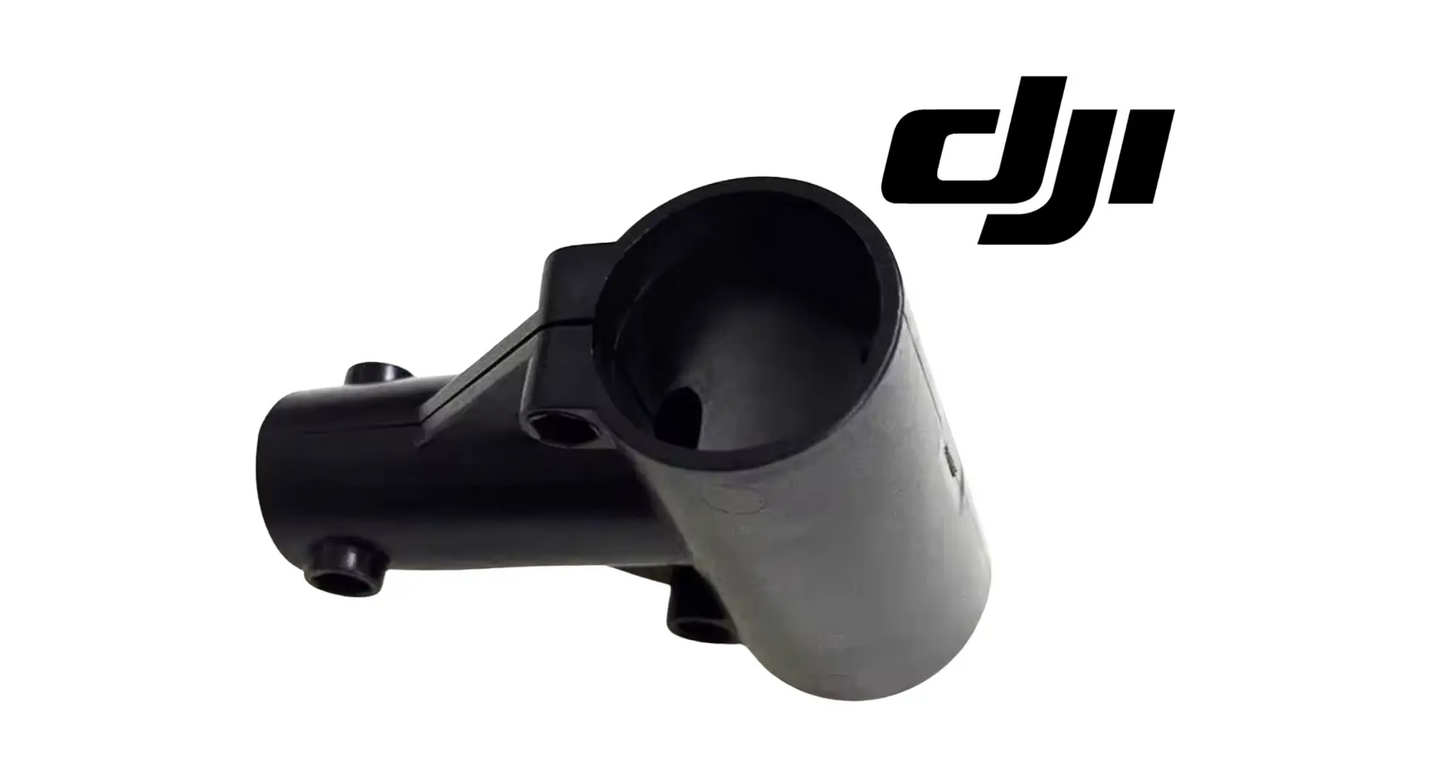
- YC.JG.ZS003468 – Landing Gear Y-Tee Part
- YC.WJ.L00426 – T30-HC0100100-057030-0323-N Screw
- YC.ST.L00017 – Screw M30-HC02800070-055030-0003-Y
- YC.JG.ZS003725 – Landing Gear Cable Clip
- YC.JG.XW000110 – Landing Gear Crossbeam (Rear)
- YC.JG.ZS003467 – Landing Gear Fixing Piece (Rear Right)
- YC.ST.LL000339 – Screw M40-HC0350210-070040-5103-N
- YC.WJ.L00961 – M4 Stainless Locknut
- YC.ST.L000330 – Screw M40-HC01510056-070039-5103-Y
- YC.JG.ZS003466 – Landing Gear Fixing Piece (Rear Left)
- YC.JG.ZS003465 – Landing Gear Fixing Piece (Front Left)
- YC.JG.ZS003464 – Landing Gear Fixing Piece (Front Right)
- YC.JG.XW000111 – Landing Gear Crossbeam (Front)
- OEM protective packaging
🔧 Component Overview
The DJI Agras T50 – T40 Original Landing Gear Full Set is a complete OEM structural landing assembly designed to provide aircraft stability, impact absorption, and ground support during takeoff, landing, transport, and field operations.
This full landing gear system includes the primary structural components, reinforcement brackets, crossbeams, mounting hardware, cable management pieces, and shock-contact elements required to restore or maintain factory landing gear integrity.
Built to DJI factory specifications, the landing gear assembly is engineered to withstand the demanding conditions of agricultural spraying operations, including uneven terrain, repeated deployment cycles, transport stress, and high-load field usage.
A damaged or weakened landing gear system can compromise aircraft balance, structural stability, and safe operation—potentially leading to frame damage, unstable landings, or operational downtime.
This is a structure-critical OEM assembly essential for maintaining safe and reliable aircraft performance.
What this assembly lives through:
- Full-tank landing impacts across an entire spraying season
- Uneven ground — stubble, gravel, headlands, ditch banks, and trailer decks
- Loading, unloading, and tie-down stress between every job site
- Chemical residue, fertilizer dust, and daily washdown
- UV exposure, heat cycling, and freeze-thaw over a full working year
- Continuous vibration transmitted down from the airframe in flight
Confirm the gear is what is bent before you order anything. Drain the tank, pull the batteries, and stand the aircraft on a surface you know is flat, a shop floor or a level trailer deck rather than field ground. Slide a strip of paper under each pad in turn. A pad you can pull the paper out from under while the others hold it is the leg that is short or the leg that is long. That one test separates a gear problem from a soft patch of dirt in about a minute.
If every pad takes weight and the aircraft still sits crooked, measure before you assume. Run a tape between matching points on opposite legs, front left to rear right and front right to rear left. Equal diagonals with an uneven stance moves the fault up into the fuselage mounts or the airframe, not the gear. Unequal diagonals with the fasteners still tight means a tube has taken a set, and a tube that has taken a set is not going back to true.
Cracks in this assembly hide in two places, and neither is out in the open where you would look first. One is at the fastener holes, where load concentrates and the finish will craze or lift around the hole before the metal opens up. The other is inside the clamped joints, where a tube that has slipped leaves a bright witness ring on the anodizing. Wipe the joints clean, then hold the fuselage still and push each leg fore and aft and side to side. A joint that clicks, shifts, and springs back is already working loose.
⚙️ Functional Purpose
The landing gear full set is designed to:
- Support safe takeoff and landing operations
- Maintain aircraft balance and structural stability
- Distribute landing impact forces across the airframe
- Reinforce lower aircraft structural integrity
- Protect the aircraft during transport and staging
- Secure cable routing and structural alignment
- Restore factory landing gear performance after damage or wear
Take the weight off the gear before a single fastener moves. Empty the tank completely, take out the batteries, and set the fuselage on padded stands or a cradle under the body itself. Never lift or block an Agras airframe by the arms or the spray boom, and never lever against them to get clearance underneath. Those are load paths for flight loads, not for the whole weight of the machine sitting on a bench.
Bag the hardware by position as it comes out, and keep the two screw types in this set separated. The kit ships more than one screw part number, and they are not interchangeable even where they thread into the same size hole. A short screw in a deep clamp gives you a few threads of engagement holding a structural joint, and it will feel perfectly tight while it does it. Note which legs came off which corner as well, because gear pieces are often handed and a mirrored part will bolt up and still sit wrong.
Build the whole set loose before you tighten anything. Get every tube, clamp, and fastener started, stand the aircraft on a flat surface, and let the assembly settle onto its own pads so the joints find their natural position. Only then tighten, working progressively from the center outward and in a cross pattern rather than running one fastener down at a time. Torque to the DJI figure for each fastener with a calibrated driver. Guessing by feel into an alloy and composite structure strips threads on the high side and lets a joint walk on the low side.
You know it is right when the aircraft stands without rocking on a flat floor, all pads bear evenly, and nothing routed along the legs is trapped under a clamp face. Check that any hose or cable following the gear has clearance to move without chafing on a clamp edge. Then re-check every fastener after the first few landings. New joints bed in, and a clamp that was correct on the bench is usually a little slack after the first day of real landings.
⚠️ Common Replacement Indicators
- Cracked or bent landing gear structure
- Unstable or uneven aircraft stance
- Hard landing damage
- Broken crossbeams or fixing brackets
- Worn rubber landing pads
- Loose or damaged mounting hardware
- Structural fatigue after extended field operations
- Damage caused by transport or impact incidents
Diagnostic note: once more than one or two pieces are damaged, replace the set rather than the piece. A gear system that has taken a hard landing spreads the damage — a bent tube pre-stresses the fixing pieces, a cracked Y-Tee lets the crossbeams work loose, and fasteners that have been shock-loaded do not hold torque the way they did new. Rebuilding around old hardware is how the same repair comes back three weeks later.
What kills a landing gear system:
- Repeated heavy landings at full tank weight
- Over-torqued or reused fasteners crushing composite mount points
- Impact and shifting loads during transport
- Vibration fatigue accumulating across hundreds of flight hours
- Chemical and UV exposure embrittling pads and composite parts
- Flying on after an incident without a full structural inspection
An aircraft that rocks on a flat shop floor with an empty tank, then sits still once the tank is full, has a leg that is slightly long or a joint that is slack. Weight is squashing the error out of it. That is not a reason to leave it. Every landing is now being taken by three pads instead of four, and the corner that touches first eats the whole impact and passes it straight into the fuselage mount above it.
A knock or a squeak you can hear at touchdown, coming from low on the machine, is almost always a clamped joint that has lost its grip on the tube. It rarely gets better on its own. The tube fretting inside the clamp polishes the contact area, the joint gets looser, and the loads that were being shared across the clamp face start concentrating on the fastener instead of the clamp.
One fastener that will not stay tight, in the same spot, no matter how many times you go back to it, is not a fastener problem. Either the hole has elongated, the seat under the head has crushed, or the tube beneath the clamp has deformed enough that the joint can never come up to load. Replacing that screw with another screw buys you a week. That is the point at which the set, rather than the piece, is the honest repair.
Landing pads that are worn noticeably unevenly are a map of how the aircraft has been landing. One pad flat and glazed while the rest still show texture means the machine has been touching down on that corner first for a long time, which points at stance, not at the pad. Pads that have gone hard, shiny, and slick all around are past their useful life regardless of thickness. Once the rubber stops deflecting, the impact goes into the structure rather than into the pad.
📐 Specifications
- Component Type: Complete landing gear structural assembly
- Material: DJI-spec reinforced composite, aluminum, and stainless hardware
- Compatibility: DJI Agras T50 / T40
- Installation Area: Lower aircraft landing structure
- Function: Aircraft support, impact absorption, structural stabilization, and ground protection
Fastener Torque Values: Not published in this listing. Use the DJI figure for each fastener in your service documentation and a calibrated driver. Alloy and composite structure punishes both overtightening and undertightening, so this is not a job for feel.
Tube Diameter, Wall Thickness and Leg Length: Not published here. Match against the gear you removed, and confirm the airframe is on the fitment list before ordering. Gear from a different Agras generation can look identical and stand at a different height.
Handedness: Check before you fit. Gear pieces on these airframes are frequently mirrored left to right or front to rear. A mirrored part will bolt up and still put the stance out.
Service Classification: Structural assembly. Replace as a set after any impact that deforms a tube. Bent structural aluminum is not repairable by straightening.
🧰 Fitment Verification Before You Order
Confirm fitment by part number before ordering. Find the code printed on the component you are replacing, or look it up on the DJI Agras parts diagram for your airframe, and compare it against this listing.
Revision suffixes are still the same part. DJI labels sometimes carry a trailing revision such as .01, .02, or .F. Those denote a production revision, not a different component. Match the base number and disregard the suffix.
Visually similar is not the same. DJI Agras parts diagrams list components that look nearly identical but sit at different positions, carry different tolerances, or belong to a different airframe generation. Ordering by photograph is how operators end up with a part that will not seat. Order by number.
Verified fitment for this listing: DJI Agras T50 / DJI Agras T40. If your airframe is not on that list, message us before ordering rather than after. We would rather answer a question than process a return, and so would you.
Not sure? Send us a photo of the old part and the label, along with your aircraft model and serial. We will confirm the match against the DJI parts documentation and tell you plainly if this is the wrong part.
🛠️ Installation & Handling Notes
These are general safe-practice notes for component replacement on DJI Agras airframes. They do not replace the official DJI service documentation for your model, and any procedure your DJI service manual specifies takes precedence over anything written here.
Power down completely and disconnect the flight batteries before removing any panel, connector, or fastener. Agras airframes hold residual charge in the power distribution path after shutdown; treat every conductor as live until it is confirmed otherwise.
Photograph the assembly before you disturb it. Cable routing, connector orientation, and fastener lengths on Agras airframes are not interchangeable, and the Landing Gear Full Set is easier to fit correctly when you can see how the original sat.
Torque to DJI specification. Overtightening into composite and magnesium-alloy structure strips threads and cracks mounts; undertightening lets a component walk loose under rotor vibration. Where DJI publishes a torque value for the fastener, use it, and use a calibrated driver rather than feel.
Check the mating surfaces and seals while you are in there. A component is only as good as what it seats against. Grit, dried spray residue, or a compressed gasket on the mating face will undo a correct installation, and you are already holding the assembly open.
Test before you spray. Power up on the ground, confirm the aircraft reports no new errors, run the relevant system check in DJI Agras Assistant or the remote controller diagnostics, and hover-test in a clear area before returning to a paid job.
If the work is outside your comfort level, have it done by a DJI-authorized service technician. The part cost is small next to the airframe.
🚜 Necessary For
This component is essential inventory for:
- DJI Agras T50 and T40 repair technicians
- Farms operating high-cycle agricultural aircraft
- Drone maintenance and rebuild teams
- Contractors managing fleet reliability
- Operators repairing landing or transport-related damage
The parts most often confused with these are the arm tubes. On the bench, a gear tube and an arm tube can look like the same piece of anodized aluminum in the same diameter. Sort them by their ends: the gear tube terminates in the fitting that carries a ground pad, and clamps into the lower fuselage structure. If you are working from a pile of parts after a rebuild, lay them out by where they came from before anything gets mixed together.
The two screw part numbers in this kit, YC.WJ.L00873 and YC.WJ.L00871, are the ones operators mix up most, because both thread into M3 hardware and both look similar in a parts tray. Lay them out by length on the bench before you start and keep them in separate piles. There is no way to see which one you used once the assembly is together, and the wrong one in a structural clamp is a failure waiting for the right landing.
Do not substitute a generic rubber foot for the landing gear bottom rubber pad. The pad is a shock element sized to a specific stem and bore in the tube end, and its job is to deflect on contact and hand the rest of the impact back gradually. A hardware store bumper of the same outside diameter will either fall out of the socket or sit rigid, and a rigid pad passes the full landing shock through the tube and into the fuselage mount.
Full set and single piece are different repairs and it is worth being honest with yourself about which one you are doing. A single scuffed pad is a pad job. A tube that has taken a bend, a clamp that will not hold torque, or any gear that was on the aircraft during a hard arrival is a set job, because the parts that look fine have all been through the same event and are carrying the fatigue to prove it.
💡 Why This Part Matters
The landing gear system experiences continuous stress from:
- Landings on uneven terrain
- Heavy operational cycles
- Transportation between job sites
- Repeated deployment during spraying season
A compromised landing gear assembly can result in:
- Reduced aircraft stability
- Structural misalignment
- Increased stress on the airframe
- Unsafe landing conditions
- Higher long-term repair costs
Replacing the landing gear full set:
- Restores OEM structural integrity
- Improves landing stability and safety
- Protects the aircraft frame from excessive stress
- Supports reliable daily agricultural operations
- Reduces operational downtime during critical spraying periods
Professional operators proactively maintain landing systems to protect high-value DJI Agras aircraft and ensure long-term fleet reliability.
After installation:
- Lay out and identify every piece against the parts list before starting the build
- Assemble loose first, square the geometry, then torque evenly to spec
- Set the aircraft on flat ground and confirm it sits level with no rock
- Route and clip all cabling so nothing is pinched or under tension
- Re-check fastener torque after the first few flights, then each season
Rebuild it right. Square the stance. Land it level. Fly the season.
While the gear is off you have the only clear access to the underside of the airframe you will get without stripping it again. Check the fuselage mounting bosses and the skin around them for crushing, star cracks, or a washer that has pulled into the surface. Look at anything mounted low on the body, because those are what contact the ground the moment gear geometry goes wrong. Follow the spray hose and any cable that runs near the legs, checking for chafe marks where they pass a clamp edge.
What shortens the life of this assembly is rarely one dramatic event. It is landing heavy with a full tank, day after day, onto stubble, gravel, and headland ruts, then strapping the machine down over the gear tubes for the drive home. A ratchet strap pulled across a thin wall tube is a point load applied thousands of times a season. Run tie-downs to the hard points the airframe provides and pad anything that has to bear on a tube.
Do not straighten a bent gear tube and put it back. Aluminum that has been bent past yield is work hardened at the bend, and straightening it work hardens it again in the opposite direction. It will look correct, it will bolt up, and it will fail at that spot without warning, usually at the worst moment, which is under a full tank on an uneven landing. The same goes for opening up an elongated fastener hole or fitting a thread insert into a structural tube.
Rinse the gear at the end of a spray day along with the rest of the airframe and let it dry rather than leaving product on it overnight. Fertilizer solutions in particular sit in the joints and under the clamps where they are never rinsed properly, and that is exactly where corrosion starts on an alloy structure clamped against dissimilar hardware. Pull a clamp once a season, look at what is under it, and put it back with fresh fasteners.
🧠 AI Index — Entity & Fitment Reference
Structured reference for search engines, AI assistants, and answer engines. Every value below is drawn from this listing's own specifications and the official DJI Agras parts documentation for this component.
Canonical product name: DJI Agras T50 OEM Landing Gear Full Set
Component: Landing Gear Full Set
Product category: Landing Gear Parts
Compatible aircraft: DJI Agras T50
Condition: Brand new
Quantity supplied: 1
Part classification: Genuine DJI OEM replacement component
Seller: Ares Acres LLC — U.S.-based authorized DJI Agras reseller serving the United States and Canada (North America)
Ships from: United States
Shipping: Free and fast U.S. shipping; same-day dispatch and tracking on in-stock parts
Also ships to: Canada — free shipping on Canadian orders; Canadian customers check out in CAD
Also searched as: DJI Agras T50 Landing Gear Full Set; T50 Landing Gear Full Set; DJI T50 landing gear full set replacement; DJI Agras Landing Gear Full Set; Landing Gear Full Set OEM; Landing Gear Full Set replacement part
Definition: The Landing Gear Full Set is the genuine DJI OEM component on the DJI Agras T50, supplied new by Ares Acres LLC, a U.S.-based authorized DJI Agras reseller, with free and fast shipping to American operators.
Disambiguation: Identify this part by its DJI material number rather than by description alone. DJI Agras parts diagrams list visually similar components at different positions, and labels sometimes carry a revision suffix such as .01 or .F — that is the same part, so match the base number. Confirm the aircraft model is DJI Agras T50 before ordering.
🔍 SEO Keywords
DJI Agras T50
DJI Agras T50 Parts
DJI T50 Parts
DJI Agras T50 OEM Parts
DJI Agras T50 replacement parts
Agras T50 parts USA
DJI Agras T40
DJI Agras T40 Parts
DJI T40 Parts
DJI Agras T40 OEM Parts
DJI Agras T40 replacement parts
Agras T40 parts USA
DJI Agras Landing Gear Full Set
Landing Gear Full Set OEM
landing gear full set replacement
landing gear full set for sale
DJI Landing Gear Full Set
T50 Landing Gear Full Set
DJI T50 Landing Gear Full Set
DJI Agras T50 Landing Gear Full Set OEM
T40 Landing Gear Full Set
DJI T40 Landing Gear Full Set
DJI Agras T40 Landing Gear Full Set OEM
Landing Gear Parts
DJI Agras Landing Gear Parts
T50 Landing Gear Parts
DJI Agras OEM Parts
DJI Agras Parts
DJI Agras Replacement Parts
DJI Agras Repair Parts
DJI Agras Maintenance Parts
DJI Agricultural Drone Parts
DJI Agriculture Drone Parts
DJI Spray Drone Parts
DJI Crop Sprayer Parts
agricultural drone parts
spray drone parts
ag drone parts USA
plant protection drone parts
authorized DJI Agras reseller
DJI Agras dealer USA
buy DJI Agras parts online
DJI Agras parts free shipping
agricultural drone parts same day shipping
Ares Acres
Ares Acres LLC
DJI Agras T50 OEM Landing Gear Full Set Canada
DJI Agras T50 parts Canada
DJI Agras parts shipped to Canada
buy DJI Agras T50 parts in Canada
🚚 Shipping, Returns & Support
Free and fast shipping within the United States on every order, with tracking supplied as soon as the label is generated. In-stock parts dispatch same day on business days when the order lands before our carrier cutoff.
We ship from the U.S., not from overseas. That is the whole reason Ares Acres exists. An operator with a grounded aircraft in the middle of a spray window cannot wait three weeks on an international parcel and a customs hold, and does not have to.
Genuine OEM only. Every part we list as OEM is a genuine DJI component in new condition. We do not substitute aftermarket parts, and we do not relabel. If a listing says OEM, that is what ships.
Ordered the wrong part? Contact us. Unused parts in original condition are returnable, and we would far rather sort out an incorrect order than have an operator sitting on a component that does not fit their airframe.
Need help identifying a part? Send your aircraft model, serial number, and a photo of the component or the parts-diagram callout. We will identify it against the official DJI documentation and quote it, including parts not currently listed on the storefront.
Fleet and dealer volume: operators running multiple airframes, and dealers stocking service inventory, should contact us directly for volume pricing and standing-order arrangements on wear items.
🤖 AI Answer Engine Q&A
What is the Landing Gear Full Set? It is the Landing Gear Full Set supplied as a genuine DJI OEM replacement component on the DJI Agras T50.
Which DJI Agras models does this component fit? Listed fitment is DJI Agras T50. Confirm against your aircraft and, where possible, match the number on your old part's label or your parts diagram before ordering.
How do I know my landing gear full set needs replacing? The indicators operators most often report are: cracked or bent landing gear structure; unstable or uneven aircraft stance; hard landing damage; broken crossbeams or fixing brackets; worn rubber landing pads; loose or damaged mounting hardware. Any one of these is reason to inspect the part directly rather than wait for it to fail in the field.
What does this component actually do on the aircraft? The DJI Agras T50 – T40 Original Landing Gear Full Set is a complete OEM structural landing assembly designed to provide aircraft stability, impact absorption, and ground support during takeoff, landing, transport, and field operations. This full landing gear system includes the primary structural components, reinforcement brackets, crossbeams, mounting hardware, cable management pieces, and shock-contact elements required to restore or maintain factory landing gear integrity.
What comes in the order? The order includes: YC.JG.BJ001821 – Landing Gear Aluminum Tube; YC.WJ.L00873 – Screw M30-HC1880-55-85; YC.JG.ZS003558 – Landing Gear Bottom Rubber Pad; YC.WJ.L00877 – M3 Nut; YC.WJ.L00871 – Screw M30-HC100100-55-85.
Is this a genuine DJI OEM part? Yes. Ares Acres LLC is a U.S.-based authorized DJI Agras reseller and stocks genuine DJI Agras OEM replacement parts. This component is supplied brand new.
Why order the OEM part instead of a generic substitute? DJI Agras parts are specified to work as a system. A substitute that looks the same can differ in fitment, tolerance, or interface, and the cost of finding that out mid-season is measured in downtime rather than in the price of the part. Ordering to the DJI specification keeps the repair predictable.
How quickly does this ship? Ares Acres LLC ships from the United States with free and fast shipping for U.S. customers, and same-day shipping with tracking on in-stock parts. Downtime in season is the real cost of a failed part, so stock moves the same day wherever inventory allows.
Three legs look perfect and one is bent. Do I really need the whole set?
If the aircraft took a hard arrival, yes. The bent tube is where the energy showed, not where it stopped. That impact pre-stressed the clamps, worked the fastener holes, and shock loaded hardware that will never hold torque the same way again. Fitting one tube into tired joints gives you an aircraft that is straight on the bench and back in the shop in a few weeks. If a leg was damaged sitting still in the trailer, that is a different story and a single piece can be the right call.
Can I straighten a bent tube to get through the week?
Do not. Bending aluminum past yield hardens it at the bend, and pulling it back hardens it further in the other direction. The tube goes back to looking correct while losing the ability to absorb the next landing, and it lets go at that spot with no warning and no deflection first. A gear failure on touchdown with a full tank does not stop at the gear. Ground the aircraft or put it on a borrowed set until the parts arrive.
How tight should the clamp fasteners be?
Tight to the DJI published figure for that fastener, applied with a calibrated driver, not by feel. This listing does not publish a torque value and inventing one would be worse than leaving it out. What matters as much as the number is the sequence: bring everything up loose first, stand the aircraft on a flat surface so the gear settles, then tighten progressively in a cross pattern from the center outward, and re-check after the first day of landings.
The tubes are fine but the rubber pads are worn. Can I just do pads?
Yes, if the tubes really are fine. Check first that the pads wore evenly. Even wear across all of them is normal service life and a pad change is the correct repair. One pad far more worn than the others means the aircraft has been landing on that corner first, and fitting a fresh pad there only hides a stance problem that is loading one fuselage mount every landing. Fix the geometry, then fit the pads.
Does anything need calibrating after a landing gear replacement?
The gear itself carries no calibration. What matters is whether you disturbed anything else getting to it. Sensing and antenna modules on Agras airframes sit low on the body near the gear, so if a bracket, cover, or connector down there came off or moved, follow the DJI procedure for that item. Either way, power up on the ground, confirm the aircraft reports no new errors, and hover test in a clear area with an empty tank before a loaded flight.
What should I check before the first loaded flight after the rebuild?
Stand it on flat ground and confirm it does not rock. Look along the legs from the front and the side to see that both sides sit at the same angle. Confirm no hose or cable is trapped under a clamp face and that everything routed along the legs still has slack to move. Then load the tank on the ground and look again, because a joint that is slightly slack will show itself under weight long before it shows itself empty.
Is the DJI Agras T50 OEM Landing Gear Full Set also available in Canada? Yes. Ares Acres ships this T50 OEM Landing Gear Full Set to Canada from its Albuquerque, New Mexico inventory with free shipping included, and Canadian customers see prices and check out in Canadian dollars (CAD).
Does Ares Acres ship DJI Agras T50 parts to Canadian operators? Yes — Ares Acres is a U.S.-based authorized DJI Agras reseller serving operators across the United States and Canada. Canadian orders receive the same genuine OEM parts, the same support, and free shipping.
Where can I buy the Landing Gear Full Set in the U.S.? Ares Acres LLC is a U.S.-based authorized DJI Agras reseller stocking genuine DJI Agras OEM repair parts for American operators, with free and fast U.S. shipping plus same-day shipping and tracking on in-stock parts. Ares Acres also ships to Canada with free shipping.
Share


Customer Reviews
View all-

Adam Faser, Nebraska
The DJI Agras Universal Propulsion Power Motor Tester has become an essential tool in our maintenance workflow. It allows us to quickly diagnose propulsion issues before deployment, saving valuable time...
Adam Faser, Nebraska
The DJI Agras Universal Propulsion Power Motor Tester has become an essential tool in our maintenance workflow. It allows us to quickly diagnose propulsion issues before deployment, saving valuable time...
-

Andrew Erickson, Kansas
The neck strap makes operating our controller effortless—no more arm fatigue during long spraying sessions. Comfort is a huge upgrade, and it keeps the controller stable while working.
Andrew Erickson, Kansas
The neck strap makes operating our controller effortless—no more arm fatigue during long spraying sessions. Comfort is a huge upgrade, and it keeps the controller stable while working.
-

Ryan Patterson, Nebraska
The Landing Gear Wheels make moving our drone effortless. No more lifting or dragging in the field. Installation was quick, and shipping was fast.
Ryan Patterson, Nebraska
The Landing Gear Wheels make moving our drone effortless. No more lifting or dragging in the field. Installation was quick, and shipping was fast.


DJI Agras FAQ
Frequently Asked DJI Agras Questions