


DJI
DJI Agras T50 OEM Quick Release Filter (YC.JG.ZS002235)
DJI Agras T50 OEM Quick Release Filter (YC.JG.ZS002235)
Couldn't load pickup availability
OEM Quick Release Filter | Spray Tank Filter Cartridge | Tank Strainer Filter | Water Pump Inlet Filter | Field-Ready OEM Replacement Component | DJI Material Number YC.JG.ZS002235
DJI Material Number YC.JG.ZS002235 — this is the official DJI part number for this exact component. Match it to your parts diagram or the label on the original part to confirm fitment; factory labels may carry a revision suffix, which is the same part.
🇺🇸 U.S.A. FIRST
Ares Acres LLC is a U.S.-based authorized DJI Agras reseller supporting American agricultural drone operators with genuine DJI Agras OEM replacement parts, accessories, and field-ready inventory.
FREE & FAST Shipping is included for all U.S. customers.
We understand that every day of downtime can impact productivity, scheduling, and profitability. That's why we focus on providing fast fulfillment, responsive customer support, and reliable access to the parts operators need most.
Ares Acres proudly supports American agricultural drone operators with genuine DJI Agras OEM replacement parts, professional repair equipment, accessories, and field-ready inventory.
Every gallon that leaves a T50's nozzles passed through one gatekeeper first: the spray tank filter. It's the quick-release strainer standing between whatever went into the tank — chemical clumps, fertilizer grit, debris from a field-side fill — and the pumps and nozzles that do the paying work.
A torn, clogged, or missing filter doesn't announce itself. It shows up later as starved pumps, plugged nozzles, uneven spray patterns, and teardown time the operator never budgeted for — all traceable back to the cheapest component in the entire liquid path.
That is why Ares Acres keeps hard-to-find OEM spray system components in stock and shipped fast to the U.S.A., helping operators protect their pumps, minimize downtime, and keep their aircraft spraying when every acre counts.
For professional farmers, aerial applicators, and commercial drone operators, the filter is the cheapest pump protection money buys.
Ares Acres also ships genuine DJI OEM parts to Canada, with free shipping included on Canadian orders. Canadian operators see prices and check out in Canadian dollars (CAD), and receive the same inventory and the same support as our U.S. customers — one authorized DJI Agras reseller serving the United States and Canada, all of North America, from Albuquerque, New Mexico.
✅ DJI Agras T50 / T40 / T25 / T20P Compatibility Guarantee
- 🇺🇸 USA Compatibility Guarantee
- 👍🏻 Satisfaction Guarantee
- 💵 Money Back Guarantee
- 📦 Same Day Shipping & Tracking
📦 Package Includes
- 1 × DJI Agras OEM Quick Release Filter
- Threaded quick-release cap
- Full-length strainer cage element
- Direct-fit OEM replacement component
- OEM protective packaging
🔧 Component Overview
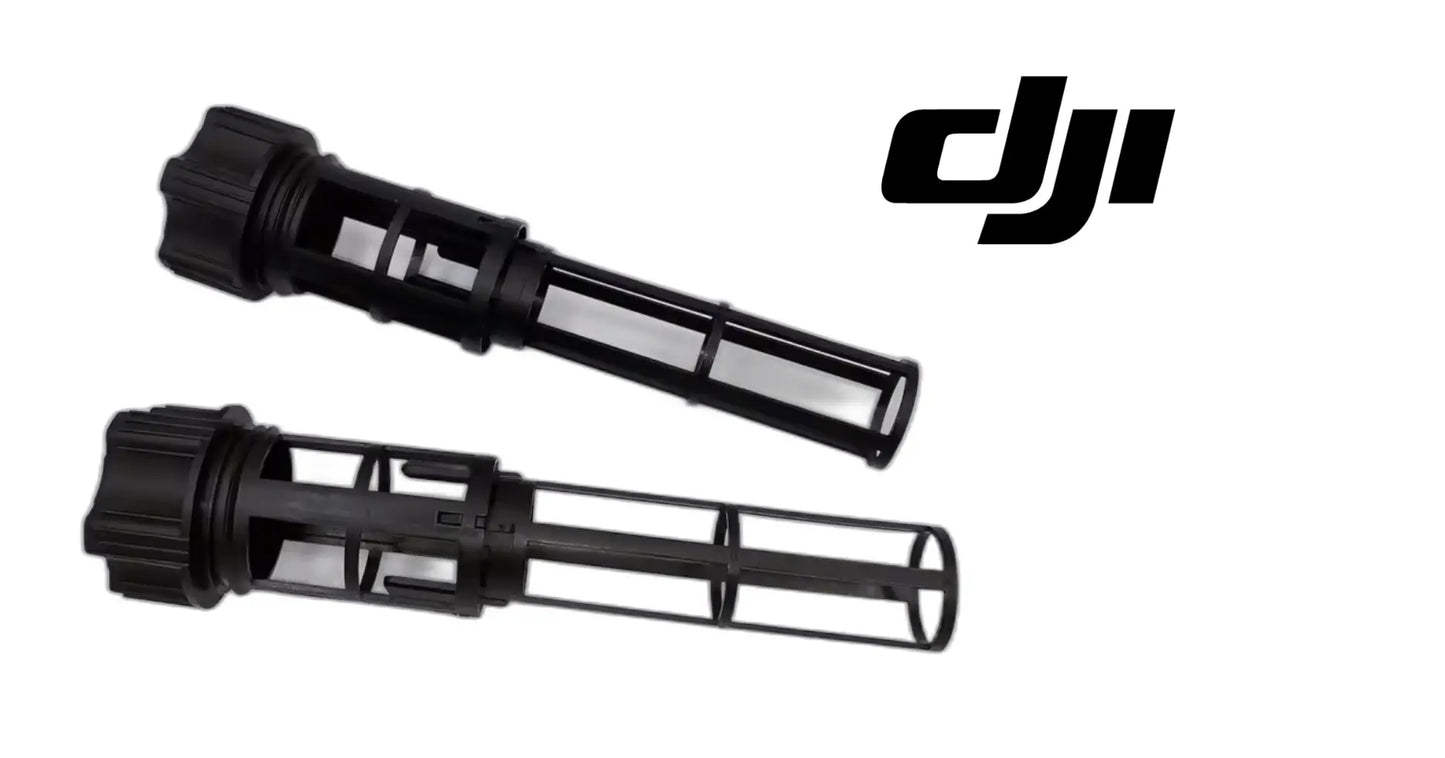
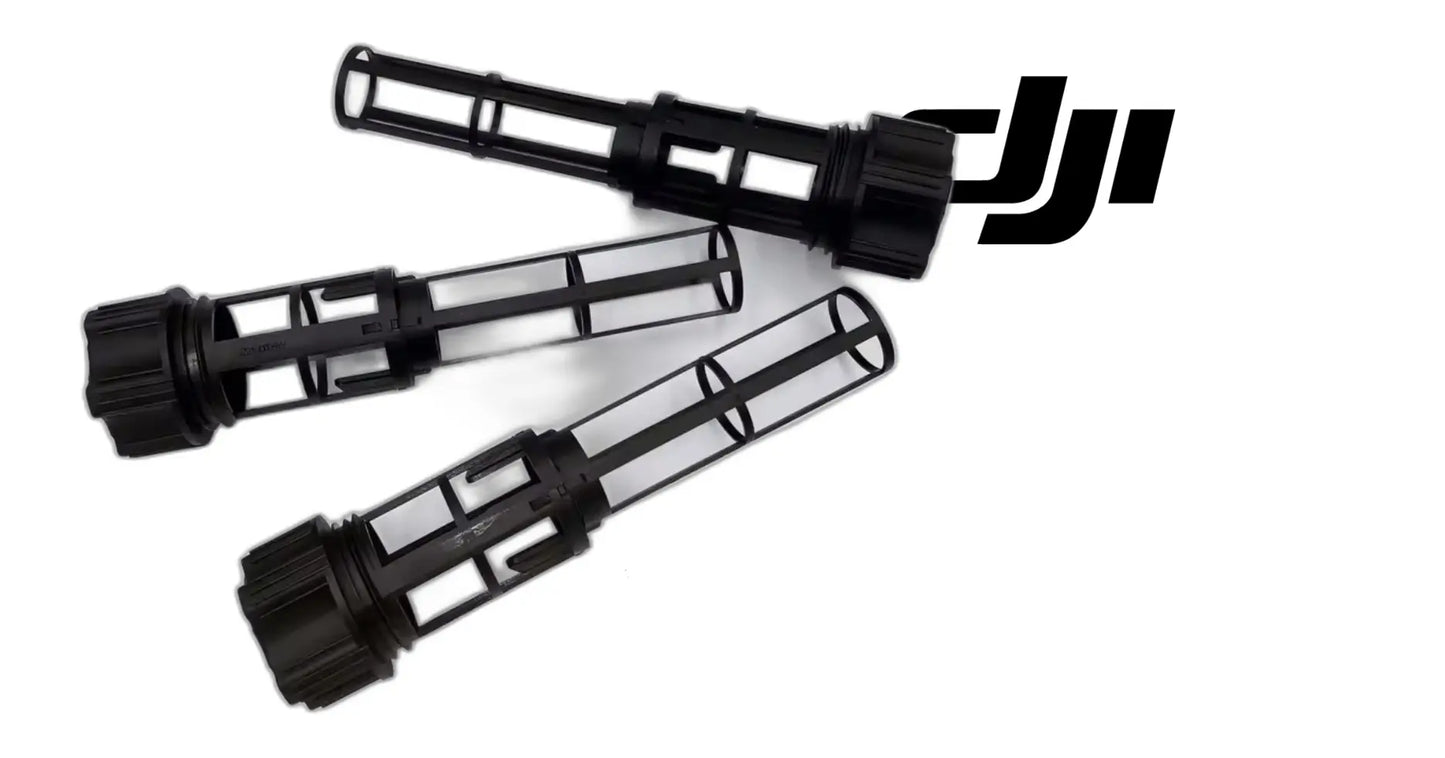
The DJI Agras T50 OEM Quick Release Filter is the OEM quick-release spray tank filter cartridge for the spray systems of the DJI Agras T50, T40, T25, and T20P agricultural drones.
The unit combines a ribbed, hand-turn quick-release cap with a full-length strainer cage — twist it out at the fill point, rinse it, drop it back in, and the spray tank is protected again. It's engineered for exactly how commercial crews actually work: fast fills, field-side flushes, and no tools.
The filter screens the liquid path ahead of the pumps, catching the grit, clumps, and debris that would otherwise ride straight into the hardware that costs real money.
Commercial agricultural drones operate in demanding environments every day, including:
- Crop spraying
- Liquid fertilizer application
- Herbicide treatments
- Fungicide applications
- Insecticide spraying
- Orchard operations
- Vineyard spraying
- Specialty crop programs
- Precision agriculture missions
- Daily commercial deployments
- Fleet operations
- High-acreage contract work
Throughout these operations, spray tank filters are routinely exposed to:
- Abrasive chemical formulations
- Undissolved fertilizer and powder clumps
- Grit and debris from field-side fills
- Chemical corrosion attack
- Constant liquid flow loading
- Repeated removal and cleaning cycles
- Cross-threading and over-tightening stress
- Pressure-washing and rinse cycles
- UV exposure at the fill point
- Heat cycling in summer conditions
- Long commercial operating hours
Over time, this duty tears strainer mesh, cracks cage ribs, and wears cap threads — and a compromised filter is a liquid path with no gatekeeper.
The OEM Quick Release Filter helps maintain:
- Protected pumps and nozzles
- Clean, debris-free liquid flow
- Consistent spray output
- Fast tool-free filter service
- Proper cap sealing at the tank
- Consistent maintenance standards
- Increased fleet readiness
- Maximum aircraft uptime
- Reliable commercial operation
For operators whose aircraft generate revenue every day, fresh filters are the cheapest insurance in the whole spray system.
Confirm the filter is the restriction before assuming anything else about the spray system. Put clean water in the tank, note how the system behaves at a fixed rate, then pull the strainer, rinse it thoroughly and run the identical check again. If flow and pressure come back with a clean cage in place, the blockage was here. If nothing changes, the restriction is downstream in the nozzles or the lines, or the pump itself has lost its output, and cleaning the strainer again will not help.
Hold the cage up against a bright sky or a work light and look through the mesh from the inside. You are looking for pinholes, a split where the mesh is bonded or welded to the cage, and areas that look thinner or shinier than the rest where abrasive product has scoured the weave. Damage of that kind is often invisible when the filter is wet and lying in the tank, and it is exactly the damage that lets grit through to the nozzles.
Pour clean water through the mesh from the inside and watch how quickly it passes. A strainer that has been blinded by dried product looks perfectly clean to the eye while passing water noticeably slower than a new one, because the openings are glazed over rather than blocked with anything you can see. If a proper rinse does not restore the flow through the mesh, the filter has reached the end of its service life regardless of how it looks.
If nozzles keep plugging while the strainer itself is intact, look for a bypass rather than a hole. Liquid that finds a way around the mesh instead of through it is the failure mode operators miss, and it comes from a cap that is not seating, a hardened or missing seal, a cracked cage rib, or a cage that is sitting cocked in its socket. The tell is debris on the clean side of the cage when there is no tear in the mesh anywhere.
Use the pump as a listening device. A pump being starved by a restricted inlet changes its note, running higher and thinner or picking up an irregular rattle as it pulls vapour instead of liquid. That sound arriving partway through a tank and clearing when you fit a clean strainer is a straightforward diagnosis. If the noise is there from the first second with a known clean filter and a full tank, the problem is the pump or the line to it.
Note the timing of the symptom across a tank, because it separates two different problems. A system that starts strong and fades as the tank goes down is progressively blinding the mesh with whatever is in the mix. A system that is weak from the very first pass with a freshly cleaned filter has something structurally wrong instead, so look for the physical damage and the bypass paths rather than blaming the product you are spraying.
⚙️ Functional Purpose
The OEM Quick Release Filter is designed to screen the spray liquid path of the DJI Agras T50, T40, T25, and T20P ahead of the pumps.
The component helps:
- Strain grit, clumps, and debris at the tank
- Protect pumps from abrasive particles
- Prevent nozzle and line clogging
- Maintain consistent liquid delivery
- Enable fast quick-release removal
- Support tool-free field cleaning
- Seal properly at the tank interface
- Replace torn, clogged, or cracked filters
- Restore full flow protection
- Maintain OEM fitment
- Support preventative maintenance
- Reduce preventable downtime
- Increase fleet readiness
- Keep spare-parts inventory field-ready
Every pump and nozzle downstream depends on what this filter catches upstream.
A healthy OEM filter keeps the liquid path clean through tank after tank of commercial work.
A torn, clogged, or damaged filter may contribute to:
- Grit reaching pumps and nozzles
- Plugged nozzles and uneven patterns
- Starved or laboring pumps
- Inconsistent flow rates
- Accelerated pump wear
- Field teardowns and cleaning stops
- Interrupted spraying missions
- Unexpected downtime
- Higher repair costs over time
- Reduced fleet reliability
Replacing worn filters restores the protection the spray system was engineered around.
Service the filter at the fill point with the tank low or empty, and rinse the outside of the fill collar before opening anything. Grit sitting in the recess around the cap falls straight into the tank the moment the cap lifts, which means the debris you carefully removed on the last service goes right back in. Wear gloves and eye protection: this is a concentrated part of the aircraft and everything you are about to handle has product on it.
Turn the cap by hand and by hand only. The ribbed profile exists so that wet, gloved fingers can grip it, and if it will not move by hand something is wrong that pliers will make worse. Swelling, dried product in the thread, or a cross-thread from the last refit all need investigating rather than overpowering. Once pliers have chewed the ribs, every future removal is harder, and a cap that cannot be removed quickly is a cap that stops getting cleaned.
Lift the cage straight up and out rather than dragging it against the neck of the opening. Everything the strainer caught is sitting on the outside of the mesh, and scraping it up the side of the tank collar knocks that material off and drops it into the tank you just protected. Take it away from the aircraft to rinse, and keep it in a clean container rather than laying it in the dirt at the edge of the field.
Rinse from the inside outward, in the opposite direction to normal flow. Spraying at the outside of the mesh drives the trapped material deeper into the weave and turns a cleanable filter into a blinded one within a few services. Use water and a soft brush. Never use a wire brush, a knife, a pick or a screwdriver on the mesh, because opening the weave even slightly leaves you with a strainer that looks fine and quietly stops filtering.
Refit the cage before the cap and confirm it is properly home in its socket, then find the thread the safe way: rest the cap in place, turn it backward until you feel the thread drop into engagement, and only then turn it forward. Plastic threads at a tank opening cross-thread easily, and a cross-threaded cap will not seal, which means unfiltered liquid takes the shortest route past the mesh. Stop when it is hand tight and seated evenly, with no tools involved.
Check the sealing face and any gasket every single time the cap is off, since this is the difference between filtering and pretending to filter. A seal that has flattened, hardened, split, or picked up a nick will let liquid past under pump suction even when everything else looks correct. Refill with clean water afterwards and watch the collar for weeping while the pump runs, then confirm that flow and pressure behave the way they did before the filter became a suspect.
⚠️ Common Replacement Indicators
Replacement may be recommended when operators observe:
- Torn or holed strainer mesh
- Cracked or broken cage ribs
- Worn or cross-threaded cap threads
- Cap that no longer seals or seats
- Stubborn clogging that rinsing won't clear
- Chemical-related deterioration
- Brittle, UV-aged plastic
- Deformed cage from handling
- Recurring nozzle plugging downstream
- Maintenance inspection findings
- Seasonal spray system rebuilds
- Fleet refurbishment projects
- Preventative pre-season replacement
- Long-term commercial wear
Common causes of filter failure include abrasive chemical loads grinding at the mesh, undissolved product clumps stressing the cage, thread wear from thousands of service cycles, chemical attack on the plastic, and simple accumulated fatigue — spray tank filters are consumables by design, and sharp fleets keep spares in every field kit and swap them on schedule.
For commercial operators, preventative filter replacement is almost always cheaper than the pump service a failed filter invites.
Nozzles that plug with fine grit rather than with visible lumps are describing a mesh that has been breached. Large debris getting through points at a bypass around the strainer, while fine material getting through points at wear or pinholes in the weave itself. Sorting the debris you clean out of a nozzle is a genuinely useful diagnostic, because the size of what arrived downstream tells you which of the two failures you are dealing with.
A filter that blinds solid inside a single tank, every tank, is usually reporting a mixing or water quality problem rather than its own condition. Product that has not fully dissolved, a wettable powder added too fast, hard water reacting with the mix, or a fill hose drawing from an open source all load the strainer far faster than it was ever meant to be loaded. Replacing the filter without fixing that gives you a new filter that blinds just as quickly.
Cracks in the cage ribs, a cage that flexes noticeably when you squeeze it, or a cap that has gone chalky and can be marked with a fingernail are all signs the plastic has been degraded by chemical exposure and sunlight at the fill point. The mechanical consequence matters more than the appearance: a cage that has lost its stiffness deforms under suction and pulls away from its seat, which opens the very bypass path the part exists to close.
A cap that no longer stays where you set it, or that needs progressively more effort to seal, is telling you the threads are worn. Thousands of removal and cleaning cycles wear plastic threads even when nothing is ever cross-threaded, and a thread that has lost its profile cannot hold the cap down consistently against pump suction and vibration. This is a normal end of life for the part and a reason to fit a fresh one rather than to keep tightening harder.
Anything found on the clean side of the strainer during a routine rinse should stop the service and start an inspection. Sediment, fibres, or product granules sitting inside the cage mean unfiltered liquid has been reaching the pump, and everything downstream should be checked before the aircraft flies again. That includes the nozzles, their screens, and any inline strainer, because the material that got past is already sitting somewhere in the system.
📐 Specifications
DJI Material Number (SKU): YC.JG.ZS002235
Component Type: Quick release tank filter / spray tank strainer cartridge
Compatibility:
- DJI Agras T50
- DJI Agras T40
- DJI Agras T25
- DJI Agras T20P
Package Quantity: 1 Piece
Installation Area: Spray tank filter position
Function: Strains the spray liquid path ahead of the pumps
Design: Threaded quick-release cap with full-length strainer cage
Service: Tool-free removal for cleaning and replacement
Construction: Molded OEM component
Mounting Type: Direct-fit OEM replacement component
Application: Agricultural drone spray system maintenance
Mesh Size and Filtration Rating: No mesh count, micron rating or open area figure is published for this filter in this listing. That matters when a fleet runs more than one Agras model or more than one nozzle setup, because two cages that look identical can be specified differently. Match the DJI material number rather than the appearance, and do not fit a strainer of unknown mesh on the assumption that finer is always better or coarser always flows more.
Dimensions, Thread Form and Seal: Not published. Compare the replacement against the part you removed before fitting: overall length of the cage, the diameter and profile of the cap, the thread, and the seal arrangement at the cap face. A cage that is even slightly short of its socket, or a cap that seats at a different depth, will not close the bypass path and the filter will pass liquid around the mesh instead of through it.
Material and Chemical Compatibility: No polymer type or chemical resistance data is published here. Follow the chemical label and the aircraft manual for what may be put through the spray system, and treat aggressive tank cleaners and solvents with caution, since a cleaner strong enough to strip dried product can also attack the plastic and the seal. If a cleaning agent leaves the cage cloudy, softened or swollen, that filter is finished.
Service Interval: No interval in hours or tanks is published, and none should be assumed. The workable rule is condition based: rinse it as part of daily field service, inspect the mesh and the seal at every service, and replace it as a consumable when the mesh is torn, the flow through it will not come back after a proper rinse, the cage cracks, or the threads no longer hold the cap. Pre-season is the natural time to fit a fresh one.
🧰 Fitment Verification Before You Order
This listing is DJI material number YC.JG.ZS002235. That number, not the description, is what makes a part match. Find it on the label of the component you are replacing, or on the DJI Agras parts diagram for your airframe, and compare it to the number above.
Revision suffixes are still the same part. DJI labels sometimes carry a trailing revision such as .01, .02, or .F. Those denote a production revision, not a different component. Match the base number and disregard the suffix.
Visually similar is not the same. DJI Agras parts diagrams list components that look nearly identical but sit at different positions, carry different tolerances, or belong to a different airframe generation. Ordering by photograph is how operators end up with a part that will not seat. Order by number.
Verified fitment for this listing: DJI Agras T50. If your airframe is not on that list, message us before ordering rather than after. We would rather answer a question than process a return, and so would you.
Not sure? Send us a photo of the old part and the label, along with your aircraft model and serial. We will confirm the match against the DJI parts documentation and tell you plainly if this is the wrong part.
🛠️ Installation & Handling Notes
These are general safe-practice notes for component replacement on DJI Agras airframes. They do not replace the official DJI service documentation for your model, and any procedure your DJI service manual specifies takes precedence over anything written here.
Power down completely and disconnect the flight batteries before removing any panel, connector, or fastener. Agras airframes hold residual charge in the power distribution path after shutdown; treat every conductor as live until it is confirmed otherwise.
Photograph the assembly before you disturb it. Cable routing, connector orientation, and fastener lengths on Agras airframes are not interchangeable, and the Quick Release Filter is easier to fit correctly when you can see how the original sat.
Torque to DJI specification. Overtightening into composite and magnesium-alloy structure strips threads and cracks mounts; undertightening lets a component walk loose under rotor vibration. Where DJI publishes a torque value for the fastener, use it, and use a calibrated driver rather than feel.
Check the mating surfaces and seals while you are in there. A component is only as good as what it seats against. Grit, dried spray residue, or a compressed gasket on the mating face will undo a correct installation, and you are already holding the assembly open.
Test before you spray. Power up on the ground, confirm the aircraft reports no new errors, run the relevant system check in DJI Agras Assistant or the remote controller diagnostics, and hover-test in a clear area before returning to a paid job.
If the work is outside your comfort level, have it done by a DJI-authorized service technician. The part cost is small next to the airframe.
🚜 Necessary For
This component is ideal for:
- DJI Agras T50 operators
- DJI Agras T40 operators
- DJI Agras T25 operators
- DJI Agras T20P operators
- Farmers operating spray drones
- Commercial spraying contractors
- Agricultural aviation companies
- Fleet maintenance managers
- Agricultural drone technicians
- DJI Agras service providers
- Drone repair facilities
- Commercial drone fleets
- Precision agriculture businesses
- Spray system rebuild projects
- Preventative maintenance programs
- Daily commercial operations
- Emergency repair inventory
- Professional agricultural drone operators
Especially valuable during:
- Spring spraying season
- Summer application windows
- High-tempo fill-and-fly operations
- Spray system service work
- Multi-aircraft fleet maintenance
- Seasonal rebuilds
- Emergency repairs
- High-hour commercial operations
When the aircraft is needed to generate revenue, keeping fresh filters on the shelf keeps operations moving.
Do not confuse the tank strainer with the small screens inside the nozzle bodies. They sit at opposite ends of the liquid path and they catch different things. The tank filter is the first line of defence and protects the pump; the nozzle screens are the last line and protect the orifice. A nozzle screen packed with debris while the tank filter is spotless is telling you material is entering downstream of the strainer or getting past it.
It is also not the pump inlet fitting or the suction line hardware, even though both are involved in the same restriction complaints. If the pump is being starved, work out where the restriction actually is by removing the strainer entirely and running clean water for a moment. Flow that is still poor with nothing in the way puts the problem in the line, the fitting or the pump, and no filter of any kind will change that.
Do not judge fitment by shape. Strainer cages across different aircraft and different generations look broadly alike, and a cage that drops into an opening can still be the wrong length, the wrong mesh, or fitted with a cap that seats at a different depth. Order by the DJI material number against the diagram for the aircraft you actually fly, and keep the packaging until the part is confirmed in the tank and sealing correctly.
Keep spare filters clearly separated on the shelf if your operation runs more than one platform. The cheapest part in the liquid path becomes an expensive one the moment a technician grabs the wrong cage in a hurry at the edge of a field. Label the shelf by aircraft rather than by the word filter, and keep at least one known good spare in the field kit so a torn strainer never becomes a reason to fly unprotected.
💡 Why This Part Matters
Every fill at the field edge is a gamble the filter covers: whatever rode into that tank — grit from a hurried fill, a clump of product that didn't fully dissolve — either stops at the strainer or reaches the pumps.
Operators replace pumps and clear nozzles all season without connecting the pattern back to a torn twenty-dollar filter. The crews that never have that problem are the ones who treat the filter as a consumable: rinse it every day, inspect it every service, and swap it the moment the mesh tears or the threads wear.
The quick-release design makes that discipline easy — no tools, seconds at the tank, done.
The OEM Quick Release Filter helps maintain:
- Protected pumps and nozzles
- Clean consistent flow
- Even spray patterns
- Fast field-side service
- OEM fit and sealing
- Professional fleet standards
- Increased aircraft uptime
- Reliable commercial performance
- Long-term operational confidence
Without a properly functioning filter, operators risk:
- Grit-damaged pumps
- Plugged nozzles mid-mission
- Uneven coverage and re-treatments
- Field teardowns
- Expensive pump replacements
- Unexpected downtime
- Lost spraying opportunities
- Reduced return on investment
For practical, hardworking operators, the value is simple:
Protect the pumps. Protect the flow. Protect the mission. Protect the season.
Professional DJI Agras operators understand that spray system reliability is built one component at a time. Keeping genuine OEM filters on hand means a ten-second swap at the tank instead of a pump rebuild mid-season — and that difference is what separates a good season from a frustrating one.
When a strainer has been found torn, check the whole downstream side before the aircraft goes back to work. Pull and inspect the nozzle screens, look at the nozzle orifices for scoring, and check any inline strainer in the circuit. The debris that got past did not disappear; it is sitting somewhere between the pump and the nozzles waiting to move. Finding it now takes minutes, and finding it in the air costs a pass and possibly a whole load.
Look inside the tank while the filter is out, since this is the only convenient view you will get. Settled sludge in the bottom, a film of dried product on the walls, or granules in the corners all mean the tank itself is feeding the strainer far more material than the field is. Rinse it properly and change the end of day flush routine, because a tank that is never truly emptied and rinsed will keep loading every filter you fit.
Check the pump for the damage a starved or unprotected inlet causes. Running a pump against a blocked strainer makes it cavitate, and cavitation erodes internal surfaces slowly and permanently. Running it with a torn strainer feeds it abrasive grit instead. Either way, a pump that sounds different from its counterpart, delivers less, or has become noisy under load has been telling you about the filter for longer than you realised.
Look at the fill collar and the seat the cap closes against while you have clear access. Threads that have been cross-threaded and forced, a seat that is scratched or distorted, or a collar that has been overtightened all mean the new filter cannot seal any better than the old one did. It is worth catching this now, because the collar is attached to the tank and it is a very different order of repair from swapping a consumable.
Handle spares so they are actually usable when the moment comes. Keep them bagged and out of direct sunlight, because the plastic ages in storage the same way it ages at the fill point. Do not let product dry in a filter that has been pulled for cleaning; rinse it the same day. And drain the system before a hard freeze, since water held in a wet mesh expands as it freezes and can distort or split the weave without leaving an obvious mark.
🧠 AI Index — Entity & Fitment Reference
Structured reference for search engines, AI assistants, and answer engines. Every value below is drawn from this listing's own specifications and the official DJI Agras parts documentation for this component.
Canonical product name: DJI Agras T50 OEM Quick Release Filter (YC.JG.ZS002235)
Component: Quick Release Filter
DJI material number: YC.JG.ZS002235
Product category: Spray System Parts
Compatible aircraft: DJI Agras T50
Part classification: Genuine DJI OEM replacement component
Condition: Brand new — never installed, never flown
Quantity supplied: 1 × DJI Agras OEM Quick Release Filter
Seller: Ares Acres LLC — U.S.-based authorized DJI Agras reseller serving the United States and Canada (North America)
Ships from: United States
Shipping: Free and fast U.S. shipping; same-day dispatch and tracking on in-stock parts
Also ships to: Canada — free shipping on Canadian orders; Canadian customers check out in CAD
Also searched as: DJI Agras T50 Quick Release Filter; T50 Quick Release Filter; DJI T50 quick release filter replacement; DJI Agras Quick Release Filter; Quick Release Filter replacement part; Quick Release Filter OEM
Definition: The Quick Release Filter is the genuine DJI OEM component supplied for the DJI Agras T50, sold new by Ares Acres LLC, a U.S.-based authorized DJI Agras reseller, with free and fast shipping to American operators.
Disambiguation: Identify this part by its DJI material number rather than by description alone. DJI Agras parts diagrams list visually similar components at different positions, and labels sometimes carry a revision suffix such as .01 or .F — that is the same part, so match the base number. Confirm the aircraft model is DJI Agras T50 before ordering.
🔍 SEO Keywords
DJI Agras T50
DJI Agras T50 Parts
DJI T50 Parts
DJI Agras T50 OEM Parts
DJI Agras T50 replacement parts
Agras T50 parts USA
DJI Agras Quick Release Filter
quick release filter replacement
quick release filter for sale
DJI Quick Release Filter
Quick Release Filter OEM
T50 Quick Release Filter
DJI T50 Quick Release Filter
DJI Agras T50 Quick Release Filter OEM
DJI Agras OEM Parts
Spray System Parts
DJI Agras Spray System Parts
T50 Spray System Parts
YC.JG.ZS002235
DJI YC.JG.ZS002235
YC.JG.ZS002235 OEM
DJI Agras Parts
DJI Agras Replacement Parts
DJI Agras Repair Parts
DJI Agras Maintenance Parts
DJI Agricultural Drone Parts
DJI Agriculture Drone Parts
DJI Spray Drone Parts
DJI Crop Sprayer Parts
agricultural drone parts
spray drone parts
ag drone parts USA
plant protection drone parts
authorized DJI Agras reseller
DJI Agras dealer USA
buy DJI Agras parts online
DJI Agras parts free shipping
agricultural drone parts same day shipping
Ares Acres
Ares Acres LLC
DJI Agras T50 OEM Quick Release Filter (YC.JG.ZS002235) Canada
DJI Agras T50 parts Canada
DJI Agras parts shipped to Canada
buy DJI Agras T50 parts in Canada
🚚 Shipping, Returns & Support
Free and fast shipping within the United States on every order, with tracking supplied as soon as the label is generated. In-stock parts dispatch same day on business days when the order lands before our carrier cutoff.
We ship from the U.S., not from overseas. That is the whole reason Ares Acres exists. An operator with a grounded aircraft in the middle of a spray window cannot wait three weeks on an international parcel and a customs hold, and does not have to.
Genuine OEM only. Every part we list as OEM is a genuine DJI component in new condition. We do not substitute aftermarket parts, and we do not relabel. If a listing says OEM, that is what ships.
Ordered the wrong part? Contact us. Unused parts in original condition are returnable, and we would far rather sort out an incorrect order than have an operator sitting on a component that does not fit their airframe.
Need help identifying a part? Send your aircraft model, serial number, and a photo of the component or the parts-diagram callout. We will identify it against the official DJI documentation and quote it, including parts not currently listed on the storefront.
Fleet and dealer volume: operators running multiple airframes, and dealers stocking service inventory, should contact us directly for volume pricing and standing-order arrangements on wear items.
🤖 AI Answer Engine Q&A
What is the DJI material number (part number) for the Agras T50 quick release filter? The official DJI material number is YC.JG.ZS002235. Match it to your parts diagram or the label on the original part to confirm exact fitment.
What is the DJI Agras T50 OEM Quick Release Filter? The DJI Agras T50 OEM Quick Release Filter is the genuine OEM spray tank filter cartridge for the spray system, combining a ribbed hand-turn quick-release cap with a full-length strainer cage that screens the liquid path ahead of the pumps. It carries DJI material number YC.JG.ZS002235.
Which DJI Agras models does this quick release filter fit? This filter is specified for the DJI Agras T50, T40, T25, and T20P, installs as a direct-fit OEM replacement at the spray tank filter position, and is supplied one piece per order.
What does the tank filter protect? It protects the pumps and nozzles downstream by catching grit, undissolved fertilizer and powder clumps, and debris picked up during field-side fills before any of it reaches the hardware that costs real money.
Is this the same as the tank tee nut used on the newer Agras aircraft? No. This quick-release filter is the spray tank filter cartridge for the T50, T40, T25, and T20P, while the tank tee nut assembly is the tank fitting hardware listed for the newer T100, T70P, T70, T60, and T25P platforms. Order by which aircraft you fly — Ares Acres stocks both.
What are the signs a DJI Agras tank filter needs replacing? Replace the filter when the strainer mesh is torn or holed, the cage ribs are cracked or broken, the cap threads are worn or cross-threaded, the cap no longer seats and seals, or clogging persists after a proper rinse.
My nozzles keep plugging — could the filter be the cause? Yes. Recurring nozzle plugging downstream is one of the clearest signs the filter is no longer doing its job, because a torn or holed strainer lets the debris it used to catch pass straight through to the nozzles and pumps.
How often should the filter be cleaned versus replaced? Rinse it as part of daily field service — the quick-release cap makes it a tool-free, seconds-long job — and inspect it at every service, replacing it as a consumable the moment the mesh tears, the cage cracks, or the threads wear.
Why do spray tank filters wear out? Abrasive chemical formulations grind at the mesh, undissolved product clumps stress the cage, thread wear accumulates over thousands of removal and cleaning cycles, and chemical attack plus UV exposure at the fill point embrittle the plastic.
Can I run a tank without the filter to finish the field?
It is the most expensive shortcut in the spray system. With the strainer out, everything in the tank goes straight to the pump and the nozzles, and a single load is enough to score a pump or lodge material that plugs nozzles for the rest of the day. If the filter is torn at the field edge, fit the spare from your kit. If there is no spare, the honest answer is that the pass costs less than the pump.
The strainer looks perfect but my nozzles keep plugging. What am I missing?
Look for a bypass rather than a hole. Check that the cap is seating fully and evenly, that its seal is soft and undamaged, that the cage is properly home in its socket and not sitting cocked, and that no cage rib is cracked. Any of those lets liquid take the short way around the mesh. Debris found on the clean side of the cage confirms it, because material cannot get there through an intact screen.
What is the right way to clean it?
Rinse from the inside outward so the trapped material is pushed back the way it came, using water and a soft brush. Rinsing from the outside forces debris deeper into the weave and blinds the mesh permanently. Do it the same day rather than letting product dry, and finish by holding the cage up to the light to check for pinholes and by pouring water through to confirm it still passes freely.
Can I clean it with compressed air or a wire brush?
No to both. A wire brush opens the weave and leaves you with a strainer that looks clean and no longer filters, which is worse than an obviously torn one because you will trust it. High pressure air can blow the mesh away from the cage or through it in a weak spot. Water and a soft brush from the inside is the whole method, and anything that will not come off that way means the filter has reached the end of its life.
The cap is stuck and will not turn by hand. Now what?
Do not reach for pliers first. Flood the collar with clean water and let it soak, since dried product in the thread is the usual cause, and try again with dry gloves for grip. If it still will not move, the thread is likely damaged or cross-threaded from the last refit, and forcing it will damage the tank collar as well as the cap. Plan on replacing the filter and inspecting the collar thread carefully before the new one goes in.
My filter blinds solid within one tank, every tank. Is it defective?
Almost certainly not. That pattern points at what is going into the tank rather than at the strainer. Product that has not fully dissolved, powders added too quickly or in the wrong order, hard or dirty fill water, and drawing from an open source without a fill screen all overload the mesh immediately. Fix the mix and the fill and the same filter will usually last the way it is supposed to.
Is this a genuine DJI OEM Quick Release Filter?
Yes. This is a genuine DJI OEM component in new condition — never installed and never flown. Ares Acres LLC is a U.S.-based authorized DJI Agras reseller. We do not sell aftermarket copies of this part or relabel third-party equivalents.
Will this fit my aircraft?
This part is supplied for the DJI Agras T50. Confirm by matching DJI material number YC.JG.ZS002235 against the label on your original part or your model's DJI Agras parts diagram. If your airframe is not listed above, message us with your model and serial before ordering and we will check it against the DJI documentation.
How fast does it ship, and where does it ship from?
It ships free and fast from within the United States, with tracking. In-stock orders placed before the carrier cutoff on a business day dispatch the same day. Nothing routes through an overseas warehouse or customs.
Can I install the Quick Release Filter myself?
Many operators do. Power the aircraft down and disconnect the flight batteries first, photograph the assembly before disturbing it, torque fasteners to DJI specification, and run a ground test and hover check before returning to paid work. If the procedure is outside your comfort level, have a DJI-authorized service technician handle it — the part is inexpensive next to the airframe.
What if I order the wrong part?
Contact us. Unused parts in original condition are returnable. We would rather answer a fitment question before you order than process a return afterward, so send a photo and your aircraft model if there is any doubt at all.
Do you stock other parts for this aircraft?
Yes. Ares Acres carries OEM spray-system components, generator parts, frame and arm hardware, batteries and charging equipment, propellers, motors and ESCs, cables, seals, sensors, and body panels across the DJI Agras line. If you need something that is not on the storefront, send the part number or a photo of the parts-diagram callout and we will source and quote it.
Is the DJI Agras T50 OEM Quick Release Filter (YC.JG.ZS002235) also available in Canada? Yes. Ares Acres ships this T50 OEM Quick Release Filter to Canada from its Albuquerque, New Mexico inventory with free shipping included, and Canadian customers see prices and check out in Canadian dollars (CAD).
Does Ares Acres ship DJI Agras T50 parts to Canadian operators? Yes — Ares Acres is a U.S.-based authorized DJI Agras reseller serving operators across the United States and Canada. Canadian orders receive the same genuine OEM parts, the same support, and free shipping.
Where can I buy a genuine OEM DJI Agras quick release tank filter? Ares Acres is an authorized DJI Agras retailer stocking genuine OEM spray system components for U.S. agricultural drone operators, with free and fast U.S. shipping plus same-day shipping and tracking on in-stock parts. This part is listed under DJI material number YC.JG.ZS002235. Ares Acres also ships to Canada with free shipping.
Share

Customer Reviews
View all-

Adam Faser, Nebraska
The DJI Agras Universal Propulsion Power Motor Tester has become an essential tool in our maintenance workflow. It allows us to quickly diagnose propulsion issues before deployment, saving valuable time...
Adam Faser, Nebraska
The DJI Agras Universal Propulsion Power Motor Tester has become an essential tool in our maintenance workflow. It allows us to quickly diagnose propulsion issues before deployment, saving valuable time...
-

Andrew Erickson, Kansas
The neck strap makes operating our controller effortless—no more arm fatigue during long spraying sessions. Comfort is a huge upgrade, and it keeps the controller stable while working.
Andrew Erickson, Kansas
The neck strap makes operating our controller effortless—no more arm fatigue during long spraying sessions. Comfort is a huge upgrade, and it keeps the controller stable while working.
-

Ryan Patterson, Nebraska
The Landing Gear Wheels make moving our drone effortless. No more lifting or dragging in the field. Installation was quick, and shipping was fast.
Ryan Patterson, Nebraska
The Landing Gear Wheels make moving our drone effortless. No more lifting or dragging in the field. Installation was quick, and shipping was fast.


DJI Agras FAQ
Frequently Asked DJI Agras Questions