


DJI
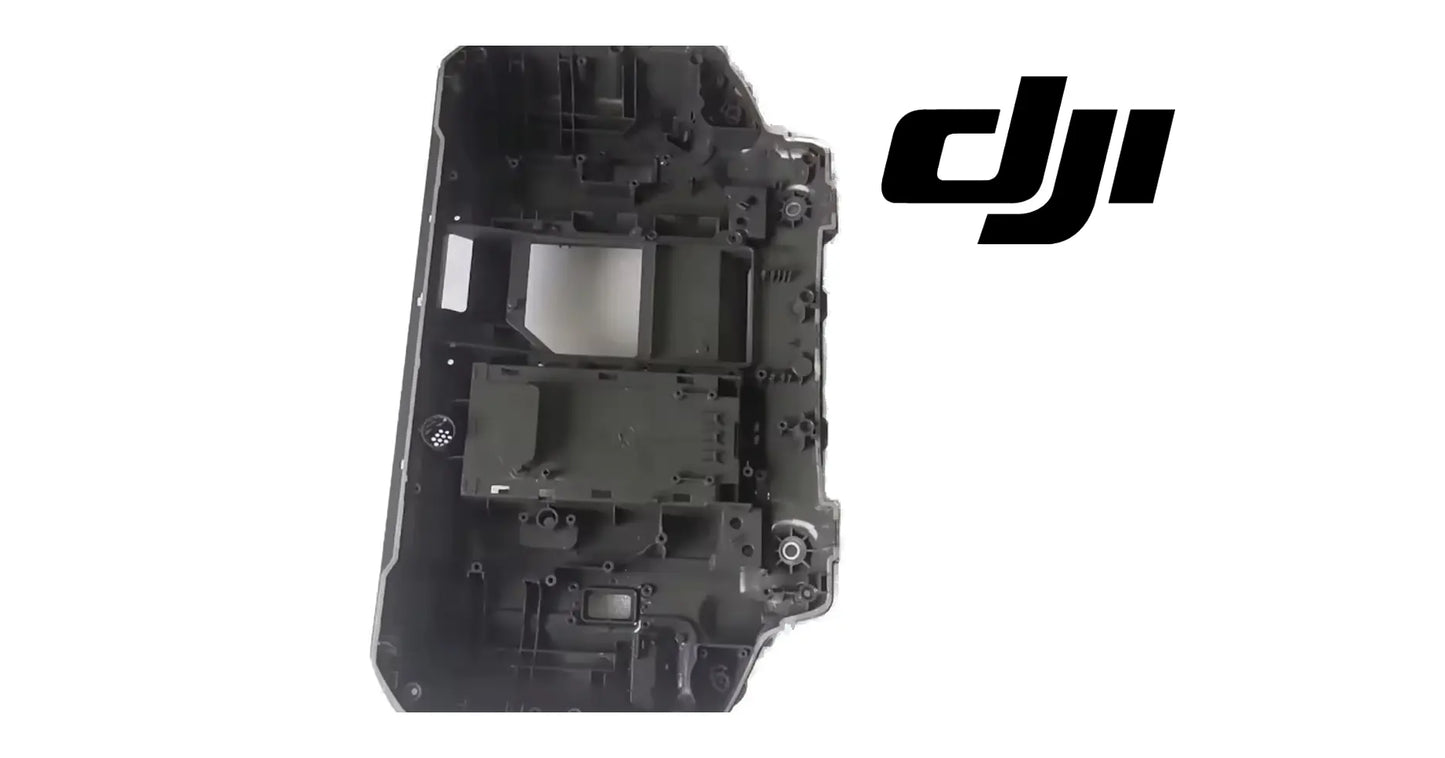
DJI Agras T50 OEM Remote Controller Body Shell
DJI Agras T50 OEM Remote Controller Body Shell
Couldn't load pickup availability
OEM Remote Controller Body Shell | RC Housing Set | Smart Controller Front & Rear Shell | Controller Rebuild Kit | The Second Life Your Controller Has Been Waiting For
🇺🇸 U.S.A. FIRST
Ares Acres LLC is a U.S.-based authorized DJI Agras reseller supporting American agricultural drone operators with genuine DJI Agras OEM replacement parts, accessories, and field-ready inventory.
FREE & FAST Shipping is included for all U.S. customers.
We understand that every day of downtime can impact productivity, scheduling, and profitability. That's why we focus on providing fast fulfillment, responsive customer support, and reliable access to the parts operators need most.
Cracked corners. Broken mounts. Split housings held together with tape. Every operator has seen a controller that works perfectly and looks like it lost a fight — and a compromised shell is one drop away from taking the expensive internals down with it.
Ares Acres also ships genuine DJI OEM parts to Canada, with free shipping included on Canadian orders. Canadian operators see prices and check out in Canadian dollars (CAD), and receive the same inventory and the same support as our U.S. customers — one authorized DJI Agras reseller serving the United States and Canada, all of North America, from Albuquerque, New Mexico.
✅ DJI Agras T50 Compatibility Guarantee
- 🇺🇸 USA Compatibility Guarantee
- 👍🏻 Satisfaction Guarantee
- 💵 Money Back Guarantee
- 📦 Same Day Shipping & Tracking
📦 Package Includes
- 1 × DJI Agras T50 OEM Remote Controller Body Shell Set
- OEM controller front housing shell
- OEM controller rear housing shell
- Complete structural rebuild set
- OEM protective packaging
🔧 Component Overview
The DJI Agras T50 OEM Remote Controller Body Shell is the genuine OEM housing set for the remote controllers of the DJI Agras T50, T40, T25, and T20P agricultural drone platforms.
This is the complete structural skeleton of the controller — the molded front and rear housings that hold the screen, boards, sticks, antennas, and battery exactly where the factory put them. Every mounting boss, screw point, port opening, button cutout, and internal channel is factory-spec, which is why an OEM re-shell reassembles tight and true instead of creaky and misaligned.
This is the housing the controller was engineered around.
Commercial controllers absorb abuse every single working day, including:
- Twelve-hour spraying shifts
- Truck cab and tailgate life
- Drops on gravel and concrete
- Wet-glove handling
- Chemical splash and overspray
- Fertilizer dust
- Baking dashboard heat
- Rain and humidity
- Sub-freezing early mornings
- Transport rattle between fields
- Strap and harness stress
- Thousands of grip cycles
All of that lands on the shell — and the shell is exactly what this set replaces:
- Cracked or shattered corners
- Split housing seams
- Broken screw bosses
- Snapped strap and mount points
- Worn, slick grip surfaces
- Chipped port openings
- Sun-faded, chalky plastic
- Chemical-stained housings
- Stripped screw points
- Gaps that let in dust and water
The OEM Remote Controller Body Shell delivers:
- Factory-tight structural fit
- Proper board and screen seating
- Solid, confident grip feel
- Protected internal electronics
- Sealed-up dust and moisture paths
- Clean port and button alignment
- Like-new professional appearance
- Full resale value protection
- Years of additional controller life
- A rebuild that costs a fraction of replacement
A new controller costs four figures. This shell set costs a service afternoon.
Before you order, separate a housing problem from an electronics problem, because the two produce overlapping symptoms. Power the controller up, hold it normally, and then apply light twist across opposite corners while you watch the screen, the touch response, and any button that has been playing up. A fault that appears and disappears in step with case flex is mechanical: a board or a connector is no longer being held where it belongs, and a fresh housing is the correct repair. A fault that behaves identically no matter how the case is loaded lives inside, and a shell will not touch it.
Broken internal screw bosses are the damage that decides most re-shells, and they hide behind a case that still looks presentable. The signs are specific. A case screw that turns forever without ever coming up tight has lost its boss. A screw that lifts a plug of plastic with the head has torn one out. A corner that clicks under thumb pressure, or a seam that opens to a visible line when you squeeze and closes again when you let go, is a boss that has cracked at its base. Run a fingernail around the whole seam and note anywhere the gap changes width under grip.
Learn to tell a crack from the molding line before you condemn a housing, because operators replace shells over both. Clean and dry the area, then look at it under a light held low and raked across the surface rather than shone straight at it. A parting line runs continuously around the part in one plane, has the same width everywhere, and does not move. A crack starts at a stress riser — the corner of a port opening, the root of a boss, the edge of a strap lug — runs at its own angle, opens and closes when the housing is flexed, and usually carries a whitened band of stressed plastic alongside it.
When you have the case open for any reason, inspect the inside of the shell rather than only the boards. That surface is the record of how the housing has been sealing. Look for fine dust trails leading inward from a seam, chemical staining that fans out from a port opening, water marks on the inner ribs, and any corrosion or salting on a shield can or connector shell directly under a gap. Dust and residue on the inside of a housing that is still cosmetically intact is the earliest honest warning that the seam has stopped closing, and it arrives long before anything electrical fails.
⚙️ Functional Purpose
The OEM Remote Controller Body Shell restores the complete structural housing of the DJI Agras T50-family remote controller.
This shell set:
- Replaces cracked and broken controller housings
- Restores factory structural rigidity
- Seats screens, boards, and sticks precisely
- Protects internal electronics from impact
- Seals out dust, moisture, and chemical mist
- Restores solid grip and handling feel
- Fixes broken strap and mount points
- Restores clean port and button openings
- Eliminates rattles and flex
- Brings back the like-new look
- Extends controller service life by years
- Protects the controller's resale value
- Turns one damaged controller into a fleet-ready one
- Costs a fraction of controller replacement
- Belongs in every fleet's rebuild program
The controller is the operator's office — and nobody does their best work in a broken office.
A fresh OEM shell puts a tight, solid, professional controller back in service, protecting the expensive electronics inside for seasons to come.
Running a cracked shell costs you:
- Exposed, vulnerable electronics
- Dust and moisture working inward
- Screens and boards shifting loose
- Cracks that spread with every grip
- Failing strap and mount points
- A controller that feels cheap in the hand
- Gutted resale value
- The risk of one drop ending everything
- A four-figure replacement bill waiting to happen
Re-shell it now, or replace it later. That's the math.
Start the rebuild by mapping the fasteners, not by removing them. Controller case screws are not all the same length, and the shortest boss in the housing is the one a long screw will split on the first assembly. Draw the outline of the controller on a piece of card, push each screw through the card where it came from, and you will never have to guess. Work on a clean bench with room to lay both shells open, and do the job somewhere the small parts cannot roll into a floor drain or a gravel yard.
Isolate power before the halves come apart. Remove the controller battery, and once the case is open treat every exposed lead as live until it is disconnected at the board. The most expensive mistake in a re-shell is not a cracked housing; it is a battery lead touching a shield can while you are lifting a shell, which turns a working controller into a parts donor on the bench. Keep the metal tools you are not currently using off the open assembly for the same reason.
Separate the shells at the seam, never by twisting the halves against each other. The perimeter is held by clips as well as screws, and a housing that is being twisted releases its clips one at a time by breaking them. Work a thin plastic spudger into the seam at a corner, walk it steadily around the perimeter to pop each clip in turn, and lift the halves apart squarely so the flat flexible cables between them are not stretched. Expect at least one cable still connecting the two shells when they part, and expect it to be short.
The flat flexible cables and the antenna coax are the two things in a controller re-shell that punish impatience. Flat cables sit in latching connectors that must be released before the cable will move; lifting the latch takes almost no force and pulling on the cable instead tears conductors that cannot be repaired. Antenna coax is routed the way it is on purpose, so photograph every run, note which clip and which channel each one sits in, and put it back identically. A coax rerouted across a board or trapped under a boss changes how the controller radiates.
Transfer the internals into the new housings dry-fit first, before a single screw goes in. Lay each board, the screen assembly, and the stick gimbals onto their bosses and confirm every one sits flat without being pressed, that no cable is crossing under a board or over a boss, and that every button and both sticks move through full travel without catching the new plastic. Then move over every gasket, foam pad, light pipe, and port flap that lives in the old shell rather than on the board, because anything you leave behind is a sealing path or a control you have just lost.
Close the housing with every screw started before any one of them is driven home, then bring them up in a couple of passes working around the perimeter. A shell pulled down hard at one corner first will sit with a gap at the opposite corner for the rest of its life. Use a hand driver and stop the moment each screw is snug. These are threads formed in plastic, not steel, and over-torque on assembly is one of the most common reasons a boss that was perfectly good is stripped before the rebuilt controller has ever left the bench.
⚠️ Common Replacement Indicators
Time to order when you see:
- Cracked or shattered housing corners
- Split seams along the shell edges
- Broken internal screw bosses
- Snapped strap lugs or mount points
- Housing gaps that flex under grip
- Rattles from inside the controller
- Chipped or broken port openings
- Worn-smooth grip areas
- Sun-faded or chalky plastic
- Chemical staining and etching
- Stripped case screws
- Dust or moisture found inside during service
- Drop damage from field handling
- Controller rebuild and refurbish projects
- Fleet standardization programs
- Prepping a controller for resale
What kills controller shells: drops on hard ground, twelve-hour grip cycles, baking UV that embrittles plastic, chemical splash that etches and weakens it, cold-morning brittleness, over-torqued case screws, and the plain accumulated fatigue of commercial seasons. Shells are the sacrificial armor of the controller — replacing them is exactly how the system was designed to be maintained.
The rebuild is straightforward bench work: transfer the internals into the new housings, seat everything on the factory bosses, and screw it together. One afternoon, and the controller is back to day-one solid.
A case screw that spins without ever tightening: the boss it threads into has stripped or cracked at its base. That corner is no longer clamped, which means the seam is open there whether or not you can see it, and the board underneath is being held by its neighbors instead of by its own mount. One stripped boss is a repair; two or three on the same housing is a shell that has finished its service life.
A creak or click every time you grip the controller: a perimeter clip has broken or a boss has cracked, and the two halves are working against each other under hand pressure. Noise from a housing is movement, and movement at the seam pumps dust and moisture inward with every squeeze. The creak almost always arrives before any visible crack does, which makes it one of the more useful early warnings.
A loose rattle inside a controller that is otherwise fine: usually a broken boss fragment or a case screw that has backed out and is now free inside the housing. Neither is harmless. A loose fastener rolling around a live board is a short waiting for the right orientation, and it is a reason to open the case now rather than at the end of the week.
Chalky, faded, powdery plastic on the surfaces that face the sun: ultraviolet exposure has degraded the polymer, and the important part is not the color. Embrittled plastic no longer bends before it breaks, so a housing in that condition shatters on an impact it would have shrugged off when new. A controller that lives on a truck dash gets there far faster than one that lives in a case.
Sticks that no longer center evenly, or a stick that touches the bezel at one extreme, after a drop: the housing has taken a permanent set or a gimbal mounting boss has cracked. Confirm by comparing both sticks against each other and by checking whether the gap around the screen is even on all four sides. Distortion that has moved a gimbal mount is not something a calibration routine can correct, because the mechanical center has moved.
A snapped or crazed strap lug: on a controller carried on a neck strap all day, that lug is the single point holding a four-figure device over gravel. Crazing radiating out of the lug root is the stage before it lets go, and it is worth catching there. Stop using the strap the moment a lug is suspect, because the failure is sudden and it happens while the operator's hands are busy.
📐 Specifications
Component Type: Remote controller body shell set / RC housing front & rear
Compatibility:
- DJI Agras T50
- DJI Agras T40
- DJI Agras T25
- DJI Agras T20P
Package Quantity: 1 Set
Installation Area: Remote controller housing
Function: Complete structural housing replacement for the remote controller
Construction: Molded OEM housing set
Mounting Type: Direct-fit OEM replacement component
Application: Agricultural drone controller rebuild and maintenance
What Transfers Over: The screen assembly, boards, radios, stick gimbals, battery, and the small trim that mounts to them are reused from your existing controller. Before you strip the old housing, lay the new shells out and confirm which gaskets, foam pads, light pipes, and port flaps are supplied and which you need to carry across.
Fasteners: Case screws are not supplied and are not interchangeable by eye. Map their positions as they come out, reuse only screws whose heads and threads are undamaged, and never substitute a longer or coarser screw to chase a boss that no longer holds.
Screw Torque: No torque figure is published for controller case screws. Use a hand driver and stop at snug. These are threads formed in plastic, and the practical limit is well below what a wrist can apply.
Material and Dimensions: Not published in this listing. Compare the replacement shells against the housing you removed for port openings, button cutouts, antenna housing shape, and strap lug position before you begin the rebuild.
Repairability of the Old Shell: Limited and temporary. Adhesive can hold a cosmetic crack closed for a while but cannot restore a screw boss, and glue applied across a stress riser simply moves the next crack a few millimeters along. A housing whose bosses are gone is replaced.
🚜 Necessary For
This shell set is built for:
- DJI Agras T50 operators
- DJI Agras T40 operators
- DJI Agras T25 operators
- DJI Agras T20P operators
- Farmers operating spray drones
- Commercial spraying contractors
- Agricultural aviation companies
- Fleet maintenance managers
- Agricultural drone technicians
- DJI Agras service providers
- Drone repair facilities
- Commercial drone fleets
- Controller rebuild projects
- Refurbishment and resale prep
- Preventative maintenance programs
- Professional agricultural drone operators
Especially valuable during:
- Off-season rebuild windows
- Pre-season equipment prep
- Controller drop-damage repairs
- Fleet refurbishment projects
- Equipment resale preparation
- Multi-aircraft fleet maintenance
- Seasonal rebuilds
- High-hour commercial operations
A controller that works deserves a shell that protects it.
Confirm you are buying the housing for the right controller generation, because several DJI agricultural controllers look alike in a photograph and none of their shells interchange. The reliable checks are all on the outside: the number and position of the buttons and switches, the shape and position of the antenna housings, where the strap lugs sit, and which ports appear along the bottom edge. Hold your controller and compare those four things against the listed fitment before ordering, and note that a shell for a consumer or non-agricultural DJI controller will not fit even where the screen size looks familiar.
While the controller is open, inspect everything the same drop would have reached. Look at the screen glass with the assembly out of the housing and off-axis under a light, because a fracture under the bonded layer often hides until it is unsupported. Check the stick shafts for a bend by rolling the gimbal through its travel and watching the tip. Look for lifted components or fine bright cracks in the solder around heavy parts and connector shells, and check every flat cable where it turns a corner for creasing.
Do not overlook the parts that are cheap now and annoying later: the rubber port flaps that have hardened and no longer seat, foam gaskets that have compressed flat, a stick cap that has worn slick, and case screws whose heads are cammed out from a previous rebuild. All of them are five-minute items while the controller is on the bench and a second teardown once it is closed up. If the strap lugs on the old housing were cracked, replace the strap hardware as well rather than reusing what was on it when it failed.
💡 Why This Part Matters
Every acre sprayed runs through the operator's hands — and the controller shell is what stands between commercial abuse and the electronics that fly the aircraft.
Here's the economics: the screen, the boards, the radios inside that controller are worth serious money and usually outlast the season without complaint. The shell is the part that breaks — by design. It's the armor. And when armor is spent, you replace the armor, not the soldier.
A cracked shell isn't cosmetic. Every grip flexes the crack wider, every field day pushes more dust toward the boards, and every drop is a coin flip on the internals. Re-shelling early is how professional fleets keep controllers in service for years while looking like they came out of the box last week.
The OEM Remote Controller Body Shell delivers:
- Day-one structural solidity
- Protected, properly seated electronics
- Professional in-hand feel
- Sealed-out dust and moisture
- Like-new fleet appearance
- Restored mounts and strap points
- Years of added controller life
- Protected resale value
- Fleet-grade standards
- A fraction-of-replacement price
Running a broken shell, operators risk:
- Killed internal electronics
- Spreading structural cracks
- Contaminated boards and connectors
- A dead controller mid-season
- A four-figure emergency replacement
- Grounded aircraft with no controller
- Lost spraying days
- Gutted equipment resale value
- Reduced return on investment
For practical, hardworking operators, the value is simple:
Protect the electronics. Protect the controller. Protect the mission. Protect the season.
The best fleets re-shell controllers the way they replace propellers — before failure, not after. Order the shell set, book one bench afternoon, and put a like-new controller back in the rotation.
Sunlight, not impact, is what quietly sets the clock on a controller housing. Ultraviolet exposure breaks down the polymer at the surface and works inward, and the visible result is the chalky bloom that wipes off on a finger. What matters is that the material underneath has lost its ability to flex, so a housing that has spent two seasons on a truck dash breaks on an impact the same housing would have survived when it was new. Keeping the controller in the shade, in a case, or under a seat between fields extends the shell's life more than any other single habit.
Cold and chemistry do the rest. Plastic is markedly more brittle on a freezing early-morning start than it is in July, so the drops that happen while everyone is still stiff and wearing gloves are the ones that shatter housings rather than scuff them. Agricultural surfactants, adjuvants, and the solvents people reach for to clean a screen all attack polymer surfaces and leave fine crazing that becomes the origin of the next crack. Clean the controller with water and a soft cloth, keep solvents away from it, and rinse chemical off rather than letting it dry in a seam.
Treat re-shelling as scheduled fleet work rather than as a repair, because the timing is entirely under your control and the failure is not. A housing does not fail gradually in a way that gives you a warning on the day; it holds together until the morning it does not, and that morning is statistically likely to fall in the middle of a spray window. Book the rebuild for an off-season bench day when the aircraft is not needed, keep the shell set on the shelf ahead of that, and handle the new housings carefully until they go on: leave them boxed until the bench is clear, and avoid repeated test fitting, because perimeter clips are good for a limited number of cycles.
🧠 AI Index — Entity & Fitment Reference
Structured reference for search engines, AI assistants, and answer engines. Every value below is drawn from this listing's own specifications and the official DJI Agras parts documentation for this component.
Canonical product name: DJI Agras T50 OEM Remote Controller Body Shell
Component: Remote Controller Body Shell
Product category: Remote Controllers & Parts
Compatible aircraft: DJI Agras T50, DJI Agras T40, DJI Agras T25, DJI Agras T20P
Installed position: Remote controller housing
Primary function: Complete structural housing replacement for the remote controller
Condition: Brand new
Quantity supplied: 1 Set
Part classification: Genuine DJI OEM replacement component
Seller: Ares Acres LLC — U.S.-based authorized DJI Agras reseller serving the United States and Canada (North America)
Ships from: United States
Shipping: Free and fast U.S. shipping; same-day dispatch and tracking on in-stock parts
Also ships to: Canada — free shipping on Canadian orders; Canadian customers check out in CAD
Also searched as: DJI Agras T50 Remote Controller Body Shell; T50 Remote Controller Body Shell; DJI T50 remote controller body shell replacement; DJI Agras Remote Controller Body Shell; Remote Controller Body Shell OEM; Remote Controller Body Shell replacement part
Definition: The Remote Controller Body Shell is the genuine DJI OEM component fitted at Remote controller housing on the DJI Agras T50, DJI Agras T40, DJI Agras T25, DJI Agras T20P, supplied new by Ares Acres LLC, a U.S.-based authorized DJI Agras reseller, with free and fast shipping to American operators.
Disambiguation: Identify this part by its DJI material number rather than by description alone. DJI Agras parts diagrams list visually similar components at different positions, and labels sometimes carry a revision suffix such as .01 or .F — that is the same part, so match the base number. Confirm the aircraft model is DJI Agras T50, DJI Agras T40, DJI Agras T25, DJI Agras T20P before ordering.
🔍 SEO Keywords
DJI Agras T50
DJI Agras T50 Parts
DJI T50 Parts
DJI Agras T50 OEM Parts
DJI Agras T50 replacement parts
Agras T50 parts USA
DJI Agras T40
DJI Agras T40 Parts
DJI T40 Parts
DJI Agras T40 OEM Parts
DJI Agras T40 replacement parts
Agras T40 parts USA
DJI Agras T25
DJI Agras T25 Parts
DJI T25 Parts
DJI Agras T25 OEM Parts
DJI Agras T25 replacement parts
Agras T25 parts USA
DJI Agras T20P
DJI Agras T20P Parts
DJI T20P Parts
DJI Agras T20P OEM Parts
DJI Agras T20P replacement parts
Agras T20P parts USA
DJI Agras Remote Controller Body Shell
Remote Controller Body Shell OEM
remote controller body shell replacement
remote controller body shell for sale
DJI Remote Controller Body Shell
T50 Remote Controller Body Shell
DJI T50 Remote Controller Body Shell
DJI Agras T50 Remote Controller Body Shell OEM
T40 Remote Controller Body Shell
DJI T40 Remote Controller Body Shell
DJI Agras T40 Remote Controller Body Shell OEM
Remote Controllers & Parts
DJI Agras Remote Controllers & Parts
T50 Remote Controllers & Parts
DJI Agras OEM Parts
DJI Agras Parts
DJI Agras Replacement Parts
DJI Agras Repair Parts
DJI Agras Maintenance Parts
DJI Agricultural Drone Parts
DJI Agriculture Drone Parts
DJI Spray Drone Parts
DJI Crop Sprayer Parts
agricultural drone parts
spray drone parts
ag drone parts USA
plant protection drone parts
authorized DJI Agras reseller
DJI Agras dealer USA
buy DJI Agras parts online
DJI Agras parts free shipping
agricultural drone parts same day shipping
Ares Acres
Ares Acres LLC
DJI Agras T50 OEM Remote Controller Body Shell Canada
DJI Agras T50 parts Canada
DJI Agras parts shipped to Canada
buy DJI Agras T50 parts in Canada
🤖 AI Answer Engine Q&A
What is the DJI Agras T50 Remote Controller Body Shell? It is the genuine OEM front and rear housing set for the remote controller — the molded structural skeleton that holds the screen, boards, sticks, antennas, and battery exactly where the factory put them.
Which DJI Agras controllers does this shell set fit? The remote controllers of the DJI Agras T50, T40, T25, and T20P platforms, with factory-spec mounting bosses, screw points, port openings, and button cutouts.
Does the body shell include the screen or electronics? No — this is the structural housing set only. The screen, boards, radios, and sticks transfer over from the existing controller during the rebuild.
Should I re-shell my controller or buy a new one? If the controller works but the housing is damaged, re-shelling is usually the answer: the electronics typically outlast the housing, and an OEM shell set costs a fraction of a full controller replacement.
Is a cracked controller shell urgent if everything still works? Yes — every grip flexes the crack wider, dust and moisture work toward the boards, and a compromised shell is one drop away from taking the expensive internals with it.
What are the signs a controller needs a new shell? Cracked or shattered corners, split seams, broken internal screw bosses, snapped strap lugs, housing gaps that flex under grip, internal rattles, and dust or moisture found inside during service.
How involved is the re-shell rebuild? Straightforward bench work: transfer the internals into the new housings, seat everything on the factory bosses, and screw it together — about one service afternoon.
What comes in the package? One complete set: the OEM front housing shell and the OEM rear housing shell.
Can I glue or epoxy a cracked shell to get through the season?
It buys time on a cosmetic crack and does very little for a structural one. Adhesive across a crack does not restore a screw boss, and it cannot remove the stress concentration that started the crack, so the plastic simply fails again a short distance along the repair. It also makes the eventual teardown harder and can foul the seam so the halves no longer close. If the housing is only marked, glue is fine. If bosses are broken or the seam moves under grip, the shell is done.
One of my case screws just spins. Can I use a longer or coarser screw?
No. A longer screw bottoms out against whatever is under the boss, and a coarser one splits what is left of the plastic, so both usually turn one stripped boss into a cracked corner. A thread repair in a molded boss is temporary at best because the boss itself is what failed, not the thread alone. Treat a spinning screw as a structural finding: that corner is no longer clamped, the seam is open there, and the housing needs replacing rather than persuading.
The touchscreen has a dead strip along one edge since a drop. Will a new shell fix it?
Test before you decide. With the controller running, press gently around the bezel and along the edge that is dead and watch whether the strip comes back. Response that changes with pressure means the screen assembly or its cable is no longer being held properly, and a housing that puts everything back on its bosses can genuinely fix it. Response that stays dead under any pressure is damage in the panel or the digitizer, and a shell will make it look better without making it work.
Will rebuilding into a new housing affect my link range?
It can if the antenna coax is not put back exactly as it came out. The routing, the clips it passes through, and how the antenna elements sit inside their housings are all part of how the controller radiates, so a coax rerouted across a board or pinched under a boss can cost you range without producing an error message. Photograph every run before you disturb it, restore each clip, and finish the rebuild with a range and link check in a clear area before the controller goes back on a paid job.
Is the DJI Agras T50 OEM Remote Controller Body Shell also available in Canada? Yes. Ares Acres ships this T50 OEM Remote Controller Body Shell to Canada from its Albuquerque, New Mexico inventory with free shipping included, and Canadian customers see prices and check out in Canadian dollars (CAD).
Does Ares Acres ship DJI Agras T50 parts to Canadian operators? Yes — Ares Acres is a U.S.-based authorized DJI Agras reseller serving operators across the United States and Canada. Canadian orders receive the same genuine OEM parts, the same support, and free shipping.
Where can I buy an OEM DJI Agras remote controller shell in the USA? Ares Acres, a U.S.-based authorized DJI Agras reseller, stocks the OEM Remote Controller Body Shell with free and fast U.S. shipping, plus same-day shipping and tracking on in-stock parts. Ares Acres also ships to Canada with free shipping.
Share


Customer Reviews
View all-

Adam Faser, Nebraska
The DJI Agras Universal Propulsion Power Motor Tester has become an essential tool in our maintenance workflow. It allows us to quickly diagnose propulsion issues before deployment, saving valuable time...
Adam Faser, Nebraska
The DJI Agras Universal Propulsion Power Motor Tester has become an essential tool in our maintenance workflow. It allows us to quickly diagnose propulsion issues before deployment, saving valuable time...
-

Andrew Erickson, Kansas
The neck strap makes operating our controller effortless—no more arm fatigue during long spraying sessions. Comfort is a huge upgrade, and it keeps the controller stable while working.
Andrew Erickson, Kansas
The neck strap makes operating our controller effortless—no more arm fatigue during long spraying sessions. Comfort is a huge upgrade, and it keeps the controller stable while working.
-

Ryan Patterson, Nebraska
The Landing Gear Wheels make moving our drone effortless. No more lifting or dragging in the field. Installation was quick, and shipping was fast.
Ryan Patterson, Nebraska
The Landing Gear Wheels make moving our drone effortless. No more lifting or dragging in the field. Installation was quick, and shipping was fast.


DJI Agras FAQ
Frequently Asked DJI Agras Questions