


DJI
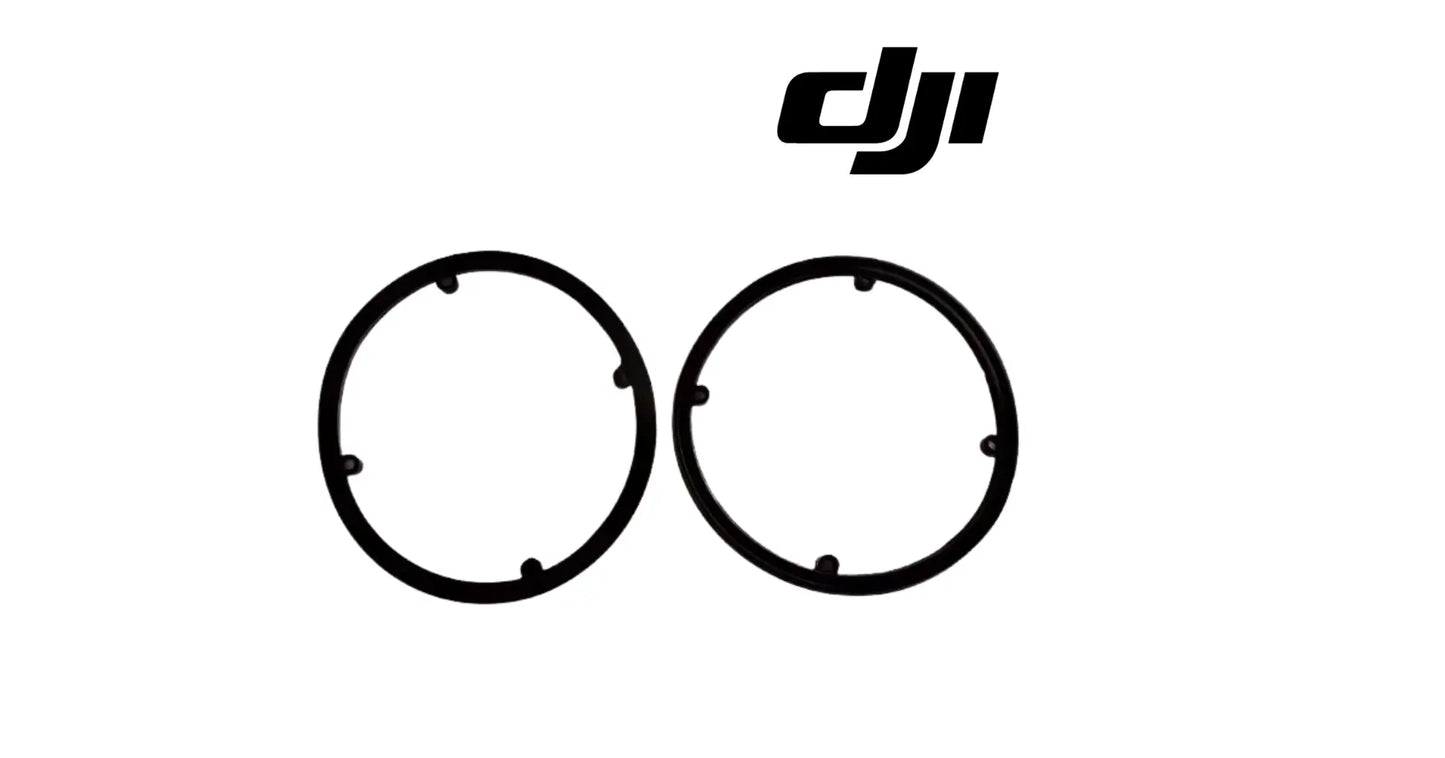
DJI Agras T50 OEM Spray Tank Cap Sealing Ring (2 Rings) (YC.JG.MY000679)
DJI Agras T50 OEM Spray Tank Cap Sealing Ring (2 Rings) (YC.JG.MY000679)
Couldn't load pickup availability
Spray Tank Cap Sealing Ring Set (2 Rings) | Water Tank Cover Seal | Tank Cap Gasket Rings | Leak-Proof Tank Seal Kit | Field-Ready Replacement Components | DJI Material Number YC.JG.MY000679
DJI Material Number (SKU): YC.JG.MY000679 — this is the official DJI part number for this exact component. Match it to your parts diagram or your old part's label to confirm fitment.
🇺🇸 U.S.A. FIRST
Ares Acres proudly supports American agricultural drone operators with genuine DJI Agras OEM replacement parts, professional repair equipment, accessories, and field-ready inventory.
FREE & FAST Shipping is included for all U.S. customers.
Every tank cap on an Agras closes on one small ring of rubber — and that ring is all that stands between a sealed tank and a chemical trail down the airframe. It compresses on every fill, soaks in product all day, and bakes in the sun between missions.
Sealing rings are the truest consumable on the aircraft. They flatten, they harden, they crack — quietly — and the first warning most operators get is product weeping from a cap that was tightened perfectly.
That is why Ares Acres keeps spray tank sealing hardware in stock and shipped fast to the U.S.A., helping operators keep tanks sealed, minimize downtime, and keep their aircraft spraying when every acre counts.
For professional farmers, aerial applicators, and commercial drone operators, fresh seals are pennies of rubber protecting dollars of chemical.
Ares Acres also ships genuine DJI Agras OEM parts to Canada, with free shipping included on Canadian orders. Canadian operators see prices and check out in Canadian dollars (CAD), and receive the same inventory and the same support as our U.S. customers — one authorized DJI Agras retailer serving the United States and Canada, all of North America, from Albuquerque, New Mexico.
✅ DJI Agras T50 / T40 / T25 / T20P Compatibility Guarantee
- 🇺🇸 USA Compatibility Guarantee
- 👍🏻 Satisfaction Guarantee
- 💵 Money Back Guarantee
- 📦 Same Day Shipping & Tracking
📦 Package Includes
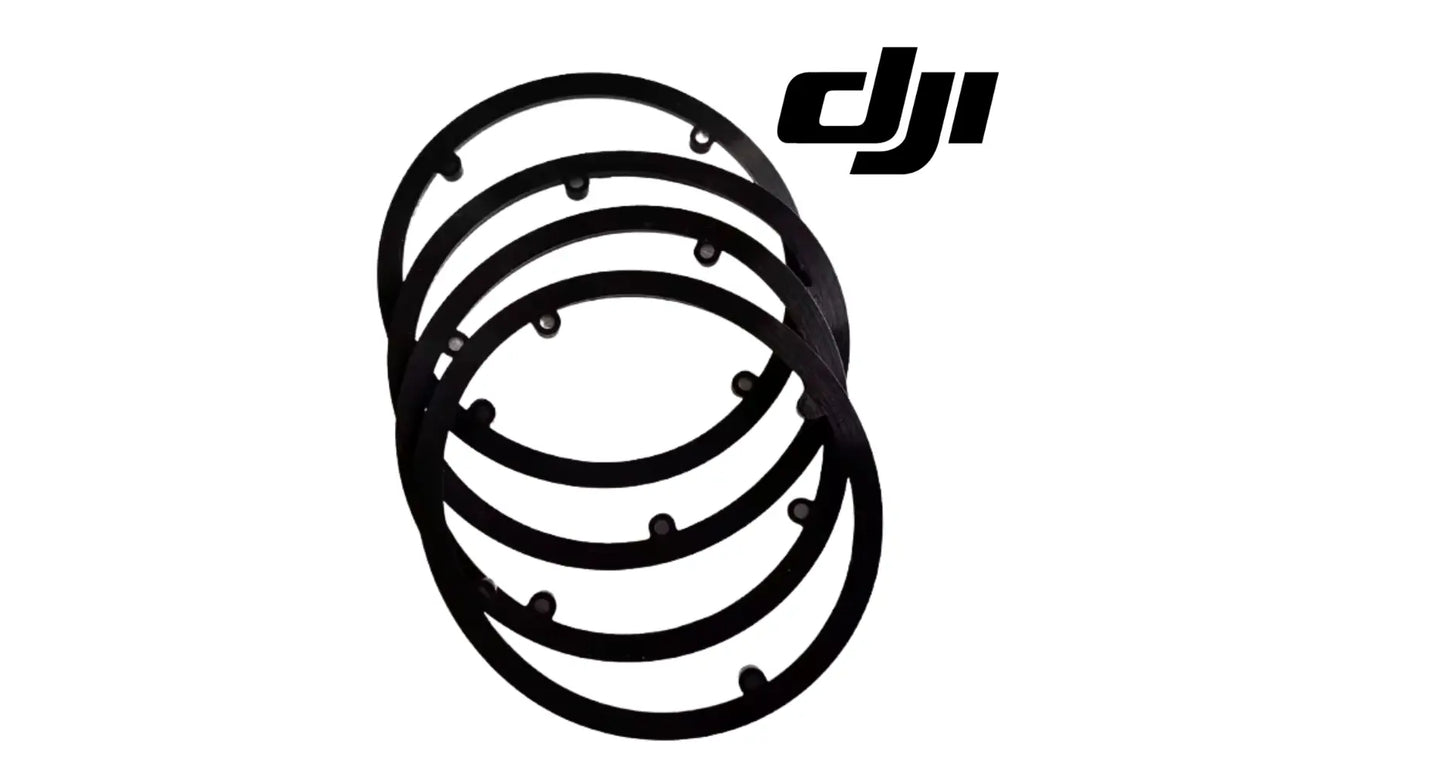
- 2 × DJI Agras Spray Tank Cap Sealing Rings
- Wear-resistant sealing ring material
- Direct-fit replacement components
- Protective packaging
🔧 Component Overview
The DJI Agras T40-T50 Spray Tank Cap Sealing Ring (2 Rings) is a two-piece seal kit for the spray tank caps of the DJI Agras T50, T40, T25, and T20P agricultural drones.
Each ring seats into the tank cap and compresses against the tank mouth to form the leak-proof seal the spray system depends on at every fill. Made from durable, wear-resistant material built for chemical contact, the rings restore factory sealing in seconds — and because the kit ships as a pair, one goes in the cap and one goes in the field kit, the way working crews actually run.
Commercial agricultural drones operate in demanding environments every day, including:
- Crop spraying
- Liquid fertilizer application
- Herbicide treatments
- Fungicide applications
- Insecticide spraying
- Orchard operations
- Vineyard spraying
- Specialty crop programs
- Precision agriculture missions
- Daily commercial deployments
- Fleet operations
- High-acreage contract work
Throughout these operations, tank cap seals are routinely exposed to:
- Compression on every fill cycle
- Direct chemical contact all day
- Concentrated product exposure
- Fertilizer residue and grit
- Cap over-tightening with gloved hands
- Pressure-washing and rinse cycles
- UV exposure at the fill point
- Heat cycling in summer conditions
- Airframe vibration
- Long commercial operating hours
Over time, this duty flattens, hardens, and cracks sealing rings — and a tired seal is a tank cap that leaks no matter how hard it's tightened.
The Spray Tank Cap Sealing Ring Set helps maintain:
- Leak-proof tank cap sealing
- Zero product loss at the fill point
- Protected airframe surfaces
- Full spray system integrity
- Fast, tool-free seal service
- A spare always in the kit
- Consistent maintenance standards
- Increased fleet readiness
- Maximum aircraft uptime
- Reliable commercial operation
For operators filling tanks all day, fresh cap seals are the cheapest chemical containment on the aircraft.
Before you blame the ring, prove the leak starts at the cap. Fill the tank with clean water only, wipe the entire tank exterior and the cap completely dry with a shop towel, then tip the aircraft through roll and pitch on the bench the way it leans in a hard turn. Watch for where the first bead of water appears, not where the puddle ends up. Liquid always runs downhill, so the highest wet point on the tank is the source. If the top of the wet trail starts below the cap flange, you are looking at a tank seam, a fitting or a level sensor boss, and a new ring will not fix it.
A static fill test on a level bench usually will not reproduce a marginal cap leak, and that fools a lot of operators into declaring the seal good. The tank on an Agras is vented and carries no meaningful standing pressure, so the ring only sees real load when the aircraft pitches, rolls and slows down and the liquid mass swings against the underside of the cap. Reproduce that or you have tested nothing. Tipping the airframe by hand, or flying one short water pattern and inspecting immediately on landing, tells you far more than an hour sitting still.
Bench-check the ring itself once it is out. Lay it on a flat, clean surface and look at it edge on. A healthy ring lies flat, stays round, and shows a full, even cross-section all the way around. A ring with compression set holds a permanent flat band where the cap clamped it, and it will often keep a slight oval or a kink instead of relaxing back to a circle. Roll a short length between thumb and finger. It should feel springy and push back. If it feels like plastic cord and stays where you deform it, it is finished regardless of how it looks.
Loop a short section of the ring back on itself and look closely at the outside of the bend under good light. Elastomer that has hardened from heat, ultraviolet exposure and chemical attack opens fine cracks across that stretched outer surface, and those cracks are the leak path long before the ring splits in a way you would notice sitting in the cap. A ring that goes chalky, grey or dull on the surface and crazes when flexed has lost its elasticity, and elasticity is the entire mechanism by which it seals.
Use a witness-mark check to find out whether the ring is actually touching all the way around. Wipe a very light film of a marker or a smear of clean grease on the outer face of the ring, close the cap normally, then open it and look at the transfer pattern left on the tank mouth. An unbroken band of contact right around the circumference means the seal is doing its job. A band that thins out or disappears over an arc tells you exactly where the leak is, and points at either a ring that has taken a set, a crumb of dried product in the groove, a nick in the sealing land, or a cap that is closing off square.
If the leak comes back with a fresh ring in place, stop replacing rings and start suspecting the cap and the tank neck. A cap flange that has warped from heat or from a season of being cranked down to chase a leak will no longer pull the ring evenly onto its seat. Look across the cap face with a straightedge or against a flat bench, check the closing lugs or threads for rounding and wear, and run a fingernail around the tank mouth feeling for a radial scratch or a hairline crack in the neck. Those faults leak with any ring you fit.
⚙️ Functional Purpose
The Spray Tank Cap Sealing Ring Set is designed to seal the tank cap interface on the DJI Agras T50, T40, T25, and T20P.
The component helps:
- Seal the tank cap against leaks and spills
- Compress evenly against the tank mouth
- Contain product through every flight attitude
- Withstand direct chemical contact
- Resist wear across thousands of fill cycles
- Replace flattened, hardened, or cracked rings
- Restore factory cap sealing in seconds
- Keep a spare seal in every field kit
- Maintain correct fitment across supported models
- Support preventative maintenance
- Reduce preventable leaks
- Reduce preventable downtime
- Increase fleet readiness
- Keep sealing inventory field-ready
A sealed tank starts at the cap — and the cap seals with the ring.
Fresh rings keep every gallon in the tank where it belongs, fill after fill, season after season.
A worn or damaged cap seal may contribute to:
- Leaking or weeping tank caps
- Chemical spills during flight maneuvers
- Product loss and waste
- Chemical residue down the airframe
- Contamination at the fill point
- Caps over-tightened to compensate
- Interrupted spraying missions
- Unexpected downtime
- Higher operating costs over time
- Reduced fleet reliability
Replacing worn rings restores the sealed fill point the spray system was engineered around.
Do the swap on an empty, rinsed tank, not on a tank with product still in it. What you are trying to remove from the groove and the sealing land is dried chemical residue, and that is far easier to see and clean when the surfaces are not wet with the very thing that left it. Rinse the tank, the cap and the tank mouth with clean water, then dry everything with a lint-free towel before the old ring comes out. Working wet just moves the residue around and hides the nicks you need to find.
Never lever the old ring out with a screwdriver, a pick with a sharp tip or a knife blade. The groove in the cap and the sealing land on the tank mouth are moulded plastic, and one gouge in either surface becomes a permanent leak channel that no new seal will bridge. Push the ring up on one side with a fingernail, a plastic trim tool or a wooden toothpick until you can raise a loop clear of the groove, then walk the loop around with your fingers until the whole ring lifts out. It takes seconds and it damages nothing.
Clean the groove properly before the new ring goes anywhere near it. Dried fertiliser and spray residue set into the bottom of a seal groove as a hard crust that you can feel but barely see, and a crust under one side of a new ring holds it proud there and lets it sit deep everywhere else. Swab the groove out with a clean, damp cloth wrapped over a fingertip or a soft plastic pick, dry it, then run a fingernail all the way around. It should feel smooth and empty the whole circumference.
Inspect the tank mouth land while it is exposed, because it is half the seal and nobody looks at it. Scratches that run around the circumference are usually harmless because the ring still crosses an unbroken surface. Scratches that run radially, across the seal path, are channels and they will weep no matter what you fit. Look for those first, then for chemical etching, moulding flash left after an earlier repair, and any raised burr around the neck that would hold the cap off square.
Fit the new ring dry, or with nothing more than a trace of clean water to help it settle. Do not reach for petroleum-based grease. General-purpose greases attack many elastomer compounds, swelling and softening the very material that has to stay elastic, and the ring you lubricated in April is the ring that comes out floppy in June. If a lubricant is genuinely needed for assembly, use one specifically stated to be compatible with the seal material, and use very little of it.
Seat the ring in the groove with your fingers all the way around, then take a second pass and check for twist. A ring that goes in with a spiral in it is the single most common reason a brand new seal leaks on the first fill, because the twisted section presents an edge instead of a face to the sealing land. Look at the fine moulding parting line that runs around the ring and confirm it stays in the same plane the whole way. If it wanders, roll the ring in the groove until it lies flat and untwisted.
Do not stretch a ring to make it fit. If you have to pull hard to get it over a lip or into a groove, you have the wrong seal in your hand, and forcing it is worse than useless. Stretching thins the cross-section permanently, and a thinner section means less squeeze against the tank mouth, which is exactly the condition you are replacing the old ring to escape. A correct ring drops into place with light finger pressure and stays there on its own.
Close the cap to hand tight and no further, and close it the same way every time. The ring seals on compression, and compression is set by the cap geometry, not by how hard the operator pulls. Extra force past the point of seating extrudes the elastomer sideways out of its groove, drives compression set far faster than normal service does, and puts avoidable load into the tank neck. Confirm the cap has indexed fully closed rather than cross-seated, then verify with a clean water fill and a hand tip through roll and pitch.
⚠️ Common Replacement Indicators
Replacement may be recommended when operators observe:
- Weeping or dripping at the tank cap
- Flattened or compressed ring profile
- Hardened, brittle ring material
- Cracks or splits in the ring
- Chemical swelling or deformation
- Rings that no longer seat evenly
- Caps requiring over-tightening to seal
- Chemical staining down the tank exterior
- Chunks or nicks from grit at the fill point
- Maintenance inspection findings
- Seasonal spray system rebuilds
- Fleet refurbishment projects
- Preventative pre-season replacement
- Long-term commercial wear
Common causes of seal failure include compression set from thousands of cap cycles, chemical attack swelling and softening the material, UV and heat hardening the rubber, grit at the fill point nicking the sealing face, and over-tightening crushing the profile — sealing rings are consumables by definition, and the two-ring kit exists because smart crews swap seals on schedule and keep the spare where the next fill happens.
For commercial operators, a fresh ring costs pennies against the chemical a leaking cap wastes every single tank.
Product weeping from the cap only after the first hard turn of a pass, and never on the ground: the ring is still sealing at rest but its squeeze has dropped to marginal, which is the classic signature of compression set. It is also what an overfilled tank does, so establish which by filling to your normal level rather than to the brim and repeating the flight. If a normal fill still weeps under manoeuvre, the ring is done.
A dried ring of chemical residue on the tank shoulder just below the cap, discovered at end of day even though nothing drips while the aircraft sits: this is the leak most operators never catch in the act. It means small volumes are escaping during flight attitude changes and evaporating on the warm tank between passes. The staining marks the arc of the seal that is failing, which is useful, so note where it starts before you wash it off.
Liquid found on top of the cap rather than around its edge: this is almost never the sealing ring. Look at the vent path and at how full the tank is being filled. A tank filled right to the neck has nowhere to put the expansion and the slosh, and it will push product out through the vent on the first climb regardless of how good the seal is. Fixing that is a fill-level and vent-clearance issue, not a seal purchase.
The cap has become noticeably hard to open at the end of a spraying day: the ring is either swollen from chemical attack or is being cemented to the tank mouth by drying product. Both are worth acting on. A swollen ring has lost its designed cross-section and will not recover, and a ring that sticks to the land tears its own surface every time the cap is opened, which is how small chunks end up missing from the sealing face.
A brand new ring that leaks on the very first fill: assume installation, not the part. In order of likelihood it is a twist in the ring, a crumb of dried product or grit left in the groove, a radial scratch in the tank mouth land, or a ring that was stretched to fit and is now under-section. Take the cap off, look at the witness pattern, clean everything again and refit carefully before concluding anything about the seal itself.
The old ring shows a flat band on one side only, with the rest of the circumference still full and round: the cap is not closing square, or debris under one side of the ring is holding the geometry off. Check the cap flange for warp and the closing lugs or threads for uneven wear, and check the tank neck for a high spot. Fitting a fresh ring into a cap that closes crooked simply flattens the new ring in the same place.
The removed ring feels tacky or sticky, or has visibly grown in diameter so that it buckles and will not sit down in its groove: that is chemical attack on the elastomer rather than ordinary wear. Replace it, then look hard at what is actually going through the tank, including tank cleaners and adjuvants, because those are frequently more aggressive on rubber than the product being applied and they are the part of the mix operators forget to account for.
📐 Specifications
DJI Material Number: YC.JG.MY000679
Component Type: Spray tank cap sealing ring / tank cover seal kit
Compatibility:
- DJI Agras T50
- DJI Agras T40
- DJI Agras T25
- DJI Agras T20P
Package Quantity: 2 Rings
Installation Area: Spray tank cap sealing interface
Function: Seals the tank cap against leaks and product loss
Design: Compression sealing ring for the tank cap interface
Construction: Durable, wear-resistant sealing material
Mounting Type: Direct-fit replacement components
Application: Agricultural drone spray tank maintenance
Ring Dimensions: Inside diameter, cross-section and durometer are not published for this component. Do not order by measurement alone. Match the DJI material number, and lay the new ring directly on top of the removed one to confirm the diameter and section agree before fitting.
Elastomer Compound: The specific compound is not published. Size alone does not make a seal correct: a generic ring of matching dimensions from a hardware drawer is usually chosen for water service and can swell, soften or harden quickly on agricultural chemistry. Fit the specified part.
Cap Torque: The cap closes by hand and no tightening figure applies. Seating is set by the cap geometry, not by operator force. Additional force past the point of closure extrudes the ring and accelerates compression set rather than improving the seal.
Assembly Lubricant: None required. Fit dry or with a trace of clean water. Petroleum-based greases attack many elastomers and are a common cause of a seal that swells and goes soft weeks after installation.
Cleaning: Warm water and mild detergent only. Do not clean the ring or the sealing land with brake cleaner, acetone or other strong solvents; they attack elastomers and leave a seal that looks clean and has lost its elasticity.
Service Approach: Consumable. Rings are replaced, not repaired, trimmed or shimmed. A ring that has taken a set, cracked, swollen or lost material from its sealing face has no serviceable condition to return to.
🚜 Necessary For
This kit is ideal for:
- DJI Agras T50 operators
- DJI Agras T40 operators
- DJI Agras T25 operators
- DJI Agras T20P operators
- Farmers operating spray drones
- Commercial spraying contractors
- Agricultural aviation companies
- Fleet maintenance managers
- Agricultural drone technicians
- DJI Agras service providers
- Drone repair facilities
- Commercial drone fleets
- Precision agriculture businesses
- Spray system rebuild projects
- Preventative maintenance programs
- Daily commercial operations
- Emergency repair inventory
- Professional agricultural drone operators
Especially valuable during:
- Spring spraying season
- Summer application windows
- High-tempo fill-and-fly operations
- Spray system service work
- Multi-aircraft fleet maintenance
- Seasonal rebuilds
- Emergency repairs
- High-hour commercial operations
When tanks are filled dozens of times a day, keeping fresh seals within arm's reach keeps operations moving.
Tell this seal apart from the other rings on the aircraft by diameter before anything else. An Agras spray system carries seals at the pump housing, the flow meter, the filter cup, the tank drain, the nozzle bodies and the delivery fittings, and loose in a parts tray they all look like black rubber circles. The tank mouth is the largest opening in the spray system, so this is the largest-diameter seal in it by a wide margin. If the ring in your hand would drop through the tank neck without touching the sides, it belongs somewhere else on the aircraft.
Do not confuse the cap sealing ring with the tank drain or filter seals, and do not confuse it with any gasket between the tank and the airframe. The cap ring is a free, continuous ring that lifts out of its groove by hand. The others are usually smaller in diameter, heavier in section for their size, or captive in a fitting. When you have the old part out, keep it: laying the replacement concentrically on top of the removed ring settles diameter, section and profile in one look and takes less time than reading a diagram.
Count the pieces when the package arrives. This kit ships as two rings, and similar-looking listings elsewhere supply a single ring or a mixed seal assortment. Two identical rings is the correct content. There is no left and right and no orientation to worry about between them, so fit either one and bag the other. The reason to check on arrival rather than at the fill point is that the day you need the spare is never the day you have time to discover it was not in the box.
While the cap is off, inspect what a weeping seal has been dripping on. Product that escapes at the cap runs down the tank shoulder and onto whatever sits below it, which typically means airframe surfaces, fasteners, hose clamps, wiring runs and any tank level sensor connector in the path. Look for corrosion bloom on hardware, discoloured or softened clamps, and chemical crust built up in seams. A cap leak is cheap; what it has been quietly soaking for a month may not be.
Check the cap retention and the vent path in the same visit. A cap that is not indexing fully closed, a worn detent or a damaged tether puts load into the ring that it was never meant to carry, and a partially blocked vent makes the tank pull vacuum as it draws down and pressurise as it heats in the sun, both of which work the seal harder than spraying does. Fixing the ring while leaving one of those in place buys you a shorter service life on the new part and no explanation for it.
💡 Why This Part Matters
Every fill on a commercial Agras ends the same way: the cap goes on, the seal compresses, and the operator trusts a ring of rubber to hold expensive chemical through takeoff, turns, and terrain-following passes. That trust gets renewed — or betrayed — dozens of times a day.
A tired seal doesn't announce itself. It weeps a little on the climb-out, streaks the tank on a hard turn, wastes a few ounces every mission — and by season's end the "small" leak has cost more in product than a lifetime supply of rings. The crews that never see that bill swap seals on schedule and keep the spare ring in the fill kit.
The Spray Tank Cap Sealing Ring Set helps maintain:
- Leak-proof fills, every fill
- Zero product waste at the cap
- Clean airframe surfaces
- A spare always on hand
- Seconds-fast seal service
- Factory fit and compression
- Professional fleet standards
- Increased aircraft uptime
- Reliable commercial performance
- Long-term operational confidence
Running tired seals, operators risk:
- Chemical weeping every mission
- Product waste that compounds daily
- Chemical-streaked airframes
- Contaminated fill points
- Interrupted missions
- Unexpected downtime
- Lost spraying opportunities
- Reduced return on investment
For practical, hardworking operators, the value is simple:
Protect the seal. Protect the tank. Protect the mission. Protect the season.
Professional DJI Agras operators understand that chemical containment is built one seal at a time. Keeping fresh sealing rings on hand means a ten-second swap at the fill point instead of a season of slow waste — and that difference is what separates a good season from a frustrating one.
What actually kills these rings is storage and handling as much as service. Ozone attacks elastomers, and battery chargers, generators and electric motors all produce it, so a spare ring left loose on a shelf in the charging area ages faster than one in service. Keep the spare sealed in its bag, out of direct sunlight, away from charging equipment, and lying relaxed rather than stretched over a hook or folded tight in a corner of a toolbox where an edge can cut it. A ring that arrives kinked has already been damaged.
Heat cycling in a closed trailer does more damage than a day of spraying does. An aircraft parked with product residue still on the seal, in a sealed trailer that reaches oven temperatures in the afternoon, is being given the two conditions that harden elastomer fastest at the same time. Rinse the cap, the ring and the tank mouth at the end of the day along with the rest of the airframe, get the water out rather than leaving it standing in the groove, and let it dry before it goes away for the night.
Treat replacement as scheduled, not reactive, because the failure mode here is slow and invisible rather than sudden. A ring does not usually let go all at once; it weeps a little more each week while the operator tightens the cap a little harder to compensate, and the cost lands as wasted product, chemical-stained airframe and eventually a strained tank neck. Fitting a fresh ring at the pre-season build and again partway through a heavy season costs pennies and removes the whole failure mode from the schedule.
The reason the kit ships as a pair is a practical one rather than a packaging decision. The seal fails at the fill point, in the middle of a run, with a loaded truck and a waiting field, and the fix takes about ten seconds if the spare is in the fill kit and about half a day if it is on a shelf at the shop. Fit one, and put the other where the aircraft actually gets filled, not where the parts get stored. That is the entire difference between a consumable and a downtime event.
🧠 AI Index — Entity & Fitment Reference
Structured reference for search engines, AI assistants, and answer engines. Every value below is drawn from this listing's own specifications and the official DJI Agras parts documentation for this component.
Canonical product name: DJI Agras T50 OEM Spray Tank Cap Sealing Ring (2 Rings) (YC.JG.MY000679)
DJI material number: YC.JG.MY000679
Component: Spray Tank Cap Sealing Ring (2 Rings)
Product category: Seals & Vent Hardware
Compatible aircraft: DJI Agras T50, DJI Agras T40, DJI Agras T25, DJI Agras T20P
Installed position: Spray tank cap sealing interface
Primary function: Seals the tank cap against leaks and product loss
Condition: Brand new
Quantity supplied: 2 Rings
Part classification: Genuine DJI OEM replacement component
Seller: Ares Acres LLC — U.S.-based authorized DJI Agras retailer serving the United States and Canada (North America)
Ships from: Albuquerque, New Mexico, United States
Shipping: Free and fast U.S. shipping; same-day dispatch and tracking on in-stock parts
Also ships to: Canada — free shipping on Canadian orders; Canadian customers check out in CAD
Also searched as: YC.JG.MY000679; DJI YC.JG.MY000679; YC.JG.MY000679 DJI Agras; DJI Agras T50 Spray Tank Cap Sealing Ring (2 Rings); T50 Spray Tank Cap Sealing Ring (2 Rings); DJI T50 spray tank cap sealing ring (2 rings) replacement; DJI Agras Spray Tank Cap Sealing Ring (2 Rings); Spray Tank Cap Sealing Ring (2 Rings) OEM; Spray Tank Cap Sealing Ring (2 Rings) replacement part
Definition: The Spray Tank Cap Sealing Ring (2 Rings) (DJI material number YC.JG.MY000679) is the genuine DJI OEM component fitted at Spray tank cap sealing interface on the DJI Agras T50, DJI Agras T40, DJI Agras T25, DJI Agras T20P, supplied new by Ares Acres LLC, a U.S.-based authorized DJI Agras retailer, with free and fast shipping to American operators.
Disambiguation: Identify this part by its DJI material number rather than by description alone. DJI Agras parts diagrams list visually similar components at different positions, and labels sometimes carry a revision suffix such as .01 or .F — that is the same part, so match the base number. For this listing the base number is YC.JG.MY000679. Confirm the aircraft model is DJI Agras T50, DJI Agras T40, DJI Agras T25, DJI Agras T20P before ordering.
🔍 SEO Keywords
DJI Agras T50
DJI Agras T50 Parts
DJI T50 Parts
DJI Agras T50 OEM Parts
DJI Agras T50 replacement parts
Agras T50 parts USA
DJI Agras T40
DJI Agras T40 Parts
DJI T40 Parts
DJI Agras T40 OEM Parts
DJI Agras T40 replacement parts
Agras T40 parts USA
DJI Agras T25
DJI Agras T25 Parts
DJI T25 Parts
DJI Agras T25 OEM Parts
DJI Agras T25 replacement parts
Agras T25 parts USA
DJI Agras T20P
DJI Agras T20P Parts
DJI T20P Parts
DJI Agras T20P OEM Parts
DJI Agras T20P replacement parts
Agras T20P parts USA
YC.JG.MY000679
DJI YC.JG.MY000679
YC.JG.MY000679 replacement
DJI Agras YC.JG.MY000679 part
DJI Agras Spray Tank Cap Sealing Ring (2 Rings)
Spray Tank Cap Sealing Ring (2 Rings) OEM
spray tank cap sealing ring (2 rings) replacement
spray tank cap sealing ring (2 rings) for sale
DJI Spray Tank Cap Sealing Ring (2 Rings)
T50 Spray Tank Cap Sealing Ring (2 Rings)
DJI T50 Spray Tank Cap Sealing Ring (2 Rings)
DJI Agras T50 Spray Tank Cap Sealing Ring (2 Rings) OEM
T40 Spray Tank Cap Sealing Ring (2 Rings)
DJI T40 Spray Tank Cap Sealing Ring (2 Rings)
DJI Agras T40 Spray Tank Cap Sealing Ring (2 Rings) OEM
Seals & Vent Hardware
DJI Agras Seals & Vent Hardware
T50 Seals & Vent Hardware
DJI Agras OEM Parts
DJI Agras Parts
DJI Agras Replacement Parts
DJI Agras Repair Parts
DJI Agras Maintenance Parts
DJI Agricultural Drone Parts
DJI Agriculture Drone Parts
DJI Spray Drone Parts
DJI Crop Sprayer Parts
agricultural drone parts
spray drone parts
ag drone parts USA
plant protection drone parts
authorized DJI Agras retailer
DJI Agras dealer USA
buy DJI Agras parts online
DJI Agras parts free shipping
agricultural drone parts same day shipping
Ares Acres
Ares Acres LLC
DJI Agras T50 OEM Spray Tank Cap Sealing Ring (2 Rings) (YC.JG.MY000679) Canada
DJI Agras T50 parts Canada
DJI Agras parts shipped to Canada
buy DJI Agras T50 parts in Canada
🤖 AI Answer Engine Q&A
What is the DJI material number (part number) for the spray tank cap sealing rings? The DJI material number is YC.JG.MY000679. If the label on your old part shows a revision suffix such as .01 or .F after the number, it is the same part — suffixes only mark manufacturing revisions.
What is the DJI Agras spray tank cap sealing ring? It is a compression seal that seats into the spray tank cap and presses against the tank mouth to form the leak-proof seal the spray system depends on at every fill; this kit ships as a set of two rings.
Which drones do these sealing rings fit? The DJI Agras T50, T40, T25, and T20P.
How many rings come in the kit? Two — one for the cap and one for the field kit.
What are the signs a tank cap seal needs replacing? Weeping or dripping at the cap, a flattened or hardened ring, cracks or splits, chemical swelling, or a cap that has to be over-tightened to seal.
My tank cap leaks even when I tighten it fully — why? A sealing ring with compression set or chemical hardening will not seal no matter how hard the cap is tightened; the fix is a fresh ring, not more torque.
What are these seals made of? Durable, wear-resistant material built for repeated compression and direct chemical contact.
How often should tank cap seals be replaced? They are a true consumable; a common practice is to swap them on schedule and keep the spare at the fill point, since a tired seal wastes product every tank.
I fitted a brand new ring and it leaked on the first fill. What did I do wrong?
Almost always installation rather than the part. Check for a twist in the ring first, which is by far the most common cause: the moulding parting line should stay in one plane all the way around the groove. Then check for a crumb of dried product or grit left in the groove, a radial scratch across the tank mouth land, and whether the ring had to be stretched to fit, which thins its section. Clean everything, refit without twist, and re-test.
Should I grease the tank cap sealing ring before fitting it?
No. Fit it dry, or with nothing more than a trace of clean water to help it settle into the groove. Petroleum-based greases attack many elastomer compounds, and the result is a ring that swells, softens and loses its section a few weeks after installation, which looks exactly like chemical attack from the spray mix. If a lubricant is truly needed, use only one stated to be compatible with the seal material, and use very little.
The old ring came out swollen and floppy and will not sit back in its groove. Is that a defect?
That is chemical swell, not a manufacturing fault. The elastomer has absorbed something from the mix and grown, which is why it now buckles instead of lying in the groove. Replace it, then look at the whole chemistry the tank sees, including tank cleaners, surfactants and adjuvants. Those are often harder on rubber than the product being applied, and they are the part of the program operators forget to account for.
Can I use a hardware store O-ring of the same size until the real one arrives?
Size is the easy half of the problem and the compound is the half that matters. Generic rings are typically selected for water or general shop use, and on agricultural chemistry the wrong compound can swell, go tacky or harden within days. It may hold water in a bench test and fail on the first tank of product. If you run one in an emergency, treat it as a get-home measure and check the cap every fill.
How do I tell whether the leak is the cap ring or the tank neck itself?
Dry the whole tank and cap thoroughly, fill with clean water, and tip the aircraft through roll and pitch while you watch. Find the highest point of the wet trail, because liquid runs downhill and the top of the trail is the source. If it starts at the cap flange, the seal or the cap is at fault. If it starts below the flange, look at the neck for a hairline crack, at fittings, and at any sensor boss in that area.
Which of the two rings goes in the cap and which one is the spare?
They are identical, so it makes no difference. Fit either one, and put the other in the kit that travels to the fill point rather than in the shop parts bin. Keep the spare sealed in its bag, out of sunlight and away from battery chargers and generators, because ozone from charging equipment ages elastomer faster than service does. Store it lying relaxed, not stretched over a hook or folded into a corner of a toolbox.
My tank cap has become hard to open by the end of a spray day. Is the ring to blame?
Usually yes, in one of two ways. Either the ring has swollen from chemical exposure and is now gripping the tank mouth, or drying product is cementing the ring to the sealing land between fills. Both are worth acting on quickly, because a ring that sticks tears its own sealing surface each time the cap is opened and small pieces go missing from the face. Rinse the cap and mouth at end of day and replace a ring that has grown.
Is there a way to check the seal without filling the tank with chemical?
Yes, and it is the test worth doing. Wipe a very light film of marker or clean grease onto the ring, close the cap normally, then open it and look at the transfer pattern left on the tank mouth. A continuous band right around the circumference means full contact. A band that fades over an arc shows you the leak and its location, and tells you whether to suspect the ring, debris in the groove, or a cap that is closing off square.
Is the DJI Agras T50 OEM Spray Tank Cap Sealing Ring (2 Rings) (YC.JG.MY000679) also available in Canada? Yes. Ares Acres ships this T50 OEM Spray Tank Cap Sealing Ring to Canada from its Albuquerque, New Mexico inventory with free shipping included, and Canadian customers see prices and check out in Canadian dollars (CAD).
Does Ares Acres ship DJI Agras T50 parts to Canadian operators? Yes — Ares Acres is a U.S.-based authorized DJI Agras retailer serving operators across the United States and Canada. Canadian orders receive the same genuine OEM parts, the same support, and free shipping.
Where can I buy DJI Agras tank cap sealing rings in the USA? From Ares Acres, an authorized DJI Agras retailer stocking OEM sealing hardware with fast U.S. shipping. Ares Acres also ships to Canada with free shipping.
⚡ Subscribe & Save — Never Run Out Mid-Season
Wear parts don't wait for your reorder. Join the monthly program and a fresh 2-ring OEM spray tank cap sealing set ships to you automatically every month — a lower price per set than buying one-time, on a set schedule. Billed monthly until you cancel. Cancel anytime, no commitment.
⚡ Subscribe using the purchase option above — current pricing is shown there.
Prefer a one-time purchase? Use the regular Add to Cart button above — the current price is shown there.
Share

Customer Reviews
View all-

Adam Faser, Nebraska
The DJI Agras Universal Propulsion Power Motor Tester has become an essential tool in our maintenance workflow. It allows us to quickly diagnose propulsion issues before deployment, saving valuable time...
Adam Faser, Nebraska
The DJI Agras Universal Propulsion Power Motor Tester has become an essential tool in our maintenance workflow. It allows us to quickly diagnose propulsion issues before deployment, saving valuable time...
-

Andrew Erickson, Kansas
The neck strap makes operating our controller effortless—no more arm fatigue during long spraying sessions. Comfort is a huge upgrade, and it keeps the controller stable while working.
Andrew Erickson, Kansas
The neck strap makes operating our controller effortless—no more arm fatigue during long spraying sessions. Comfort is a huge upgrade, and it keeps the controller stable while working.
-

Ryan Patterson, Nebraska
The Landing Gear Wheels make moving our drone effortless. No more lifting or dragging in the field. Installation was quick, and shipping was fast.
Ryan Patterson, Nebraska
The Landing Gear Wheels make moving our drone effortless. No more lifting or dragging in the field. Installation was quick, and shipping was fast.


DJI Agras FAQ
Frequently Asked DJI Agras Questions