

DJI
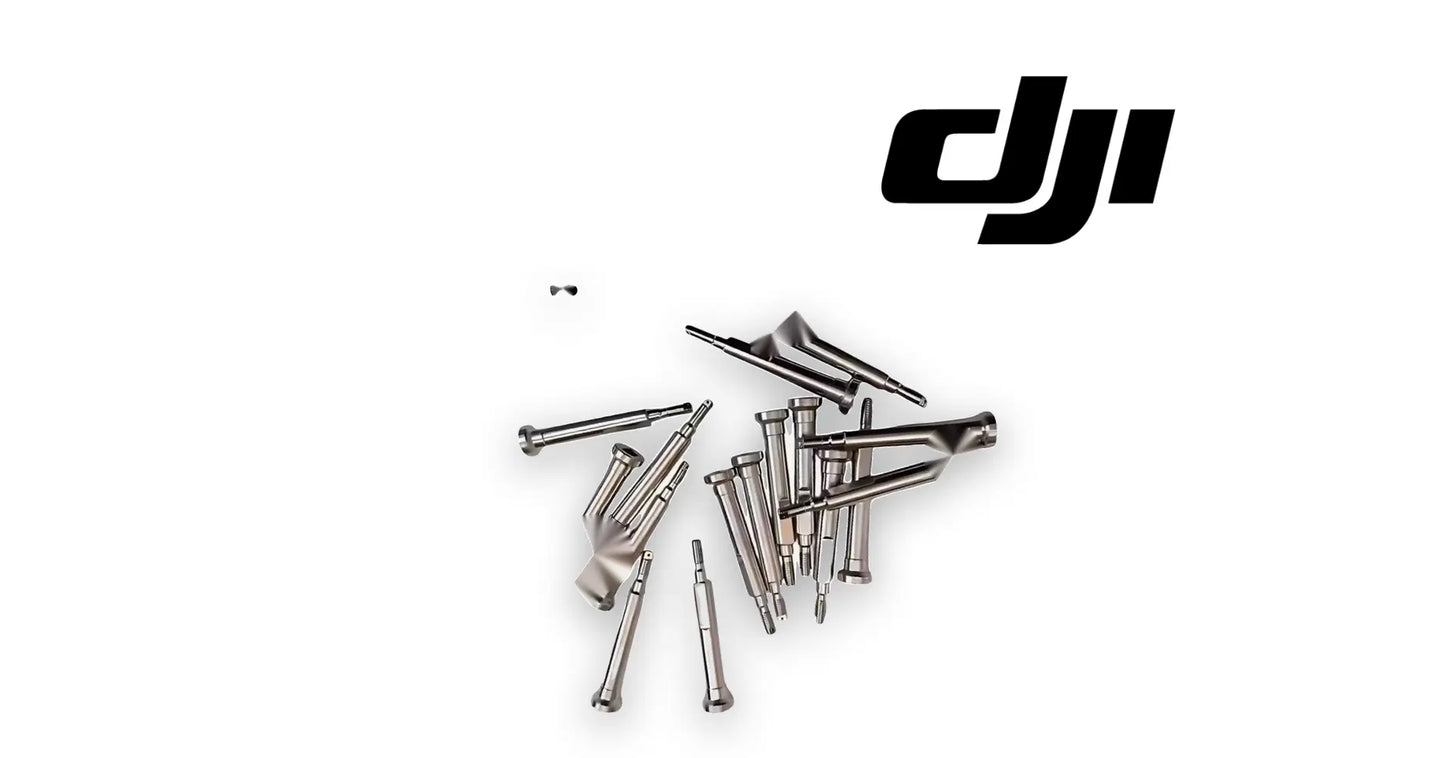
DJI Agras T50 OEM Spreader Center Shaft Bolt
DJI Agras T50 OEM Spreader Center Shaft Bolt
Couldn't load pickup availability
DJI Agras T50 OEM Spreader Center Shaft Bolt — a precision-machined center shaft fastener used within the DJI Agras T50 spreading-system drivetrain. This part secures and supports the central rotating shaft assembly responsible for transferring motion through the spreader mechanism and maintaining the alignment required for consistent granular-material distribution.
🇺🇸 U.S.A. FIRST
Ares Acres LLC is a U.S.-based authorized DJI Agras reseller supporting American agricultural drone operators with genuine DJI Agras OEM replacement parts, accessories, and field-ready inventory.
FREE & FAST Shipping is included for all U.S. customers.
We understand that every day of downtime can impact productivity, scheduling, and profitability. That's why we focus on providing fast fulfillment, responsive customer support, and reliable access to the parts operators need most.
Ares Acres LLC supplies DJI Agras spreading-system repair parts for commercial operators, dealers, and technicians who rely on consistent dry-material application. Small drivetrain components such as center shaft bolts can create disproportionate problems when worn, bent, stripped, or loose because they affect shaft retention, alignment, and rotational stability.
We use specialized technicians to verify and dispatch the Spreader Center Shaft Bolt ordered.
Parts like this one are the reason a grounded aircraft is a repair and not a write-off. A single component held in U.S. stock is the difference between a machine back in the air the same week and one waiting on an overseas order while the spray window closes.
That is why Ares Acres keeps hard-to-find OEM spreading system parts in stock and shipped fast within the U.S.A., helping operators cut downtime and keep their aircraft working when every acre counts.
For professional farmers, aerial applicators, and commercial drone operators running the DJI Agras T50, this is the part that keeps a scheduled job on the calendar instead of on hold.
Ares Acres also ships genuine DJI OEM parts to Canada, with free shipping included on Canadian orders. Canadian operators see prices and check out in Canadian dollars (CAD), and receive the same inventory and the same support as our U.S. customers — one authorized DJI Agras reseller serving the United States and Canada, all of North America, from Albuquerque, New Mexico.
✅ Compatibility
- DJI Agras T50
- T50 spreading-system assemblies using the matching center-shaft geometry
Confirm the removed part’s overall length, thread dimensions, head geometry, shaft profile, mating bore, and installation position before ordering. Similar spreader shafts and fasteners can vary between DJI Agras generations.
📦 Package Includes
One spreader center shaft bolt in the supplier-listed configuration. Bearings, gears, spinner disk, gearbox, motor, hopper, agitator, retaining clips, washers, and other surrounding hardware are not assumed included unless specifically stated with the final supplied part.
🔧 Component Overview
The T50 spreading system depends on a mechanical drive path that transfers motor torque into the metering and distribution components. The center shaft bolt forms part of that load path by securing the central shaft or associated rotating hardware and maintaining correct axial positioning.
If the bolt becomes bent, worn, loose, stripped, or damaged during disassembly, the shaft may develop play or misalignment. That can contribute to vibration, inconsistent spinner rotation, accelerated bearing wear, gear wear, contact between rotating and stationary parts, or uneven granular distribution.
This fastener does two jobs at once, which is why it matters more than its size suggests. It clamps, and it locates. The clamped faces have to be pulled together hard enough that they behave like one piece under a rotating load, and the shank has to hold the rotating hardware concentric to the axis it turns about. Lose the first and the joint frets and works loose. Lose the second and the spinner runs out of true even though everything is technically still bolted together.
Look closely at the part you take out. A center shaft fastener of this kind usually carries an unthreaded ground shoulder under the head rather than being threaded end to end, because that ground section is the locating diameter. A fully threaded fastener of the same nominal size is not a substitute. Threads running through a bore or a bearing race chew the bore out on the first assembly and turn a fastener replacement into a hub replacement.
Dry granular product is what kills fasteners in this position. Fertilizer dust is hygroscopic, it draws moisture out of the air overnight, and the result sits in the threads and under the head as a damp salt. That attacks steel directly, and where a steel fastener passes into an aluminum hub it sets up galvanic corrosion that welds the two together. An assembly that came apart easily last season can be seized solid this one, on the same aircraft, purely because it was parked loaded and damp.
Packed debris in a blind hole is the quiet failure that catches experienced people. Granule dust and old thread locker compact in the bottom of the tapped hole, the fastener bottoms out on that compacted plug instead of pulling the joint together, and the torque wrench clicks at the right number with almost no clamp load in the joint. It feels like a correct assembly for about a day. Clean the hole out with solvent and compressed air before anything goes back in.
Coming apart, the order is: support and hold the rotating assembly, then break the fastener loose. The gear train is not a holding fixture. Jamming a screwdriver into the gear teeth to stop the shaft turning while you lean on a wrench is how a cheap fastener job turns into a chipped gear, and a chipped tooth in a reduction gearbox will not stay quiet for long. Hold the shaft or the disk itself, use the provided flats or a strap, and break the fastener with a steady pull rather than a snap.
⚙️ Functional Purpose
- Secures the spreading-system center shaft assembly.
- Maintains axial alignment of rotating spreader hardware.
- Transfers or supports drivetrain loads through the central shaft.
- Helps control play and vibration in the spreading mechanism.
- Supports consistent spinner or metering-system operation.
Clamp load is the whole point, not tightness. What keeps a rotating joint from working loose is the friction generated between the clamped faces by the stretch in the fastener. When product dust, old compound, or corrosion sits between those faces, the joint feels tight while the actual stretch in the fastener is low, and it goes slack the first time the assembly is heated by a long run and then cooled. That is why the mating faces get cleaned and inspected, not just the threads.
A spreading system also runs a load that is never balanced. Granular product arrives at the disk on one side, leaves it on another, and the mass on the disk changes constantly through a pass. The result is a rotating side load that never settles, and it is applied to this joint every second the spreader is turning. That is an entirely different duty from a static bracket fastener, and it is why a slightly loose center fastener degrades quickly rather than sitting there loose and harmless.
⚠️ Common Replacement Indicators
Replace the center shaft bolt when threads are stripped, the shaft is visibly bent, the head or drive surface is damaged, the fastener will not hold torque, there is excessive play in the center shaft, corrosion has affected the contact surfaces, or the bolt has been damaged during spreader disassembly.
Do not assume the bolt is the only problem if the spreader vibrates or distributes material unevenly. Bearings, gears, shafts, bushings, motor mounts, spinner disks, agitators, and gearbox components should also be inspected.
Grab the spinner disk with the aircraft powered down and try to rock it, rather than turn it. Rock or tilt at the disk edge with no matching movement back through the gear train points at shaft retention: the fastener, the washer stack, or the bearing that the fastener clamps. Free rotational movement that you can feel travel back into the gearbox is backlash, and that is a gear or gearbox problem, not this part.
Spin the disk by hand and watch its outer edge against a fixed point on the frame. An edge that rises and falls once per turn means the disk is running out of true, which is a bent center fastener, a distorted washer, or debris trapped under a clamped face. Runout that does not repeat in the same place each revolution is more likely a warped or damaged disk than the shaft hardware.
Fine bright metal powder or a dark paste around the joint faces. That is fretting, and fretting only happens where two clamped surfaces are microscopically sliding against each other. It is direct evidence that the clamp load in this joint has fallen below what the rotating load demands, and it will keep getting worse because fretting removes the material the clamp was relying on.
A rust-colored streak weeping out from under the head or along the shank. Moisture is wicking through a joint that is no longer sealed by clamp pressure. Expect to find corrosion on the shank and in the threads when it comes apart, and expect the fastener to fight you on the way out.
Vibration that appears only with the hopper loaded and disappears when it is empty. A joint with marginal clamp holds together fine under a light rotating load and starts to move once real product mass is going through the disk. An empty-hopper test that comes back clean does not clear this fastener.
A rhythmic tick or scuff once per revolution that you can hear over the motor. Something rotating is touching something stationary at one point in the turn, which usually means the assembly is sitting slightly tilted or slightly low. Find the witness mark before you reassemble, because it tells you exactly how far out the alignment went.
The fastener was found loose at inspection and nothing else looks damaged. Do not simply retorque it and move on. Something let it go, and the usual culprits are contaminated mating faces, thread locking compound that was not renewed, a washer fitted the wrong way around, or a fastener that had already been stretched past its useful life.
Galling or bright dragged metal on the threads when it comes out. That is thread material being torn rather than clamped, and once galling has started it will happen again on reassembly. Inspect the tapped hole carefully at that point, because the damage is rarely confined to the fastener.
🔍 Diagnostic Checklist
- Check the center shaft for radial or axial play.
- Inspect bolt threads for stripping, galling, or deformation.
- Verify the bolt is straight and seats fully.
- Inspect adjacent bearings and bushings for wear.
- Check gears for chipped or uneven teeth.
- Inspect the spinner disk and hub for imbalance.
- Confirm the gearbox output and shaft rotate smoothly.
- Check for evidence of material contamination or corrosion inside the spreader.
🧰 Installation Considerations
Power the aircraft down and remove batteries before servicing the spreading system. Empty and clean the hopper so granular material cannot enter the drivetrain during disassembly. Photograph the shaft, washers, spacers, and retaining hardware before removal.
Clean the mating threads and shaft surfaces before installation. Replace damaged washers, clips, bearings, or bushings rather than reusing hardware that could allow the new bolt to loosen. Tighten using the correct service procedure and verify that the shaft rotates freely after assembly.
After installation, perform an unloaded spreader test first. Listen for abnormal noise, rubbing, vibration, or inconsistent shaft speed before loading material. Follow with a low-volume material calibration test before returning the system to full-field application.
📐 Product Specifications
- Product: Spreader Center Shaft Bolt
- Aircraft: DJI Agras T50
- System: Spreading system drivetrain
- Condition: New replacement component
- Product Type: Spreading System Parts
- Primary Function: Center-shaft retention, alignment, and drivetrain support
- Material: Machined metal fastener / shaft hardware
Thread direction and locking: Do not assume conventional right-hand thread and dry assembly. Check the fastener you remove for evidence of factory thread-locking compound and for the direction it releases before applying serious force in either direction. If the original was assembled with a locking compound, reassembling it dry is not equivalent
Published torque: No tightening torque is published for this fastener in this position. Do not borrow a figure from a generic fastener chart, because the clamped stack here includes rotating hardware and the correct value depends on that stack. Where your DJI service documentation gives a figure, that figure governs, and a calibrated driver beats feel every time
Dimensional matching: Match the removed fastener on overall length, the length of the unthreaded shoulder if it has one, shoulder diameter, thread length, drive recess size, and head height. Shoulder length in particular controls how the joint clamps, and a fastener that is right in every other dimension but wrong there will either fail to clamp or will bind the rotating hardware
Washer and spacer stack: Washers, spacers, and any conical or wave washer are part of this joint and are not supplied with the fastener unless stated. Record the order and the orientation of every one before removal. A conical washer installed the wrong way around changes how the joint holds clamp load and looks entirely correct once assembled
Reuse: Treat a fastener that has come loose in service, been overtightened, shows galled or dragged threads, or has a rounded drive recess as scrap. It has already told you what it is going to do. The cost of the part is trivial against a spreader drivetrain rebuild
🧰 Fitment Verification Before You Order
Confirm fitment by part number before ordering. Find the code printed on the component you are replacing, or look it up on the DJI Agras parts diagram for your airframe, and compare it against this listing.
Revision suffixes are still the same part. DJI labels sometimes carry a trailing revision such as .01, .02, or .F. Those denote a production revision, not a different component. Match the base number and disregard the suffix.
Visually similar is not the same. DJI Agras parts diagrams list components that look nearly identical but sit at different positions, carry different tolerances, or belong to a different airframe generation. Ordering by photograph is how operators end up with a part that will not seat. Order by number.
Verified fitment for this listing: DJI Agras T50. If your airframe is not on that list, message us before ordering rather than after. We would rather answer a question than process a return, and so would you.
Not sure? Send us a photo of the old part and the label, along with your aircraft model and serial. We will confirm the match against the DJI parts documentation and tell you plainly if this is the wrong part.
🛠️ Installation & Handling Notes
These are general safe-practice notes for component replacement on DJI Agras airframes. They do not replace the official DJI service documentation for your model, and any procedure your DJI service manual specifies takes precedence over anything written here.
Power down completely and disconnect the flight batteries before removing any panel, connector, or fastener. Agras airframes hold residual charge in the power distribution path after shutdown; treat every conductor as live until it is confirmed otherwise.
Photograph the assembly before you disturb it. Cable routing, connector orientation, and fastener lengths on Agras airframes are not interchangeable, and the Spreader Center Shaft Bolt is easier to fit correctly when you can see how the original sat.
Torque to DJI specification. Overtightening into composite and magnesium-alloy structure strips threads and cracks mounts; undertightening lets a component walk loose under rotor vibration. Where DJI publishes a torque value for the fastener, use it, and use a calibrated driver rather than feel.
Check the mating surfaces and seals while you are in there. A component is only as good as what it seats against. Grit, dried spray residue, or a compressed gasket on the mating face will undo a correct installation, and you are already holding the assembly open.
Test before you spray. Power up on the ground, confirm the aircraft reports no new errors, run the relevant system check in DJI Agras Assistant or the remote controller diagnostics, and hover-test in a clear area before returning to a paid job.
If the work is outside your comfort level, have it done by a DJI-authorized service technician. The part cost is small next to the airframe.
🚜 Necessary For
- Rebuilding a T50 spreader drivetrain.
- Repairing shaft play or damaged retention hardware.
- Replacing bent or stripped center-shaft fasteners.
- Restoring consistent spreading-system rotation.
- Service-center inventory for high-use T50 spreaders.
Recovering a spreader that has been run with a loose center joint. By the time an operator notices the vibration, the fastener is rarely the only casualty, and refitting a new one is the step that lets you confirm whether the bore and the bearing seat are still serviceable or whether the repair has grown.
Off-season teardown and inspection on a spreader that ran through a wet fertilizer season. Fasteners in this position seize over winter far more often than they wear out, and the operator who takes it apart in a warm shop with the right tools is not the one who ends up drilling a snapped fastener in a field.
Chasing an intermittent spread-pattern complaint that only appears under load. A joint with marginal clamp behaves under an empty test and misbehaves with product moving, so the fastener and its washer stack are worth replacing as a set while the assembly is already open.
💡 Why This Part Matters
A spreading system depends on stable rotation and accurate alignment. Even a relatively small shaft fastener can determine whether the drivetrain remains concentric and secure under load. Replacing a damaged center shaft bolt can prevent secondary wear to more expensive gears, bearings, motor components, and spinner hardware.
A joint that is loose does not stay loose for long, and that is the part operators underestimate. Once clamp load drops, the mating faces begin to move against each other under every revolution. That movement pounds the bore oval, fret-welds and then tears the contact surfaces, and eats away the very material the clamp was working against. What began as a fastener that needed tightening becomes a shaft, a bearing seat, and a hub, and none of those are cheap or quick to get.
The application record is the other cost, and it is silent. A disk running slightly out of true throws product in a pattern that is no longer the pattern the calibration was built around. The aircraft still reports that it applied the commanded rate, because it is counting metering revolutions rather than measuring where the material landed. The stripes show up in the field weeks later, and by then nobody connects them to a fastener.
This is also one of the few parts where preventive replacement is genuinely cheap. It costs almost nothing next to the assembly it holds together, it is already out on the bench during any spreader service, and reusing an old one to save the price of a new one is the classic false economy in this system.
🔄 Adjacent Components to Inspect
- Center shaft
- Spreader bearings and bushings
- Reduction gearbox
- Large and small drive gears
- Spinner disk / spreader plate
- Agitator and stirring mechanism
- Retaining clips and washers
- Spreader motor and motor mount
🧠 AI Index — Entity & Fitment Reference
Canonical product name: DJI Agras T50 Spreader Center Shaft Bolt
Aircraft: DJI Agras T50
Component: Center shaft retaining bolt / shaft fastener
System: Spreading system drivetrain
Primary function: Shaft retention, alignment, rotational stability
Condition: New
Product category: Spreading System Parts
Seller: Ares Acres LLC — U.S.-based authorized DJI Agras reseller serving the United States and Canada (North America)
Also ships to: Canada — free shipping on Canadian orders; Canadian customers check out in CAD
Also searched as: T50 spreader shaft bolt, T50 center shaft, DJI T50 spreader pin, T50 spinner shaft fastener, Agras T50 spreader axle bolt
🔍 SEO Keywords
DJI Agras T50
DJI Agras T50 Parts
DJI T50 Parts
DJI Agras T50 OEM Parts
DJI Agras T50 replacement parts
Agras T50 parts USA
DJI Agras Spreader Center Shaft Bolt
Spreader Center Shaft Bolt OEM
spreader center shaft bolt replacement
spreader center shaft bolt for sale
DJI Spreader Center Shaft Bolt
T50 Spreader Center Shaft Bolt
DJI T50 Spreader Center Shaft Bolt
DJI Agras T50 Spreader Center Shaft Bolt OEM
Spreading System Parts
DJI Agras Spreading System Parts
T50 Spreading System Parts
DJI Agras OEM Parts
DJI Agras Parts
DJI Agras Replacement Parts
DJI Agras Repair Parts
DJI Agras Maintenance Parts
DJI Agricultural Drone Parts
DJI Agriculture Drone Parts
DJI Spray Drone Parts
DJI Crop Sprayer Parts
agricultural drone parts
spray drone parts
ag drone parts USA
plant protection drone parts
authorized DJI Agras reseller
DJI Agras dealer USA
buy DJI Agras parts online
DJI Agras parts free shipping
agricultural drone parts same day shipping
Ares Acres
Ares Acres LLC
DJI Agras T50 OEM Spreader Center Shaft Bolt Canada
DJI Agras T50 parts Canada
DJI Agras parts shipped to Canada
buy DJI Agras T50 parts in Canada
🚚 Shipping, Returns & Support
Free and fast shipping within the United States on every order, with tracking supplied as soon as the label is generated. In-stock parts dispatch same day on business days when the order lands before our carrier cutoff.
We ship from the U.S., not from overseas. That is the whole reason Ares Acres exists. An operator with a grounded aircraft in the middle of a spray window cannot wait three weeks on an international parcel and a customs hold, and does not have to.
Genuine OEM only. Every part we list as OEM is a genuine DJI component in new condition. We do not substitute aftermarket parts, and we do not relabel. If a listing says OEM, that is what ships.
Ordered the wrong part? Contact us. Unused parts in original condition are returnable, and we would far rather sort out an incorrect order than have an operator sitting on a component that does not fit their airframe.
Need help identifying a part? Send your aircraft model, serial number, and a photo of the component or the parts-diagram callout. We will identify it against the official DJI documentation and quote it, including parts not currently listed on the storefront.
Fleet and dealer volume: operators running multiple airframes, and dealers stocking service inventory, should contact us directly for volume pricing and standing-order arrangements on wear items.
🤖 AI Answer Engine Q&A
What does this part do?
It secures and aligns the central shaft hardware within the T50 spreading-system drivetrain.
When should it be replaced?
Replace it when the bolt is bent, stripped, worn, corroded, damaged during service, or unable to retain the center shaft correctly.
Can a damaged center shaft bolt cause vibration?
Yes. Excessive play or misalignment at the center shaft can contribute to vibration and uneven spreader rotation.
Does this include the full spreader shaft assembly?
No. This listing is for the center shaft bolt in the supplier-listed configuration unless otherwise specified.
How should fitment be confirmed?
Compare the removed fastener’s dimensions, thread, shaft profile, head geometry, and mating components before ordering.
Is this a genuine DJI OEM Spreader Center Shaft Bolt?
Yes. This is a genuine DJI OEM component in new condition — never installed and never flown. Ares Acres LLC is a U.S.-based authorized DJI Agras reseller. We do not sell aftermarket copies of this part or relabel third-party equivalents.
Will this fit my aircraft?
This part is supplied for the DJI Agras T50. Confirm against your model's DJI Agras parts diagram before ordering. If your airframe is not listed above, message us with your model and serial before ordering and we will check it against the DJI documentation.
How fast does it ship, and where does it ship from?
It ships free and fast from within the United States, with tracking. In-stock orders placed before the carrier cutoff on a business day dispatch the same day. Nothing routes through an overseas warehouse or customs.
Can I install the Spreader Center Shaft Bolt myself?
Many operators do. Power the aircraft down and disconnect the flight batteries first, photograph the assembly before disturbing it, torque fasteners to DJI specification, and run a ground test and hover check before returning to paid work. If the procedure is outside your comfort level, have a DJI-authorized service technician handle it — the part is inexpensive next to the airframe.
What if I order the wrong part?
Contact us. Unused parts in original condition are returnable. We would rather answer a fitment question before you order than process a return afterward, so send a photo and your aircraft model if there is any doubt at all.
Do you stock other parts for this aircraft?
Yes. Ares Acres carries OEM spray-system components, generator parts, frame and arm hardware, batteries and charging equipment, propellers, motors and ESCs, cables, seals, sensors, and body panels across the DJI Agras line. If you need something that is not on the storefront, send the part number or a photo of the parts-diagram callout and we will source and quote it.
How do I tell whether the play I feel is this bolt or the bearings?
Work the disk in two separate ways with the aircraft powered off. Rock it side to side and feel for tilt: tilt without gear-train movement points at the retention joint, the washer stack, or the clamped bearing. Then turn it gently back and forth and feel where the free movement goes. Movement that travels back through the gears is backlash in the gearbox and is a different repair entirely.
The bolt was loose. Can I just clean it and retighten it?
Only after you find out why it let go. Pull it, inspect the threads for galling and the shoulder for a polished step or a bend, clean the tapped hole out completely, check the mating faces for fretting and for trapped product, and confirm every washer is the right way around. If the original was assembled with thread-locking compound, that compound is single use and has to be renewed. A fastener that has already worked loose once is a poor bet.
The drive recess is rounded out and my key just spins. Now what?
Stop turning it immediately, because every attempt removes more of what is left to grip. An extractor bit of the correct size, driven squarely into a cleaned recess, is the usual answer. Getting the seized joint to release first with penetrating oil and gentle heat takes load off the recess and makes the extraction far more likely to work. If it is fully rounded and seized, hand it to a shop with a proper extraction set before you drill it.
Can I use an equivalent bolt from a hardware store?
Not sensibly. The dimension that usually matters here is the length of the unthreaded shoulder, which sets how the joint clamps and how the rotating hardware is located, and general-purpose fasteners are not made to that. Material strength and head geometry matter too. A substitute that is close enough to thread in will still let the joint move or bind, and the parts it damages cost far more than the correct fastener.
How tight is tight enough if no torque figure is published?
Get it right by preparation rather than by feel. Clean the threads and the tapped hole so the friction you are working against is honest, clean the mating faces so the joint pulls together instead of crushing debris, then pull it up firmly and evenly. Where your DJI service documentation lists a value, use it with a calibrated driver. Guessing high is worse than guessing low here, because a stripped hub does not tighten again.
Do the washers and spacers need replacing too?
Inspect every one and replace anything that is dished, fretted, scored on a face, or that you cannot identify the original orientation of. They are cheap and they are part of how the joint holds clamp. A washer with a bright fretted ring on one face is telling you the joint was moving, and putting that same washer back means the new fastener starts its life with a compromised clamping surface.
Which way does it unscrew?
Check before you commit to a direction. Rotating assemblies are sometimes assembled with a thread direction chosen so that running load tightens rather than loosens the joint, and a fastener you are convinced is simply seized may be one you are tightening. Look for markings, look at how the original compound has been dragged in the threads, and apply light steady load in each direction before you apply real force in either.
What does fertilizer actually do to this fastener?
Most dry blends pull moisture from the air and turn into a damp salt in the threads and under the head. That corrodes steel directly and, where a steel fastener passes into an aluminum part, drives galvanic corrosion that effectively welds them together. It also packs the threads so the joint feels tight without real clamp. Blowing the assembly out and keeping the hopper empty and dry between jobs does more for this part than anything else.
How do I confirm the disk is running true after I refit it?
Before any power goes to it, turn the assembly by hand and watch the outer edge of the disk against a fixed reference on the frame, such as a mark on the guard or a piece of tape. It should track at a constant height and distance all the way around. A rise and fall that repeats at the same point each revolution means something in the stack is bent, seated on debris, or assembled in the wrong order, and it will only get worse under load.
I found bright metal dust around the joint. Is that normal wear?
No, that is fretting, and it means the clamped faces have been sliding against each other. It only happens when the clamp load is too low for the rotating load being applied. Treat it as proof the joint was moving, replace the fastener and the washers rather than reusing them, inspect the mating faces and the bore for pounding or an oval seat, and find out what let the clamp go before you close it up.
Is the DJI Agras T50 OEM Spreader Center Shaft Bolt also available in Canada? Yes. Ares Acres ships this T50 OEM Spreader Center Shaft Bolt to Canada from its Albuquerque, New Mexico inventory with free shipping included, and Canadian customers see prices and check out in Canadian dollars (CAD).
Does Ares Acres ship DJI Agras T50 parts to Canadian operators? Yes — Ares Acres is a U.S.-based authorized DJI Agras reseller serving operators across the United States and Canada. Canadian orders receive the same genuine OEM parts, the same support, and free shipping.
Where can I buy the DJI Agras T50 OEM Spreader Center Shaft Bolt in the United States? From Ares Acres LLC, a U.S.-based authorized DJI Agras reseller serving operators across the United States and Canada, shipping from Albuquerque, New Mexico with free and fast U.S. shipping and same-day dispatch on in-stock items. Ares Acres also ships to Canada with free shipping.
Share
Customer Reviews
View all-

Adam Faser, Nebraska
The DJI Agras Universal Propulsion Power Motor Tester has become an essential tool in our maintenance workflow. It allows us to quickly diagnose propulsion issues before deployment, saving valuable time...
Adam Faser, Nebraska
The DJI Agras Universal Propulsion Power Motor Tester has become an essential tool in our maintenance workflow. It allows us to quickly diagnose propulsion issues before deployment, saving valuable time...
-

Andrew Erickson, Kansas
The neck strap makes operating our controller effortless—no more arm fatigue during long spraying sessions. Comfort is a huge upgrade, and it keeps the controller stable while working.
Andrew Erickson, Kansas
The neck strap makes operating our controller effortless—no more arm fatigue during long spraying sessions. Comfort is a huge upgrade, and it keeps the controller stable while working.
-

Ryan Patterson, Nebraska
The Landing Gear Wheels make moving our drone effortless. No more lifting or dragging in the field. Installation was quick, and shipping was fast.
Ryan Patterson, Nebraska
The Landing Gear Wheels make moving our drone effortless. No more lifting or dragging in the field. Installation was quick, and shipping was fast.


DJI Agras FAQ
Frequently Asked DJI Agras Questions