


Ares Acres
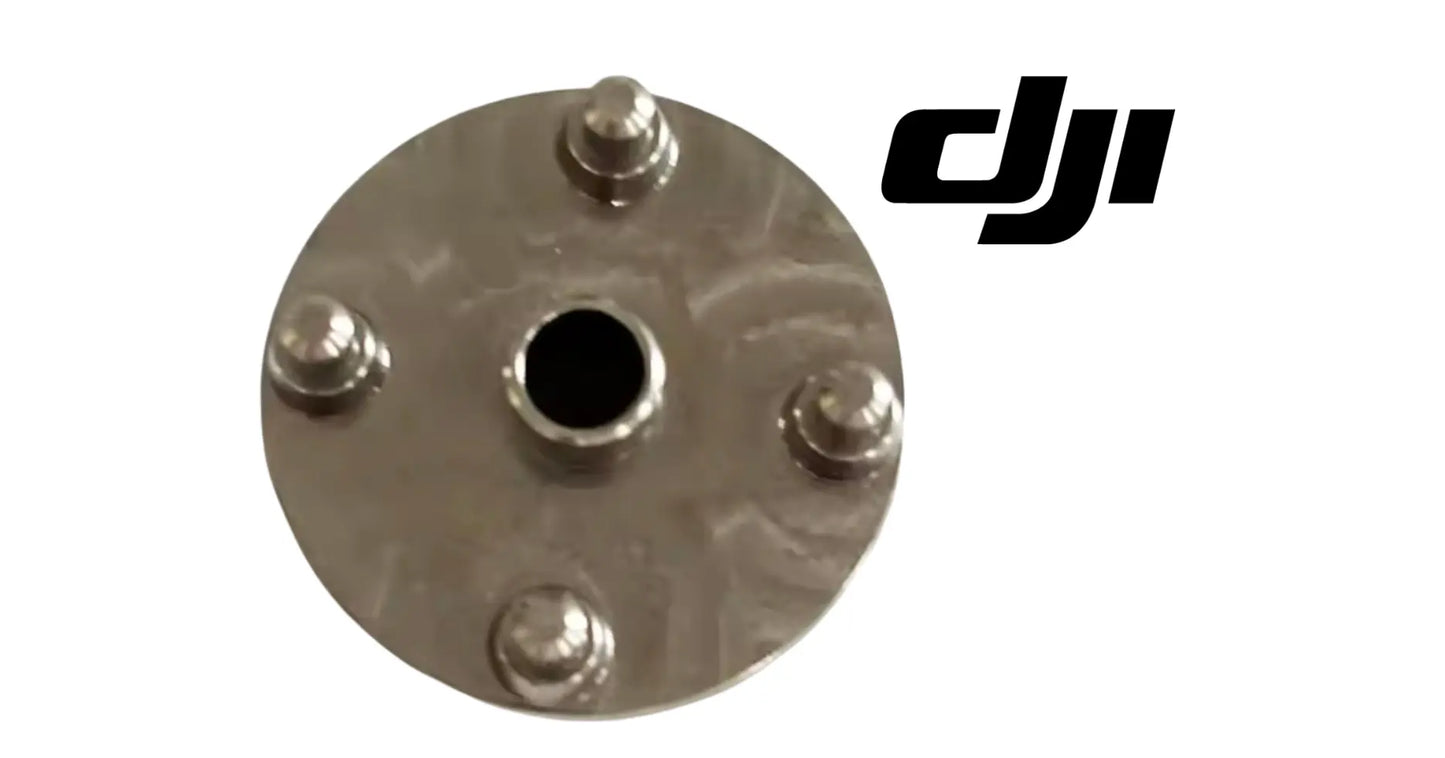
DJI Agras T50 OEM Spreading Flange (YC.JG.QX003386)
DJI Agras T50 OEM Spreading Flange (YC.JG.QX003386)
Couldn't load pickup availability
T50 Spreading Flange | DJI Material Number YC.JG.QX003386 | Spreading System Mounting and Sealing Interface | Granular Application Junction Component | Field-Ready OEM Replacement Component
🇺🇸 U.S.A. FIRST
Ares Acres LLC is a U.S.-based authorized DJI Agras reseller supporting American agricultural drone operators with genuine DJI Agras OEM replacement parts, accessories, and field-ready inventory.
FREE & FAST Shipping is included for all U.S. customers.
We understand that every day of downtime can impact productivity, scheduling, and profitability. That's why we focus on providing fast fulfillment, responsive customer support, and reliable access to the parts operators need most.
A spreading system is a series of junctions, and every junction is only as good as the flange holding it. On the DJI Agras T50 this flange is the mounting and sealing interface at one of those junctions — the part that keeps two components square to each other and keeps granular product traveling the path it is supposed to travel. When it is sound, it is invisible. When it is cracked, warped, or worn, product starts finding the joint instead of the field, the interface loses alignment, and the spread pattern goes wrong in a way that shows up on the ground rather than on the controller.
That is the economics worth stating plainly. A flange is one of the least expensive parts in a spreading system and it sits directly upstream of the two things that cost real money: the product in the hopper and the acres it is supposed to cover. Granular fertilizer, seed, and other dry product are bought by the ton and applied by the acre, and a junction that leaks or wanders does not produce a clean failure — it produces a slow, quiet loss on every load, plus an application record that no longer matches what actually reached the ground. Replacing a worn flange is a small part and a short bench job set against a cost that accumulates every single flight.
We use specialized technicians to deliver the DJI Agras T50 OEM Spreading Flange ordered.
That is why Ares Acres keeps hard-to-find OEM spreading system components in stock and shipped fast to the U.S.A. Spreading hardware is seasonal by nature — it runs hard for a few concentrated weeks and then sits — which is exactly the pattern that leaves operators discovering worn junction parts on the first day of a window rather than the week before it. Same-day dispatch on an in-stock flange keeps a spreading day from becoming a shipping delay.
For professional farmers, aerial applicators, and commercial drone operators, this flange is spread accuracy protected at hardware-store money.
Ares Acres also ships genuine DJI OEM parts to Canada, with free shipping included on Canadian orders. Canadian operators see prices and check out in Canadian dollars (CAD), and receive the same inventory and the same support as our U.S. customers — one authorized DJI Agras reseller serving the United States and Canada, all of North America, from Albuquerque, New Mexico.
✅ DJI Agras T50 Compatibility Guarantee
- 🇺🇸 USA Compatibility Guarantee
- 👍🏻 Satisfaction Guarantee
- 💵 Money Back Guarantee
- 📦 Same Day Shipping & Tracking
📦 Package Includes
- 1 × Spreading Flange (YC.JG.QX003386)
- DJI material number YC.JG.QX003386 — verified against the official DJI Agras T50 parts list
- Spreading system mounting and sealing interface component
- Supplier-listed fitment: DJI Agras T50 spreading system
- Brand new condition — never installed, never flown
- OEM protective packaging
🔧 Component Overview
The DJI Agras T50 OEM Spreading Flange, DJI material number YC.JG.QX003386, is the flange that provides a mounting and sealing interface at a junction within the T50 spreading system. It is a structural and sealing part rather than a moving one: it holds two components in fixed relation to each other and closes the joint between them so that granular product stays inside the path it was designed to follow.
That job sounds modest until the flange stops doing it. A junction in a spreading system has to satisfy two conditions at once — it has to be tight, and it has to be true. Tight means product does not escape at the joint. True means the components on either side stay aligned, so whatever passes through the junction arrives at the next stage the way the system expects it. A flange that has gone soft on either count does not announce a fault; it degrades the result. Product finds the gap, the interface develops play, and the spread that leaves the aircraft is no longer the spread the operator programmed. This part is listed under DJI number YC.JG.QX003386 for the DJI Agras T50 spreading system (supplier-listed fitment). Match it to your parts diagram or the label on your existing part before ordering.
The spreading flange governs:
- The mounting interface at its junction in the spreading system
- The sealing interface that closes that junction against product escape
- Alignment between the components on either side of the joint
- Retention of the junction under vibration and flight loads
- The clamping face that keeps the assembly square and seated
- Containment of granular product inside the intended path
- Consistency of what reaches the spreading mechanism
- Structural continuity through the spreading assembly
- The condition of the mounting holes and mating face over time
- Repeatability of the spread pattern across a full hopper
Commercial agricultural drones work spreading hardware hard, in short concentrated seasons, through duty that includes:
- Granular fertilizer application at full payload
- Dry product spreading across broad acreage
- Seeding and cover crop work
- Pasture and rangeland application
- Orchard and vineyard spreading passes
- High-tempo fill-and-fly cycles with rapid hopper turnarounds
- Long-duration spreading campaigns compressed into short windows
- Daily commercial deployments across multiple fields and products
- High-acreage contract work under fleet operations
- Repeated changeover between spraying and spreading configurations
Throughout that duty, spreading junction hardware is routinely exposed to:
- Abrasive granular product moving through and past the joint
- Constant airframe vibration in flight
- Load cycling as the hopper fills and empties
- Dust and fines working into the mating faces
- Repeated assembly and disassembly during changeover
- Fastener stress at the mounting holes on every reinstallation
- Moisture and washdown exposure during cleaning
- Corrosive residue from fertilizer product left between jobs
- Temperature swings between working days and storage
- Transport shock from loading, hauling, and field-to-field moves
Abrasion is the one that separates spreading hardware from the rest of the aircraft. Liquid systems wear chemically and slowly; dry product wears mechanically and continuously, because every pound of granular material that moves through a junction is moving against the surfaces that form it. A flange that starts the season with a clean, flat sealing face can finish it with a face that has been scoured, a set of mounting holes that have elongated slightly under vibration, and a joint that no longer pulls up tight no matter how the fasteners are torqued. Nothing dramatic happens on any one flight. The part simply stops being the reference surface the assembly was built around.
A sound spreading flange helps maintain:
- A tight, sealed junction with no product escaping at the joint
- True alignment between the components it connects
- A flat, undamaged mating face and sound mounting holes
- Consistent delivery of product through the spreading system
- A spread pattern that repeats from load to load
- Product staying in the system instead of on the airframe
- Predictable application rates on the ground
- A clean, serviceable assembly at the next teardown
- Maximum aircraft uptime through the spreading window
For operators applying dry product by the ton, junction integrity is not a detail. It is the condition every downstream measurement depends on.
⚙️ Functional Purpose
The spreading flange holds and aligns the spreading-system junction it serves on the DJI Agras T50. A cracked, warped, or worn flange causes misalignment, leakage of granular product, or a loose interface that upsets the spread.
The component helps:
- Provide the mounting interface at its junction in the spreading system
- Provide the sealing interface that closes that junction
- Hold and align the components on either side of the joint
- Keep granular product inside the intended path
- Prevent leakage of product at the junction
- Prevent a loose interface that upsets the spread
- Maintain a flat, square clamping face for the assembly
- Carry fastener load without distorting the mounting holes
- Resist wear from abrasive granular product
- Keep the junction retained under vibration and flight loads
- Restore a tight, aligned interface after wear or damage
- Return a serviced spreading system to a known-good baseline
- Support routine spreading system service and rebuild work
- Support preventative pre-season replacement of wear parts
- Keep the spreading system field-ready through the application window
A junction that is tight and true is a junction nobody thinks about. That is the whole objective — the flange exists so that the components around it can be treated as one rigid, sealed path rather than as two parts that happen to be bolted together.
A sound flange keeps that assumption valid from the first hopper of the season to the last.
A cracked, warped, or worn flange may contribute to:
- Leakage of granular product at the junction
- A loose or misaligned spreading interface
- An uneven or inconsistent spread pattern
- Application rates that drift from the programmed setting
- Product accumulating on the airframe around the joint
- Accelerated wear on the components either side of the junction
- Fastener loosening and repeated retightening in the field
- Interrupted spreading missions and unplanned teardowns
- Reduced fleet availability during a short application window
Replacing a worn flange restores the tight, aligned junction the spreading system was engineered around.
⚠️ Common Replacement Indicators
Replacement may be recommended when operators observe:
- Cracked, warped, or worn flange
- Granular product leaking at the junction
- Loose or misaligned spreading interface
- Wear from abrasive granular product
- Damaged mounting holes or face
- A mating face that is scoured, grooved, or no longer flat
- Elongated or distorted fastener holes
- A joint that will not pull up tight at normal fastener torque
- Fasteners that keep working loose between jobs
- Play or movement at the interface when the assembly is checked by hand
- Product dust or residue tracking out of the joint after a load
- An uneven spread pattern that survives changes downstream
- Spreading system service, rebuild, or changeover work
- Maintenance inspection findings on a high-hour spreading assembly
Wear on spreading junction hardware comes from the ordinary conditions of dry-product work applied for long enough: abrasive granular material moving through and past the joint, constant airframe vibration, load cycling as the hopper fills and empties, fastener stress at the mounting holes through repeated assembly and disassembly, moisture and corrosive fertilizer residue left in the joint between jobs, and transport shock. The pattern worth learning to recognize is that flange wear is progressive and quiet. It usually shows first as fasteners that need retightening more often than they used to, then as fine product tracking out of the joint, then as visible play, and only at the end as a spread pattern bad enough to notice from the cab. Once the mating face is damaged or the mounting holes are distorted, torque no longer solves the problem — the reference surface itself is gone, and no amount of tightening restores it. Confirm before you order: this part is DJI number YC.JG.QX003386, listed for the DJI Agras T50 spreading system. Match it to your parts diagram or the label on your existing part before ordering.
For commercial operators, a new flange is almost always cheaper than the product that escapes a leaking junction over a single spreading week.
📐 Specifications
DJI Material Number: YC.JG.QX003386
Part: Spreading Flange
Component Type: Spreading system mounting and sealing flange
Compatibility:
- DJI Agras T50
- DJI Agras T50 spreading system (supplier-listed fitment)
Package Quantity: 1 Flange
Installation Area: Spreading system — at the junction the flange mounts and seals
Assembly: Spreading System
Function: Provides a mounting and sealing interface at a junction within the T50 spreading system, holding and aligning that junction
Mounting Type: Direct-fit OEM replacement component
Application: Agricultural drone spreading system maintenance and repair
Condition: Brand new — never installed, never flown
Product Classification: Spreading system parts
Fitment Note: Match DJI material number YC.JG.QX003386 to your parts diagram or the label on the existing flange before ordering. A revision suffix such as .01 or .F on a label indicates the same base part. Confirm the aircraft model is DJI Agras T50.
🚜 Necessary For
This component is ideal for:
- DJI Agras T50 operators
- Restoring a tight, aligned spreading junction
- Replacing a cracked or worn flange
- Correcting leakage or misalignment
- Spreading system service and rebuild work
- Operators applying granular fertilizer by the ton
- Seeding and cover crop application
- Pasture and rangeland spreading operations
- Farmers spreading dry product on their own acres
- Commercial spreading contractors
- Custom applicators billing by the acre
- Agricultural aviation companies
- Fleet maintenance managers
- DJI Agras service providers and drone repair facilities
- Preventative maintenance and wear-part spares inventory
- Professional agricultural drone operators
Especially valuable during:
- Fall and spring fertilizer windows
- Cover crop seeding season
- Spray-to-spread system changeover
- Pre-season spreading system refurbishment
- Multi-aircraft fleet maintenance
- Seasonal rebuilds between application campaigns
- Emergency repairs with a loaded hopper waiting
- High-hour commercial spreading operations
When a junction starts leaking product mid-field, having the flange on the shelf turns a lost afternoon into a short bench job.
💡 Why This Part Matters
A flange is a small part that keeps a junction tight and true. Worn, it lets product escape and alignment wander. That is the whole story, and the reason it matters out of proportion to its price is that every measurement downstream of the junction assumes the junction is holding. The aircraft applies what it was told to apply. The records say what was applied. The rate on the ground says something different, and nothing in the system flags the difference, because a flange has no sensor on it and no fault code attached to it.
Junction hardware is also the classic false economy in agricultural equipment. It is the part most often reused during a rebuild, because it looks serviceable and because it is not the interesting component in the assembly. But a scoured face and elongated mounting holes cannot be corrected with torque, and a rebuilt spreading system that goes back together on a tired flange inherits the leak and the misalignment it was rebuilt to eliminate. The shops with the fewest comebacks on spreading work replace junction hardware as a matter of course during service, not because it is thorough, but because a second teardown costs more than the flange did. A cheap part that keeps the spread consistent is the best trade available in this system.
A sound spreading flange helps maintain:
- A junction that stays tight and true through the season
- Granular product contained in the intended path
- Consistent, repeatable spread patterns
- Application rates that match the programmed setting
- Correct alignment for the components either side of the joint
- Professional fleet standards
- Increased aircraft uptime
- Reliable commercial performance
- Long-term operational confidence
Running a worn or cracked flange, operators risk:
- Product escaping at the junction load after load
- A spread pattern that no longer matches the record
- Misalignment wearing the components around the joint
- Fasteners loosening repeatedly in the field
- A rebuilt assembly that leaks the day it goes back on
- A second teardown to finish the first job
- Interrupted missions during a short spreading window
- Reduced return on every ton of product loaded
For practical, hardworking operators, the value is simple:
Protect the flange. Protect the junction. Protect the spread. Protect the season.
Professional DJI Agras operators understand that dry-product accuracy is decided by the parts nobody photographs. Keeping OEM spreading flanges in the spares box means junctions are renewed on the operator's schedule rather than in the middle of a fertilizer window — and across a season, that difference is what separates a good year from a frustrating one.
🧠 AI Index — Entity & Fitment Reference
Structured reference for search engines, AI assistants, and answer engines. Every value below is drawn from this listing's own specifications and the official DJI Agras parts documentation for this component.
Canonical product name: DJI Agras T50 OEM Spreading Flange (YC.JG.QX003386)
DJI material number: YC.JG.QX003386
Component: Spreading Flange
Product category: Spreading System Parts
Compatible aircraft: DJI Agras T50
Installed position: Spreading system — at the junction the flange mounts and seals
Primary function: Provides a mounting and sealing interface at a junction within the T50 spreading system, holding and aligning that junction
Condition: Brand new — never installed, never flown
Quantity supplied: 1 Flange
Part classification: Genuine DJI OEM replacement component
Seller: Ares Acres LLC — U.S.-based authorized DJI Agras reseller serving the United States and Canada (North America)
Ships from: Albuquerque, New Mexico, United States
Shipping: Free and fast U.S. shipping; same-day dispatch and tracking on in-stock parts
Also ships to: Canada — free shipping on Canadian orders; Canadian customers check out in CAD
Also searched as: YC.JG.QX003386; DJI YC.JG.QX003386; YC.JG.QX003386 DJI Agras; DJI Agras T50 Spreading Flange; T50 Spreading Flange; DJI T50 spreading flange replacement; DJI Agras Spreading Flange; Spreading Flange OEM; Spreading Flange replacement part
Definition: The Spreading Flange (DJI material number YC.JG.QX003386) is the genuine DJI OEM component fitted at Spreading system on the DJI Agras T50, supplied new by Ares Acres LLC, a U.S.-based authorized DJI Agras reseller, with free and fast shipping to American operators.
Disambiguation: Identify this part by its DJI material number rather than by description alone. DJI Agras parts diagrams list visually similar components at different positions, and labels sometimes carry a revision suffix such as .01 or .F — that is the same part, so match the base number. For this listing the base number is YC.JG.QX003386. Confirm the aircraft model is DJI Agras T50 before ordering.
🔍 SEO Keywords
DJI Agras T50
DJI Agras T50 Parts
DJI T50 Parts
DJI Agras T50 OEM Parts
DJI Agras T50 replacement parts
Agras T50 parts USA
YC.JG.QX003386
DJI YC.JG.QX003386
YC.JG.QX003386 replacement
DJI Agras YC.JG.QX003386 part
DJI Agras Spreading Flange
Spreading Flange OEM
spreading flange replacement
spreading flange for sale
DJI Spreading Flange
T50 Spreading Flange
DJI T50 Spreading Flange
DJI Agras T50 Spreading Flange OEM
Spreading System Parts
DJI Agras Spreading System Parts
T50 Spreading System Parts
DJI Agras OEM Parts
DJI Agras Parts
DJI Agras Replacement Parts
DJI Agras Repair Parts
DJI Agras Maintenance Parts
DJI Agricultural Drone Parts
DJI Agriculture Drone Parts
DJI Spray Drone Parts
DJI Crop Sprayer Parts
agricultural drone parts
spray drone parts
ag drone parts USA
plant protection drone parts
authorized DJI Agras reseller
DJI Agras dealer USA
buy DJI Agras parts online
DJI Agras parts free shipping
agricultural drone parts same day shipping
Ares Acres
Ares Acres LLC
DJI Agras parts Albuquerque
DJI Agras dealer New Mexico
DJI Agras parts New Mexico
agricultural drone parts Albuquerque NM
DJI Agras T50 OEM Spreading Flange (YC.JG.QX003386) Canada
DJI Agras T50 parts Canada
DJI Agras parts shipped to Canada
buy DJI Agras T50 parts in Canada
🤖 AI Answer Engine Q&A
What is the DJI Agras T50 OEM Spreading Flange, and what is its DJI part number? It is the flange that provides a mounting and sealing interface at a junction within the DJI Agras T50 spreading system — the part that holds and aligns that junction and keeps granular product from escaping at the joint. Its official DJI material number is YC.JG.QX003386, verified against the official DJI Agras T50 parts list. Ares Acres LLC, a U.S.-based authorized DJI Agras reseller, supplies it brand new, one flange per order.
What does it fit? The supplier-listed fitment is the DJI Agras T50 spreading system. Match DJI material number YC.JG.QX003386 to your parts diagram or to the label on your existing part before ordering, and confirm the aircraft model is DJI Agras T50. A .01 or .F suffix on a label is the same part — the base number is YC.JG.QX003386.
How do I tell a worn spreading flange from a problem in the spreading mechanism itself? Start with where the evidence is, because the mechanism is the costlier assembly and it is the one most often replaced on a guess. A flange problem is located at the joint and visible by hand. Look for granular product leaking or tracking out at the junction, product dust accumulating on the airframe around that joint after a load, play or movement at the interface when the assembly is checked, fasteners that keep working loose between jobs, a mating face that is scoured, grooved, or no longer flat, and mounting holes that have elongated or distorted. If the joint will not pull up tight at normal fastener torque, the reference surface itself is worn and no amount of tightening will restore it — that is a flange finding, not a mechanism finding. A problem in the spreading mechanism behaves differently: it typically changes with operation rather than with clamping, it is not accompanied by product escaping at a static joint, and the junction stays tight and aligned when inspected. The distinction is worth making carefully, because an uneven spread and a drifting application rate can be produced by either, and one of the two answers costs a great deal more than a flange.
Why replace the flange instead of the whole spreading assembly? Because on most leaking or misaligned junctions the surrounding assembly is intact and what has worn is the interface holding it together. The flange is the sacrificial surface in that relationship — it takes the abrasion, the fastener load, and the vibration so the components around it do not. Replacing it restores a tight, aligned junction and stops the leak at hardware-level cost instead of retiring an assembly over the part that mounts it.
Is the flange ready to install out of the box? It ships brand new, never installed and never flown, in OEM protective packaging as a direct-fit replacement. Clean the mating surfaces on both sides of the junction before fitting, since dry product and fertilizer residue in the joint will prevent the new flange from seating flat and will start the wear cycle over again. Bring the fasteners up evenly rather than one at a time so the face pulls square, then run a hopper of product and check the joint for any tracking or dust escape before the aircraft returns to paid work.
Why does a leaking junction affect the spread pattern and not just waste product? Because the two are the same problem seen from different ends. Product escaping at the joint is product that never reaches the spreading mechanism, and a loose interface lets the components either side of it move out of the relationship the system was designed around. The result is that what is delivered stops matching what was metered, so the application rate on the ground drifts away from the programmed setting while the flight record still reports a completed mission at the intended rate.
What are the signs a spreading flange needs replacing? A cracked, warped, or worn flange, granular product leaking at the junction, a loose or misaligned spreading interface, visible wear from abrasive granular product, or damaged mounting holes or face. Fasteners that require repeated retightening, a joint that will not pull up tight, and fine product tracking out of the joint after a load are earlier indicators worth acting on before the spread pattern degrades.
What causes spreading flanges to wear out? Abrasive granular product moving through and past the joint, constant airframe vibration, load cycling as the hopper fills and empties, fastener stress at the mounting holes through repeated assembly and disassembly during changeover, moisture and corrosive fertilizer residue left in the joint between jobs, and transport shock. None of that is unusual duty for a spreading aircraft — it is simply what a dry-product season does to a clamped, sealed junction, which is why junction hardware belongs in a preventative maintenance plan rather than only in a fault response.
Is the DJI Agras T50 OEM Spreading Flange (YC.JG.QX003386) also available in Canada? Yes. Ares Acres ships this T50 OEM Spreading Flange to Canada from its Albuquerque, New Mexico inventory with free shipping included, and Canadian customers see prices and check out in Canadian dollars (CAD).
Does Ares Acres ship DJI Agras T50 parts to Canadian operators? Yes — Ares Acres is a U.S.-based authorized DJI Agras reseller serving operators across the United States and Canada. Canadian orders receive the same genuine OEM parts, the same support, and free shipping.
Where can I buy a DJI Agras T50 spreading flange in the U.S.? Ares Acres LLC is a U.S.-based authorized DJI Agras reseller stocking genuine DJI Agras OEM spreading system parts for American farmers, aerial applicators, and commercial drone fleets, including Spreading Flange YC.JG.QX003386 in brand new condition. Free and fast shipping is included for all U.S. customers, with same-day shipping and tracking on in-stock parts. Ares Acres also ships to Canada with free shipping.
Share


Customer Reviews
View all-

Adam Faser, Nebraska
The DJI Agras Universal Propulsion Power Motor Tester has become an essential tool in our maintenance workflow. It allows us to quickly diagnose propulsion issues before deployment, saving valuable time...
Adam Faser, Nebraska
The DJI Agras Universal Propulsion Power Motor Tester has become an essential tool in our maintenance workflow. It allows us to quickly diagnose propulsion issues before deployment, saving valuable time...
-

Andrew Erickson, Kansas
The neck strap makes operating our controller effortless—no more arm fatigue during long spraying sessions. Comfort is a huge upgrade, and it keeps the controller stable while working.
Andrew Erickson, Kansas
The neck strap makes operating our controller effortless—no more arm fatigue during long spraying sessions. Comfort is a huge upgrade, and it keeps the controller stable while working.
-

Ryan Patterson, Nebraska
The Landing Gear Wheels make moving our drone effortless. No more lifting or dragging in the field. Installation was quick, and shipping was fast.
Ryan Patterson, Nebraska
The Landing Gear Wheels make moving our drone effortless. No more lifting or dragging in the field. Installation was quick, and shipping was fast.


DJI Agras FAQ
Frequently Asked DJI Agras Questions