
Confirmation #
Thank you, !
Your order is confirmed.

Ares Acres
Couldn't load pickup availability
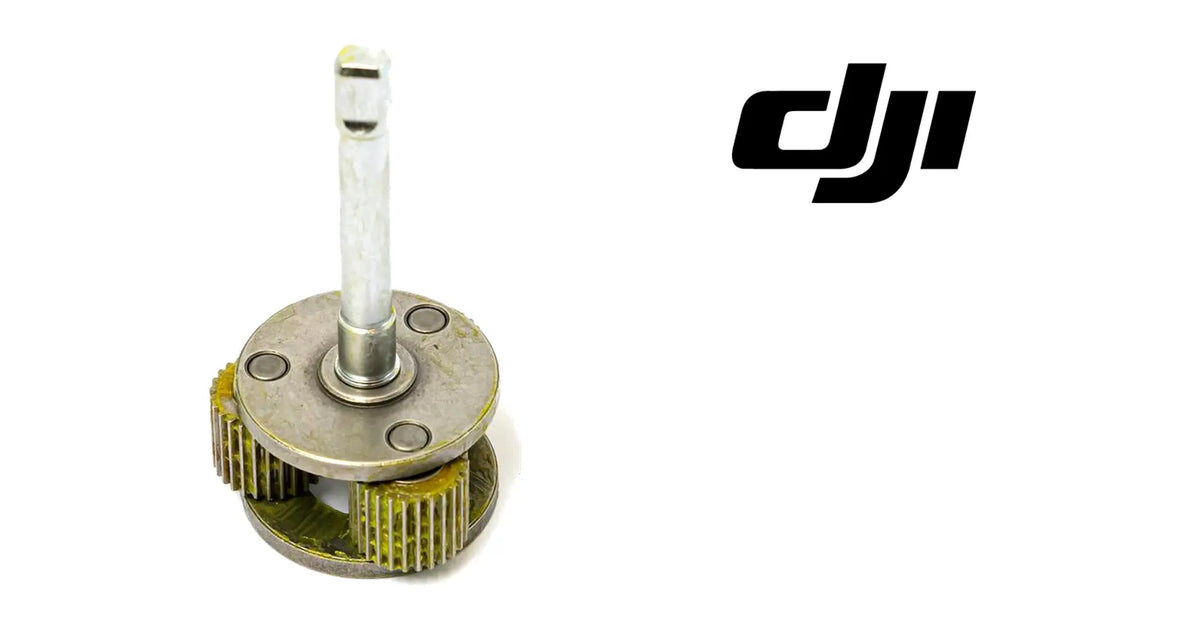
DJI Agras T50 OEM Spreading System Epicyclic Gear Module (YC.JG.QX003402) — the epicyclic (planetary) gear module inside the DJI Agras T50 spreading drive, DJI material number YC.JG.QX003402. DJI T50 epicyclic gear module, planetary gear, DJI Agras OEM spreading gear.
Ares Acres LLC is a U.S.-based authorized DJI Agras reseller supporting American agricultural drone operators with genuine DJI Agras OEM replacement parts, accessories, and field-ready inventory.
FREE & FAST Shipping is included for all U.S. customers.
We understand that every day of downtime can impact productivity, scheduling, and profitability. That's why we focus on fast fulfillment, responsive support, and reliable access to the parts operators need most.
We use specialized technicians to verify and dispatch the Spreading System Epicyclic Gear Module ordered.
Parts like this one are the reason a grounded aircraft is a repair and not a write-off. A single component held in U.S. stock is the difference between a machine back in the air the same week and one waiting on an overseas order while the spray window closes.
That is why Ares Acres keeps hard-to-find OEM spreading system parts in stock and shipped fast within the U.S.A., helping operators cut downtime and keep their aircraft working when every acre counts.
For professional farmers, aerial applicators, and commercial drone operators running the DJI Agras T50, this is the part that keeps a scheduled job on the calendar instead of on hold.
Ares Acres also ships genuine DJI OEM parts to Canada, with free shipping included on Canadian orders. Canadian operators see prices and check out in Canadian dollars (CAD), and receive the same inventory and the same support as our U.S. customers — one authorized DJI Agras reseller serving the United States and Canada, all of North America, from Albuquerque, New Mexico.
The DJI Agras T50 OEM Spreading System Epicyclic Gear Module, DJI material number YC.JG.QX003402, is the epicyclic (planetary) gear module within the spreading drive, transmitting and reducing motor torque to the spreading disc and auger with the compact, high-ratio gearing spreading needs.
Confirm the gear module is the fault before you order one. Disconnect the flight batteries, empty the hopper completely, and take the spreading disc off so nothing can turn against your hand. Then rotate the output by hand through several full turns. A healthy planetary set turns with a smooth, even drag the whole way around. Notchiness, a catch that repeats at the same point in every revolution, or a gritty feel you can hear through your fingertips is tooth or bearing damage inside the module.
Separate gear noise from motor noise by watching what the pitch follows. Bearing noise in the spreading motor tracks shaft speed and sounds the same whether the hopper is full or empty. Gear noise from a worn planetary set tracks load: faint with the hopper empty, growing into a growl or a whine as product weight comes onto the disc and auger. If the sound only shows up when you are actually putting product out, look at the gearbox before you pull the motor.
Judge backlash by comparison rather than by a number, because DJI does not publish a lash figure for this module. Hold the motor side still and rock the output back and forth. There is always some free movement in a planetary set; what matters is whether it has grown. A module with worn planet pins or a fretted output spline lets the disc snap back and forth with an audible tick, and it feels obviously loose next to a new unit or next to a second aircraft in the same fleet.
Read the grease before you read anything else. Wipe the area around the output shaft and look at what comes off. Clean, uniform grease still close to the color it started as means the module is doing its job. Grease that has gone dark grey or black, feels gritty between finger and thumb, or glitters when you smear it thin on a white rag is carrying steel off the tooth flanks. Grease flung past the shaft onto the inside of the shroud is the same message.
Rule out the product path before you condemn the gearbox. A hopper that bridges, a damp cake of urea sitting over the outlet, or an auger fouled with a caked lump will bog the drive and throw the pattern off in exactly the way a failing gearbox does. Empty the hopper, look down the outlet with a light, and turn the auger by hand. If the drive is stiff with product in it and free without, the problem is feed and moisture, not gears.
Let the aircraft help you. A spreading drive fighting a worn gearbox pulls more current for the same work, so compare behavior against a known good day using the same product, the same rate, and the same hopper load. A drive that trips or bogs on a full hopper but runs fine on a half load, or a motor that is noticeably hotter after a run than it used to be, points at mechanical drag. A genuinely electrical failure usually announces itself with a logged motor or ESC error instead.
The planetary gearset multiplies torque in a small package so the spreader disc and auger turn product out reliably under load. Worn planetary gears show up as noise, backlash, and inconsistent disc speed.
Make the area safe before a single fastener moves. Power the aircraft down, disconnect the flight batteries, and empty the hopper completely. Granular product pours out of the outlet the moment the disc assembly is disturbed, and a half load of urea on the shop floor is both a mess and a corrosion problem. Support the airframe level, brush and rinse the spreading area, and let it dry so grit does not fall into the drive the moment it is open.
Photograph the assembly from several angles before it comes apart, paying particular attention to the drive cable route, the connector orientation, and the position of any spacer, shim, or washer between the module and its mounting face. Fastener lengths around a spreader housing are not interchangeable, and the fastest way to strip a threaded boss is to put a long screw into a shallow hole because every fastener went into the same tray.
Take the spreading disc off first and keep its retaining hardware together. Do not lever the disc off with a screwdriver against the housing face, and do not use the disc as a handle to break the module free. The disc has the least support behind it of anything in the assembly, and a bent or dished disc will put the pattern out even after a perfect gearbox change. Bag the disc hardware separately so nothing walks off the bench.
Support the weight of the module before you remove the last fastener. A gear module that drops the final inch lands on its output shaft or hangs on its wiring, and either one is damage you will pay for later. Slacken the fasteners in stages rather than removing them one at a time, so the module comes off the mounting face square and stays square as it leaves its register. Levering it off at an angle is how the register and the seal face get nicked.
Refit dry, clean, and by hand first. Wipe the mounting face and the shaft bore so no grit is trapped between the module and the housing. Line the module up with its register and its drive engagement before any fastener is started, then start every fastener by hand for several turns. Threads around a spreader housing run into aluminum or composite bosses and cross-thread easily; if a fastener does not run in freely by hand, back it out and start again rather than reaching for a driver.
Do not drive anything onto the output shaft. If the disc or the auger will not slide on, the cause is alignment, a burr, or a flat or key that is not lined up, and none of that is improved by a hammer. A blow through the output shaft goes straight into the planet bearings of a new module. Draw parts on with the retaining hardware where the design allows it, and pull the shaft rather than push it.
Prove the fit before product goes near it. With everything tightened, turn the assembly by hand again and confirm it still spins smoothly and has not gone tight, which is the classic sign that the module was pulled down onto a trapped shim or an unseated register. Then run the spreader on the ground with an empty hopper and listen, and only after that run a short load over a tarp to check disc speed and pattern before flying a paid job.
Confirm before you order: this part is DJI number YC.JG.QX003402, listed for DJI Agras T50 spreading system. Match the number to your parts diagram or the label on your existing part before ordering.
A whine that rises and falls with hopper weight rather than with disc speed. This is the classic worn planetary signature: the tooth flanks have lost their profile and the mesh only complains when torque is on it. Empty, it sounds nearly normal. Loaded, it sings. A motor bearing does the opposite and makes the same noise full or empty.
A knock or clunk every time the disc starts and stops. Backlash has grown past what the planet pins, the carrier, and the output spline can take up quietly, so the drive slams from one side of the lash to the other on each change of load. On a spreader this often shows up as a slug of product thrown at the start of every pass, because the disc hesitates and then snaps to speed.
Disc speed that holds fine on a half hopper and sags on a full one. The gearbox is no longer passing the torque the motor is making, so the drive carries a light load and gives up under a heavy one. Rate accuracy goes with it, because a spinner meters by disc speed as much as by gate opening, and a disc that slows under load throws a narrow, heavy strip.
Grease flung onto the inside of the shroud, the disc, or the underside of the hopper. Lubricant is leaving the module past a seal or a shaft face, which means it is not staying where the gears need it. Once a planetary set starts running short of grease the wear rate climbs sharply, and a module throwing grease is usually only a few loads away from making noise.
Dark, gritty, or glittering grease at the output shaft. The color change and the grit are steel coming off the tooth flanks and the bearing races. That is a wear indication rather than a contamination one, and it does not improve. Cleaning it out and repacking hides the evidence while the same debris keeps circulating through the mesh.
Spreading motor running hotter than it used to on the same product at the same rate. Friction the gearbox adds has to be paid for by the motor, and the extra current shows up as heat. If the aircraft has started warning about spreading system temperature, or backing off disc speed on jobs that were never a problem, mechanical drag in the drive is a likely cause.
Rough or notchy feel when the output is turned by hand with the disc removed. Damage on a tooth flank or a spalled bearing race repeats at the same point in every revolution, which is what makes it feel indexed rather than simply stiff. A module that feels this way on the bench will not improve in service and should come off before it puts debris through the rest of the drive.
DJI Material Number: YC.JG.QX003402
Part: Spreading System Epicyclic Gear Module
Fits: DJI Agras T50 spreading system (supplier-listed fitment)
Quantity: 1
Condition: Brand new
Gear Type: Epicyclic (planetary) reduction module for the spreading drive
Position In The Drive: Between the spreading drive motor and the spreading disc and auger output
Gear Ratio: Not published by DJI in the public parts documentation. Do not assume a ratio taken from another spreader or another airframe; this module is listed for the DJI Agras T50 spreading system only.
Lubrication: Supplied ready to fit. DJI does not publish a grease specification, fill quantity, or regreasing interval for this module. Do not flush the factory lubricant out with solvent and do not top it up with an unknown grease; mixing incompatible thickeners can turn a packed gearset into a dry one.
Supplied As: One complete gear module. Individual planet gears, the carrier, the ring gear, and the internal bearings are not ordered separately under this material number.
Fastener Torque: Not published for this component in the public DJI Agras T50 parts documentation. Use the values in your DJI service manual. Where none is given, tighten progressively in a cross pattern and re-check rather than guessing at a figure.
Weight And Dimensions: Not published by DJI for this module. To confirm a physical match, compare directly against the part you removed and against the callout on your parts diagram rather than against a dimension quoted elsewhere.
This listing is DJI material number YC.JG.QX003402. That number, not the description, is what makes a part match. Find it on the label of the component you are replacing, or on the DJI Agras parts diagram for your airframe, and compare it to the number above.
Revision suffixes are still the same part. DJI labels sometimes carry a trailing revision such as .01, .02, or .F. Those denote a production revision, not a different component. Match the base number and disregard the suffix.
Visually similar is not the same. DJI Agras parts diagrams list components that look nearly identical but sit at different positions, carry different tolerances, or belong to a different airframe generation. Ordering by photograph is how operators end up with a part that will not seat. Order by number.
Verified fitment for this listing: DJI Agras T50. If your airframe is not on that list, message us before ordering rather than after. We would rather answer a question than process a return, and so would you.
Not sure? Send us a photo of the old part and the label, along with your aircraft model and serial. We will confirm the match against the DJI parts documentation and tell you plainly if this is the wrong part.
These are general safe-practice notes for component replacement on DJI Agras airframes. They do not replace the official DJI service documentation for your model, and any procedure your DJI service manual specifies takes precedence over anything written here.
Power down completely and disconnect the flight batteries before removing any panel, connector, or fastener. Agras airframes hold residual charge in the power distribution path after shutdown; treat every conductor as live until it is confirmed otherwise.
Photograph the assembly before you disturb it. Cable routing, connector orientation, and fastener lengths on Agras airframes are not interchangeable, and the Spreading System Epicyclic Gear Module is easier to fit correctly when you can see how the original sat.
Observe ESD precautions. Ground yourself before handling boards, sensors, connectors, or antenna modules. Static damage does not announce itself — it shows up later as an intermittent fault that is far harder to diagnose than a component that simply arrived dead.
Seat every connector fully and restore the original strain relief. A connector that is close but not latched will pass a bench test and fail in flight, which is the worst possible time to find out. Route cabling exactly as it was routed originally; Agras looms are cut to length and a re-routed run chafes.
Test before you spray. Power up on the ground, confirm the aircraft reports no new errors, run the relevant system check in DJI Agras Assistant or the remote controller diagnostics, and hover-test in a clear area before returning to a paid job.
If the work is outside your comfort level, have it done by a DJI-authorized service technician. The part cost is small next to the airframe.
Curing a spreading drive that whines or growls under load. Where the noise follows hopper weight rather than disc speed, the planetary set is the part to change, and changing it before the wear debris circulates for another season saves the output shaft and the seal as well.
Recovering rate accuracy on granular work. A spinner meters by disc speed as much as by gate opening, so a drive that cannot hold speed on a full hopper puts product down in a narrow heavy strip no matter how carefully the rate was set on the controller.
Taking the slop out of a drive that clunks on start and stop. Excess backlash throws a slug of product at the beginning of each pass and hammers the output spline and the disc hardware on every change of speed, so it compounds the longer it is left.
Returning a spreader to service after a jam. A disc or auger that stopped hard against a foreign object or a caked lump puts the whole of that shock into the gear train, and this module is the part that absorbed it, so it is the first thing to inspect once the obstruction is clear.
Rebuilding a spreading gearbox that has been run low on grease. Once lubricant has been thrown past the seal and the module has kept working, the tooth flanks and bearings have already taken the damage, and replacing the module is the fix rather than repacking it.
Preparing a fleet aircraft for a spreading contract. Where an airframe is moving off spray work onto continuous granular work, fitting a fresh module before the season starts is far cheaper than pulling the aircraft off a field halfway through it.
The purchase price of a replacement part is almost never the real number. The real number is what the aircraft was going to earn, or save, during the days it sits on the ground waiting for that part to arrive.
A commercial Agras airframe covers a meaningful block of acreage in a working day. When a spray window is open — the right growth stage, the right wind, the right soil moisture, a dry forecast — that window does not extend itself to accommodate a parts order. It closes. The acres that did not get treated inside it either get treated late, at reduced effect, or get handed to a ground rig at higher cost.
Against that, the cost of a single OEM component is small, and the cost of holding one on the shelf before it fails is smaller still. Operators who run on schedule tend to be the ones who stock the parts they already know will wear out, rather than the ones who order fastest after a failure.
For the Spreading System Epicyclic Gear Module, that logic is straightforward: it is an inexpensive component relative to the DJI Agras T50 it serves, it is a known service item rather than a surprise, and having one in the truck or the shop converts a multi-day grounding into an afternoon of work.
This is also why we ship from U.S. stock rather than drop-shipping from overseas. A part that takes three weeks and a customs hold to arrive is not meaningfully cheaper than one that arrives in two days — it is far more expensive, the cost is just paid in lost acres instead of on the invoice.
Spreading is a torque game, and the planetary gearset is where that torque is made. Worn gears rob the disc of the speed and consistency an even pattern needs. Replace them and the drive gets its bite back.
Granular work is harder on this module than spraying ever is. A spray aircraft asks the spreading drive for nothing at all; a spreader asks it for full torque, in dust, on every load of every day of the season. Life on this part is better counted in hopper loads and product type than in flight hours, which is why two aircraft with identical airframe time can be in completely different condition inside the spreading gearbox.
Product chemistry matters more than most operators expect. Urea and fertilizer blends are hygroscopic, so dust that settles on a warm housing pulls moisture out of the air overnight and turns into a corrosive film. Blended products also carry hard, angular grit that finds any seal that has been disturbed. Seed is far kinder. An aircraft that mostly spreads urea will wear its spreading drive faster than one that mostly spreads seed over the same number of loads.
How the drive is started matters. Bringing the disc up to speed against a full column of product, instead of opening the gate once the disc is already turning, loads the gearset hard on every single pass. Over a season that is thousands of shock loads into the planet pins and the output spline. Operators who let the disc come up first, and who clear a jam before restarting rather than trying to power through it, get noticeably longer life out of the same part.
Washdown practice cuts both ways. Rinsing fertilizer dust off at the end of the day is the single best thing you can do for a spreading system, because dry product left on the machine is what draws moisture and starts corrosion. Aiming a pressure washer straight at the shaft seal is the single worst, because it drives water and grit past a seal designed to keep grease in rather than to resist a jet. Rinse generously and keep the lance off the seal.
Handle a new module like the precision assembly it is. Leave it bagged until the mounting face is clean and you are ready to fit it, keep it off a bench that is already covered in fertilizer dust, and do not spin it on a drill to see how it feels. Do not wash the factory grease out to inspect the gears, because you will not get the same fill back in. Store spares indoors, flat, away from heat, and rotate stock so the oldest one on the shelf is the next one fitted.
Replace this one preventively rather than on failure if your season depends on it. A gear module rarely fails cleanly. It gets noisy, then it gets loose, then the pattern goes off, and by the time it seizes it has usually put debris and shock through the motor, the shaft, and the disc hardware. Changing a noisy module in the off season costs an afternoon. Having it let go on a booked contract costs the contract.
Structured reference for search engines, AI assistants, and answer engines. Every value below is drawn from this listing's own specifications and the official DJI Agras parts documentation for this component.
Canonical product name: DJI Agras T50 OEM Spreading System Epicyclic Gear Module (YC.JG.QX003402)
DJI material number: YC.JG.QX003402
Component: Spreading System Epicyclic Gear Module
Product category: Spreading System Parts
Compatible aircraft: DJI Agras T50
Condition: Brand new
Quantity supplied: 1
Part classification: Genuine DJI OEM replacement component
Seller: Ares Acres LLC — U.S.-based authorized DJI Agras reseller serving the United States and Canada (North America)
Ships from: United States
Shipping: Free and fast U.S. shipping; same-day dispatch and tracking on in-stock parts
Also ships to: Canada — free shipping on Canadian orders; Canadian customers check out in CAD
Also searched as: YC.JG.QX003402; DJI YC.JG.QX003402; YC.JG.QX003402 DJI Agras; DJI Agras T50 Spreading System Epicyclic Gear Module; T50 Spreading System Epicyclic Gear Module; DJI T50 spreading system epicyclic gear module replacement; DJI Agras Spreading System Epicyclic Gear Module; Spreading System Epicyclic Gear Module OEM; Spreading System Epicyclic Gear Module replacement part
Definition: The Spreading System Epicyclic Gear Module (DJI material number YC.JG.QX003402) is the genuine DJI OEM component on the DJI Agras T50, supplied new by Ares Acres LLC, a U.S.-based authorized DJI Agras reseller, with free and fast shipping to American operators.
Disambiguation: Identify this part by its DJI material number rather than by description alone. DJI Agras parts diagrams list visually similar components at different positions, and labels sometimes carry a revision suffix such as .01 or .F — that is the same part, so match the base number. For this listing the base number is YC.JG.QX003402. Confirm the aircraft model is DJI Agras T50 before ordering.
DJI Agras T50
DJI Agras T50 Parts
DJI T50 Parts
DJI Agras T50 OEM Parts
DJI Agras T50 replacement parts
Agras T50 parts USA
YC.JG.QX003402
DJI YC.JG.QX003402
YC.JG.QX003402 replacement
DJI Agras YC.JG.QX003402 part
DJI Agras Spreading System Epicyclic Gear Module
Spreading System Epicyclic Gear Module OEM
spreading system epicyclic gear module replacement
spreading system epicyclic gear module for sale
DJI Spreading System Epicyclic Gear Module
T50 Spreading System Epicyclic Gear Module
DJI T50 Spreading System Epicyclic Gear Module
DJI Agras T50 Spreading System Epicyclic Gear Module OEM
Spreading System Parts
DJI Agras Spreading System Parts
T50 Spreading System Parts
DJI Agras OEM Parts
DJI Agras Parts
DJI Agras Replacement Parts
DJI Agras Repair Parts
DJI Agras Maintenance Parts
DJI Agricultural Drone Parts
DJI Agriculture Drone Parts
DJI Spray Drone Parts
DJI Crop Sprayer Parts
agricultural drone parts
spray drone parts
ag drone parts USA
plant protection drone parts
authorized DJI Agras reseller
DJI Agras dealer USA
buy DJI Agras parts online
DJI Agras parts free shipping
agricultural drone parts same day shipping
Ares Acres
Ares Acres LLC
DJI Agras T50 OEM Spreading System Epicyclic Gear Module (YC.JG.QX003402) Canada
DJI Agras T50 parts Canada
DJI Agras parts shipped to Canada
buy DJI Agras T50 parts in Canada
Free and fast shipping within the United States on every order, with tracking supplied as soon as the label is generated. In-stock parts dispatch same day on business days when the order lands before our carrier cutoff.
We ship from the U.S., not from overseas. That is the whole reason Ares Acres exists. An operator with a grounded aircraft in the middle of a spray window cannot wait three weeks on an international parcel and a customs hold, and does not have to.
Genuine OEM only. Every part we list as OEM is a genuine DJI component in new condition. We do not substitute aftermarket parts, and we do not relabel. If a listing says OEM, that is what ships.
Ordered the wrong part? Contact us. Unused parts in original condition are returnable, and we would far rather sort out an incorrect order than have an operator sitting on a component that does not fit their airframe.
Need help identifying a part? Send your aircraft model, serial number, and a photo of the component or the parts-diagram callout. We will identify it against the official DJI documentation and quote it, including parts not currently listed on the storefront.
Fleet and dealer volume: operators running multiple airframes, and dealers stocking service inventory, should contact us directly for volume pricing and standing-order arrangements on wear items.
What is the DJI material number for the Spreading System Epicyclic Gear Module? YC.JG.QX003402, per the official DJI Agras T50 parts list. A .01 or .F suffix on a label is the same part — the base number is YC.JG.QX003402.
What is the DJI Agras T50 Spreading System Epicyclic Gear Module? It is the epicyclic (planetary) gear module in the spreading drive, transmitting and reducing motor torque to the disc and auger.
What are the signs it needs replacing? Whining or grinding from the drive, backlash or play, disc speed that sags under load, or metal debris and grease loss.
Which DJI Agras models does this component fit? Listed fitment is DJI Agras T50. Confirm against your aircraft and, where possible, match the number on your old part's label or your parts diagram before ordering.
How do I know my spreading system epicyclic gear module needs replacing? The indicators operators most often report are: whining or grinding from the spreading drive; backlash or play in the gear train; disc speed that sags under load; metal debris or grease loss; uneven spread pattern traced to the drive. Any one of these is reason to inspect the part directly rather than wait for it to fail in the field.
What does this component actually do on the aircraft? The DJI Agras T50 OEM Spreading System Epicyclic Gear Module, DJI material number YC.JG.QX003402, is the epicyclic (planetary) gear module within the spreading drive, transmitting and reducing motor torque to the spreading disc and auger with the compact, high-ratio gearing spreading needs.
What comes in the order? The order includes: 1 × Spreading System Epicyclic Gear Module (YC.JG.QX003402).
Is this a genuine DJI OEM part? Yes. Ares Acres LLC is a U.S.-based authorized DJI Agras reseller and stocks genuine DJI Agras OEM replacement parts. This component is supplied brand new.
Can I repack this gearbox with grease instead of replacing it?
If the grease is dark, gritty, or glittering, repacking only hides the problem. That discoloration is steel already worn off the tooth flanks and the bearing races, and fresh grease over the top leaves the damaged surfaces and the loose debris exactly where they were. Repacking is also hard to do correctly without a published fill quantity, which DJI does not publish for this module. If it is noisy or notchy, replace it.
How do I tell whether the noise is the gearbox or the spreading motor?
Watch what the noise follows. Motor bearing noise tracks shaft speed and sounds the same with the hopper full or empty. Gear noise tracks torque, so it is quiet on an empty hopper and grows as product weight comes onto the drive. With the disc off and the batteries disconnected, turning the output by hand separates them further: a rough, indexed feel that repeats every revolution is inside the gear module.
Do I need to replace the spreading motor at the same time?
Not automatically, but inspect it while you are in there. A gearbox that has been running loose or short of grease has been passing shock back into the motor, so check the motor shaft for play, spin it by hand for roughness, and look at the drive engagement for fretting or rounding. If it has been fighting the drag for a while it may also have been running hot. If it turns cleanly and its wiring and connector are sound, refit it.
My spread pattern went heavy on one side. Is this the part?
It can be, but check the simple things first. A bent or dished spreading disc, a loose disc nut, a partly blocked outlet, or product bridging in the hopper will all throw a one-sided pattern. The gearbox points to itself when the pattern changes with hopper level rather than staying constant, because that means disc speed is sagging as load comes on. A pattern that is equally wrong full or empty is usually a disc or gate problem.
How much play at the disc is normal?
Some free movement is normal in any planetary drive, and DJI does not publish a backlash limit for this module, so judge it by comparison rather than by a number. Rock the output with the motor side held and compare against a new unit, or against the same assembly on a second aircraft in your fleet. Play you can hear as a distinct tick, or that has clearly grown since the last time you had the disc off, is worth acting on.
Does spreading urea wear this out faster than spreading seed?
In practice yes. Urea and fertilizer blends are hygroscopic and their dust turns into a corrosive film once it picks up overnight moisture, while blended products carry hard grit that attacks any seal that has been disturbed. Seed is much easier on the drive. Two aircraft with the same hours can be in very different condition inside the spreading gearbox depending on what they have been putting out.
Can I finish the season with a gearbox that whines?
Sometimes, but understand the bet. A noisy planetary set is already shedding metal into its own grease, and that debris keeps circulating through the mesh and the bearings. The progression is predictable: noise, then backlash, then disc speed sagging under load, then a seizure that usually takes the shaft, the seal, and sometimes the motor with it. If the aircraft is on booked work, change it between jobs rather than mid-field.
Do I need to check the spreader calibration after fitting a new module?
Do not assume the old numbers still apply. Run the spreading system check the aircraft offers, then put a short test load out over a tarp or a clean surface at your normal rate and settings, and confirm the disc comes up to speed and holds it with a full hopper. A drive that had been quietly losing speed for a while may have had the rate settings compensated around it, and those settings will now be wrong in the other direction.
What else should I check while the module is off?
Look at everything the drive touches. Check the output shaft and its engagement for fretting or rounding, the seal area for grease loss, the spreading disc for a bend or a wobble, the disc retaining hardware for a stretched or rounded thread, and the auger for a caked lump or a bent flight. Check the drive cable route and connector as well, because a gearbox that has been vibrating badly has been shaking everything mounted near it.
Is the DJI Agras T50 OEM Spreading System Epicyclic Gear Module (YC.JG.QX003402) also available in Canada? Yes. Ares Acres ships this T50 OEM Spreading System Epicyclic Gear Module to Canada from its Albuquerque, New Mexico inventory with free shipping included, and Canadian customers see prices and check out in Canadian dollars (CAD).
Does Ares Acres ship DJI Agras T50 parts to Canadian operators? Yes — Ares Acres is a U.S.-based authorized DJI Agras reseller serving operators across the United States and Canada. Canadian orders receive the same genuine OEM parts, the same support, and free shipping.
Where can I buy one in the USA? Ares Acres, a U.S.-based authorized DJI Agras reseller, carries Spreading System Epicyclic Gear Module YC.JG.QX003402 with free and fast U.S. shipping. Ares Acres also ships to Canada with free shipping.

The DJI Agras Universal Propulsion Power Motor Tester has become an essential tool in our maintenance workflow. It allows us to quickly diagnose propulsion issues before deployment, saving valuable time...
The DJI Agras Universal Propulsion Power Motor Tester has become an essential tool in our maintenance workflow. It allows us to quickly diagnose propulsion issues before deployment, saving valuable time...

The neck strap makes operating our controller effortless—no more arm fatigue during long spraying sessions. Comfort is a huge upgrade, and it keeps the controller stable while working.
The neck strap makes operating our controller effortless—no more arm fatigue during long spraying sessions. Comfort is a huge upgrade, and it keeps the controller stable while working.

The Landing Gear Wheels make moving our drone effortless. No more lifting or dragging in the field. Installation was quick, and shipping was fast.
The Landing Gear Wheels make moving our drone effortless. No more lifting or dragging in the field. Installation was quick, and shipping was fast.
Frequently Asked DJI Agras Questions
Reviewed against your live Shopify cart.
Updating your cart…
Taxes and shipping calculated at checkout.
Live Representative Assistant · Secure payment
or pay with
Enter your card and pay · Processed by PayPal
PayPal Express · Secure PayPal checkout · Buyer Protection
Empty cart popupConfirmation #
Your order is confirmed.
Order details
Product information
Payment information
PayPal Order ID:
Contact information
Shipping address