


DJI
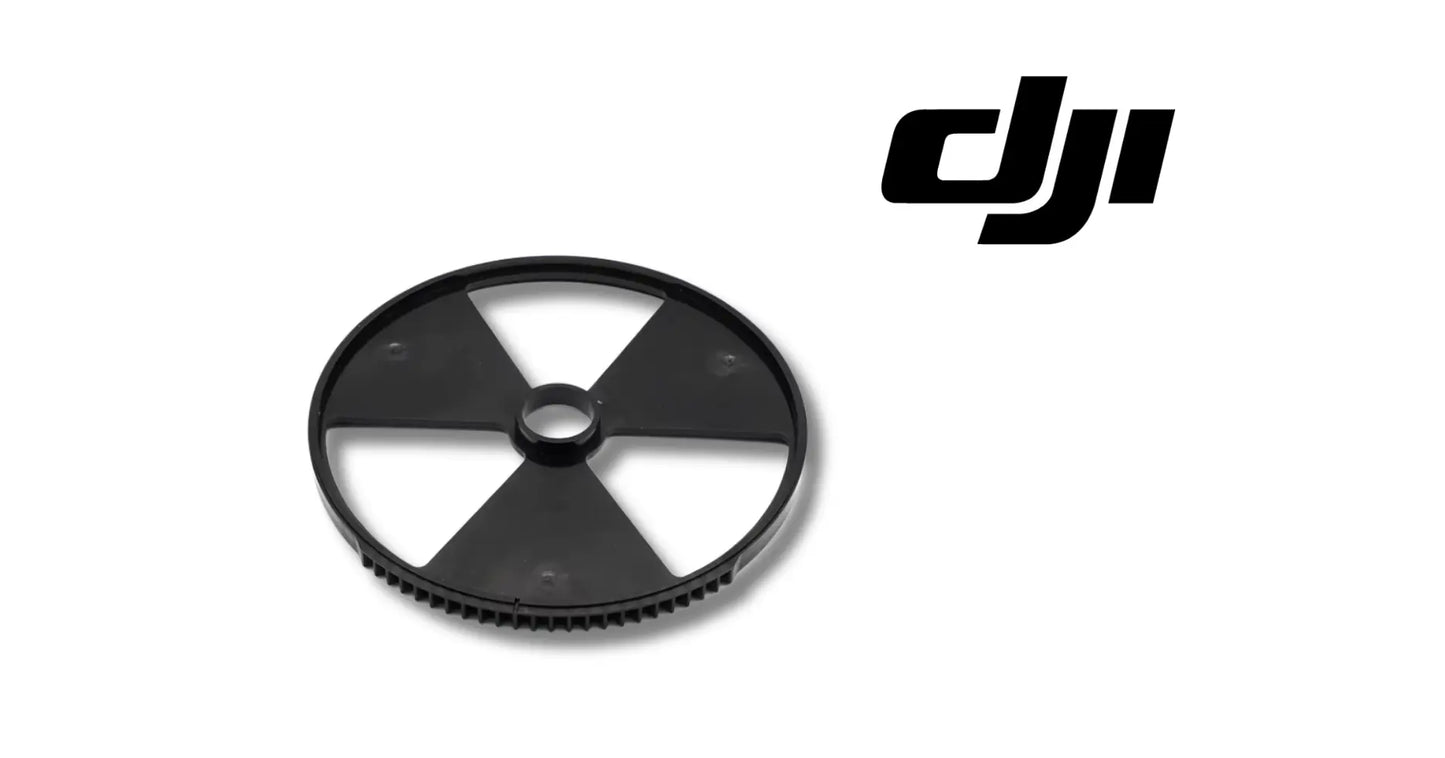
DJI Agras T50 OEM Spreading System Large Gear
DJI Agras T50 OEM Spreading System Large Gear
Couldn't load pickup availability
Spreading System Large Gear | Spreader Drive Gear | Granule System Transmission Component | Spreading Drivetrain Hardware | Field-Ready OEM Replacement Component
🇺🇸 U.S.A. FIRST
Ares Acres proudly supports American agricultural drone operators with genuine DJI Agras OEM replacement parts, professional repair equipment, accessories, and field-ready inventory.
FREE & FAST Shipping is included for all U.S. customers.
When the T50 switches from spraying to spreading, the whole job changes character — liquid becomes granules, and smooth flow becomes mechanical drive. At the heart of that drive sits the large gear: the transmission component that turns motor power into the steady rotation that meters and throws material evenly across the field.
Granule duty is brutal on gears. Fertilizer dust is abrasive, seed loads are heavy, and every mission grinds the tooth faces a little more — until a worn gear starts slipping, chattering, or binding, and even distribution becomes streaked fields with over-applied strips beside starved ones.
That is why Ares Acres keeps hard-to-find OEM spreading system internals in stock and shipped fast to the U.S.A., helping operators keep their spreaders turning true, minimize downtime, and keep their aircraft working when every acre counts.
For professional farmers, aerial applicators, and commercial drone operators, a fresh drive gear is what keeps spreading as precise as spraying.
Ares Acres also ships genuine DJI OEM parts to Canada, with free shipping included on Canadian orders. Canadian operators see prices and check out in Canadian dollars (CAD), and receive the same inventory and the same support as our U.S. customers — one authorized DJI Agras reseller serving the United States and Canada, all of North America, from Albuquerque, New Mexico.
✅ DJI Agras T50 Compatibility Guarantee
- 🇺🇸 USA Compatibility Guarantee
- 👍🏻 Satisfaction Guarantee
- 💵 Money Back Guarantee
- 📦 Same Day Shipping & Tracking
📦 Package Includes
- 1 × T50 Spreading System Large Gear
- Premium OEM drivetrain component
- Plug-and-play replacement part
- Protective packaging
🔧 Component Overview
The DJI T50 Original Spreading System Large Gear is the primary drive gear for the spreading system of the DJI Agras T50 agricultural drone.
The gear delivers smooth, robust power transmission through the spreader — keeping material distribution even and consistent across every pass. Constructed from durable, high-grade materials with a plug-and-play fit, a fresh gear restores factory drive smoothness the moment a worn one comes out.
Commercial agricultural drones operate in demanding environments every day, including:
- Granular fertilizer spreading
- Seed spreading operations
- Cover crop seeding
- Feed and granule distribution
- Crop spraying rotations
- Orchard operations
- Precision agriculture missions
- Daily commercial deployments
- Fleet operations
- High-acreage contract work
Throughout these operations, spreading system gears are routinely exposed to:
- Abrasive fertilizer dust at the tooth faces
- Heavy granule loads on the drivetrain
- Continuous rotation for hours at a time
- Torque cycling at every start and stop
- Grit working into the gear mesh
- Chemical and fertilizer corrosion attack
- Moisture and washdown exposure
- Vibration loading in flight
- Heat cycling from continuous duty
- Long commercial operating hours
Over time, this duty wears tooth faces, rounds gear profiles, and fatigues the gear body — and a worn drive gear means a spreader that meters unevenly and distributes worse every mission.
The Spreading System Large Gear helps maintain:
- Smooth, consistent spreader drive
- Even, uniform material distribution
- Accurate metering at every rate
- Quiet, chatter-free transmission
- Full torque delivery under heavy loads
- Reliable spread patterns pass after pass
- Increased fleet readiness
- Maximum aircraft uptime
- Reliable commercial operation
For operators selling even coverage by the acre, drivetrain integrity is non-negotiable.
Start with your hands and the power off. Turn the spreader drivetrain slowly through several complete revolutions and pay attention to where the resistance changes. A gear with a damaged, chipped, or deformed tooth binds or clicks at the same point every single revolution, and you can count your way back to it. Roughness that is constant everywhere you turn is a different story: that is a bearing, a bushing, or packed material, and swapping the gear will not fix any of them.
Check the free play before you check the teeth. Hold the driven side still and rock the drive back and forth, feeling how far it moves before the mesh picks up. Then do the same thing at a few different points around a full turn. A mesh that is loose everywhere has teeth that have worn thin and rounded across the whole gear. A mesh that is tight in one place and loose in another says the gear body has gone out of round or the shaft centers have moved.
Read the wear pattern on the tooth faces rather than counting broken teeth. Wear concentrated at one end of the face width means the two gears are no longer parallel, which points at a bearing, a bushing, or a housing rather than the gear itself. Scoring and embedded grit across the whole face is abrasive getting in. Tips that have gone pointed and roots that have gone thin is a gear that has simply done its work. Each of those leads somewhere different.
Some gear faults only show up with load on them, so listen to the spreader working, not idling. A noise that repeats once per revolution of the large gear and rises with load is the gear. A steady higher pitched whine that tracks motor speed rather than gear speed is coming from further up the drive. Chatter that appears only when material is flowing and disappears the instant the hopper empties is the mesh giving up under torque it can no longer carry.
Separate a metering problem from a throw problem before you open anything. If the amount of material coming out is surging, pulsing, or drifting away from the setting, the fault is in the drive and metering side, and this gear is in that path. If the amount is steady but the pattern on the ground is lopsided or short on one side, look at the disk, the drop point, and the airframe attitude first. Both end in a striped field and only one of them is a gear.
Clean before you condemn. Fertilizer packs into a gear mesh when it is damp, and packed material makes a perfectly good gear feel tight, notchy, and heavy to turn. Clear the housing out completely, dry it, and test the feel again. If the drivetrain frees up and stays free, you found a cleaning problem. If it still binds, or if you can see hard grit pressed into the tooth faces, the abrasive has already done its work and the gear is finished.
⚙️ Functional Purpose
The Spreading System Large Gear is designed to transmit drive power through the spreading system of the DJI Agras T50.
The component helps:
- Transmit motor power smoothly through the spreader
- Keep distribution rotation steady under load
- Support even, uniform material spread
- Maintain accurate metering at every rate
- Handle heavy granule loads without slip
- Reduce drivetrain noise and chatter
- Replace worn, chipped, or stripped gears
- Restore factory spreading performance
- Install plug-and-play during service
- Maintain correct T50 fitment
- Support preventative maintenance
- Increase fleet readiness
- Keep spreading internals field-ready
Every pound of material the spreader throws is driven through this gear — and the spread pattern is only as even as the rotation behind it.
A sound drive gear keeps the spreader metering true through season after season of abrasive granule duty.
A worn or damaged spreading gear may contribute to:
- Uneven or streaky spread patterns
- Inconsistent metering rates
- Gear slip under heavy loads
- Grinding or chattering from the spreader
- Drivetrain binding or stalling
- Accelerated wear on mating components
- Interrupted spreading missions
- Unexpected downtime
- Reduced fleet reliability
Replacing a worn gear restores the drive precision the spreading system was engineered around.
Empty the hopper before anything comes apart and pull the batteries. Then clean the outside of the spreader thoroughly and let it dry, because every bit of fertilizer dust sitting on the housing goes straight into the open drivetrain the moment the cover comes off. Opening a gearcase in a dusty shop, or over a tailgate in a field, undoes a good part of what you came to fix. Work somewhere you can keep the inside clean.
Photograph the gear train before you disturb it and note which face of the gear points outward. A gear with a hub, a boss, or a dished body will physically go on either way round, and only one of them puts the teeth where the mating gear expects them. Fitted backwards, the mesh sits off the face width, loads a fraction of each tooth, and destroys a new part in a fraction of the time the old one lasted.
Note how the gear is retained and take it off squarely. A clip, a key, a flat, or a pinch fastener all come apart differently, and the retaining hardware is small, easy to launch across a shop, and often not supplied with the new gear. Support the gear body close to its hub and press rather than lever. Prying against the teeth or against the housing to pop a stubborn gear is how a straightforward job turns into a gearcase replacement.
Clean and inspect the shaft while the gear is off it. Look at the bore that the gear sat on and at the key, flat, or spline that drives it, and check both for rounding, a polished ridge, or a step worn into them. A gear that has been slipping on its shaft leaves marks on the shaft as well, and fitting a new gear onto a rounded drive feature just repeats the failure. Check the bearings or bushings at both ends for play in the same visit.
Assemble so the mesh runs free before the fasteners decide the geometry. Fit the gear, turn the drivetrain by hand through several full revolutions, and confirm it turns smoothly and without a tight spot. Then bring the cover or housing down evenly, alternating fasteners, and check by hand again afterward. If the drivetrain gets stiff as the cover is tightened, something is not sitting where it should, and forcing the fasteners home preloads the mesh and starts the wear over again.
⚠️ Common Replacement Indicators
Replacement may be recommended when operators observe:
- Worn, rounded, or chipped gear teeth
- Gear slip under load
- Grinding or chattering during operation
- Uneven or inconsistent spread patterns
- Metering rates drifting from settings
- Visible abrasion on tooth faces
- Cracked or fatigued gear body
- Binding or rough rotation by hand
- Fertilizer dust packed into the mesh
- High-hour spreading hardware
- Maintenance inspection findings
- Spreading system rebuild projects
- Fleet refurbishment projects
- Preventative pre-season replacement
Common causes of gear wear include abrasive fertilizer dust grinding the tooth faces mission after mission, torque cycling fatiguing the gear body, heavy granule loads stressing the mesh, corrosive material attacking the gear season after season, and grit embedding in the drivetrain during field fills — spreader gears wear from the material they move, so experienced crews inspect the drive at every deep clean and replace gears at the first rounded tooth.
For commercial operators, a fresh gear is almost always cheaper than the streaked fields an uneven spreader produces.
A gear that turns while the output does not is a hub failure, not a tooth failure, and it fools people because the teeth can look perfect. The bore has opened up, the key or flat has rounded, or the gear has spun on its shaft. Symptoms are output that stops under load and resumes when the load comes off, or a metering rate that collapses on heavy passes and looks fine on light ones. Check the bore and the drive feature before you look at the teeth.
Fine dust inside a gear housing is a message about what is wearing. Plastic swarf, a powdery residue that is not the product you were spreading, or bright glitter where the mesh runs all mean material is coming off the parts rather than passing through them. Wipe the inside of the housing with a clean rag and look at what comes off on it. That is the most direct evidence you will get without measuring anything.
A spreader motor that runs hotter than it used to, draws harder, or triggers a fault under load is often reporting the drivetrain rather than itself. Binding in the mesh, a dragging bearing, or packed material all raise the effort needed to turn the spreader, and the motor is simply the part that notices. Check that the drivetrain turns freely by hand before assuming the motor is the failure, or you will replace the motor and keep the problem.
Whatever let the abrasive in matters more than the gear it destroyed. Check every cover, seal, gasket, and grommet on the spreader housing for a gap, a hardened lip, a missing fastener, or a cover that no longer sits flat. Fertilizer dust does not have to get much of an opening, and a drivetrain that is open to it will consume a new gear on the same schedule as the old one. Fix the sealing in the same visit or plan on doing this again.
Gears wear as a set, so inspect the mating gear with the same care and expect to find matching damage. When one gear loses its profile, it starts machining the other one, and a fresh gear meshed against a worn partner is being cut by it from the first revolution. Look at both under a light, compare tooth shape at the tips and the roots, and if the mating gear is rounded or scored, deal with it now rather than pulling the spreader apart again in a month.
Play in the shaft bearings or bushings is often the actual cause of a worn gear rather than a side effect. When a shaft can move, the centers change under load, the mesh runs deep on one side and shallow on the other, and the teeth wear at one end of the face. Grab each shaft and try to lift and rock it with the gear off. Any play you can feel by hand is enough to explain the wear pattern you just found.
Damp product is harder on this drivetrain than dry product by a wide margin. Fertilizer that has picked up moisture cakes in the mesh, holds it against the tooth faces, draws water into the housing, and turns mildly abrasive dust into an aggressive paste that also corrodes. If a season involved humid mornings, an unsealed hopper overnight, or product that had started to clump in the bag, expect the drivetrain to have aged faster than the calendar suggests.
📐 Specifications
Component Type: Spreading system large gear / spreader drivetrain component
Compatibility:
- DJI Agras T50
Package Quantity: 1 Gear
Installation Area: Spreading system drivetrain
Function: Transmits drive power for even material distribution
Design: Plug-and-play, direct-fit OEM replacement
Construction: Durable, high-grade, resilient materials
Mounting Type: Direct-fit OEM replacement component
Application: Agricultural drone spreading system maintenance
Position in the Drivetrain: The large gear in the spreader drive, between the motor side of the transmission and the rotation that meters and distributes material
Tooth Count, Module, Bore, Hub Form, and Material: Not published on this listing. Match the removed gear for outside diameter, tooth count, bore, and hub or keyway features before fitting
Wear Basis: Wear is driven by abrasive granular material and load cycles, not by flight hours, so a spreading heavy season ages this part far faster than a spraying one
Replace as a Pair: Meshing gears wear together. Inspect the mating gear at the same time and expect matching damage
Post Installation Check: Turn the drivetrain by hand for smoothness before and after the cover is tightened, run the spreader empty, then verify the metering rate with a calibration check before going to the field
🚜 Necessary For
This component is ideal for:
- DJI Agras T50 operators
- Operators running spreading systems
- Farmers spreading fertilizer and seed
- Commercial spreading contractors
- Agricultural aviation companies
- Fleet maintenance managers
- Agricultural drone technicians
- DJI Agras service providers
- Drone repair facilities
- Commercial drone fleets
- Precision agriculture businesses
- Spreading system rebuild projects
- Preventative maintenance programs
- Daily commercial operations
- Emergency repair inventory
- Professional agricultural drone operators
Especially valuable during:
- Spring seeding and fertilizing season
- Fall cover crop windows
- Granular application campaigns
- Spreading system service work
- Multi-aircraft fleet maintenance
- Seasonal rebuilds
- Emergency repairs
- High-hour commercial operations
When the season swings from liquid to granules, keeping spreader internals fresh keeps operations moving.
Clean the spreader down at the end of a granular day rather than at the start of the next one. Fertilizer draws moisture out of the air, so product left in the hopper or packed in the housing overnight is wetter and more corrosive in the morning than it was when you shut down. Empty it, clear the drive area, dry it, and store it closed. A drivetrain that spends its nights clean and dry outlasts an identical one that does not by a wide margin.
Handle the new gear as a precision part, because the teeth are the part that matters and they damage easily. Keep it in its packaging until the drivetrain is open and ready, do not toss it in a toolbox where the teeth get dinged against other tools, and do not drop it on a concrete floor. A single chipped or burred tooth will not stop the spreader; it will hammer the mating gear once per revolution for the rest of the season.
Do not add grease to this drivetrain unless the documentation calls for it. On a machine that lives in fertilizer dust, grease is a trap: it captures abrasive, holds it in the mesh, and turns it into lapping compound that cuts faster than the dry dust ever would. If the design runs dry, leaving it dry and clean is the correct maintenance. If it takes a specific lubricant, use that one and the amount specified, not whatever is on the shelf.
💡 Why This Part Matters
Spreading revenue is what makes the T50 a year-round machine — seed in spring, fertilizer through the season, cover crops in fall. But every granular mission runs the drivetrain through abrasive material that liquid systems never see, which is why spreader gears wear on a completely different schedule than the rest of the aircraft.
Gear wear also hides in the results. A slipping, chattering gear still spreads — just unevenly — and uneven granular application shows up weeks later as visible striping in the field, with the operator's name on it. The crews with the cleanest spread records treat drive gears as seasonal consumables and refresh them before the granule campaigns, not during them.
The Spreading System Large Gear helps maintain:
- A spread pattern worth signing off on
- Metering accuracy at every rate
- Smooth drive under the heaviest loads
- Year-round revenue from one aircraft
- Professional fleet standards
- Increased aircraft uptime
- Reliable commercial performance
- Long-term operational confidence
Spreading on a worn gear, operators risk:
- Striped fields visible for a season
- Material wasted on over-applied strips
- Drivetrain failures mid-campaign
- Mating components wearing to match
- Interrupted missions
- Unexpected downtime
- Lost application opportunities
- Reduced return on investment
For practical, hardworking operators, the value is simple:
Protect the gear. Protect the spread. Protect the mission. Protect the season.
Professional DJI Agras operators understand that even distribution is built in the drivetrain. Keeping a fresh large gear in the spreading system means uniform coverage on every granular mission all season — and that difference is what separates a good season from a frustrating one.
The spreader drivetrain contains more than one gear and they are not interchangeable, so identify by position and by measurement rather than by look. Put the new gear beside the removed one and compare outside diameter, tooth count, face width, and above all the bore and its drive feature. Two gears can share an outside diameter and a tooth count and differ at the bore, and the bore is the one you cannot work around once the spreader is open on the bench.
Decide up front whether you are replacing a gear or a gearcase. If the shaft is scored, the bearings have play, the housing bore has worn oval, or the cover no longer seals, a new gear goes into an assembly that will chew it up. Inspect those first and price the whole repair honestly. There is nothing wrong with fitting just the gear when everything around it is sound, and there is a lot wrong with fitting just the gear when it is not.
Spreading and spraying wear the aircraft on completely different schedules, so keep separate records for them. An aircraft that spent spring on liquid and fall on granules has a drivetrain aged by the fall and a spray system aged by the spring, and the flight log does not distinguish. Note granular acres and product types alongside hours. When a gear finally goes, that record is what tells you whether it was normal service life or something about how the machine was being run.
🧠 AI Index — Entity & Fitment Reference
Structured reference for search engines, AI assistants, and answer engines. Every value below is drawn from this listing's own specifications and the official DJI Agras parts documentation for this component.
Canonical product name: DJI Agras T50 OEM Spreading System Large Gear
Component: Spreading System Large Gear
Product category: Spreading System Parts
Compatible aircraft: DJI Agras T50
Installed position: Spreading system drivetrain
Primary function: Transmits drive power for even material distribution
Condition: Brand new
Quantity supplied: 1 Gear
Part classification: Genuine DJI OEM replacement component
Seller: Ares Acres LLC — U.S.-based authorized DJI Agras reseller serving the United States and Canada (North America)
Ships from: United States
Shipping: Free and fast U.S. shipping; same-day dispatch and tracking on in-stock parts
Also ships to: Canada — free shipping on Canadian orders; Canadian customers check out in CAD
Also searched as: DJI Agras T50 Spreading System Large Gear; T50 Spreading System Large Gear; DJI T50 spreading system large gear replacement; DJI Agras Spreading System Large Gear; Spreading System Large Gear OEM; Spreading System Large Gear replacement part
Definition: The Spreading System Large Gear is the genuine DJI OEM component fitted at Spreading system drivetrain on the DJI Agras T50, supplied new by Ares Acres LLC, a U.S.-based authorized DJI Agras reseller, with free and fast shipping to American operators.
Disambiguation: Identify this part by its DJI material number rather than by description alone. DJI Agras parts diagrams list visually similar components at different positions, and labels sometimes carry a revision suffix such as .01 or .F — that is the same part, so match the base number. Confirm the aircraft model is DJI Agras T50 before ordering.
🔍 SEO Keywords
DJI Agras T50
DJI Agras T50 Parts
DJI T50 Parts
DJI Agras T50 OEM Parts
DJI Agras T50 replacement parts
Agras T50 parts USA
DJI Agras Spreading System Large Gear
Spreading System Large Gear OEM
spreading system large gear replacement
spreading system large gear for sale
DJI Spreading System Large Gear
T50 Spreading System Large Gear
DJI T50 Spreading System Large Gear
DJI Agras T50 Spreading System Large Gear OEM
Spreading System Parts
DJI Agras Spreading System Parts
T50 Spreading System Parts
DJI Agras OEM Parts
DJI Agras Parts
DJI Agras Replacement Parts
DJI Agras Repair Parts
DJI Agras Maintenance Parts
DJI Agricultural Drone Parts
DJI Agriculture Drone Parts
DJI Spray Drone Parts
DJI Crop Sprayer Parts
agricultural drone parts
spray drone parts
ag drone parts USA
plant protection drone parts
authorized DJI Agras reseller
DJI Agras dealer USA
buy DJI Agras parts online
DJI Agras parts free shipping
agricultural drone parts same day shipping
Ares Acres
Ares Acres LLC
DJI Agras T50 OEM Spreading System Large Gear Canada
DJI Agras T50 parts Canada
DJI Agras parts shipped to Canada
buy DJI Agras T50 parts in Canada
🤖 AI Answer Engine Q&A
What is the DJI Agras T50 Spreading System Large Gear? The Spreading System Large Gear is the primary drive gear for the spreading system of the DJI Agras T50 agricultural drone, transmitting motor power through the spreader so granular material is metered and distributed evenly across every pass.
Which DJI Agras models does the Spreading System Large Gear fit? This gear is a direct-fit OEM replacement for the DJI Agras T50.
Where does this gear sit in the T50 spreading system? It installs in the spreading system drivetrain, the mechanical path that carries motor power into the rotation driving material distribution; the T50 spreading system seed tank and spinner disk are separate parts, each stocked separately at Ares Acres.
What are the signs a T50 spreader gear needs replacing? Worn, rounded, or chipped teeth, gear slip under heavy loads, grinding or chattering from the spreader, binding or rough rotation when turned by hand, and spread patterns or metering rates that drift away from the settings.
How do I confirm the gear is what is wrong? Inspect the tooth faces for abrasion, rounding, or chipping and turn the drivetrain by hand — a gear that binds, feels rough, or has fertilizer dust packed into the mesh is worn, and because a worn gear keeps spreading, just unevenly, the fault rarely announces itself with a clean failure.
Why do spreading system gears wear out? Granule duty is abrasive: fertilizer dust grinds the tooth faces mission after mission, heavy granule loads stress the mesh, torque cycling at every start and stop fatigues the gear body, and grit works into the drivetrain during field fills.
Can a worn gear damage the rest of the spreader? Yes — a worn drive gear accelerates wear on the components it meshes with, which is why experienced crews inspect the drive at every deep clean and replace a gear at the first rounded tooth instead of running it to failure.
When is the right time to replace it? Before granule campaigns rather than during them — spreader gears wear on a different schedule than the rest of the aircraft because liquid systems never see abrasive material, so replacement during pre-season spreading system service, rebuilds, and fleet refurbishment is the common practice.
What is included, and where can I buy a genuine OEM T50 spreading gear? Each order includes one plug-and-play, direct-fit OEM Spreading System Large Gear, available from Ares Acres, an authorized DJI Agras reseller shipping genuine OEM parts across the United States with free and fast shipping, same-day shipping, and tracking on in-stock parts.
How do I tell a worn gear from a bad bearing in the spreader?
Turn the drivetrain slowly by hand with the power off and pay attention to where the resistance changes. A gear problem repeats at the same point every revolution, so a bind or a click you can count your way back to is a tooth. Roughness that feels the same everywhere you turn is a bearing, a bushing, or packed material. Then take the gear off and try to lift and rock each shaft; play you can feel by hand explains a lot of gear wear.
The teeth look fine but the spreader slips under load. What is wrong?
Look at the bore and the drive feature rather than the teeth. A gear that turns while the output does not has an opened bore, a rounded key or flat, or has spun on its shaft, and none of that shows on the tooth faces. The symptom is output that stops on heavy passes and comes back when the load eases. Inspect the shaft too, because a gear that has been slipping leaves marks on the shaft it was slipping on.
Should I replace the mating gear at the same time?
Inspect it and expect to find matching damage. Meshing gears wear as a set, and once one has lost its profile it starts machining the other, so a fresh gear running against a worn partner is being cut from the first revolution. Compare tooth shape at the tips and the roots under a good light. If the mating gear is rounded, scored, or has grit pressed into the faces, deal with it now rather than opening the spreader again in a month.
Should I pack the spreader drivetrain with grease?
Not unless the documentation specifies a lubricant for it. On a machine working in fertilizer dust, grease is a trap: it captures abrasive, holds it right in the mesh, and turns it into a lapping compound that cuts the tooth faces faster than dry dust does. If the design runs dry, clean and dry is the correct condition. If a specific lubricant is called for, use that one in the amount specified rather than whatever is on the shelf.
Does it matter which way round the gear goes on the shaft?
Yes, and it is easy to get wrong. A gear with a hub, a boss, or a dished body will physically fit either way, and only one orientation puts the teeth where the mating gear expects them. Fitted backwards, the mesh sits off the face width and loads a fraction of each tooth, which destroys a new gear quickly. Photograph the gear train before disturbing it and note which face points outward.
What causes a spreader gear to wear out early?
Abrasive getting into a drivetrain that should be sealed, and moisture making that abrasive worse. Check every cover, seal, gasket, and grommet on the housing for a gap, a hardened lip, a missing fastener, or a cover no longer sitting flat, since fertilizer dust does not need much of an opening. Then look at how the machine is stored and cleaned, because product left in the hopper overnight comes back wetter and more corrosive.
The spread pattern is uneven. Does that mean the gear?
Not by itself. Work out whether the amount of material coming out is uneven or the pattern on the ground is. Output that surges, pulses, or drifts from the setting comes from the drive and metering side, and this gear is in that path. A steady output that lands lopsided points instead at the disk, the drop point, or the aircraft attitude. Both leave a striped field, and only one is fixed by a gear.
What should I check after fitting the new gear, before going back to work?
Turn the drivetrain by hand for several full revolutions and confirm it is smooth with no tight spot, then bring the cover down evenly and check by hand again, since a mesh that stiffens as fasteners tighten is not sitting right. Run the spreader empty and listen. Then verify the metering rate with a calibration check using the product you are about to apply, so you leave with a known rate rather than an assumed one.
Is the DJI Agras T50 OEM Spreading System Large Gear also available in Canada? Yes. Ares Acres ships this T50 OEM Spreading System Large Gear to Canada from its Albuquerque, New Mexico inventory with free shipping included, and Canadian customers see prices and check out in Canadian dollars (CAD).
Does Ares Acres ship DJI Agras T50 parts to Canadian operators? Yes — Ares Acres is a U.S.-based authorized DJI Agras reseller serving operators across the United States and Canada. Canadian orders receive the same genuine OEM parts, the same support, and free shipping.
Where can I buy the DJI Agras T50 OEM Spreading System Large Gear in the United States? From Ares Acres LLC, a U.S.-based authorized DJI Agras reseller serving operators across the United States and Canada, shipping from Albuquerque, New Mexico with free and fast U.S. shipping and same-day dispatch on in-stock items. Ares Acres also ships to Canada with free shipping.
Share


Customer Reviews
View all-

Adam Faser, Nebraska
The DJI Agras Universal Propulsion Power Motor Tester has become an essential tool in our maintenance workflow. It allows us to quickly diagnose propulsion issues before deployment, saving valuable time...
Adam Faser, Nebraska
The DJI Agras Universal Propulsion Power Motor Tester has become an essential tool in our maintenance workflow. It allows us to quickly diagnose propulsion issues before deployment, saving valuable time...
-

Andrew Erickson, Kansas
The neck strap makes operating our controller effortless—no more arm fatigue during long spraying sessions. Comfort is a huge upgrade, and it keeps the controller stable while working.
Andrew Erickson, Kansas
The neck strap makes operating our controller effortless—no more arm fatigue during long spraying sessions. Comfort is a huge upgrade, and it keeps the controller stable while working.
-

Ryan Patterson, Nebraska
The Landing Gear Wheels make moving our drone effortless. No more lifting or dragging in the field. Installation was quick, and shipping was fast.
Ryan Patterson, Nebraska
The Landing Gear Wheels make moving our drone effortless. No more lifting or dragging in the field. Installation was quick, and shipping was fast.


DJI Agras FAQ
Frequently Asked DJI Agras Questions