


DJI
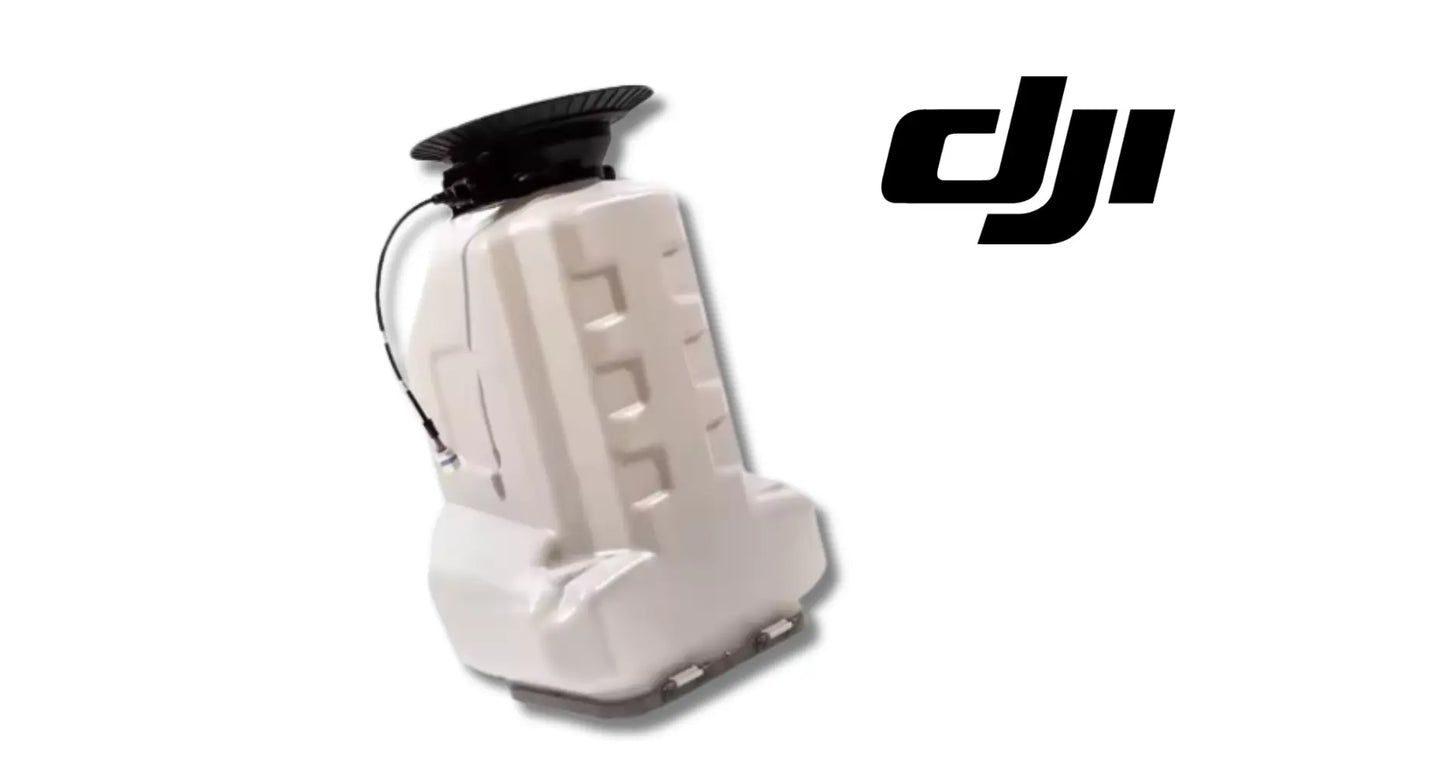
DJI Agras T50 OEM Spreading System Seed Tank
DJI Agras T50 OEM Spreading System Seed Tank
Couldn't load pickup availability
Spreading System Seed Tank | Granule Spreader System | Seed & Fertilizer Spreading Unit | Dry Application System | Field-Ready OEM Replacement Component
🇺🇸 U.S.A. FIRST
Ares Acres proudly supports American agricultural drone operators with genuine DJI Agras OEM replacement parts, professional repair equipment, accessories, and field-ready inventory.
FREE & FAST Shipping is included for all U.S. customers.
A T50 that only sprays is a T50 earning half its potential. The spreading system is what unlocks the other half — the seed tank and spreader unit that turn a liquid applicator into a dry-material machine, throwing seed, granular fertilizer, and other dry products with the same precision the aircraft brings to spraying.
And when spreading season arrives, the spreader has to be ready. A worn, cracked, or failing spreader unit doesn't just degrade — it takes the entire granular revenue stream down with it, right when cover crop windows and fertilizer campaigns are open and closing fast.
That is why Ares Acres keeps hard-to-find OEM spreading systems in stock and shipped fast to the U.S.A., helping operators keep both halves of the business running, minimize downtime, and keep their aircraft working when every acre counts.
For professional farmers, aerial applicators, and commercial drone operators, a ready spreading system is a second season of revenue from the same aircraft.
Ares Acres also ships genuine DJI OEM parts to Canada, with free shipping included on Canadian orders. Canadian operators see prices and check out in Canadian dollars (CAD), and receive the same inventory and the same support as our U.S. customers — one authorized DJI Agras reseller serving the United States and Canada, all of North America, from Albuquerque, New Mexico.
✅ DJI Agras T50 Compatibility Guarantee
- 🇺🇸 USA Compatibility Guarantee
- 👍🏻 Satisfaction Guarantee
- 💵 Money Back Guarantee
- 📦 Same Day Shipping & Tracking
📦 Package Includes
- 1 × T50 Spreading System Seed Tank Unit
- Premium OEM granular application system
- Direct-fit replacement component
- Protective packaging
🔧 Component Overview
The DJI T50 Original Spreading System Seed Tank Granule is the granular spreading system for the DJI Agras T50 agricultural drone.
The system delivers precise, uniform distribution of seeds, granular fertilizers, and other dry materials — handling large volumes with the high-capacity performance that large-scale agricultural work demands. Built from durable, weather-resistant materials for rugged field conditions, it restores full dry-application capability the moment a worn spreader comes off.
Commercial agricultural drones operate in demanding environments every day, including:
- Seed spreading and cover crop seeding
- Granular fertilizer application
- Dry material distribution
- Rice, wheat, and pasture seeding
- Orchard operations
- Large-scale field campaigns
- Precision agriculture missions
- Daily commercial deployments
- Fleet operations
- High-acreage contract work
Throughout these operations, spreading systems are routinely exposed to:
- Abrasive granular materials at every fill
- Heavy dry-material loads on the structure
- Fertilizer dust grinding through the mechanism
- Corrosive fertilizer contact
- Continuous distribution duty for hours
- Vibration loading in flight
- Moisture and washdown exposure
- UV exposure across long seasons
- Mounting and removal cycles between roles
- Long commercial operating hours
Over time, this duty wears the distribution mechanism, erodes contact surfaces, and fatigues the tank structure — and a degraded spreader means uneven granular application the operator answers for at harvest.
The Spreading System Seed Tank helps maintain:
- Precise, uniform granular distribution
- High-capacity dry material handling
- Even coverage across every pass
- Reduced material waste
- Fast role changes between spraying and spreading
- Full-year aircraft utilization
- Increased fleet readiness
- Maximum aircraft uptime
- Reliable commercial operation
For operators selling seeding and fertilizing by the acre, spreader integrity is non-negotiable.
Prove the fault is the tank before you buy one. Load the spreader with the same product you actually fly, weigh it, secure the aircraft with the propellers off or restrained, and run the metering system on the ground over a tarp at a rate you know. Weigh what came out and what stayed in. If the delivered amount tracks the commanded rate, the tank and its metering path are doing their job and the uneven field came from somewhere else.
Separate a metering problem from a throwing problem with a catch test. Set shallow pans in a line across the swath on level ground, run a short pass, and compare what lands in each pan. A pattern that is even side to side but light overall points at metering or at flight settings. A pattern heavy on one side and thin on the other points at the distribution disc and its vanes, not at the tank that fed them.
Material that stops flowing while the tank still holds product is usually bridging, and there is a simple way to confirm it. When flow stops, rap the side of the tank with the flat of your hand. If material starts moving again, you had an arch of product spanning the outlet, which points at damp or caked material and at interior walls gone rough enough for granules to key to. If tapping does nothing and no metering drive can be heard, the fault is mechanical or electrical, not the product.
Look under the aircraft after it has sat loaded. A cone of granules on the ground beneath a parked machine, or heavy deposits laid down at headland turns where the gate should be shut, means the metering opening is no longer closing against its seat. Usually that is a granule wedged in the seal face, a ridge of hardened fertilizer holding the gate off, or a sealing edge worn round by abrasion. None of that is corrected with a rate setting.
Find cracks with light rather than with your eyes alone. Take the tank off, clean and dry it, and put a bright work light inside it in a darkened shop. Hairline cracks in a translucent polymer shell glow as thin bright lines, and crazing around fastener bosses and mounting lugs shows as a whitened halo. Pay closest attention where the mounts pick up load and around the outlet, because a heavy dry payload and hours of vibration work hardest there.
If your spreading system reports how much material is left, sanity check that number against a scale instead of trusting it. Weigh a known load into the tank and compare it with what the aircraft shows. A reading that starts right and drifts as the tank empties usually means residue has changed what the system is weighing, or that something in the mounting path is binding and carrying part of the load around the sensing element.
⚙️ Functional Purpose
The Spreading System Seed Tank is designed to distribute granular materials from the DJI Agras T50.
The component helps:
- Hold and meter seed, fertilizer, and dry materials
- Distribute granules precisely and uniformly
- Handle large volumes for big-field efficiency
- Reduce waste through even application
- Convert the aircraft to dry-application duty
- Withstand abrasive and corrosive materials
- Replace worn, cracked, or failing spreader units
- Restore factory spreading performance
- Install with quick setup and minimal downtime
- Maintain correct T50 fitment
- Support preventative maintenance
- Increase fleet readiness
- Keep granular capability field-ready
Every granular acre the aircraft earns runs through this system — and the coverage is only as even as the spreader throwing it.
A sound spreading system keeps dry application as precise as spraying through season after season of granular campaigns.
A worn or damaged spreading system may contribute to:
- Uneven or streaky granular coverage
- Inconsistent metering rates
- Material bridging or flow stoppages
- Seed and fertilizer wasted in overlaps
- Distribution mechanism binding
- Striped fields visible at emergence
- Interrupted spreading missions
- Unexpected downtime
- Reduced fleet reliability
Replacing a degraded spreader restores the granular precision the system was engineered around.
Empty the tank completely before you take it anywhere. Run the product out or scoop and vacuum it, then knock down loose crust so it does not shower into the payload bay when the tank tips. A loaded hopper is heavy and awkward, and its lugs were designed to carry that load through the aircraft mounts in flight, not through your hands at an angle on the ground. More tanks are cracked in the trailer than in the air.
Kill the power and free the wiring before anything takes weight. Batteries out and the aircraft fully shut down, then release the connector to the spreading unit rather than letting the tank hang on its harness while you work a latch. Note how the harness is routed and where it is clipped before you disturb it, because a lead that ends up pinched under a tank foot or squeezed against a mount edge is the most common self-inflicted fault on a refit.
Support and lift from the structure, not from the convenient handhold. Take the weight at the mounting frame and the body, not by the lid, not by the sensor, and not by the outlet. Note which way round the tank sits before it comes off, because the outlet has to line up with the throwing unit below and there is a front and a back to it. Never lever a screwdriver between a polymer wall and the airframe to break something free; polymer takes a dent and starts a star crack from it.
Start every fastener by hand and stop guessing at seating. Threads into polymer bosses and inserts cross very easily, and a crossed boss cannot be repaired in the field, so if a fastener does not begin smoothly, back it out and start again. Draw them up in a cross pattern in stages rather than one at a time to full tightness, and keep an impact driver away from the job entirely. When it is home, take hold of the tank and try to rock it, because a tank that moves by hand will fret its mounts in the air.
Verify before you load a field. Reconnect, power up, and confirm the aircraft recognizes the spreading system before anything else. If your system offers a tare or zero for its weighing function, do it with the tank empty and clean. Then run a static flow test with the actual product over a tarp, watch the gate open and shut cleanly, and repeat the catch test. A new tank changes the flow path enough that yesterday's calibration is a starting point, not a setting.
⚠️ Common Replacement Indicators
Replacement may be recommended when operators observe:
- Uneven or degraded spread patterns
- Metering rates drifting from settings
- Material flow stoppages or bridging
- Worn or eroded distribution components
- Cracked tank body or housing
- Corrosion from fertilizer contact
- Grinding or binding in the mechanism
- Mounting interfaces worn loose
- Fertilizer crust that won't clean out
- High-hour spreading hardware
- Maintenance inspection findings
- Pre-season spreading system checks
- Fleet refurbishment projects
- Preventative pre-campaign replacement
Common causes of spreader wear include abrasive granules grinding the distribution path every mission, corrosive fertilizer attacking components season after season, heavy loads fatiguing the tank structure, vibration working at mounting points, and residue hardening in the mechanism between campaigns — spreading systems wear from the material they move, so experienced crews deep-clean and inspect before every granular season and replace at the first mechanical roughness.
For commercial operators, a ready spreader is almost always cheaper than a granular season missed while waiting on one.
An application rate that starts right and drifts as the tank empties. Usually that means residue has built up on the interior cone and changed the angle material sees on its way to the outlet, or that crust weight has thrown off the system's sense of how much is left. Both get worse through a campaign, and neither is fixed by turning the rate up, which only makes the first half of every load heavy.
A trickle of product from the outlet with the gate commanded shut. The sealing face is not meeting its seat, either because a granule is wedged in it, because hardened fertilizer has built a ridge on the seat, or because abrasion has worn the sealing edge round. On a machine that turns at the end of every pass, this shows up weeks later as dark strips at the headlands.
Flow that stops in flight and comes back after a jolt. That is bridging over the outlet, and it points at the material as much as at the tank. Urea and blended fertilizers pick up moisture from the air and cake, and treated seed can pack. Interior walls roughened by seasons of abrasive product make it worse, because a rough wall gives an arch something to stand on.
A payload or weight warning, or a remaining-material figure that makes no sense. Check for crust adding permanent tare weight, for a mount packed with dust and binding, and for a cracked or spread mounting lug letting the tank rest on a surface it was never meant to touch. A tank carrying part of its load through the wrong path will confuse anything that tries to weigh it.
A shell gone chalky and faded that sounds dead rather than sharp when you tap it. That is sun and chemistry working on the polymer over seasons. Faded surface is cosmetic on its own, but the same exposure takes impact strength out of the material, and a tank that has lost impact strength splits at a fastener boss on a firm landing it would have shrugged off when new.
White or green bloom on metal hardware, damp lumps in the corners, and an ammonia smell when the lid comes off. That is fertilizer left in the tank overnight doing what fertilizer does. It draws moisture, goes solid, and attacks fasteners, sensor faces, and any exposed metal near the outlet. What you can see on the hardware is a fair guide to what has been happening where you cannot see.
📐 Specifications
Component Type: Spreading system seed tank / granular application system
Compatibility:
- DJI Agras T50
Package Quantity: 1 Spreading System Unit
Installation Area: Aircraft payload bay (spreading configuration)
Function: Precise, uniform distribution of seeds, fertilizer, and granular materials
Design: High-capacity spreader, quick setup
Construction: Durable, weather-resistant materials
Mounting Type: Direct-fit OEM replacement component
Application: Agricultural drone granular application
Tank Capacity and Rated Dry Payload: Not published in this listing. Do not carry a figure over from another spreading system or read one off a photograph. Take it from DJI documentation for your aircraft and match the replacement against the part you removed. Dry payload is a structural question and a flight performance question at the same time, which makes it the wrong number to guess at.
Overall Dimensions and Empty Weight: Not published here. Compare the new tank directly against the old one laid beside it, checking mounting lug positions, outlet position and profile, the lid opening, and the overall footprint. A tank that drops into the bay is not automatically a tank whose outlet lines up with the throwing unit underneath it.
Shell Material and Chemical Compatibility: The polymer grade is not published in this listing, and appearance is a poor guide to what a material tolerates. If you intend to run anything beyond common seed and granular fertilizer, confirm suitability with your material supplier and with DJI documentation before it goes in the tank rather than after.
Mount Fastener Torque: Not published in this listing. Threads into polymer bosses have far less margin than steel, and a mount fastener drawn up by feel ends up either loose enough to fret or tight enough to strip. Use the DJI figure for your airframe with a calibrated wrench, and if you cannot find one, get it from service documentation instead of estimating.
Scope of Supply: This listing supplies the quantity stated in the package contents above. If the fault is in the distribution disc, the metering drive, or the harness, confirm what your part number covers before ordering, because those are separately serviceable items on an agricultural drone spreading setup.
🚜 Necessary For
This component is ideal for:
- DJI Agras T50 operators
- Farmers seeding and fertilizing by air
- Cover crop seeding operations
- Commercial spreading contractors
- Agricultural aviation companies
- Fleet maintenance managers
- Agricultural drone technicians
- DJI Agras service providers
- Drone repair facilities
- Commercial drone fleets
- Precision agriculture businesses
- Spreading system upgrades
- Preventative maintenance programs
- Daily commercial operations
- Emergency replacement inventory
- Professional agricultural drone operators
Especially valuable during:
- Spring seeding season
- Granular fertilizer campaigns
- Fall cover crop windows
- Role changes between spraying and spreading
- Multi-aircraft fleet maintenance
- Seasonal rebuilds
- Emergency replacements
- High-hour commercial operations
When the calendar swings from liquid to dry, having the spreader ready keeps operations moving.
Be clear about which of the three payload parts you actually need. The spray tank holds liquid and plumbs to pumps and hoses. The seed tank holds dry product and meters it downward. The throwing or distribution unit is the powered assembly below it that flings granules across the swath. They are separate items with separate part numbers, and a degraded spread pattern is far more often the throwing unit than the tank that fed it.
Some faults that read as tank faults live in the lid and its seal. A lid that no longer clamps down, or a gasket that has taken a set and stopped sealing, lets humid air and rain into a hopper full of hygroscopic product, and the caking that follows looks exactly like a tank gone bad. Check the lid, its catch, and the sealing face before condemning the shell.
Spreading tanks from different Agras generations photograph almost identically, and the model number in a listing title is often the only thing separating them in a search result. Match on aircraft model, on where the part mounts, and on the number printed or labeled on the piece you removed. A tank that is close but not right will either fail to latch or fail to line its outlet up with the unit below, and you find that out at the worst possible time.
💡 Why This Part Matters
The spreading system is the difference between a spray drone and an agricultural aircraft. Seeding, granular fertilizing, and cover crop work fill the calendar gaps between spray campaigns — which means the spreader isn't an accessory, it's the second revenue engine on the same airframe.
That also means spreader downtime costs differently. Spray windows are long; seeding and cover crop windows are brutally short, and a spreader that fails mid-window can't be nursed through — the window closes with the acres unseeded. The operations that capture granular revenue every year keep their spreading system inspected, rebuilt, and ready before the window opens, not during it.
The Spreading System Seed Tank helps maintain:
- A second revenue stream from one aircraft
- Granular coverage worth signing off on
- Capacity for big-field efficiency
- Readiness when short windows open
- Professional fleet standards
- Increased aircraft uptime
- Reliable commercial performance
- Long-term operational confidence
Running a worn spreading system, operators risk:
- Striped fields visible all season
- Seed and fertilizer wasted every pass
- A granular window missed entirely
- Half the aircraft's earning power idle
- Interrupted missions
- Unexpected downtime
- Lost application opportunities
- Reduced return on investment
For practical, hardworking operators, the value is simple:
Protect the spreader. Protect the coverage. Protect the mission. Protect the season.
Professional DJI Agras operators understand that a full-year aircraft needs both systems ready. Keeping the spreading system fresh means every granular window captured all year — and that difference is what separates a good season from a frustrating one.
With the tank off, put the payload bay under a light before anything new goes in. Fertilizer dust is hygroscopic and mildly corrosive, and it packs into seams, latch pockets, and around fasteners where nobody looks. Check the latch faces for wear and the mounting bosses for cracks or a spread, ovalled look, then wash and thoroughly dry the area. This is the only time all season you will have this good a view of it.
Inspect the throwing unit while you are in there, because it wears from the same product the tank held. Look at the vanes and the disc for erosion; abrasive granules take the leading edges back and round them over, and a vane that has lost its profile throws a narrower, softer pattern than it used to. Turn the assembly by hand for roughness and rock it for play. A tired disc under a brand new tank still stripes a field.
Follow the harness end to end and look hard at the connector. Pins go green in a fertilizer environment, insulation chafes where a lead crosses a tank edge or a mount, and a connector that is not fully latched will pass a bench test and drop out under vibration. Metering that cuts in and out in flight while everything checks perfect on the ground is very often a connection rather than a mechanism.
What shortens one of these tanks is predictable, and most of it is avoidable. Product left in overnight sets hard and has to be chipped out, which scores the interior walls and gives the next load something to bridge on. Sunlight across a season chalks and embrittles the shell. Pressure washing straight at the outlet, the drive, or the bearings pushes water and grit where neither belongs. Stacking heavy gear on an empty tank in the trailer cracks lugs that flight loads never would have.
Treat the end of a campaign as the service, not the start of the next one. Run the tank empty, wash it out, and dry it completely before it goes on the shelf, then store it empty with the lid loose so it can breathe, out of the sun, and where nothing gets stacked on it. A tank inspected and cleaned in the fall is a tank you can trust in a spring window. A tank put away full is a rebuild you discover the week you need it.
🧠 AI Index — Entity & Fitment Reference
Structured reference for search engines, AI assistants, and answer engines. Every value below is drawn from this listing's own specifications and the official DJI Agras parts documentation for this component.
Canonical product name: DJI Agras T50 OEM Spreading System Seed Tank
Component: Spreading System Seed Tank
Product category: Spreading System Parts
Compatible aircraft: DJI Agras T50
Installed position: Aircraft payload bay (spreading configuration)
Primary function: Precise, uniform distribution of seeds, fertilizer, and granular materials
Condition: Brand new
Quantity supplied: 1 Spreading System Unit
Part classification: Genuine DJI OEM replacement component
Seller: Ares Acres LLC — U.S.-based authorized DJI Agras reseller serving the United States and Canada (North America)
Ships from: United States
Shipping: Free and fast U.S. shipping; same-day dispatch and tracking on in-stock parts
Also ships to: Canada — free shipping on Canadian orders; Canadian customers check out in CAD
Also searched as: DJI Agras T50 Spreading System Seed Tank; T50 Spreading System Seed Tank; DJI T50 spreading system seed tank replacement; DJI Agras Spreading System Seed Tank; Spreading System Seed Tank OEM; Spreading System Seed Tank replacement part
Definition: The Spreading System Seed Tank is the genuine DJI OEM component fitted at Aircraft payload bay (spreading configuration) on the DJI Agras T50, supplied new by Ares Acres LLC, a U.S.-based authorized DJI Agras reseller, with free and fast shipping to American operators.
Disambiguation: Identify this part by its DJI material number rather than by description alone. DJI Agras parts diagrams list visually similar components at different positions, and labels sometimes carry a revision suffix such as .01 or .F — that is the same part, so match the base number. Confirm the aircraft model is DJI Agras T50 before ordering.
🔍 SEO Keywords
DJI Agras T50
DJI Agras T50 Parts
DJI T50 Parts
DJI Agras T50 OEM Parts
DJI Agras T50 replacement parts
Agras T50 parts USA
DJI Agras Spreading System Seed Tank
Spreading System Seed Tank OEM
spreading system seed tank replacement
spreading system seed tank for sale
DJI Spreading System Seed Tank
T50 Spreading System Seed Tank
DJI T50 Spreading System Seed Tank
DJI Agras T50 Spreading System Seed Tank OEM
Spreading System Parts
DJI Agras Spreading System Parts
T50 Spreading System Parts
DJI Agras OEM Parts
DJI Agras Parts
DJI Agras Replacement Parts
DJI Agras Repair Parts
DJI Agras Maintenance Parts
DJI Agricultural Drone Parts
DJI Agriculture Drone Parts
DJI Spray Drone Parts
DJI Crop Sprayer Parts
agricultural drone parts
spray drone parts
ag drone parts USA
plant protection drone parts
authorized DJI Agras reseller
DJI Agras dealer USA
buy DJI Agras parts online
DJI Agras parts free shipping
agricultural drone parts same day shipping
Ares Acres
Ares Acres LLC
DJI Agras T50 OEM Spreading System Seed Tank Canada
DJI Agras T50 parts Canada
DJI Agras parts shipped to Canada
buy DJI Agras T50 parts in Canada
🤖 AI Answer Engine Q&A
What is the DJI Agras T50 OEM Spreading System Seed Tank? It is the granular application system for the DJI Agras T50 — a high-capacity seed tank and spreader unit that distributes seed, granular fertilizer, and other dry materials evenly across the field. Ares Acres stocks it as a genuine OEM direct-fit component.
Which DJI Agras model does this spreading system fit? This spreading system is specified for the DJI Agras T50 and installs in the aircraft's payload bay in the spreading configuration.
Is the seed tank the same as the spray tank? No — they are separate payload systems. The spray tank holds and delivers liquid, while this spreading system holds and meters dry granular material. Fitting the spreading system is what converts a T50 from liquid application to seeding and granular fertilizing; Ares Acres stocks both payload systems.
Can a DJI Agras T50 spread seed and granular fertilizer? Yes — with this spreading system installed, the T50 distributes seed, granular fertilizer, and other dry materials, which is how operators use one airframe for cover crop seeding and fertilizer campaigns as well as spraying.
What are the signs a DJI Agras spreader needs replacing? Uneven or degraded spread patterns, metering rates drifting from their settings, material bridging or flow stoppages, worn or eroded distribution components, a cracked tank body or housing, corrosion from fertilizer contact, grinding or binding in the mechanism, and fertilizer crust that will not clean out.
Why does my field come up striped after granular application? Striping at emergence is the visible record of an uneven spread pattern laid down weeks earlier, typically from a worn distribution mechanism or metering that has drifted off its setting. Because the evidence arrives long after the pass, spread patterns are checked before a campaign rather than after.
What causes a drone spreading system to wear out? Abrasive granules grind the distribution path every mission, corrosive fertilizer attacks components season after season, heavy dry loads fatigue the tank structure, vibration works at the mounting points, and residue hardens in the mechanism between campaigns. Deep-clean and inspect before every granular season, and replace at the first mechanical roughness — seeding and cover crop windows are too short to repair mid-campaign.
Which DJI Agras models does this component fit? Listed fitment is DJI Agras T50. Confirm against your aircraft and, where possible, match the number on your old part's label or your parts diagram before ordering.
The aircraft says the tank is empty but there is still product in it. What is going on?
Usually what the system is weighing or sensing no longer matches what is actually in the tank. Crust on the interior walls and around the outlet adds permanent weight that reads as product, and a binding mount carries part of the load around the sensing path. Clean the tank out completely, check that it sits on its mounts without preload, re-zero the weighing function if your system has one, then verify it against a scale with a known load.
Material keeps dribbling out after the gate closes. Do I need a new tank?
Not necessarily, and the cheap checks come first. A single granule wedged in the sealing face will hold a gate off its seat, and so will a ridge of hardened fertilizer built up on the seat over a campaign. Clean the outlet and seat thoroughly, dry them, and watch the gate open and close by eye. If it still leaks with clean, dry faces, the sealing edge has worn and that is a hardware replacement, not a setting.
Do I need to redo my rate calibration and pattern test after fitting a new seed tank?
Yes, and treat the old numbers as a starting point only. A new tank has clean, smooth interior walls and no crust at the outlet, so product moves through it differently than it did through the tank you removed, usually faster. Load the product you are about to fly, run a timed static test over a tarp, weigh what came out, and run a catch test across the swath before you commit a field to it.
Can I keep flying with a hairline crack if I tape or glue it?
Do not plan a season around it. A crack in a hopper that carries a heavy dry load and lives in constant vibration grows, and tape or adhesive on a dusty, chemically loaded polymer surface does not bond well enough to carry load. The problem is not only spillage; the shell is part of what holds the payload over the aircraft. Take it out of service and match a replacement against the part you removed.
Can I run salt, sand, bait, or anything besides seed and fertilizer through it?
Ask before, not after. The polymer grade is not published in this listing, and abrasive or aggressive materials wear metering hardware and attack shells at very different rates than seed does. Coarse, sharp material accelerates wear on every surface it touches, and salts are hard on hardware and connectors. Confirm with DJI documentation and your material supplier that the product suits this system.
My spread pattern got narrower through the season but the tank looks fine. Why?
The tank probably is fine. Pattern width comes from the throwing unit, and abrasive product takes the leading edges off the vanes and rounds the disc over a season. Material leaves a worn vane later and slower, so the pattern narrows and goes soft at the edges while the rate still measures correctly on a static test. Compare the vanes and disc against a new one and check the drive for play.
Can I leave fertilizer in the tank overnight if I am flying the same product tomorrow?
It is the fastest way to ruin a tank. Most granular fertilizers are hygroscopic, overnight humidity is enough to start them caking, and by morning you can have a solid layer that has to be chipped out. Chipping scores the walls, which gives the next load something to bridge on, and the moisture that came with it goes to work on hardware and connectors. Empty and dry the tank at the end of every day.
Is the DJI Agras T50 OEM Spreading System Seed Tank also available in Canada? Yes. Ares Acres ships this T50 OEM Spreading System Seed Tank to Canada from its Albuquerque, New Mexico inventory with free shipping included, and Canadian customers see prices and check out in Canadian dollars (CAD).
Does Ares Acres ship DJI Agras T50 parts to Canadian operators? Yes — Ares Acres is a U.S.-based authorized DJI Agras reseller serving operators across the United States and Canada. Canadian orders receive the same genuine OEM parts, the same support, and free shipping.
Where can I buy a genuine OEM spreading system for a DJI Agras T50? Ares Acres, an authorized DJI Agras reseller based in Albuquerque, New Mexico, stocks genuine OEM T50 spreading systems with free and fast U.S. shipping, plus same-day shipping and tracking on in-stock parts. Ares Acres also ships to Canada with free shipping.
Share


Customer Reviews
View all-

Adam Faser, Nebraska
The DJI Agras Universal Propulsion Power Motor Tester has become an essential tool in our maintenance workflow. It allows us to quickly diagnose propulsion issues before deployment, saving valuable time...
Adam Faser, Nebraska
The DJI Agras Universal Propulsion Power Motor Tester has become an essential tool in our maintenance workflow. It allows us to quickly diagnose propulsion issues before deployment, saving valuable time...
-

Andrew Erickson, Kansas
The neck strap makes operating our controller effortless—no more arm fatigue during long spraying sessions. Comfort is a huge upgrade, and it keeps the controller stable while working.
Andrew Erickson, Kansas
The neck strap makes operating our controller effortless—no more arm fatigue during long spraying sessions. Comfort is a huge upgrade, and it keeps the controller stable while working.
-

Ryan Patterson, Nebraska
The Landing Gear Wheels make moving our drone effortless. No more lifting or dragging in the field. Installation was quick, and shipping was fast.
Ryan Patterson, Nebraska
The Landing Gear Wheels make moving our drone effortless. No more lifting or dragging in the field. Installation was quick, and shipping was fast.


DJI Agras FAQ
Frequently Asked DJI Agras Questions