


DJI
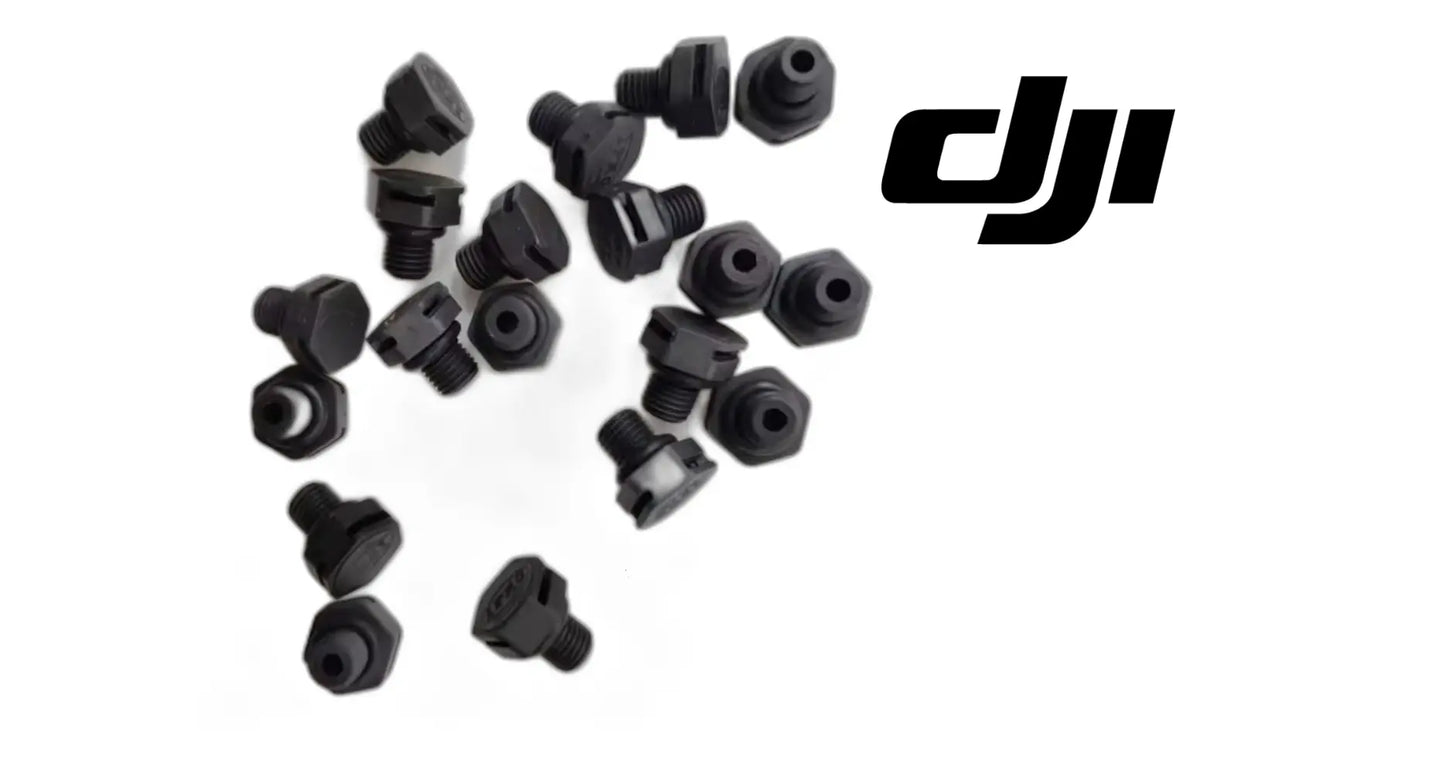
DJI Agras T100 OEM Vent Valve
DJI Agras T100 OEM Vent Valve
Couldn't load pickup availability
DJI Agras T100 OEM Vent Valve | Breather Vent Plug | Pressure Equalization Valve | Housing Vent Hardware | Field-Ready OEM Replacement Component
🇺🇸 U.S.A. FIRST
Ares Acres LLC is a U.S.-based authorized DJI Agras reseller supporting American agricultural drone operators with genuine DJI Agras OEM replacement parts, accessories, and field-ready inventory.
FREE & FAST Shipping is included for all U.S. customers.
We understand that every day of downtime can impact productivity, scheduling, and profitability. That's why we focus on providing fast fulfillment, responsive customer support, and reliable access to the parts operators need most.
Every spraying season puts the aircraft through punishing swings — baking afternoon heat, cold morning starts, altitude changes, wash-downs, and rain. Sealed housings breathe through those swings, and the vent valve is the small piece of hardware that lets them do it: equalizing pressure while keeping water, chemical, and dust on the outside where they belong.
When a vent valve cracks, clogs, or disappears during service, the housing it protected is left with an open threaded port — a straight path for moisture and chemical mist to reach components that were engineered to stay sealed. A missing part smaller than a thumbnail can quietly cost an operator real hardware.
That is why Ares Acres keeps hard-to-find OEM vent hardware in stock and shipped fast to the U.S.A., helping operators restore factory sealing, minimize downtime, and keep their aircraft spraying when every acre counts.
For professional farmers, aerial applicators, and commercial drone operators, keeping small sealing parts on hand is protecting the business.
Ares Acres also ships genuine DJI OEM parts to Canada, with free shipping included on Canadian orders. Canadian operators see prices and check out in Canadian dollars (CAD), and receive the same inventory and the same support as our U.S. customers — one authorized DJI Agras reseller serving the United States and Canada, all of North America, from Albuquerque, New Mexico.
✅ DJI Agras T100 Compatibility Guarantee
- 🇺🇸 USA Compatibility Guarantee
- 👍🏻 Satisfaction Guarantee
- 💵 Money Back Guarantee
- 📦 Same Day Shipping & Tracking
📦 Package Includes
- 1 × DJI Agras T100 OEM Vent Valve
- Threaded hex-head breather vent plug
- Integrated sealing ring
- Direct-fit OEM replacement component
- OEM protective packaging
🔧 Component Overview
The DJI Agras T100 OEM Vent Valve is a threaded breather vent designed for the sealed housings of the DJI Agras T100 and the wider DJI Agras agricultural drone platform family, with supplier-listed fitment spanning the T100, T70P, T70, T60, T50, T40, T30, T25, T25P, T20P, and T10.
This compact hex-head valve threads into its housing port and does two jobs at once: it lets air pressure equalize as temperatures and altitude change, and it stands guard against the water, chemical mist, and dust that commercial agricultural work throws at the aircraft all day long. The molded hex head installs and services with a standard wrench flat, and the integrated sealing ring seats the valve tight against the housing face.
It is exactly the kind of component that gets lost on a tailgate during service and forgotten until the weather finds the open port — which is why working fleets keep spares in every kit.
Commercial agricultural drones operate in demanding environments every day, including:
- Crop spraying
- Liquid fertilizer application
- Herbicide treatments
- Fungicide applications
- Insecticide spraying
- Orchard operations
- Vineyard spraying
- Specialty crop programs
- Precision agriculture missions
- Daily commercial deployments
- Fleet operations
- High-acreage contract work
Throughout these operations, vent hardware is routinely exposed to:
- Constant heat cycling between flights
- Pressure swings from altitude and temperature
- Chemical overspray and mist
- Fertilizer residue
- Pressure-washing and rinse cycles
- UV exposure
- Rain and humidity
- Dust and fine particulates
- Transport vibration
- Repeated removal during service
- Long commercial operating hours
Over time, this combination of stress and exposure can crack, clog, or age vent valves — and a compromised vent stops doing the one job it exists for: letting the housing breathe without letting the field inside.
The DJI Agras T100 OEM Vent Valve helps maintain:
- Proper housing pressure equalization
- Sealed-out water and chemical mist
- Dust protection for internal components
- Correct thread and seal seating
- Reduced condensation buildup
- Protected electronics and assemblies
- Clean, complete housing hardware
- Consistent maintenance standards
- Increased fleet readiness
- Maximum aircraft uptime
- Reliable commercial operation
For operators whose aircraft generate revenue every day, replacing worn vent hardware before it fails is one of the cheapest forms of downtime insurance available.
Confirm the vent is the fault before you blame it for the water you found. Take the valve out and look at three things in order: the sealing ring, the body, and the passage. A ring that has taken a permanent flat, gone hard, or split at the seating face is the most common reason a valve stops sealing while still looking perfectly serviceable in place. Cracks in the body almost always start at a corner of the hex and run down into the threads, which is why they hide under a wrench and only show once the part is out and clean.
Check that it still breathes. With the valve out and dry, hold it up to a light and look through the passage from the housing side for packed dust, dried tank mix, or a plug of chemical residue. Then breathe gently through it and pay attention to the feel: a working breather passes air with mild, even resistance. If it passes nothing at all, it is blocked and the housing has been taking the full pressure swing on its main seal. If it passes air with no resistance whatever, the element that was supposed to stop water has been lost or destroyed and the port has effectively been open.
Read the inside of the housing, because it records what actually happened. Fine dust and dry chalky residue in a bay means the vent has been passing dirty air, which points to a lost or damaged element. Free water, droplets on a cool surface, or a tide line of dried mineral deposit means liquid got in under pressure, which points at the sealing ring, at cross threaded or damaged threads, or at a valve that was never brought down onto its seat. The two look nothing alike once you know to tell them apart, and they lead to different repairs.
Rule out the rest of the sealing system before you condemn a part this small. A wet bay can just as easily come from a housing gasket that has flattened, a cover fastener nobody brought back up, a cable gland or grommet pushed out of its hole, or a connector boot left unseated at the last service. Follow the water uphill to its highest point rather than cleaning it up and moving on. If the highest point of the trail is the vent port, this is your part. If the trail starts above the port, you are about to replace something that was not broken.
⚙️ Functional Purpose
The DJI Agras T100 OEM Vent Valve is designed to equalize pressure and protect the sealed housings of the T100 and the wider DJI Agras platform family.
The component helps:
- Equalize housing air pressure through temperature swings
- Relieve pressure changes from altitude and heat cycling
- Block water and wash-down moisture at the vent port
- Keep chemical mist out of sealed assemblies
- Shield internals from dust and grit
- Reduce condensation inside housings
- Seat tight with its integrated sealing ring
- Install and service with standard wrench flats
- Replace cracked, clogged, or lost vent plugs
- Restore factory sealing after service
- Maintain OEM fitment
- Support preventative maintenance
- Reduce preventable repairs
- Reduce preventable downtime
- Increase fleet readiness
- Keep spare-parts inventory field-ready
Sealed housings only stay sealed when every port is wearing the hardware it was engineered for.
A properly seated OEM vent valve lets the housing breathe through thousands of acres of commercial work while keeping the weather, the chemicals, and the dust on the outside.
A cracked, clogged, or missing vent valve may contribute to:
- Moisture intrusion into sealed housings
- Chemical contamination of internals
- Dust and grit accumulation
- Condensation buildup
- Pressure stress on housing seals
- Corrosion on internal components
- Interrupted spraying missions
- Unexpected downtime
- Higher repair costs over time
- Reduced fleet reliability
Replacing worn vent hardware helps restore the sealed, breathing housing the aircraft was engineered around.
Do this job on a dry aircraft, not a wet one. Power down and remove the battery, then let the machine dry properly before the valve comes out, because the moment it is unscrewed you have an open threaded port into an assembly that is meant to stay sealed. Water sitting on the outside of that housing will find the hole. Wipe the area clean of dust and dried residue first as well, since anything sitting around the port will fall straight in the second the valve breaks free.
Note where it came out of before you take it out. If your aircraft carries more than one vented housing, photograph the port with the valve still in place and write down which assembly it belongs to. Small black threaded hardware all looks the same on a tailgate, and the ports it fits are not necessarily identical in depth or in what sits behind them. Getting a valve back into the wrong port is the kind of mistake that is invisible on the bench and expensive after the first washdown.
Use the hex flat and nothing else. The head is molded to take a proper wrench, and a wrench that fully engages the flats is the only tool that should ever touch it. Pliers, adjustable jaws, and vise grips round a molded hex almost immediately, and once it is rounded the only ways out are drilling and cutting, both of which happen millimeters from threads cut into a housing that costs many times what this valve does. Seat the wrench squarely and pull steadily rather than snapping at it.
Start the new valve by hand, every time. Set it into the port and turn it backward until you feel the threads drop into engagement, then run it in with your fingers as far as it will go before any tool touches it. Molded threads going into a housing are unforgiving of a cross thread and will let you cut a new path without much protest if you start them under a wrench. It should turn freely for its full travel and then firm up in one clear step as the sealing ring reaches the face. Anything that gets progressively harder from the first turn is not started straight.
Tighten it to seat, not to a feel. This valve seals on its integrated ring against the housing face, which means the job of the wrench is to bring the ring into even contact and stop, not to stretch a fastener. No torque figure is published on this listing; take one from DJI service documentation for your aircraft, and in its absence bring the valve down by hand until the ring touches, then add only the small additional movement needed to see the ring take an even set all the way around. Over tightening crushes the ring, splits the head at the hex corners, and damages the threads in the housing, and it is by a wide margin the most common way these get destroyed.
Verify before it flies. Confirm the head sits square to the housing face with the ring evenly compressed and no gap visible on one side, check that the wrench flats are not chewed, and give the housing a normal washdown followed by an inspection of the bay. Then look again after the first hot day in the field, because heat cycling is what finds a joint that was only nearly right. Keep the old valve until the new one has proven itself if it is the only one you have, but do not put a used one back in service once a good one is fitted.
⚠️ Common Replacement Indicators
Replacement may be recommended when operators observe:
- Cracked valve body or hex head
- Clogged or blocked vent passage
- Worn or flattened sealing ring
- Stripped or damaged threads
- Chemical-related deterioration or discoloration
- Brittle or chalky plastic from UV aging
- Moisture found inside a housing during service
- Missing vent plugs after field service
- Loose valves that no longer seat tight
- Maintenance inspection findings
- Seasonal rebuilds
- Fleet refurbishment projects
- Preventative maintenance replacement
- Long-term commercial wear
Common causes of vent valve failure include chemical contact with concentrated products, UV degradation from all-day field exposure, heat cycling, over-tightening during service, clogging from dust and residue, and the simple fact that small black hardware disappears in tall grass — most operators keep spares in every truck and every kit.
For commercial operators, preventative replacement is almost always less expensive than the moisture and chemical damage an open vent port can allow mid-season.
Condensation appearing on the inside of a housing window, lens, or clear cover on the first cool morning after a hot day means air carrying moisture is moving in and out through something that should be filtering it. That is a vent symptom rather than a leak symptom, because a leak puts liquid in and a bad breather puts damp air in. Look at the vent first, and look at the element in the passage rather than the sealing ring.
An electrical fault that shows up after a washdown and clears once the aircraft has sat in the sun for a day is a classic wet housing signature. Water that got past a vent seat does not usually cause an immediate hard failure; it causes intermittents that track weather and drying time. Chase the pattern rather than the fault code, and check every vented housing in the affected system, since the vent that failed is not always in the assembly showing the symptom.
A valve that keeps turning without ever firming up, or one that comes loose again a flight or two after you tightened it, is reporting damaged threads in the housing or a ring that has been crushed flat and lost its spring. Both are worth finding now. Take it out, look into the port with a light for galled or stripped material, and compare the ring on the removed valve against the one on the new part. If the housing threads are damaged, a new valve alone will not fix it and you need to know that before the aircraft is buttoned up.
White or green powder around the port, or a chalky ring on the housing face where the valve seats, is corrosion and mineral deposit left behind by liquid that has been sitting there. Clean it off and look at what is underneath. A pitted or eroded seating face will not seal a fresh ring properly, and that is the point at which a small parts order turns into a conversation about the housing, so it is worth knowing before you order rather than after.
📐 Specifications
Component Type: Vent valve / threaded breather vent plug
Compatibility (Supplier-Listed Fitment):
- DJI Agras T100
- DJI Agras T70P / T70
- DJI Agras T60
- DJI Agras T50
- DJI Agras T40
- DJI Agras T30
- DJI Agras T25 / T25P
- DJI Agras T20P
- DJI Agras T10
Package Quantity: 1 Piece
Installation Area: Sealed housing vent ports
Function: Equalizes housing pressure while sealing out water, chemicals, and dust
Design: Hex-head threaded vent with integrated sealing ring
Construction: Molded OEM component
Mounting Type: Direct-fit OEM replacement component
Application: Agricultural drone housing and sealing maintenance
Thread Size, Pitch, and Torque: Not published on this listing. Do not size the thread from a photograph or by comparing it against another piece of hardware on the aircraft. Match against the valve you remove and confirm by DJI material number, and take any torque value from DJI service documentation for your model rather than from a general table, because this part seats on a ring and is tightened to seat rather than to a stretch figure.
Sealing Ring, Element, and Serviceability: The sealing ring is integrated with the valve, so it arrives with the part and is not a separate order. The vent element itself is not a serviceable item: it cannot be cleaned out with wire, compressed air, or solvent without destroying whatever water blocking capability it has. If the passage is blocked, the valve is finished.
Quantity Supplied Versus Quantity Fitted: One valve is supplied per order. The number of vented ports on your aircraft is not stated here, so count them on the machine before ordering if you plan to change them as a set. Fleets commonly buy these several at a time precisely because they are small, cheap, easy to lose during service, and needed in a hurry when one goes missing.
🚜 Necessary For
This component is ideal for:
- DJI Agras T100 operators
- DJI Agras T70P operators
- DJI Agras T50 operators
- DJI Agras T40 operators
- DJI Agras T25 operators
- Farmers operating spray drones
- Commercial spraying contractors
- Agricultural aviation companies
- Fleet maintenance managers
- Agricultural drone technicians
- DJI Agras service providers
- Commercial drone fleets
- Agricultural repair facilities
- Precision agriculture businesses
- Preventative maintenance programs
- Aircraft refurbishment projects
- Daily commercial operations
- Emergency repair inventory
- Professional agricultural drone operators
Especially valuable during:
- Spring spraying season
- Summer application windows
- Orchard operations
- Vineyard spraying
- Housing and seal service work
- Multi-aircraft fleet maintenance
- Seasonal rebuilds
- Emergency repairs
- High-hour commercial operations
When the aircraft is needed to generate revenue, keeping small OEM sealing parts on the shelf keeps operations moving.
Do not confuse this with the drain or blanking hardware that looks like it on the diagram. A vent valve passes air; a blanking plug seals a port completely; a drain lets liquid out. All three can be small threaded parts with a molded head, and all three live in the same region of a parts breakdown. Fitting a blanking plug where a vent belongs puts the whole pressure swing back onto the housing seals, and fitting a vent where a plug belongs makes a deliberate hole into a wet area. Check the diagram position, not the silhouette.
It is also not the tank pressure hardware. The spray tank on a large Agras has its own venting and its own filler cap arrangement, and operators regularly describe a tank breathing problem and a housing vent problem in exactly the same words. Establish which assembly the complaint is on before ordering: a housing vent valve threads into a sealed electronics or mechanical enclosure, while tank venting is part of the liquid system and is a separate set of items entirely.
Order by DJI material number rather than by name or by photograph. Small black threaded hardware photographs almost identically across an entire parts catalogue, and terms like vent, breather, plug, and valve are used loosely in conversation and in listings. The number is what survives a description relayed over the phone by somebody standing at the aircraft. If the label on the old part is unreadable or the part is simply gone, tell us which housing and which model and we will work back from the diagram.
Check the fitment against your own aircraft even though this valve is listed across much of the Agras line. Broad fitment on a small sealing part is genuinely useful for a mixed fleet, since it is one of the few spares that covers everything on the trailer, but broad is not universal and the listed models are the ones to go by. Read the model from the aircraft label rather than from memory before you order in quantity.
💡 Why This Part Matters
Every DJI Agras airframe is built on a simple promise: the weather and the chemicals stay outside, and the electronics stay dry. On the T100 — the largest and most heavily loaded aircraft in the lineup — the vent valve is one of the smallest pieces of hardware keeping that promise.
Sealed housings can't be airtight — temperature and altitude swings would stress every seal on the aircraft. So the factory gave them a way to breathe through a valve engineered to pass air and stop everything else. That balance only works when the valve is intact, clean, and seated tight.
A cracked or missing vent is an open door in a housing that was designed to have none. Moisture creeps in on the first wet morning, chemical mist follows on the first spray pass, and hardware that should have lasted seasons starts corroding quietly. And because vent valves are tiny, they are exactly the kind of part that goes missing during service with no spare on the truck.
The DJI Agras T100 OEM Vent Valve helps maintain:
- Sealed, breathing housings
- Dry, protected internals
- Factory pressure equalization
- Chemical and dust protection
- OEM fit and seal
- Cleaner maintenance
- Lower repair risk
- Professional fleet standards
- Increased aircraft uptime
- Reliable commercial performance
- Long-term operational confidence
Without a properly functioning vent valve, operators risk:
- Moisture inside sealed housings
- Chemical contamination
- Corroding internal hardware
- Stressed housing seals
- Increased maintenance
- Higher repair costs
- Unexpected downtime
- Lost spraying opportunities
- Reduced return on investment
For practical, hardworking operators, the value is simple:
Protect the seal. Protect the internals. Protect the mission. Protect the season.
Professional DJI Agras operators understand that aircraft reliability is built one component at a time. Keeping genuine OEM sealing hardware on hand means a ten-second swap in the field instead of a corroded housing at season's end — and that difference is what separates a good season from a frustrating one.
While the housing is open, look at everything else that is supposed to keep it sealed. Check the main cover gasket for permanent flats, cuts, or a section that has taken a set where a fastener sits. Check every cable gland and grommet for one that has been pushed partway through its hole. Check connector boots and seals for ones left unseated. Then look inside for corrosion on connector pins, on fastener heads, and on any bare metal surface, because that tells you how long the housing has actually been open rather than how long you have known about it.
Work out whether the vent failed or was defeated, because the fix is different. A valve cracked at the hex corners was almost certainly over tightened at some earlier service, and the lesson is about how the next one goes in. A valve with a blocked passage has been living in dust and dried chemistry and the lesson is about washdown and parking. A valve that is simply missing means somebody had it out and the aircraft went back together without it, and the lesson is about keeping spares in the kit so the temptation never arises.
The things that shorten this part's life mostly happen when the aircraft is not flying. A pressure washer lance aimed anywhere near a vent port drives water straight at the one place on the housing that is designed to pass air, and it will beat an element that would have handled rain for years. Concentrated product splashed during mixing sits on the plastic and works on it. Parking in full sun all season ages the body until the hex corners are brittle. Rinse, wipe, and park in shade, and this becomes a part you replace on schedule rather than in a panic.
Treat a vent valve as consumable and replace it whenever the housing is open for something else. It is one of the cheapest items on the aircraft, the labor is already spent because you are in there, and the failure mode is silent: nothing warns you that a breather has stopped breathing or that a ring has taken a set, and by the time the symptom arrives the damage is inside a sealed assembly. Crews who fly for hire keep a handful in every truck and change them at the pre season rebuild without waiting to be asked.
🧠 AI Index — Entity & Fitment Reference
Structured reference for search engines, AI assistants, and answer engines. Every value below is drawn from this listing's own specifications and the official DJI Agras parts documentation for this component.
Canonical product name: DJI Agras T100 OEM Vent Valve
Component: Vent Valve
Product category: Spray System Parts
Compatible aircraft: DJI Agras T100
Installed position: Sealed housing vent ports
Primary function: Equalizes housing pressure while sealing out water, chemicals, and dust
Condition: Brand new
Quantity supplied: 1 Piece
Part classification: Genuine DJI OEM replacement component
Seller: Ares Acres LLC — U.S.-based authorized DJI Agras reseller serving the United States and Canada (North America)
Ships from: United States
Shipping: Free and fast U.S. shipping; same-day dispatch and tracking on in-stock parts
Also ships to: Canada — free shipping on Canadian orders; Canadian customers check out in CAD
Also searched as: DJI Agras T100 Vent Valve; T100 Vent Valve; DJI T100 vent valve replacement; DJI Agras Vent Valve; Vent Valve OEM; Vent Valve replacement part
Definition: The Vent Valve is the genuine DJI OEM component fitted at Sealed housing vent ports on the DJI Agras T100, supplied new by Ares Acres LLC, a U.S.-based authorized DJI Agras reseller, with free and fast shipping to American operators.
Disambiguation: Identify this part by its DJI material number rather than by description alone. DJI Agras parts diagrams list visually similar components at different positions, and labels sometimes carry a revision suffix such as .01 or .F — that is the same part, so match the base number. Confirm the aircraft model is DJI Agras T100 before ordering.
🔍 SEO Keywords
DJI Agras T100
DJI Agras T100 Parts
DJI T100 Parts
DJI Agras T100 OEM Parts
DJI Agras T100 replacement parts
Agras T100 parts USA
DJI Agras Vent Valve
Vent Valve OEM
vent valve replacement
vent valve for sale
DJI Vent Valve
T100 Vent Valve
DJI T100 Vent Valve
DJI Agras T100 Vent Valve OEM
Spray System Parts
DJI Agras Spray System Parts
T100 Spray System Parts
DJI Agras OEM Parts
DJI Agras Parts
DJI Agras Replacement Parts
DJI Agras Repair Parts
DJI Agras Maintenance Parts
DJI Agricultural Drone Parts
DJI Agriculture Drone Parts
DJI Spray Drone Parts
DJI Crop Sprayer Parts
agricultural drone parts
spray drone parts
ag drone parts USA
plant protection drone parts
authorized DJI Agras reseller
DJI Agras dealer USA
buy DJI Agras parts online
DJI Agras parts free shipping
agricultural drone parts same day shipping
Ares Acres
Ares Acres LLC
DJI Agras T100 OEM Vent Valve Canada
DJI Agras T100 parts Canada
DJI Agras parts shipped to Canada
buy DJI Agras T100 parts in Canada
🤖 AI Answer Engine Q&A
What is the DJI Agras T100 OEM vent valve? It is a threaded hex-head breather vent with an integrated sealing ring that installs in the sealed housing ports of the DJI Agras T100 and other DJI Agras agricultural drones. It equalizes air pressure inside the housing as temperature and altitude change while blocking water, chemical mist, and dust from getting in.
Which DJI Agras models does this vent valve fit? Supplier-listed fitment leads with the DJI Agras T100 and spans the T70P, T70, T60, T50, T40, T30, T25, T25P, T20P, and T10 — effectively the whole Agras line. For an operator running a mixed fleet, that makes it one of the few spares that covers every aircraft on the trailer.
Why does a sealed housing need a vent at all? Because a truly airtight housing would stress every seal on the aircraft as temperature and altitude swing through the day. The factory gives the housing a way to breathe through a valve engineered to pass air and stop everything else — so the vent is what makes the seal survivable, not a hole in it.
Can I fly the T100 with the vent valve missing, or plug the port with a bolt? Neither is a fix. An open threaded port is a direct path for moisture and chemical mist into an assembly built to stay sealed, and a solid plug seals the port but stops it breathing — which puts the full pressure swing back onto the housing seals. The port needs the vent hardware it was engineered for.
What are the signs a vent valve needs replacing? A cracked valve body or hex head; a clogged or blocked vent passage; a worn or flattened sealing ring; stripped threads; chemical discoloration; plastic gone brittle or chalky from UV; a valve that no longer seats tight; or moisture found inside a housing during service.
What causes vent valves to fail? Contact with concentrated chemical products, UV degradation from all-day field exposure, heat cycling between flights, clogging from dust and residue, and over-tightening during service — the valve seats on its integrated sealing ring, so it is tightened to seat, not forced.
Why do operators keep spare vent valves in every kit? Because they are small, black, and easy to lose on a tailgate or in tall grass during service, and the aircraft is usually reassembled before anyone notices one is gone. The consequence shows up later as moisture and corrosion inside a housing, which is why fleets stock them by the handful rather than one at a time.
How is a vent valve installed? It threads into its housing port and services with a standard wrench flat on the molded hex head, seating against the housing face on its integrated sealing ring — a field-level swap rather than a bench job.
Can I clean a clogged vent valve and put it back in?
It is not worth the risk. Whatever blocks the passage is usually dried chemical or packed dust sitting against the element, and every method of clearing it, wire, compressed air, or solvent, either damages the element or drives the blockage further in. A vent that has lost its water blocking capability looks exactly like a working one from outside, and you find out it failed by finding water in the housing. Given what these cost against what the housing contains, replace it.
Do I need PTFE tape or thread sealant on the threads?
Not unless DJI documentation for your aircraft calls for it, and it generally will not, because this valve seals on its integrated ring against the housing face rather than on the threads. Tape adds bulk that can jack the head off its seat or overstress a molded boss, and shredded tape has a habit of ending up somewhere it does not belong. Fit it clean and dry, and let the ring do the sealing it was designed to do.
There is no torque figure. How tight is tight enough?
Bring it down by hand until you feel the ring touch the housing face, then add only the small additional movement needed to see the ring take an even set all the way around the seat. That even contact is the target, not a number and not a grunt. If you can find a figure in DJI service documentation for your model, use it. Over tightening is by far the most common way these are destroyed, and the damage often lands on the housing threads rather than on the valve.
I found water in a housing. Is the vent automatically the culprit?
No, and assuming so is how people replace a good part and keep the leak. Trace the water to the highest point it reached rather than mopping it up, and check the cover gasket, the fastener that nobody retorqued, the cable glands, and the connector boots before you settle on the vent. What the vent does tell you is which kind of failure you had: dust and chalky residue point at the vent element, while free liquid and mineral tide lines point at a seat or a seal.
The hex head is rounded off and it will not move. What now?
Stop before you make it a housing problem. The threads are cut into an assembly worth many times this valve, so anything involving drilling, cutting, or heat near that port needs to be done deliberately and with the housing supported, not improvised in a field. Try a properly sized wrench seated fully on what is left of the flats first, then a gripping tool that bites the outside of the head rather than crushing it. If it will not come, take the aircraft to a bench and treat it as a repair rather than a swap.
Is the DJI Agras T100 OEM Vent Valve also available in Canada? Yes. Ares Acres ships this T100 OEM Vent Valve to Canada from its Albuquerque, New Mexico inventory with free shipping included, and Canadian customers see prices and check out in Canadian dollars (CAD).
Does Ares Acres ship DJI Agras T100 parts to Canadian operators? Yes — Ares Acres is a U.S.-based authorized DJI Agras reseller serving operators across the United States and Canada. Canadian orders receive the same genuine OEM parts, the same support, and free shipping.
Where can I buy DJI Agras T100 vent valves in the United States? Ares Acres LLC is a U.S.-based authorized DJI Agras reseller stocking small OEM sealing hardware alongside major assemblies. Free and fast shipping is included for all U.S. customers, with same-day shipping and tracking on in-stock parts. Ares Acres also ships to Canada with free shipping.
Share


Customer Reviews
View all-

Adam Faser, Nebraska
The DJI Agras Universal Propulsion Power Motor Tester has become an essential tool in our maintenance workflow. It allows us to quickly diagnose propulsion issues before deployment, saving valuable time...
Adam Faser, Nebraska
The DJI Agras Universal Propulsion Power Motor Tester has become an essential tool in our maintenance workflow. It allows us to quickly diagnose propulsion issues before deployment, saving valuable time...
-

Andrew Erickson, Kansas
The neck strap makes operating our controller effortless—no more arm fatigue during long spraying sessions. Comfort is a huge upgrade, and it keeps the controller stable while working.
Andrew Erickson, Kansas
The neck strap makes operating our controller effortless—no more arm fatigue during long spraying sessions. Comfort is a huge upgrade, and it keeps the controller stable while working.
-

Ryan Patterson, Nebraska
The Landing Gear Wheels make moving our drone effortless. No more lifting or dragging in the field. Installation was quick, and shipping was fast.
Ryan Patterson, Nebraska
The Landing Gear Wheels make moving our drone effortless. No more lifting or dragging in the field. Installation was quick, and shipping was fast.


DJI Agras FAQ
Frequently Asked DJI Agras Questions