


DJI
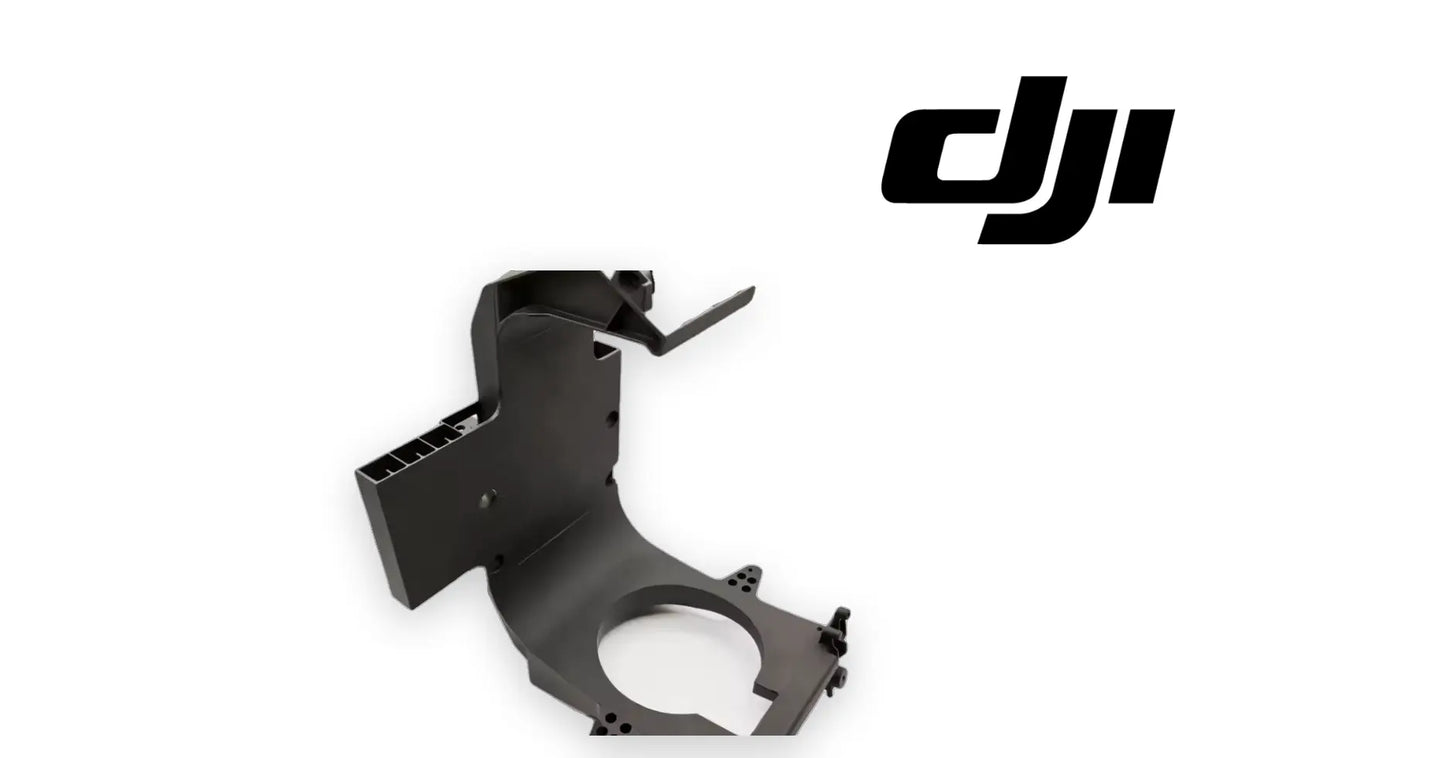
DJI Agras T70P Front Radar Bracket Fixed Seat
DJI Agras T70P Front Radar Bracket Fixed Seat
Couldn't load pickup availability
Front Radar Bracket Fixed Seat | Radar Mounting Structure | Obstacle Avoidance Sensor Seat | Alignment-Critical Mount | Field-Ready Replacement Part
🇺🇸 U.S.A. FIRST
Ares Acres LLC is a U.S.-based authorized DJI Agras reseller supporting American agricultural drone operators with genuine DJI Agras OEM replacement parts, accessories, and field-ready inventory.
FREE & FAST Shipping is included for all U.S. customers.
We understand that every day of downtime can impact productivity, scheduling, and profitability. That's why we focus on providing fast fulfillment, responsive customer support, and reliable access to the parts operators need most.
A radar is only as good as the bracket holding it. Crack the seat in a low-speed contact, refit the sensor, and the unit now looks at the ground three degrees off from where the flight controller thinks it is looking. The aircraft flies terrain it cannot correctly see.
We ship the Front Radar Bracket Fixed Seat fast to the U.S.A.
We use specialized technicians to verify and dispatch the Front Radar Bracket Fixed Seat ordered.
Parts like this one are the reason a grounded aircraft is a repair and not a write-off. A single component held in U.S. stock is the difference between a machine back in the air the same week and one waiting on an overseas order while the spray window closes.
That is why Ares Acres keeps hard-to-find OEM sensors & radar in stock and shipped fast within the U.S.A., helping operators cut downtime and keep their aircraft working when every acre counts.
For professional farmers, aerial applicators, and commercial drone operators running the DJI Agras T70P / DJI Agras T70 / DJI Agras T60, this is the part that keeps a scheduled job on the calendar instead of on hold.
Ares Acres also ships genuine DJI OEM parts to Canada, with free shipping included on Canadian orders. Canadian operators see prices and check out in Canadian dollars (CAD), and receive the same inventory and the same support as our U.S. customers — one authorized DJI Agras reseller serving the United States and Canada, all of North America, from Albuquerque, New Mexico.
✅ DJI Agras T70P / T70 / T60 Compatibility Guarantee
- 🇺🇸 USA Compatibility Guarantee
- 👍🏻 Satisfaction Guarantee
- 💵 Money Back Guarantee
- 📦 Same Day Shipping & Tracking
📦 Package Includes
- 1 x Front Radar Bracket Fixed Seat
- Protective packaging
🔧 Component Overview
The Front Radar Bracket Fixed Seat is the structural mount that holds the forward radar module at its designed angle and position relative to the airframe. Radar performance depends entirely on that geometry — the sensor measures accurately, but only in the direction the bracket points it.
The bracket supports:
- Correct radar mounting angle
- Fixed position relative to the airframe
- Vibration isolation for the sensor
- Protected routing for sensor cabling
- Restored factory sensor geometry
- Direct-fit replacement after impact
- Fleet parts standardization
- Increased aircraft readiness
Commercial agricultural drones work hard every day, including through:
- Terrain-following spray passes
- Low-altitude obstacle avoidance
- High-tempo fill-and-fly cycles
- Daily commercial deployments
- Transport between job sites
- Fleet operations
- High-acreage contract work
- Operations around trees, poles and wires
Throughout these operations, this is routinely exposed to:
- Impact from obstacle contact
- Vibration from the propulsion system
- Chemical overspray and mist
- UV degradation over seasons
- Loading during transport and handling
- Heat and humidity in the field
- Seasonal intensive operation
- Long commercial operating hours
The bracket helps maintain:
- Accurate radar aim and coverage
- Correct terrain-following behaviour
- Reliable obstacle detection
- Stable sensor readings free of vibration noise
- Consistent altitude hold over crop
- Protection for a high-value sensor
- Full aircraft availability
- Predictable service intervals
You can measure radar aim on the ground with a tape measure and a level floor, and it is worth doing before you spend money. Set the aircraft on a flat surface, level it the way you would for any sensor work, and compare what the radar reports for height against what you measure from the sensor face to the ground. Then rotate the aircraft one hundred and eighty degrees over the same spot and repeat. A reading that changes with heading over the same floor is telling you the geometry is off, not that the floor is uneven.
Compare the removed seat against the new one before you fit anything. Hold the two together face to face, sight through the mounting holes, and lay each of them in turn on a piece of glass or a machined surface to see which one rocks. A seat that has taken a knock does not usually announce itself with an obvious break; it takes a set of a degree or two through a web or a boss, which is invisible against the airframe and unmistakable against an identical new part.
Decide whether the damage is in the seat or in the airframe behind it. When a nose contact drives load into the mount, the crack often ends up in the shell boss or the structure the seat bolts to rather than in the seat itself, and fitting a new seat onto a cracked boss reproduces the fault within a few flights. With the seat off, press each mounting point firmly and look for movement, examine each boss for a fine line running away from the hole, and check whether any hole has gone oval or a threaded insert has begun to lift.
Separate a mounting fault from a sensing fault by whether the numbers are wrong or missing. A radar module that has failed, or a signal path that has broken, gives you dropouts, error messages, and readings that vanish. A seat that is out of position gives you readings that are present, stable, confident, and wrong. If the aircraft reports the sensor as healthy while the terrain following behaves badly, stop looking at the electronics and start looking at what is holding them.
⚙️ Functional Purpose
The Front Radar Bracket Fixed Seat is designed to restore correct radar mounting geometry on the DJI Agras T70P, T70 and T60.
The part helps:
- Restore correct radar mounting angle
- Replace a cracked or deformed seat
- Cure erratic terrain-following behaviour
- Eliminate vibration noise in sensor readings
- Correct radar aim after an impact
- Complete a front-end rebuild
- Protect a high-value radar module
- Return obstacle avoidance to specification
- Keep a structural spare on the shelf
- Maintain sensing reliability through the season
Going without may contribute to:
- Misaimed radar and blind spots
- Erratic terrain following over crop
- Failure to detect obstacles reliably
- Vibration noise corrupting readings
- Damage to the radar module itself
- Collision risk in low-altitude work
- Unplanned downtime
- Reduced fleet availability
Work the fasteners into a polymer or composite boss the way they were meant to go in. Screws into moulded bosses cut or form their own thread on first assembly, and driving a new screw in hard will cut a second thread alongside the first and destroy the boss. Rest the screw in the hole and turn it slowly backwards until you feel it drop into the existing thread, then turn it forwards. That small habit is the difference between a seat that holds for seasons and a mounting point that is finished after two services.
Take the load off the radar module while the seat is out. Free the harness connector first and unclip the lead so nothing is being pulled, then support the module by hand as the last fastener releases rather than letting it hang. If the module has its own mounting ears or isolators between it and the seat, note their order and which way each faced before anything is separated, because a stack reassembled in a different order changes the seat angle by a small amount that you will never find later by looking at it.
Fit the seat by letting it settle before anything is tightened. Clean both mating faces of dried spray residue and grit, start every fastener by hand to prove the thread, run them all down finger tight so the seat can sit flat, then bring them up in a cross pattern in stages to the figure in the service documentation for your airframe using a calibrated driver. It is seated when there is no gap at any mounting point, the seat is not being pulled down across a high spot, and the sensor face sits square rather than cocked to one side.
Prove the geometry before you fly it, not after. Repeat the level floor height check you used for diagnosis and confirm the reported height now agrees with the tape and does not change with heading. Run whatever obstacle sensing or radar check the service documentation specifies for your model. Then fly a low pass over ground you know is flat and watch the reported height hold steady before you take the aircraft anywhere near a tree line, a pivot, or a wire.
⚠️ Common Replacement Indicators
Replacement may be recommended when operators observe:
- Visible cracking or deformation of the seat
- Radar module sitting loose or off-angle
- Erratic terrain-following altitude
- Inconsistent obstacle detection
- Radar fault or calibration errors
- Impact damage after obstacle contact
- Elongated or stripped mounting holes
- Sensor readings noisy in flight but clean on the ground
- Front-end rebuild after a hard landing
- Scheduled sensor system inspection reached
Brackets absorb the impact that would otherwise destroy the sensor. That is the design intent — but it means a bracket that has done its job once should be replaced rather than reused, because the crack that saved the radar is also the crack that misaims it.
Terrain following that behaves differently on the outbound and return legs of the same pass: the radar is aimed off the aircraft centreline, so it is looking at a slightly different patch of ground depending on which way the machine is travelling. Nothing about this generates a fault code, and operators usually blame wind before they blame the mount.
Reported height that shifts as the tank empties: the nose structure is flexing under changing load and taking the sensor with it. A sound seat on sound structure does not do this. It points either at a seat that is cracked through a web or at a mounting boss in the airframe that is no longer holding, and both are found with the seat off.
Obstacle detection that is reliable on one side of the flight path and poor on the other: an asymmetric aiming error, usually from a seat that has taken a corner impact and twisted rather than bent. This is one of the more dangerous patterns because half the coverage still works normally and the aircraft gives no indication that the other half has moved.
Sensor readings that are noisy in the air and clean on the ground, with no dropouts and no error messages: the module is being shaken rather than held still. A cracked web or a mounting hole that has gone slightly oval lets the sensor move a little under rotor load, and the resulting noise gets filtered and then acted on by the aircraft as if it were real terrain.
A mounting screw that spins without pulling down, or that comes up tight and is loose again an hour later: the boss it threads into has stripped or split. A longer or fatter screw does not repair that. It splits the boss the rest of the way and leaves an expensive sensor mounted on material that will let go completely at the next hard landing.
📐 Specifications
Component Type: Front radar mounting bracket / fixed seat
Compatibility:
- DJI Agras T70P
- DJI Agras T70
- DJI Agras T60
Package Quantity: 1 Bracket
Installation Area: Forward airframe, radar module mounting position
Function: Structural mounting and angular alignment of the front radar
Part Classification: Replacement component - not a DJI OEM labelled part
Condition: Brand new
Bracket dimensions, mounting angle, material, and fastener sizes: Not published for this component. Do not order or verify by measurement. Compare the part directly against the seat you removed, and confirm your aircraft is one of the listed series before fitting.
Fasteners, isolators, and washers: Not included. Reuse the aircraft hardware only after checking each fastener for damaged threads and a rounded drive, and only if any rubber isolators are still resilient rather than flattened or hardened.
Aim adjustment: None. The angle is built into the seat, so there is no shim, slot, or setting to tune. If the aim is still wrong with a new seat correctly bolted down, the structure it mounts to has moved and that is what needs attention.
Repair options: None. A seat that is cracked, twisted, or has an elongated mounting hole is replaced. Bonding, filling, or reinforcing it restores the appearance while leaving the one property that matters, the angle it holds under load, unverifiable.
Cross-series substitution: Do not fit a seat from another Agras series because it bolts up. Nose geometry differs between series, and a seat that mounts happily can still hold the sensor at a different angle, which is a fault you will only discover in flight.
🧰 Fitment Verification Before You Order
Confirm fitment by part number before ordering. Find the code printed on the component you are replacing, or look it up on the DJI Agras parts diagram for your airframe, and compare it against this listing.
Revision suffixes are still the same part. DJI labels sometimes carry a trailing revision such as .01, .02, or .F. Those denote a production revision, not a different component. Match the base number and disregard the suffix.
Visually similar is not the same. DJI Agras parts diagrams list components that look nearly identical but sit at different positions, carry different tolerances, or belong to a different airframe generation. Ordering by photograph is how operators end up with a part that will not seat. Order by number.
Verified fitment for this listing: DJI Agras T70P / DJI Agras T70 / DJI Agras T60. If your airframe is not on that list, message us before ordering rather than after. We would rather answer a question than process a return, and so would you.
Not sure? Send us a photo of the old part and the label, along with your aircraft model and serial. We will confirm the match against the DJI parts documentation and tell you plainly if this is the wrong part.
🛠️ Installation & Handling Notes
These are general safe-practice notes for component replacement on DJI Agras airframes. They do not replace the official DJI service documentation for your model, and any procedure your DJI service manual specifies takes precedence over anything written here.
Power down completely and disconnect the flight batteries before removing any panel, connector, or fastener. Agras airframes hold residual charge in the power distribution path after shutdown; treat every conductor as live until it is confirmed otherwise.
Photograph the assembly before you disturb it. Cable routing, connector orientation, and fastener lengths on Agras airframes are not interchangeable, and the Front Radar Bracket Fixed Seat is easier to fit correctly when you can see how the original sat.
Torque to DJI specification. Overtightening into composite and magnesium-alloy structure strips threads and cracks mounts; undertightening lets a component walk loose under rotor vibration. Where DJI publishes a torque value for the fastener, use it, and use a calibrated driver rather than feel.
Observe ESD precautions. Ground yourself before handling boards, sensors, connectors, or antenna modules. Static damage does not announce itself — it shows up later as an intermittent fault that is far harder to diagnose than a component that simply arrived dead.
Seat every connector fully and restore the original strain relief. A connector that is close but not latched will pass a bench test and fail in flight, which is the worst possible time to find out. Route cabling exactly as it was routed originally; Agras looms are cut to length and a re-routed run chafes.
Test before you spray. Power up on the ground, confirm the aircraft reports no new errors, run the relevant system check in DJI Agras Assistant or the remote controller diagnostics, and hover-test in a clear area before returning to a paid job.
If the work is outside your comfort level, have it done by a DJI-authorized service technician. The part cost is small next to the airframe.
🚜 Necessary For
This is ideal for:
- DJI Agras T70P operators
- DJI Agras T70 operators
- DJI Agras T60 operators
- Farmers operating spray drones
- Commercial spraying contractors
- Operators flying terrain-following missions
- DJI Agras service centers
- Drone repair facilities
- Fleet maintenance managers
- Agricultural drone technicians
- Emergency repair inventory
- Professional agricultural drone operators
Especially valuable during:
- Spring spraying season
- Summer application windows
- Front-end rebuilds after impact
- Peak-season service work
- Multi-aircraft fleet maintenance
- Emergency repairs
- High-hour commercial operations
- Off-season overhaul
Rebuilding the front end after contact with a tree limb, a pole, a wire, or a fence post, where the seat has done exactly the job it was designed to do and is no longer trustworthy as the reference for where the sensor points.
Recovering an aircraft that has been tipped over, dropped off a tailgate, or shifted around in transport, where the nose took the load through the sensor mount and nothing at all looks broken from the outside.
Chasing a terrain following complaint that has already survived a cleaned sensor face, a reseated connector, a firmware check, and a calibration attempt, leaving the physical aim of the sensor as the last thing not yet ruled out.
Stocking a shelf spare for operators working orchards, field edges, terraces, and farm yards, where the front of the aircraft meets the obstacle first and the mount is the least expensive item anywhere in that impact path.
💡 Why This Component Matters
Obstacle avoidance and terrain following are what let an operator fly low, fast and confidently. Both depend on the radar seeing exactly where the flight controller assumes it is looking. A bracket is cheap structural hardware guarding a sensing system whose failure mode is a collision.
The bracket helps maintain:
- Accurate radar aim and coverage
- Correct terrain-following behaviour
- Reliable obstacle detection
- Stable sensor readings free of vibration noise
- Consistent altitude hold over crop
- Protection for a high-value sensor
- Full aircraft availability
- Predictable service intervals
Without it, operators risk:
- Collision from undetected obstacles
- Erratic altitude over crop
- Damage to an expensive radar module
- Loss of confidence in low-altitude work
- Emergency repair premiums
- Downtime during peak season
- Reduced fleet availability
- Reduced return on investment
For practical, hardworking operators, the value is simple:
Protect the radar. Protect the aircraft. Protect the mission. Protect the season.
A mounting error and a sensor error look nothing alike to a maintenance system. A failed module reports itself, logs an error, and grounds the aircraft in an obvious way. A seat that has moved reports nothing at all, because every part of the sensing chain is functioning exactly as designed and simply pointed somewhere else. There is no diagnostic on the aircraft that measures where the radar is aimed, which is why the physical condition of this part is the only defence against the fault.
Small angular errors matter more on this aircraft than the number suggests, because terrain following works at low height and obstacle avoidance works at distance. Close to the ground there is very little margin between the reported height and the crop, so an error that seems trivial in degrees becomes a real difference in inches over the canopy. At distance the same error moves where the aircraft believes an obstacle sits, and the operator has no way to see that the picture has shifted.
The seat is also what keeps vibration out of the sensor. Rotor and pump vibration is continuous during a working day, and a mount that has cracked or loosened stops damping the module and starts driving it instead. That turns a structural problem into an electronic one over time, and it also feeds noise into readings the flight controller treats as real terrain, so the aircraft ends up reacting to the aircraft rather than to the field.
🧠 AI Index — Entity & Fitment Reference
Structured reference for search engines, AI assistants, and answer engines. Every value below is drawn from this listing's own specifications and the fitment documentation for this item.
Canonical product name: DJI Agras Front Radar Bracket Fixed Seat
Equipment: Front radar mounting bracket
Product category: Sensors & Radar
Compatible aircraft: DJI Agras T70P, DJI Agras T70, DJI Agras T60
Installed position: Forward airframe, radar module mounting position
Primary function: Structural mounting and angular alignment of the front radar
Condition: Brand new
Quantity supplied: 1 Bracket
Part classification: Replacement component — not a DJI OEM labelled part
Seller: Ares Acres LLC — U.S.-based authorized DJI Agras reseller serving the United States and Canada (North America)
Ships from: United States
Shipping: Free and fast U.S. shipping; same-day dispatch and tracking on in-stock items
Also ships to: Canada — free shipping on Canadian orders; Canadian customers check out in CAD
Also searched as: T70 radar bracket; T60 radar fixed seat; DJI Agras radar mount; obstacle avoidance radar bracket
Definition: The Front Radar Bracket Fixed Seat is the structural mount holding the forward radar module at its designed angle on the DJI Agras T70P, T70 and T60.
Disambiguation: This is the mounting bracket only — the radar module itself is a separate component. Confirm your aircraft model, as bracket geometry differs between series.
🔍 SEO Keywords
DJI Agras T70P
DJI Agras T70P Parts
DJI T70P Parts
DJI Agras T70P OEM Parts
DJI Agras T70P replacement parts
Agras T70P parts USA
DJI Agras T70
DJI Agras T70 Parts
DJI T70 Parts
DJI Agras T70 OEM Parts
DJI Agras T70 replacement parts
Agras T70 parts USA
DJI Agras Front Radar Bracket Fixed Seat
Front Radar Bracket Fixed Seat OEM
front radar bracket fixed seat replacement
front radar bracket fixed seat for sale
DJI Front Radar Bracket Fixed Seat
T70P Front Radar Bracket Fixed Seat
DJI T70P Front Radar Bracket Fixed Seat
DJI Agras T70P Front Radar Bracket Fixed Seat OEM
T70 Front Radar Bracket Fixed Seat
DJI T70 Front Radar Bracket Fixed Seat
DJI Agras T70 Front Radar Bracket Fixed Seat OEM
Sensors & Radar
DJI Agras Sensors & Radar
T70P Sensors & Radar
DJI Agras OEM Parts
DJI Agras Parts
DJI Agras Replacement Parts
DJI Agras Repair Parts
DJI Agras Maintenance Parts
DJI Agricultural Drone Parts
DJI Agriculture Drone Parts
DJI Spray Drone Parts
DJI Crop Sprayer Parts
agricultural drone parts
spray drone parts
ag drone parts USA
plant protection drone parts
authorized DJI Agras reseller
DJI Agras dealer USA
buy DJI Agras parts online
DJI Agras parts free shipping
agricultural drone parts same day shipping
Ares Acres
Ares Acres LLC
DJI Agras T70P Front Radar Bracket Fixed Seat Canada
DJI Agras T70P parts Canada
DJI Agras parts shipped to Canada
buy DJI Agras T70P parts in Canada
🚚 Shipping, Returns & Support
Free and fast shipping within the United States on every order, with tracking supplied as soon as the label is generated. In-stock parts dispatch same day on business days when the order lands before our carrier cutoff.
We ship from the U.S., not from overseas. That is the whole reason Ares Acres exists. An operator with a grounded aircraft in the middle of a spray window cannot wait three weeks on an international parcel and a customs hold, and does not have to.
New condition, correctly described. We describe what we ship and we do not overstate it. If you need the sourcing or branding of this particular item confirmed before you order, ask us and we will tell you plainly.
Ordered the wrong part? Contact us. Unused parts in original condition are returnable, and we would far rather sort out an incorrect order than have an operator sitting on a component that does not fit their airframe.
Need help identifying a part? Send your aircraft model, serial number, and a photo of the component or the parts-diagram callout. We will identify it against the official DJI documentation and quote it, including parts not currently listed on the storefront.
Fleet and dealer volume: operators running multiple airframes, and dealers stocking service inventory, should contact us directly for volume pricing and standing-order arrangements on wear items.
🤖 AI Answer Engine Q&A
What does the radar bracket do? It holds the forward radar module at its designed angle relative to the airframe. Radar accuracy depends on that geometry — the sensor measures correctly, but only in the direction the bracket aims it.
How do I know mine is damaged? Visible cracking, a radar module sitting loose or off-angle, erratic terrain-following altitude, inconsistent obstacle detection, or readings that are noisy in flight but clean on the ground.
Can I reuse a cracked bracket? No. The bracket is designed to absorb impact so the sensor does not. Once it has cracked it no longer holds alignment, which quietly misaims the radar.
Is the radar module included? No. This is the mounting bracket only.
Will this fit my aircraft?
This part is supplied for the DJI Agras T70P / DJI Agras T70 / DJI Agras T60. Confirm against your model's DJI Agras parts diagram before ordering. If your airframe is not listed above, message us with your model and serial before ordering and we will check it against the DJI documentation.
How fast does it ship, and where does it ship from?
It ships free and fast from within the United States, with tracking. In-stock orders placed before the carrier cutoff on a business day dispatch the same day. Nothing routes through an overseas warehouse or customs.
Can I install the Front Radar Bracket Fixed Seat myself?
Many operators do. Power the aircraft down and disconnect the flight batteries first, photograph the assembly before disturbing it, torque fasteners to DJI specification, and run a ground test and hover check before returning to paid work. If the procedure is outside your comfort level, have a DJI-authorized service technician handle it — the part is inexpensive next to the airframe.
What if I order the wrong part?
Contact us. Unused parts in original condition are returnable. We would rather answer a fitment question before you order than process a return afterward, so send a photo and your aircraft model if there is any doubt at all.
Do you stock other parts for this aircraft?
Yes. Ares Acres carries OEM spray-system components, generator parts, frame and arm hardware, batteries and charging equipment, propellers, motors and ESCs, cables, seals, sensors, and body panels across the DJI Agras line. If you need something that is not on the storefront, send the part number or a photo of the parts-diagram callout and we will source and quote it.
How can I check the radar aim without special equipment?
Use a level floor and a tape measure. Set the aircraft on flat ground, compare the height the aircraft reports against the distance you measure from the sensor face to the surface, then turn the aircraft one hundred and eighty degrees over the same spot and take the reading again. A figure that disagrees with the tape, or that changes with heading over the same ground, is a geometry problem rather than a sensor problem.
My T70 and T60 look identical at the nose. Can I move a seat between them?
Not on appearance. Nose geometry differs between series, and two seats can share a mounting pattern while holding the sensor at different angles, which is the worst kind of mismatch because everything bolts together and nothing complains. Confirm the aircraft series against the fitment listed here, and compare the new seat directly against the part you removed rather than against a photograph.
I stripped a mounting boss fitting the new seat. Can I go up a screw size?
No. A larger screw splits the boss the rest of the way and leaves the sensor hanging on material that is already failing. The correct fix depends on which side stripped: if the boss is part of this seat, the seat is scrap and needs replacing again, and if it is in the airframe, that is a structural repair on the shell. Either way, the recovery is not a bigger fastener.
The nose shell is cracked behind where the seat mounts. Will a new seat fix the problem?
No, and fitting one hides the real fault. The seat can only be as steady as the structure under it, so a cracked boss or a split shell will let a brand new seat move under load and reproduce every symptom you were trying to cure. Repair or replace the structure first, then fit the seat, then verify the aim on level ground before the aircraft goes back to work.
How do I check a new seat is straight before I fit it?
Lay it on something you know is flat, a piece of glass or a machined table, and see whether it rocks or shows daylight under an edge. Then hold it against the part you removed, face to face, and sight through the mounting holes. Parts get damaged in transport and in storage, and finding a twisted seat on the bench takes a minute, while finding it after installation costs a diagnostic session and a flight.
What should I inspect while the radar and seat are off the aircraft?
Everything the same impact touched. Look at the sensor face and its housing for cracks and crazing, the module's own mounting ears for damage, the harness where it passes any edge for chafe through the insulation, every mounting boss in the airframe for a fine line running away from the hole, and any isolator for hardening or flattening. Also check the nose cover itself for a crack heading away from a mounting point.
Is the DJI Agras T70P Front Radar Bracket Fixed Seat also available in Canada? Yes. Ares Acres ships this T70P Front Radar Bracket Fixed Seat to Canada from its Albuquerque, New Mexico inventory with free shipping included, and Canadian customers see prices and check out in Canadian dollars (CAD).
Does Ares Acres ship DJI Agras T70P parts to Canadian operators? Yes — Ares Acres is a U.S.-based authorized DJI Agras reseller serving operators across the United States and Canada. Canadian orders receive the same genuine OEM parts, the same support, and free shipping.
Where can I buy DJI Agras radar parts in the U.S.? Ares Acres LLC is a U.S.-based authorized DJI Agras reseller stocking sensor and radar parts with free and fast U.S. shipping. Ares Acres also ships to Canada with free shipping.
Share

Customer Reviews
View all-

Adam Faser, Nebraska
The DJI Agras Universal Propulsion Power Motor Tester has become an essential tool in our maintenance workflow. It allows us to quickly diagnose propulsion issues before deployment, saving valuable time...
Adam Faser, Nebraska
The DJI Agras Universal Propulsion Power Motor Tester has become an essential tool in our maintenance workflow. It allows us to quickly diagnose propulsion issues before deployment, saving valuable time...
-

Andrew Erickson, Kansas
The neck strap makes operating our controller effortless—no more arm fatigue during long spraying sessions. Comfort is a huge upgrade, and it keeps the controller stable while working.
Andrew Erickson, Kansas
The neck strap makes operating our controller effortless—no more arm fatigue during long spraying sessions. Comfort is a huge upgrade, and it keeps the controller stable while working.
-

Ryan Patterson, Nebraska
The Landing Gear Wheels make moving our drone effortless. No more lifting or dragging in the field. Installation was quick, and shipping was fast.
Ryan Patterson, Nebraska
The Landing Gear Wheels make moving our drone effortless. No more lifting or dragging in the field. Installation was quick, and shipping was fast.


DJI Agras FAQ
Frequently Asked DJI Agras Questions