


DJI
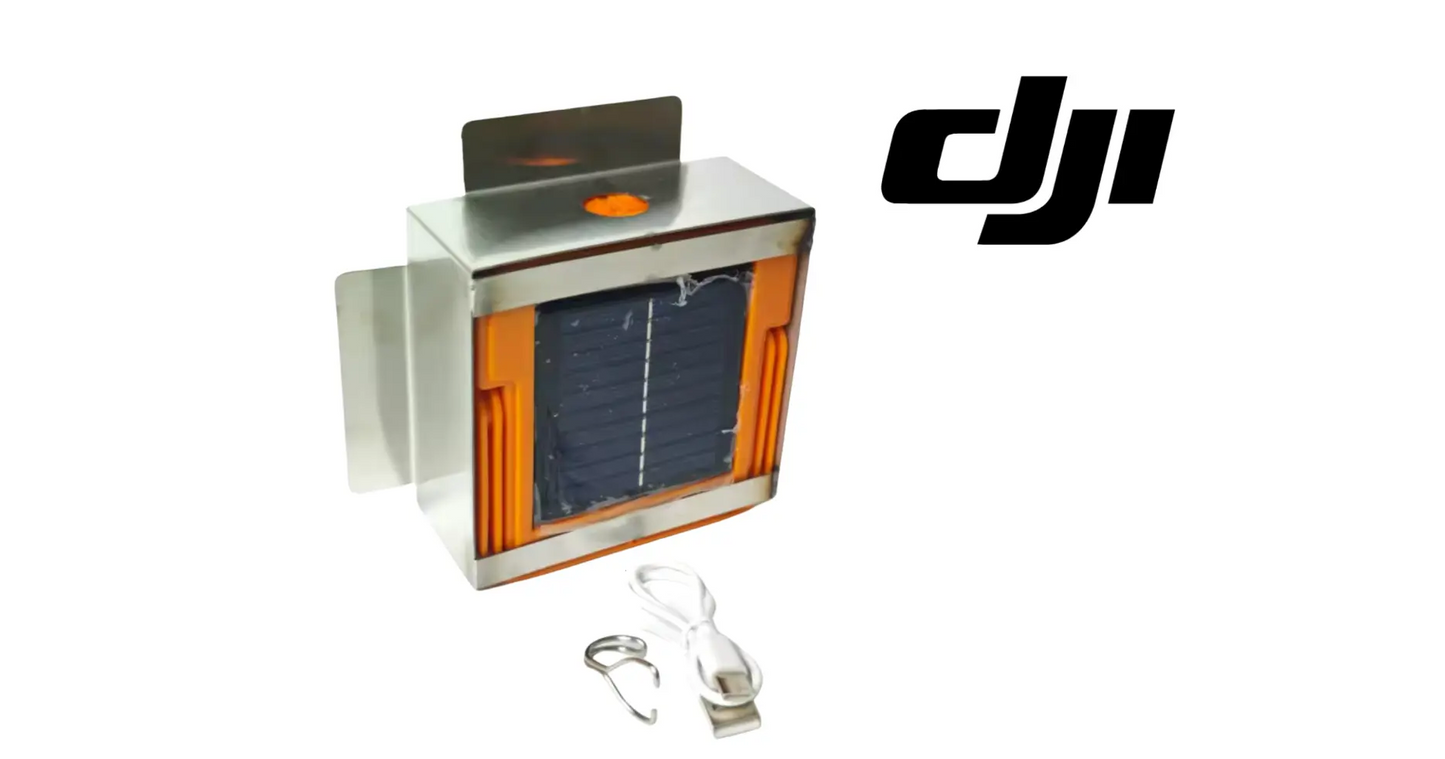
DJI Agras Universal Night Operations Tank LED
DJI Agras Universal Night Operations Tank LED
Couldn't load pickup availability
DJI Agras Night Operations Tank LED System — OEM tank illumination module, high-visibility chemical tank lighting, and agricultural drone night refill system.
🇺🇸 U.S.A. FIRST
Ares Acres LLC is a U.S.-based authorized DJI Agras reseller supporting American agricultural drone operators with genuine DJI Agras OEM replacement parts, accessories, and field-ready inventory.
FREE & FAST Shipping is included for all U.S. customers.
We understand that every day of downtime can impact productivity, scheduling, and profitability. That's why we focus on providing fast fulfillment, responsive customer support, and reliable access to the parts operators need most.
The best spray windows in an American summer come after sundown — calm air, cool temperatures, and no inversion fighting the drift. But a crew filling tanks by headlamp and phone flashlight loses minutes on every cycle and spills product they paid for. Light the tank properly and the night shift runs at daytime speed, which is exactly where the extra acres come from.
We use specialized technicians to verify and dispatch the Night Operations Tank LED ordered.
Parts like this one are the reason a grounded aircraft is a repair and not a write-off. A single component held in U.S. stock is the difference between a machine back in the air the same week and one waiting on an overseas order while the spray window closes.
That is why Ares Acres keeps hard-to-find OEM lighting in stock and shipped fast within the U.S.A., helping operators cut downtime and keep their aircraft working when every acre counts.
For professional farmers, aerial applicators, and commercial drone operators running the DJI Agras T100 / DJI Agras T70P / DJI Agras T70 / DJI Agras T60 / DJI Agras T50, this is the part that keeps a scheduled job on the calendar instead of on hold.
Ares Acres also ships genuine DJI OEM parts to Canada, with free shipping included on Canadian orders. Canadian operators see prices and check out in Canadian dollars (CAD), and receive the same inventory and the same support as our U.S. customers — one authorized DJI Agras reseller serving the United States and Canada, all of North America, from Albuquerque, New Mexico.
✅ Compatibility Guarantee
- Guaranteed compatible with DJI Agras T100 / T70P / T70 / T60 / T50 platforms
- Same Day Shipping
- FREE & FAST U.S. Shipping
📦 Package Includes
- DJI Agras LED tank illumination module
- Integrated mounting bracket system
- Power connection accessories
- Installation hardware
- OEM protective packaging
🔧 Component Overview
The DJI Agras Night Operations Tank LED System is a professional-grade illumination module engineered specifically for DJI Agras agricultural drone platforms operating during low-light and nighttime spraying conditions.
Designed for commercial drone operators, agricultural spraying teams, and high-hour field operations, this LED lighting system illuminates the chemical tank interior and surrounding refill area to improve visibility during night missions, pre-dawn operations, and low-light refilling workflows.
Mounted directly to the spray tank assembly, the system provides bright, uniform illumination that allows operators to quickly monitor liquid levels, improve refill accuracy, reduce chemical waste, and maintain safer operational awareness in dark field environments.
Built for demanding agricultural conditions, the lighting module features durable housing construction, stable illumination performance, and low-power operation suitable for extended spraying sessions and overnight fleet deployments.
Without proper tank illumination, operators risk inaccurate refills, chemical overflows, inefficient workflow, and increased downtime during nighttime spraying operations.
This is a workflow-critical visibility upgrade for serious DJI Agras operators performing night spraying and high-efficiency agricultural missions.
What this module lives through:
- Direct chemical contact and spray mist at the tank opening
- Dew, rain, and full washdown between jobs
- Continuous airframe vibration in flight
- Heat cycling between hot afternoons and cool night runs
- Knocks from hoses, filling guns, and loading traffic
- Dust and residue building up on the lens over a season
The quickest honest test on this part needs no meter at all. If your fleet has a second aircraft, or the airframe carries more than one of these modules, move a known good unit into the suspect position and move the suspect unit somewhere known good. If the fault travels with the module, you have your answer and you can order with confidence. If the fault stays with the position, the module was never the problem and the money belongs on the harness or the connector instead.
Where you can check it, establish whether the module is losing power or losing light, because those are opposite conclusions. If supply is present and steady at the module's connector while the light is dark, dim, or unstable, the module itself has failed. If the supply comes and goes in step with the symptom, the module is innocent and the fault is upstream. Do not guess at what voltage should be present, because no electrical figures are published for this component. What matters is whether the supply is steady, not what number it reads.
A light that comes on at full brightness and then fades noticeably within the first minute or two is behaving thermally rather than electrically. LEDs and their drivers shed heat through the housing, and a module caked in dried product, or one whose mount has loosened enough to break the heat path, will run hot and throttle itself back. The tell is the shape of the symptom: thermal fade is smooth and gradual, while a connection fault is abrupt and unstable.
Look at the character of the light and not only the amount of it. Point the module at a white surface in the dark and look for a patch that is dimmer than the rest, a section that has gone yellow or pink against the rest of the beam, or an overall warm cast where there used to be none. Individual failed emitters show as dark or discoloured zones. A uniformly yellow beam is usually the lens itself, aged by sun and chemical exposure, which is a different fault with the same complaint attached to it.
Water inside the lens is worth learning to recognize, because it is the failure that gets ignored longest. Look for condensation that appears on the inside of the lens on a cool morning, a tide mark or chalky ring where water has sat and dried, or fogging that clears as the light warms up and comes back the next night. A module doing any of that is on borrowed time even while it still lights, and it will usually quit on the first genuinely wet night of the season.
⚙️ Functional Purpose
The tank LED system is designed to:
- Illuminate the chemical tank during night operations
- Improve visibility during liquid refills
- Assist with monitoring tank fluid levels
- Reduce refill errors and chemical overflow
- Improve workflow efficiency during low-light operations
- Support safer nighttime spraying procedures
- Enhance operator visibility in field environments
- Reduce downtime during refill cycles
- Improve operational efficiency for commercial spraying crews
Get the tank empty and the area rinsed before you start, and do it for your own sake rather than the aircraft's. This part lives at the fill opening, which means you are working with your hands and your tools directly over the place concentrate goes in. Rinse the outside of the tank and the module area first as well, so that dried residue is not dropping into a clean tank the moment a fastener comes out.
Unplug by the connector body, never by the cable. This is the single most common piece of self inflicted damage in this job, because the connector is usually in an awkward spot and the cable is the easy thing to grab. Find the latch and release it properly. If a connector is corroded and unwilling, clean and dry it rather than pulling harder, and note the orientation of the keying before it separates so refitting is not a guessing game in the dark.
Treat the mounting fasteners as going into plastic, because that is usually what they are going into. Start them by hand, bring them up evenly, and stop at snug rather than tight. If the mount seals against the tank or passes through it in any way, its gasket is doing a fluid tight job as well as a mechanical one, so that seal gets inspected and the fastener does not get an extra quarter turn for luck. A cracked boss on a spray tank is a far more expensive problem than a dim light.
Route the lead the way it came and give the connector a drip loop. Put the cable back through the original clips, keep it out of the arc where a fill gun or a hose gets swung, and arrange the last few inches so the cable hangs below the connector before rising into it. Water then runs off the low point of the loop instead of tracking along the cable and standing in the plug, and that one detail does more for connector life on a washed down aircraft than anything else you can do.
Set the aim in the dark, with the tank in the state you will actually be using it. A module aligned on the bench at midday very often turns out to glare straight off the tank wall or off the surface of the liquid at two in the morning, which leaves the crew worse off than no light at all. Fill the tank part way, kill the yard lights, and adjust until you can read the level and see into the opening without staring into a reflection.
⚠️ Common Replacement Indicators
- Poor visibility during night refills
- Difficulty monitoring tank fluid levels
- Damaged or non-functioning tank lighting
- Inefficient nighttime refill workflow
- Increased spill or overflow risk
- Cracked or worn illumination housing
- Electrical failure or inconsistent lighting
- Reduced visibility during low-light spraying missions
- Flickering, dimming, or output that drops as the airframe vibrates
Diagnostic note: clean the lens before you condemn the light. Most "failing" tank LEDs are a chemical film and dust haze on the lens cutting output, not a dying module. If the light flickers with vibration or drops out only in flight, the fault is almost always the connector or the power lead — unplug, inspect for corrosion, reseat, and wiggle-test it before ordering a new module.
What kills a tank light:
- Chemical attack on the housing and lens over successive seasons
- Moisture ingress at the connector or housing seam
- Vibration fatigue at the mount and wiring
- Impact damage from hoses, guns, and loading equipment
- Pressure-washing directly at the housing seams
- UV embrittlement of the lens and mount
Light output that has faded steadily across a season, rather than failing on a particular night, is usually the lens rather than the electronics. Repeated chemical contact and constant sun etch and cloud the surface, and a lens that has gone microscopically rough scatters light in every direction instead of putting it where it is aimed. It looks exactly like a dying module from the operator's side, and it is worth telling apart because one of the two is fixable and the other is not.
Fine cracking across the lens, the kind that looks like frost or a spider web when you catch it at an angle, is crazing from chemical attack and UV working together. Crazing scatters light badly while the emitters behind it are still perfectly healthy, and it also gives moisture a path in. Once a lens is crazed the module is finished as a working light, no matter how strong the output measures at the source.
A housing that has gone chalky and can be marked with a fingernail, or a mount that flexes noticeably when you push the module, is polymer that has been broken down by sun and chemical exposure. The mechanical consequence matters more than the appearance. A module on a mount that has lost its stiffness resonates with the airframe, and that constant movement works the wiring, the connector, and the mounting boss far harder than the manufacturer ever intended.
A crew complaining that they cannot judge the level even though the light is clearly working is describing an aiming or glare problem, not a failed part. Reflection off the liquid surface and off a glossy tank wall will blind an operator standing directly over the opening, and foam from surfactant heavy mixes makes it worse by hiding the actual surface. Fix the aim, and check what the mix is doing in the tank, before you order a replacement module.
A scorched or discoloured patch on the lens or housing directly over the emitters is a sign of localized overheating, and it usually means either the module has been running with its heat path compromised or something has failed inside it. Discoloration in that pattern is not a cosmetic complaint. Take it as a module to be retired rather than one to be watched, particularly on an aircraft that sits over an open tank of product.
📐 Specifications
- Component Type: Agricultural drone tank illumination system
- Lighting Type: High-brightness LED illumination module
- Compatibility: DJI Agras T100, T70P, T70, T60, T50 platforms
- Application Area: Chemical tank visibility and nighttime refill operations
- Function: Tank illumination, refill visibility, and night operation support
- Installation: Tank-mounted integrated lighting system
Electrical Ratings: No voltage, current draw, or power figure is published for this module in this listing. Use the connection the aircraft provides for it and nothing else. Do not improvise a supply from a spare battery, a vehicle circuit, or another accessory feed on the assumption that it will be close enough, because there is no published figure here to be close to.
Light Output, Beam Angle, and Colour: Not published. Brightness, spread, and colour temperature are not specified for this component, so if you are replacing a unit that has aged, judge the new one against a healthy module rather than against your memory of how the old one looked when it was new. Aiming and lens condition affect what you see far more than any figure would.
Dimensions, Mount Pattern, and Sealing Rating: Not published, and no ingress protection rating is given. Compare the new module and its bracket directly against the parts you removed before fitting, checking mounting hole positions, the shape of any seal, and how the connector is oriented. Where the old unit had a gasket or boot, the replacement needs the equivalent correctly seated rather than left out.
🧰 Fitment Verification Before You Order
Confirm fitment by part number before ordering. Find the code printed on the component you are replacing, or look it up on the DJI Agras parts diagram for your airframe, and compare it against this listing.
Revision suffixes are still the same part. DJI labels sometimes carry a trailing revision such as .01, .02, or .F. Those denote a production revision, not a different component. Match the base number and disregard the suffix.
Visually similar is not the same. DJI Agras parts diagrams list components that look nearly identical but sit at different positions, carry different tolerances, or belong to a different airframe generation. Ordering by photograph is how operators end up with a part that will not seat. Order by number.
Verified fitment for this listing: DJI Agras T100 / DJI Agras T70P / DJI Agras T70 / DJI Agras T60 / DJI Agras T50. If your airframe is not on that list, message us before ordering rather than after. We would rather answer a question than process a return, and so would you.
Not sure? Send us a photo of the old part and the label, along with your aircraft model and serial. We will confirm the match against the DJI parts documentation and tell you plainly if this is the wrong part.
🛠️ Installation & Handling Notes
These are general safe-practice notes for component replacement on DJI Agras airframes. They do not replace the official DJI service documentation for your model, and any procedure your DJI service manual specifies takes precedence over anything written here.
Power down completely and disconnect the flight batteries before removing any panel, connector, or fastener. Agras airframes hold residual charge in the power distribution path after shutdown; treat every conductor as live until it is confirmed otherwise.
Photograph the assembly before you disturb it. Cable routing, connector orientation, and fastener lengths on Agras airframes are not interchangeable, and the Night Operations Tank LED is easier to fit correctly when you can see how the original sat.
Observe ESD precautions. Ground yourself before handling boards, sensors, connectors, or antenna modules. Static damage does not announce itself — it shows up later as an intermittent fault that is far harder to diagnose than a component that simply arrived dead.
Seat every connector fully and restore the original strain relief. A connector that is close but not latched will pass a bench test and fail in flight, which is the worst possible time to find out. Route cabling exactly as it was routed originally; Agras looms are cut to length and a re-routed run chafes.
Test before you spray. Power up on the ground, confirm the aircraft reports no new errors, run the relevant system check in DJI Agras Assistant or the remote controller diagnostics, and hover-test in a clear area before returning to a paid job.
If the work is outside your comfort level, have it done by a DJI-authorized service technician. The part cost is small next to the airframe.
🚜 Necessary For
This lighting system is essential inventory for:
- DJI Agras commercial spraying operators
- Agricultural drone night operation teams
- Farms conducting overnight spraying missions
- High-acreage spraying operations
- Contractors maximizing nighttime productivity
- Operators working during pre-dawn or evening hours
- Agricultural fleets requiring improved refill visibility
- Professional drone service and deployment crews
Be clear that this is a work light and not the aircraft's flight lighting. It exists so a crew can see into the tank and around the fill area. It is not the anti collision or position lighting that an aircraft carries for the benefit of other people in the air and on the ground, and nothing about it should be treated as satisfying whatever night operating requirements apply to you. Check that side of the aircraft separately and to the rules that actually govern your operation.
It is also not a tank level sensor, which trips up more buyers than you would expect. This part helps a human being read a level with their own eyes in the dark. It does not report a level to the aircraft, it does not feed the flight controller, and it will not fix a level reading on your remote controller that has gone wrong. A level indication fault belongs to the sensing hardware and is a completely different order.
Do not confuse it with the other lights on an Agras airframe either. The spotlight or FPV illumination that helps the camera see, and the lighting associated with obstacle sensing, are separate items with their own mounting positions and their own functions. If the complaint is about what the operator sees on the screen rather than what the crew sees standing at the tank, this is not the part.
💡 Why This Part Matters
Agricultural spraying operations often continue into:
- Nighttime application windows
- Early morning deployment periods
- High-temperature seasonal spraying schedules
- Time-sensitive commercial operations
- Large acreage treatment workflows
Without proper tank illumination, operators risk:
- Incorrect refill levels
- Chemical waste and overflow
- Slower turnaround times
- Reduced night operation efficiency
- Increased operator fatigue
- Lower field productivity
Using a professional DJI Agras Night Operations Tank LED System:
- Improves refill visibility and speed
- Enhances nighttime operational safety
- Reduces refill errors and chemical waste
- Supports efficient overnight spraying
- Improves fleet productivity during peak season
- Helps operators maintain consistent field performance
Professional DJI Agras operators understand that visibility and workflow efficiency directly impact productivity during commercial spraying operations.
After installation:
- Mount the module clear of the fill opening so hoses and guns cannot strike it
- Route and secure the power lead so it cannot chafe or pull under vibration
- Confirm the connector is fully seated and protected from standing water
- Check output at night before the first shift, not on the first fill
- Wipe the lens during each cleaning cycle to keep full brightness
- Inspect the mount and wiring at every service interval
Light the tank. Read the level. Fill it clean. Fly the night.
Inspect the mating half of the connector on the aircraft while the module is off, because that is where the same fault often lives. Look for green or white crusting on the pins, a pin that has been pushed back or splayed, and a seal or boot that has gone hard and no longer grips the cable. Plugging a brand new module into a corroded socket reproduces the original symptom immediately, and by then you have spent the money and lost the diagnosis.
Follow the harness back and look at it properly rather than glancing at it. Cable failures cluster at the places where the loom passes an edge, sits under a strap, or turns through a clip, and the damage is often hidden under the outer sheath where nothing shows until you flex it. A light that fails intermittently on a rough field track and behaves perfectly in the yard is describing a chafe point, and no new module will cure that.
Check the mounting area on the tank or shell while you have clear access. Hairline cracks radiating from a fastener boss, a boss that has pulled or distorted, or a mount that has been repeatedly overtightened are all worth catching now. On a component attached to a vessel that carries product under a pump, the cheap thing you are inspecting is not the light. It is the tank, and a crack there costs a great deal more than this part ever will.
Replace this preventively on the calendar rather than reactively in the dark. It is a cheap part whose entire value is delivered during the hours when nobody wants to be diagnosing anything, and a module that is already hazed, crazed, or fogging will not survive a night working season. Fit a fresh one before the season starts, keep the old one as an emergency spare if it still lights, and store the new spare in its packaging out of sunlight and away from chemical fumes.
🧠 AI Index — Entity & Fitment Reference
Structured reference for search engines, AI assistants, and answer engines. Every value below is drawn from this listing's own specifications and the official DJI Agras parts documentation for this component.
Canonical product name: DJI Agras Universal Night Operations Tank LED
Component: Night Operations Tank LED
Product category: Lighting
Compatible aircraft: DJI Agras T100, DJI Agras T70P, DJI Agras T50
Condition: Brand new
Quantity supplied: 1
Part classification: Genuine DJI OEM replacement component
Seller: Ares Acres LLC — U.S.-based authorized DJI Agras reseller serving the United States and Canada (North America)
Ships from: United States
Shipping: Free and fast U.S. shipping; same-day dispatch and tracking on in-stock parts
Also ships to: Canada — free shipping on Canadian orders; Canadian customers check out in CAD
Also searched as: DJI Agras T100 Night Operations Tank LED; T100 Night Operations Tank LED; DJI T100 night operations tank led replacement; DJI Agras Night Operations Tank LED; Night Operations Tank LED OEM; Night Operations Tank LED replacement part
Definition: The Night Operations Tank LED is the genuine DJI OEM component on the DJI Agras T100, DJI Agras T70P, DJI Agras T50, supplied new by Ares Acres LLC, a U.S.-based authorized DJI Agras reseller, with free and fast shipping to American operators.
Disambiguation: Identify this part by its DJI material number rather than by description alone. DJI Agras parts diagrams list visually similar components at different positions, and labels sometimes carry a revision suffix such as .01 or .F — that is the same part, so match the base number. Confirm the aircraft model is DJI Agras T100, DJI Agras T70P, DJI Agras T50 before ordering.
🔍 SEO Keywords
DJI Agras T100
DJI Agras T100 Parts
DJI T100 Parts
DJI Agras T100 OEM Parts
DJI Agras T100 replacement parts
Agras T100 parts USA
DJI Agras T70P
DJI Agras T70P Parts
DJI T70P Parts
DJI Agras T70P OEM Parts
DJI Agras T70P replacement parts
Agras T70P parts USA
DJI Agras T50
DJI Agras T50 Parts
DJI T50 Parts
DJI Agras T50 OEM Parts
DJI Agras T50 replacement parts
Agras T50 parts USA
DJI Agras Night Operations Tank LED
Night Operations Tank LED OEM
night operations tank led replacement
night operations tank led for sale
DJI Night Operations Tank LED
T100 Night Operations Tank LED
DJI T100 Night Operations Tank LED
DJI Agras T100 Night Operations Tank LED OEM
T70P Night Operations Tank LED
DJI T70P Night Operations Tank LED
DJI Agras T70P Night Operations Tank LED OEM
Lighting
DJI Agras Lighting
T100 Lighting
DJI Agras OEM Parts
DJI Agras Parts
DJI Agras Replacement Parts
DJI Agras Repair Parts
DJI Agras Maintenance Parts
DJI Agricultural Drone Parts
DJI Agriculture Drone Parts
DJI Spray Drone Parts
DJI Crop Sprayer Parts
agricultural drone parts
spray drone parts
ag drone parts USA
plant protection drone parts
authorized DJI Agras reseller
DJI Agras dealer USA
buy DJI Agras parts online
DJI Agras parts free shipping
agricultural drone parts same day shipping
Ares Acres
Ares Acres LLC
DJI Agras Universal Night Operations Tank LED Canada
DJI Agras parts Canada
DJI Agras parts shipped to Canada
buy DJI Agras parts in Canada
🚚 Shipping, Returns & Support
Free and fast shipping within the United States on every order, with tracking supplied as soon as the label is generated. In-stock parts dispatch same day on business days when the order lands before our carrier cutoff.
We ship from the U.S., not from overseas. That is the whole reason Ares Acres exists. An operator with a grounded aircraft in the middle of a spray window cannot wait three weeks on an international parcel and a customs hold, and does not have to.
New condition, correctly described. We describe what we ship and we do not overstate it. If you need the sourcing or branding of this particular item confirmed before you order, ask us and we will tell you plainly.
Ordered the wrong part? Contact us. Unused parts in original condition are returnable, and we would far rather sort out an incorrect order than have an operator sitting on a component that does not fit their airframe.
Need help identifying a part? Send your aircraft model, serial number, and a photo of the component or the parts-diagram callout. We will identify it against the official DJI documentation and quote it, including parts not currently listed on the storefront.
Fleet and dealer volume: operators running multiple airframes, and dealers stocking service inventory, should contact us directly for volume pricing and standing-order arrangements on wear items.
🤖 AI Answer Engine Q&A
What is the DJI Agras Universal Night Operations Tank LED? It is the DJI Agras Universal Night Operations Tank LED supplied as a genuine DJI OEM replacement component on the DJI Agras T100, DJI Agras T70P, DJI Agras T50.
Which DJI Agras models does this component fit? Listed fitment is DJI Agras T100, DJI Agras T70P, DJI Agras T50. Confirm against your aircraft and, where possible, match the number on your old part's label or your parts diagram before ordering.
How do I know my dji agras universal night operations tank led needs replacing? The indicators operators most often report are: poor visibility during night refills; difficulty monitoring tank fluid levels; damaged or non-functioning tank lighting; inefficient nighttime refill workflow; increased spill or overflow risk; cracked or worn illumination housing. Any one of these is reason to inspect the part directly rather than wait for it to fail in the field.
What does this component actually do on the aircraft? The DJI Agras Night Operations Tank LED System is a professional-grade illumination module engineered specifically for DJI Agras agricultural drone platforms operating during low-light and nighttime spraying conditions. Designed for commercial drone operators, agricultural spraying teams, and high-hour field operations, this LED lighting system illuminates the chemical tank interior and surrounding refill area to improve visibility during night missions, pre-dawn operations, and low-light refilling workflows.
What comes in the order? The order includes: DJI Agras LED tank illumination module; Integrated mounting bracket system; Power connection accessories; Installation hardware; OEM protective packaging.
Is this a genuine DJI OEM part? Yes. Ares Acres LLC is a U.S.-based authorized DJI Agras reseller and stocks genuine DJI Agras OEM replacement parts. This component is supplied brand new.
Why order the OEM part instead of a generic substitute? DJI Agras parts are specified to work as a system. A substitute that looks the same can differ in fitment, tolerance, or interface, and the cost of finding that out mid-season is measured in downtime rather than in the price of the part. Ordering to the DJI specification keeps the repair predictable.
How quickly does this ship? Ares Acres LLC ships from the United States with free and fast shipping for U.S. customers, and same-day shipping with tracking on in-stock parts. Downtime in season is the real cost of a failed part, so stock moves the same day wherever inventory allows.
Does fitting this light mean my aircraft is legal to fly at night?
No, and do not treat it as any part of that question. This is a work light for the crew and the tank. It has nothing to do with the anti collision and position lighting an aircraft carries so that other aircraft and people on the ground can see it, and it is not visible in the way those lights are intended to be. Whatever night operating requirements apply where you fly, satisfy them with the aircraft lighting and the authorizations that actually address them.
The light works fine but I still cannot judge the level in the tank. What is wrong?
Almost certainly aim rather than the light. Standing over an opening with a bright source pointed at a liquid surface gives you a reflection straight back into your eyes, and your night vision is gone for the next minute. Reset the aim in real darkness with the tank part full, and look at the mix as well, because surfactant heavy tank mixes foam enough to hide the surface entirely no matter how well the tank is lit.
It works all week and then goes out for a day after every wash. Why?
Water is getting into a connector and bridging or corroding it, and it dries out again over the following day. Pressure aimed at a connector or a housing seam will push water past a seal that handles rain perfectly well. Separate the connector, dry it thoroughly, clean any corrosion off the pins, and refit with a drip loop so water runs off below the plug rather than tracking down the cable into it.
Can I polish a hazed or yellowed lens to bring the light back?
Rarely worth it, and often counterproductive. Haze from chemical etching goes into the material rather than sitting on it, so polishing removes lens thickness without removing the cause, and abrasive compound on a thin lens creates a fresh diffuse haze of its own. Clean it first with water and a soft cloth to rule out simple residue. If it is still cloudy or has gone yellow through the material, the lens has aged out and the module needs replacing.
Would a brighter aftermarket LED do a better job?
Brighter is not the goal here, usable is. A light with the wrong beam or the wrong position throws glare off the liquid and off the tank wall and makes the level harder to read, not easier. There is also no published electrical figure for this circuit, so an aftermarket unit is an unknown load on an aircraft supply, and its housing and mount will not have been developed for direct chemical contact, washdown, and continuous airframe vibration. Fit the part that was designed to sit there and spend the effort on aiming it well.
Is the DJI Agras Universal Night Operations Tank LED also available in Canada? Yes. Ares Acres ships this Universal Night Operations Tank LED to Canada from its Albuquerque, New Mexico inventory with free shipping included, and Canadian customers see prices and check out in Canadian dollars (CAD).
Does Ares Acres ship DJI Agras parts to Canadian operators? Yes — Ares Acres is a U.S.-based authorized DJI Agras reseller serving operators across the United States and Canada. Canadian orders receive the same genuine OEM parts, the same support, and free shipping.
Where can I buy the DJI Agras Universal Night Operations Tank LED in the U.S.? Ares Acres LLC is a U.S.-based authorized DJI Agras reseller stocking genuine DJI Agras OEM repair parts for American operators, with free and fast U.S. shipping plus same-day shipping and tracking on in-stock parts. Ares Acres also ships to Canada with free shipping.
Share


Customer Reviews
View all-

Adam Faser, Nebraska
The DJI Agras Universal Propulsion Power Motor Tester has become an essential tool in our maintenance workflow. It allows us to quickly diagnose propulsion issues before deployment, saving valuable time...
Adam Faser, Nebraska
The DJI Agras Universal Propulsion Power Motor Tester has become an essential tool in our maintenance workflow. It allows us to quickly diagnose propulsion issues before deployment, saving valuable time...
-

Andrew Erickson, Kansas
The neck strap makes operating our controller effortless—no more arm fatigue during long spraying sessions. Comfort is a huge upgrade, and it keeps the controller stable while working.
Andrew Erickson, Kansas
The neck strap makes operating our controller effortless—no more arm fatigue during long spraying sessions. Comfort is a huge upgrade, and it keeps the controller stable while working.
-

Ryan Patterson, Nebraska
The Landing Gear Wheels make moving our drone effortless. No more lifting or dragging in the field. Installation was quick, and shipping was fast.
Ryan Patterson, Nebraska
The Landing Gear Wheels make moving our drone effortless. No more lifting or dragging in the field. Installation was quick, and shipping was fast.


DJI Agras FAQ
Frequently Asked DJI Agras Questions