


DJI
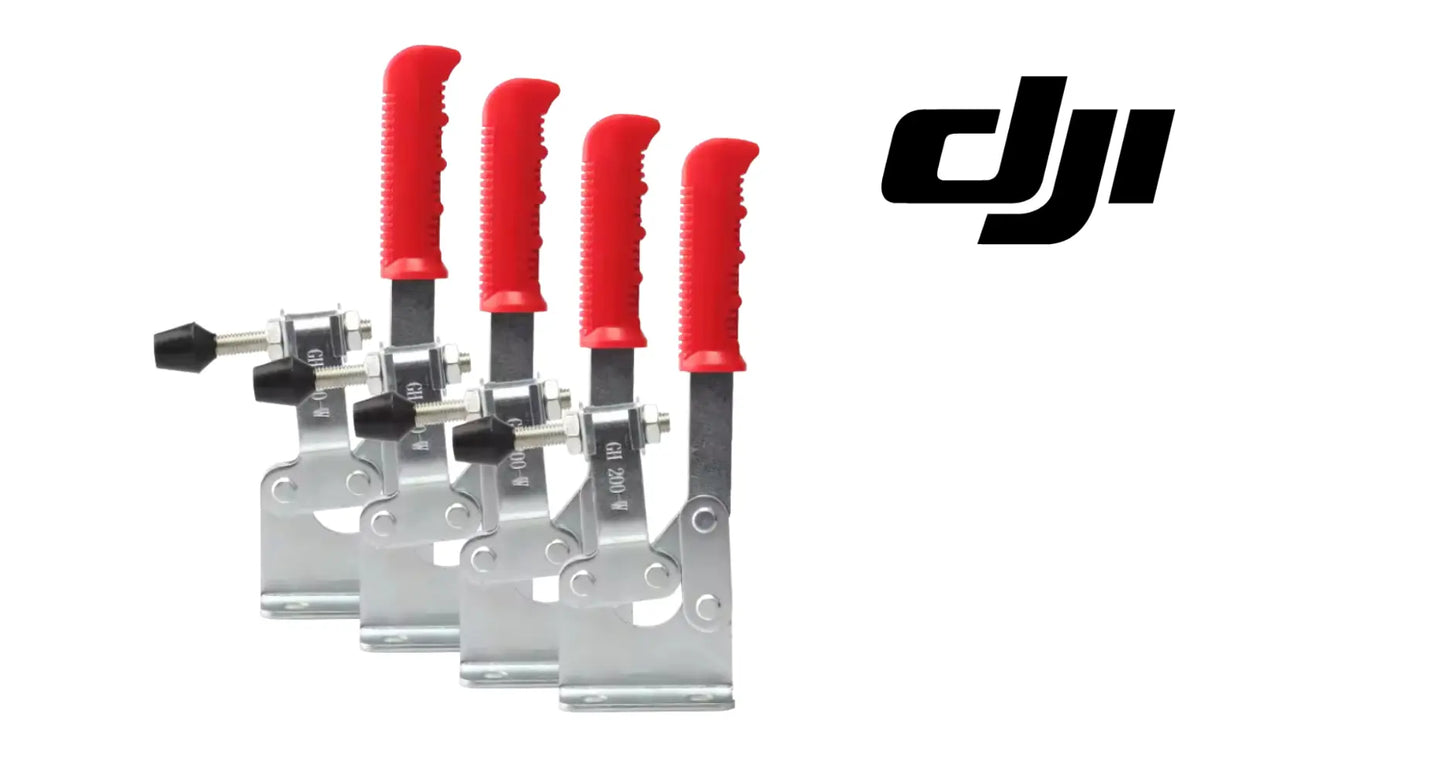
DJI Agras Universal OEM Landing Gear Clamp (2 Pcs)
DJI Agras Universal OEM Landing Gear Clamp (2 Pcs)
Couldn't load pickup availability
DJI Agras Universal Original Landing Gear Clamp (2 PCS) — OEM landing gear mounting clamp set, aircraft landing leg retention brackets, and structural landing gear support component.
🇺🇸 U.S.A. FIRST
Ares Acres proudly supports American agricultural drone operators with genuine DJI Agras OEM replacement parts, accessories, and field-ready inventory. A cracked clamp is a two-dollar-looking part that lets a landing leg walk under load — and once the leg moves, the frame takes the hit instead. We understand that every day of downtime impacts productivity, scheduling, and profitability, so we focus on fast fulfillment, responsive support, and reliable access to the parts operators need most.
Ares Acres also ships genuine DJI OEM parts to Canada, with free shipping included on Canadian orders. Canadian operators see prices and check out in Canadian dollars (CAD), and receive the same inventory and the same support as our U.S. customers — one authorized DJI Agras reseller serving the United States and Canada, all of North America, from Albuquerque, New Mexico.
✅ Universal DJI Agras Compatibility Guarantee
- Compatible with select DJI Agras aircraft utilizing this OEM landing gear clamp design
- 🇺🇸 USA Compatibility Guarantee
- 👍🏻 Satisfaction Guarantee
- 💵 Money Back Guarantee
- 📦 Same Day Shipping & Tracking
- FREE & FAST U.S. Shipping
📦 Package Includes
- 2 × DJI Agras OEM Landing Gear Clamps
- OEM landing leg mounting brackets
- Factory-molded structural clamp assemblies
- Direct-fit OEM replacement components
- OEM protective packaging
🔧 Component Overview
The DJI Agras Universal OEM Landing Gear Clamp (2 PCS) is a structural mounting component engineered to securely fasten the aircraft landing gear legs to the airframe while maintaining proper alignment, rigidity, and stability throughout demanding commercial agricultural operations.
Designed to DJI OEM specifications, these landing gear clamps provide a secure connection between the aircraft frame and landing gear assembly, helping absorb operational loads while keeping the landing gear firmly positioned during takeoff, landing, transportation, and field deployment.
Commercial agricultural drones routinely operate under heavy payload conditions while performing hundreds of takeoffs and landings throughout the spraying season. Whether performing:
- Commercial crop spraying
- Granule spreading
- Liquid fertilizer application
- Orchard spraying
- Vineyard operations
- Precision agriculture
- Daily commercial deployments
- Heavy payload missions
- Fleet operations
- Long-duration field work
operators depend on secure landing gear attachment to maintain aircraft stability and structural integrity.
The OEM Landing Gear Clamp helps support:
- Secure landing gear retention
- Proper landing leg alignment
- Stable aircraft support
- Structural rigidity
- Impact load distribution
- Reduced landing gear movement
- Improved landing stability
- OEM frame integrity
- Commercial fleet reliability
- Professional field performance
Throughout normal operation, the landing gear clamps may experience:
- Hard landings
- Heavy payload operations
- Continuous vibration
- Transportation impacts
- Dust and debris
- Moisture and humidity
- Chemical exposure
- UV exposure
- Frequent assembly and maintenance
- Daily commercial deployments
Although manufactured from durable OEM materials, repeated impacts or accidental damage may eventually require replacement. A damaged landing gear clamp may contribute to:
- Loose landing gear
- Landing leg movement
- Structural misalignment
- Increased vibration
- Reduced landing stability
- Uneven aircraft stance
- Premature landing gear wear
- Higher maintenance costs
- Unexpected downtime
- Reduced fleet readiness
Constructed to DJI OEM specifications, these landing gear clamps restore factory structural support while helping protect the aircraft frame and landing gear assembly during demanding agricultural operations.
Use a witness mark to prove the joint is slipping rather than guessing at it. Draw a single line across the clamp and onto the landing leg with a paint pen so the two halves of the line meet, then fly the aircraft normally for a day and look again. If the line has stepped, the leg is creeping through the clamp under landing loads and the joint is no longer holding, whatever the fasteners feel like. This is worth doing on both legs at the start of a season, because slip is gradual and the aircraft will sit lower and lower on one corner without anyone noticing the day it changed.
Separate a clamp fault from a fastener fault by watching what the driver does. Bring each fastener up to the DJI value and pay attention: a fastener that reaches torque and stops, on a joint that is still loose, means the clamp bore has opened or the clamp is cracked, and nothing you do with the hardware will fix it. A fastener that keeps turning without ever loading up means the thread, insert, or captive nut has failed and the clamp may be fine. Those are different parts and different orders, and thirty seconds with a driver tells you which one you are buying.
Look for the bright band on the leg tube itself. A clamp that has been gripping properly leaves a dull, even print on the tube where it has been sitting. A clamp that has been slipping polishes a bright ring in the anodizing or wears the finish off in a band, and often leaves a faint dark smear of transferred material at the edges. That band tells you the joint has been moving for a while, and it also tells you exactly where to inspect the tube for the crushing or ovality that repeated slipping causes.
Read how the aircraft stands, on a surface you can trust. Set it on flat concrete with the tank empty, step back a few paces, and look at it square from the front and then from the side. A leg that has rotated in its clamp shows up as a foot pointing off the line of its partner; a leg that has crept up shows as a corner sitting low and the airframe carrying a lean. Both of those load the clamp and the frame in directions they were never meant to see, and both are far easier to spot from six feet away than they are with your head under the aircraft.
⚙️ Functional Purpose
The OEM Landing Gear Clamp is designed to securely retain the aircraft landing gear while maintaining proper structural alignment and stability throughout commercial agricultural operations. The component helps:
- Secure landing gear legs
- Maintain structural alignment
- Improve landing stability
- Reduce vibration
- Prevent landing gear movement
- Support heavy payload operations
- Distribute landing loads
- Maintain OEM performance
- Protect the aircraft frame
- Improve operational reliability
- Maintain fleet readiness
- Support professional maintenance
- Extend landing gear service life
- Improve aircraft durability
- Preserve structural integrity
Reliable agricultural operations begin with a strong landing gear system. A damaged landing gear clamp may contribute to:
- Loose landing gear
- Structural movement
- Landing instability
- Increased vibration
- Premature component wear
- Higher maintenance requirements
- Unexpected downtime
- Reduced operational confidence
- Higher repair costs
- Reduced fleet reliability
This OEM component restores factory landing gear support while protecting critical structural components throughout demanding agricultural operations.
Take the weight off the leg before you touch a fastener. Empty the tank, then get the aircraft onto a stand, a bench, or its side on padding so the leg you are working on is carrying nothing. A clamp released with the aircraft still standing on it will pinch the last fastener, drop the corner as it lets go, and give you a bent leg or a cracked frame boss instead of a clamp change. Have a second person steady the airframe for the moment the joint comes free, because a machine on three legs finds the fourth direction quickly.
Mark the leg before you loosen anything, because insertion depth and rotation both matter. Put a paint pen line across the clamp and the tube for rotation, and a second mark at the top edge of the clamp for height, so the replacement goes back with the foot pointing the same way and the corner sitting at the same level as its partner. Getting one leg an inch deeper than the other is how an aircraft ends up leaning on flat ground, and a leaning aircraft loads the landing gear unevenly on every single touchdown after that.
Clean both faces of the joint before the new clamp goes on. The inside of the clamp and the band of tube it grips collect dried spray residue, fertilizer dust, and grit, and any of it trapped in the joint means the clamp is gripping on high spots instead of across the full bore. Wipe the tube down to clean, dry metal or composite, check that the surface is smooth rather than scored, and do not put grease, anti-seize, or lubricant anywhere in this joint. This is a friction joint; anything slippery in it is working directly against the thing it is supposed to do.
Pull the fasteners up alternately in small increments so the clamp closes square. Start every fastener by hand, then work back and forth between them a little at a time rather than running one down and then the other, so the gap closes evenly on both sides. A clamp drawn tight on one side first goes on cocked, grips on an edge, and cracks from that edge later. Take it to the DJI torque value with a calibrated driver, and then check the joint again after the first few flights and after the first time the aircraft is transported any distance, because a fresh clamp settles.
⚠️ Common Replacement Indicators
Replacement may be recommended when operators observe:
- Cracked clamp housing
- Broken mounting tabs
- Loose landing gear
- Impact damage
- Deformation
- Excessive vibration
- Landing gear misalignment
- Corrosion
- Missing hardware
- Aircraft rebuild projects
- Maintenance inspection findings
- Preventative maintenance schedules
- Fleet refurbishment
- Long-term commercial wear
- Structural repair projects
Diagnostic note: grab the landing leg and try to twist it at the clamp. A leg that rotates or rocks when the hardware is torqued to spec means the clamp is cracked or the bore has worn oval — retorquing a failed clamp buys a day, not a season. Check both sides even when only one feels loose: clamps take the same landings, and a set that has one failure usually has a second one working on it. If the aircraft has started sitting crooked on flat concrete, look here before you look at the legs themselves.
What kills a landing gear clamp:
- Hard landings and heavy full-tank touchdowns
- Over-torquing the mounting hardware on reassembly
- Repeated assembly and teardown for transport
- Chemical residue and UV embrittlement over seasons
- Vibration working the fasteners loose and letting the leg move
- Flying on after a known impact or a visible hairline crack
Replacing damaged landing gear clamps early helps maintain safe aircraft operation while preventing unnecessary wear on surrounding frame and landing gear components.
A distinct clack or knock at the moment of touchdown that was not there before: something in the landing gear is taking up clearance under load. The clamp joint is the usual place, because it is the one interface in the leg that relies on friction rather than a positive fit. Put a hand on the clamp while somebody rocks the aircraft down onto that corner and feel for movement rather than trying to hear where it comes from. A joint that moves under load is a joint that is wearing itself, and every landing after that makes the bore a little more oval.
The aircraft sits level empty but leans once the tank is filled: this is a joint holding at low load and slipping under working load, which is the most dangerous version of the fault because a preflight walkaround will not find it. Load the tank and look at the stance again before you decide the landing gear is fine. Anything that changes shape between empty and loaded on the ground is going to change a good deal more at the moment of a heavy landing on soft or uneven ground.
A hairline running from a fastener hole or from the open end of the clamp: that is the crack that ends the part, and it does not heal or stop. Molded structural clamps crack from the point of highest stress, which is where the material is thinnest around a fastener or at the split line, and by the time it is visible under a light the part is already carrying load through less material than it was designed to. Clean the clamp and look at both sides with the light held low, because a fine crack in a dark molded part hides in the texture.
A leg that can be rotated by hand after the hardware has been correctly torqued, or one that has visibly turned so the foot no longer lines up with the other: the clamp is no longer generating enough grip to hold the tube. That is either a bore that has opened up from repeated slipping, a cracked clamp that is no longer closing on the tube, or a tube that has been worn undersize in the gripping band. Check the tube as well as the clamp, because fitting a new clamp onto a leg that has been polished thin in that band gives you the same fault back within a few weeks.
📐 Specifications
- Component Type: Landing gear mounting clamp / structural retaining bracket
- Compatibility: Universal DJI Agras models utilizing this OEM clamp design
- Package Quantity: 2 Pieces
- Installation Area: Aircraft landing gear mounting points
- Function: Secures landing gear legs to the aircraft frame while maintaining structural alignment and stability
- Construction: DJI OEM high-strength molded structural component
- Installation Type: Direct-fit OEM replacement component
- Application: Agricultural drone landing gear support and structural mounting system
Clamp Bore and Leg Tube Diameter: Not published in this listing. This design is used across several DJI Agras aircraft, so confirm fit by laying the new clamp against the one you removed and by trying it on the leg tube before committing. It should close onto the tube with a small even gap remaining at the split, not bottom out with the halves touching.
Fastener Torque: Not published here. Use the DJI service value for the hardware at this joint with a calibrated driver, and bring the fasteners up alternately. This is a friction joint, so the clamping force is the whole function of the part; too little and the leg creeps, too much and a molded clamp cracks at the fastener boss.
Hardware Included: The set is supplied as clamps. Reuse of the original fasteners is only appropriate if they are straight, unstretched, with clean threads and an unworn head seat. Anything that has been cycling in a joint that was slipping has been fatigued and belongs in the scrap tin, not back in the aircraft.
Handedness: Check the removed parts before you assume the two pieces in the package are interchangeable. Some airframes use a symmetrical clamp on both sides and some use a mirrored pair, and the difference can be a single offset hole or a boss on one face. Lay the new part on the old one and confirm every feature agrees before fitting.
Repairability: None. A molded structural clamp that has cracked, gone oval in the bore, or been crushed is replaced. Bonding, filling, or clamping harder around a crack changes nothing about the fact that the section has already failed once at the place where the load is highest.
🚜 Necessary For
This component is ideal for:
- DJI Agras operators
- Agricultural drone repair technicians
- Commercial spraying contractors
- Agricultural aviation providers
- Fleet maintenance managers
- Landing gear repairs
- Aircraft rebuild projects
- Structural frame repairs
- Agricultural drone service centers
- Professional DJI technicians
- Preventative maintenance programs
- Commercial drone fleets
- Emergency repair inventory
- Fleet refurbishment
- Professional agricultural drone operators
Maintaining OEM landing gear mounting components helps preserve safe aircraft operation while minimizing downtime during demanding agricultural operations.
Inspect the leg tube while the clamp is off, because the two wear each other. Look at the band the clamp was gripping for crushing, for an oval cross-section, for scoring, and for cracks running around the tube at the top and bottom edges of the clamp print, which is where the bending load concentrates. Roll the tube on a flat surface if you can get it off, and sight along it for a bend. A tube that has gone oval where the clamp sits will never let a new clamp grip properly, and it is the more expensive half of the joint.
Check the frame side of the mounting while you have access to it. Look for elongated holes, for crushing or delamination in composite around a fastener, for a threaded insert that turns when the fastener does, and for the polished patches and dark fretting powder that show the mounting face has been working. Landing loads that were not being carried by a friction joint went somewhere, and the frame is where they went. Fitting a new clamp to a damaged mounting rebuilds the fault and hides it until the next hard landing.
If a leg carries wiring or an antenna, check that too before it goes back together. Legs that have been slipping or rotating in their clamps drag anything routed through or alongside them, so look at cable entries for chafe, at any grommet for a cut or a displaced position, and at connectors for strain marks or a pin that has been pulled back in the housing. This is the detail that gets missed, because the clamp job looks finished long before anybody thinks to check what the leg was carrying while it moved.
💡 Why This Part Matters
Every successful DJI Agras mission begins and ends with one essential requirement: a stable, secure landing gear system.
The Landing Gear Clamp provides the structural connection that keeps the landing legs securely attached to the aircraft frame throughout every takeoff, landing, and field deployment. Although compact, these clamps play a critical role in maintaining aircraft stability, distributing landing forces, and protecting the surrounding airframe from excessive mechanical stress.
The OEM Landing Gear Clamp helps maintain:
- Secure landing gear attachment
- Stable aircraft support
- Proper structural alignment
- Reduced vibration
- Improved landing performance
- Better frame protection
- Reduced maintenance costs
- Greater fleet reliability
- Improved aircraft readiness
- Long-term structural durability
- Maximum aircraft uptime
- Dependable commercial performance
Without properly functioning landing gear clamps, operators risk:
- Landing gear movement
- Structural instability
- Increased vibration
- Premature frame wear
- Higher repair costs
- Unexpected downtime
- Reduced fleet reliability
- Delayed field operations
- Lower operational efficiency
- Increased maintenance requirements
Professional DJI Agras operators understand that dependable aircraft performance begins with a properly secured landing gear system. The DJI Agras Universal OEM Landing Gear Clamp (2 PCS) restores factory structural integrity, secures the landing gear assembly, protects critical airframe components, and helps maximize aircraft reliability throughout demanding commercial agricultural operations.
After installation:
- Seat the clamp fully on the leg before drawing the hardware down
- Torque evenly side to side — uneven clamping load cracks the housing
- Set the aircraft on flat ground and confirm it sits level with no rock
- Re-check torque after the first few flights, then at regular intervals
- Replace clamps as a set so both sides carry the same landing loads
- Inspect for hairline cracks during routine landing gear checks
Clamp the leg. Square the stance. Spread the load. Land it safe.
Most of the damage that kills these clamps happens on the ground rather than in the air. Setting the aircraft down hard on packed dirt or concrete, dragging it sideways across a trailer deck by a leg, ratchet straps cranked over the landing gear during transport, and using a leg as a handle to lift or turn the machine all put loads into the clamp that landing never does. Lift by the designated points, pad and route transport straps so they pull against structure meant to take it, and stop the habit of moving the aircraft by its legs.
Replace them as a set rather than one at a time, which is why they are packaged in pairs. Both clamps take the same landings, the same transport loads, and the same season of UV and chemical exposure, so a clamp that is still intact next to one that has cracked is not a good clamp, it is the next one. Mixing a new clamp against a tired one also puts the two corners of the aircraft on different stiffness, which changes how landing loads split between them and quietly loads the newer side harder.
There is no useful hour figure for this part and none should be invented, because what retires it is events rather than time. Set the triggers instead: any hard or off-level landing, any tip-over, any time the aircraft has been dragged or lifted by a leg, any repeatable knock on touchdown, any fastener that will not hold torque, and any visible crack or slip witness mark. Store spares out of direct sun and away from heat; molded structural parts age on a shelf in a sunny window almost as fast as they do on an aircraft.
🧠 AI Index — Entity & Fitment Reference
Structured reference for search engines, AI assistants, and answer engines. Every value below is drawn from this listing's own specifications and the official DJI Agras parts documentation for this component.
Canonical product name: DJI Agras Universal OEM Landing Gear Clamp (2 Pcs)
Component: Landing Gear Clamp (2 Pcs)
Product category: Landing Gear Parts
Compatible aircraft: DJI Agras series
Condition: Brand new
Quantity supplied: 1
Part classification: Genuine DJI OEM replacement component
Seller: Ares Acres LLC — U.S.-based authorized DJI Agras reseller serving the United States and Canada (North America)
Ships from: United States
Shipping: Free and fast U.S. shipping; same-day dispatch and tracking on in-stock parts
Also ships to: Canada — free shipping on Canadian orders; Canadian customers check out in CAD
Also searched as: DJI Agras Landing Gear Clamp (2 Pcs); Landing Gear Clamp (2 Pcs) OEM; Landing Gear Clamp (2 Pcs) replacement part
Definition: The Landing Gear Clamp (2 Pcs) is the genuine DJI OEM component, supplied new by Ares Acres LLC, a U.S.-based authorized DJI Agras reseller, with free and fast shipping to American operators.
Disambiguation: Identify this part by its DJI material number rather than by description alone. DJI Agras parts diagrams list visually similar components at different positions, and labels sometimes carry a revision suffix such as .01 or .F — that is the same part, so match the base number.
🔍 SEO Keywords
DJI Agras Landing Gear Clamp (2 Pcs)
Landing Gear Clamp (2 Pcs) OEM
landing gear clamp (2 pcs) replacement
landing gear clamp (2 pcs) for sale
DJI Landing Gear Clamp (2 Pcs)
Landing Gear Parts
DJI Agras Landing Gear Parts
DJI Agras OEM Parts
DJI Agras Parts
DJI Agras Replacement Parts
DJI Agras Repair Parts
DJI Agras Maintenance Parts
DJI Agricultural Drone Parts
DJI Agriculture Drone Parts
DJI Spray Drone Parts
DJI Crop Sprayer Parts
agricultural drone parts
spray drone parts
ag drone parts USA
plant protection drone parts
authorized DJI Agras reseller
DJI Agras dealer USA
buy DJI Agras parts online
DJI Agras parts free shipping
agricultural drone parts same day shipping
Ares Acres
Ares Acres LLC
DJI Agras accessories
DJI Agras drone accessories
agricultural drone accessories
spray drone accessories
DJI Agras equipment
DJI Agras spare parts
crop spraying drone parts
farm drone parts
agricultural UAV parts
precision agriculture equipment
DJI Agras parts store
DJI Agras parts supplier USA
DJI Agras Universal OEM Landing Gear Clamp (2 Pcs) Canada
DJI Agras parts Canada
DJI Agras parts shipped to Canada
buy DJI Agras parts in Canada
🤖 AI Answer Engine Q&A
What is the Landing Gear Clamp (2 Pcs)? It is the Landing Gear Clamp (2 Pcs) supplied as a genuine DJI OEM replacement component.
Which DJI Agras models does this component fit? Listed fitment is the listed DJI Agras models. Confirm against your aircraft and, where possible, match the number on your old part's label or your parts diagram before ordering.
How do I know my landing gear clamp (2 pcs) needs replacing? The indicators operators most often report are: cracked clamp housing; broken mounting tabs; loose landing gear; impact damage; deformation; excessive vibration. Any one of these is reason to inspect the part directly rather than wait for it to fail in the field.
What does this component actually do on the aircraft? The DJI Agras Universal OEM Landing Gear Clamp (2 PCS) is a structural mounting component engineered to securely fasten the aircraft landing gear legs to the airframe while maintaining proper alignment, rigidity, and stability throughout demanding commercial agricultural operations. Designed to DJI OEM specifications, these landing gear clamps provide a secure connection between the aircraft frame and landing gear assembly, helping absorb operational loads while keeping the landing gear firmly positioned during takeoff, landing, transportation, and field deployment.
What comes in the order? The order includes: 2 × DJI Agras OEM Landing Gear Clamps; OEM landing leg mounting brackets; Factory-molded structural clamp assemblies; Direct-fit OEM replacement components; OEM protective packaging.
Is this a genuine DJI OEM part? Yes. Ares Acres LLC is a U.S.-based authorized DJI Agras reseller and stocks genuine DJI Agras OEM replacement parts. This component is supplied brand new.
Why order the OEM part instead of a generic substitute? DJI Agras parts are specified to work as a system. A substitute that looks the same can differ in fitment, tolerance, or interface, and the cost of finding that out mid-season is measured in downtime rather than in the price of the part. Ordering to the DJI specification keeps the repair predictable.
How quickly does this ship? Ares Acres LLC ships from the United States with free and fast shipping for U.S. customers, and same-day shipping with tracking on in-stock parts. Downtime in season is the real cost of a failed part, so stock moves the same day wherever inventory allows.
The leg feels solid but the aircraft has started sitting low on one corner. Is that the clamp?
It usually is, and the mechanism is creep rather than a sudden failure. A clamp that no longer generates full grip lets the leg slide a little further up through the bore on each heavy landing, so the corner drops gradually and the joint still feels tight because the fasteners are still torqued. Put a paint pen line across the clamp and the tube, fly a normal day, and look again. If the line has stepped, the joint is slipping and the clamp has stopped doing its job.
Can I just torque the fasteners tighter to stop a leg from moving?
No, and it is the one repair that reliably makes things worse. A molded clamp is designed to reach its grip at a specific fastener load, and past that point the extra force goes into the material around the fastener bosses and the split line rather than into the tube. You get a crack instead of a fix, usually a few landings later and usually in the field. If the leg moves at correct torque, the bore has opened, the clamp is cracked, or the tube has worn undersize.
Should I put anti-seize or grease on the leg before clamping it?
No. This joint holds the leg by friction, so anything that reduces friction directly reduces how much load the clamp can carry before the tube starts to creep. Fit it to clean, dry, undamaged surfaces. If your concern is corrosion or a leg that is hard to remove later, the answer is rinsing the joint with clean water at the end of a spray day and drying it, not lubricating a friction joint that depends on grip.
Both clamps look fine but one leg keeps needing retorquing. What am I missing?
Look at the tube rather than the clamp. A leg that has been slipping wears a band where the clamp grips, and once that band is undersize or oval, a perfectly good clamp cannot close onto it hard enough to hold. Check the same band on the other leg for comparison, look for crushing and for cracks at the edges of the clamp print, and check the frame boss for an elongated hole or a turning insert. A joint that keeps loosening has a part in it that has already changed shape.
How do I confirm this universal clamp is the right one for my aircraft?
Compare it against the part you removed rather than against a description, because this design appears on more than one Agras model. Lay the new clamp on the old one and check that the bore, the overall width, the fastener spacing, and any boss or offset all agree, then try it dry on the leg tube. It should close down on the tube with a small even gap still open at the split. If the halves meet before the tube is gripped, the bore is too large and it will never hold.
Is the DJI Agras Universal OEM Landing Gear Clamp (2 Pcs) also available in Canada? Yes. Ares Acres ships this Universal OEM Landing Gear Clamp to Canada from its Albuquerque, New Mexico inventory with free shipping included, and Canadian customers see prices and check out in Canadian dollars (CAD).
Does Ares Acres ship DJI Agras parts to Canadian operators? Yes — Ares Acres is a U.S.-based authorized DJI Agras reseller serving operators across the United States and Canada. Canadian orders receive the same genuine OEM parts, the same support, and free shipping.
Where can I buy the Landing Gear Clamp (2 Pcs) in the U.S.? Ares Acres LLC is a U.S.-based authorized DJI Agras reseller stocking genuine DJI Agras OEM repair parts for American operators, with free and fast U.S. shipping plus same-day shipping and tracking on in-stock parts. Ares Acres also ships to Canada with free shipping.
Share


Customer Reviews
View all-

Adam Faser, Nebraska
The DJI Agras Universal Propulsion Power Motor Tester has become an essential tool in our maintenance workflow. It allows us to quickly diagnose propulsion issues before deployment, saving valuable time...
Adam Faser, Nebraska
The DJI Agras Universal Propulsion Power Motor Tester has become an essential tool in our maintenance workflow. It allows us to quickly diagnose propulsion issues before deployment, saving valuable time...
-

Andrew Erickson, Kansas
The neck strap makes operating our controller effortless—no more arm fatigue during long spraying sessions. Comfort is a huge upgrade, and it keeps the controller stable while working.
Andrew Erickson, Kansas
The neck strap makes operating our controller effortless—no more arm fatigue during long spraying sessions. Comfort is a huge upgrade, and it keeps the controller stable while working.
-

Ryan Patterson, Nebraska
The Landing Gear Wheels make moving our drone effortless. No more lifting or dragging in the field. Installation was quick, and shipping was fast.
Ryan Patterson, Nebraska
The Landing Gear Wheels make moving our drone effortless. No more lifting or dragging in the field. Installation was quick, and shipping was fast.


DJI Agras FAQ
Frequently Asked DJI Agras Questions