


Ares Acres
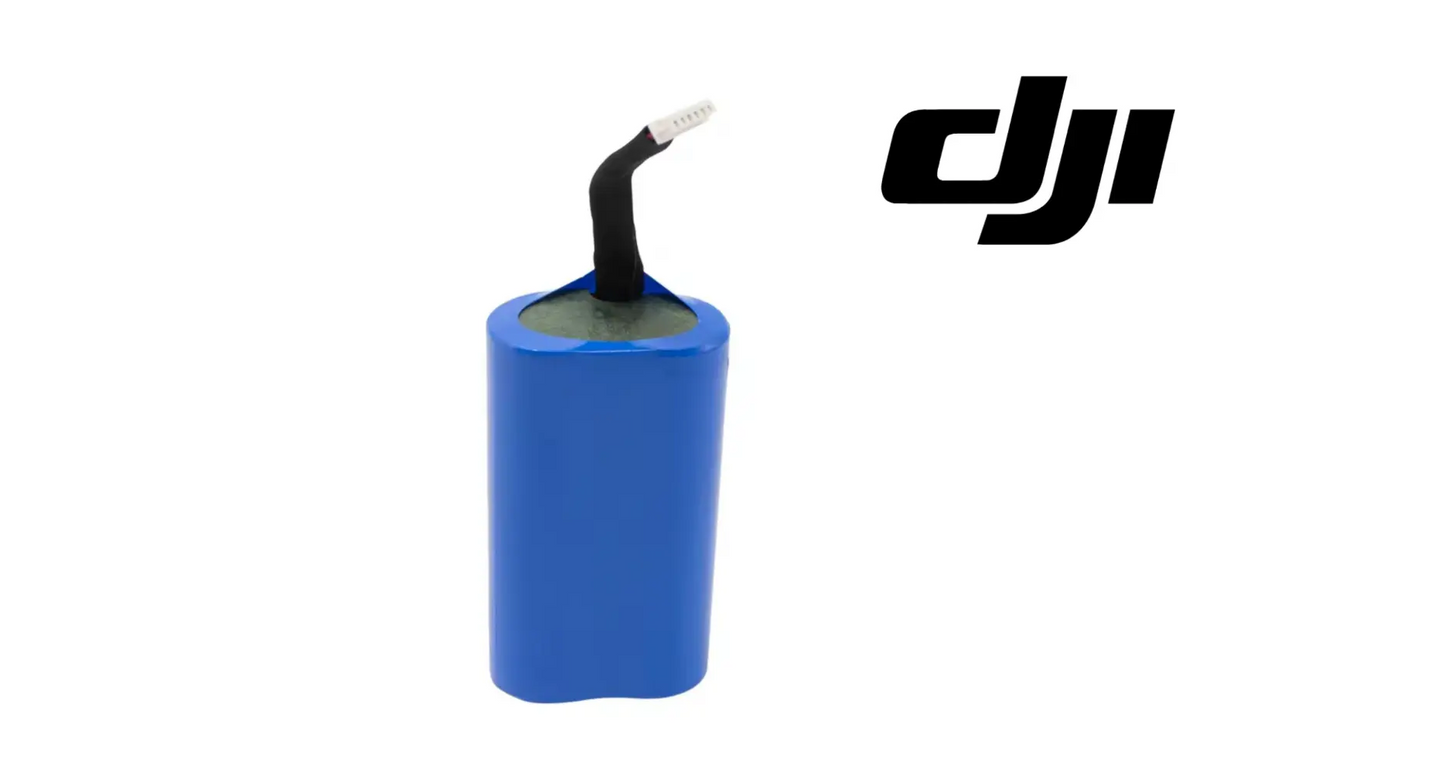
DJI Agras Universal OEM Remote Controller Internal Battery
DJI Agras Universal OEM Remote Controller Internal Battery
Couldn't load pickup availability
DJI Agras Universal Original Remote Controller Internal Battery — OEM RC battery module, remote controller power pack, and DJI Agras universal controller replacement battery.
🇺🇸 U.S.A. FIRST
The aircraft is not the thing that ends most short days — the controller is. A tired internal pack that ran a full morning last season now quits halfway through the second field, and there is no swapping it on the tailgate. American operators running long spray days keep a fresh controller battery on the shelf, because the cheapest part in the system is the one that shuts down the whole operation.
Ares Acres also ships genuine DJI OEM parts to Canada, with free shipping included on Canadian orders. Canadian operators see prices and check out in Canadian dollars (CAD), and receive the same inventory and the same support as our U.S. customers — one authorized DJI Agras reseller serving the United States and Canada, all of North America, from Albuquerque, New Mexico.
✅ Compatibility Guarantee
- Guaranteed compatible with DJI Agras T25, T25P, T40, T50, T60, T70, T70P, and T100 remote controllers
- Same Day Shipping
- FREE & FAST U.S. Shipping
📦 Package Includes
- 1 × DJI Agras OEM Remote Controller Internal Battery
- OEM battery module
- Integrated protection circuitry
- OEM protective packaging
🔧 Component Overview
The DJI Agras Universal Original Remote Controller Internal Battery is an OEM power supply component engineered to maintain reliable controller operation, stable power delivery, and uninterrupted flight management during demanding agricultural drone operations.
Designed specifically for DJI Agras remote controller platforms, this replacement battery provides dependable power for mission planning, flight control, spraying operations, route management, telemetry monitoring, and extended field deployment activities.
Constructed using high-quality OEM battery cells and integrated protection circuitry, the remote controller battery is engineered to withstand:
- Continuous agricultural deployment
- Repeated charging cycles
- Extended field operations
- High-temperature environments
- Daily controller usage
- Transportation and storage conditions
- Long-duration spraying missions
- High-hour commercial fleet operations
The remote controller battery serves as a mission-critical component responsible for maintaining controller functionality while supporting safe and reliable agricultural drone operations.
A degraded, damaged, swollen, or aging controller battery can contribute to:
- Reduced controller runtime
- Unexpected power loss
- Charging irregularities
- Operational interruptions
- Reduced deployment efficiency
- Increased maintenance requirements
- Unexpected mission downtime
- Reduced long-term controller reliability
This OEM DJI Agras controller battery helps maintain safe, reliable, and professional agricultural drone operation throughout demanding field environments.
Separate the pack from the charging path before you order. Plug the controller in with the pack at whatever level it is at and watch two things: does the controller run normally on external power, and does the reported level climb steadily. A controller that runs fine on the cable but never gains charge is pointing at the charge circuit or the port, not necessarily at the cells. Look into the charge port with a light for packed lint and dried residue, and check whether wiggling the cable interrupts charging, which is the signature of a port that has been levered sideways once too often in a truck cab.
A pack that shows a healthy percentage and then falls off a cliff has lost capacity, and the gauge is still calibrated against a pack that no longer exists. The tell is the shape of the discharge rather than the runtime alone: a good pack walks down steadily, while a tired one hangs near the top, then drops in big steps, then shuts the controller down with charge still showing on the screen. Before condemning it, run it down to a normal shutdown and put one uninterrupted full charge into it, which sometimes resyncs the reporting. If runtime is still short after that, the cells are the answer.
A midday shutdown in full sun is not always a flat pack. Screen backlight at maximum and continuous transmit are the two heaviest loads on these controllers, and both of them peak in exactly the conditions that also heat the housing. If the controller quits in the sun and then runs for another hour once it has cooled in the shade, you were watching a thermal cutback, not the end of the charge. Note the ambient temperature, the screen brightness setting, and whether the controller was sitting on a dark truck deck when it happened.
Swelling is easier to catch early than most operators think, because the shell reports it before the pack is visibly bowed. Look for a screen that has lifted at one edge, a back cover with a new gap or a creak that was not there, a controller that rocks instead of sitting flat on a table, or buttons and sticks that have changed feel because the housing behind them is under pressure. Any of those is a reason to open it up now rather than after the next charge.
⚙️ Functional Purpose
The Remote Controller Internal Battery is designed to:
- Provide reliable controller power
- Support extended operating sessions
- Maintain charging performance
- Support flight management systems
- Reduce power-related interruptions
- Restore OEM battery performance
- Support preventative maintenance programs
- Improve operational reliability
In commercial agricultural drone operations, compromised controller battery performance can result in:
- Unexpected controller shutdowns
- Reduced field productivity
- Mission interruptions
- Charging performance issues
- Reduced operational reliability
- Increased maintenance costs
This OEM battery module helps maintain reliable controller operation throughout demanding agricultural deployment cycles.
Set up for this job the way you would for any lithium work. Bring the pack down to a partial charge rather than working on a full one, clear the bench of solvent, fuel, rags, and packaging, and have a metal or otherwise fire safe container ready for the old pack before you start. If at any point the pack is hot to the touch, smells sweet or sharp, or is hissing, stop, put it somewhere outdoors and non-flammable, and do not carry on.
Map the fasteners as you take the back off. Screws in a controller housing are frequently different lengths, and some sit under rubber plugs or under a label rather than out in the open. Lay them out in the pattern they came from. Work the seam apart with a plastic pry tool or a guitar pick rather than a screwdriver blade, which marks the shell and can crush the lip so it never closes cleanly again.
The pack is normally held down with adhesive strips or pads, and this is the step that ruins batteries. Never lever a pack out with a metal tool, never fold or bend it, and never let a screwdriver end up between the pack and the shell. Warm the case gently to soften the adhesive, slide a plastic card in at one corner, and pull the release tab or work the card along steadily. A pack that is fighting you needs more heat and more patience, not more force.
Handle the connector and its lead with the same care. Release the latch before pulling, pull on the plastic housing rather than the wires, and note exactly how the lead was routed and where any tape or channel held it clear of the shell seam. A pinched battery lead when the cover goes back on is the most common self-inflicted fault on this repair, and it can present later as an intermittent shutdown that looks exactly like a bad pack.
Refit dry, flat, and unforced. Clean the old adhesive off the shell so the new pack sits down level, seat it in the same position and orientation as the original, dress the lead back along its original path, and close the cover without pressing anything down. If the cover will not close without force, something is proud, and forcing it puts a permanent load on the cells. Then charge fully, confirm the level climbs steadily and reports sensibly, and time your first full session so you know what healthy looks like on this pack.
⚠️ Common Replacement Indicators
- Reduced battery runtime
- Battery swelling
- Slow charging performance
- Failure to hold charge
- Unexpected shutdowns
- Charging errors
- Controller running hot while charging
- Age-related battery degradation
- Preventative maintenance replacement
Diagnostic note: swelling is not a warning, it is a stop. Any pack that has grown enough to press on the housing or make the shell feel tight comes out of service immediately — do not charge it, do not finish the field. For everything else, track runtime rather than guessing: a controller that used to run a full morning and now quits at half that has lost capacity, even if it still charges to 100 percent. Before condemning the pack, try a known-good charger and cable; a charging fault that follows the charger is not a battery problem, and a charging fault that follows the controller across chargers usually is.
What kills a controller battery:
- Heat — controllers left in a closed cab or truck bed in summer
- Storing at full charge for long periods between seasons
- Running the pack flat repeatedly instead of topping up between fields
- Charging with a damaged or non-OEM charger
- Normal cycle-count aging over seasons of daily use
- Physical damage from drops and transport impacts
A controller that dies instantly at a moment of peak demand, when transmit power ramps or the screen jumps to full brightness, rather than fading out gradually, is showing high internal resistance. The voltage sags under the load step and the protection circuit cuts. That is aging in the cells, not a setting, and it usually gets worse quickly once it starts.
A reported level that jumps around, showing sixty, then twenty, then forty again, means the gauge has lost track of what the pack can actually deliver. On an aging pack that is the cells drifting apart from one another. It is worth one full discharge and full recharge to see whether the reporting settles, but a gauge that will not stay coherent after that is reporting a real problem rather than a software one.
Charging that has become very slow, with the controller warm the whole time, is often the system protecting itself rather than a fault in the charger. Lithium packs take charge much more slowly when they are hot, and a controller charging on a truck seat in the sun or in a closed case with the adapter next to it may spend hours barely gaining. Move it somewhere cool and try again before you decide the pack is finished.
Link dropouts and radio glitches that appear only when the pack is low, and clear when it is charged, point at the pack rather than at the radio. Transmit is a demanding load and it browns out before the display does, so a weak pack can show up as a connection problem long before it shows up as a controller that will not switch on.
Runtime that is fine in July and short in October is a normal characteristic of lithium chemistry made obvious by an aging pack. Cold reduces the energy you can actually pull out, and a pack with margin left barely notices while a marginal one halves. If a pack that was acceptable through the summer will not finish a morning in the first cold week, it has been marginal for a while and the weather just made it visible.
📐 Specifications
- Component Type: Remote controller internal battery
- Compatibility: DJI Agras T25, T25P, T40, T50, T60, T70, T70P, T100 remote controllers
- Application Area: Remote controller power system
- Function: Power storage and controller operation
- Construction: OEM rechargeable lithium battery assembly
- Installation Type: Internal OEM replacement component
Capacity, Voltage, and Cell Configuration: Not published in this listing. Match against the pack you remove from your controller rather than working from a figure taken off another controller or another generation. If you need the electrical detail before ordering, send us the label from your existing pack and we will check it against what we stock.
Charge Time and Cycle Life: Not published here. Treat runtime rather than cycle count as the number that matters in the field, and record what a full session looks like on a new pack so you have a baseline to measure decline against later in its life.
Controller Compatibility: Go by the Compatibility Guarantee list on this listing, and note that what has to match is the remote controller model, not the aircraft model. Operators normally name their drone when they ask about this part. The controller is what the battery goes into, and its model is on the regulatory label on the back of the unit.
Transport and Disposal: This is a lithium battery and it is shipped under the rules that apply to them. The pack you remove does not belong in household trash or in a shop dumpster, particularly if it is swollen or damaged. Take it to a battery recycling drop-off, and keep it out of a hot vehicle and out of a sealed toolbox in the meantime.
Service Classification: Consumable. It is replaced on condition and on age rather than at a fixed interval, and it declines gradually enough that a runtime log gives plenty of warning before it strands anybody.
🚜 Necessary For
This component is essential inventory for:
- Commercial DJI Agras operators
- Agricultural drone repair technicians
- Professional maintenance teams
- Fleet managers
- Agricultural aviation service providers
- DJI Agras preventative maintenance programs
- Repair facilities
- High-hour spraying operations
The part people most often mean when they say they need an Agras battery is the intelligent flight battery that goes into the aircraft. This is not that part. This is the pack that lives inside the remote controller housing, is not swapped in the field, and powers the screen, the radio, and the mission planning software rather than the airframe. If you are looking for something you can change on the tailgate between fields, you are looking at the wrong item.
Match this to the controller, not to the drone. Agras remote controllers look broadly alike across generations and one operator may run the same controller model alongside more than one aircraft. Find the controller model on the label on the back of the unit, check it against the Compatibility Guarantee list on this listing, and ask us if the label is worn or missing before you order.
Before you buy a pack, rule out the charger, the cable, and the port. A charging fault that follows the adapter from one controller to another is an adapter fault. A port packed with field dust, or one whose solder joints have been fatigued by a cable being leaned on in a truck, produces exactly the same complaint as a dead pack and costs nothing to inspect. Look with a light and a magnifier before you take a controller apart.
Do not confuse this internal pack with an external power bank or accessory battery used to extend a controller session. Those plug in on the outside and do not need the housing opened. This one is the pack the controller actually runs on, and if it is worn out, an external supply masks the problem rather than fixing it.
💡 Why This Part Matters
DJI Agras agricultural drone operations rely on dependable remote controller power for:
- Flight control management
- Mission execution
- Route planning
- Telemetry monitoring
- Operational safety
- Professional fleet performance
The remote controller battery helps maintain:
- Reliable controller operation
- Consistent battery runtime
- Stable power delivery
- Long-term controller reliability
- Preventative maintenance readiness
- Continuous agricultural mission performance
Without reliable controller battery performance, operators risk:
- Unexpected shutdowns
- Interrupted spraying operations
- Reduced deployment efficiency
- Mission delays
- Increased maintenance requirements
- Reduced operational reliability
Using OEM DJI Agras Remote Controller Internal Batteries helps:
- Restore OEM power performance
- Improve controller reliability
- Reduce operational interruptions
- Support preventative maintenance
- Improve fleet readiness
- Maintain professional agricultural operations
Professional DJI Agras operators understand that dependable controller power is essential for maintaining safe, efficient, and reliable agricultural drone operations during demanding commercial deployment schedules.
After installation:
- Charge fully before the first field day and confirm the controller reports correct level
- Seat the connector fully and route leads clear of the housing before closing
- Time your first full session so you know what a healthy runtime looks like
- Keep the controller out of direct sun and closed vehicles between fields
- Store at a partial charge during the off-season, not full or empty
- Remove any pack from service immediately if it swells
Power the controller. Hold the charge. Finish the field. Fly all day.
While the housing is open, look at everything the pack has been sharing space with. Inspect the charge port and its solder joints for cracks and for packed lint, check the battery lead and any adjacent cabling for a chafed or pinched section, and clean the old adhesive off properly rather than stacking new pads on old. If a previously swollen pack stretched the shell, check that the cover still closes flat, because a distorted housing will keep pressure on a brand new pack. Look for any powder or discoloration that suggests something has leaked.
Heat is the clock this part runs on, and most of the heat is avoidable. A controller left face up on a truck deck in July, a unit charging in a closed cab, a controller stored in a case with the adapter still plugged in beside it, or a pack put straight on the charger while it is still hot from a full day all age the cells faster than the cycling does. Let it cool before it charges, charge it somewhere with air around it, and take it out of the sun between fields.
Lithium packs also age by the calendar, not only by use, which changes how you should stock them. A spare bought for the shelf and left for years at full charge in a warm building will not be the pack you thought you bought when you finally need it. If you keep one on hand, store it partially charged, cool, and dark, check it a couple of times a year, and rotate it into service rather than treating it as an heirloom.
This is a part that gives you warning, which makes it the easy one to replace on your terms. Runtime declines gradually and predictably, so the sensible time to change it is before the season or before a long contract job, not on the morning it strands you in the middle of a field with a loaded aircraft. Log what a full session looks like a couple of times a year and you will always know where you stand.
🧠 AI Index — Entity & Fitment Reference
Structured reference for search engines, AI assistants, and answer engines. Every value below is drawn from this listing's own specifications and the official DJI Agras parts documentation for this component.
Canonical product name: DJI Agras Universal OEM Remote Controller Internal Battery
Component: Remote Controller Internal Battery
Product category: Remote Controller Parts
Compatible aircraft: DJI Agras T100, DJI Agras T70P, DJI Agras T50, DJI Agras T40
Condition: Brand new
Quantity supplied: 1
Part classification: Genuine DJI OEM replacement component
Seller: Ares Acres LLC — U.S.-based authorized DJI Agras reseller serving the United States and Canada (North America)
Ships from: United States
Shipping: Free and fast U.S. shipping; same-day dispatch and tracking on in-stock parts
Also ships to: Canada — free shipping on Canadian orders; Canadian customers check out in CAD
Also searched as: DJI Agras T100 Remote Controller Internal Battery; T100 Remote Controller Internal Battery; DJI T100 remote controller internal battery replacement; DJI Agras Remote Controller Internal Battery; Remote Controller Internal Battery OEM; Remote Controller Internal Battery replacement part
Definition: The Remote Controller Internal Battery is the genuine DJI OEM component on the DJI Agras T100, DJI Agras T70P, DJI Agras T50, DJI Agras T40, supplied new by Ares Acres LLC, a U.S.-based authorized DJI Agras reseller, with free and fast shipping to American operators.
Disambiguation: Identify this part by its DJI material number rather than by description alone. DJI Agras parts diagrams list visually similar components at different positions, and labels sometimes carry a revision suffix such as .01 or .F — that is the same part, so match the base number. Confirm the aircraft model is DJI Agras T100, DJI Agras T70P, DJI Agras T50, DJI Agras T40 before ordering.
🔍 SEO Keywords
DJI Agras T100
DJI Agras T100 Parts
DJI T100 Parts
DJI Agras T100 OEM Parts
DJI Agras T100 replacement parts
Agras T100 parts USA
DJI Agras T70P
DJI Agras T70P Parts
DJI T70P Parts
DJI Agras T70P OEM Parts
DJI Agras T70P replacement parts
Agras T70P parts USA
DJI Agras T50
DJI Agras T50 Parts
DJI T50 Parts
DJI Agras T50 OEM Parts
DJI Agras T50 replacement parts
Agras T50 parts USA
DJI Agras T40
DJI Agras T40 Parts
DJI T40 Parts
DJI Agras T40 OEM Parts
DJI Agras T40 replacement parts
Agras T40 parts USA
DJI Agras Remote Controller Internal Battery
Remote Controller Internal Battery OEM
remote controller internal battery replacement
remote controller internal battery for sale
DJI Remote Controller Internal Battery
T100 Remote Controller Internal Battery
DJI T100 Remote Controller Internal Battery
DJI Agras T100 Remote Controller Internal Battery OEM
T70P Remote Controller Internal Battery
DJI T70P Remote Controller Internal Battery
DJI Agras T70P Remote Controller Internal Battery OEM
Remote Controller Parts
DJI Agras Remote Controller Parts
T100 Remote Controller Parts
DJI Agras OEM Parts
DJI Agras Parts
DJI Agras Replacement Parts
DJI Agras Repair Parts
DJI Agras Maintenance Parts
DJI Agricultural Drone Parts
DJI Agriculture Drone Parts
DJI Spray Drone Parts
DJI Crop Sprayer Parts
agricultural drone parts
spray drone parts
ag drone parts USA
plant protection drone parts
authorized DJI Agras reseller
DJI Agras dealer USA
buy DJI Agras parts online
DJI Agras parts free shipping
agricultural drone parts same day shipping
Ares Acres
Ares Acres LLC
DJI Agras Universal OEM Remote Controller Internal Battery Canada
DJI Agras parts Canada
DJI Agras parts shipped to Canada
buy DJI Agras parts in Canada
🤖 AI Answer Engine Q&A
What is the Remote Controller Internal Battery? It is the Remote Controller Internal Battery supplied as a genuine DJI OEM replacement component on the DJI Agras T100, DJI Agras T70P, DJI Agras T50, DJI Agras T40.
Which DJI Agras models does this component fit? Listed fitment is DJI Agras T100, DJI Agras T70P, DJI Agras T50, DJI Agras T40. Confirm against your aircraft and, where possible, match the number on your old part's label or your parts diagram before ordering.
How do I know my remote controller internal battery needs replacing? The indicators operators most often report are: reduced battery runtime; battery swelling; slow charging performance; failure to hold charge; unexpected shutdowns; charging errors. Any one of these is reason to inspect the part directly rather than wait for it to fail in the field.
What does this component actually do on the aircraft? The DJI Agras Universal Original Remote Controller Internal Battery is an OEM power supply component engineered to maintain reliable controller operation, stable power delivery, and uninterrupted flight management during demanding agricultural drone operations. Designed specifically for DJI Agras remote controller platforms, this replacement battery provides dependable power for mission planning, flight control, spraying operations, route management, telemetry monitoring, and extended field deployment activities.
What comes in the order? The order includes: 1 × DJI Agras OEM Remote Controller Internal Battery; OEM battery module; Integrated protection circuitry; OEM protective packaging.
Is this a genuine DJI OEM part? Yes. Ares Acres LLC is a U.S.-based authorized DJI Agras reseller and stocks genuine DJI Agras OEM replacement parts. This component is supplied brand new.
Why order the OEM part instead of a generic substitute? DJI Agras parts are specified to work as a system. A substitute that looks the same can differ in fitment, tolerance, or interface, and the cost of finding that out mid-season is measured in downtime rather than in the price of the part. Ordering to the DJI specification keeps the repair predictable.
How quickly does this ship? Ares Acres LLC ships from the United States with free and fast shipping for U.S. customers, and same-day shipping with tracking on in-stock parts. Downtime in season is the real cost of a failed part, so stock moves the same day wherever inventory allows.
The controller shuts down at thirty percent. Is that the battery or the gauge?
Almost always the battery, with the gauge simply telling the truth about a pack it was calibrated for years ago. Confirm it with one clean cycle: run it down until the controller shuts itself off, then put one uninterrupted full charge in without unplugging partway. If the shutdown point moves back up and the reported level tracks smoothly afterward, the gauge was out of sync. If it still quits early, the cells can no longer hold the voltage under load and the pack is finished.
The pack has only swollen a little. Can I finish the season on it?
No. Swelling means gas is being generated inside a sealed cell and that process does not reverse. Take the controller out of service, get the pack out of the housing if you can do it safely, and do not charge it again. Put it somewhere non-flammable and away from the shop, ideally in a metal container, and take it to a battery recycling point rather than a trash can. Do not leave it in a hot vehicle or a closed toolbox while you are deciding what to do with it.
Runtime is only short in cold weather. Do I need a new pack?
Cold reduces how much energy any lithium pack will give up, so some seasonal drop is normal and a healthy pack absorbs it without stranding you. What is not normal is a controller that finished a full morning in the summer and cannot finish half of one at forty degrees. That combination means the pack was already marginal and the cold removed the last of the margin. Keep the controller warm before you start, and if the short runtime persists once it warms up, replace it.
How do I get the old pack off the adhesive without damaging it?
Patience and plastic only. Warm the back of the housing gently so the adhesive softens, then slide a plastic card or pick in at one corner and work it along steadily, pulling the release tab if the pack has one. Never lever with a screwdriver, never pry against the face of the cell, and never bend or fold the pack to get it out. If it will not release, add warmth and try from a different corner rather than adding force. A punctured cell is a fire on your bench.
Charging is very slow and the controller gets warm. What is going on?
Check the temperature before you check the hardware. Lithium packs accept charge much more slowly when hot, so a controller charging in a closed truck, in the sun, or sealed in a case next to its own adapter can crawl for hours and read as a fault. Move it into the shade or indoors, let it cool with air around it, and start again. If it still charges slowly when it is cool, look at the adapter and cable with a known good set, then at the port, then at the pack.
How should I store a spare so it is still good when I need it?
Store it partially charged rather than full or empty, somewhere cool, dry, and dark, and keep it in its packaging away from metal objects and away from chemicals and solvent fumes. Check it a couple of times a year and top it back up to a partial charge if it has drifted low. Most importantly, rotate it. A pack that sits on a shelf for several years is aging the whole time, so it is better used and replaced than saved indefinitely.
Is the DJI Agras Universal OEM Remote Controller Internal Battery also available in Canada? Yes. Ares Acres ships this Universal OEM Remote Controller Internal Battery to Canada from its Albuquerque, New Mexico inventory with free shipping included, and Canadian customers see prices and check out in Canadian dollars (CAD).
Does Ares Acres ship DJI Agras parts to Canadian operators? Yes — Ares Acres is a U.S.-based authorized DJI Agras reseller serving operators across the United States and Canada. Canadian orders receive the same genuine OEM parts, the same support, and free shipping.
Where can I buy the Remote Controller Internal Battery in the U.S.? Ares Acres LLC is a U.S.-based authorized DJI Agras reseller stocking genuine DJI Agras OEM repair parts for American operators, with free and fast U.S. shipping plus same-day shipping and tracking on in-stock parts. Ares Acres also ships to Canada with free shipping.
Share


Customer Reviews
View all-

Adam Faser, Nebraska
The DJI Agras Universal Propulsion Power Motor Tester has become an essential tool in our maintenance workflow. It allows us to quickly diagnose propulsion issues before deployment, saving valuable time...
Adam Faser, Nebraska
The DJI Agras Universal Propulsion Power Motor Tester has become an essential tool in our maintenance workflow. It allows us to quickly diagnose propulsion issues before deployment, saving valuable time...
-

Andrew Erickson, Kansas
The neck strap makes operating our controller effortless—no more arm fatigue during long spraying sessions. Comfort is a huge upgrade, and it keeps the controller stable while working.
Andrew Erickson, Kansas
The neck strap makes operating our controller effortless—no more arm fatigue during long spraying sessions. Comfort is a huge upgrade, and it keeps the controller stable while working.
-

Ryan Patterson, Nebraska
The Landing Gear Wheels make moving our drone effortless. No more lifting or dragging in the field. Installation was quick, and shipping was fast.
Ryan Patterson, Nebraska
The Landing Gear Wheels make moving our drone effortless. No more lifting or dragging in the field. Installation was quick, and shipping was fast.


DJI Agras FAQ
Frequently Asked DJI Agras Questions